
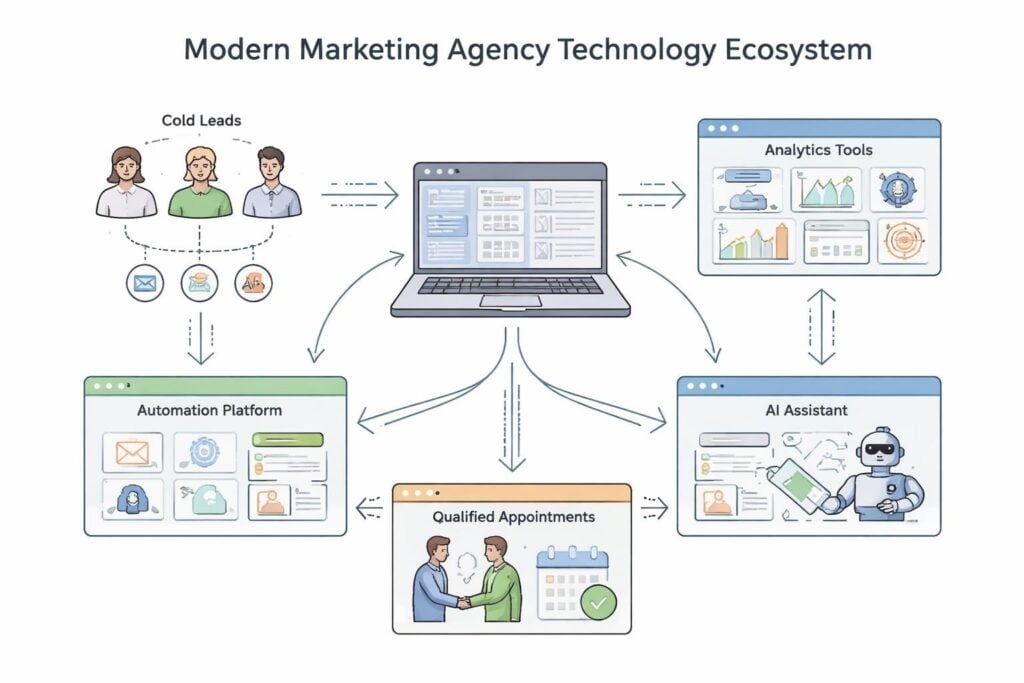
Running a successful marketing agency in 2026 demands more than creative talent and strategic thinking. The right marketing agency tools can transform your operations from chaotic firefighting into a smooth, scalable lead generation machine. With AI integration becoming standard practice and client expectations reaching new heights, your tech stack determines whether you're drowning in manual tasks or delivering predictable growth for every client. The agencies winning today aren't just using more tools – they're using the right combination of platforms that work together seamlessly to automate appointment bookings, qualify leads faster, and demonstrate ROI with precision.
Why Your Marketing Agency Tools Determine Client Success
The technology you choose directly impacts your ability to deliver results. Agencies that invest in comprehensive marketing agency tools report 43% higher client retention compared to those relying on fragmented solutions.
Your tool stack influences every client interaction:
- Speed of campaign deployment and optimization
- Accuracy of targeting and lead qualification
- Transparency in reporting and communication
- Scalability of successful strategies across multiple accounts
When you're operating a lead generation-focused business model, the difference between mediocre and exceptional tools can mean thousands of dollars in monthly recurring revenue. Clients don't just buy your expertise – they're investing in your ability to execute consistently.
The Real Cost of Tool Misalignment
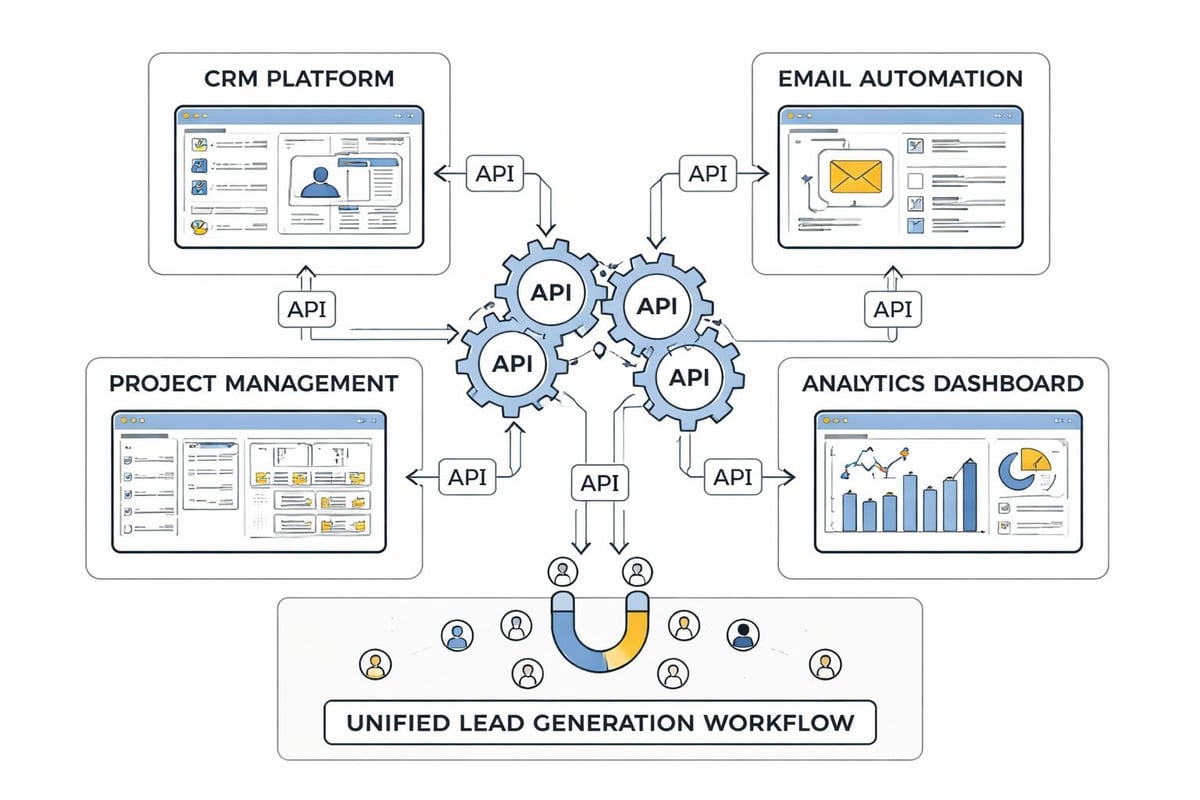
Many agencies cobble together platforms without considering integration complexity. This creates data silos, duplicate work, and missed opportunities.
Consider these hidden costs:
| Problem Area | Impact on Agency | Annual Cost (10-person team) |
|---|---|---|
| Manual data transfer | 15 hours/week wasted | $46,800 |
| Reporting delays | Client churn +12% | $95,000 |
| Learning curve | Reduced billable time | $28,500 |
These inefficiencies compound quickly. The right marketing agency tools eliminate friction, allowing your team to focus on strategy rather than administrative busywork.
Essential Categories of Marketing Agency Tools
Smart agencies build their stack across six core categories, each serving a distinct function in the client success journey.
Client Relationship Management and Lead Tracking
Your CRM serves as the central nervous system for client data and lead progression. Without robust tracking, you're essentially flying blind through the customer journey.
Leading platforms in 2026 offer:
- Multi-channel attribution modeling
- Automated lead scoring based on behavior
- Native appointment booking integrations
- Predictive analytics for deal closure probability
- Custom pipeline stages for different service offerings
For agencies specializing in transforming cold leads into ready-to-buy customers, your CRM must connect seamlessly with your outreach tools and analytics platforms. The best marketing platforms now include AI-powered insights that flag at-risk deals before they slip away.
SEO and Competitive Intelligence Platforms
Search visibility drives sustainable growth for both your agency and your clients. The best SEO tools of 2026 combine keyword research, technical audits, and content optimization in unified dashboards.
Must-have SEO capabilities:
- Real-time ranking tracking across locations
- Backlink opportunity identification
- Content gap analysis against competitors
- Page speed and Core Web Vitals monitoring
- Schema markup recommendations
Moz Pro offers comprehensive features that agencies need for client reporting, while tools like SpyFu excel at competitive analysis, revealing exactly which keywords and ad strategies your competitors are using successfully.
Understanding competitor strategies becomes crucial when building digital marketing funnels that outperform industry benchmarks.
Content Creation and AI Writing Assistants
Content production bottlenecks kill agency scalability. AI-powered writing tools have evolved from novelty to necessity for maintaining consistent output quality across multiple clients.
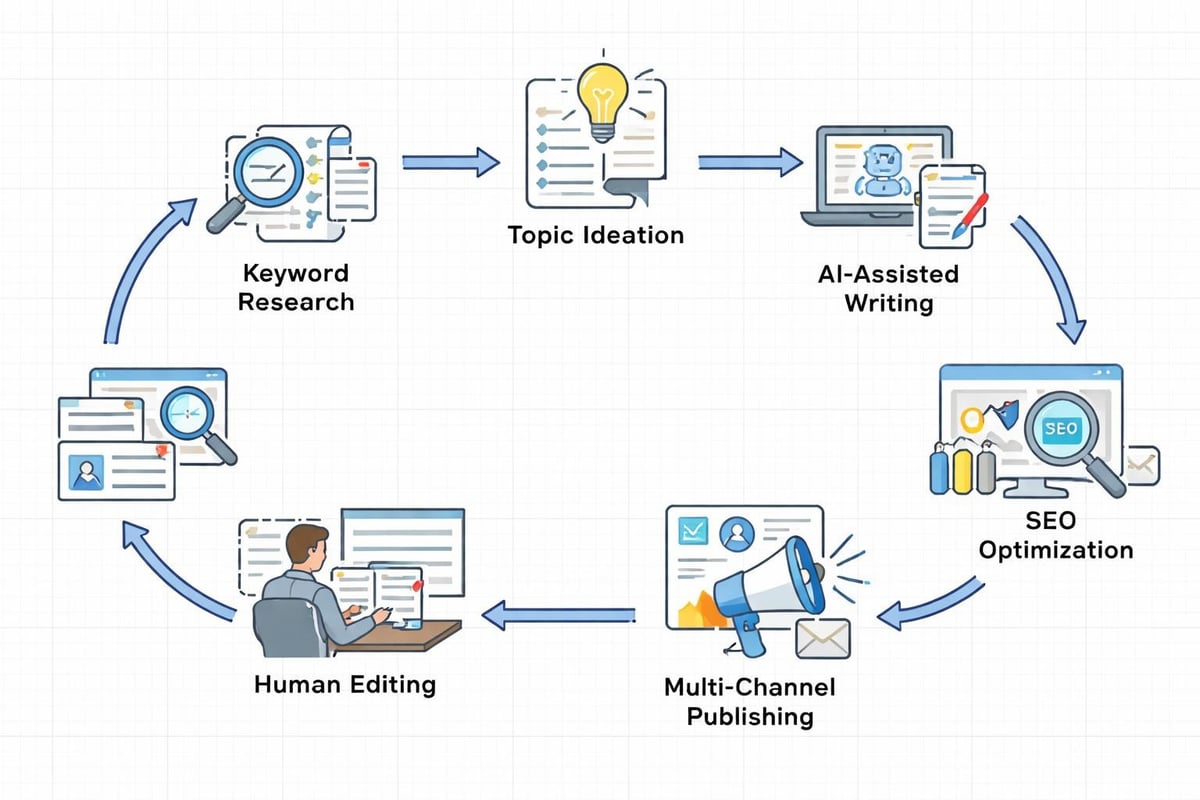
The leading AI writing tools of 2025 now handle everything from blog posts to ad copy with minimal human intervention. However, the magic happens when you combine AI efficiency with human strategic oversight.
Effective content workflows in 2026:
- AI-generated first drafts based on keyword research
- Human editors refine brand voice and accuracy
- SEO optimization tools scan for improvement opportunities
- Automated publishing schedules across platforms
- Performance tracking tied directly to business outcomes
Google’s Pomelli AI represents the next wave, offering small and medium businesses the ability to create entire campaigns with minimal marketing expertise – which means your agency needs to demonstrate even more sophisticated value.
Advanced Marketing Agency Tools for Lead Generation
Lead generation demands specialized technology that goes beyond basic marketing automation. Your ability to generate qualified appointments at scale separates profitable agencies from struggling ones.
Multi-Channel Outreach Automation
The days of single-channel campaigns are over. Prospects engage across email, social media, chat, and phone – your outreach must meet them everywhere.
Sophisticated outreach platforms enable:
- Sequenced campaigns across 4-6 touchpoints
- Dynamic personalization using CRM data
- A/B testing at every stage
- Automatic follow-up based on engagement signals
- Deliverability monitoring and domain rotation
When executing Facebook lead generation campaigns or targeting real estate audiences, integration between your ad platform and outreach tools ensures no lead falls through the cracks.
Appointment Booking and Qualification Systems
Converting leads to booked appointments requires removing friction from the scheduling process while maintaining lead quality standards.
Modern booking systems include:
| Feature | Business Impact | Implementation Difficulty |
|---|---|---|
| Calendar sync | 78% more bookings | Easy |
| Pre-qualification questions | 44% better show rates | Medium |
| Automated reminders | 31% reduction in no-shows | Easy |
| Round-robin assignment | Balanced team workload | Medium |
| Custom booking pages | 23% conversion lift | Easy |
These marketing agency tools work best when connected to your lead scoring system, ensuring only genuinely qualified prospects reach your sales calendar.
Analytics and Attribution Platforms
Client retention depends on proving ROI with ironclad data. Generic analytics don't cut it when clients demand accountability for every marketing dollar spent.
Advanced attribution tools track:
- First-touch and last-touch conversion paths
- Multi-touch attribution across channels
- Lifetime value predictions by traffic source
- Cost per qualified lead vs. cost per closed deal
- Campaign performance segmented by audience characteristics
For agencies working with B2B lead generation companies, showing how your campaigns compare to industry benchmarks builds trust and justifies premium pricing.
Project Management and Collaboration Tools
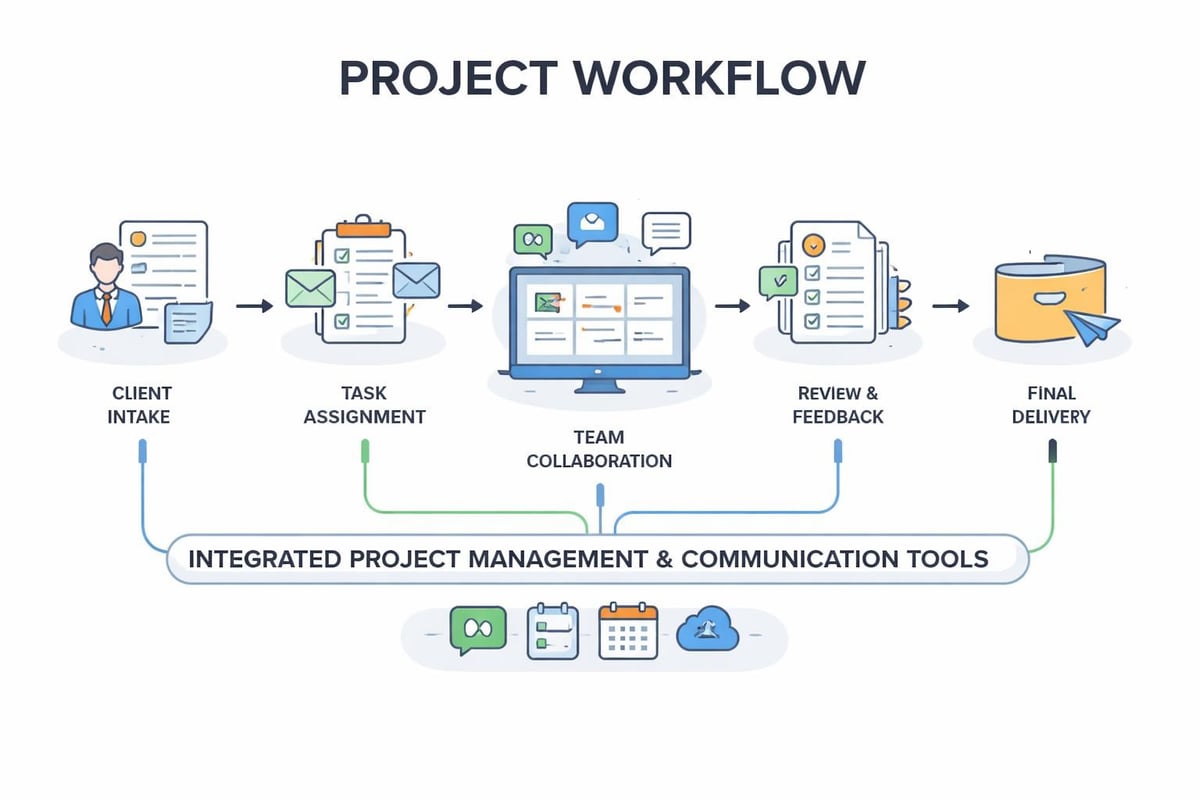
Client-facing marketing work represents only half the battle. Internal coordination determines whether you deliver on time or constantly apologize for delays.
Workflow Management Platforms
Modern agencies operate across time zones with distributed teams and freelance specialists. Centralized workflow tools prevent chaos.
Essential workflow features:
- Customizable project templates for recurring deliverables
- Time tracking integrated with billing systems
- File versioning and approval workflows
- Client portal access for transparency
- Automated status updates reducing meeting overhead
The comprehensive guide to marketing agency tools highlights how proper project management creates capacity for 30% more client work without adding headcount.
Communication and Documentation Systems
Clear communication prevents the misunderstandings that damage client relationships and burn team morale.
Strategic communication stack:
- Internal chat platforms for quick questions
- Video conferencing for strategic discussions
- Shared documentation for SOPs and processes
- Screen recording for training and feedback
- Centralized knowledge base for client information
When tools for lead generation are properly documented, new team members become productive 60% faster than agencies relying on tribal knowledge.
AI-Powered Marketing Agency Tools Revolutionizing 2026
Artificial intelligence has moved from experimental to essential across the marketing agency landscape. Agencies leveraging AI report 2.3x faster campaign optimization cycles compared to manual approaches.
Predictive Lead Scoring and Prioritization
Not all leads deserve equal attention. AI analyzes hundreds of behavioral signals to predict which prospects will convert.
Modern lead scoring considers:
- Engagement patterns across email, web, and social
- Firmographic data matching ideal customer profiles
- Behavioral triggers indicating buying intent
- Historical conversion data from similar prospects
- Competitive intelligence about alternative solutions
When you're running campaigns for mortgage lead generation or other high-value verticals, focusing resources on the right 20% of leads dramatically improves ROI.
Automated Campaign Optimization
Manual A/B testing can't keep pace with algorithmic optimization. AI-powered platforms adjust bids, creative elements, and targeting parameters in real-time based on performance data.
Campaign optimization automation includes:
- Dynamic budget allocation across channels
- Automated ad creative testing and rotation
- Audience segment discovery and expansion
- Bid adjustments based on conversion likelihood
- Negative keyword mining and implementation
Adobe’s suite of AI tools demonstrates how major platforms are integrating intelligence directly into creative workflows, enabling agencies to deliver personalized experiences at unprecedented scale.
Natural Language Processing for Customer Insights
Understanding customer sentiment across reviews, social media, and support tickets requires processing volumes of text data impossible for humans to analyze manually.
NLP-powered marketing agency tools extract:
- Common pain points mentioned across channels
- Emotional tone of brand mentions
- Competitive positioning in customer language
- Feature requests and product improvement opportunities
- Early warning signals of customer dissatisfaction
These insights inform messaging strategy, content creation, and product positioning that resonates with real customer needs rather than internal assumptions.
Building Your Optimal Marketing Agency Tools Stack
Selection paralysis kills more agency tech initiatives than any other factor. With thousands of options available, strategic curation matters more than comprehensive coverage.
The Integration-First Approach
Start with your CRM as the foundation, then select complementary tools that offer native integrations or robust API access. Forcing disconnected tools to work together wastes resources better spent on client work.
Evaluate potential additions by asking:
- Does this solve a specific, measurable problem?
- Can it integrate with our existing core platforms?
- Will our team actually use it consistently?
- Does it scale as we add clients and team members?
- What's the true total cost including training and maintenance?
The detailed comparison of marketing tools for agencies reveals that agencies running lean, integrated stacks outperform those with bloated tool collections.
Balancing Specialization and Consolidation
Some agencies chase all-in-one platforms promising to replace ten specialized tools. Others maintain separate best-of-breed solutions for every function.
The winning approach falls somewhere in the middle:
| Strategy | Advantages | Disadvantages |
|---|---|---|
| All-in-one platforms | Single login, unified data | Feature compromises, vendor lock-in |
| Best-of-breed stack | Superior capabilities | Integration complexity, higher costs |
| Hybrid approach | Flexibility with consistency | Requires strategic planning |
Most successful agencies in 2026 use an all-in-one platform for core functions (CRM, email, basic automation) while adding specialized tools for competitive advantages like advanced analytics or industry-specific capabilities.
Training and Adoption Strategies
The best marketing agency tools deliver zero value if your team doesn't use them properly. Implementation failure stems from inadequate training far more often than tool limitations.
Effective adoption programs include:
- Executive sponsorship demonstrating commitment
- Hands-on training sessions for each user role
- Written documentation and video tutorials
- Regular check-ins to address frustrations
- Recognition for team members driving adoption
- Continuous optimization based on usage data
When introducing B2B lead generation tools, pilot with a small team segment before rolling out agency-wide to identify issues while they're manageable.
Measuring ROI From Your Marketing Agency Tools Investment
Technology spending without measurement is just expense. Agencies that track tool ROI make smarter decisions about renewals and additions.
Key Performance Indicators for Tool Success
Different marketing agency tools deserve different success metrics aligned with their purpose.
ROI measurement framework:
- CRM platforms: Pipeline visibility, sales cycle length, client retention rate
- SEO tools: Keyword rankings, organic traffic growth, backlink acquisition
- Automation platforms: Time saved per campaign, lead response speed, conversion rate improvement
- Project management: On-time delivery rate, team utilization, client satisfaction scores
- Analytics tools: Insight discovery frequency, decision-making speed, attribution accuracy
Track these metrics before implementation and quarterly thereafter. Tools that don't demonstrate measurable improvement within six months should be reconsidered.
Cost-Benefit Analysis Beyond Subscription Fees
The sticker price represents only a fraction of true tool costs. Comprehensive analysis includes:
- Monthly or annual subscription fees
- Implementation and onboarding time
- Ongoing training requirements
- Integration development and maintenance
- Data migration from previous solutions
- Opportunity cost of alternatives
Compare total costs against quantifiable benefits like time saved, revenue attributed to better insights, or client retention improvements. The guide to 39 essential marketing agency tools emphasizes that the most expensive tools often deliver the best ROI when properly implemented.
Future-Proofing Your Marketing Agency Tools Strategy
Technology evolution accelerates constantly. Agencies that anticipate trends position themselves as innovation leaders rather than followers scrambling to catch up.
Emerging Capabilities to Watch
Several technological shifts will reshape marketing agency tools over the next 18-24 months:
- Unified customer data platforms consolidating identity across channels
- Conversational AI handling initial lead qualification autonomously
- Blockchain-based attribution providing fraud-proof performance tracking
- Voice search optimization requiring new SEO approaches
- Privacy-first analytics adapting to cookie deprecation
Agencies staying informed about these developments can guide clients through transitions while less-prepared competitors struggle with disruption.
Building Vendor Relationships That Last
Your marketing agency tools vendors should function as strategic partners, not just software suppliers. Cultivate relationships that provide early access to beta features, dedicated support, and input on product roadmaps.
Strong vendor partnerships deliver:
- Advance notice of platform changes affecting clients
- Exclusive training and certification opportunities
- Case study collaborations demonstrating your expertise
- Preferential pricing as you scale
- Direct access to product teams for feature requests
The marketing agency tools overview for 2025 notes that agencies with formal partnership agreements experience 40% fewer technical issues than typical customers.
The right marketing agency tools transform your operations from reactive chaos into a predictable lead generation system that scales with every new client. By focusing on integration, measuring ROI consistently, and staying ahead of technological trends, your agency positions itself to deliver exceptional results regardless of market conditions. If you're ready to leverage advanced AI systems that automate appointment bookings and transform cold leads into ready-to-buy customers, Adstra provides the proven frameworks and technology partnerships that drive guaranteed growth for agencies committed to excellence.