


The marketing landscape has fundamentally shifted. What once required entire teams and months of testing can now be accomplished in hours through intelligent automation. The integration of ai in digital marketing isn't just about efficiency anymore-it's about survival in a market where your competitors are already leveraging machine learning to identify, engage, and convert your ideal customers before you even know they exist. For businesses focused on lead generation, artificial intelligence has become the difference between struggling to fill pipelines and systematically generating qualified appointments on demand.
The Revenue Impact of AI-Powered Marketing Systems
The data tells an undeniable story about the effectiveness of ai in digital marketing. According to recent research on marketing AI ROI, 93% of CMOs now see clear returns on their AI investments, with 83% of marketing teams reporting measurable improvements in campaign performance.
This isn't theoretical innovation-it's practical transformation happening right now.
Why Traditional Marketing Falls Short in 2026
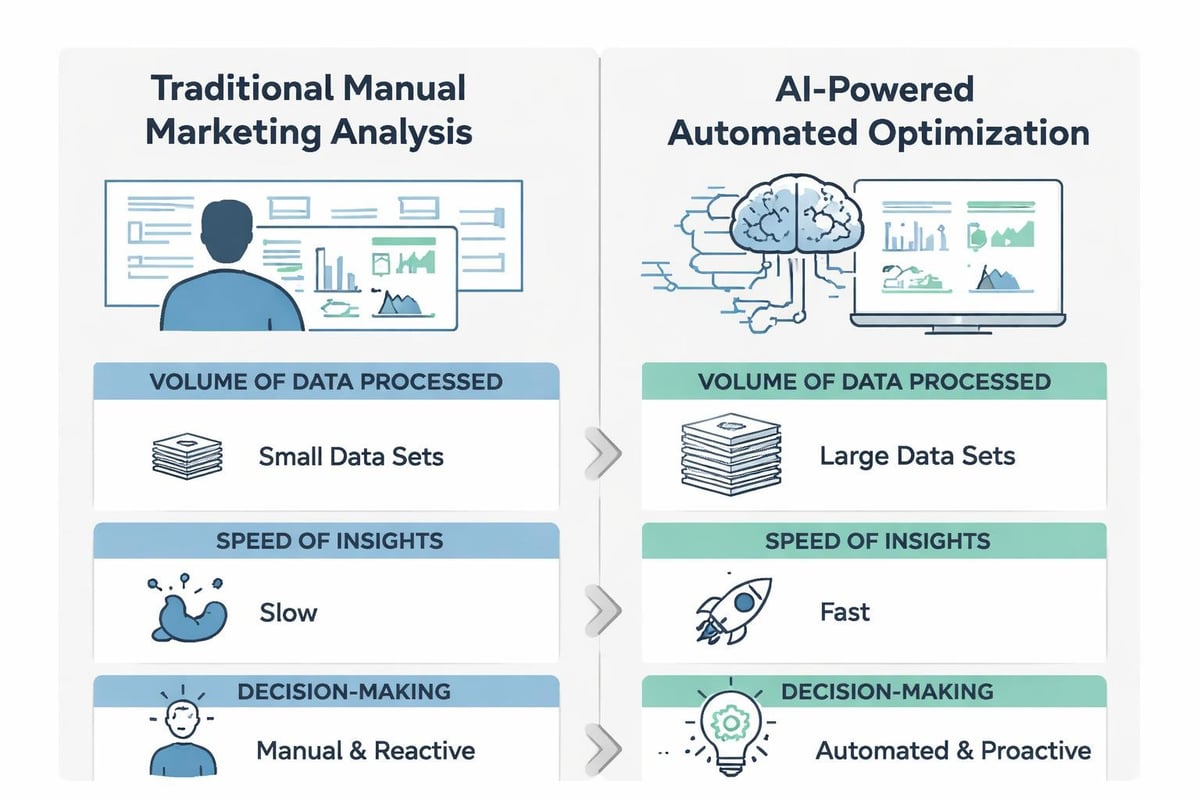
Manual campaign management simply can't compete with AI's capabilities:
- Human analysis processes hundreds of data points per day
- AI systems analyze millions of signals simultaneously
- Traditional segmentation relies on basic demographic filters
- AI segmentation identifies behavioral patterns invisible to human observers
- Manual optimization happens weekly or monthly
- Automated optimization adjusts bids and targeting in real-time
The gap between these approaches translates directly to cost per lead, conversion rates, and ultimately revenue. Businesses still relying on manual processes are paying more to acquire lower-quality leads while their AI-powered competitors dominate market share.
How AI Transforms Every Stage of Lead Generation
The application of ai in digital marketing extends far beyond simple automation. Modern AI systems fundamentally reimagine how businesses identify, attract, and convert prospects into customers.
Predictive Lead Scoring and Qualification
AI doesn't just collect leads-it predicts which ones will convert. Machine learning algorithms analyze thousands of behavioral signals to score prospects based on their likelihood to purchase. This means your sales team spends time talking to ready-to-buy customers instead of chasing cold contacts.
The transformation in lead quality metrics speaks for itself:
| Traditional Approach | AI-Powered Approach | Improvement |
|---|---|---|
| 2-5% lead-to-sale conversion | 8-15% lead-to-sale conversion | 3-4x increase |
| 45-60 min per qualified lead | 10-15 min per qualified lead | 70% time savings |
| Manual follow-up tracking | Automated engagement sequences | 95% follow-up rate |
For businesses implementing lead generation with AI, the difference isn't incremental-it's transformational. Your customer acquisition cost drops while your conversion rates climb, creating compound growth effects that traditional methods simply cannot match.
Intelligent Content Personalization at Scale
Generic messaging died years ago. Today's buyers expect personalized experiences that speak directly to their specific challenges and goals. AI enables this personalization across thousands of prospects simultaneously.
Consider how AI is changing digital marketing personalization:
- Behavioral analysis identifies individual prospect interests
- Dynamic content adapts messaging to match each visitor's journey stage
- Predictive recommendations suggest relevant solutions before prospects ask
- Automated A/B testing continuously optimizes every element
This level of personalization was impossible five years ago. Now it's table stakes for competitive lead generation.
Advanced AI Applications Driving Lead Volume
The sophistication of ai in digital marketing continues accelerating. What seemed like science fiction in 2024 is now standard practice for growth-focused businesses.
Conversational AI and Chatbot Intelligence
Modern chatbots don't just answer FAQs-they qualify leads, book appointments, and nurture prospects through complex buying cycles. The evolution from scripted responses to contextual conversations has transformed chatbots from novelties into revenue generators.
Key capabilities of 2026 conversational AI:
- Natural language processing that understands intent, not just keywords
- Sentiment analysis to detect frustration and escalate appropriately
- Multi-turn conversations that gather qualification information naturally
- Integration with CRM systems for seamless handoff to sales teams
- Learning from every interaction to improve future conversations
Businesses implementing intelligent chat systems report 40-60% increases in qualified appointment bookings. The AI handles initial qualification 24/7, ensuring no lead goes cold while your team sleeps.
Programmatic Advertising with Machine Learning
The widespread adoption of generative AI for video ads represents just one dimension of AI's advertising impact. The real power lies in intelligent bid management and audience targeting that adapts in real-time.
AI-powered programmatic systems:
- Analyze competitor bidding patterns and adjust strategies accordingly
- Identify micro-audiences with high conversion probability
- Automatically reallocate budget from underperforming segments
- Test creative variations and scale winners instantly
- Predict optimal times and channels for reaching specific prospects
When combined with sophisticated social media funnel strategies, these capabilities create lead generation machines that continuously improve their own performance.
Building Revenue-Predictable Systems with AI
The ultimate goal of ai in digital marketing isn't just more leads-it's predictable revenue growth. This requires systems thinking that connects every touchpoint in your customer acquisition process.
Data Integration and Unified Customer Profiles
AI's effectiveness depends entirely on data quality and accessibility. The most successful implementations create unified customer profiles that aggregate:
- Website behavior and engagement patterns
- Email interaction history and preferences
- Social media activity and content consumption
- Purchase history and transaction data
- Customer service interactions and feedback
- Third-party demographic and firmographic data
This comprehensive view enables AI to make intelligent decisions about when to engage, what to offer, and how to communicate with each prospect. The difference between scattered data and unified profiles is the difference between guessing and knowing.
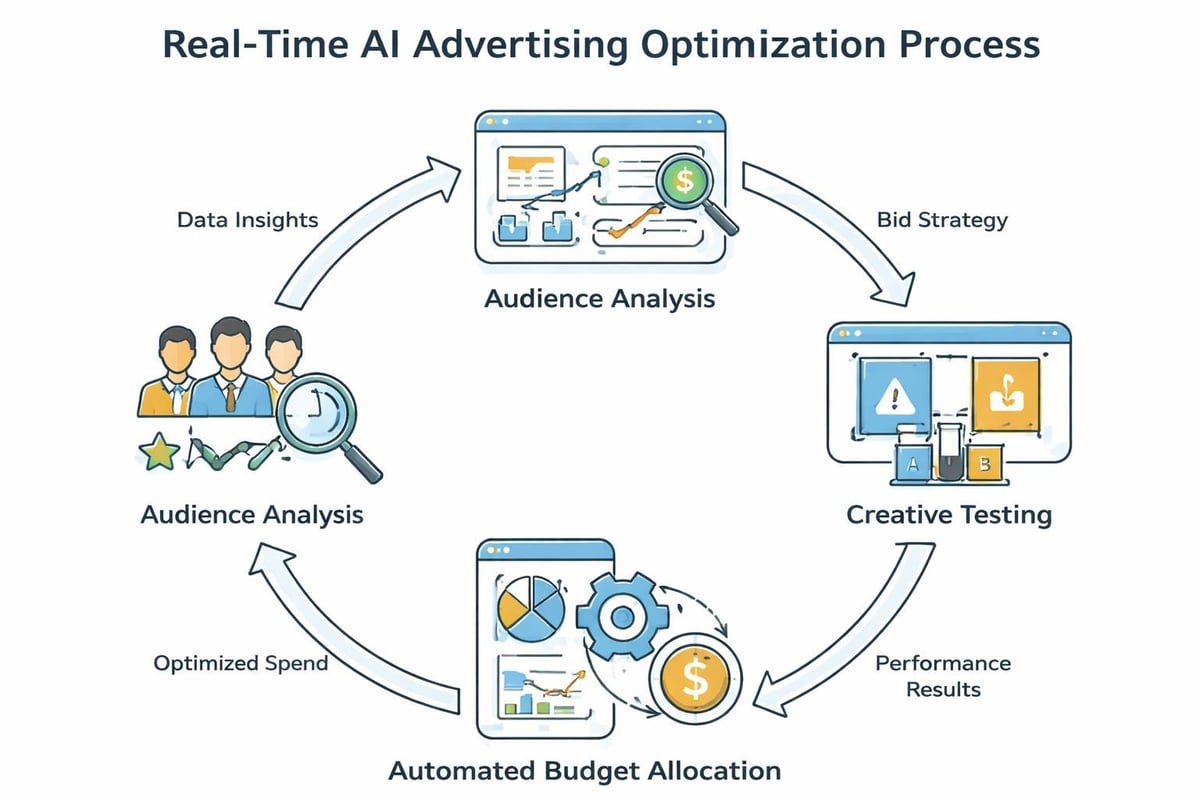
Automated Campaign Optimization Loops
Traditional marketing requires constant manual intervention. AI creates self-optimizing systems that improve continuously without human oversight.
Here's how modern optimization loops function:
- AI monitors performance across all channels and campaigns
- Machine learning identifies patterns in successful conversions
- Algorithms adjust targeting, bidding, and messaging automatically
- Systems test new variations against control groups
- Performance data feeds back into the learning model
- The cycle repeats every few hours, not weeks
Businesses leveraging these systems for lead generation campaigns on Facebook and other platforms see 30-50% improvements in cost per acquisition within the first 90 days. The AI finds efficiencies that human managers simply miss.
Strategic Implementation for Maximum Impact
Understanding the role of AI in digital marketing matters less than implementing it strategically. The businesses winning with AI follow specific frameworks that ensure technology serves business objectives.
Choosing the Right AI Tools for Lead Generation
The AI marketing technology landscape is overwhelming. Hundreds of platforms promise revolutionary results, but not all deliver for lead generation specifically.
| Tool Category | Primary Function | Best For | ROI Timeline |
|---|---|---|---|
| Predictive analytics | Lead scoring and forecasting | B2B services, high-ticket sales | 60-90 days |
| Conversational AI | Qualification and booking | Service businesses, consultancies | 30-60 days |
| Programmatic advertising | Automated media buying | Volume-based lead gen | 45-75 days |
| Content generation | Personalized messaging at scale | Complex sales cycles | 90-120 days |
The key is selecting tools that integrate seamlessly with your existing systems. Isolated point solutions create data silos that limit AI's effectiveness. Look for platforms that enhance your current marketing agency strategy rather than requiring complete rebuilds.
Training AI on Your Specific Market
Generic AI models produce generic results. The most effective implementations involve training algorithms on your specific customer data, market dynamics, and conversion patterns.
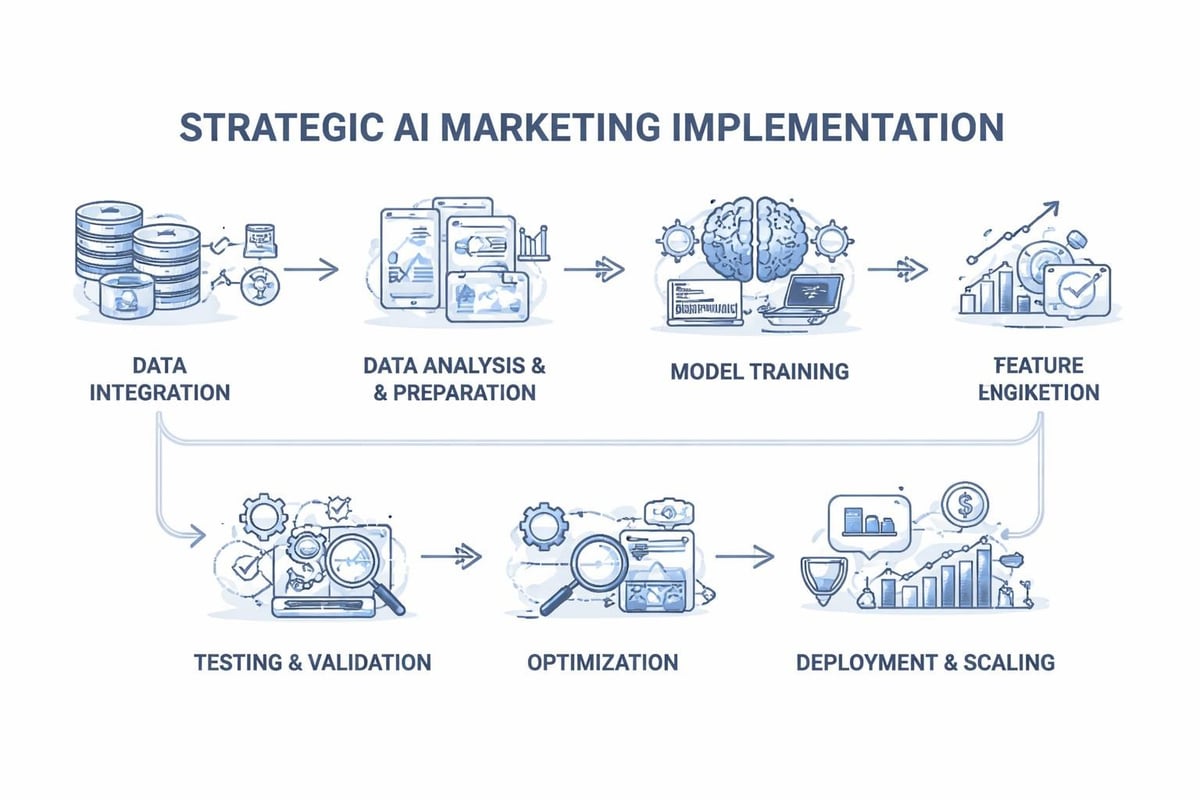
Steps to customize AI for your business:
- Feed historical customer data into learning models
- Tag successful conversions with relevant attributes
- Identify patterns unique to your best customers
- Test AI recommendations against known outcomes
- Refine models based on prediction accuracy
- Continuously update with new conversion data
This customization process typically takes 30-60 days but dramatically improves AI accuracy. You're not getting generic market insights-you're getting intelligence specific to your ideal customers.
Measuring AI's Impact on Business Growth
The promise of ai in digital marketing only matters if it translates to measurable business outcomes. Smart marketers track specific metrics that connect AI performance to revenue.
Beyond Vanity Metrics to Revenue Attribution
Likes, impressions, and click-through rates don't pay the bills. Focus on metrics that directly correlate with business growth:
- Cost per qualified lead (not just any lead)
- Lead-to-appointment conversion rate
- Appointment-to-customer conversion rate
- Customer acquisition cost (total marketing spend ÷ new customers)
- Return on ad spend (revenue generated ÷ advertising investment)
- Time to conversion (days from first touch to sale)
AI systems should demonstrably improve these numbers within 60-90 days. If they're not, you're either measuring wrong or implementing poorly.
Setting Realistic Expectations and Timelines
AI isn't magic-it's mathematics. Understanding realistic timelines prevents premature abandonment of strategies that need time to mature.
Typical AI implementation timeline:
- Weeks 1-2: Data integration and system setup
- Weeks 3-6: Initial learning phase (AI observes patterns)
- Weeks 7-10: Early optimization (first improvements visible)
- Weeks 11-14: Acceleration phase (compound improvements begin)
- Week 15+: Mature optimization (consistent performance gains)
Most businesses see initial positive results around week 8-10, with significant improvements by week 12-14. Companies exploring financial advisor lead generation or other specialized markets may need slightly longer learning periods due to smaller data sets.
The Future of AI-Driven Marketing in 2026 and Beyond
The current state of ai in digital marketing is impressive, but we're still in the early stages of what's possible. Several emerging trends will reshape lead generation over the next 12-24 months.
Hyper-Personalization Through Predictive AI
Today's personalization adapts to past behavior. Tomorrow's AI predicts future needs before prospects even realize them. Advanced machine learning models are beginning to:
- Anticipate life events that trigger buying decisions
- Predict product needs based on usage patterns and external factors
- Recommend solutions before customers start actively searching
- Optimize timing for outreach down to the specific hour
This shift from reactive to predictive marketing fundamentally changes customer acquisition economics. You're not competing for attention in crowded channels-you're reaching prospects at exactly the moment they're ready to engage.
Voice and Visual AI Integration
Text-based AI dominates current marketing applications, but voice and visual AI are rapidly maturing. By late 2026, expect to see:
- Voice-optimized content strategies based on spoken search patterns
- Visual recognition that identifies brand mentions in user-generated content
- AI-generated video content personalized for individual prospects
- Voice-activated customer service that seamlessly transitions to sales conversations
According to comprehensive AI marketing guides, businesses preparing for these shifts now will have significant competitive advantages as adoption accelerates.
Practical Steps to Start Leveraging AI Today
You don't need massive budgets or technical expertise to begin benefiting from ai in digital marketing. Start with high-impact, low-complexity applications and expand as you see results.
Quick-Win AI Implementations
Immediate actions that deliver measurable results:
- Implement AI-powered email subject line optimization (30-40% open rate improvements)
- Deploy chatbot qualification on your highest-traffic landing pages
- Enable automated bid management on existing ad campaigns
- Use AI writing assistants to scale content production
- Activate predictive lead scoring in your CRM system
These implementations typically require minimal technical resources but deliver noticeable improvements within 30 days. They also generate valuable data that makes subsequent AI initiatives more effective.
Building Your AI Marketing Stack
A comprehensive AI marketing system includes several interconnected components. For businesses focused on B2B lead generation, prioritize tools that excel at:
- Intent detection – identifying prospects actively researching solutions
- Behavioral tracking – understanding how prospects engage with your content
- Automated outreach – personalizing communication at scale
- Appointment automation – converting interest into booked meetings
- Performance analytics – measuring what drives actual revenue
The best marketing platforms integrate these capabilities into cohesive systems rather than forcing you to manage disconnected tools. Integration complexity is the hidden cost that often undermines AI marketing ROI.
Avoiding Common AI Implementation Pitfalls
Despite the clear benefits, many businesses struggle to realize AI's full potential. Understanding common mistakes helps you avoid expensive learning curves.
Over-Automation Without Strategy
AI enables automation, but not everything should be automated. The most successful implementations maintain human involvement at critical decision points:
- AI handles: Data analysis, pattern recognition, initial outreach, qualification
- Humans handle: Strategy development, creative direction, complex objections, relationship building
The businesses that struggle with AI typically automate everything indiscriminately, losing the human touch that builds trust and closes deals.
Insufficient Data for Effective Learning
AI algorithms need substantial data to generate reliable insights. Implementing AI with limited historical data produces unreliable results that undermine confidence in the technology.
Minimum data requirements for effective AI:
- At least 500-1,000 conversion events for predictive modeling
- 90+ days of campaign performance data for optimization algorithms
- 50+ customer profiles for audience modeling
- Consistent data quality and formatting across all sources
If you lack sufficient data, consider partnerships with platforms that provide pre-trained models or start with simpler automation while building your data foundation. Resources like free B2B lead generation tools can help gather initial data sets without significant investment.
The integration of ai in digital marketing has moved from competitive advantage to business necessity. Companies leveraging intelligent automation are generating higher-quality leads at lower costs while their competitors struggle with manual processes that can't scale. The question isn't whether to adopt AI-it's how quickly you can implement systems that transform your lead generation from unpredictable to systematic. If you're ready to leverage advanced AI systems that guarantee qualified appointments and predictable revenue growth, Adstra provides the proven frameworks and technology that turn cold leads into ready-to-buy customers. Our growth partnership model ensures we're invested in your success, not just collecting agency fees.