


Email marketing remains one of the most powerful channels for generating qualified business opportunities, yet most companies struggle to convert their contact databases into actual revenue. The challenge isn't just collecting email addresses but transforming those emails leads into genuine conversations and scheduled appointments with decision-makers ready to buy. In 2026, businesses that master the strategic approach to nurturing and converting emails leads are experiencing conversion rates up to 400% higher than those relying on outdated batch-and-blast techniques. This comprehensive guide reveals how modern companies are leveraging AI-powered systems and proven methodologies to turn their email databases into predictable revenue engines.
Understanding the True Value of Emails Leads
When we talk about emails leads, we're not just discussing a list of contact information. We're examining potential customers at various stages of awareness and readiness to engage with your solutions. The fundamental difference between successful lead generation campaigns and those that fail lies in recognizing that not all emails leads are created equal.
High-quality emails leads exhibit specific characteristics:
- Verified contact information with active engagement history
- Clear alignment with your ideal customer profile
- Demonstrated interest through previous interactions
- Decision-making authority within their organization
- Specific pain points your solution addresses
Research shows that email lead generation drives an average ROI of 3600%, making it one of the most cost-effective channels available. However, this extraordinary return only materializes when you implement strategic segmentation and personalization. The days of generic mass emails are over, and businesses that continue those practices find themselves watching their sender reputation deteriorate while competitors capture market share.
Segmentation Strategies That Drive Results
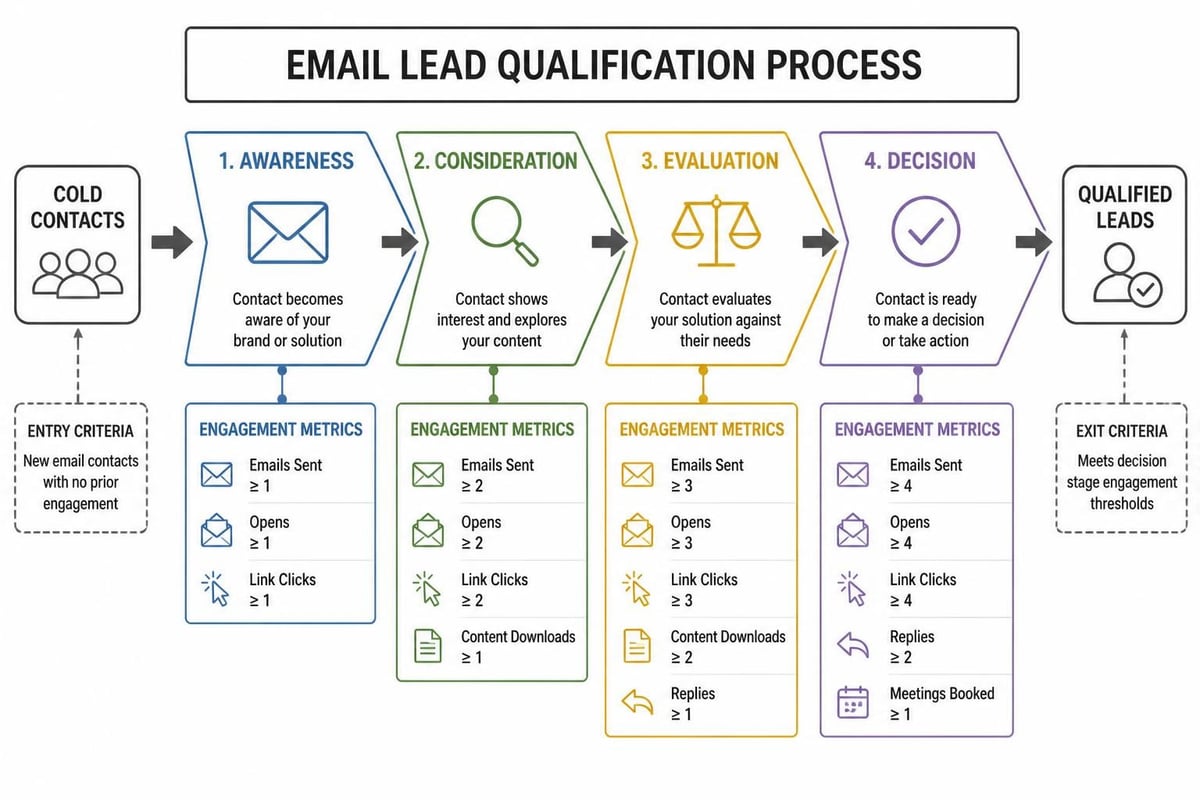
Breaking down your emails leads database into meaningful segments transforms your entire approach to conversion. Start by categorizing contacts based on behavioral signals, company demographics, and engagement patterns. A manufacturing company seeking new suppliers behaves differently than a software startup looking for marketing solutions, and your messaging must reflect these distinctions.
Consider implementing these proven segmentation frameworks:
- Industry-specific groupings that address unique sector challenges
- Company size categories matching your service tiers
- Engagement level tiers from cold to warm to hot
- Buyer journey stages aligned with your sales process
- Geographic segments when location impacts service delivery
Modern B2B lead generation strategies emphasize the importance of combining demographic and psychographic data. When you understand not just who your emails leads are but what keeps them awake at night, your messaging resonates on a completely different level.
Building Your High-Converting Email Infrastructure
The technical foundation supporting your emails leads directly impacts conversion performance. Deliverability rates, automation capabilities, and integration with CRM systems all determine whether your carefully crafted messages actually reach decision-makers or languish in spam folders.
| Infrastructure Element | Impact on Conversion | Priority Level |
|---|---|---|
| Domain Authentication (SPF/DKIM) | Prevents spam filtering | Critical |
| Email Warm-up Protocol | Establishes sender reputation | Critical |
| CRM Integration | Enables behavioral tracking | High |
| Automation Sequences | Scales personalization | High |
| A/B Testing Capability | Optimizes performance | Medium |
| Analytics Dashboard | Measures ROI accurately | Medium |
Your email infrastructure should support sophisticated automation while maintaining the personal touch that converts. The best practices for email outreach automation emphasize achieving high reply rates through strategic personalization combined with efficient scaling.
Crafting Irresistible Subject Lines
Subject lines represent the gatekeeper between your carefully researched emails leads and actual engagement. Research on effective email subject line generation reveals that specific patterns consistently outperform generic alternatives. Your subject line must accomplish three objectives simultaneously: capture attention, establish relevance, and create curiosity.
High-performing subject line formulas include:
- Question-based approaches addressing specific pain points
- Personalization using company or industry references
- Time-sensitive elements creating urgency without manipulation
- Benefit-focused language highlighting tangible outcomes
- Curiosity gaps that naturally compel opening
Avoid common mistakes that immediately signal spam to both algorithms and human recipients. ALL CAPS, excessive punctuation, and misleading claims destroy your sender reputation faster than any other factor. When working with emails leads in B2B contexts, professional authenticity always outperforms gimmicky tactics.
Converting Emails Leads Through Strategic Nurturing
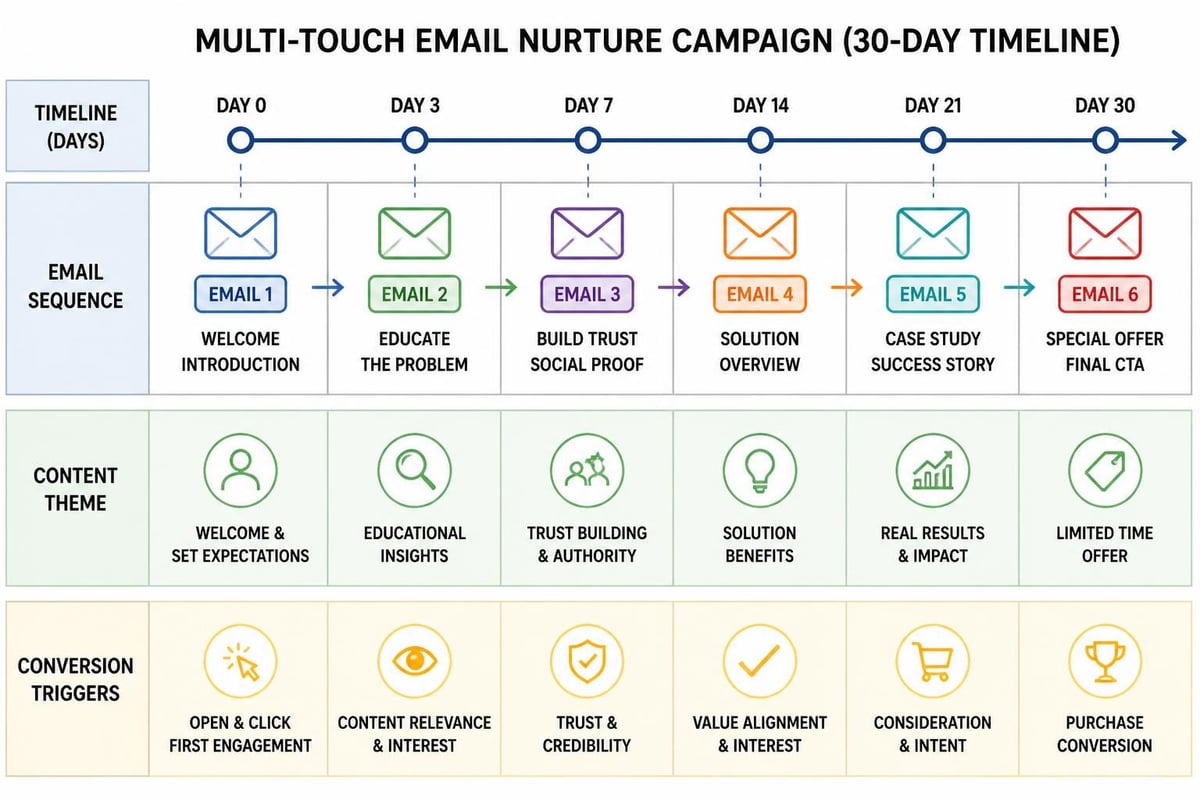
Moving emails leads from initial contact to scheduled appointments requires a strategic sequence of touchpoints delivering escalating value. The traditional approach of immediately pitching services in the first email generates deletion rates above 90%. Instead, successful campaigns establish credibility and trust before introducing commercial conversations.
A proven nurture sequence for emails leads follows this progression:
- Initial contact sharing valuable insight without asking for anything
- Value reinforcement providing case study or relevant success story
- Problem agitation helping prospects recognize urgency of their challenge
- Solution introduction presenting your approach as natural answer
- Social proof delivery showcasing testimonials and results
- Direct conversation invitation offering consultation or demo
For organizations managing qualified leads at scale, automation handles the sequence timing while personalization variables ensure each message feels individually crafted. The key lies in balancing efficiency with authenticity.
Personalization Beyond First Names
Generic personalization tokens inserting a contact's first name fool no one in 2026. Sophisticated personalization draws from multiple data sources to demonstrate genuine understanding of each prospect's unique situation. When your emails leads receive messages referencing their specific industry challenges, company growth stage, or recent business developments, engagement rates multiply.
Advanced personalization strategies include:
- Company news monitoring and timely outreach
- Industry-specific pain point references
- Competitive landscape acknowledgment
- Growth stage appropriate messaging
- Technology stack compatibility mentions
Even specialized industries benefit from personalized email approaches. For example, swim club management platforms like PoolPulse successfully generate leads by addressing specific operational challenges pool managers face, from member billing complications to check-in inefficiencies, rather than sending generic facility management messages.
Leveraging AI and Automation for Scale
The intersection of artificial intelligence and email marketing has fundamentally transformed how businesses handle emails leads. AI-powered systems now predict optimal send times, generate personalized content variations, and identify behavioral patterns signaling purchase readiness. This technological advantage allows companies to maintain personalized communication with thousands of contacts simultaneously.
Modern AI in digital advertising extends beyond simple automation to predictive analytics that score emails leads based on conversion likelihood. Machine learning algorithms analyze hundreds of behavioral signals to determine which prospects warrant immediate sales team attention versus continued nurturing.
| AI Application | Benefit | Implementation Complexity |
|---|---|---|
| Send Time Optimization | 20-30% open rate increase | Low |
| Content Personalization | 40-50% engagement boost | Medium |
| Lead Scoring Automation | 3x sales efficiency gain | Medium |
| Predictive Analytics | 25% conversion improvement | High |
| Behavioral Triggering | 60% relevance increase | Medium |
However, automation must enhance rather than replace human judgment. The most successful approaches combine AI efficiency with strategic human oversight, ensuring your emails leads receive communications that feel authentically helpful rather than algorithmically generated.
Behavioral Triggers That Drive Action
Monitoring how emails leads interact with your content reveals their evolving interests and readiness to engage. Behavioral trigger campaigns respond automatically to specific actions, delivering relevant next-step content that moves prospects closer to conversion. A lead who downloads a pricing guide receives different follow-up than someone who watches a product demo video.
Implementing behavioral triggers requires careful planning around your customer journey stages. Map out the typical path your emails leads follow from initial awareness through final decision, then create trigger campaigns addressing each transition point. This approach transforms static email lists into dynamic conversation engines.
Measuring and Optimizing Performance
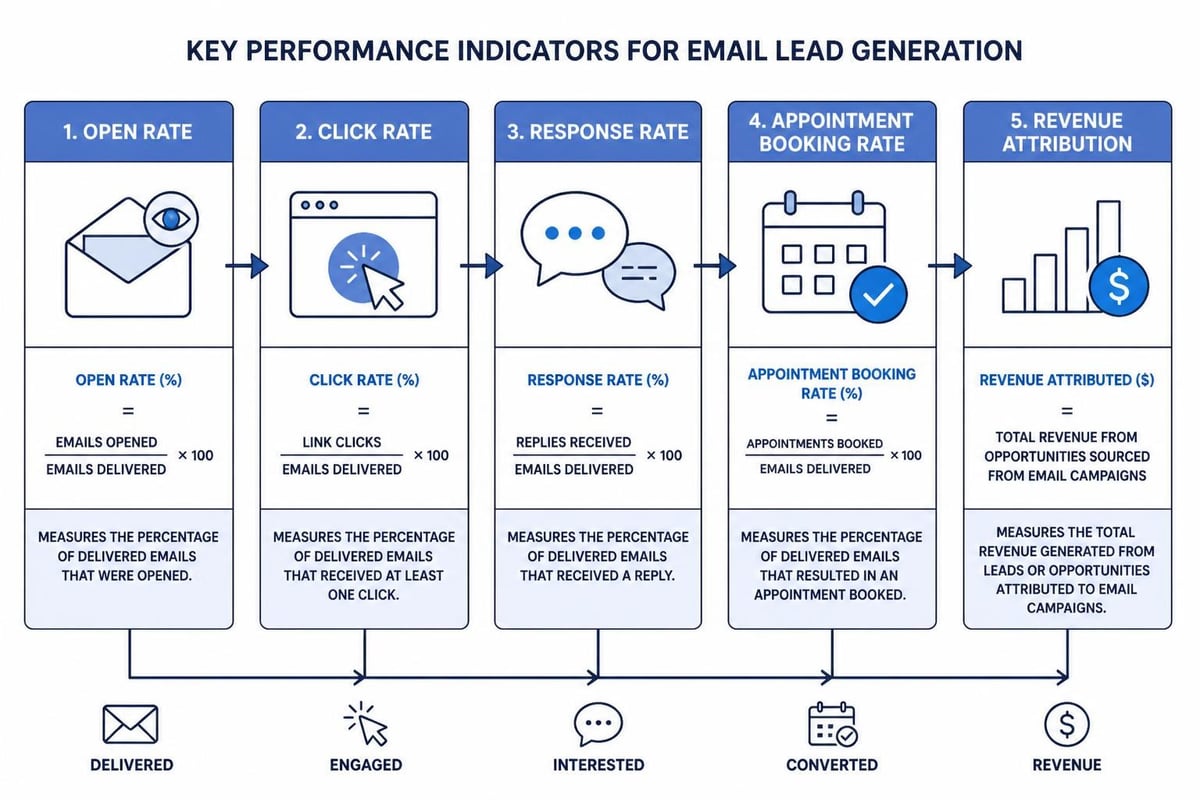
Converting emails leads into revenue demands rigorous measurement and continuous optimization. Vanity metrics like open rates provide limited insight compared to business-critical indicators like appointment booking rates and revenue per contact. Establishing clear key performance indicators aligned with actual business outcomes separates high-performing campaigns from those that merely generate activity.
Essential metrics for emails leads campaigns:
- Open rate baseline (industry average 21-24% in 2026)
- Click-through rate measuring content engagement
- Response rate indicating conversation starts
- Meeting booking rate showing sales readiness
- Conversion to opportunity tracking pipeline impact
- Revenue attribution calculating actual ROI
According to comprehensive B2B lead generation statistics, companies that consistently monitor and optimize based on these metrics achieve 50% higher conversion rates than those focusing on basic engagement metrics alone. The difference lies in connecting email activity to actual revenue outcomes.
A/B Testing for Continuous Improvement
Systematic testing reveals what resonates with your specific audience of emails leads. Variables worth testing include subject lines, send times, call-to-action placement, email length, personalization depth, and content format. However, testing requires statistical discipline. Running too many simultaneous tests or drawing conclusions from insufficient sample sizes leads to false insights that actually harm performance.
Structure your testing program around these principles:
- Test one variable at a time for clear attribution
- Ensure sufficient sample sizes for statistical significance
- Run tests for complete business cycles accounting for weekly patterns
- Document learnings in a centralized knowledge base
- Implement winning variations systematically across campaigns
Companies generating leads across specialized verticals, including local lead generation businesses, discover that testing reveals counterintuitive insights specific to their audience. What works for national B2B software companies often fails for local service providers, making audience-specific testing essential.
Compliance and Deliverability Protection
Managing emails leads in 2026 requires navigating complex regulatory requirements while maintaining high deliverability rates. Violations of CAN-SPAM, GDPR, or CCPA regulations don't just risk penalties but destroy your sender reputation, causing legitimate emails to land in spam folders indefinitely. Building sustainable email programs demands treating compliance as a competitive advantage rather than a checkbox exercise.
Non-negotiable compliance requirements include:
- Clear opt-in mechanisms with documented consent
- Prominent unsubscribe links in every message
- Accurate sender identification and physical address
- Honor unsubscribe requests within 10 business days
- Maintain suppression lists across all campaigns
- Document data processing and retention policies
Beyond legal requirements, understanding why people fall for phishing emails helps you craft legitimate messages that don't trigger spam detection or recipient suspicion. The research reveals that context, urgency, and authority signals influence recipient decisions, insights that apply equally to legitimate business communication.
Protecting Your Sender Reputation
Your sender reputation determines whether your carefully crafted messages reach your emails leads or disappear into spam filters. Major email providers use sophisticated algorithms evaluating sending patterns, engagement rates, spam complaints, and authentication protocols. A damaged reputation takes months to rebuild, making prevention infinitely preferable to remediation.
Protect your sender reputation through these practices:
- Warm up new sending domains gradually over 4-6 weeks
- Maintain engagement rates above 25% through list hygiene
- Remove unengaged contacts after 90 days of inactivity
- Monitor spam complaint rates keeping below 0.1%
- Implement double opt-in for new subscriber verification
- Use dedicated IP addresses for high-volume sending
When working with free B2B lead generation tools to build your initial database, pay special attention to list quality. A small list of genuinely interested contacts outperforms a large database of unengaged emails leads by orders of magnitude.
Integration With Broader Marketing Systems
Email doesn't operate in isolation but functions as one component within comprehensive lead generation systems. The most effective approaches integrate emails leads with content marketing, paid advertising, social selling, and sales outreach creating a cohesive experience across all touchpoints. This orchestrated approach ensures prospects receive consistent messaging regardless of channel while preventing awkward overlaps or contradictions.
Modern lead generation advertising strategies view email as the nurturing engine that converts awareness generated through other channels into actual sales conversations. A prospect who discovers your company through LinkedIn advertising, visits your website, and downloads a guide enters your email nurture sequence receiving strategic touchpoints guiding them toward booking a consultation.
For businesses requiring sophisticated web presence to support their email campaigns, partnering with specialists like Rocket Website ensures your landing pages and conversion paths align with email messaging. Their approach to creating technically optimized WordPress websites provides the foundation for converting emails leads who click through your campaigns.
CRM Integration Best Practices
Your customer relationship management system should serve as the single source of truth for all emails leads data. Bidirectional synchronization ensures email engagement automatically updates contact records while CRM data enriches email personalization. This integration enables sales teams to see exactly which emails each prospect received and how they engaged before a conversation begins.
| Integration Benefit | Business Impact | Technical Requirement |
|---|---|---|
| Unified Contact Data | Eliminates duplicate outreach | API connection or native integration |
| Behavioral Tracking | Enables intelligent conversation | Real-time data sync |
| Lead Score Visibility | Prioritizes sales follow-up | Automated scoring rules |
| Campaign Attribution | Proves marketing ROI | Multi-touch tracking |
| Automated Task Creation | Ensures timely follow-up | Workflow automation |
Companies operating across multiple service areas benefit from marketing platform integration that connects email systems with advertising channels, analytics tools, and sales platforms. This comprehensive view reveals how emails leads interact with your brand across their entire journey, not just email touchpoints.
Advanced Strategies for Complex Sales Cycles
Organizations with longer sales cycles and higher deal values require sophisticated approaches to managing emails leads through extended nurturing periods. A software company selling enterprise solutions might nurture prospects for 6-12 months before conversion, demanding content strategies that maintain engagement without overwhelming recipients or prematurely pushing for sales conversations.
Multi-touch nurture campaigns for complex sales include:
- Educational content series building expertise and trust
- Industry insight emails positioning your team as thought leaders
- Case study deliveries demonstrating relevant success stories
- Interactive content invitations like webinars or assessments
- Executive insights from leadership establishing credibility
- Soft CTAs that invite conversation without pressure
The challenge lies in maintaining consistent communication without becoming noise. Strategic emails leads management during long sales cycles means varying content types, adjusting frequency based on engagement signals, and recognizing that silence sometimes reflects consideration rather than disinterest.
Account-Based Marketing Integration
When targeting high-value accounts, individual contact nurturing expands to coordinated account-level campaigns. Account-based marketing (ABM) approaches treat entire organizations as single units, ensuring all stakeholders within target companies receive relevant messaging aligned with their specific roles and concerns. This coordinated approach prevents the confusion that occurs when different contacts at the same company receive contradictory or disconnected communications.
ABM strategies for emails leads involve:
- Identifying key stakeholders within target accounts
- Mapping organizational buying committees and decision processes
- Creating role-specific content addressing unique concerns
- Coordinating send timing across all contacts within accounts
- Measuring account-level engagement rather than individual metrics
This sophisticated approach to managing emails leads delivers the highest ROI for enterprise sales but requires significant investment in research, content creation, and campaign orchestration. Understanding the demand funnel helps structure ABM campaigns that address each stage of the collective buying journey.
Mastering emails leads conversion transforms your marketing from an expense into a predictable revenue engine, but success requires strategic thinking, sophisticated technology, and continuous optimization. The companies winning in 2026 combine AI-powered automation with genuine personalization, creating scalable systems that treat each prospect as an individual while managing thousands of contacts efficiently. If you're ready to transform your email database into a stream of qualified appointments with ready-to-buy prospects, Aletto provides the AI-powered systems and guaranteed growth partnership that aligns our success directly with yours. Our transparent, value-driven approach replaces the traditional agency model with a results-focused partnership that turns cold leads into revenue.