


The marketing landscape has undergone a seismic shift as artificial intelligence transforms how businesses connect with customers. Companies using AI for marketing are no longer experimental outliers but market leaders setting new standards for efficiency, personalization, and return on investment. From predictive analytics that identify high-value prospects to automated systems that nurture leads through complex sales funnels, AI has become the cornerstone of modern marketing strategies. According to recent research, 93% of CMOs report clear returns on investment from their AI initiatives, proving this isn't just hype but tangible business value. The question is no longer whether to adopt AI, but how quickly you can implement it to stay competitive.
Real-World Examples of AI Marketing Success
The most compelling evidence for AI's marketing power comes from companies already achieving measurable results. Spectrum Reach has deployed over 15,000 AI-powered ad campaigns for small businesses, demonstrating scalability that was previously impossible with traditional methods. These campaigns leverage machine learning to optimize ad placement, timing, and creative elements in real-time.
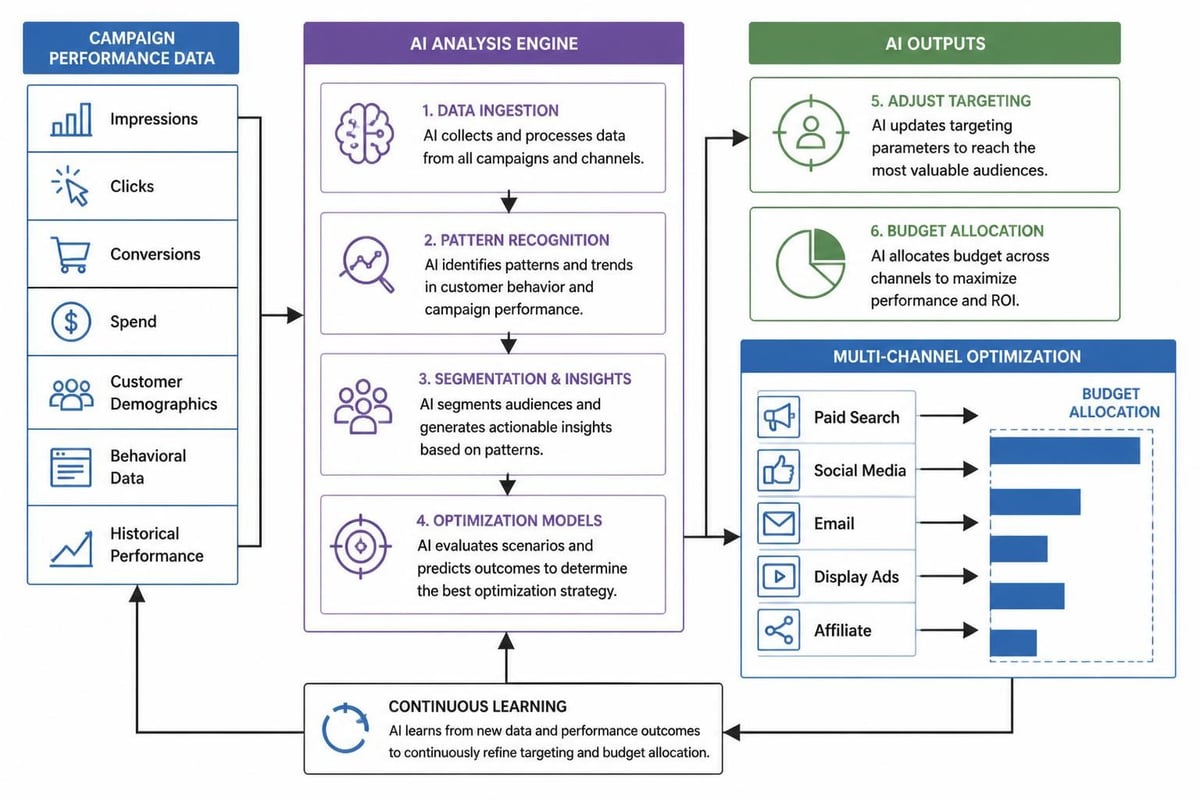
Major brands across industries are seeing similar transformations. Real-world examples of brands using AI reveal diverse applications from content creation to customer engagement strategies. Netflix uses AI to personalize viewing recommendations, driving engagement and reducing churn. Starbucks employs predictive analytics to customize offers based on purchase history, weather patterns, and even time of day.
Personalization at Scale
Traditional marketing required choosing between personalization and scale. You could either craft individual messages for small audiences or broadcast generic content to larger groups. AI eliminates this compromise entirely.
Companies using AI for marketing now deliver one-to-one experiences to millions of customers simultaneously. Amazon's recommendation engine, perhaps the most famous example, generates 35% of the company's revenue through personalized product suggestions. This level of customization would require armies of human analysts working around the clock.
The technology behind these systems includes:
- Natural language processing for understanding customer intent
- Predictive modeling to forecast purchase likelihood
- Behavioral tracking across multiple touchpoints
- Dynamic content generation tailored to individual preferences
- Automated segmentation based on real-time data
For businesses focused on lead generation, these capabilities translate directly into higher conversion rates. AI identifies which prospects are most likely to convert, when they're ready to buy, and what messages will resonate most effectively.
How AI Transforms Lead Qualification and Nurturing
The traditional sales funnel wastes tremendous resources on unqualified leads. Marketing teams generate thousands of contacts, sales teams chase hundreds, and only a handful convert to customers. This inefficiency drains budgets and demoralizes teams.
AI changes the fundamental economics of lead generation. By analyzing hundreds of data points across customer interactions, AI systems predict which leads deserve immediate attention and which need further nurturing. This isn't guesswork or intuition but mathematical probability backed by historical patterns.
| Traditional Lead Scoring | AI-Powered Lead Scoring |
|---|---|
| Manual point assignment | Continuous learning algorithms |
| Static criteria | Dynamic, adaptive models |
| Limited data inputs | Hundreds of behavioral signals |
| Weekly/monthly updates | Real-time scoring adjustments |
| 20-30% accuracy | 80-90% accuracy |
Companies using AI for marketing report dramatic improvements in sales efficiency. One study found that AI-powered lead qualification increases conversion rates by 50% while reducing time spent on unqualified prospects by 60%. Those numbers represent real revenue gains and cost savings.
Automated Appointment Setting
Beyond identifying quality leads, AI systems now handle appointment booking without human intervention. Chatbots and conversational AI engage prospects 24/7, answering questions, addressing objections, and scheduling meetings when leads are ready.
These systems don't just save time. They capture opportunities that human teams miss. When a prospect visits your website at 11 PM on Saturday, AI engages them immediately rather than waiting until Monday morning when they've already contacted competitors.
The sophistication of modern AI advertising extends to understanding context, sentiment, and buying signals. Natural language processing detects urgency in customer messages, escalating hot leads while continuing to nurture those still in research mode.
Predictive Analytics and Customer Targeting
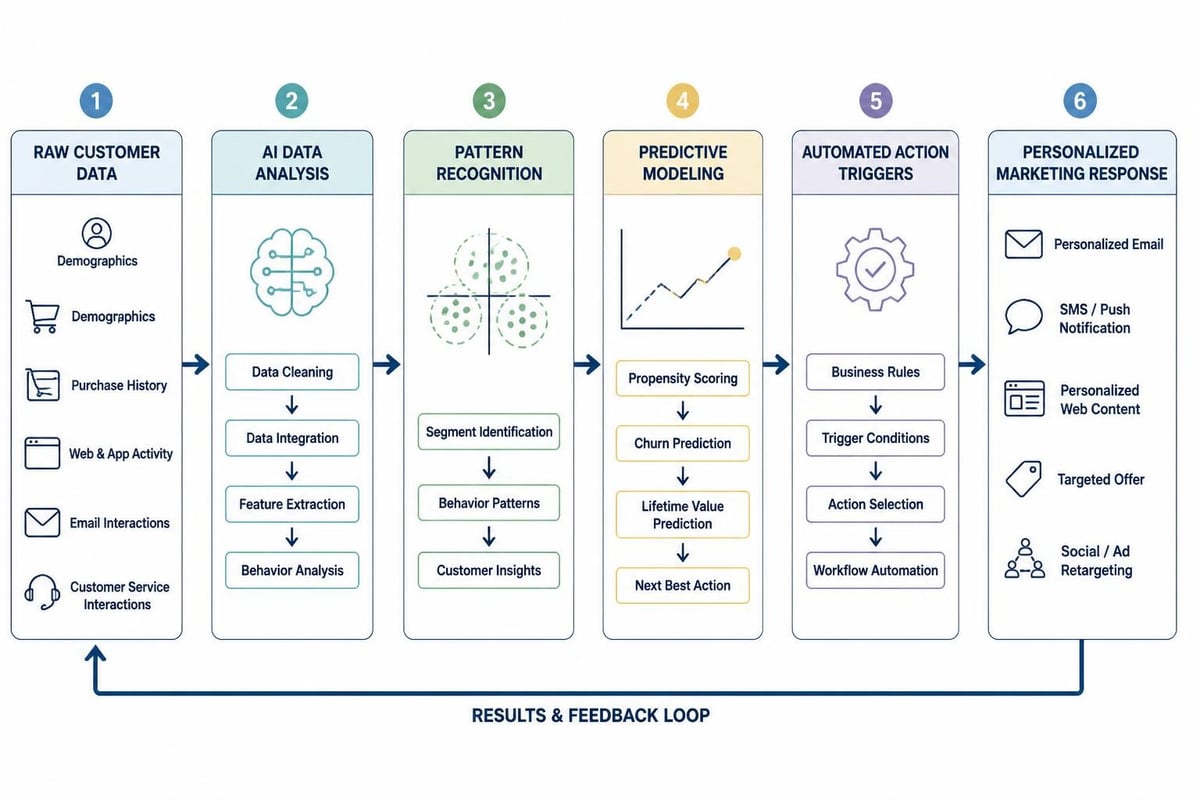
Perhaps the most powerful application of AI in marketing is predictive analytics. Rather than reacting to customer behavior, companies now anticipate it. This shift from reactive to proactive marketing fundamentally changes campaign effectiveness.
Companies utilizing AI for diverse marketing applications demonstrate how predictive models identify customers likely to churn, prospects ready to upgrade, and segments responsive to specific offers. This intelligence allows marketers to intervene at precisely the right moment with exactly the right message.
Audience Segmentation Beyond Demographics
Traditional segmentation relied on demographic data: age, location, income, industry. While useful, these categories miss the behavioral nuances that truly predict purchasing decisions.
AI creates micro-segments based on:
- Browsing patterns and content consumption
- Engagement history across email, social, and web
- Purchase timing and frequency patterns
- Price sensitivity and discount responsiveness
- Channel preferences for communication
- Device usage and time-of-day activity
This granular segmentation enables campaigns that feel personally crafted for each recipient. A prospect researching solutions at 2 AM from their phone receives different content than one comparing options during business hours from their desktop. Both get relevant messages, but AI optimizes format, timing, and content for maximum impact.
Companies focused on B2B lead generation particularly benefit from these capabilities. The longer sales cycles and multiple decision-makers involved in B2B purchases create complexity that overwhelms manual tracking. AI systems monitor every touchpoint across multiple stakeholders, identifying when accounts are approaching decision points.
Content Creation and Optimization
Creating enough content to feed modern marketing engines challenges every organization. Blog posts, social updates, email campaigns, ad copy, landing pages-the demand seems endless. Companies using AI for marketing are solving this bottleneck through automated content generation and optimization.
Google recently introduced Pomelli AI, designed to assist small and medium-sized businesses in creating marketing campaigns by analyzing brand identity and generating tailored content. This tool exemplifies how AI democratizes sophisticated marketing previously available only to enterprises with large agencies.
Modern content AI doesn't just generate text. It:
- Analyzes top-performing content in your niche
- Identifies trending topics and keywords
- Generates multiple variations for A/B testing
- Optimizes headlines for click-through rates
- Adjusts reading level for target audiences
- Suggests improvements to existing content
Dynamic Content Optimization
Static content represents massive missed opportunities. The same landing page shows identical messaging to first-time visitors and returning customers, early-stage researchers and ready-to-buy prospects, mobile users and desktop browsers.
AI-powered dynamic content adapts in real-time based on visitor characteristics and behavior. Headlines change based on referral source. Product descriptions emphasize different features for different industries. Calls-to-action adjust based on previous engagement history.
| Content Element | Static Approach | AI Dynamic Approach |
|---|---|---|
| Headline | One version for all | Personalized by source, stage, industry |
| Images | Generic stock photos | Relevant to visitor's business type |
| CTA | Same button text | Customized by readiness to convert |
| Testimonials | Random rotation | Matched to visitor's industry/size |
| Pricing | One-size-fits-all | Optimized by perceived value sensitivity |
This level of optimization directly impacts conversion rates. Research shows personalized landing pages convert 2-5 times better than generic versions. For businesses where generating qualified leads determines growth trajectory, these improvements translate to substantial revenue gains.
Campaign Performance and ROI Tracking
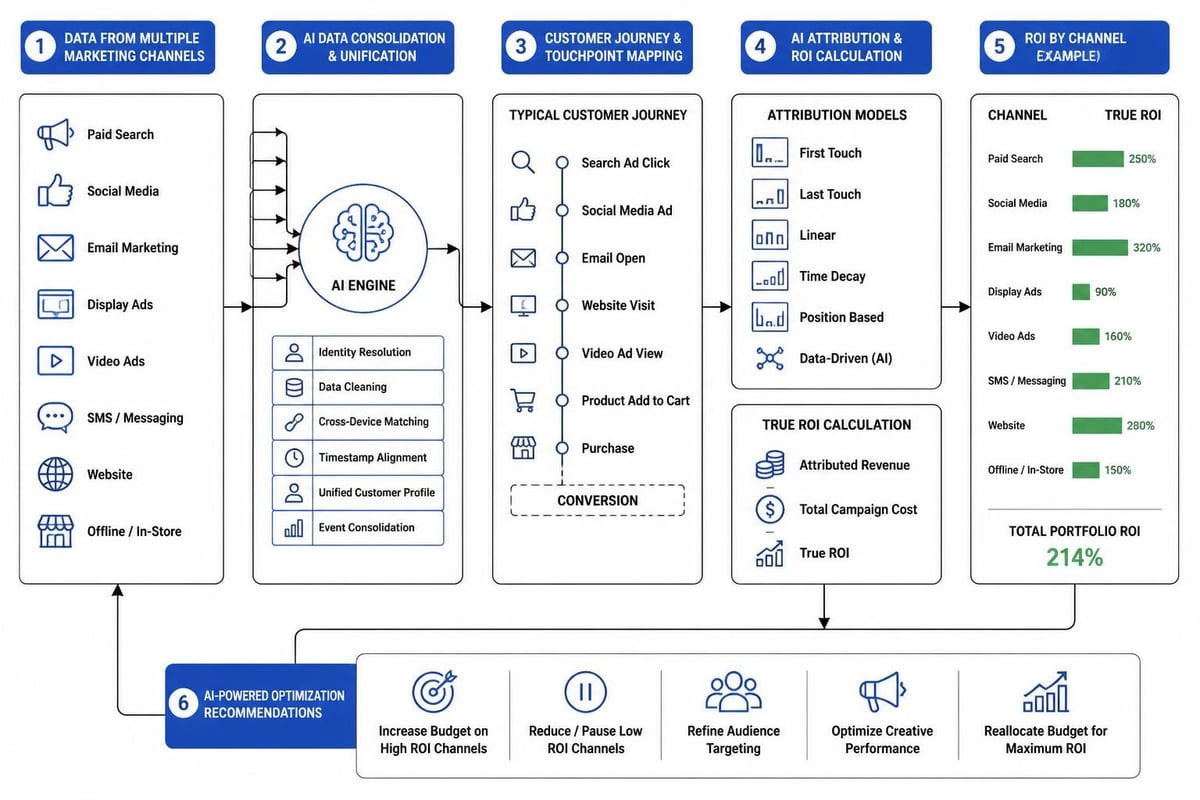
Marketing has always struggled with attribution. Which touchpoints influenced which conversions? What's the true ROI of each channel? How should budgets allocate across tactics? These questions plagued marketers for decades.
Companies using AI for marketing now have unprecedented clarity into campaign performance. Machine learning models attribute revenue to specific touchpoints across complex customer journeys, revealing the true impact of each marketing investment.
Major AI companies have developed platforms that track customers across devices, channels, and extended timeframes, connecting initial awareness touches to eventual purchases months later. This visibility allows optimization that was previously impossible.
Real-Time Budget Optimization
Traditional campaigns lock budgets into channels for weeks or months at a time. If Facebook outperforms Google Ads, you can't reallocate until the next planning cycle. Meanwhile, you're wasting money on underperforming channels and missing opportunities on high-performers.
AI systems adjust budgets continuously based on performance data:
- Shifting spend from low-converting keywords to high-converters
- Reducing bids during low-probability conversion windows
- Increasing investment when competitor activity drops
- Pausing underperforming ad variations automatically
- Scaling successful campaigns before saturation
This dynamic optimization dramatically improves efficiency. Companies report 30-50% cost reductions while maintaining or increasing lead volume through marketing agency tools that automate these adjustments.
Chatbots and Conversational Marketing
Customer expectations have evolved. Today's prospects expect instant responses to questions, 24/7 availability, and personalized interactions. Meeting these expectations with human staff requires massive teams working around the clock.
AI-powered chatbots deliver these experiences at scale. Modern conversational AI understands context, maintains conversation flow across multiple interactions, and handles complex queries that earlier generations couldn't address.
The impact on demand generation is substantial. Chatbots engage website visitors immediately, qualifying interest levels and collecting contact information before prospects lose interest or visit competitor sites. This immediacy captures opportunities that traditional forms and delayed responses miss.
Beyond Simple FAQs
Early chatbots frustrated users with rigid scripts and inability to handle variations in questions. Modern AI chatbots use natural language understanding to interpret intent rather than matching keywords. They handle:
- Multi-turn conversations with context retention
- Sentiment analysis to detect frustration or urgency
- Smooth handoffs to human agents when needed
- Proactive outreach based on visitor behavior
- Multi-language support without separate programming
For businesses serving diverse markets or operating globally, this multilingual capability eliminates the need for separate support teams for each language. A single AI system handles English, Spanish, Mandarin, and dozens of other languages with equal fluency.
Email Marketing Automation and Personalization
Email remains one of marketing's highest-ROI channels, but only when done well. Generic blast emails achieve dismal open rates and even worse conversion rates. Companies using AI for marketing transform email from batch-and-blast to sophisticated, personalized conversation.
AI email systems optimize every element:
- Subject lines tested and personalized for each recipient
- Send times calculated based on individual engagement patterns
- Content customized to preferences and behavior
- Product recommendations based on browsing and purchase history
- Follow-up sequences triggered by specific actions or inactions
This automation doesn't feel robotic because AI adapts to individual responses. If a prospect opens but doesn't click, they receive different follow-up than someone who clicked but didn't convert. The system learns from millions of interactions, continuously improving its predictions.
Abandoned Cart Recovery and Re-engagement
One of AI email marketing's most profitable applications is recovering abandoned transactions and re-engaging inactive customers. These represent known interested prospects who for various reasons didn't complete their journey.
AI determines optimal timing, messaging, and incentive levels for recovery campaigns. Some customers respond to immediate follow-up; others need several days. Some convert with 10% discounts; others require 20%. AI tests and learns individual preferences, maximizing recovery rates while minimizing discounting.
The results speak volumes. Companies report abandoned cart recovery rates of 15-30% with AI-optimized sequences versus 5-10% with generic approaches. For businesses with complex sales funnels, these improvements represent significant revenue recovery.
Social Media Management and Engagement
Social media marketing demands constant attention. Algorithms favor accounts that post consistently, respond quickly to comments, and engage authentically with followers. Maintaining this presence across multiple platforms overwhelms most marketing teams.
AI social media tools handle scheduling, monitoring, and even content creation. They analyze when your audience is most active, what content types generate engagement, and which topics trend in your niche. Some systems generate post variations, suggest relevant hashtags, and even respond to common questions automatically.
The sophistication extends to sentiment analysis. AI monitors brand mentions across platforms, categorizing them as positive, negative, or neutral. This early warning system alerts teams to potential PR issues before they escalate and identifies brand advocates worth nurturing.
For lead generation agencies, social listening powered by AI identifies prospects discussing relevant pain points or expressing buying intent. These signals enable timely outreach when prospects are actively seeking solutions rather than cold approaches when they're not interested.
Voice Search and Audio Marketing Optimization
Voice search is reshaping how people find information and make purchases. Alexa, Siri, and Google Assistant handle billions of queries monthly, and this format requires different optimization strategies than traditional text search.
Companies using AI for marketing are adapting content for voice search by:
- Targeting conversational long-tail keywords
- Creating FAQ content matching natural language queries
- Optimizing for featured snippets that voice assistants read
- Developing voice apps and skills for smart speakers
- Analyzing voice search data for intent signals
The shift to voice extends beyond search. Podcasts and audio content consumption continues growing, creating opportunities for brands willing to meet audiences in these formats. AI tools transcribe audio content, identify key topics, and repurpose material across formats efficiently.
Video Marketing and Visual Recognition
Video dominates social media and content consumption, but creating video at scale challenges most organizations. AI video tools now generate, edit, and optimize video content with minimal human input.
These systems:
- Automatically edit raw footage into polished videos
- Generate captions and translations
- Optimize thumbnails for click-through rates
- Personalize video content for different segments
- Analyze viewer engagement at second-by-second granularity
Visual recognition AI takes this further by analyzing images and videos to understand content without manual tagging. This enables automatic categorization of visual assets, identification of brand logo placements, and detection of products in user-generated content.
For companies focused on generating new business leads, video personalization creates powerful touchpoints. Imagine prospects receiving videos that address them by name, reference their specific industry, and demonstrate solutions to their exact challenges. This level of personalization was science fiction five years ago but is standard practice today.
Implementing AI in Your Marketing Strategy
The breadth of AI marketing applications can feel overwhelming. Where should you start? How do you prioritize investments? What delivers quickest ROI?
Start with your biggest bottlenecks. If lead qualification consumes excessive sales time, begin with AI scoring and routing. If content creation limits campaign volume, implement AI writing assistants. If you're leaving money on the table with poor ad optimization, deploy campaign management AI.
The implementation path typically follows this sequence:
- Audit current processes to identify inefficiencies and missed opportunities
- Select focused use cases with clear success metrics
- Choose tools that integrate with existing systems
- Train teams on AI capabilities and limitations
- Start small with pilot programs before full deployment
- Measure results rigorously and adjust based on data
- Scale successes and retire underperforming initiatives
This methodical approach prevents the common mistake of implementing AI for its own sake without clear business objectives. Every AI investment should tie directly to measurable outcomes: increased conversion rates, reduced customer acquisition costs, improved customer lifetime value, or faster sales cycles.
Data Quality and AI Performance
AI systems are only as good as the data they learn from. Garbage in, garbage out applies doubly to machine learning models. Companies using AI for marketing successfully invest heavily in data quality, integration, and governance.
Your AI marketing performance depends on:
- Data completeness across customer touchpoints
- Integration between marketing tools and CRM systems
- Consistent tagging and categorization standards
- Regular data cleaning and deduplication
- Privacy compliance and security measures
Many organizations discover their data infrastructure needs significant work before AI can deliver value. Customer records scattered across disconnected systems, inconsistent naming conventions, duplicate records, and poor hygiene all undermine AI effectiveness.
This foundational work isn't glamorous, but it's essential. Think of it as preparing soil before planting. The best seeds won't grow in poor conditions, and the most sophisticated AI won't perform with bad data.
Organizations leveraging resources like comprehensive AI marketing examples recognize that technology is only one component. Process, people, and data quality matter equally.
The evidence is overwhelming: companies using AI for marketing achieve better results, operate more efficiently, and scale faster than competitors relying on traditional approaches. From predictive analytics that identify high-value prospects to automated systems that nurture leads and book appointments, AI transforms every aspect of the marketing funnel. If you're ready to harness these capabilities for predictable revenue growth, Aletto combines advanced AI systems with a guaranteed growth partnership model to transform your cold leads into ready-to-buy customers. Let's build your AI-powered growth engine together.