
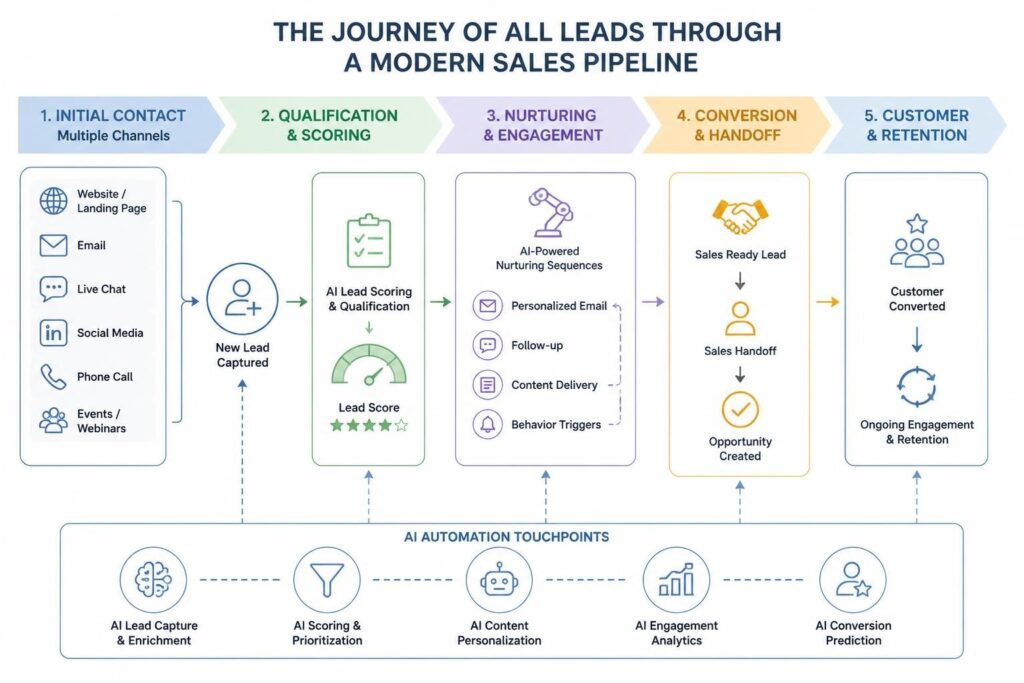
Managing all leads effectively separates thriving businesses from those constantly struggling to hit revenue targets. In 2026, companies generate prospects from countless sources-social media, paid advertising, organic search, referrals, and events-yet most fail to capitalize on this influx because they lack systematic approaches to qualification, nurturing, and conversion. The reality is that not every prospect deserves equal attention, but every single one deserves a strategic place in your pipeline. When you implement frameworks that properly handle all leads flowing into your business, you transform random inquiries into predictable revenue streams that fuel sustainable growth.
Understanding the True Value of All Leads
Every prospect entering your pipeline represents potential revenue, but the actual value varies dramatically based on qualification criteria, timing, and fit. The mistake most businesses make involves treating all leads identically, pouring resources into prospects who will never convert while neglecting high-intent opportunities ready to buy.
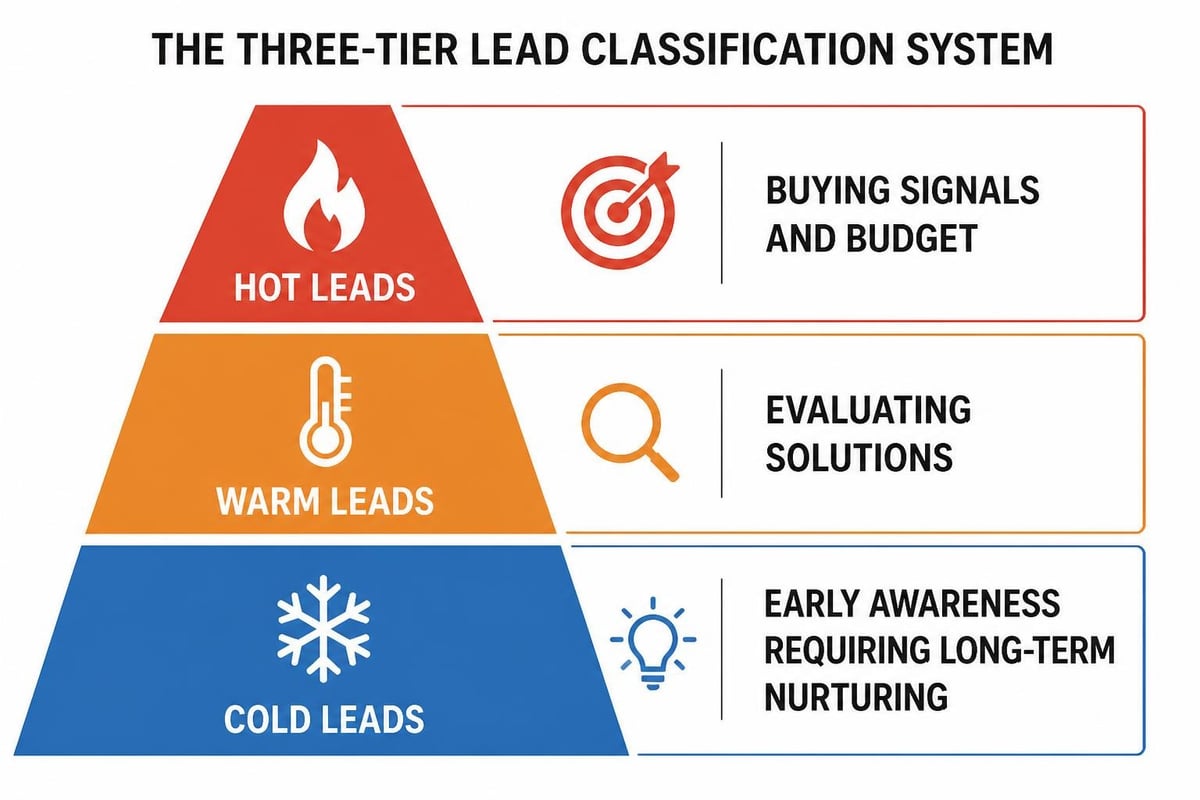
The three categories all leads fall into include:
- Hot leads: Ready to purchase, actively researching solutions, budget allocated
- Warm leads: Problem-aware, evaluating options, timeline uncertain
- Cold leads: Early awareness stage, no immediate purchase intent, require extended nurturing
According to Salesforce’s comprehensive lead generation guide, understanding these distinctions fundamentally impacts conversion rates and sales cycle length. Your approach to managing all leads must account for these differences while maintaining systematic processes that prevent prospects from slipping through cracks.
Why Most Businesses Waste Their Lead Pool
The harsh truth is that companies squander up to 80% of their lead generation investment through poor management practices. When all leads receive generic follow-up sequences, response rates plummet and sales teams become demoralized chasing unqualified prospects.
Consider this breakdown of common failures:
| Problem | Impact | Solution |
|---|---|---|
| No lead scoring system | Sales wastes time on poor-fit prospects | Implement qualification frameworks |
| Delayed follow-up | Hot leads cool off and choose competitors | Automated immediate response |
| Generic messaging | Low engagement across all lead types | Segmented personalized campaigns |
| Disconnected systems | Leads lost between marketing and sales | Integrated CRM and automation |
The solution requires treating all leads with strategic precision rather than spray-and-pray tactics. Modern lead generation strategies emphasize structured funnels that align marketing, sales, product, and technology teams around common qualification criteria and conversion goals.
Building Systems That Handle All Leads Effectively
Creating infrastructure that properly manages all leads starts with understanding your ideal customer profile and reverse-engineering qualification criteria. This isn't about rejecting prospects-it's about directing each one toward the appropriate nurturing path based on their current position in the buyer's journey.
Your lead management system needs these core components to function optimally:
- Multi-channel capture mechanisms that centralize all leads regardless of source
- Automated scoring algorithms that assign values based on demographic and behavioral data
- Segmentation rules that route prospects to appropriate nurturing sequences
- Response protocols that ensure timely follow-up matching urgency levels
- Feedback loops that continuously refine qualification criteria based on conversion data
When you properly structure these elements, you create a machine that processes all leads efficiently while maximizing conversion rates. The key involves balancing automation with personalization-technology handles repetitive tasks while humans focus on high-value conversations with qualified prospects.
Lead Qualification Frameworks That Work
Lead qualification frameworks provide the structure needed to evaluate all leads consistently across your organization. The most effective models include BANT (Budget, Authority, Need, Timeline), MEDDIC (Metrics, Economic Buyer, Decision Criteria, Decision Process, Identify Pain, Champion), and CHAMP (Challenges, Authority, Money, Prioritization).
Implementing qualification frameworks delivers these benefits:
- Consistent evaluation standards across all team members
- Faster identification of high-value opportunities
- Better forecasting accuracy based on qualified pipeline
- Reduced sales cycle length through proper prioritization
- Higher close rates from focusing on ideal-fit prospects
The framework you choose matters less than consistent application across all leads entering your pipeline. According to lead qualification experts, companies using structured scoring methods see 50% higher conversion rates compared to those relying on gut instinct alone.
Optimizing Follow-Up for All Leads
Speed-to-lead statistics reveal that contacting prospects within five minutes of inquiry increases conversion likelihood by 900% compared to waiting thirty minutes. Yet most businesses take hours or days to respond, allowing all leads to go cold before meaningful conversations begin.
The solution requires automated response systems that acknowledge inquiries instantly while routing qualified prospects to appropriate team members. This doesn't mean replacing human interaction-it means ensuring no opportunity falls through cracks due to timing failures.
Creating Nurturing Sequences That Convert
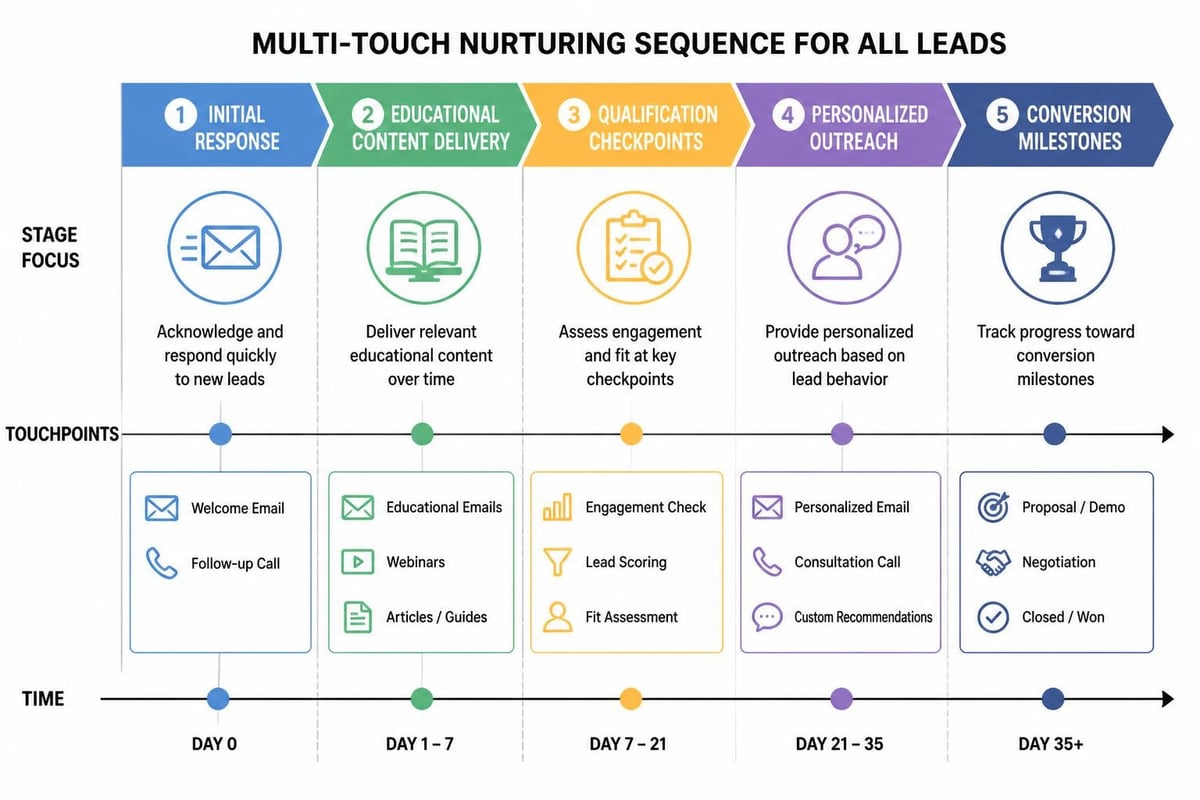
Not all leads are ready to buy immediately, which is why nurturing sequences prove essential for maximizing lifetime pipeline value. Your sequences should vary based on lead source, qualification score, and behavioral signals, delivering targeted content that moves prospects toward purchase decisions.
Effective nurturing for all leads includes:
- Educational content addressing specific pain points and challenges
- Case studies demonstrating results for similar companies or situations
- Product demonstrations tailored to identified needs and use cases
- Social proof elements including testimonials and industry recognition
- Clear calls-to-action appropriate to each stage of the buyer's journey
Email lead generation best practices emphasize personalization, timing, and value delivery over aggressive sales pitches. When you provide genuine value through every touchpoint, all leads remain engaged even during extended sales cycles that span months rather than weeks.
Leveraging Technology to Scale Lead Management
In 2026, AI-powered systems handle routine tasks that previously consumed countless hours of human effort. This technological shift allows businesses to manage all leads effectively regardless of volume, maintaining personalization at scale through intelligent automation.
Key technologies transforming lead management include:
- Predictive lead scoring using machine learning to identify high-conversion prospects
- Chatbots and conversational AI providing instant qualification and routing
- Marketing automation platforms orchestrating multi-channel nurturing sequences
- CRM systems with AI insights surfacing engagement patterns and buying signals
- Analytics dashboards tracking performance metrics across all lead sources
For businesses focused on lead generation, these tools aren't luxuries-they're necessities for competing in markets where prospects expect instant responses and personalized experiences. The companies winning in 2026 use technology to handle all leads with the same attention previously reserved for only VIP prospects.
Integration: The Missing Piece for Most Businesses
Having powerful tools means nothing if they don't communicate effectively. The greatest waste in managing all leads occurs when prospects enter one system but sales teams work from another, creating gaps where opportunities disappear.
Your technology stack must include:
| System Type | Primary Function | Integration Requirements |
|---|---|---|
| Lead capture forms | Collect prospect information | Direct CRM connection |
| Marketing automation | Nurture sequences and scoring | Bi-directional CRM sync |
| Sales CRM | Pipeline management and tracking | Marketing platform integration |
| Analytics tools | Performance measurement | Data feeds from all sources |
| Communication platforms | Email, SMS, calling | Activity logging to CRM |
When these systems work together seamlessly, you create visibility into all leads across their entire lifecycle. Sales teams see marketing touches, marketers access conversion data, and executives get real-time pipeline insights that inform strategic decisions. Companies exploring best marketing platforms should prioritize integration capabilities over feature lists.
Measuring What Matters with All Leads
You can't improve what you don't measure, yet most businesses track vanity metrics that don't correlate with revenue. The number of leads generated means nothing if conversion rates sit below industry benchmarks or cost-per-acquisition exceeds customer lifetime value.
Focus your measurement efforts on these critical metrics:
- Lead-to-customer conversion rate across all sources and campaigns
- Time-to-conversion from initial contact to closed deal
- Cost per qualified lead rather than total lead volume
- Pipeline velocity measuring deal progression speed
- Lead source ROI comparing investment to revenue generated
These metrics tell you whether your systems for managing all leads actually drive business outcomes. When you discover certain sources consistently produce higher-quality prospects, you can reallocate budget accordingly rather than spreading resources equally across underperforming channels.
Attribution: Understanding the Full Journey
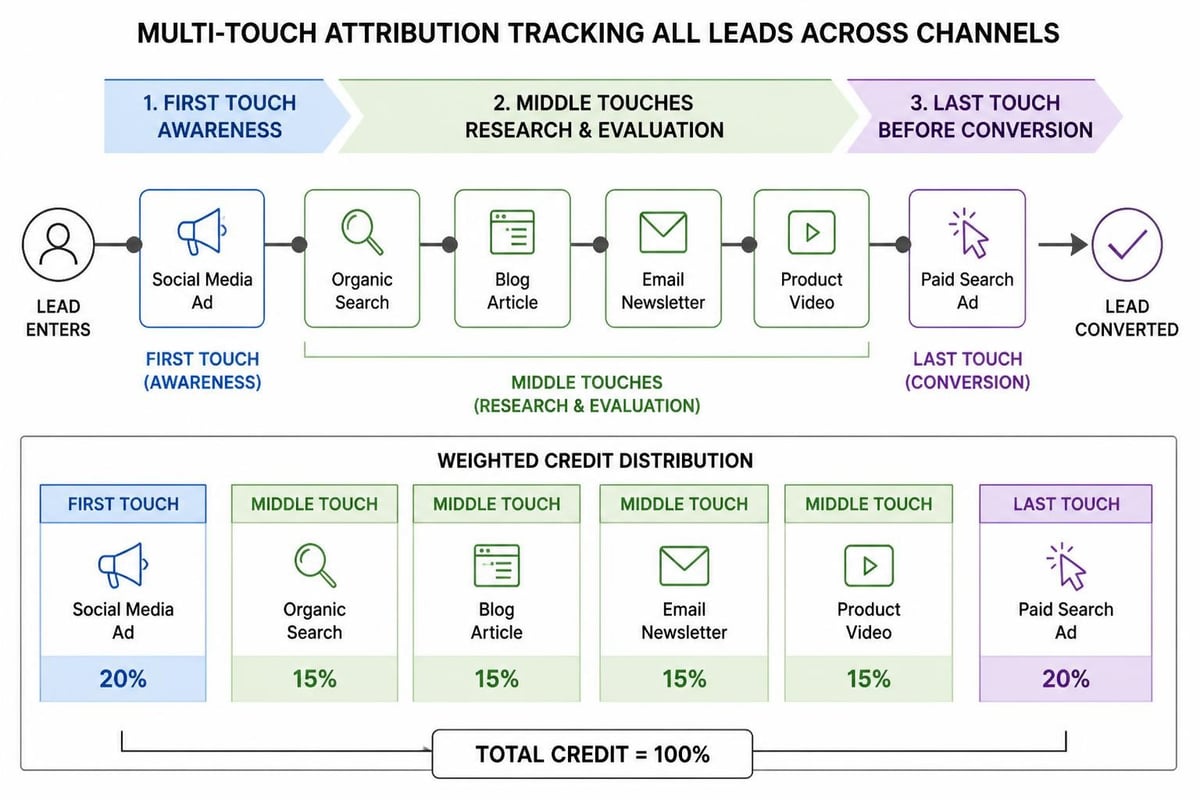
Modern buyers interact with brands across multiple touchpoints before purchasing, making single-touch attribution models dangerously misleading. To truly understand how all leads convert, you need multi-touch attribution that credits each interaction appropriately.
B2B lead generation best practices emphasize the importance of tracking the complete buyer journey, from initial awareness through multiple research phases to final decision. This visibility reveals which content types, channels, and messaging resonate most effectively at each stage, informing optimization efforts that improve results for all leads entering your pipeline.
Advanced Strategies for Maximizing All Leads
Once you've mastered fundamental lead management, advanced strategies multiply results by extracting additional value from prospects at every pipeline stage. These approaches require sophisticated systems and disciplined execution but deliver outsized returns for businesses willing to invest in excellence.
Re-engagement Campaigns That Revive Dead Leads
Not all leads convert on first contact or even after extended nurturing. Many go dark for months before circumstances change and they re-enter active buying cycles. Smart businesses maintain re-engagement campaigns that periodically reach out to dormant prospects with fresh angles and updated offerings.
Effective re-engagement tactics for all leads include:
- Surveys asking why prospects didn't move forward initially
- New case studies or product updates addressing previous objections
- Special incentives for prospects who engaged previously but didn't convert
- Personalized videos from sales representatives maintaining relationships
- Industry insights demonstrating continued thought leadership
These campaigns cost relatively little since you're targeting all leads already in your database, yet they frequently uncover hidden opportunities that competitors abandoned long ago. Research from lead generation strategy experts shows that well-executed re-engagement programs convert 5-15% of previously unresponsive prospects.
Account-Based Approaches for High-Value Leads
When certain prospects represent significant revenue potential, generic nurturing sequences won't cut it. Account-based marketing treats individual companies as markets of one, orchestrating personalized campaigns across multiple stakeholders within target organizations.
This approach requires identifying which of all leads warrant intensive investment, then aligning sales and marketing around coordinated outreach that addresses specific business challenges facing those accounts. The effort required is substantial, but conversion rates and deal sizes justify the investment for ideal-fit prospects.
Common Mistakes That Sabotage Lead Performance
Even sophisticated businesses make critical errors that undermine their ability to convert all leads effectively. Recognizing these patterns helps you avoid costly mistakes that competitors continue repeating.
Prioritizing Quantity Over Quality
The pressure to demonstrate marketing ROI often drives companies to obsess over lead volume, celebrating when all leads counted reach arbitrary targets regardless of qualification levels. This creates frustration when sales teams struggle to convert low-quality prospects who were never good fits in the first place.
The solution requires shifting focus from total lead count to qualified lead generation based on predetermined criteria. Professional lead generation services understand this distinction, delivering smaller volumes of high-intent prospects rather than inflated numbers that look impressive in reports but don't drive revenue.
Neglecting Lead Source Analysis
When you treat all leads identically regardless of origin, you miss critical insights about which channels produce the best results. A prospect from a targeted LinkedIn campaign likely has different characteristics and conversion patterns compared to someone who found you through organic search or a referral.
Analyzing performance by source reveals:
| Lead Source | Avg. Qualification Score | Conversion Rate | Sales Cycle Length | Customer LTV |
|---|---|---|---|---|
| Paid search | 7.2/10 | 12% | 45 days | $8,500 |
| Organic content | 6.8/10 | 18% | 60 days | $12,000 |
| Referrals | 8.5/10 | 35% | 30 days | $15,000 |
| Webinars | 7.9/10 | 22% | 40 days | $11,000 |
This data informs budget allocation and strategy adjustments that improve overall performance across all leads by emphasizing proven channels while optimizing or eliminating underperformers.
Failing to Align Sales and Marketing
The classic disconnect between marketing and sales teams destroys value for all leads by creating handoff friction, inconsistent messaging, and finger-pointing when conversion rates disappoint. Marketing complains that sales doesn't follow up quickly enough, while sales argues that marketing delivers unqualified junk.
Breaking this cycle requires establishing shared definitions, processes, and accountability. When both teams agree on what constitutes a qualified lead, appropriate follow-up timelines, and success metrics, collaboration replaces conflict. B2B lead generation companies that excel in this area create service level agreements specifying exactly how all leads will be handled from initial capture through conversion or disqualification.
Future-Proofing Your Lead Management Approach
The landscape of lead generation and management continues evolving rapidly as technology advances and buyer behaviors shift. Businesses that want to maintain competitive advantages must stay ahead of trends rather than reacting after competitors have already capitalized on new opportunities.
Privacy Regulations and Data Management
Stricter privacy laws globally affect how you can collect, store, and use information from all leads. Compliance isn't optional, and violations carry severe penalties that can devastate businesses. Beyond legal requirements, modern buyers expect transparency about data usage and demand control over their information.
Best practices for responsible data management include:
- Clear opt-in mechanisms for all communications and data collection
- Easy unsubscribe processes that honor requests immediately
- Transparent privacy policies explaining exactly how lead data is used
- Regular data audits removing outdated or irrelevant information
- Security measures protecting prospect information from breaches
Companies that build trust through responsible practices differentiate themselves in markets where all leads have become increasingly skeptical of how businesses handle personal data.
AI and Predictive Analytics
Artificial intelligence transforms how businesses identify, qualify, and nurture all leads by recognizing patterns humans miss and automating complex decision-making at scale. Predictive analytics forecast which prospects will convert, when they're most likely to buy, and what messaging will resonate most effectively.
These capabilities allow you to optimize resource allocation, focusing human attention on opportunities with the highest conversion probability while automated systems handle routine interactions with all other leads. The businesses winning in 2026 use AI not to replace human judgment but to augment it, combining technological efficiency with personal relationship-building that closes deals.
For organizations investing in lead gen advertising, AI-powered optimization continuously improves campaign performance by testing variables and allocating budget toward highest-performing combinations faster than manual management allows.
Managing all leads effectively requires systematic approaches that balance automation with personalization, treating every prospect strategically based on qualification criteria and buying signals. When you implement the frameworks, technologies, and best practices outlined above, you transform random inquiries into predictable revenue that fuels sustainable growth. Aletto specializes in exactly this transformation, leveraging advanced AI systems to generate qualified leads and automate appointment bookings while partnering with clients through guaranteed growth models that align interests and drive measurable results. If you're ready to revolutionize how your business handles all leads, let's start a conversation about building systems that consistently deliver ready-to-buy customers.