
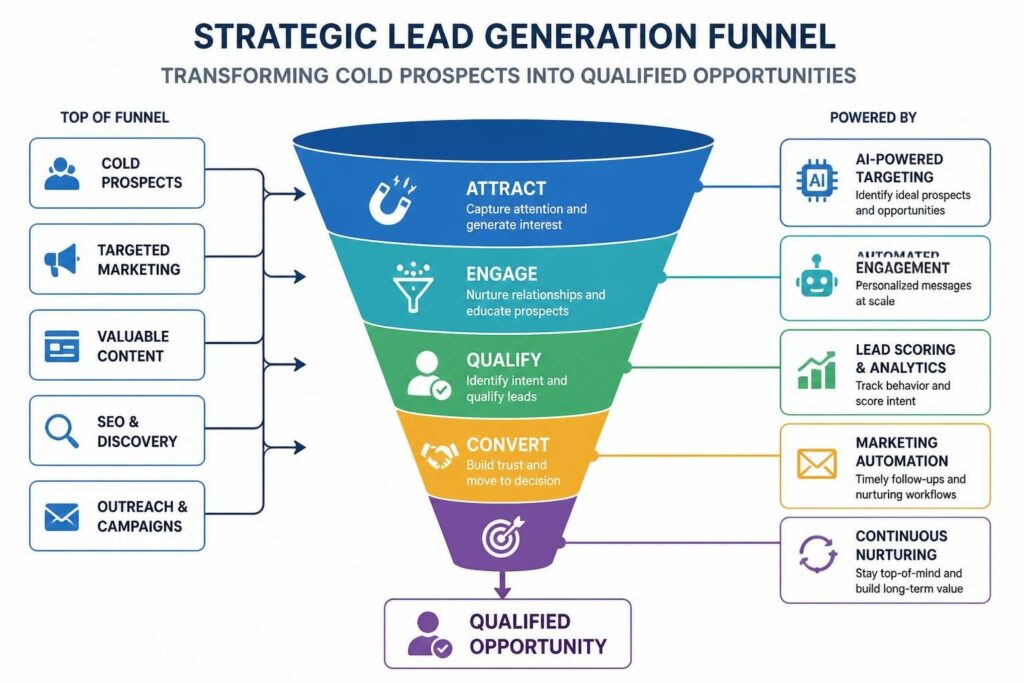
Every business faces the same fundamental challenge: finding and converting the right prospects into paying customers. The ability to build leads consistently separates thriving companies from those struggling to hit revenue targets. In 2026, the landscape has shifted dramatically toward intelligent automation, personalized outreach, and data-driven decision-making. Companies like Aletto are revolutionizing how businesses approach lead generation by combining advanced AI systems with proven marketing frameworks. This comprehensive guide explores the strategies, tools, and methodologies that enable businesses to build leads at scale while maintaining quality and maximizing conversion rates.
Understanding the Foundation of Modern Lead Generation
The traditional approach to lead generation has become obsolete. Cold calling random prospects and hoping for the best no longer delivers results. Today's successful businesses build leads through strategic, multi-channel approaches that prioritize quality over volume.
Modern lead generation requires three core components:
- A deep understanding of your ideal customer profile and their pain points
- Systems that attract, capture, and qualify prospects automatically
- Processes that nurture relationships until prospects are ready to buy
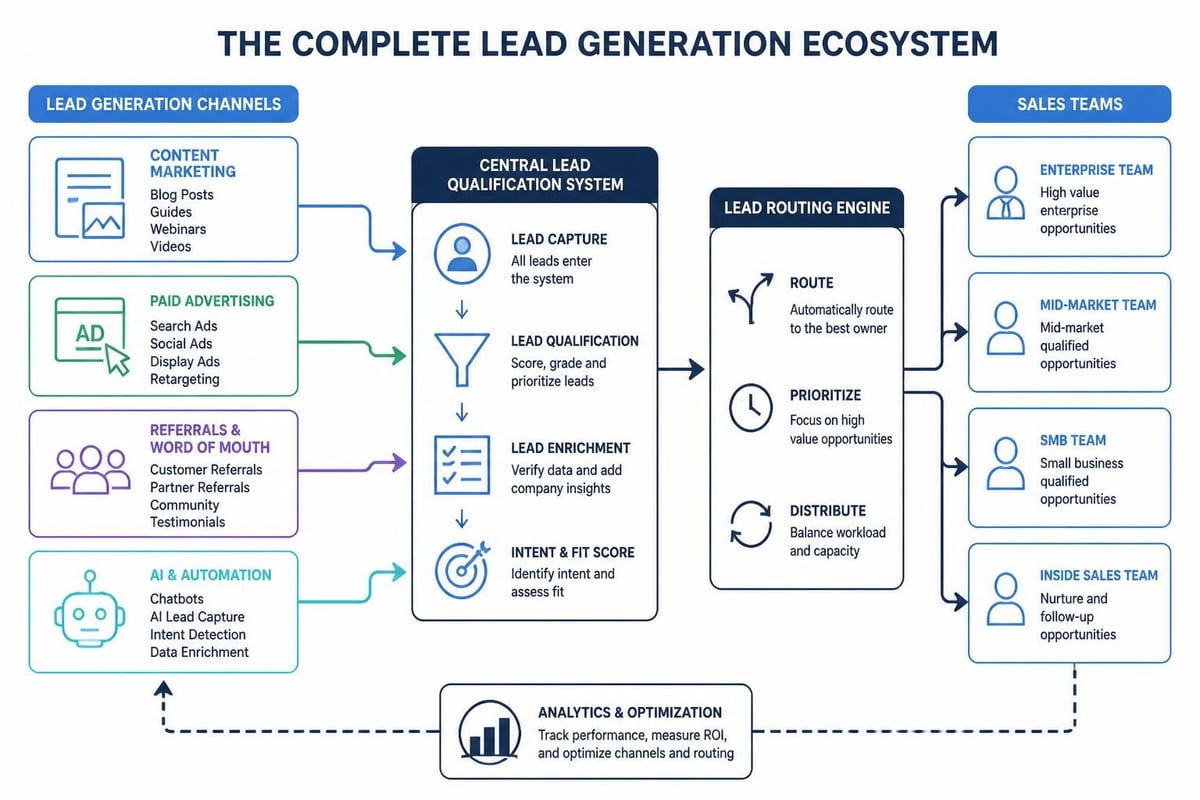
The most effective organizations recognize that lead generation isn't a single activity but an integrated system. When you build a comprehensive marketing agency strategy, you create predictable revenue streams that compound over time.
Mapping the Customer Journey
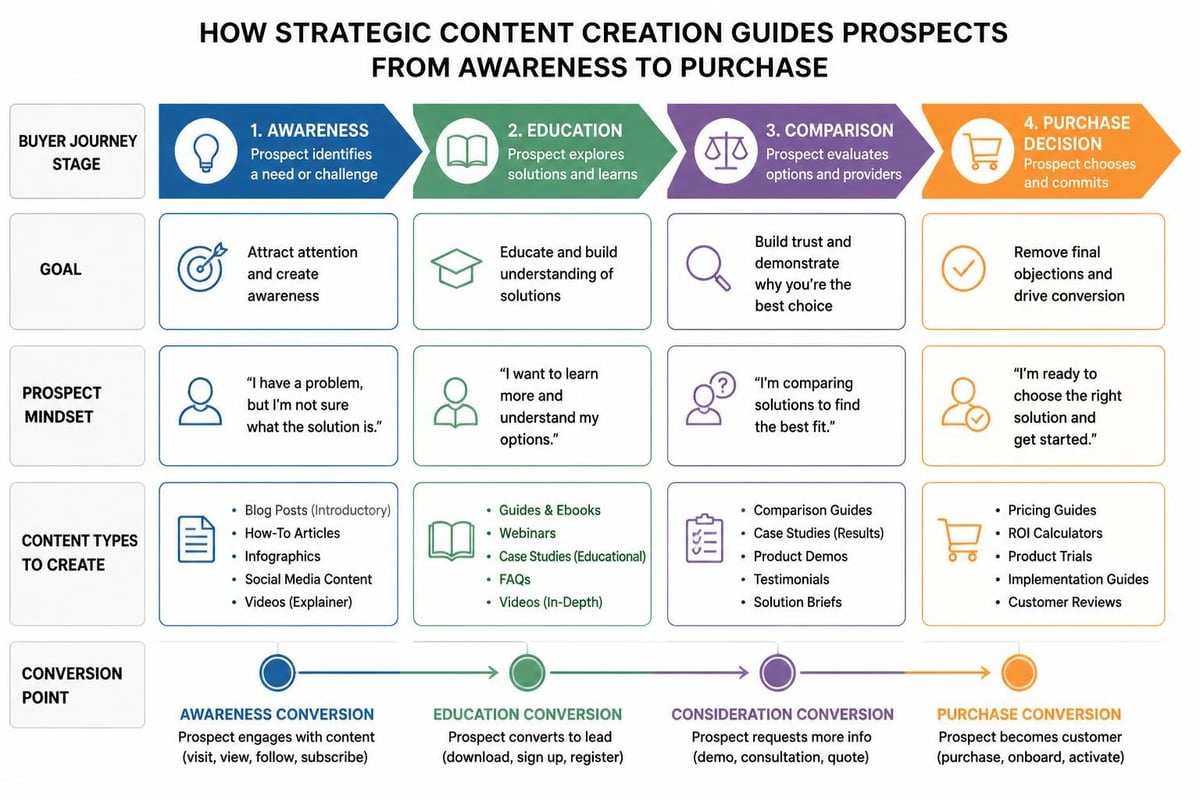
Before implementing tactics, successful businesses map every touchpoint in their customer journey. This strategic exercise reveals exactly where prospects discover your brand, what information they need at each stage, and which obstacles prevent them from moving forward.
| Journey Stage | Prospect Mindset | Required Content | Conversion Goal |
|---|---|---|---|
| Awareness | Exploring problems | Educational blogs, videos | Email capture |
| Consideration | Comparing solutions | Case studies, webinars | Demo booking |
| Decision | Evaluating vendors | Pricing guides, testimonials | Sales conversation |
| Purchase | Final validation | ROI calculators, guarantees | Contract signature |
Understanding these stages allows you to build leads more effectively by delivering the right message at precisely the right moment.
Leveraging AI and Automation to Build Leads at Scale
The integration of artificial intelligence has transformed how businesses build leads. AI-powered systems can analyze thousands of data points, identify high-intent prospects, and personalize outreach at a scale impossible for human teams alone.
Advanced AI capabilities now enable:
- Predictive lead scoring that identifies which prospects are most likely to convert
- Automated qualification that routes leads to the appropriate sales representative
- Personalized nurture sequences that adapt based on prospect behavior
- Conversation intelligence that optimizes messaging for maximum engagement
Companies implementing these technologies report conversion rate improvements of 30-50% compared to manual processes. The best marketing platforms now include native AI features that make sophisticated automation accessible to businesses of all sizes.
Building Automated Lead Capture Systems
The most successful lead generation programs build leads continuously, even when your team is offline. Automated capture systems work around the clock to identify interested prospects and begin the qualification process immediately.
Consider implementing these high-converting capture mechanisms:
- Interactive assessments that provide personalized insights while collecting prospect data
- Chatbots powered by AI that answer questions and book appointments automatically
- Gated premium content that exchanges valuable resources for contact information
- Webinar funnels that demonstrate expertise while building your email list
According to research on effective lead generation strategies, businesses using multiple capture mechanisms generate 45% more qualified leads than those relying on a single method.
Creating Content That Attracts and Converts
Content marketing remains one of the most cost-effective ways to build leads. However, generic blog posts and surface-level advice no longer cut through the noise. Your content must solve real problems and demonstrate genuine expertise.
The Content Hierarchy for Lead Generation
Awareness-stage content attracts new prospects by addressing broad industry challenges. These pieces rank well in search engines and introduce your brand to cold audiences.
Consideration-stage content educates prospects comparing different solutions. This includes detailed guides, comparison articles, and framework explanations that position your approach as superior.
Decision-stage content removes final objections and builds confidence in your solution. Case studies, ROI calculators, and customer testimonials prove your ability to deliver results.
When you create content across all three stages, you build leads throughout the entire customer journey. Each piece serves a specific purpose in moving prospects closer to a purchasing decision.
Optimizing Paid Advertising for Maximum Lead Quality
Paid advertising enables businesses to build leads immediately rather than waiting for organic strategies to gain traction. However, budget efficiency requires precise targeting and continuous optimization.
Platform selection matters tremendously:
| Platform | Best For | Average Cost Per Lead | Typical Conversion Rate |
|---|---|---|---|
| Google Ads | High-intent searches | $50-$200 | 5-10% |
| LinkedIn Ads | B2B decision-makers | $75-$300 | 2-5% |
| Facebook/Instagram | Broad awareness | $25-$100 | 3-8% |
| YouTube | Educational content | $30-$150 | 4-9% |
The key to profitable paid advertising is understanding your demand funnel and building campaigns that align with how prospects naturally discover and evaluate solutions. Testing multiple ad variations, landing pages, and offers allows you to identify winning combinations that build leads cost-effectively.
Retargeting: The Secret to Conversion Rate Optimization
Most prospects don't convert on their first interaction with your brand. Retargeting campaigns keep your solution top-of-mind as prospects continue their research.
Strategic retargeting sequences might include:
- First touch: Educational content addressing the core problem
- Second touch: Case studies demonstrating successful outcomes
- Third touch: Limited-time offers creating urgency
- Fourth touch: Testimonials building trust and credibility
This layered approach ensures you build leads even from initially skeptical prospects who need multiple touchpoints before committing.
Building Strategic Partnerships and Referral Systems
The most cost-effective leads often come from strategic partnerships and customer referrals. These prospects arrive with built-in trust, converting at rates 3-5 times higher than cold leads.
Successful partnership programs include:
- Complementary service providers who serve the same target market
- Industry associations and professional organizations
- Technology platforms with relevant user bases
- Satisfied customers incentivized to make introductions
When you acquire leads through referral networks, you benefit from social proof and warm introductions that dramatically shorten sales cycles. According to Salesforce’s comprehensive lead generation guide, referred leads convert 30% faster and have 37% higher retention rates.
Designing a Customer Referral System
Building a systematic referral program requires removing friction and providing clear incentives. Your best customers want to help, but they need structure and motivation.
Effective referral programs feature:
- Simple sharing mechanisms (one-click introductions)
- Compelling incentives for both referrer and referee
- Clear communication about ideal referral profiles
- Automated tracking and reward fulfillment
- Regular reminders and appreciation
The businesses that build leads most effectively treat referral generation as seriously as any paid marketing channel.
Implementing Lead Scoring and Qualification Frameworks
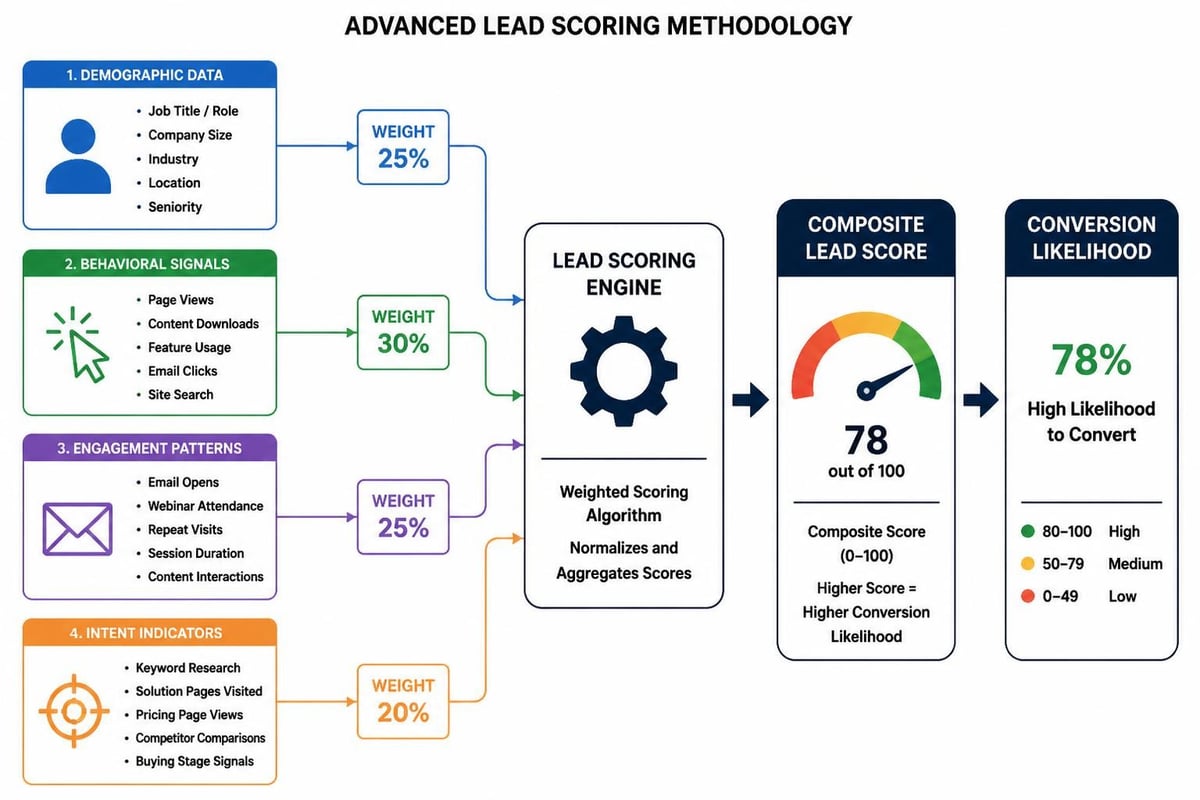
Not all leads are created equal. The ability to identify which prospects deserve immediate attention versus which need further nurturing determines sales team efficiency and close rates.
The BANT Framework Evolved
Traditional BANT (Budget, Authority, Need, Timeline) qualification still provides a useful foundation, but modern approaches incorporate additional dimensions:
Budget remains critical, but payment flexibility and ROI demonstration can overcome initial price objections.
Authority now requires understanding entire decision-making committees, not just individual stakeholders.
Need extends beyond surface-level pain points to underlying business objectives and strategic priorities.
Timeline influences nurture strategy, with long-timeline prospects requiring different content than immediate buyers.
Engagement measures how actively prospects interact with your content and communications.
Fit evaluates whether your solution genuinely solves their specific situation.
When you build leads using comprehensive scoring models, you maximize sales productivity by focusing energy where it matters most. The tools for lead generation available in 2026 make sophisticated scoring accessible to businesses without dedicated data science teams.
Optimizing Conversion Points Throughout Your Funnel
Every interaction represents an opportunity to build leads or lose prospects forever. Conversion rate optimization focuses on removing friction and reinforcing value at critical decision points.
Landing Page Optimization Essentials
High-converting landing pages share common characteristics:
- Single, clear call-to-action that eliminates decision paralysis
- Compelling headline that immediately communicates value
- Social proof elements including testimonials, client logos, and statistics
- Risk reversal through guarantees, free trials, or money-back promises
- Minimal navigation that prevents distraction and maintains focus
According to research compiled by ClickFunnels on lead generation best practices, businesses that A/B test landing pages continuously improve conversion rates by 20-30% over six months.
Form optimization principles:
- Request only essential information initially
- Use progressive profiling to gather details over time
- Provide clear privacy assurances
- Implement autofill and smart defaults
- Show progress indicators for multi-step forms
The goal is to build leads without creating unnecessary barriers that reduce completion rates.
Nurturing Leads Into Ready-to-Buy Customers
The fortune is in the follow-up. Most prospects aren't ready to purchase immediately, requiring systematic nurturing that maintains engagement while building trust.
| Nurture Tactic | Implementation | Expected Impact |
|---|---|---|
| Email sequences | Automated educational series | 15-25% engagement rate |
| Personalized video | Custom messages to high-value leads | 40-50% response rate |
| Retargeting ads | Platform-specific remarketing | 10-15% click-through rate |
| Direct outreach | Strategic phone calls or LinkedIn messages | 5-10% conversation rate |
Effective nurture programs build leads into customers by addressing objections, demonstrating expertise, and creating multiple touchpoints that keep your solution top-of-mind. The key is providing genuine value rather than aggressive selling.
Timing Your Sales Outreach Perfectly
Behavioral signals indicate when prospects transition from research to active buying mode. Advanced systems monitor engagement patterns and alert sales teams when leads demonstrate high intent.
High-intent signals include:
- Visiting pricing pages multiple times
- Downloading decision-stage content like case studies
- Engaging with comparison or "vs competitor" content
- Spending significant time on product/service detail pages
- Opening and clicking multiple nurture emails in short timeframes
When you build leads through systematic nurturing and respond to buying signals immediately, you capture opportunities before competitors even know they exist.
Measuring and Optimizing Lead Generation Performance
What gets measured gets improved. Successful lead generation programs track comprehensive metrics that reveal both efficiency and effectiveness.
Critical metrics to monitor:
- Cost per lead across different channels and campaigns
- Lead-to-customer conversion rate showing qualification accuracy
- Time to conversion indicating funnel efficiency
- Customer acquisition cost measuring overall program profitability
- Lifetime value validating long-term program sustainability
Professional lead generation services provide detailed analytics dashboards that make performance tracking straightforward. According to UserGems’ compilation of expert best practices, businesses that review metrics weekly improve results 40% faster than those with monthly review cycles.
Attribution Modeling for Multi-Touch Journeys
Modern buyers interact with brands across numerous touchpoints before converting. Attribution modeling reveals which channels and content pieces contribute most to successful outcomes.
Common attribution models:
- First-touch attribution credits the initial discovery channel
- Last-touch attribution gives credit to the final conversion point
- Linear attribution distributes credit equally across all touchpoints
- Time-decay attribution weights recent interactions more heavily
- Data-driven attribution uses machine learning to assign credit algorithmically
Understanding attribution helps you build leads more efficiently by investing in channels that genuinely drive results rather than those that simply look impressive in vanity metrics.
Creating Systematic Lead Generation Processes
Consistency separates professional lead generation from amateur efforts. When you build leads through documented, repeatable processes, you create scalability and reduce dependence on individual heroics.
Essential process documentation includes:
- Standard operating procedures for each lead generation channel
- Response time commitments and escalation protocols
- Content creation workflows and approval processes
- Lead handoff procedures between marketing and sales
- Quality assurance checks and performance reviews
The businesses that excel in end-to-end marketing treat lead generation as an engineered system rather than an art project. This systematic approach enables continuous improvement and predictable results.
Building Your Lead Generation Technology Stack
The right technology infrastructure amplifies human effort and enables sophisticated strategies that would be impossible manually.
Core technology components:
- CRM system as the central database for all prospect information
- Marketing automation platform for email sequences and nurturing
- Analytics tools tracking website behavior and campaign performance
- AI-powered chatbots for 24/7 prospect engagement
- Lead intelligence tools providing company and contact data
When integrated properly, these systems work together to build leads automatically while providing sales teams with the context needed to close deals effectively. The artificial intelligence tools available today make enterprise-grade capabilities accessible to businesses of all sizes.
Building a sustainable lead generation system requires strategic thinking, systematic execution, and continuous optimization across multiple channels. The businesses that consistently build leads successfully treat it as an integrated discipline rather than a collection of random tactics. Aletto combines advanced AI systems with proven marketing frameworks to help businesses generate qualified leads and automate appointment bookings, providing a guaranteed growth partnership that aligns our success directly with yours. Ready to transform your lead generation results? Let's build your predictable revenue engine together.