


Understanding what you're paying for each potential customer is the cornerstone of profitable marketing. Every dollar spent on advertising, content creation, and campaign management should generate measurable results, and calculating your price per lead gives you the clarity needed to make intelligent budget decisions. Whether you're running paid ads, investing in content marketing, or building automated systems, knowing your cost per acquisition for prospects determines whether your marketing efforts drive profit or drain resources. This metric separates businesses that scale predictably from those that waste thousands on campaigns that never deliver ROI.
Why Price Per Lead Matters More Than Ever in 2026
Marketing budgets face unprecedented scrutiny as economic conditions demand accountability and measurable outcomes. Business leaders no longer accept vague promises about brand awareness or engagement metrics. They want concrete numbers that demonstrate marketing efficiency and justify every dollar allocated to customer acquisition efforts.
The price per lead metric provides that accountability. It transforms abstract marketing activities into quantifiable business intelligence that directly impacts your bottom line. When you know exactly what each prospect costs to acquire, you can compare channels, optimize campaigns, and allocate resources with surgical precision.
Consider this reality: two companies in the same industry might both generate 100 leads monthly, but if one pays $50 per lead while the other pays $200, the cost difference of $15,000 monthly compounds to $180,000 annually. That's capital that could fund expansion, hire talent, or invest in advanced marketing technology that amplifies results.
The True Definition and Formula
The cost per lead calculation follows a straightforward formula that anyone can apply immediately. Take your total marketing spend for a specific campaign or timeframe and divide it by the number of leads generated during that period.
Price Per Lead = Total Marketing Spend ÷ Number of Leads Generated
This simplicity makes it universally applicable across industries, channels, and campaign types. Whether you're measuring paid advertising, organic content efforts, or AI-driven lead generation systems, the formula remains constant.
The challenge isn't the math but rather defining what constitutes a "lead" for your business and accurately tracking all associated costs. Many organizations underestimate their true price per lead by excluding overhead, software subscriptions, creative development, or team salaries from their calculations.
Breaking Down the Complete Cost Structure
Accurate price per lead measurement requires comprehensive cost accounting that captures every expense contributing to lead acquisition. Partial calculations create false confidence and misguided optimization efforts that hurt long-term profitability.
Direct Campaign Costs
These represent the most obvious expenses:
- Media buying and advertising spend across platforms
- Content creation and design fees
- Landing page development and hosting
- Marketing automation software subscriptions
- Lead magnet production costs
Direct costs are easily tracked through advertising dashboards, invoices, and platform reporting. Most businesses accurately account for these elements when calculating their initial understanding of cost per lead.
Hidden Operational Expenses
The expenses that often escape calculation include:
- Internal team salaries allocated to campaign management
- Agency retainers and consulting fees
- CRM and analytics platform costs
- Testing and optimization resources
- Administrative overhead
When you factor these hidden costs into your price per lead calculation, you typically discover your true acquisition cost runs 30-60% higher than initial estimates. This revelation often explains why campaigns that appear profitable on the surface fail to generate sustainable business growth.
| Cost Category | Typical Monthly Range | Often Overlooked? |
|---|---|---|
| Ad Spend | $3,000 – $50,000 | No |
| Software/Tools | $500 – $3,000 | Sometimes |
| Team Salaries (allocated) | $2,000 – $15,000 | Yes |
| Creative Production | $1,000 – $8,000 | Sometimes |
| Agency Fees | $2,000 – $20,000 | No |
Industry Benchmarks and What They Mean for Your Business
Understanding whether your price per lead aligns with industry standards provides critical context for performance evaluation. While every business operates with unique variables, benchmark data helps identify whether you're achieving competitive efficiency or leaving money on the table.
B2B vs B2C Cost Differences
Business-to-business lead generation typically commands higher costs due to longer sales cycles, more complex decision-making processes, and higher lifetime customer values. B2B companies commonly see price per lead ranges from $35 to $200+ depending on industry complexity and deal size.
Consumer-focused businesses often generate leads at lower costs, frequently ranging from $10 to $50 per lead. The higher volume and shorter sales cycles in B2C markets create economies of scale that reduce per-unit acquisition costs.
However, lower cost doesn't automatically mean better value. A $150 B2B lead that converts to a $50,000 annual contract delivers far superior ROI compared to a $15 B2C lead generating a $200 one-time purchase.
Channel-Specific Performance Expectations
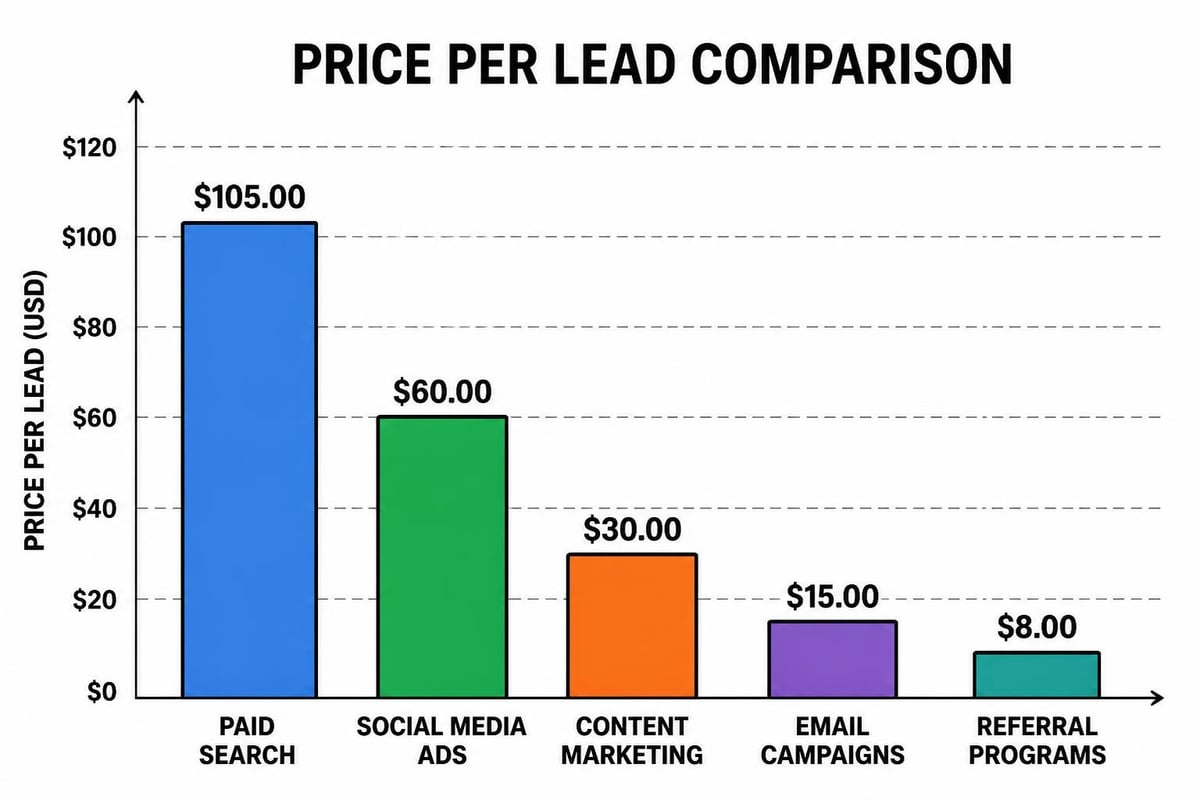
Different marketing channels produce dramatically different price per lead outcomes:
- Paid search advertising generally delivers qualified leads between $25-$100, with high purchase intent offsetting premium costs
- Social media advertising ranges from $15-$75 per lead, varying significantly by platform and targeting precision
- Content marketing can achieve $10-$50 per lead when properly optimized, though longer timeframes apply
- Email marketing to existing lists often produces the lowest costs at $5-$30 per lead
- Referral programs vary wildly but frequently deliver $20-$80 per lead with higher conversion rates
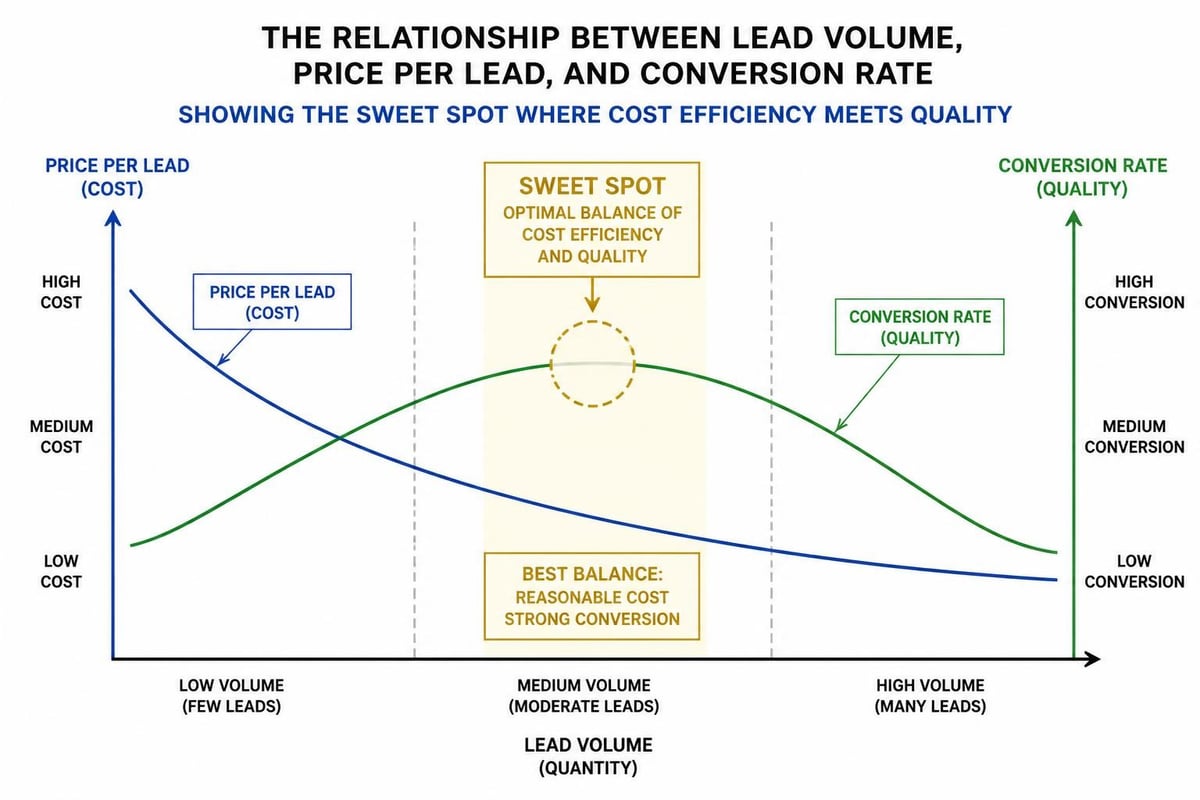
Smart marketers don't simply chase the lowest price per lead. They optimize for the leads most likely to convert into profitable customers, even when those prospects cost more to acquire initially.
Strategic Optimization Methods That Actually Work
Reducing your price per lead without sacrificing quality requires systematic testing, intelligent analysis, and strategic refinement across multiple variables. Random changes produce random results. Methodical optimization creates compound improvements that dramatically enhance marketing ROI over time.
Audience Targeting Precision
Broad targeting wastes budget on unqualified prospects who inflate lead counts while depressing conversion rates. Narrow your focus to ideal customer profiles using:
- Detailed demographic and firmographic filters
- Behavioral targeting based on demonstrated intent signals
- Lookalike audiences modeled on your best existing customers
- Retargeting campaigns that re-engage warm prospects
- Account-based targeting for high-value B2B opportunities
The demand generation approach emphasizes quality targeting over volume-based tactics. By investing more per lead on highly qualified prospects, you often reduce overall customer acquisition costs while improving conversion rates.
Conversion Path Optimization
The journey from initial click to completed lead form determines whether your traffic investment generates returns or evaporates. Optimize every touchpoint:
- Landing page relevance matching ad messaging and search intent
- Form field reduction removing unnecessary friction points
- Value proposition clarity answering "what's in it for me" immediately
- Trust signals incorporating testimonials, certifications, and guarantees
- Mobile optimization ensuring seamless experiences across devices
Testing one element weekly compounds into 52 optimization opportunities annually. Even modest 5% improvements per test accumulate into transformative cost reductions and performance gains over twelve months.
Creative Testing and Iteration
Ad creative directly impacts both click-through rates and lead quality. Stale creative suffers from audience fatigue, declining performance, and rising costs over time.
Implement systematic creative testing:
- Rotate new ad variations every 2-3 weeks
- Test different value propositions and messaging angles
- Experiment with various visual styles and formats
- Try multiple calls-to-action and urgency elements
- Monitor creative fatigue metrics and refresh proactively
Best marketing platforms provide robust A/B testing capabilities that automate variation delivery and statistical analysis, removing guesswork from creative optimization decisions.
The Quality vs Quantity Dilemma
Chasing the lowest possible price per lead often backfires spectacularly when those cheap leads never convert into paying customers. A $10 lead that never buys costs more than a $100 lead that generates thousands in revenue.
Measuring Lead Quality Metrics
Track these indicators beyond raw lead volume:
- Conversion rate to sales opportunities showing genuine buying interest
- Sales cycle length indicating lead readiness and qualification level
- Average deal size demonstrating prospect quality and budget authority
- Customer lifetime value revealing long-term relationship potential
- Sales team feedback providing qualitative insights on lead preparedness
Many businesses discover that lead generation strategies focused exclusively on cost reduction produce floods of unqualified contacts that overwhelm sales teams and damage morale. The optimal strategy balances acquisition cost against conversion probability and customer value.
Qualification Frameworks
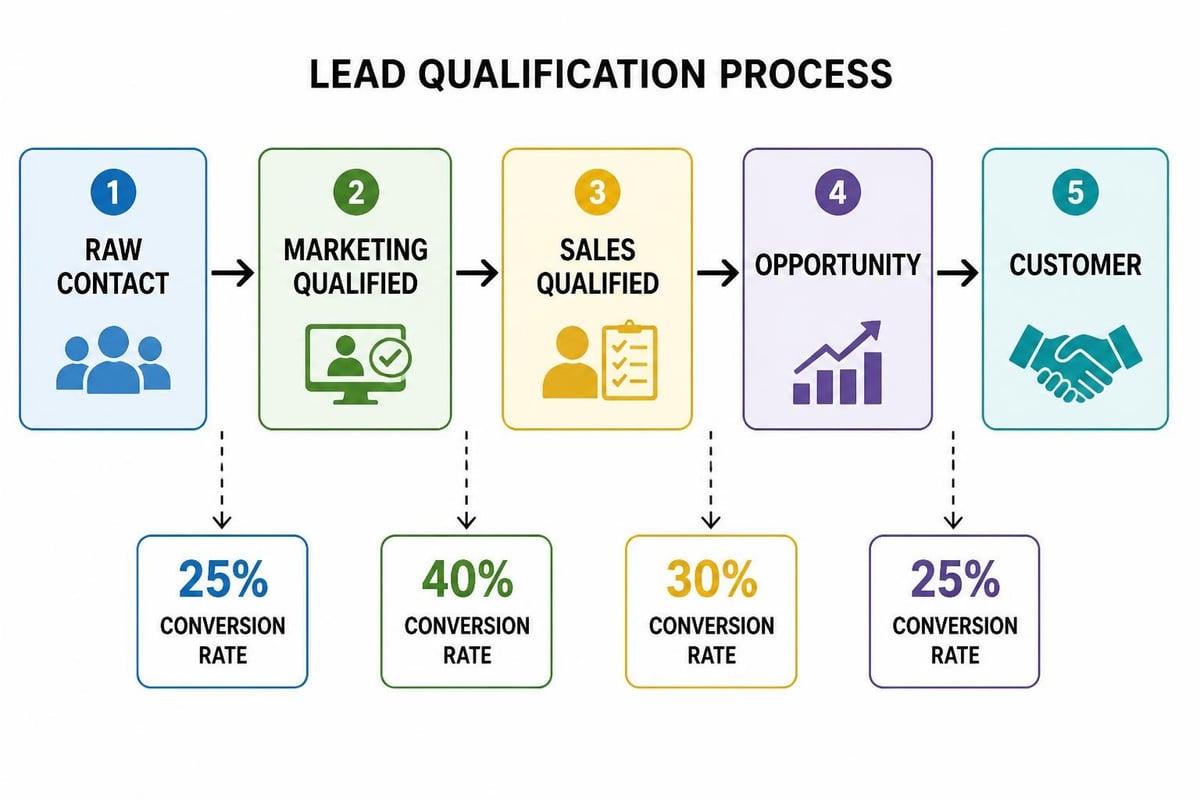
Implement structured qualification before counting leads in your price per lead calculations:
| Qualification Level | Definition | Typical Conversion Rate |
|---|---|---|
| MQL (Marketing Qualified) | Meets basic demographic criteria | 15-25% to SQL |
| SQL (Sales Qualified) | Demonstrates buying intent | 20-35% to opportunity |
| Opportunity | Active evaluation process | 25-40% to customer |
| Customer | Completed purchase | N/A |
When you calculate price per lead based on truly qualified prospects rather than raw form submissions, you gain honest insight into marketing efficiency. This approach prevents the deceptive metrics that make ineffective campaigns appear successful.
Technology and Automation Impact
Advanced marketing technology fundamentally transforms price per lead economics by automating repetitive tasks, enabling sophisticated targeting, and providing real-time optimization capabilities that were impossible just years ago.
AI-Powered Lead Generation Systems
Artificial intelligence applications in lead generation companies have revolutionized cost structures and performance outcomes. Machine learning algorithms analyze millions of data points to:
- Identify highest-probability prospects before competitors
- Optimize bidding strategies in real-time across platforms
- Personalize messaging based on individual behavioral patterns
- Predict lead quality scores before human review
- Automate follow-up sequences that nurture prospects efficiently
These capabilities reduce price per lead while simultaneously improving lead quality. The combination creates exponential ROI improvements that manual campaign management simply cannot match.
Marketing Automation ROI
Marketing automation platforms justify their costs by dramatically reducing the human hours required for lead nurturing, scoring, and management. When properly implemented, automation systems:
- Score leads automatically based on engagement and fit criteria
- Trigger personalized follow-up based on prospect behaviors
- Route qualified leads to appropriate salespeople instantly
- Track attribution across complex multi-touch journeys
- Generate performance reports without manual data compilation
The complete explanation of CPL demonstrates how technology investments might increase short-term expenses but decrease long-term price per lead through efficiency gains and conversion improvements.
Channel Diversification Strategy
Relying on a single marketing channel creates dangerous vulnerability to platform changes, algorithm updates, and competitive pressure. Diversified channel strategies spread risk while uncovering optimization opportunities across different prospect touchpoints.
Multi-Channel Attribution
Understanding how channels work together requires sophisticated attribution modeling that moves beyond last-click oversimplification. Prospects typically interact with multiple touchpoints before converting:
- Initial awareness through content marketing or social media
- Consideration via organic search or email nurturing
- Decision influenced by retargeting ads or sales outreach
- Conversion triggered by specific offer or timing
When you analyze the measurement methods across the complete customer journey, you discover that channels working synergistically often justify higher individual price per lead costs because they enable conversions that wouldn't occur in isolation.
Budget Allocation Framework
Distribute marketing budget across channels based on:
- Historical performance data showing proven conversion rates
- Incremental testing budgets exploring new opportunities
- Customer lifetime value by acquisition channel
- Scalability potential of each channel as spend increases
- Competitive dynamics affecting cost and efficiency
This balanced approach prevents over-reliance on any single channel while continuously testing new opportunities that might deliver superior price per lead performance.
Common Calculation Mistakes to Avoid
Even experienced marketers frequently miscalculate their true price per lead by overlooking critical factors or using inconsistent methodologies. These errors create false confidence and misguided optimization priorities.
Time Period Inconsistencies
Comparing price per lead across different timeframes without accounting for seasonality, market conditions, or campaign maturity stages produces misleading conclusions. A campaign's first month typically shows higher costs as algorithms learn and creative gets tested.
Establish consistent measurement windows:
- Weekly snapshots for rapid testing and iteration
- Monthly aggregations for trend analysis
- Quarterly reviews for strategic planning
- Annual comparisons accounting for seasonal variations
Incomplete Cost Allocation
The comprehensive guide approaches emphasize including all relevant costs in your calculations. Partial accounting undermines decision-making and masks inefficiencies.
Include these often-forgotten expenses:
- Design and creative development time
- A/B testing tools and analytics platforms
- Team training and professional development
- Failed campaign expenses and learning costs
- Technology infrastructure and integration work
Defining Leads Inconsistently
What qualifies as a "lead" must remain consistent across campaigns and channels. Mixing raw form submissions with sales-qualified opportunities in the same calculation produces meaningless averages that obscure actual performance.
Establish clear definitions:
- Raw leads: Any contact information captured
- Marketing qualified leads: Contacts meeting basic criteria
- Sales qualified leads: Prospects vetted by sales team
- Opportunities: Active deals in the pipeline
Calculate separate price per lead metrics for each category, understanding that higher qualification levels naturally command higher costs but deliver superior conversion rates.
Optimization Timeline and Expectations
Reducing price per lead requires patience and systematic effort. Overnight transformations rarely occur, but consistent optimization compounds into dramatic improvements over months.
30-Day Quick Wins
Initial optimization efforts should focus on low-hanging fruit:
- Pause underperforming ad variations and audiences
- Tighten targeting to remove obvious waste
- Fix broken conversion paths and technical issues
- Implement basic retargeting campaigns
- Optimize landing pages for mobile devices
These tactical improvements typically reduce price per lead by 10-25% within the first month while establishing momentum for deeper optimization work.
90-Day Strategic Improvements
Quarter-long initiatives enable substantial transformation:
- Complete audience research informing targeting refinement
- Comprehensive creative testing across multiple variables
- Conversion funnel rebuilding eliminating major friction points
- Marketing automation implementation nurturing leads efficiently
- Attribution modeling revealing hidden channel interactions
Three-month optimization cycles commonly achieve 30-50% price per lead reductions while simultaneously improving lead quality metrics.
Annual Transformation
Year-long commitments to systematic optimization create compounding advantages:
- Technology stack consolidation and integration
- Advanced AI implementation for targeting and bidding
- Brand authority building reducing paid acquisition dependency
- Sales and marketing alignment improving conversion efficiency
- Predictable systems generating consistent lead flow
Organizations committed to professional lead generation services and continuous improvement often reduce their price per lead by 60-75% over twelve months while doubling or tripling lead volume.
The Relationship Between Price Per Lead and Customer Acquisition Cost
Understanding how price per lead fits within broader customer acquisition economics prevents optimization efforts that reduce lead costs while inadvertently increasing overall acquisition expenses. The distinction between CPL and customer acquisition cost matters enormously for strategic decision-making.
Price per lead measures prospect acquisition efficiency. Customer acquisition cost (CAC) measures what you spend to actually convert those prospects into paying customers. A business might achieve a $50 price per lead but incur $500 in total CAC when factoring in sales team time, nurturing costs, and conversion expenses.
This relationship means that optimizing exclusively for lower price per lead can backfire if it generates leads that require dramatically more sales effort to convert. The most profitable approach balances affordable lead acquisition with reasonable conversion costs and strong customer lifetime value.
Calculate your complete acquisition economics:
| Metric | Formula | Strategic Importance |
|---|---|---|
| Price Per Lead | Marketing Spend ÷ Leads | Channel efficiency |
| Lead-to-Customer Rate | Customers ÷ Leads | Qualification quality |
| Customer Acquisition Cost | Total Spend ÷ Customers | Complete efficiency |
| LTV:CAC Ratio | Lifetime Value ÷ CAC | Business sustainability |
Businesses should target LTV:CAC ratios of at least 3:1 for healthy unit economics. This benchmark means your price per lead must stay low enough that even accounting for conversion costs and sales expenses, you still achieve profitable customer relationships.
Mastering price per lead calculation and optimization separates thriving businesses from those struggling with unpredictable marketing results and unsustainable customer acquisition costs. By implementing systematic measurement, strategic testing, and technology-driven efficiency improvements, you transform marketing from a cost center into a predictable revenue generation engine. Aletto combines advanced AI systems with proven optimization methodologies to help businesses reduce their price per lead while improving conversion rates and customer quality. Our guaranteed growth partnership model ensures we're invested in your success, delivering qualified leads and automated appointment bookings that drive measurable revenue growth.