
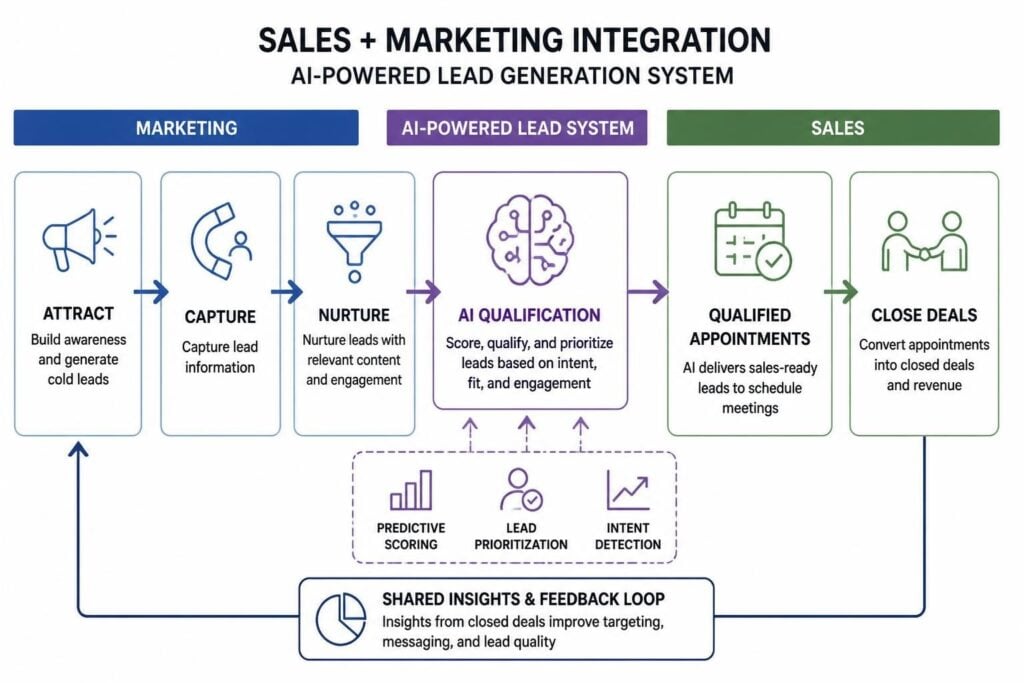
Building a thriving sales and marketing business in 2026 requires more than just following traditional playbooks. The landscape has fundamentally shifted, with artificial intelligence revolutionizing how companies generate leads, nurture prospects, and close deals. Modern businesses must align their sales and marketing efforts seamlessly while leveraging advanced technologies to stay competitive. The companies that succeed are those that understand how to transform cold leads into ready-to-buy customers through strategic automation, transparent processes, and value-driven approaches that prioritize client outcomes over vanity metrics.
The Foundation of Modern Sales and Marketing Integration
Every successful sales and marketing business today operates on a foundation of alignment between two historically siloed departments. When these teams work in harmony, businesses experience higher customer retention rates, faster deal velocity, and significantly improved revenue outcomes.
The critical difference between average and exceptional performance lies in how well your organization implements sales and marketing alignment best practices. Companies that achieve true alignment see 36% higher customer retention rates and 38% higher sales win rates compared to their misaligned competitors.
Creating Unified Revenue Goals
Your sales and marketing business must operate with shared objectives that cascade throughout both departments. Here's what unified goal-setting looks like in practice:
- Revenue targets that both teams contribute to and are measured against
- Pipeline velocity metrics that track lead progression from first touch to closed deal
- Customer lifetime value calculations that inform acquisition spending decisions
- Quality score agreements that define what constitutes a marketing-qualified lead versus a sales-qualified lead
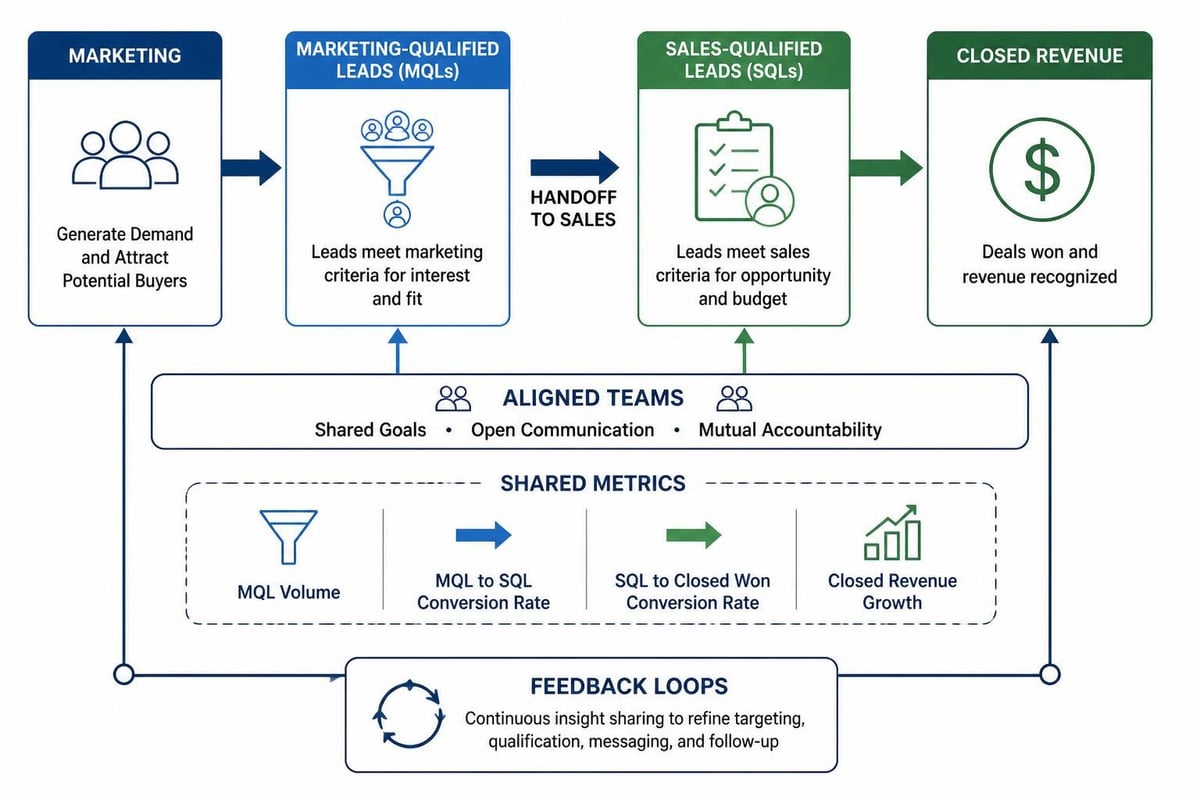
When teams share KPIs, accountability increases and finger-pointing decreases. Marketing becomes invested in lead quality, not just quantity. Sales provides feedback that helps marketing refine targeting and messaging. This virtuous cycle creates momentum that compounds over time.
Leveraging AI Systems for Lead Generation Excellence
The sales and marketing business landscape has been completely transformed by artificial intelligence. What once required armies of researchers, cold callers, and data analysts can now be accomplished through sophisticated AI systems that work around the clock.
According to research on AI in direct marketing, machine learning algorithms can predict customer behavior with unprecedented accuracy, enabling businesses to focus resources on the highest-value opportunities. This isn't about replacing human intelligence but augmenting it with computational power that processes millions of data points instantaneously.
Implementing AI-Powered Lead Qualification
Modern lead generation doesn't stop at collecting contact information. The real value comes from understanding who's ready to buy right now versus who needs additional nurturing. AI systems excel at this distinction by analyzing:
- Behavioral signals across websites, email engagement, and content consumption patterns
- Firmographic data that indicates whether prospects match your ideal customer profile
- Intent signals from search behavior, technology stack changes, and hiring patterns
- Timing indicators such as budget cycles, competitive contract renewals, and organizational changes
Companies implementing tools for lead generation that incorporate AI capabilities report dramatic improvements in conversion rates. The technology identifies patterns human analysts would miss, surfacing opportunities that might otherwise go unnoticed until competitors act first.
| Lead Source | Traditional Qualification Rate | AI-Enhanced Qualification Rate | Time to Qualification |
|---|---|---|---|
| Inbound Web | 12-15% | 28-32% | 3-4 hours vs. instant |
| Cold Outreach | 3-5% | 9-14% | 2-3 days vs. real-time |
| Referrals | 35-40% | 52-61% | 1-2 days vs. immediate |
| Event Leads | 8-11% | 19-25% | 1-2 weeks vs. same day |
Automating Appointment Setting Without Losing the Human Touch
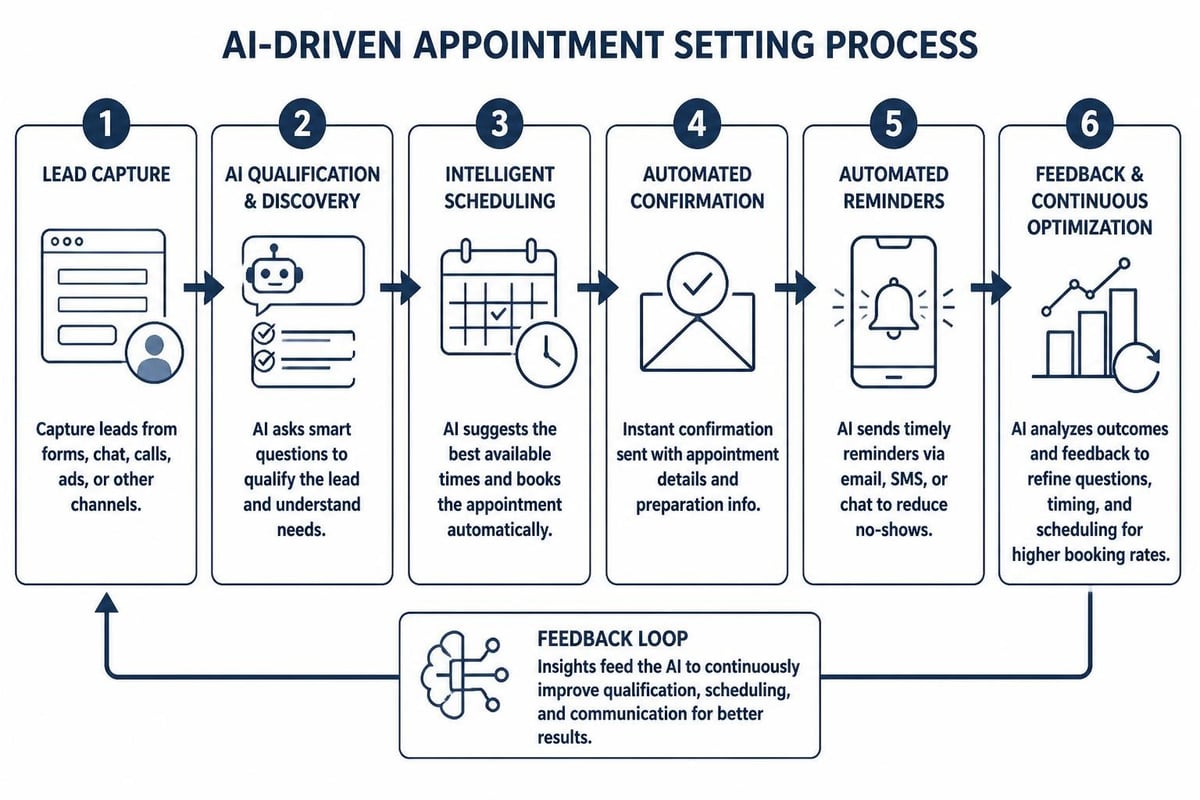
Your sales and marketing business growth depends heavily on converting interest into conversations. Appointment setting has traditionally been one of the most resource-intensive activities, requiring dedicated teams to handle scheduling, rescheduling, qualification calls, and follow-up sequences.
Automation changes this equation entirely. Modern systems can handle the entire appointment booking process while maintaining personalization and responsiveness that prospects expect. The key is designing automation that feels helpful, not robotic.
Building Intelligent Booking Workflows
Effective automated appointment systems incorporate multiple layers of intelligence. They don't just send calendar links. They understand context, timing, and prospect preferences. Here's how sophisticated automation works:
Dynamic scheduling that adjusts availability based on lead score, ensuring your best salespeople connect with your highest-value prospects first. Personalized outreach sequences that reference specific pain points, industry challenges, or content the prospect engaged with previously. Intelligent follow-up cadences that know when to persist and when to step back based on engagement signals.
The demand generation process becomes significantly more efficient when automation handles repetitive tasks while humans focus on strategic relationship building. This division of labor maximizes both productivity and prospect experience.
Transforming Cold Leads Into Ready-to-Buy Customers
The most valuable skill in any sales and marketing business is the ability to warm up cold prospects systematically. This isn't about aggressive tactics or manipulation. It's about providing genuine value at every stage of the buyer journey while building trust and credibility.
Cold leads become warm when they experience your expertise firsthand. This happens through strategic content delivery, personalized insights, and timely engagement that addresses their specific challenges.
Nurture Sequences That Actually Convert
Too many businesses treat lead nurturing as an afterthought. They dump prospects into generic email sequences and wonder why conversion rates remain abysmal. Effective nurturing requires segmentation, personalization, and value delivery at scale.
Your nurture architecture should include:
- Educational content that solves real problems without requiring a purchase
- Case studies and social proof from companies similar to your prospects
- Interactive tools like calculators, assessments, or diagnostic resources
- Exclusive insights that demonstrate your industry expertise
- Soft CTAs that invite engagement without demanding commitment
When exploring B2B lead generation companies, look for partners that understand this nuanced approach. The best providers don't just generate names and numbers. They create pathways to purchase that respect the buyer's timeline while accelerating their decision-making process.
The Guaranteed Growth Partnership Model
Traditional agency relationships often create misaligned incentives. Agencies get paid regardless of results, leading to campaigns optimized for billable hours rather than business outcomes. A sales and marketing business built on guaranteed growth partnerships flips this dynamic entirely.
In this model, agency success is directly tied to client success. This alignment creates powerful incentives for transparency, experimentation, and continuous improvement. According to insights from the U.S. Small Business Administration, businesses that work with performance-based partners see significantly better ROI than those operating under traditional retainer models.
Key Components of Performance-Based Partnerships
What makes a guaranteed growth model work? Several critical elements must be in place:
Clear, measurable success metrics agreed upon before any work begins. Both parties need to understand exactly what constitutes success and how it will be measured. Shared risk and reward structures that align financial incentives. If the client doesn't hit growth targets, the agency's compensation reflects that reality. Transparent reporting systems that provide real-time visibility into campaign performance, lead quality, and revenue impact.
This approach fundamentally changes the relationship dynamic. Instead of vendor and client, you have strategic partners invested in mutual success. When utilizing email marketing AI and other advanced technologies, this partnership model ensures continuous optimization focused on actual business results rather than technical implementation for its own sake.
Optimizing Your Sales Process for Predictable Revenue
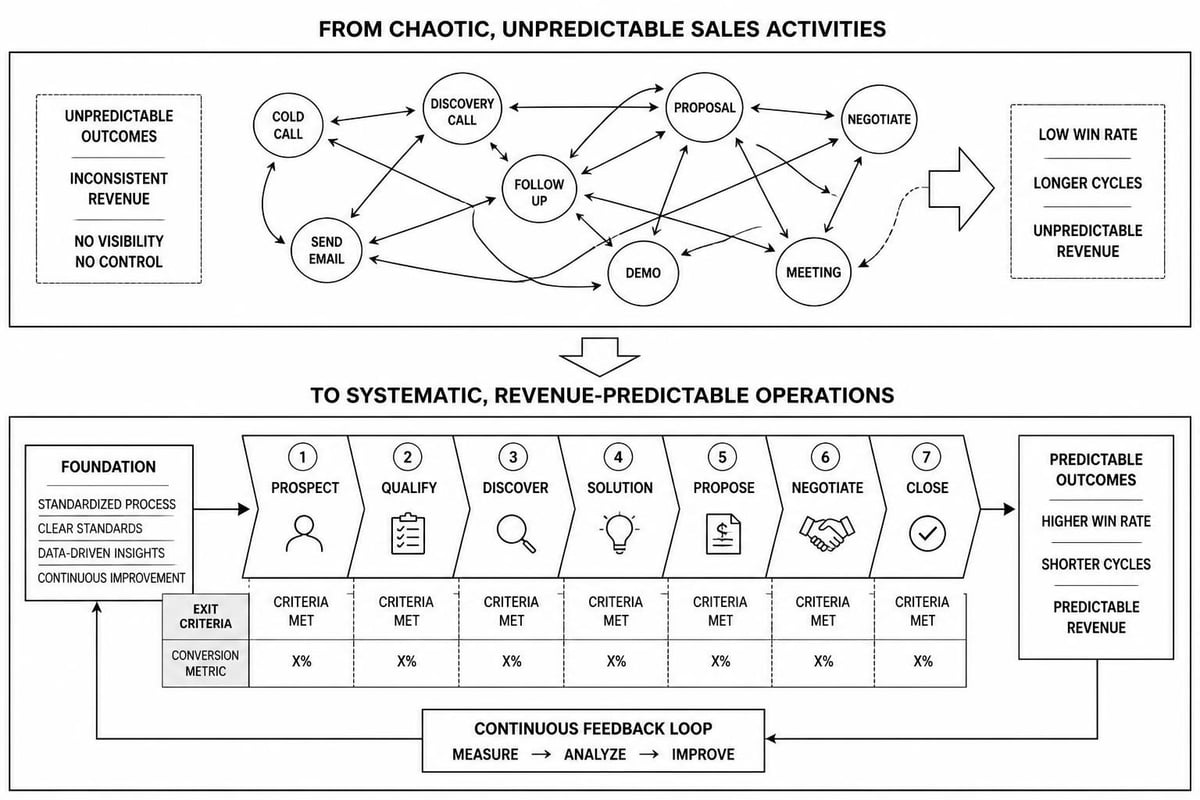
A sales and marketing business achieves scalability when it can predict revenue with reasonable accuracy. Predictability requires systematic processes, consistent execution, and data-driven decision making at every stage of the sales cycle.
Many organizations struggle with revenue forecasting because their sales processes lack structure. Deals progress unpredictably. Win rates fluctuate wildly. Pipeline coverage varies dramatically from quarter to quarter. This chaos makes planning impossible and growth unsustainable.
Building Your Revenue Prediction Engine
Predictable revenue starts with understanding your key conversion metrics at each stage. You need to know:
- What percentage of marketing-qualified leads become sales-qualified leads
- What percentage of SQLs convert to opportunities
- What percentage of opportunities close as won deals
- How long each stage typically takes
- What actions most strongly correlate with progression to the next stage
With this data, you can work backward from revenue targets to determine required activity levels. If you need $1 million in new revenue next quarter and your average deal size is $50,000, you need 20 closed deals. If your opportunity-to-close rate is 25%, you need 80 qualified opportunities. If your SQL-to-opportunity rate is 40%, you need 200 SQLs, and so on.
The best marketing platforms integrate with your CRM to provide this visibility automatically, eliminating manual reporting and ensuring data accuracy. When teams can see exactly where they stand relative to targets in real-time, they can course-correct before small gaps become major shortfalls.
Advanced Strategies for Sales and Marketing Coordination
Beyond foundational alignment, high-performing organizations implement sophisticated coordination strategies that compound their competitive advantages. These sales and marketing alignment best practices separate market leaders from followers.
Joint Campaign Planning and Execution
The most effective campaigns involve both teams from conception through analysis. Marketing brings expertise in messaging, channel selection, and creative execution. Sales contributes insights about objections, competitive positioning, and what actually resonates in conversations with prospects.
When these perspectives merge during planning, campaigns become dramatically more effective. Marketing creates content that directly addresses the obstacles sales encounters. Sales provides feedback that helps marketing refine targeting to focus on truly qualified prospects.
Coordinated enablement programs ensure sales teams understand how to leverage marketing campaigns in their outreach. Shared content libraries organized by buyer stage, industry, and use case make it easy for salespeople to find relevant materials. Regular collaboration sessions where teams review what's working and what isn't create continuous improvement cycles.
Measuring What Matters in Your Sales and Marketing Business
Vanity metrics destroy businesses. Website traffic means nothing if it doesn't convert. Social media followers are worthless if they aren't potential customers. Email open rates are irrelevant if nobody takes action.
Your measurement framework must focus ruthlessly on metrics that correlate with revenue. Everything else is distraction. This principle guides how successful organizations approach analytics and reporting.
Essential Metrics for Growth-Focused Teams
Here's what actually matters when evaluating your sales and marketing business performance:
| Metric Category | Key Indicators | Why It Matters |
|---|---|---|
| Lead Quality | MQL-to-SQL conversion rate, SQL-to-opportunity rate | Shows whether marketing targets the right prospects |
| Pipeline Health | Pipeline velocity, stage progression time, deal slippage rate | Indicates process efficiency and forecast accuracy |
| Revenue Impact | Customer acquisition cost, lifetime value, payback period | Determines sustainable growth potential |
| Team Performance | Activities per rep, conversion by rep, quota attainment | Identifies coaching opportunities and top performers |
Resources like Highspot’s guide on sales and marketing best practices emphasize the importance of selecting metrics that drive behavior change. If measuring something doesn't lead to better decisions or actions, stop measuring it.
Creating Scalable Systems That Drive Growth
The difference between a sales and marketing business that plateaus and one that scales exponentially comes down to systems. Ad hoc activities produce unpredictable results. Systematic processes create compound growth.
Every aspect of your go-to-market motion should be documented, measured, and optimized. From how leads are captured to how deals are closed, standardization enables improvement. You can't optimize what you haven't defined.
The Technology Stack for Scalability
Modern sales and marketing operations require integrated technology that automates routine tasks while providing visibility into performance. Your stack should include:
- CRM platform as the single source of truth for customer data and interactions
- Marketing automation for nurture campaigns, lead scoring, and behavioral tracking
- Sales engagement tools for outreach sequencing, call recording, and email tracking
- Analytics and BI platforms for reporting, forecasting, and performance management
- Conversation intelligence for analyzing sales calls and identifying improvement opportunities
Companies exploring leads telemarketing strategies benefit from technology that tracks call outcomes, identifies successful talk tracks, and continuously improves targeting based on results. The same principle applies across all channels and tactics.
Building a Culture of Continuous Improvement
Technology and processes matter, but culture ultimately determines success or failure. A sales and marketing business built on continuous improvement principles adapts to market changes, learns from failures, and consistently raises performance standards.
This culture starts with leadership modeling the behaviors they want to see. When executives ask questions instead of providing answers, teams develop problem-solving capabilities. When leaders celebrate smart failures that generate learning, innovation flourishes. When management shares both successes and setbacks transparently, trust deepens.
Implementing Regular Review Cycles
High-performing teams operate in cadences that create momentum without causing burnout. Weekly pipeline reviews keep deals progressing. Monthly performance retrospectives identify patterns and opportunities. Quarterly planning sessions align teams around evolving priorities.
Each review cycle should answer three questions: What worked that we should do more of? What didn't work that we should stop or change? What haven't we tried that might create breakthrough results? This framework prevents teams from getting stuck in unproductive patterns while encouraging experimentation within appropriate boundaries.
Understanding insights from organizations like UserGems on alignment best practices helps teams structure these review sessions for maximum impact. The goal isn't perfection but progressive improvement that compounds over time.
Building a successful sales and marketing business in 2026 requires strategic alignment, advanced technology, and relentless focus on measurable outcomes. By implementing AI-powered systems, automating routine processes, and creating genuine partnerships focused on guaranteed growth, organizations can transform their revenue trajectory while delivering exceptional value to customers. Aletto specializes in helping businesses implement these exact strategies through AI-driven lead generation, automated appointment booking, and transparent, performance-based partnerships that align our success with yours. If you're ready to move beyond traditional agency relationships and build a predictable revenue engine, let's explore how Aletto can accelerate your growth journey.