
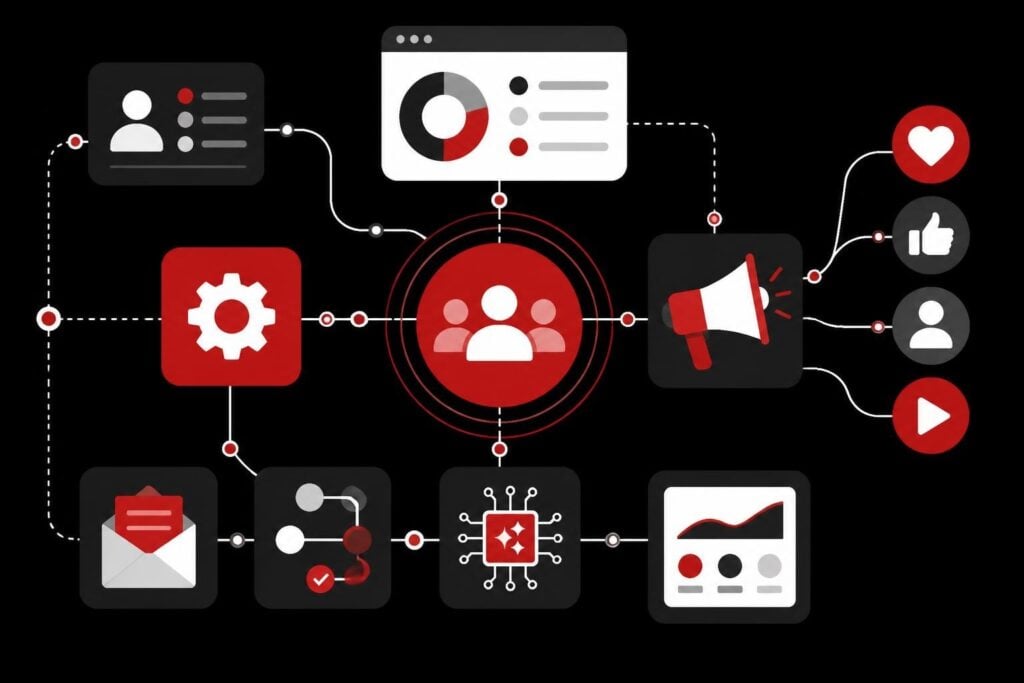
The marketing landscape has evolved dramatically, and success now depends on leveraging the right technology stack to generate qualified leads and drive predictable revenue growth. Today's businesses need sophisticated tools for marketing that automate workflows, track customer journeys, and convert cold prospects into ready-to-buy customers. Whether you're scaling a startup or optimizing enterprise operations, selecting the proper marketing technology determines whether you're leading your market or struggling to keep pace. The challenge isn't finding tools-it's identifying which platforms deliver measurable ROI and integrate seamlessly into your growth strategy.
Essential Marketing Automation Platforms
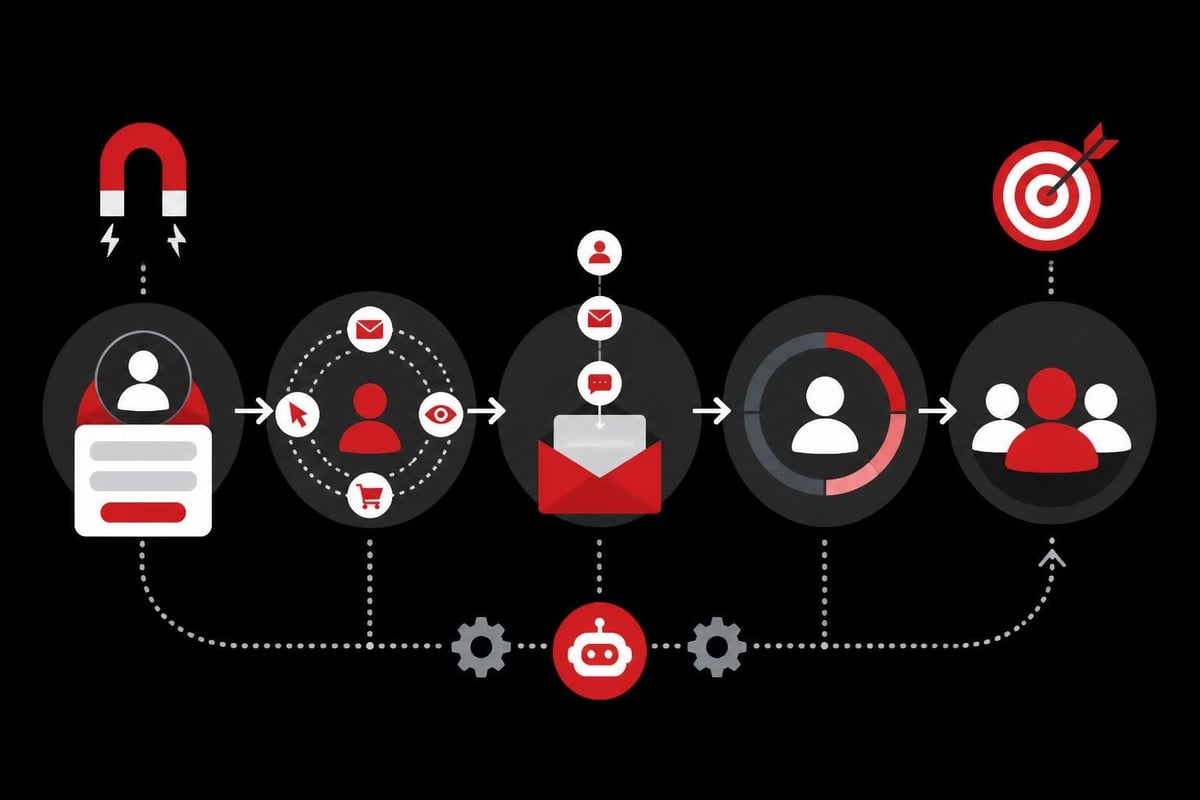
Marketing automation has become the backbone of scalable lead generation strategies. These systems transform how businesses nurture prospects, manage campaigns, and measure performance across multiple channels simultaneously.
HubSpot remains the gold standard for all-in-one marketing automation, offering comprehensive CRM integration, email workflows, and landing page builders. Its strength lies in unifying sales and marketing teams under one platform, ensuring every touchpoint is tracked and optimized.
ActiveCampaign excels at sophisticated automation sequences with conditional logic that responds to prospect behavior in real-time. For businesses focused on converting qualified leads, ActiveCampaign's predictive sending and split testing capabilities ensure messages reach prospects exactly when they're most receptive.
The Constant Contact Lead Gen & CRM platform offers marketing automation tailored specifically for small and mid-sized businesses, combining email marketing with robust CRM functionality at competitive pricing.
Selecting the Right Automation Solution
| Platform | Best For | Key Strength | Starting Price |
|---|---|---|---|
| HubSpot | All-in-one marketing | Comprehensive features | Free tier available |
| ActiveCampaign | Advanced automation | Behavioral triggers | $29/month |
| Constant Contact | Small businesses | User-friendly interface | $12/month |
| Pardot | B2B enterprises | Salesforce integration | $1,250/month |
When evaluating automation platforms, prioritize systems that align with your lead generation strategy and provide transparent analytics. The best tools for marketing don't just automate tasks-they provide actionable insights that improve conversion rates over time.
CRM Systems That Drive Revenue
Customer Relationship Management platforms serve as the central nervous system of your marketing operations, storing prospect data, tracking interactions, and enabling personalized communication at scale.
Salesforce dominates the enterprise market with unparalleled customization options and third-party integrations. However, its complexity requires significant implementation time and technical expertise.
Pipedrive takes a sales-focused approach with visual pipeline management that helps teams prioritize high-value opportunities. Its simplicity makes it ideal for businesses that need immediate deployment without extensive training.
For companies managing B2B sales leads, integrating your CRM with marketing automation creates a seamless handoff between marketing and sales teams. This integration ensures no qualified prospect falls through the cracks.
Consider these factors when selecting a CRM:
- Integration capabilities with your existing tools for marketing
- Customization options that match your sales process
- Reporting features that provide real-time visibility into pipeline health
- Mobile accessibility for teams working remotely
- Scalability to grow with your business
The most effective CRM implementations focus on data hygiene and consistent usage across teams. Technology alone doesn't generate revenue-disciplined processes combined with the right platforms drive results.
Analytics and Data Intelligence Tools
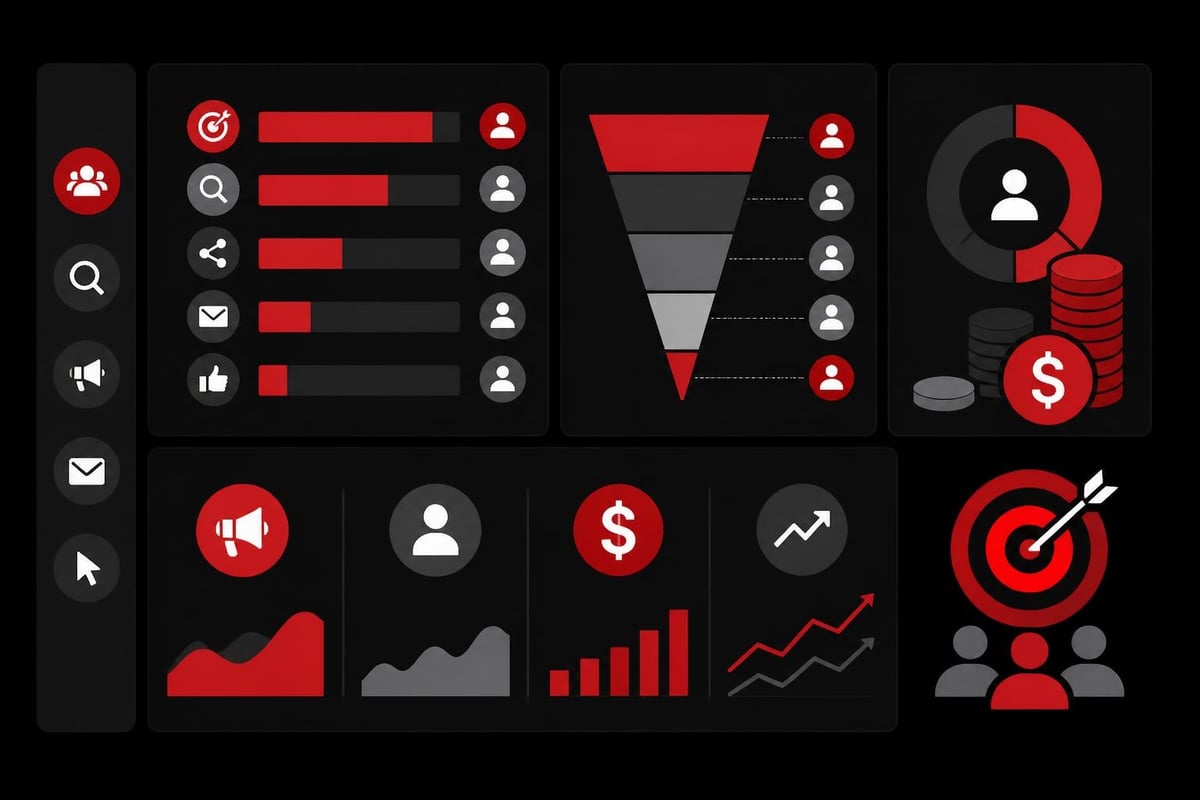
Understanding campaign performance and customer behavior separates guessing from strategic decision-making. Modern analytics platforms transform raw data into actionable intelligence that optimizes every marketing dollar spent.
Google Analytics 4 provides foundational website analytics with AI-powered insights and cross-platform tracking. Its predictive metrics help identify which prospects are most likely to convert, enabling smarter budget allocation.
Hotjar reveals how visitors actually interact with your website through heatmaps, session recordings, and feedback polls. This qualitative data complements quantitative metrics, exposing friction points in your conversion funnel.
SpyFu offers competitive intelligence through comprehensive keyword tracking and PPC analysis, allowing you to learn from competitors' successes and failures. Understanding market positioning helps refine your unique value proposition and messaging strategy.
Implementing Data-Driven Marketing
- Define clear KPIs aligned with revenue objectives
- Set up proper tracking across all customer touchpoints
- Create custom dashboards for different stakeholder needs
- Schedule regular analysis sessions to identify trends
- Test hypotheses through controlled experiments
The comprehensive guide to B2B marketing tools emphasizes that effective analytics requires both technology and analytical skill. Invest in training teams to interpret data correctly and translate insights into action.
Content Creation and SEO Platforms
Content remains the foundation of digital marketing, attracting prospects, establishing authority, and nurturing relationships throughout the buyer journey. Modern tools for marketing accelerate content production while maintaining quality and SEO effectiveness.
Semrush provides comprehensive SEO research, competitive analysis, and content optimization features. Its Topic Research tool identifies high-value content opportunities based on search demand and competition levels.
Ahrefs excels at backlink analysis and organic traffic research, helping identify which content types and topics generate the most qualified traffic in your industry.
AI writing assistants have revolutionized content creation, with platforms like Jasper and Anyword generating first drafts, ad copy variations, and email sequences. However, human expertise remains essential for strategy, brand voice, and quality control.
For businesses integrating e-commerce with content marketing, partnering with specialized agencies like Wallmander Co ensures your platform architecture supports both technical SEO requirements and conversion optimization.
Content Marketing Technology Stack
- Research and planning: Semrush, AnswerThePublic, BuzzSumo
- Creation and optimization: Clearscope, Surfer SEO, Grammarly
- Visual content: Canva, Adobe Creative Suite, Visme
- Video production: Loom, Descript, Camtasia
- Distribution: Buffer, CoSchedule, Later
Your content technology should streamline production without sacrificing authenticity. The most effective end-to-end marketing strategies balance automation with genuine value creation.
Email Marketing and Communication Tools
Email continues delivering the highest ROI of any marketing channel when executed strategically. Modern email platforms combine sophisticated segmentation, automation, and deliverability optimization.
Mailchimp democratized email marketing for small businesses with intuitive design tools and affordable pricing. Its recent AI features predict optimal send times and subject lines based on subscriber behavior.
iContact provides robust email marketing features including automation workflows and AI-powered tools, making it particularly valuable for businesses prioritizing email as their primary nurture channel.
ConvertKit serves content creators and digital marketers with visual automation builders and subscriber tagging systems that enable sophisticated segmentation without technical complexity.
| Feature | Mailchimp | iContact | ConvertKit | ActiveCampaign |
|---|---|---|---|---|
| Visual automation builder | Yes | Yes | Yes | Advanced |
| A/B testing | Limited | Yes | Yes | Extensive |
| Behavioral triggers | Basic | Yes | Limited | Advanced |
| CRM integration | Additional cost | Included | Limited | Native |
| Landing pages | Yes | Yes | Yes | Yes |
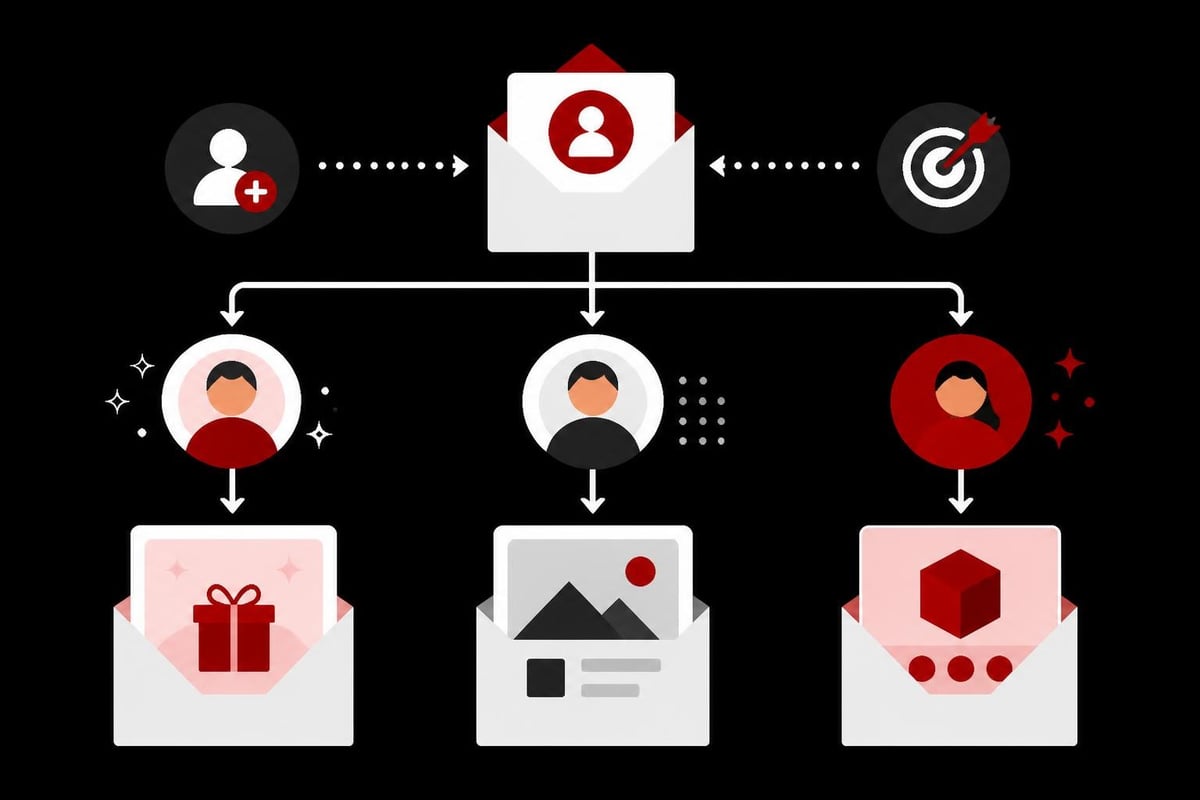
When building email campaigns for lead generation, focus on value-first messaging that educates prospects rather than immediately selling. The best performers send targeted content based on subscriber interests and engagement history.
Social Media Management Platforms
Managing multiple social channels consistently requires centralized tools for marketing that schedule content, monitor engagement, and measure performance across networks simultaneously.
Hootsuite manages unlimited social profiles from one dashboard, supporting content scheduling, team collaboration, and basic analytics. Its strength lies in consolidating multiple brand accounts and team workflows.
Sprout Social combines publishing capabilities with sophisticated social listening and customer service features. Its unified inbox helps teams respond to inquiries across platforms without missing messages.
Buffer prioritizes simplicity with straightforward scheduling and analytics at competitive pricing. For businesses just establishing social presence, Buffer provides essential functionality without overwhelming complexity.
Effective social media marketing for lead generation companies requires understanding platform algorithms and audience behavior patterns. Tools provide efficiency, but strategy determines results.
Advertising and Paid Media Tools
Paid advertising accelerates growth when coupled with targeting precision and continuous optimization. Modern advertising platforms leverage machine learning to improve performance automatically.
Google Ads reaches prospects actively searching for solutions, making it ideal for capturing high-intent traffic. Smart Bidding uses AI to optimize bids based on conversion likelihood.
Facebook Ads Manager enables sophisticated audience targeting based on demographics, interests, and behaviors across Facebook and Instagram. For businesses running Facebook lead campaigns, native lead forms reduce friction by pre-filling contact information.
LinkedIn Campaign Manager delivers B2B targeting unmatched by other platforms, allowing precise filtering by job title, company size, industry, and seniority. Despite higher costs per click, LinkedIn often generates higher-quality leads for professional services.
The evolution of AI in digital advertising has transformed campaign management, with platforms now predicting conversion probability and automatically adjusting creative and targeting parameters.
Paid Media Best Practices
- Start with clear conversion tracking implementation
- Test multiple ad variations simultaneously
- Segment audiences for personalized messaging
- Monitor frequency to prevent ad fatigue
- Analyze performance by device, location, and time
Remember that advertising tools amplify existing messaging-they don't fix fundamental positioning or value proposition problems. Ensure your offer resonates before scaling budget.
Conversion Optimization and Testing Platforms
Converting website visitors into leads requires systematic testing and optimization. These tools for marketing identify what works and eliminate guesswork from decision-making.
Optimizely provides enterprise-grade A/B testing and personalization features that adapt website experiences based on visitor characteristics and behavior.
Unbounce specializes in landing page creation and testing with drag-and-drop builders and AI-powered copywriting suggestions. Its Smart Traffic feature automatically routes visitors to the page variant most likely to convert them.
VWO combines testing with heatmaps and session recordings, providing both quantitative and qualitative insights into conversion barriers.
When optimizing sales conversion funnels, prioritize testing elements with the largest potential impact: headlines, calls-to-action, form length, and value propositions. Small improvements compound over time into significant revenue increases.
Integration and Workflow Management
The most powerful marketing technology stacks connect seamlessly, sharing data across platforms and eliminating manual tasks. Integration tools create unified systems from disparate applications.
Zapier connects over 5,000 applications through automated workflows called Zaps. Common use cases include syncing CRM contacts with email platforms, creating tasks from form submissions, and posting content across multiple channels.
Make (formerly Integromat) offers more sophisticated automation logic with visual workflow builders and advanced data transformation capabilities.
native integrations between platforms often provide deeper functionality than third-party connectors. When evaluating tools for marketing, prioritize platforms with robust API ecosystems.
The marketing tools categorized by primary function demonstrate how specialized solutions serve specific needs while integration platforms connect them into cohesive systems.
Selecting Your Marketing Technology Stack
Building an effective marketing technology stack requires balancing capability, complexity, and cost. Start with core platforms that address your primary bottleneck, then expand strategically.
Stack Selection Framework
Assess current state:
- Identify your biggest marketing challenges
- Audit existing tools and utilization rates
- Map your ideal customer journey
Define requirements:
- List must-have versus nice-to-have features
- Establish budget constraints and ROI expectations
- Determine integration requirements
Evaluate options:
- Request demos from shortlisted platforms
- Test with free trials when available
- Gather feedback from end-users
Implement systematically:
- Start with proper configuration and data migration
- Train teams thoroughly on new platforms
- Monitor adoption and adjust processes
The extensive collection of digital marketing tools available in 2026 means almost every marketing need has multiple solution options. Focus on tools that integrate well and align with your specific business model.
For businesses focused on B2B lead generation online, prioritize platforms that provide detailed attribution reporting and enable personalized outreach at scale.
Measuring Marketing Technology ROI
Technology investments must demonstrate measurable returns. Track these metrics to evaluate whether your tools for marketing justify their costs:
- Time savings from automation versus manual processes
- Conversion rate improvements from optimization tools
- Cost per lead reduction from better targeting and efficiency
- Revenue attribution to specific platforms and campaigns
- User adoption rates across your team
Poor adoption undermines even the best platforms. Invest in training, create documentation, and establish accountability for consistent tool usage.
The comprehensive overview of marketing tools emphasizes that successful implementation requires organizational alignment beyond just technological capability. Tools enable strategy-they don't replace it.
Emerging Technologies and Future Trends
The marketing technology landscape continues evolving rapidly. AI capabilities now permeate most platforms, from predictive analytics to automated content creation.
Conversational AI enables chatbots that qualify leads, answer questions, and schedule appointments without human intervention. These systems handle initial prospect interactions while seamlessly escalating complex inquiries to human representatives.
Predictive analytics identifies which prospects are most likely to convert, enabling smarter resource allocation and personalized engagement strategies.
Account-based marketing platforms coordinate multi-channel campaigns targeting specific high-value accounts with personalized messaging across teams.
As advertising and AI converge, expect increased automation in campaign management, creative optimization, and audience targeting. The most successful marketers will combine AI efficiency with human creativity and strategic thinking.
Staying current with marketing platform developments ensures your technology stack remains competitive as new capabilities emerge.
The right tools for marketing transform how businesses generate leads, nurture prospects, and drive revenue growth through systematic, data-driven processes. Success requires selecting platforms that align with your specific business model and customer journey while ensuring proper implementation and team adoption. Aletto combines advanced AI systems with proven tools for marketing to generate qualified sales leads and automate appointment bookings, delivering guaranteed growth through transparent, value-driven partnerships. If you're ready to transform your marketing technology into predictable revenue, explore how Aletto's integrated approach can accelerate your results.