
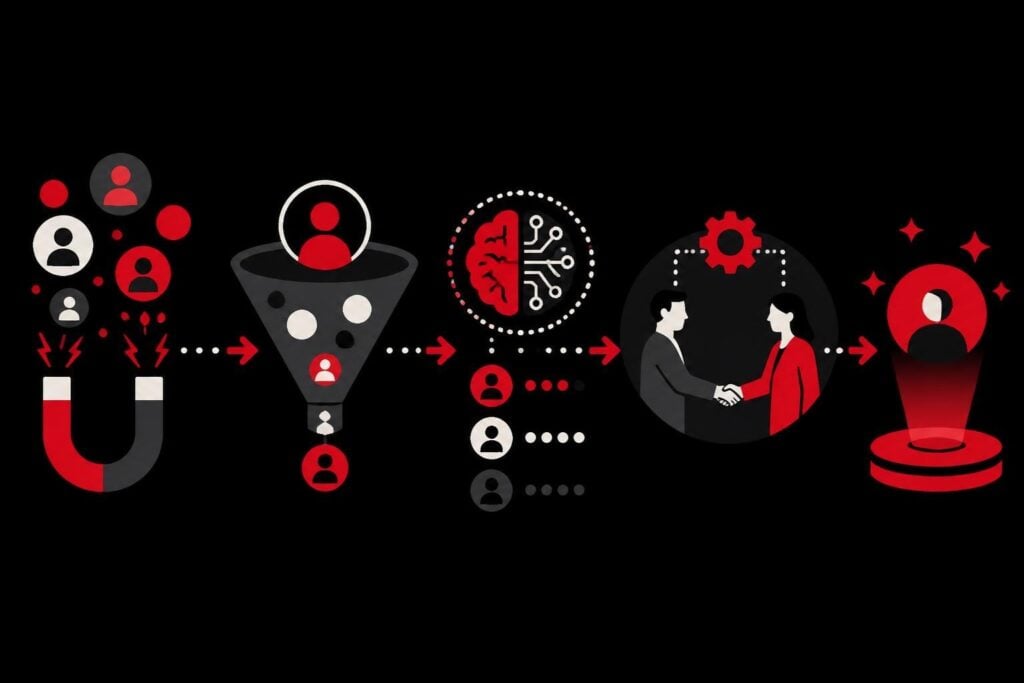
Every business knows the frustration of chasing leads that go nowhere. Your sales team spends hours on calls that never convert. Your marketing budget disappears into campaigns that generate noise instead of revenue. The problem isn't that you lack leads-it's that you're wasting resources on the wrong ones. Smart companies have cracked the code on lead generation and qualification, building systems that identify ready-to-buy prospects and filter out time-wasters before they drain your team's energy. This strategic approach transforms your entire sales operation, replacing guesswork with predictable growth.
Understanding the Foundation of Lead Generation and Qualification
Lead generation and qualification represent two sides of the same coin, yet many businesses treat them as separate activities. Generation focuses on attracting potential customers through various channels-content marketing, paid advertising, social media, partnerships, and referrals. Qualification determines which of those prospects actually match your ideal customer profile and possess genuine buying intent.
The distinction matters because volume without quality creates a bottleneck. Marketing teams celebrate thousands of new leads while sales teams struggle to convert even a fraction of them. This disconnect wastes budget, demoralizes your team, and leaves real opportunities buried under unqualified noise.
Why Traditional Approaches Fail
Most companies follow an outdated playbook that prioritizes quantity over quality. They cast wide nets, capture contact information, and dump everything into their CRM for sales to sort through. This approach made sense twenty years ago when digital channels were new and competition was lighter.
Today's landscape demands precision. Buyers research independently, comparison-shop across multiple vendors, and expect personalized experiences. Generic outreach gets ignored. Cold prospects who barely fit your criteria waste valuable selling time. The cost of pursuing bad leads has skyrocketed while the tolerance for inefficiency has disappeared.
Modern lead generation and qualification must work together from the start, not as sequential steps but as integrated systems that continuously refine your pipeline. The latest research on lead qualification frameworks confirms that companies using structured qualification models achieve significantly higher conversion rates and shorter sales cycles.
Building Your Lead Generation System
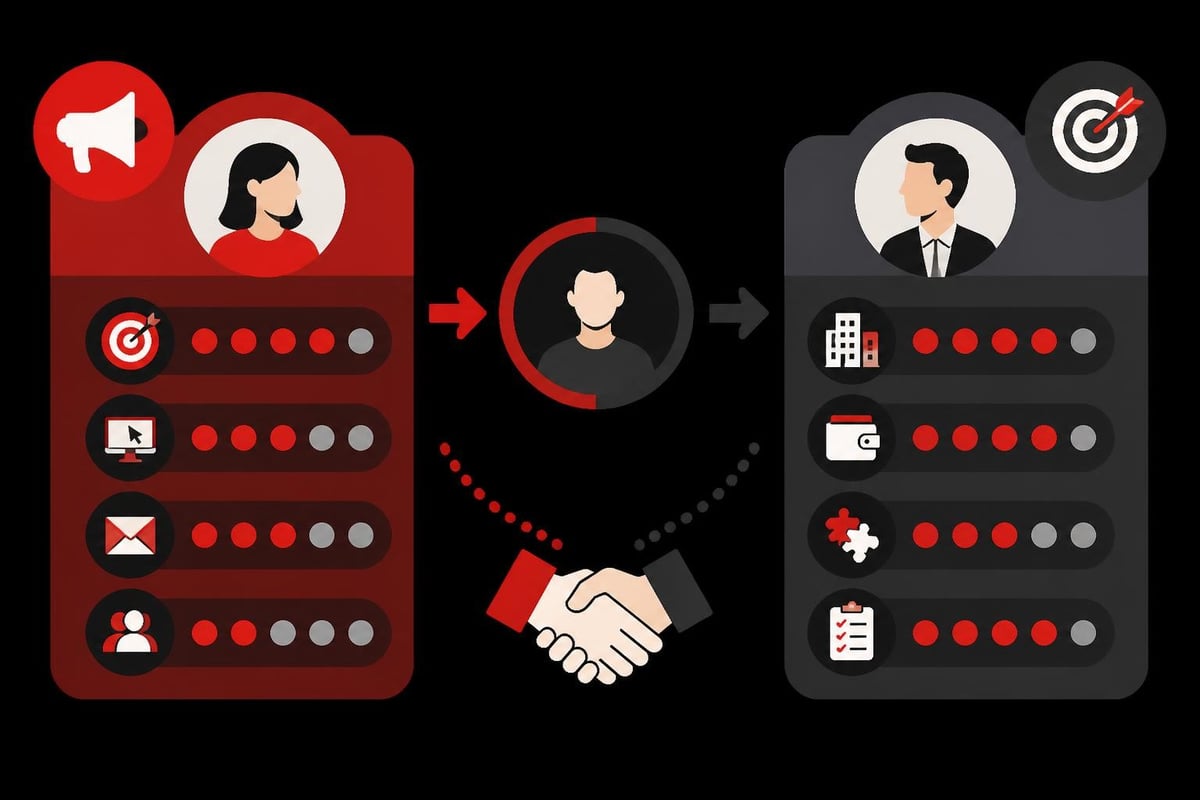
Effective lead generation starts with crystal-clear targeting. You need to know exactly who you're trying to reach, what problems they're facing, and where they spend their time. This clarity prevents the scattershot approach that generates irrelevant traffic and unqualified contacts.
Defining Your Ideal Customer Profile
Your ideal customer profile (ICP) goes beyond basic demographics. It encompasses firmographics for B2B (company size, industry, revenue, growth stage) and psychographics (challenges, goals, decision-making processes). Companies with well-defined ICPs spend less on acquisition and close deals faster because they focus resources on prospects who actually need what they offer.
Consider these essential ICP elements:
- Company characteristics: Industry verticals, employee count, annual revenue, geographic location
- Buying behavior: Budget authority, decision timeline, procurement processes
- Pain points: Specific challenges your solution addresses, current workarounds, urgency level
- Technology stack: Existing tools, integration requirements, technical sophistication
- Growth indicators: Hiring trends, funding events, market expansion signals
Once you've mapped your ICP, every marketing channel and message should align with reaching that specific audience. This focus dramatically improves lead quality while controlling acquisition costs.
Choosing High-Performance Channels
Not all lead sources perform equally. Your channel strategy should prioritize platforms where your ICP actively seeks solutions. For B2B companies, LinkedIn advertising, industry-specific publications, and strategic partnerships often outperform broad social media campaigns. For B2C, the equation shifts toward search intent, social engagement, and influencer collaborations.
| Channel Type | Best For | Qualification Level | Typical Cost |
|---|---|---|---|
| Paid Search | High intent buyers | Medium-High | $$$ |
| LinkedIn Ads | B2B decision-makers | Medium | $$$$ |
| Content Marketing | Early-stage research | Low-Medium | $$ |
| Referral Programs | Pre-qualified prospects | High | $ |
| Event Marketing | Relationship building | Medium-High | $$$ |
The smartest approach combines multiple channels in an integrated strategy. Content marketing attracts early-stage researchers, retargeting nurtures their interest, and direct outreach converts those showing strong engagement signals. This layered approach, often called demand generation, builds awareness while simultaneously identifying qualified prospects.
Implementing Qualification Frameworks That Work
Raw leads entering your system need immediate evaluation. Without structured qualification, sales teams waste 50% or more of their time on prospects who will never buy. The right framework transforms this chaos into a systematic process that surfaces your best opportunities.
Popular Qualification Models
Several proven frameworks help teams assess lead quality consistently. BANT (Budget, Authority, Need, Timeline) has served sales teams for decades by evaluating whether prospects can afford your solution, have decision-making power, actually need what you offer, and plan to buy within a reasonable timeframe.
CHAMP (Challenges, Authority, Money, Prioritization) flips the script by starting with the prospect's pain points rather than budget constraints. This approach recognizes that when the problem is severe enough, buyers find the budget. Understanding the differences between BANT and CHAMP helps you choose the right model for your sales cycle.
MEDDIC takes qualification even deeper with six criteria:
- Metrics: Quantifiable impact your solution delivers
- Economic Buyer: True budget holder and final decision-maker
- Decision Criteria: Formal evaluation process and requirements
- Decision Process: Steps, timeline, and stakeholders involved
- Identify Pain: Specific business problems creating urgency
- Champion: Internal advocate promoting your solution
Complex B2B sales often benefit from MEDDIC's thoroughness, while faster-moving markets may find BANT or CHAMP sufficient. The key is consistent application across your team so qualification remains objective and scalable.
Creating a Lead Scoring System
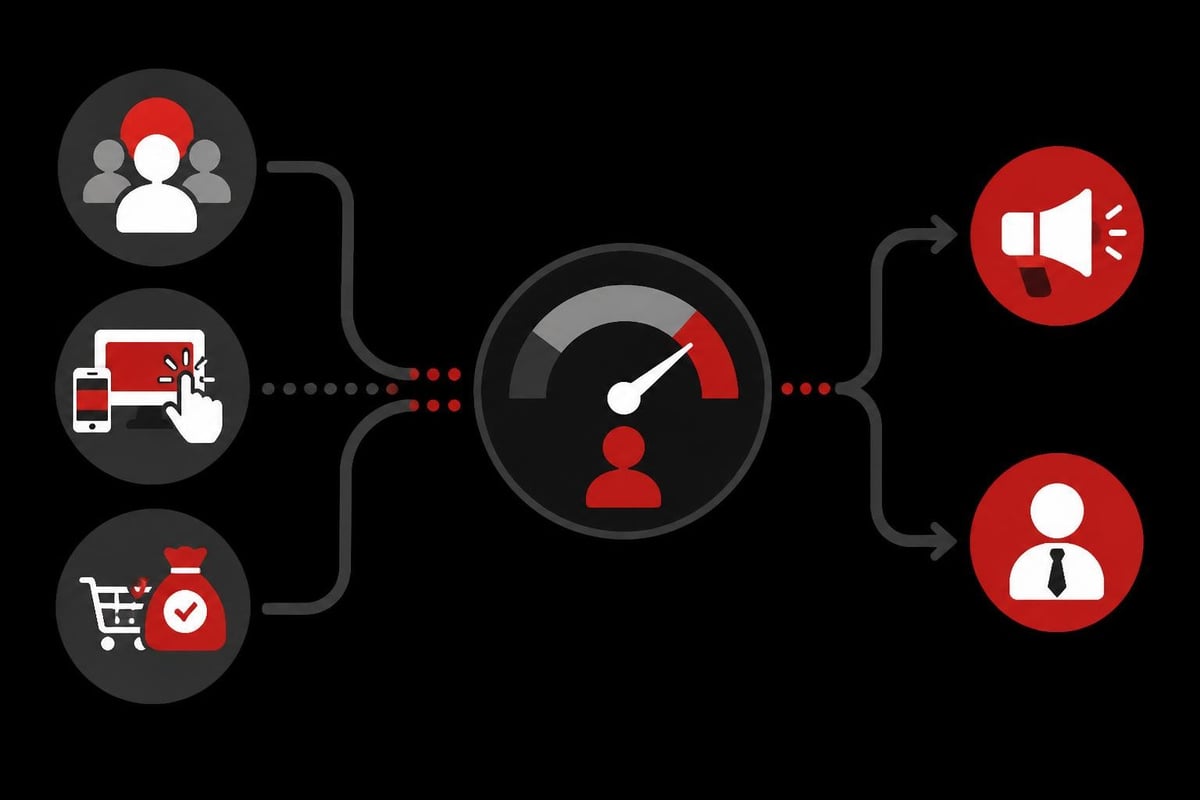
Lead scoring translates qualification criteria into numerical values that rank prospects automatically. You assign points for demographic fit (company size, industry, role), behavioral signals (website visits, content downloads, email engagement), and explicit interest indicators (demo requests, pricing inquiries).
High-performing scoring models balance implicit and explicit signals. Someone who matches your ICP perfectly but shows no engagement ranks lower than a decent-fit prospect actively researching solutions. The process of refining lead qualification requires continuous testing and adjustment based on which scored leads actually convert.
Your scoring thresholds determine when leads transition from marketing-qualified (MQL) to sales-qualified (SQL). Set the bar too low and sales gets flooded with weak prospects. Set it too high and genuine opportunities languish in marketing nurture sequences. Most successful companies establish multiple tiers-hot leads requiring immediate outreach, warm prospects needing additional nurturing, and cold contacts for long-term education.
Leveraging Technology for Automated Qualification
Manual qualification doesn't scale. As lead volume grows, human evaluation becomes inconsistent and bottlenecks form. Modern lead generation and qualification demands technological assistance to maintain quality while processing higher volumes.
AI-Powered Lead Intelligence
Artificial intelligence transforms qualification from a manual checklist into a predictive system. Generative AI helps sales teams discover client needs by analyzing conversation patterns, identifying hidden pain points, and suggesting personalized outreach strategies based on similar successful conversions.
AI systems can:
- Analyze company websites and social media to assess fit before first contact
- Monitor news feeds for triggering events (funding rounds, executive changes, market expansions)
- Predict conversion probability based on historical patterns
- Recommend optimal outreach timing and messaging
- Identify at-risk opportunities requiring intervention
This intelligence layer doesn't replace human judgment-it enhances it by surfacing insights sales teams would never catch manually. A rep might miss that a prospect's competitor just adopted your solution, creating competitive pressure. AI flags this signal and suggests leveraging it in outreach.
Integration and Automation Architecture
Your lead generation tools must work together seamlessly. Disconnected systems create gaps where leads get lost, qualification data doesn't transfer, and follow-up delays kill opportunities. Modern marketing and sales stacks connect through APIs, ensuring information flows automatically.
Essential integrations include:
- CRM and marketing automation: Bidirectional sync of lead data, scoring updates, engagement history
- Advertising platforms: Automatic audience creation from CRM segments, conversion tracking
- Communication tools: Activity logging, conversation intelligence, automated task creation
- Data enrichment services: Appending firmographic and contact information automatically
- Analytics platforms: Cross-channel attribution, conversion funnel analysis
When these systems communicate properly, leads move through qualification stages automatically based on their behaviors and characteristics. A prospect who attends a webinar, downloads a case study, and visits your pricing page triggers an automatic handoff to sales with full context. No manual intervention required.
Optimizing the Qualification Process
Even the best initial setup requires ongoing refinement. Markets shift, buyer behaviors evolve, and your product positioning changes. Successful companies treat lead generation and qualification as living systems that need regular optimization.
Analyzing Conversion Data
Your CRM contains the truth about what actually converts. Look beyond surface metrics like lead volume and cost-per-lead to understand qualification accuracy. Track which scored leads become customers, how long different segments take to close, and where prospects drop out of your funnel.
Key metrics to monitor monthly:
- MQL to SQL conversion rate
- SQL to opportunity conversion rate
- Average deal size by lead source
- Sales cycle length by qualification score
- Lead response time and its impact on conversion
- Win rate by industry, company size, and other ICP factors
These insights reveal where your qualification criteria need adjustment. If low-scoring leads convert at the same rate as high-scoring ones, your model isn't predictive enough. If certain sources generate high volumes but terrible conversion, cut spending there and reallocate budget to better-performing channels.
Aligning Sales and Marketing Teams
The handoff between marketing and sales represents the critical moment in lead qualification. Misalignment here causes qualified leads to stall while unqualified ones consume sales bandwidth. Regular communication between teams prevents this dysfunction.
Establish clear service-level agreements (SLAs) that define:
- What constitutes a qualified lead worthy of sales attention
- How quickly sales must follow up (industry standard: within 5 minutes for hot leads)
- What information marketing provides with each handoff
- When sales can reject leads back to marketing for further nurturing
- How both teams measure and report on shared goals
These agreements eliminate the blame game where marketing claims sales ignores good leads while sales insists marketing sends garbage. With objective criteria and mutual accountability, both teams work toward the same outcomes. Understanding when to upgrade leads to opportunities provides additional clarity on this crucial transition.
Advanced Qualification Strategies
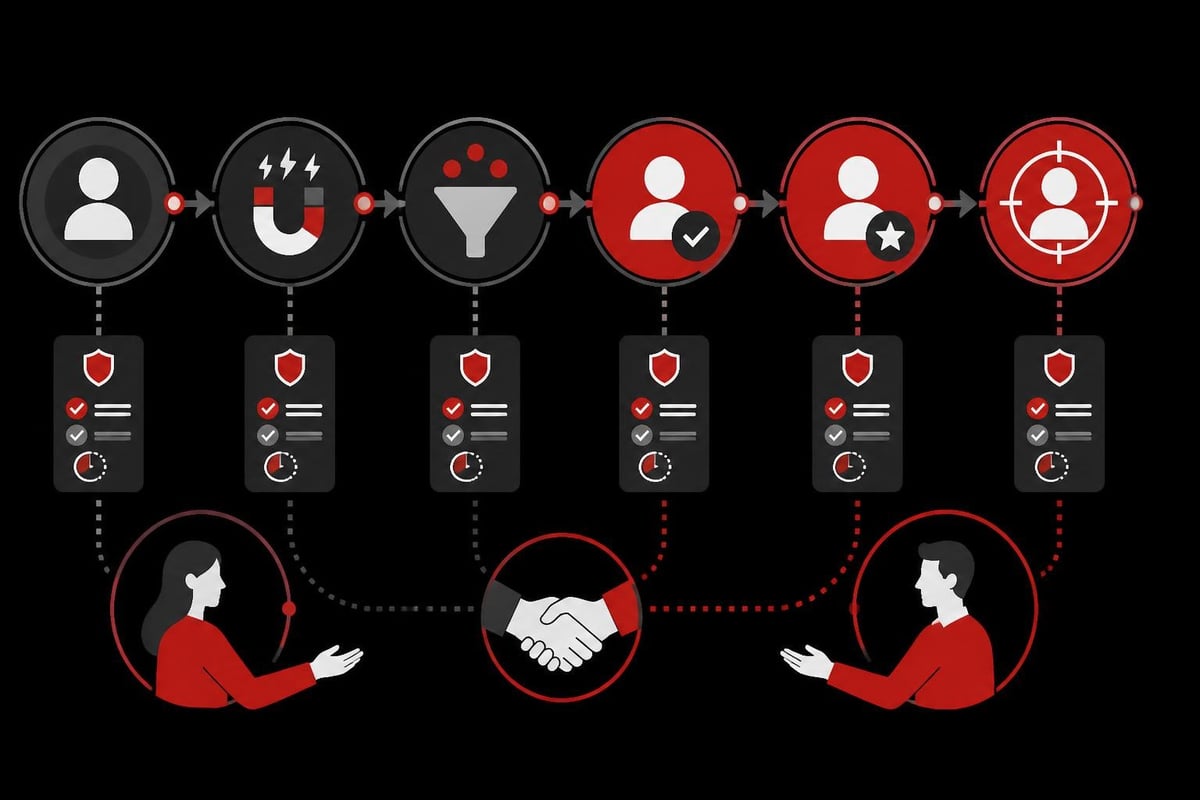
Once you've mastered the fundamentals, advanced tactics separate good lead generation and qualification programs from exceptional ones. These strategies require more sophistication but deliver disproportionate returns.
Intent Data and Predictive Analytics
Third-party intent data reveals when prospects are actively researching solutions in your category, even before they visit your website. By monitoring B2B buyer behavior across publisher networks, review sites, and industry forums, you identify companies showing buying signals and prioritize outreach accordingly.
Combining intent data with your first-party engagement creates powerful predictive models. A prospect researching "marketing automation platforms" (third-party signal) who then attends your webinar (first-party signal) becomes a priority contact. This layered intelligence approach improves qualification accuracy dramatically.
Account-Based Marketing Integration
For enterprise B2B sales, individual lead qualification matters less than account-level engagement. Account-based marketing (ABM) treats entire organizations as single units, tracking collective engagement across multiple contacts and departments.
ABM qualification asks different questions:
- How many stakeholders from this account have engaged with our content?
- Are we reaching decision-makers, influencers, and end-users?
- Does engagement come from multiple departments indicating broader interest?
- How does this account's engagement compare to others that became customers?
This approach recognizes that complex sales involve consensus across buying committees. One enthusiastic contact doesn't make a qualified opportunity if they lack budget authority and can't build internal support. The complete guide to sales qualification covers both individual and account-based approaches in depth.
Conversational Marketing and Chatbots
Real-time conversations qualify leads faster than forms and email sequences. Website chatbots ask qualifying questions immediately, routing high-value prospects to sales while providing self-service resources to others. This immediate engagement capitalizes on peak interest moments.
Smart chatbots don't just collect information-they qualify while providing value. A visitor asking about pricing gets questions about company size, current tools, and timeline before seeing rates. This natural conversation gathers qualification data without feeling like an interrogation.
For B2B lead generation strategies, conversational approaches often outperform static forms because they reduce friction while increasing data quality. Prospects willingly answer questions during helpful exchanges but abandon lengthy forms.
Measuring ROI and Continuous Improvement
Your lead generation and qualification system should deliver measurable business impact. Tracking the right metrics ensures you optimize for revenue growth, not vanity numbers that look impressive but don't drive results.
Cost Per Qualified Lead vs Cost Per Lead
Most marketing dashboards emphasize cost per lead (CPL), but this metric misleads. A campaign generating 1,000 leads at $10 each ($10,000 total) looks better than one producing 100 leads at $50 each ($5,000 total). But if the first campaign yields 10 qualified opportunities while the second produces 30, the "expensive" campaign delivers 3x more value at half the total cost.
Cost per qualified lead (CPQL) tells the real story. Calculate it by dividing total marketing spend by the number of genuinely qualified leads (MQLs or SQLs depending on your model). Track this metric alongside qualification-to-customer conversion rates to understand true acquisition costs.
| Metric | Campaign A | Campaign B | Winner |
|---|---|---|---|
| Total Leads | 1,000 | 100 | A |
| Cost Per Lead | $10 | $50 | A |
| Qualified Leads | 10 | 30 | B |
| Cost Per Qualified Lead | $1,000 | $167 | B |
| Customers | 2 | 9 | B |
| Customer Acquisition Cost | $5,000 | $556 | B |
This example demonstrates why lead generation companies focusing exclusively on volume often underperform quality-focused partners. The cheapest lead isn't the best lead.
Attribution and Channel Performance
Multi-touch attribution reveals which touchpoints actually contribute to qualified lead generation. A prospect might discover you through organic search, engage via LinkedIn ads, attend a webinar, and finally convert after an email campaign. Single-touch attribution (first or last touch) credits only one channel, missing the collaborative effect.
Understanding the full journey helps you invest wisely. Maybe your LinkedIn ads rarely drive direct conversions but play a crucial role in warming up prospects who convert via other channels later. Without proper attribution, you might cut a valuable awareness channel because it doesn't show immediate ROI.
Advanced teams track assisted conversions, time decay models, and custom attribution that weights touchpoints based on their actual influence on qualification. This sophistication requires robust tracking and analytics but pays dividends in budget optimization.
Common Pitfalls and How to Avoid Them
Even experienced teams make mistakes that undermine lead generation and qualification effectiveness. Recognizing these traps helps you sidestep them before they damage your pipeline.
Over-Automation Without Human Oversight
Automation handles repetitive tasks brilliantly but can't replace human intuition. A lead scoring system that mechanically disqualifies prospects based on company size might miss a fast-growing startup about to secure major funding. Rules-based qualification needs exceptions and regular review.
Build in human checkpoints for edge cases. High-engagement prospects who don't meet strict scoring thresholds deserve manual evaluation. Unusual buying patterns or market conditions might justify overriding automated decisions. The best systems combine algorithmic efficiency with human judgment for special situations.
Ignoring Lead Quality Feedback
Sales teams provide invaluable feedback about lead quality, but marketing often dismisses it as complaining. This disconnect perpetuates poor qualification. Establish regular feedback loops where sales rates lead quality and explains why certain prospects didn't pan out.
Create simple rating systems-thumbs up/down or 1-5 stars-that sales completes when contacting leads. Track this feedback by source, campaign, and scoring tier. Patterns emerge that guide optimization. If webinar leads consistently rate poorly, your webinar targeting or messaging needs adjustment.
Neglecting Lead Nurturing
Not every qualified lead buys immediately. Many need extended nurturing before they're ready to purchase. Companies focused exclusively on hot prospects leave massive value on the table by ignoring this longer-term opportunity.
Segment qualified leads by buying stage and timeline. Those researching solutions for next quarter enter nurture sequences that build preference and maintain engagement. When their timeline accelerates, you're top-of-mind because you've provided consistent value. This patient approach, part of comprehensive demand generation marketing, compounds over time as your nurture database grows.
The Future of Lead Generation and Qualification
Technology continues reshaping how businesses identify and qualify prospects. Staying ahead of these trends provides competitive advantages as buyer expectations and capabilities evolve.
AI and machine learning will become more sophisticated at predicting conversion probability, personalizing outreach at scale, and automating complex qualification decisions. The systems learning from your historical data today will power predictive engines that spot opportunities before human teams notice them.
Privacy regulations and data restrictions will require new qualification approaches. As third-party cookies disappear and tracking becomes more restrictive, first-party data strategies and permission-based engagement models will dominate. Companies building direct relationships and providing value-driven data exchanges will outperform those relying on purchased lists and surveillance marketing.
Conversational AI and natural language processing will enable qualification conversations that feel human while processing unlimited volume. These systems will understand context, detect buying signals in unstructured conversations, and route opportunities intelligently-all in real-time.
The winners in this evolving landscape will combine technological sophistication with genuine value delivery. As AI transforms digital advertising and qualification processes, the human element-understanding customer problems, building trust, providing insights-becomes more valuable, not less.
Mastering lead generation and qualification transforms your entire growth trajectory by ensuring every dollar and hour invested pursues prospects who actually become customers. By implementing structured frameworks, leveraging AI-powered automation, and continuously optimizing based on conversion data, you build a predictable revenue engine instead of hoping the right leads appear. Aletto specializes in exactly this transformation-combining advanced AI systems with proven qualification methodologies to generate ready-to-buy leads and automate appointment bookings that drive guaranteed growth. If you're ready to stop wasting resources on unqualified prospects and start building a pipeline of customers, partner with a team that aligns success with yours.