
The landscape of customer acquisition has evolved dramatically, and businesses can no longer rely solely on traditional advertising channels to fill their sales pipelines. Affiliate lead generation represents a powerful, performance-based approach that transforms external partners into revenue-driving assets. Unlike conventional marketing where you pay for impressions or clicks regardless of outcome, affiliate programs align payment with results, ensuring you only invest in leads that meet your quality standards. For businesses seeking predictable growth without the unpredictability of traditional agency models, affiliate partnerships offer a transparent, scalable path forward. When executed correctly, these programs create a win-win scenario where affiliates earn commissions for delivering qualified prospects while you gain access to new audiences and distribution channels that would otherwise remain untapped.
Understanding the Affiliate Lead Generation Model
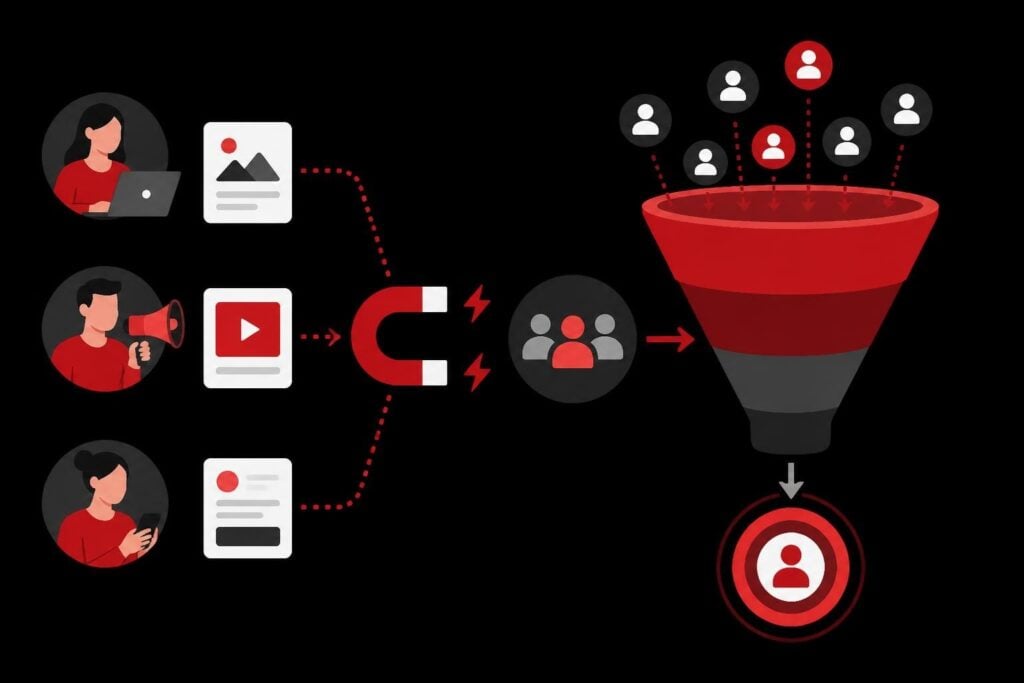
Affiliate lead generation differs fundamentally from product-based affiliate marketing. Instead of earning commissions on completed sales, affiliates receive compensation for delivering qualified leads that match your ideal customer profile. This model proves particularly valuable for B2B companies, service providers, and businesses with longer sales cycles where the path from awareness to purchase involves multiple touchpoints and human interaction.
The mechanics are straightforward yet powerful:
- Affiliates promote your lead magnets, free consultations, or gated content through their channels
- Prospects complete forms or take qualifying actions on affiliate-branded landing pages
- You validate the lead quality based on predetermined criteria
- Affiliates receive payment for each qualified lead delivered
This performance-based structure eliminates waste and ensures marketing dollars flow only toward prospects with genuine interest and fit. When Aletto partners with clients to implement affiliate strategies, we've observed conversion rates 3-4 times higher than cold outreach because affiliates pre-qualify audiences through their trusted relationships and content.
Why Businesses Choose Affiliate Lead Generation
Traditional lead generation carries significant risk. You might invest thousands in advertising campaigns that produce low-quality leads or none at all. Affiliate lead generation shifts this risk to your partners who only earn when they deliver results that meet your standards.
Consider these compelling advantages:
- Zero upfront costs: Pay only for validated leads that enter your pipeline
- Scalable reach: Access multiple audience segments simultaneously through diverse affiliate networks
- Quality control: Set precise qualification criteria and reject leads that don't meet standards
- Transparent attribution: Track exactly which affiliates drive your best-converting prospects
- Relationship leverage: Benefit from the trust affiliates have built with their audiences
The lead generation strategy you develop for affiliates should mirror your internal campaigns but with modified messaging that empowers partners to speak authentically to their audiences.
Building Your Affiliate Lead Generation Infrastructure
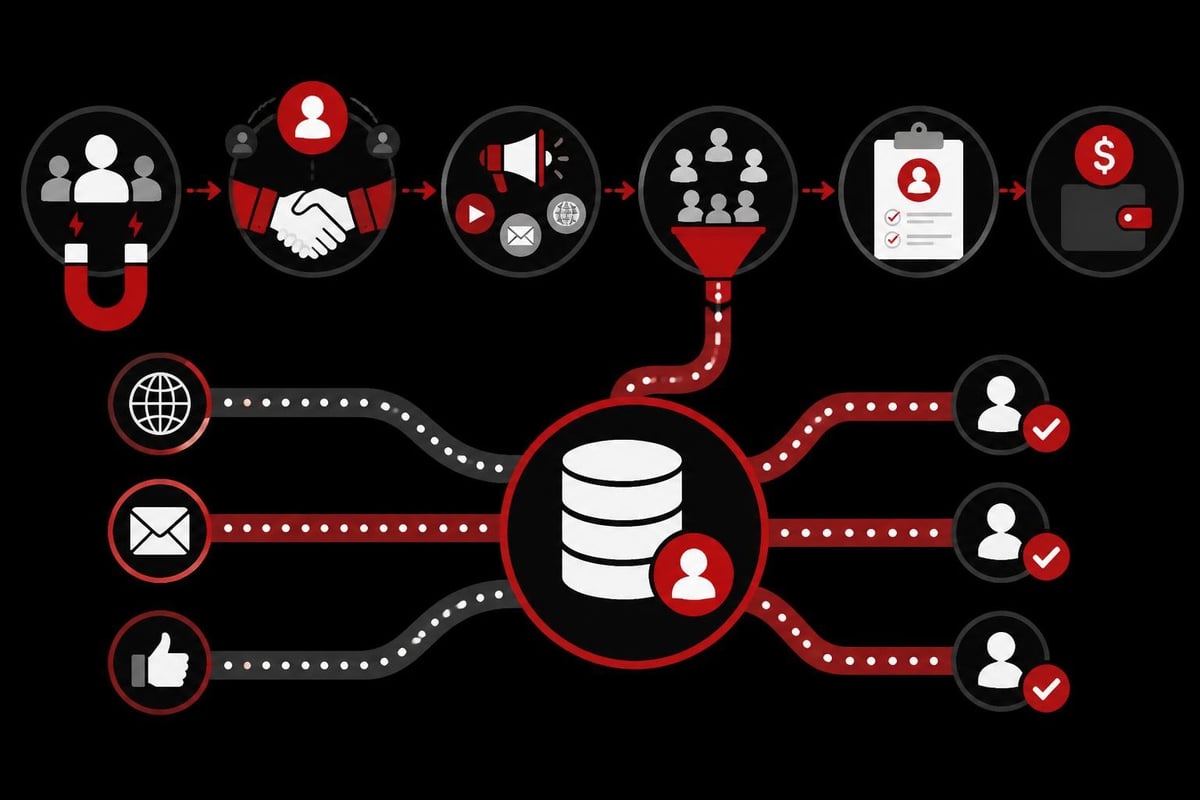
Success requires more than simply recruiting affiliates and hoping leads materialize. You need systematic infrastructure that tracks, validates, and optimizes performance across your entire partner network.
Technical Tracking and Attribution
Accurate attribution separates profitable affiliate programs from money-losing chaos. Without reliable tracking, you can't determine which partners drive quality leads, leading to misallocated commissions and partnership frustration.
Essential tracking components include:
- Unique affiliate identifiers: Assign each partner a distinct tracking code embedded in all promotional links
- Cookie duration policies: Define how long attribution windows remain active after initial click
- Server-side validation: Implement tracking that persists even when browsers block cookies
- Multi-touch attribution: Credit affiliates appropriately when prospects interact with multiple partners
The Google Analytics Measurement Protocol enables server-side event tracking that captures affiliate parameters even when client-side tracking fails. For comprehensive implementation guidance, Analytics Mania provides detailed tutorials on tracking affiliate conversions through Tag Manager and GA4.
| Tracking Method | Reliability | Implementation Complexity | Cookie-Proof |
|---|---|---|---|
| URL Parameters | Medium | Low | No |
| First-Party Cookies | Medium-High | Medium | Partially |
| Server-Side Events | High | High | Yes |
| Pixel Tracking | Medium | Low | No |
Creating High-Converting Lead Magnets
Affiliates need compelling offers to promote. Generic "contact us" forms don't motivate action. Instead, develop valuable resources that solve immediate problems for your target audience while naturally qualifying prospects.
Effective lead magnets for affiliate promotion:
- Industry-specific calculators or assessment tools
- Comprehensive guides addressing major pain points
- Free consultations with clear value propositions
- Exclusive research reports or benchmark data
- Video training series on relevant topics
Your qualified leads depend heavily on offer quality. Aletto's approach involves creating tiered lead magnets that attract prospects at different awareness stages, giving affiliates flexibility to match content with their audience's readiness level.
Recruiting and Activating Strategic Affiliates
Not all affiliates deliver equal value. Strategic recruitment focuses on partners whose audiences align precisely with your ideal customer profile, ensuring higher conversion rates and better ROI.
Identifying High-Potential Partners
Start by mapping where your best customers discover solutions before making purchasing decisions. These discovery channels represent prime affiliate recruitment opportunities.
Target these affiliate categories:
- Industry influencers: Thought leaders with engaged audiences in your niche
- Complementary service providers: Businesses serving similar clients without competing directly
- Content publishers: Blogs, podcasts, and media properties covering relevant topics
- Technology partners: Software platforms or tools your prospects already use
- Professional associations: Organizations where your ideal customers maintain memberships
Research from the Content Marketing Institute reveals that B2B buyers consume 3-5 pieces of content before engaging with sales teams. Affiliates who produce this educational content position themselves perfectly to generate qualified leads.

Structuring Compelling Commission Models
Your compensation structure directly impacts affiliate motivation and lead quality. Pay too little, and top performers ignore your program. Pay too much, and you erode profitability or attract low-quality lead farmers.
Commission structure options:
- Flat rate per lead: Fixed payment for each qualified prospect ($25-$200 typical for B2B)
- Tiered performance: Increasing rates as affiliates hit volume milestones
- Quality bonuses: Additional compensation when leads convert to customers
- Hybrid models: Base rate plus percentage of closed revenue
The most sophisticated programs combine upfront lead payments with backend revenue sharing. This aligns affiliate incentives with long-term customer quality rather than volume alone. When implementing lead generation tools, ensure your affiliate platform can handle complex commission calculations automatically.
Optimizing Conversion and Lead Quality
Affiliate lead generation succeeds or fails based on conversion optimization. Even the most talented affiliates can't overcome friction-filled landing pages or confusing value propositions.
Landing Page Excellence
Every affiliate needs dedicated landing pages that speak directly to their audience while maintaining consistent qualification standards. Generic pages produce generic results.
The Nielsen Norman Group’s UX research demonstrates that reducing form fields from 11 to 4 increases conversion rates by 120% on average. Apply these principles ruthlessly to your affiliate landing pages.
Conversion-optimized landing page elements:
- Headline matching affiliate's promotional messaging
- Clear value statement answering "what's in it for me?"
- Minimal form fields collecting only essential qualifying information
- Trust indicators (testimonials, security badges, client logos)
- Single clear call-to-action without competing links
Your business lead capture forms should balance information gathering with conversion friction. Ask too much, and prospects abandon. Ask too little, and you waste sales team resources on unqualified contacts.
Implementing Lead Validation Systems
Quality control separates sustainable affiliate programs from lead-buying nightmares. Without systematic validation, you'll pay for fake emails, competitors snooping, and prospects with zero fit.
| Validation Level | Methods | Implementation Cost | Rejection Rate |
|---|---|---|---|
| Basic | Email verification, duplicate detection | Low | 5-10% |
| Standard | Phone validation, company verification | Medium | 15-25% |
| Advanced | Real-time firmographic matching, intent signals | High | 25-40% |
| Premium | AI-powered scoring, predictive qualification | Very High | 30-50% |
Automated validation happens in real-time as leads submit forms, while manual review adds human judgment for borderline cases. Your lead generation agency partnership should include clear validation standards documented in affiliate agreements to prevent disputes.
Compliance and Disclosure Requirements
Regulatory compliance isn't optional in affiliate marketing. Violations can trigger FTC enforcement actions, damage brand reputation, and create legal liability that far exceeds any short-term revenue gains.
FTC Endorsement Guidelines
The FTC’s endorsement guidelines require clear, conspicuous disclosure of material connections between affiliates and merchants. This means affiliates must explicitly state they receive compensation for lead referrals.
Compliant disclosure practices include:
- Prominent statements on landing pages and promotional content
- "Affiliate partnership" or "paid referral" language visible before conversion
- Disclosures in plain language easily understood by average consumers
- Placement ensuring mobile users see statements without scrolling
Require affiliates to include disclosure language in all promotional materials as a program participation condition. Your affiliate agreements should explicitly outline disclosure requirements and consequences for non-compliance.
Data Privacy Considerations
When collecting lead information through affiliate channels, you inherit privacy obligations under GDPR, CCPA, and other data protection regulations. These laws impose strict requirements around consent, data minimization, and user rights.
According to analysis from the International Association of Privacy Professionals, processing lead data requires lawful basis such as consent or legitimate interest. Your affiliate lead generation programs must clearly communicate data collection practices and provide opt-out mechanisms.
Privacy-compliant lead capture requirements:
- Explicit consent checkboxes for marketing communications
- Clear privacy policy links on all forms
- Data minimization collecting only necessary information
- Secure transmission and storage protecting prospect information
- Documented data processing agreements with affiliate partners
Scaling Through Automation and AI
Manual affiliate management breaks down rapidly as programs scale. Automation transforms affiliate lead generation from administrative burden into strategic growth channel.
AI-Powered Lead Scoring
Not all affiliate leads deserve equal sales attention. AI-driven scoring models analyze hundreds of signals to predict which prospects will convert, enabling sales teams to prioritize effectively.
Modern AI in digital advertising extends beyond targeting into qualification. Machine learning models trained on your historical conversion data identify patterns invisible to human reviewers, scoring incoming leads in real-time.
AI scoring evaluates:
- Firmographic match (company size, industry, location)
- Behavioral signals (page visits, content downloads, email engagement)
- Timing factors (budget cycles, trigger events, seasonal patterns)
- Source quality (affiliate track record, audience alignment)
- Demographic fit (job title, seniority, department)
Aletto's AI systems continuously refine scoring models based on closed-loop feedback from your CRM, learning which early indicators predict ultimate conversion. This intelligence flows back to affiliates as guidance on target audience refinement.
Email Nurture Automation
Most affiliate leads aren't immediately sales-ready. Automated nurture sequences keep prospects engaged while educating them toward purchasing readiness without consuming sales resources.
Email marketing workflows that convert affiliate leads follow distinct patterns from cold outbound campaigns. These prospects already demonstrated interest by completing forms, so messaging focuses on deepening engagement rather than creating initial awareness.
Effective nurture sequences include:
- Immediate delivery of promised lead magnet with relevant next steps
- Educational content addressing common objections and questions
- Social proof showcasing customer success stories and testimonials
- Value demonstration through calculators, assessments, or tools
- Clear conversion event triggering sales team outreach
Segment affiliate leads separately from other channels in your nurture automation. Their source context enables more personalized messaging referencing the affiliate partnership and specific content that drove initial conversion.

Measuring and Optimizing Affiliate Performance
Sustainable growth requires systematic performance measurement and continuous optimization. Track the right metrics, and you'll identify improvement opportunities worth multiples of current results.
Critical Performance Indicators
Vanity metrics distract from revenue impact. Focus measurement on indicators directly tied to business outcomes rather than activity volume.
Priority metrics for affiliate lead generation:
- Cost per qualified lead: Total affiliate payments divided by validated leads
- Lead-to-customer conversion rate: Percentage of affiliate leads closing as customers
- Customer acquisition cost: Full cost including commissions, platform fees, and overhead
- Affiliate lifetime value: Total qualified leads and revenue generated per partner
- Quality score: Composite metric evaluating fit, engagement, and conversion probability
Compare these metrics across affiliates to identify top performers deserving increased support and low performers requiring intervention or removal. Your demand generation marketing strategy should allocate resources proportionally to affiliate effectiveness.
A/B Testing for Continuous Improvement
Static affiliate programs stagnate. Systematic testing identifies opportunities to increase conversion rates, improve lead quality, and reduce acquisition costs.
High-impact testing opportunities:
- Landing page headlines and value propositions
- Form field combinations and ordering
- Lead magnet formats and topics
- Commission structures and incentive programs
- Affiliate recruitment messaging and onboarding
Document every test with clear hypotheses, success criteria, and implementation timelines. Even small conversion improvements compound dramatically across thousands of affiliate-driven visitors.
Building Long-Term Affiliate Partnerships
Transactional relationships produce transactional results. The most successful affiliate lead generation programs cultivate genuine partnerships where affiliates view your success as inseparable from their own.
Providing Exceptional Affiliate Support
Top-performing affiliates have numerous partnership options. They choose programs offering superior support, resources, and communication.
Support infrastructure that retains elite affiliates:
- Dedicated affiliate managers providing strategic guidance
- Regular performance reporting with actionable insights
- Marketing asset library including landing pages, email templates, and creative
- Educational resources teaching effective promotion strategies
- Private community fostering peer learning and best practice sharing
Schedule quarterly business reviews with your highest-volume affiliates, treating these sessions as strategic planning rather than status updates. Understand their business objectives and identify opportunities where deeper collaboration creates mutual value.
Creating Affiliate-Exclusive Assets
Generic marketing materials produce generic results. Develop exclusive resources giving affiliates competitive advantages over partners in competing programs.
Exclusive assets that differentiate your program:
- Custom landing page designs matching affiliate brand aesthetics
- Industry-specific content addressing niche audience segments
- Co-branded webinars and events building affiliate authority
- First access to new offerings or beta program participation
- Enhanced commission rates for proven performance
When affiliates achieve meaningful results promoting your offerings, they naturally decrease attention to competing programs. Your objective isn't capturing 100% of any affiliate's promotional capacity, but earning enough mindshare that they consistently prioritize your campaigns.
Integration With Broader Marketing Systems
Affiliate lead generation shouldn't exist as an isolated channel. Maximum value emerges when affiliate programs integrate seamlessly with your broader marketing and sales ecosystem.
CRM and Sales Alignment
Every affiliate lead should flow directly into your CRM with complete attribution data enabling performance tracking and optimization. Manual data transfer introduces errors, delays, and missed opportunities.
Essential CRM integration requirements:
- Real-time lead creation with affiliate source tagging
- Automatic assignment to appropriate sales representatives
- Lead scoring integration applying consistent qualification standards
- Closed-loop reporting connecting affiliate sources to revenue
- Pipeline visibility showing affiliate contribution at every funnel stage
Your sales conversion funnel analytics should segment affiliate channels separately, revealing conversion patterns unique to partnership-sourced prospects. These insights inform both affiliate strategy and sales approach optimization.
Multi-Channel Attribution Modeling
Prospects rarely convert after single touchpoint exposure. They discover your brand through one channel, research through another, and ultimately convert via a third. Affiliate lead generation fits within this complex attribution landscape.
Implement attribution models recognizing affiliate contribution even when prospects don't immediately convert through affiliate links. First-touch attribution credits affiliates for initial discovery, while multi-touch models distribute value across the entire journey.
Understanding how affiliate partnerships complement your end-to-end marketing efforts prevents undervaluing this channel and enables intelligent budget allocation across your marketing mix.
Affiliate lead generation transforms external partners into extensions of your sales team, delivering qualified prospects at predictable costs while scaling reach beyond traditional marketing limitations. By building systematic infrastructure for tracking, validation, and optimization while maintaining regulatory compliance and fostering genuine partnerships, businesses unlock sustainable growth that compounds over time. Aletto specializes in creating transparent, performance-based systems that align perfectly with affiliate models-leveraging advanced AI to qualify leads, automate nurturing, and ensure you invest only in prospects positioned to become customers. Ready to transform your lead generation through strategic partnerships? Aletto provides the technology, strategy, and guaranteed growth framework to make it happen.