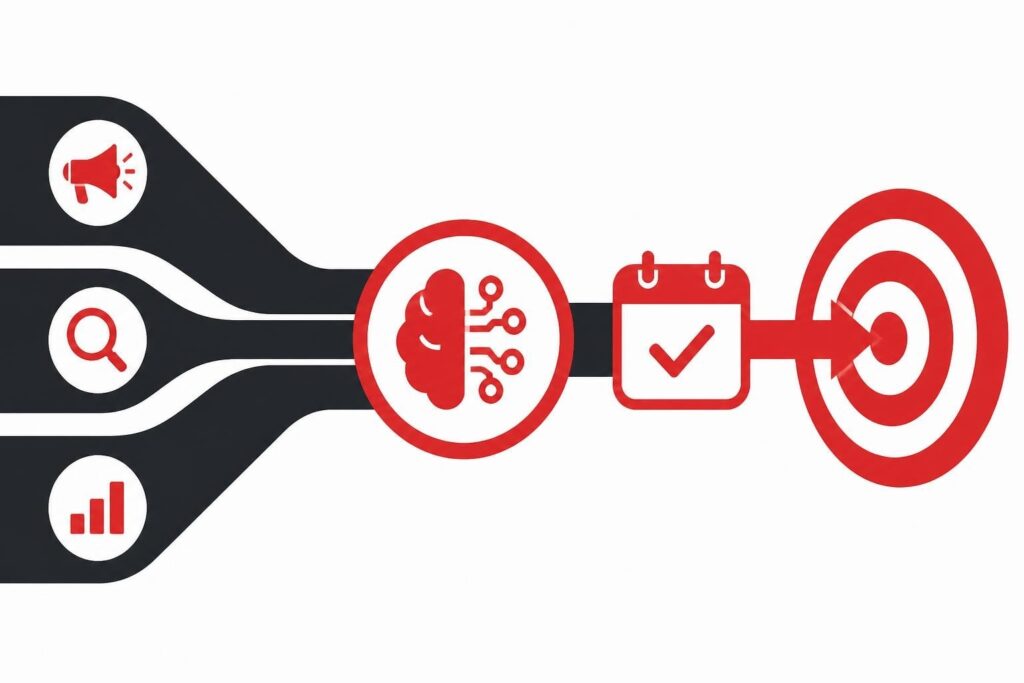
SaaS B2B lead generation in 2026 means running a system that turns ad spend into booked sales calls through paid acquisition, automated AI follow-up, and calendar booking without cold emails or events. Most SaaS companies still chase outbound tactics that stopped working after 2020, burning budgets on LinkedIn messages and conference booths while their pipelines stay empty.
The winning approach replaces manual prospecting with integrated systems that capture attention through paid channels, qualify interest through conversational AI, and book meetings automatically. Companies using this model report 3-5x ROI compared to traditional outbound, with qualified call volumes that scale predictably month over month.
What is SaaS B2B lead generation and why traditional methods fail?
SaaS B2B lead generation is the systematic process of attracting, capturing, and qualifying potential business customers for software-as-a-service products through measurable channels that produce bookable sales conversations. The traditional playbook of cold calling, LinkedIn outreach, and trade shows collapsed during the pandemic and never recovered.
Cold email reply rates dropped from 8-10% in 2019 to under 1% by 2024, according to HubSpot’s B2B marketing research. Sales teams that relied on conferences and field events lost their primary lead source overnight. The buyers changed their behavior permanently.
Decision-makers now research independently, ignore unsolicited outreach, and expect immediate value before engaging with sales. A VP evaluating CRM software will read 12 pieces of content, watch competitor demos on YouTube, and ask peers in Slack communities before ever talking to a rep. Your lead generation system must intercept this journey.
The broken economics of outbound-first strategies
Here's what the math looks like for a SaaS company still running old-school outbound:
| Metric | Volume | Cost | Result |
|---|---|---|---|
| Cold emails sent | 10,000 | $2,000 (tools + VA) | 80 replies (0.8%) |
| LinkedIn InMails | 500 | $3,000 (Sales Nav + time) | 15 responses (3%) |
| Trade show booth | 1 event | $25,000 (all-in) | 47 badge scans, 12 qualified |
| Total investment | – | $30,000 | ~100 conversations, 8-12 demos |
The cost per booked demo runs $2,500-3,750, and conversion rates from demo to close sit around 15-20% for mid-market SaaS. You need 5-7 demos to close one customer, meaning customer acquisition cost through pure outbound exceeds $15,000 before you factor in sales time.
Compare that to integrated systems combining paid acquisition with AI automation: Aletto's internal data shows an average cost per booked call of $180-320 for B2B SaaS clients, with the same close rates but 10x higher conversation volume.
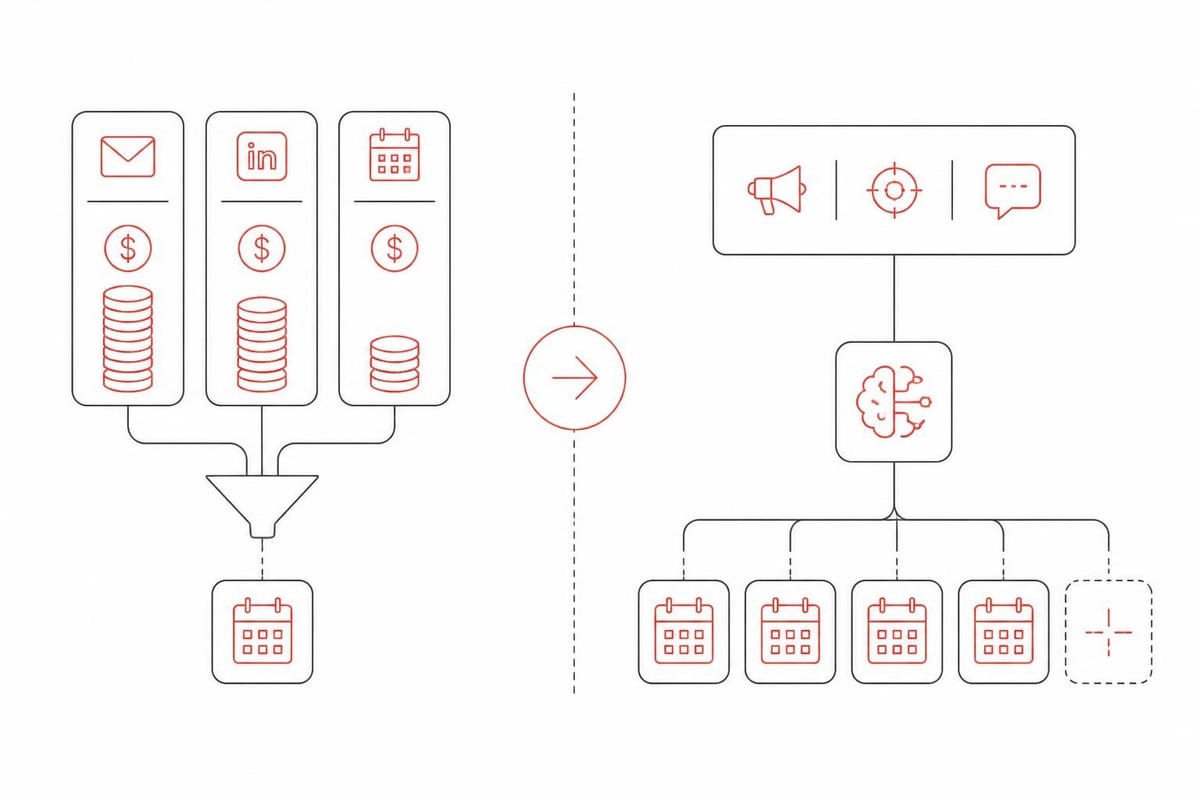
How do you build a saas b2b lead generation system that actually fills calendars?
Start with paid acquisition as your primary lead source, not a supplement to outbound. Google Search, LinkedIn Ads, and targeted display give you control over volume, speed, and cost in ways cold outreach never will. The key is treating ads as the top of an automated system, not a standalone channel.
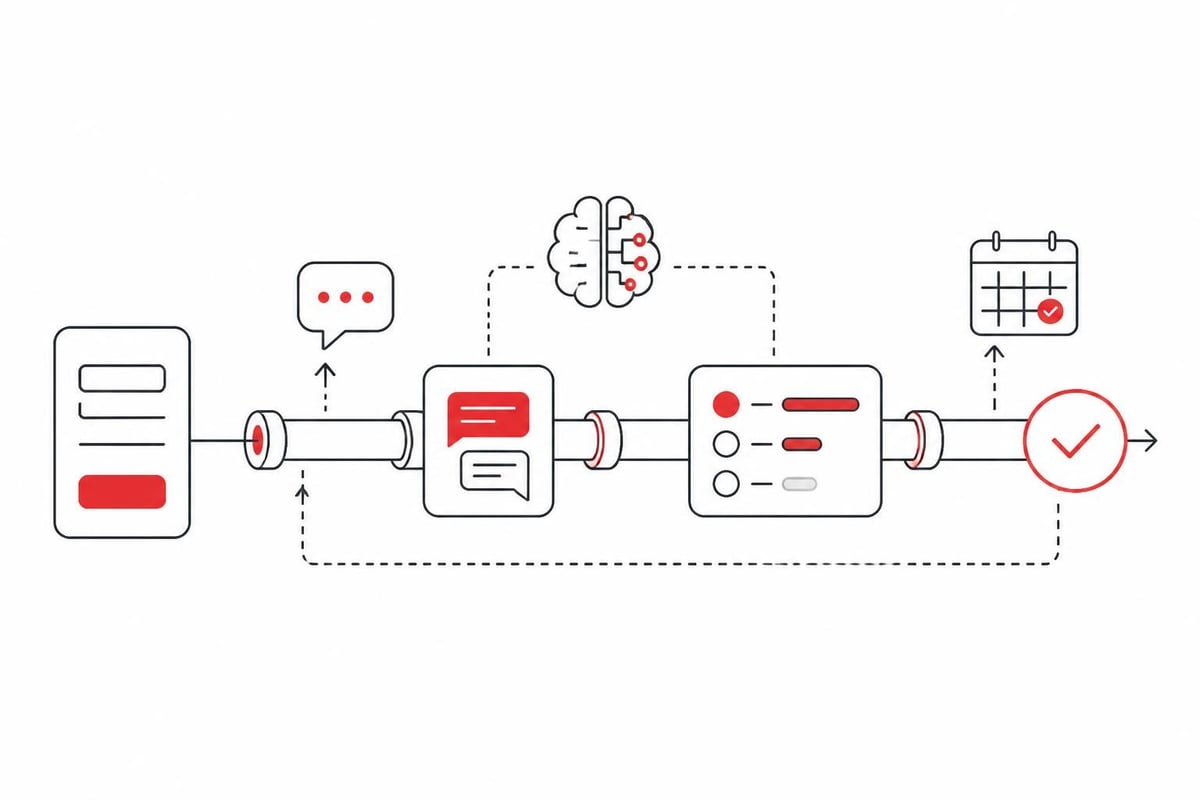
Your system needs three integrated components working together:
Paid traffic to high-intent offers. Run campaigns targeting solution-aware searches and job-title audiences. Send clicks to lead magnets, free tools, or assessment offers that provide immediate value. A marketing automation SaaS might offer "Free Email Deliverability Audit" or "Campaign ROI Calculator" instead of generic "Request a Demo."
AI-powered follow-up sequences. The moment someone opts in, trigger conversational SMS and email sequences that qualify interest, answer objections, and surface buying intent. This isn't drip campaigns. Modern AI bots respond to replies, adjust messaging based on engagement, and identify when a lead is ready to talk. AI follow-up systems now outperform traditional nurture by 40-60% on conversion to booked calls.
Automated calendar booking. Include direct booking links in every follow-up message. Remove friction by offering multiple time slots, rep selection, and calendar sync. No "let's find a time" emails. The booking happens in the same conversation where intent is expressed.
Real scenario: Series A SaaS with a $2.4M ARR target
A 22-person SaaS company selling project management software to construction firms needed to book 85 qualified demos per month to hit their annual recurring revenue goal. Their sales team of four AEs could handle that volume but their marketing couldn't generate it.
Previous approach: SDR team cold calling lists bought from ZoomInfo, sending connection requests on LinkedIn, and attending two industry trade shows per quarter. Monthly results: 28-35 conversations, 18-22 qualified demos, $47,000 in fully loaded cost (salaries, tools, events).
New system: Ran LinkedIn Ads and Google Search targeting construction project managers and ops directors. Offered "Free Construction Project Waste Calculator" as lead magnet. Leads entered AI SMS sequence that asked three qualifying questions and offered calendar link. Active prospects also received personalized email sequence.
Results in first 90 days: 847 leads captured at $42 cost per lead, 312 qualified conversations through AI bot, 94 booked demos, total spend $68,500 including ad spend and tools. Cost per demo dropped from $2,150 to $728. Close rate held steady at 18%, but volume tripled.
The difference wasn't the offer or the ads. It was the integrated system that moved leads from attention to booking without human intervention until the actual sales call.
What channels and tactics drive the highest-quality saas b2b lead generation results?
Paid search and paid social dominate for SaaS companies that measure cost per qualified opportunity, not just cost per click. Organic channels like SEO and content marketing build over time but can't scale on demand when you need to hit quarterly targets.
Paid acquisition channels ranked by control and speed
- Google Search Ads: Highest intent, captures active problem-solvers. Best for established categories where prospects search solution keywords. Expect $45-180 cost per lead depending on competition.
- LinkedIn Ads: Best targeting for job titles, company size, and seniority. Higher CPL ($80-250) but better quality for enterprise sales cycles. Use Sponsored Content and Message Ads, not just text ads.
- YouTube Ads: Underutilized for B2B SaaS. Strong for product categories requiring education. Run in-stream ads to solution-related videos. CPL ranges $30-120.
- Display Retargeting: Essential for staying visible during long consideration cycles. Remarket to website visitors and content consumers. Not a primary lead source but increases conversion 25-40% across other channels.
Organic content and SEO remain critical for building lead generation systems that compound over time. According to Content Marketing Institute research, 71% of B2B buyers consume 3-5 pieces of content before engaging sales, and owned content drives 3x higher conversion than paid alone.
The integrated approach uses paid to generate immediate pipeline while organic builds authority and reduces acquisition cost over 12-24 months. Run both simultaneously, not sequentially.
What offer types actually convert cold traffic?
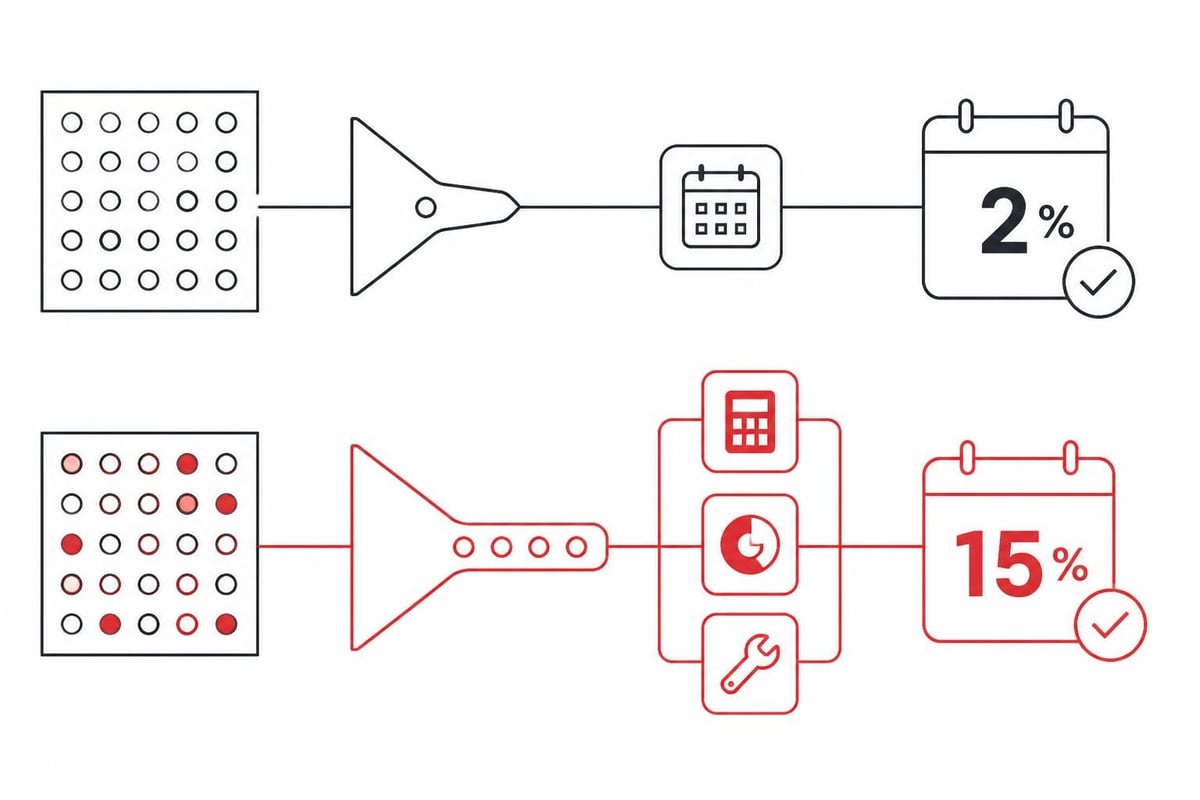
Generic "Request a Demo" converts at 0.8-2.1% of cold traffic. Value-first offers that solve an immediate problem convert at 8-15%. The offer must deliver utility before asking for a meeting.
High-performing SaaS lead magnets include:
- Free tools and calculators (ROI calculators, readiness assessments, cost comparison tools)
- Automated audits (website speed, email deliverability, security scans)
- Template libraries (SOPs, frameworks, checklists for specific roles)
- Data reports (industry benchmarks, salary surveys, trend analysis)
For SaaS teams looking to understand exactly how this works in practice, Aletto's free AI call booking report breaks down the complete system used to generate 1,122 qualified sales calls in 11 months using paid acquisition and AI automation, without cold emails or cold calls.
The offer quality matters more than ad creative. A financial planning SaaS running LinkedIn Ads tested two campaigns: "See a Demo of Our CFO Dashboard" versus "Free Cash Runway Calculator for SaaS CFOs." Same audience, same budget, same landing page template. The calculator offer generated 6.2x more leads at 1/4 the cost per lead.
How do you measure and optimize saas b2b lead generation performance?
Track cost per qualified opportunity and pipeline velocity, not just leads or MQLs. Most SaaS companies optimize the wrong metrics and wonder why revenue doesn't move. A lead is worthless if it never reaches a buying conversation.
Your measurement stack needs to connect ad spend to closed revenue through these stages:
| Stage | Metric | Benchmark (2026 B2B SaaS) | What It Tells You |
|---|---|---|---|
| Traffic | Cost per click | $8-35 (LinkedIn), $3-12 (Google) | Channel efficiency |
| Capture | Landing page conversion | 12-28% for value offers | Offer-message-audience fit |
| Qualification | Lead-to-opportunity rate | 25-45% with AI follow-up | Lead quality and nurture effectiveness |
| Booking | Opportunity-to-meeting | 60-75% with automated calendar | Friction in scheduling process |
| Close | Demo-to-customer | 15-22% (mid-market SaaS) | Product fit and sales execution |
The critical measurement challenge is attribution across touchpoints. A prospect might click a LinkedIn Ad, download an ebook, receive five AI follow-up messages, click an email link, and then book through SMS. Which channel gets credit?
Google’s unified measurement guidance recommends combining multi-touch attribution with marketing mix modeling for SaaS companies spending over $50K monthly on ads. For smaller budgets, use first-touch attribution for prospecting campaigns and last-touch for retargeting to understand what opens the door versus what closes it.
The metrics that actually predict revenue
Vanity metrics like total leads, email open rates, and website sessions don't forecast revenue. Focus on these leading indicators instead:
Qualified opportunity velocity: Number of sales-accepted opportunities created per week, trending over rolling 8-week periods. If this number drops, your revenue will drop 4-8 weeks later. Watch it weekly, not monthly.
Cost per qualified opportunity (CPQO): Total marketing spend divided by opportunities created. Benchmark this against your average contract value and close rate to know your maximum sustainable CPQO. If your ACV is $24K and you close 18% of opportunities, you can spend up to $4,320 per opportunity at breakeven (before accounting for LTV).
Speed to qualified conversation: Time from first touch to booked meeting. The industry average is 11 days for B2B SaaS using traditional nurture. AI-powered systems reduce this to 2-3 days, which matters because interest decays rapidly. A lead contacted in 48 hours converts 21x higher than one contacted after 7 days, according to HubSpot’s lead response research.
For detailed guidance on building attribution systems that track the complete buyer journey, see Aletto's SaaS lead generation tracking guide.
What role does AI play in modern saas b2b lead generation?
AI transformed lead generation from a manual qualification process into an automated conversation system that runs 24/7. The technology shift happened fast: in 2023, fewer than 12% of B2B SaaS companies used AI for lead follow-up; by late 2025, that number exceeded 60% among companies generating over $5M ARR.
Modern AI systems handle three functions that humans can't scale:
Conversational qualification at volume. An AI bot can simultaneously manage 500 text-based conversations, asking qualifying questions, handling objections, and identifying buying signals. It responds in under 60 seconds at all hours. A human SDR manages 8-12 active conversations per day and goes home at 6 PM.
Behavioral analysis and intent scoring. AI tracks micro-signals like message response time, question types, emoji usage, and engagement patterns to predict who's ready to buy versus who's browsing. It adjusts messaging intensity and offer timing based on hundreds of data points per lead.
Omnichannel orchestration. The system knows when to follow up via SMS versus email, how long to wait between touches, and when to escalate to human outreach. It optimizes send times based on individual engagement history, not generic "best practices."
Real implementation: How AI follow-up increased booking rates 340%
A B2B payments SaaS was capturing 280 leads per month through Google Ads but only converting 8% to booked demos. Their email nurture sequence had six messages over 14 days, followed by SDR manual outreach to anyone who engaged. Of 280 monthly leads, they booked 22-24 demos.
They implemented an AI SMS bot as the primary follow-up channel. When someone submitted the lead form, they received an immediate text: "Hey [Name], saw you grabbed the payment processing cost calculator. I'm Sarah (bot 🤖). Quick question – are you currently processing credit cards in-house or using a third party?"
The bot asked three qualifying questions via SMS over 48 hours. Qualified leads received a calendar link in the same thread. Unqualified leads got educational content. Non-responders received email backup after 72 hours.
Results after 60 days: Same 280 monthly leads, but 97 booked demos (346% increase). Cost per booked demo dropped from $875 to $215. The close rate from demo to customer actually increased 4 points because prospects self-qualified before reaching sales.
The AI didn't replace humans. It filtered out tire-kickers and surface-level interest, so sales reps only talked to people ready for a real conversation.
How do compliance and data privacy affect saas b2b lead generation in 2026?
Every lead generation system must handle consent, data storage, and communication compliance correctly or face regulatory penalties and deliverability problems. The landscape tightened significantly in 2024-2026 with expanded enforcement of GDPR, stricter email authentication requirements, and new AI-specific regulations.
Email authentication and deliverability. Google and Microsoft now require DMARC, SPF, and DKIM authentication for bulk sending. Without proper setup, your nurture emails land in spam regardless of content quality. B2B email programs report 40-60% deliverability drops when authentication is misconfigured.
GDPR and data minimization. If you target European companies or have EU-based website visitors, you must comply with GDPR's lawful basis requirements for processing personal data. This affects how you capture leads, store contact information, and track behavior. Privacy regulations for analytics now require explicit consent for tracking beyond strictly necessary functions.
SMS compliance (TCPA). Text message follow-up requires express written consent in the US under TCPA regulations. Your lead form must include clear SMS opt-in language separate from email consent. Violations cost $500-1,500 per message, and class-action lawsuits targeting SaaS companies increased 280% from 2024 to 2026.
The solution is building compliance into your system from day one, not bolting it on later. Use double opt-in for email, explicit checkbox consent for SMS, and clear unsubscribe mechanisms. Store consent timestamps and source for every contact. It's not optional.
What common mistakes kill saas b2b lead generation results?
Most failures come from treating lead generation as a campaign instead of a system. Companies run ads for two months, don't see immediate ROI, and declare "paid doesn't work for us." They never built the follow-up infrastructure, attribution tracking, or optimization process required to make any channel work.
Mistake one: Sending leads to generic demo request pages. If your offer is "Talk to Sales," you lose 85-92% of interested prospects who aren't ready for that conversation yet. They wanted information, education, or a quick win. Give them that first, then introduce the sales conversation after you've delivered value. Conversion rate optimization research shows value-first offers convert 6-11x higher than direct sales requests for cold traffic.
Mistake two: Waiting more than 5 minutes to follow up. Speed to contact is the single highest-impact variable in lead conversion. A lead contacted in 5 minutes converts 9x better than one contacted in 30 minutes. Yet 55% of B2B SaaS companies still route leads to sales through CRM assignment queues that sit for hours. Use instant automated follow-up, not manual assignment.
Mistake three: Treating all leads identically. A CMO researching marketing automation has different needs than a marketing coordinator from the same company. Segment by role, company size, and expressed interest. Send technical buyers to product-focused content and economic buyers to ROI and business-case resources. One-size-fits-all nurture converts poorly for everyone.
Mistake four: No closed-loop reporting. Marketing generates leads, hands them to sales, and never finds out what happened. Sales complains about lead quality but provides no data on which sources or campaigns produce actual customers. Build reporting that tracks every lead from source through close, even if it takes 90 days and multiple touches. Without this, you're optimizing blind.
The best SaaS lead generation systems are built by teams who understand the complete buyer journey and engineer around it, not marketing teams running campaigns in isolation from sales reality.
Frequently Asked Questions
What is the average cost per lead for B2B SaaS in 2026?
Average B2B SaaS cost per lead ranges from $45-250 depending on channel, target audience, and offer type. Google Search typically runs $45-120 per lead for solution-aware keywords, while LinkedIn ranges from $80-250 for cold audiences. Value-first offers (calculators, tools, audits) generate leads 60-70% cheaper than direct demo requests. The more important metric is cost per qualified opportunity, which typically runs $180-650 for integrated systems using paid acquisition with AI follow-up.
How many leads does a SaaS company need to hit revenue targets?
Work backward from your revenue goal using your average contract value, close rate, and lead-to-opportunity conversion rate. If you need $2M in new ARR, your ACV is $40K, and you close 20% of demos, you need 250 demos ($2M ÷ $40K ÷ 20%). If 40% of leads become qualified opportunities that turn into demos, you need 625 leads. Build a 15-20% buffer for seasonality and variability, so target 725-750 leads monthly.
Can organic content replace paid acquisition for SaaS lead generation?
Organic content builds compounding value over 12-24 months but cannot scale predictably to hit quarterly targets. According to Moz’s SEO guidance, it takes 4-8 months to rank for competitive keywords and 6-12 months to generate meaningful traffic volume. Use paid acquisition for predictable, scalable lead flow while simultaneously building organic assets. The best-performing SaaS companies run both in parallel, with paid providing 60-75% of leads in year one, shifting to 40-50% by year three as organic compounds.
Should SaaS companies use account-based marketing or lead generation?
Run both simultaneously for different segments. Use account-based approaches for enterprise targets (typically companies over 500-1,000 employees with $100K+ contract potential) and lead generation for mid-market and SMB prospects. ITSMA’s ABM research shows ABM delivers 171% higher ROI for strategic accounts but requires 3-6 months per account. Lead generation scales faster and fills pipeline broadly. Allocate 60-70% of budget to lead generation and 30-40% to ABM for target accounts.
How do you qualify B2B SaaS leads before sending them to sales?
Use a combination of explicit qualification (asking directly about budget, timeline, authority, and need) and implicit signals (behavior scoring, engagement patterns, content consumption). Modern AI follow-up systems ask 3-5 qualifying questions via SMS or conversational email immediately after lead capture. Track behavioral signals like pricing page visits, competitor comparison downloads, and multiple content interactions. A qualified lead shows both stated intent (answers qualifying questions favorably) and demonstrated interest (engages with multiple touchpoints over multiple days). Send only doubly-qualified leads to sales.
Modern saas b2b lead generation works when you replace manual outbound with integrated systems that combine paid acquisition, AI automation, and instant booking. The companies winning in 2026 treat lead generation as a measurable, scalable process, not a collection of random tactics. If you're ready to see exactly how top SaaS companies are booking hundreds of qualified sales calls without cold outreach, events, or expensive SDR teams, grab Aletto's free AI call booking report that breaks down the complete system step by step.