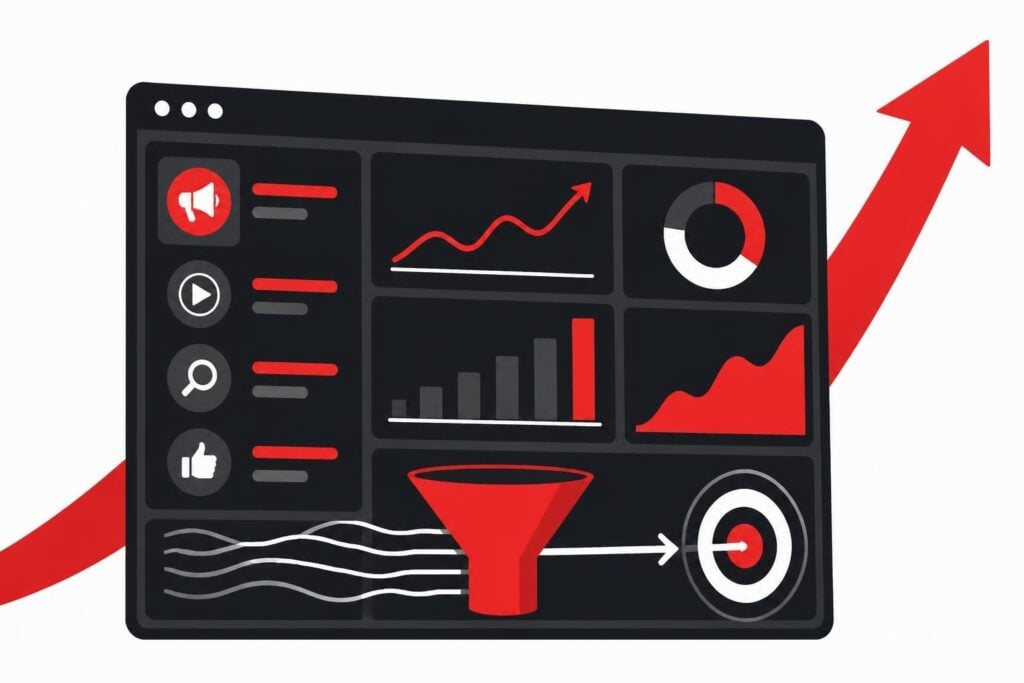
Performance marketing software is a platform that automates, measures, and optimizes paid advertising campaigns based on specific performance metrics like cost per acquisition, return on ad spend, and conversion rates. These systems integrate data from multiple ad channels, apply algorithmic bidding strategies, and provide attribution reporting to help marketers improve efficiency and prove ROI. For B2B SaaS and service companies managing complex sales cycles, the right performance marketing software can mean the difference between wasting budget on unqualified clicks and filling your calendar with ready-to-buy prospects.
The challenge is that most performance marketing platforms were built for ecommerce transactions, not B2B sales cycles that span weeks or months. When your conversion is a booked demo call rather than a checkout event, you need software that connects front-end ad spend to back-end revenue and pipeline. Traditional tools measure clicks and form fills but rarely track what happens after the lead enters your CRM. That disconnect costs B2B teams millions in wasted spend every year.
What features should performance marketing software include?
At minimum, viable performance marketing software must provide multi-channel campaign management, conversion tracking across the full funnel, automated bid optimization, and attribution reporting that connects spend to revenue. Without these four pillars, you're flying blind.
Multi-channel management means running and monitoring campaigns across Google Ads, Meta, LinkedIn, programmatic display, and other paid channels from a single interface. The software should normalize reporting so you can compare cost per lead across platforms without rebuilding spreadsheets. It should also enable bulk edits and shared audience segments to improve efficiency.
Conversion tracking is where most platforms fail B2B marketers. Ecommerce-focused tools track purchases but stop there. B2B performance marketing software needs server-side tracking that follows a prospect from first click through demo booking, opportunity creation, and closed revenue. Server-side tagging fundamentals have become essential as browser restrictions limit traditional pixel tracking. If your software can't measure what happens after the form fill, you can't optimize for actual pipeline.
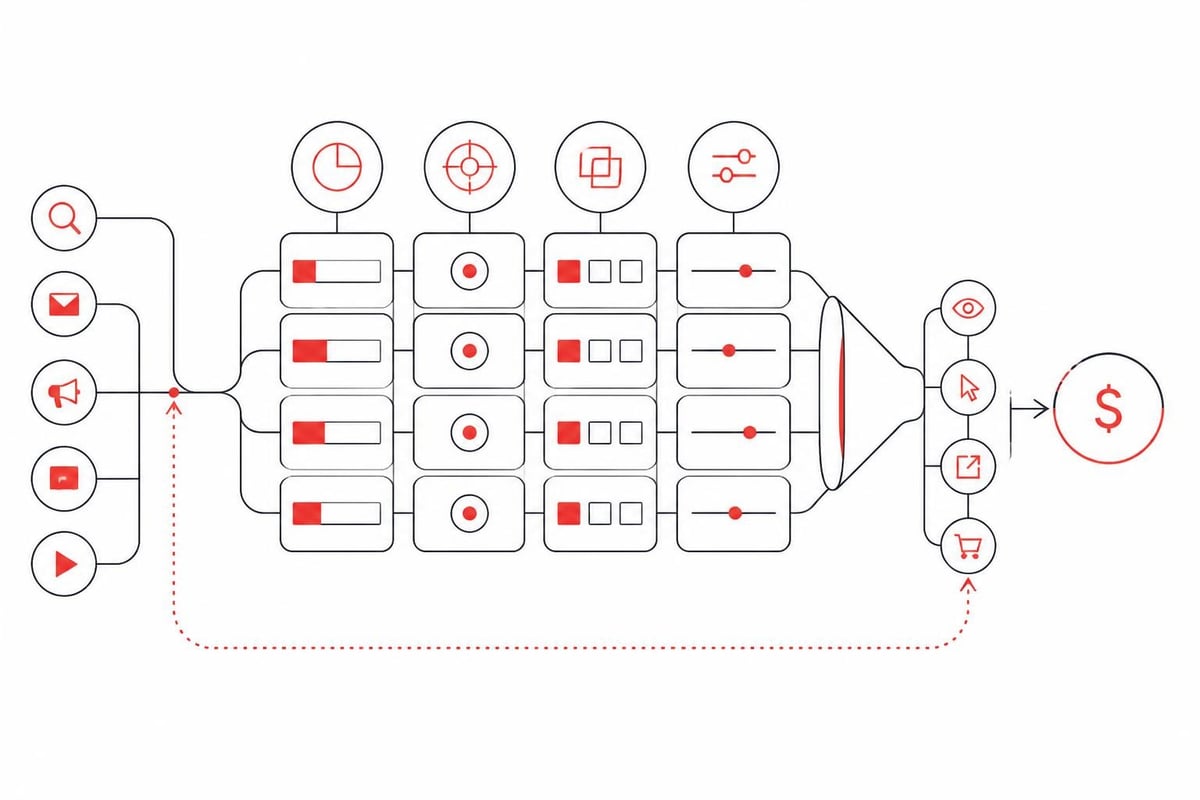
Automated bid optimization uses machine learning to adjust bids in real time based on conversion probability and target efficiency metrics. Modern performance marketing software applies these algorithms at the keyword, audience, and creative level. The best systems allow you to set constraints (maximum cost per qualified lead, minimum monthly budget) while the algorithm finds the most efficient path to your goal. According to IAB Tech Lab’s AI in Advertising Primer, AI-driven optimization is now table stakes for competitive performance marketing.
Attribution reporting answers which channels, campaigns, and keywords actually drive revenue. Single-touch attribution (first-click or last-click) is worthless for B2B. You need multi-touch models that assign credit across the journey. The software should integrate with your CRM to track pipeline value and closed deals, then attribute that revenue back to marketing spend. Without this closed-loop reporting, you'll keep investing in channels that generate junk leads while starving the ones that book qualified calls.
Additional capabilities that separate best-in-class platforms
Beyond the basics, advanced performance marketing software adds creative testing frameworks, audience insights and enrichment, fraud detection, and predictive analytics. These features accelerate optimization cycles and protect budget.
Creative testing tools let you launch multiple ad variants, automatically allocate budget to winners, and identify patterns in high-performing messaging. Instead of running manual A/B tests for weeks, the software continuously tests and reallocates. Some platforms now generate creative variations using AI, though results vary widely by vertical.
Audience insights reveal which segments convert at the highest rates and lowest costs. The best performance marketing software enriches first-party data with behavioral signals, intent data, and firmographic attributes. For B2B teams, knowing that decision-makers from companies with 50-200 employees in the healthcare vertical convert at 3x the rate of other segments lets you reallocate budget immediately.
Fraud detection has become non-negotiable. Media Rating Council guidelines on invalid traffic provide industry standards, but your software should actively filter bot traffic, click farms, and other fraud before it hits your reporting. Platforms that don't address fraud will show inflated performance that evaporates when you track to revenue.
Predictive analytics applies historical conversion data to forecast which leads are most likely to close. Some performance marketing software scores inbound leads in real time, letting sales teams prioritize follow-up. Others predict which audience segments will hit your target cost per acquisition, enabling proactive budget shifts before performance declines.
How does performance marketing software integrate with existing systems?
Integration architecture determines whether performance marketing software becomes your command center or another data silo. The platform must connect bidirectionally with your ad accounts, CRM, analytics tools, and data warehouse to enable closed-loop optimization.
Ad account integration happens through official APIs from Google, Meta, LinkedIn, and programmatic platforms. The performance marketing software reads campaign structure, performance metrics, and audience data while pushing bid adjustments, budget changes, and new campaigns. API access levels vary by platform; ensure your software has the permissions needed for automated optimization, not just read-only reporting.
CRM integration is critical for B2B attribution. The software should write lead data and source tracking into your CRM (Salesforce, HubSpot, Pipedrive) when a conversion occurs, then read back opportunity and revenue data as deals progress. This closed-loop data flow lets you optimize campaigns based on pipeline value and customer acquisition cost, not just lead volume. At Aletto, we've seen clients improve ROI by 40% within the first quarter simply by connecting ad spend to actual booked calls and closed deals rather than optimizing for form submissions.
Analytics integration with Google Analytics 4, Mixpanel, or Amplitude provides behavioral context. Performance marketing software can import event data to understand which campaign sources drive the most engaged users, even before conversion. This depth prevents optimizing for vanity metrics like low-cost clicks that produce high bounce rates.
Data warehouse connections enable advanced analysis. Pushing campaign data, conversion events, and attributed revenue into Snowflake, BigQuery, or Redshift lets data teams build custom models, blend first-party data sources, and create executive dashboards. The best performance marketing software treats the data warehouse as a first-class integration, not an afterthought.
| Integration Type | Purpose | Key Requirements |
|---|---|---|
| Ad Platforms | Campaign management, bid automation | Write access to campaigns, audiences, budgets |
| CRM | Lead tracking, revenue attribution | Bidirectional sync, custom field mapping |
| Analytics | Behavioral data, engagement metrics | Event import, user-level tracking |
| Data Warehouse | Custom analysis, executive reporting | Automated export, schema documentation |
Handling privacy and compliance requirements
Modern performance marketing software must navigate GDPR data minimization principles, CCPA consumer rights, and platform-specific restrictions. Consent management, data retention policies, and transparent tracking disclosures are no longer optional features.
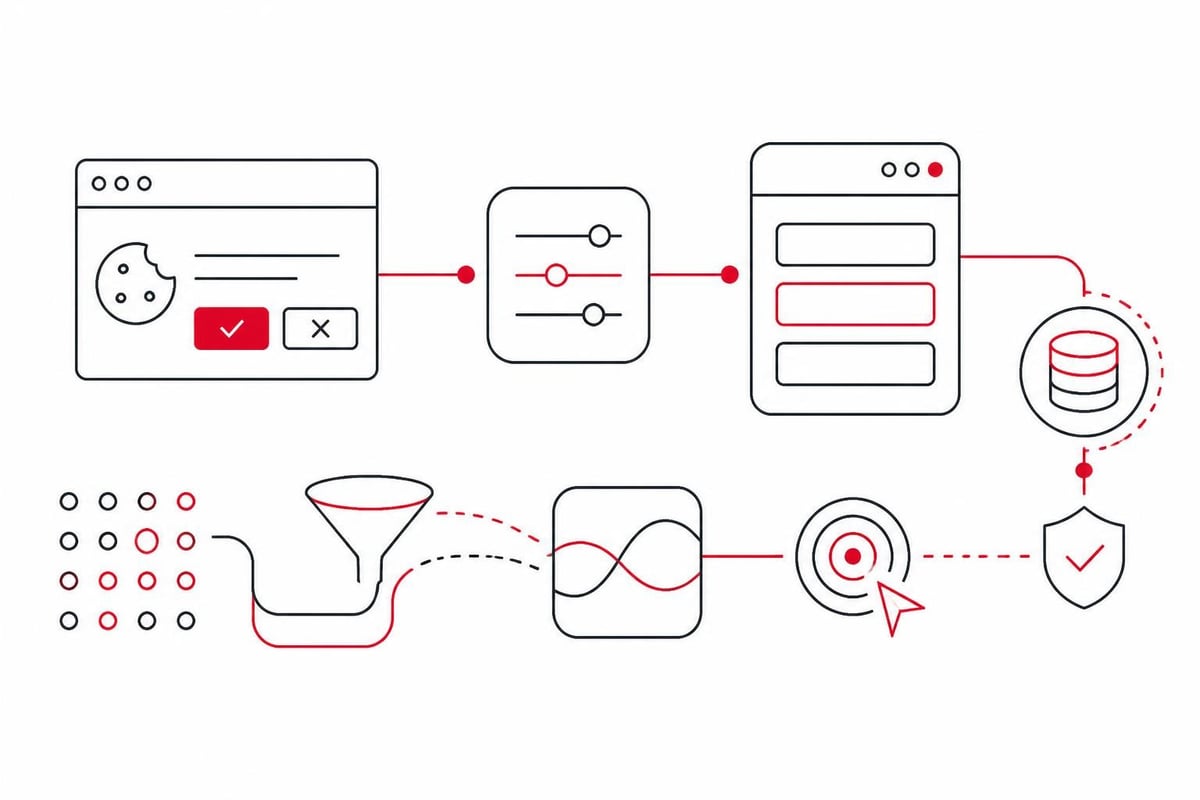
The software should provide consent mode integration that adjusts tracking behavior based on user permissions. When a visitor declines cookies, the platform should switch to privacy-safe measurement methods that provide aggregate insights without individual tracking. This maintains compliance while preserving directional performance data.
Data retention controls let you automatically purge personally identifiable information after specified periods. For B2B marketers, this means retaining aggregate campaign performance forever while deleting individual user records after 90 days or when a lead converts to customer. The right settings protect your company from liability without destroying valuable historical data.
What should performance marketing software cost in 2026?
Performance marketing software pricing typically follows three models: percentage of ad spend, flat monthly subscription, or hybrid usage-based pricing. Each model favors different company profiles and growth stages.
Percentage-of-spend pricing charges 3-10% of your total monthly ad budget. This model scales with your investment but becomes expensive at high budgets. A company spending $100,000 monthly on ads might pay $5,000-$10,000 for the software. This works well for growing teams that need predictable costs relative to spend, but penalizes scale. Mature companies spending millions monthly often negotiate custom rates or switch to flat-fee models.
Flat monthly subscriptions range from $500 for basic multi-channel dashboards to $5,000+ for enterprise platforms with automation and attribution. This model provides cost predictability and better unit economics at scale. The challenge is finding a platform whose flat fee aligns with your budget while delivering the features you need. Many vendors tier their subscriptions by features rather than spend volume.
Hybrid models combine base subscriptions with usage charges for API calls, conversion tracking events, or data processing. A platform might charge $2,000 monthly plus $0.10 per tracked conversion. This aligns costs with value but can create unpredictable bills as performance improves and conversion volume grows.
Hidden costs to factor into total ownership
Beyond platform fees, calculate integration costs, training time, data infrastructure, and potential agency fees. Many performance marketing software platforms require developer time for proper server-side tagging implementation, custom attribution models, or data warehouse connections.
Training costs vary by platform complexity. Basic dashboards need minimal onboarding, but advanced automation and bidding strategies require weeks of learning. Budget 20-40 hours per team member for initial training, then ongoing education as platforms release new features. The best vendors provide dedicated customer success managers and regular training sessions; inferior ones point you to documentation and charge for support.
Data infrastructure costs emerge when your performance marketing software requires dedicated servers for tag management, data processing, or API orchestration. Programmatic platforms in particular generate massive data volumes that need warehousing. If your current analytics stack can't handle the load, you'll need to upgrade.
Agency markup applies if you work with a managed service team. Some performance marketing software vendors operate agency models where their team runs your campaigns for 15-25% of spend plus platform fees. This can make sense for teams without in-house expertise, but creates dependency and reduces transparency compared to self-service platforms.
How do you measure ROI from performance marketing software?
ROI measurement starts by defining your baseline performance before implementation, tracking efficiency gains in the first 90 days, and calculating total cost of ownership versus incremental revenue. Without clear before-and-after metrics, you can't prove the software's value.
Baseline documentation captures current cost per lead, conversion rates, channel mix, and manual hours spent on campaign management. Pull 90 days of historical data across all active channels. Calculate average cost per acquisition for each conversion event you care about: demo bookings, qualified leads, closed deals. Document how many hours your team spends on bid management, reporting, and optimization each week.
The first 90 days reveal quick wins and integration challenges. Track the same metrics you documented at baseline. Most teams see immediate reporting efficiency gains (hours saved per week), moderate optimization improvements (10-20% better cost per acquisition), and slower attribution clarity (3-6 months to fully instrument revenue tracking). Don't expect miracles in month one; the software needs data to train algorithms and identify patterns.
Companies using comprehensive sales funnel tracking can connect performance marketing software directly to pipeline metrics. If your baseline cost per booked call was $450 and drops to $320 after optimization, you've improved efficiency by 29%. Multiply the cost savings per conversion by monthly conversion volume to quantify dollar impact.
| Metric | Pre-Software Baseline | Post-Implementation (90 days) | Improvement |
|---|---|---|---|
| Cost per qualified lead | $185 | $142 | 23% reduction |
| Hours spent on reporting | 12/week | 3/week | 75% time savings |
| Attribution visibility | Last-click only | Multi-touch revenue | Qualitative gain |
| Campaign ROAS | 3.2x | 4.1x | 28% improvement |
Long-term value beyond direct performance gains
Performance marketing software delivers compounding benefits as data accumulates and teams master advanced features. Institutional knowledge captured in campaign histories and winning audience segments protects against team turnover. Faster testing cycles enabled by automation let you try more strategies per quarter. Competitive intelligence from market data and benchmarking reveals opportunities your manual processes missed.
The best measurement frameworks track these second-order effects. How much faster can you launch campaigns in new channels? How many experiments can you run per month now versus before? What percentage of your budget flows to systematically proven winners rather than hunches? These operational improvements often matter more than incremental cost-per-click reductions.
What mistakes do teams make when selecting performance marketing software?
The most common mistake is optimizing for features you'll never use instead of the three workflows that matter most: campaign launch, daily monitoring, and attribution reporting. Vendors sell comprehensive capability lists, but most teams use 20% of available features.
Start by mapping your actual workflow. How do you currently launch campaigns? What data do you check daily? How do you report performance to executives? Choose software that makes those specific tasks faster and more accurate. Ignore exotic features that sound impressive but don't fit your process. A platform with 50 integrations means nothing if it lacks the two you need.
The second mistake is underestimating change management and adoption friction. New performance marketing software requires team buy-in, process changes, and potentially uncomfortable transparency. If your current setup lets individual channel managers operate independently with minimal accountability, a unified platform will expose inefficiencies and force conversations about budget allocation. Plan for this resistance.
Technical mistakes that undermine results
Inadequate conversion tracking dooms most implementations. Teams rush platform selection, then realize months later that critical conversion events aren't properly instrumented. Before evaluating vendors, audit your current tracking. Can you measure every conversion event you care about? Do you have server-side tracking capability? Will the platform integrate with your existing tag management system? If your tracking foundation is broken, no software can fix it.
Ignoring data latency creates false conclusions. Most performance marketing software pulls data from ad platform APIs with 24-48 hour delays for finalized metrics. Conversion attribution can lag even longer when deals close weeks after the first touch. Teams make bid adjustments based on incomplete data, then wonder why performance doesn't improve. The best platforms clearly label data freshness and provide guidance on safe optimization windows.
Misaligned attribution models produce misleading ROI calculations. If your software attributes value using linear multi-touch but your executive team expects last-click reporting, you'll show different numbers than your CRM and create confusion. Agree on attribution methodology before implementation, document it clearly, and ensure the software can produce reports in your chosen model.
Aletto has worked with dozens of B2B SaaS teams who wasted six months on performance marketing software that couldn't track post-lead conversion events. For companies where the real conversion is a booked qualified call-not a form submission-you need software that integrates with scheduling systems and CRMs to measure what actually drives revenue. We've built AI-powered follow-up and booking systems specifically because most performance marketing platforms stop tracking at the lead capture point and miss everything that determines whether that lead becomes a customer.
How is AI changing performance marketing software capabilities?
AI features now handle creative generation, predictive audience targeting, automated budget allocation, and anomaly detection. These aren't future promises; they're live features in 2026 platforms that materially improve outcomes when properly applied.
Creative generation tools produce ad copy and image variations based on your best performers. The AI analyzes historical engagement data, identifies patterns in high-converting messaging, and generates new variants to test. Quality varies significantly by platform. Some produce generic spam that damages brand perception. The best systems maintain your brand voice while testing different value propositions and calls-to-action. Always require human approval before AI-generated creative goes live.
Predictive audience targeting uses machine learning to identify lookalike segments most likely to convert. Instead of manually defining demographic and behavioral criteria, you feed the AI a seed audience of your best customers. It finds common patterns across dozens of attributes, then builds targeting profiles you wouldn't discover manually. Current AI applications in advertising have matured to the point where algorithmic audiences often outperform human-defined segments by 30-50% in B2B contexts.
Automated budget allocation shifts spend between campaigns, ad sets, and keywords based on real-time performance against your goals. Set a target cost per acquisition and monthly budget cap; the AI continuously reallocates toward efficient placements and pauses underperformers. This daily optimization would require hours of manual work but happens automatically in modern performance marketing software.
Where AI still fails and human judgment remains critical
AI cannot define strategy, understand market positioning, or make judgment calls about brand implications. The software optimizes toward the metric you specify, but choosing the right metric requires business context the algorithm doesn't have.
A common failure mode: AI optimizes for cost per lead and drives down prices by targeting less qualified prospects. Your lead volume increases, cost per lead drops, and the software reports success. But your sales team wastes hours on unqualified conversations and conversion to opportunity plummets. The AI did exactly what you asked-you asked for the wrong thing.
Human judgment also matters for creative strategy and messaging. AI can test variants, but someone needs to decide which brand positioning to test. Performance marketing software can tell you that messaging about "speed" outperforms messaging about "security," but it can't advise whether that tactical win undermines long-term brand perception or market positioning.
Frequently Asked Questions
What's the difference between performance marketing software and marketing automation platforms?
Performance marketing software focuses on paid acquisition channels, campaign optimization, and advertising ROI measurement across platforms like Google Ads and Meta. Marketing automation platforms like HubSpot and Marketo handle email nurturing, lead scoring, and workflow automation after prospects enter your database. Many B2B teams use both: performance marketing software to fill the top of funnel cost-effectively, marketing automation to nurture those leads into sales-ready opportunities.
Can small teams with limited ad budgets benefit from performance marketing software?
Yes, but choose platforms with flat subscription pricing rather than percentage-of-spend models. Teams spending under $10,000 monthly on ads often see better ROI from simple consolidation and reporting tools than advanced AI optimization. Focus on software that saves manual reporting time and provides basic cross-channel visibility. Advanced features matter more at scale when small efficiency gains equal significant dollar savings. Most platforms offer free trials; test with your actual campaigns before committing.
How long does it take to implement performance marketing software?
Basic implementation connecting existing ad accounts and setting up dashboards takes 1-2 weeks. Full implementation including server-side conversion tracking, CRM integration, custom attribution models, and team training typically requires 6-8 weeks. Enterprises with complex data governance and multiple stakeholders should budget 3-4 months. The software vendor's quality of onboarding support is the biggest variable; prioritize platforms with dedicated implementation teams and clear project plans over self-service-only options.
Do you need a developer to set up performance marketing software?
Most platforms offer no-code setup for basic features like ad account connections and standard conversion tracking. However, implementing server-side tracking, custom attribution models, data warehouse integrations, or advanced audience segmentation almost always requires developer support. Budget 20-40 developer hours for proper implementation if you want to use advanced features. Some vendors offer managed implementation services for an additional fee if you lack in-house technical resources.
What happens to your data if you switch performance marketing software?
Historical campaign performance data typically remains in the original ad platforms (Google Ads, Meta) regardless of which software you use to access it. However, custom audiences, attribution models, automated rules, and proprietary insights built within the software are usually not portable. Before committing to a platform, verify whether you can export your complete campaign history, attribution data, and audience definitions. Some vendors deliberately make it difficult to leave by locking data in proprietary formats.
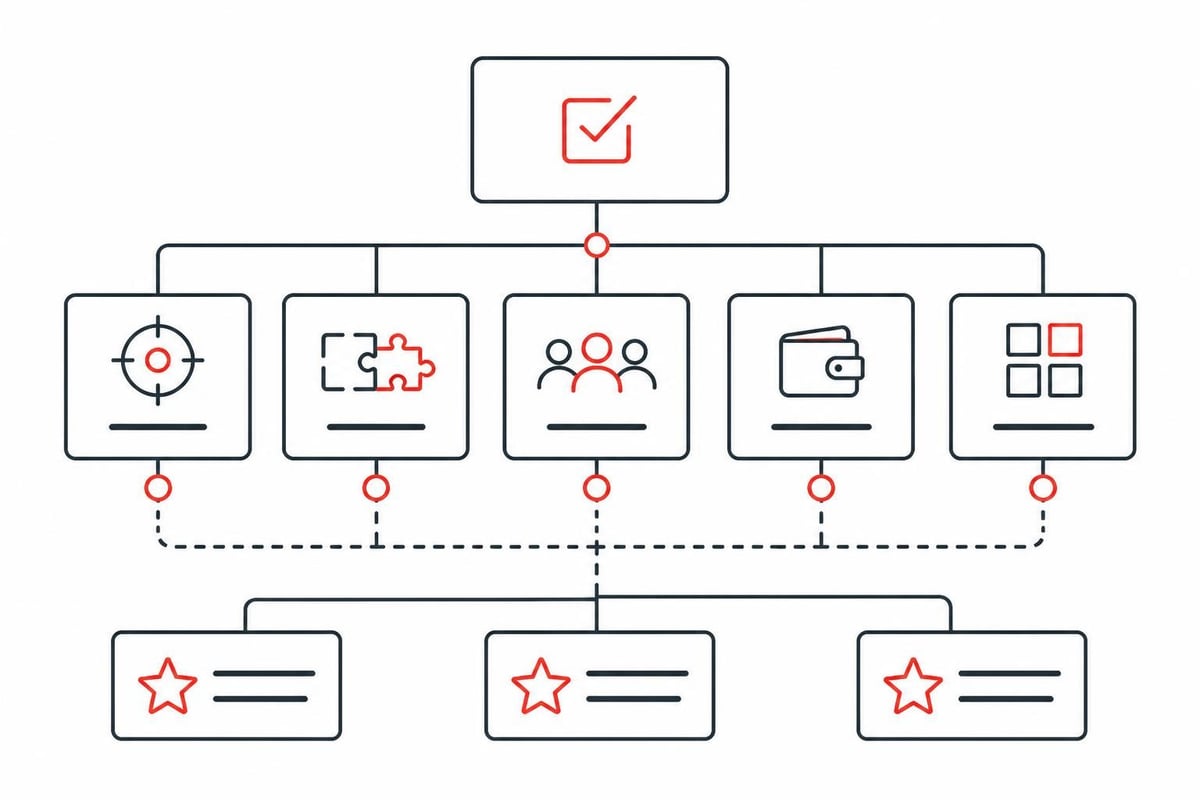
Performance marketing software has evolved from simple reporting dashboards to sophisticated platforms that automate bidding, predict conversion probability, and connect ad spend to closed revenue. The platforms that matter most for B2B teams measure beyond the click and form fill to track qualified pipeline.
Most performance marketing software still optimizes for ecommerce conversions and falls short when measuring B2B sales cycles. If you're frustrated by platforms that can't connect your ad spend to actual booked calls and revenue, Aletto's approach might help. Our free AI call booking report shows exactly how we filled calendars with 1,122 qualified sales calls in 11 months using integrated paid acquisition and AI follow-up, without relying on the metrics that most performance marketing software tracks. See the specific system that turns paid traffic into booked meetings rather than vanity metrics.