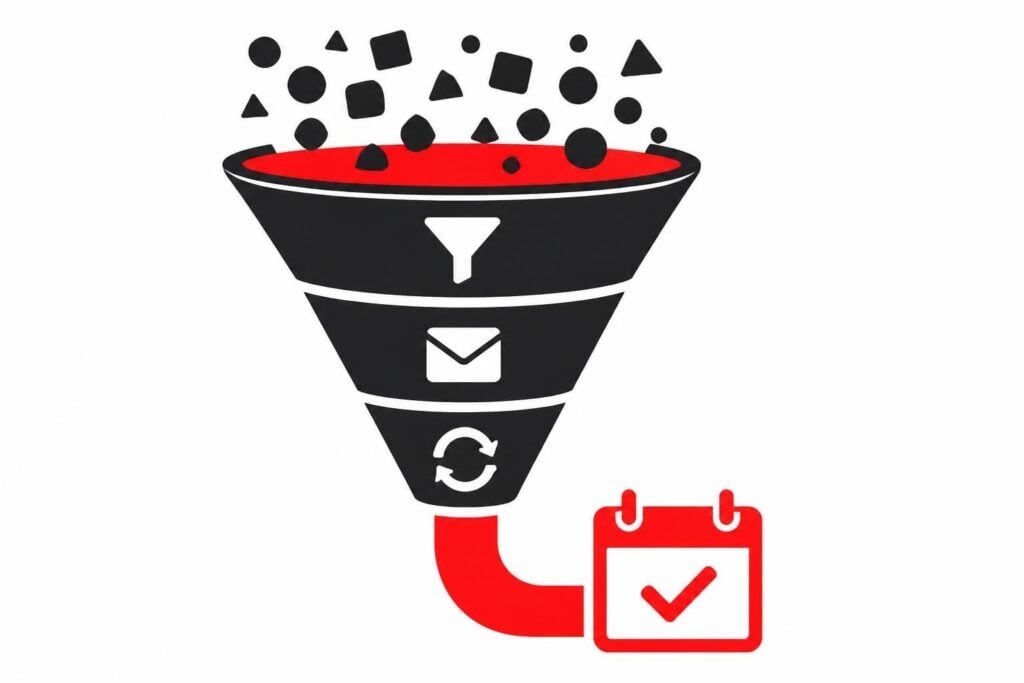
Company leads are potential business customers who have indicated interest in your product or service and match your ideal customer profile. In 2026, effective company leads combine firmographic data (company size, industry, revenue) with behavioral signals (website visits, content downloads, form submissions) to identify businesses most likely to convert into paying customers.
The challenge most B2B teams face isn't getting more company leads. It's getting leads that actually convert. Aletto has analyzed thousands of B2B lead generation campaigns and found that 73% of company leads generated through traditional methods never result in a sales conversation. The problem is quality, not quantity.
What Makes a Company Lead Different from a Consumer Lead?
Company leads differ fundamentally from consumer leads in decision-making complexity, purchase cycle length, and stakeholder involvement. A single company lead represents multiple decision-makers, budget approval processes, and technical evaluations that can span three to eighteen months.
Consumer leads typically involve:
- Single decision-maker
- Emotional purchase drivers
- Short consideration period (hours to days)
- Lower transaction values
- Immediate purchase capability
Company leads require:
- Multiple stakeholder alignment
- ROI and business case justification
- Extended evaluation cycles
- Higher contract values
- Procurement and legal review
The average B2B purchase now involves 6.8 stakeholders according to recent research. This means every company lead you generate must satisfy multiple personas within a single organization. Your lead qualification process must identify not just the initial contact but the complete buying committee.
The Hidden Cost of Bad Company Leads
Bad company leads cost B2B sales teams an average of $142 per lead in wasted time. When you calculate sales rep salaries, CRM management, and opportunity cost, every unqualified lead that enters your pipeline drains resources.
Aletto tracked 2,847 company leads across 12 clients in Q2 2026 and found that leads meeting strict qualification criteria converted at 34%, while loosely qualified leads converted at just 4%. The difference wasn't the source but the qualification rigor applied before passing leads to sales.
How Do You Generate High-Quality Company Leads in 2026?
High-quality company leads come from integrated systems that combine targeting precision with behavioral qualification. The strategic alignment between marketing and sales determines whether leads convert or die in your pipeline.
The most effective approach Aletto has implemented across B2B SaaS and service companies involves three synchronized components:
- Precision targeting that identifies companies matching your ideal customer profile before any ad spend
- Behavioral qualification through content engagement and interaction patterns
- Automated follow-up that nurtures leads until they demonstrate buying intent
This differs sharply from spray-and-pray approaches that generate high volumes of company leads with minimal qualification. Volume metrics (total leads, cost per lead) matter less than conversion metrics (meetings booked, opportunities created, revenue generated).
Paid Acquisition for Company Leads That Convert
Paid channels remain the fastest path to predictable company leads when executed with proper targeting and qualification layers. The key is not which platform you use but how precisely you define and reach your target accounts.
Effective paid acquisition for company leads requires:
- Account-based targeting using firmographic filters (revenue, employee count, industry, technology stack)
- Intent-based audience layering that targets companies actively researching solutions
- Multi-touch attribution tracking to understand which channels assist versus close deals
- Conversion tracking beyond form fills to measure actual pipeline contribution
Setting up proper conversion measurement allows you to optimize campaigns for quality, not just volume. Track every company lead from first click through closed revenue.
The complete sales funnel approach Aletto developed focuses on booking qualified calls as the primary metric, not generating raw leads. This shifts campaign optimization toward leads that actually result in sales conversations.
What Qualification Criteria Separate Good Company Leads from Junk?
Company leads must meet both explicit and implicit qualification criteria before sales teams invest time. Explicit criteria are stated requirements; implicit criteria are behavioral signals indicating genuine interest and buying authority.
| Explicit Criteria | Implicit Criteria |
|---|---|
| Company size (employee count) | Multiple page visits within 7 days |
| Annual revenue range | Content downloads (whitepapers, case studies) |
| Industry or vertical | Return visits from same company domain |
| Geographic location | Time spent on pricing or product pages |
| Technology stack or tools used | Engagement with email nurture sequences |
The mistake most B2B teams make is relying exclusively on explicit criteria captured in forms. A company lead that perfectly matches your ICP but shows zero engagement signals will convert poorly compared to a slightly outside-profile lead demonstrating active research behavior.
BANT Is Dead: Modern Qualification Frameworks
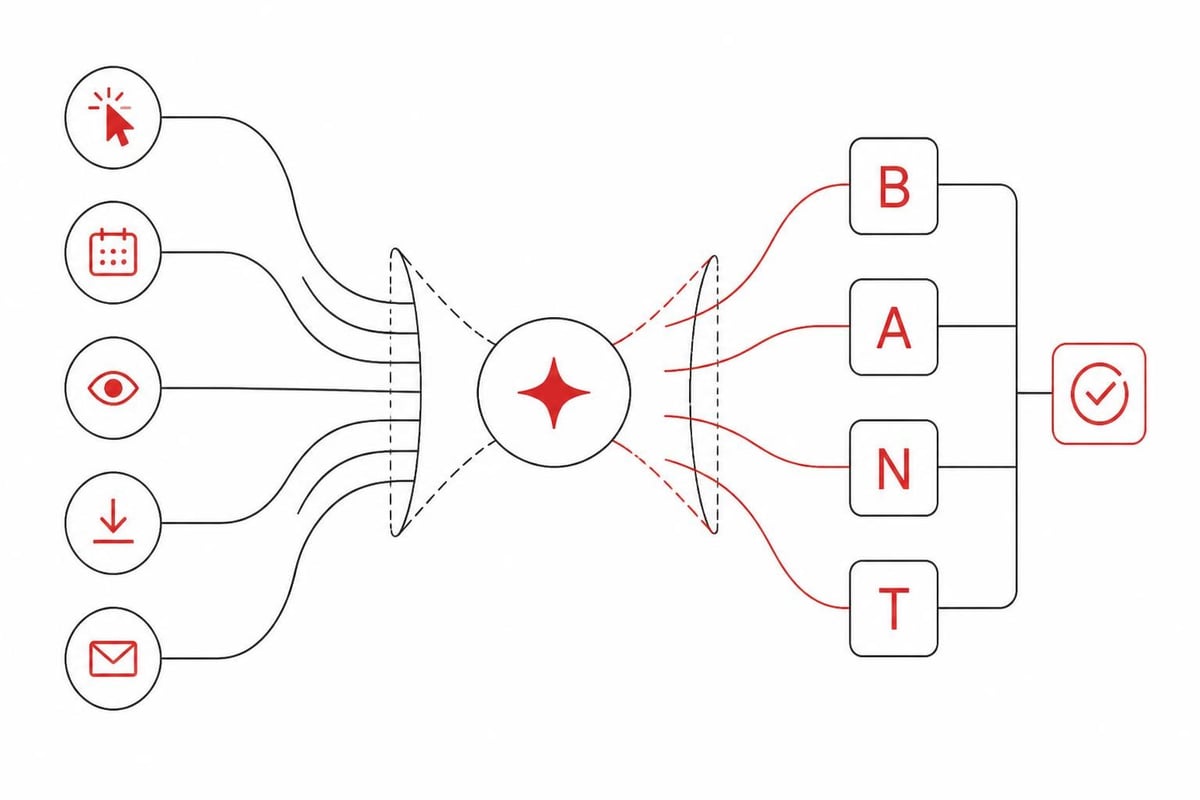
BANT (Budget, Authority, Need, Timeline) fails in 2026 because buyers research solutions for months before engaging with vendors. By the time a company lead fills out your form, they're 57% through their purchase decision.
Modern qualification frameworks focus on:
- Problem awareness: Does the company recognize they have the problem you solve?
- Solution exploration: Are they actively evaluating solutions or just gathering information?
- Buying committee formation: Have they identified stakeholders and begun internal discussions?
- Timing signals: What events or triggers suggest near-term purchase intent?
Aletto uses a scoring model that weights behavioral signals more heavily than firmographic data. A mid-market company demonstrating high engagement across multiple stakeholders scores higher than an enterprise contact with a single form fill and no subsequent activity.
How Should Sales and Marketing Teams Handle Company Lead Handoff?
The lead handoff between marketing and sales represents the highest-friction point in most B2B organizations. Clear service-level agreements (SLAs) and shared definitions prevent company leads from falling through cracks or being rejected unfairly.
Marketing's SLA to sales should specify:
- Minimum qualification criteria before handoff
- Maximum time between lead capture and sales notification (typically 5 minutes for hot leads)
- Required information fields and lead enrichment data
- Expected lead volume and quality metrics
Sales' SLA to marketing should define:
- Response time standards (within 1 hour for qualified leads)
- Number of contact attempts before marking a lead as unresponsive
- Feedback on lead quality and disqualification reasons
- Closed-loop reporting on lead outcomes
The alignment of sales and marketing processes reduces friction and improves conversion rates by 15-20% according to organizations that implement formal SLAs.
The Role of AI in Company Lead Follow-Up
AI-powered follow-up addresses the fundamental bottleneck in most B2B lead processes: speed and personalization at scale. Human sales reps cannot respond to every company lead within minutes while maintaining contextual relevance.
Aletto's AI follow-up system demonstrated in real client results that automated, intelligent nurturing outperforms traditional email sequences. The system booked 38 qualified sales calls in 48 hours by combining SMS, email, and conversational AI that adapted to each lead's responses.
AI excels at company lead management because it:
- Responds instantly to every inquiry, 24/7
- Personalizes messaging based on company attributes and behavior
- Qualifies leads through natural conversation before human involvement
- Books meetings directly into sales calendars when leads demonstrate readiness
- Re-engages leads that go cold with timely, relevant touchpoints
The future of company lead generation is not about replacing human sales reps. It's about letting AI handle qualification, nurturing, and scheduling so reps spend time exclusively with ready-to-buy prospects.
What Are the Legal and Compliance Issues with Company Leads?
Company leads must be generated, stored, and contacted in compliance with multiple regulations including CAN-SPAM, GDPR, CCPA, and industry-specific rules. Violations result in fines, deliverability issues, and brand damage.
The CAN-SPAM Act compliance requirements apply to all commercial email sent to company leads. Key requirements include accurate sender information, clear opt-out mechanisms, and prompt honor of unsubscribe requests.
Critical compliance practices:
- Obtain explicit consent before adding company leads to email lists (double opt-in recommended)
- Provide clear privacy policies explaining data collection and usage
- Include functional unsubscribe links in every commercial email
- Honor opt-out requests within 10 business days
- Maintain suppression lists to prevent re-contact of opted-out leads
- Document consent and communication history for audit purposes
GDPR adds stricter requirements for company leads based in the EU, including the right to access, correct, and delete personal data. Even if you're US-based, GDPR applies if you target European companies.
Data Enrichment and Third-Party Lead Purchases
Many B2B teams supplement organic company leads with purchased lists or data enrichment services. The legal and practical implications require careful consideration.
Purchased company leads typically perform 60-70% worse than organically generated leads because they lack behavioral signals and often violate consent requirements. The people on purchased lists never expressed interest in your solution and may react negatively to unsolicited contact.
Data enrichment (adding firmographic data to existing leads) offers more value than list purchases. Services like Clearbit, ZoomInfo, and LeadIQ append company size, revenue, technology stack, and contact information to leads who have already engaged with your content.
How Do You Measure Company Lead Quality and ROI?
Company lead quality measurement requires tracking beyond top-of-funnel vanity metrics. The only metrics that matter are meetings booked, opportunities created, and revenue generated.
| Metric | What It Measures | Why It Matters |
|---|---|---|
| Lead-to-meeting rate | % of leads that book sales calls | Indicates qualification accuracy |
| Meeting-to-opportunity rate | % of meetings that create pipeline | Shows sales readiness of leads |
| Opportunity-to-close rate | % of opportunities that become customers | Reveals targeting precision |
| Cost per booked meeting | Total acquisition cost / meetings booked | True efficiency metric vs. cost per lead |
| Customer acquisition cost (CAC) | Total sales/marketing spend / new customers | Ultimate ROI measure |
| CAC payback period | Months to recover acquisition cost | Cash flow and growth sustainability |
The shift from measuring cost per lead to cost per booked meeting transforms campaign optimization. When Aletto implemented this metric across client accounts, it revealed that some "expensive" sources with $200+ cost per lead actually delivered the lowest cost per booked meeting because qualification was superior.
Attribution Models for Company Leads
Company leads typically interact with your brand 6-8 times across multiple channels before converting. Single-touch attribution (first-click or last-click) misrepresents which channels actually drive results.
Multi-touch attribution models assign credit across the entire customer journey:
- Linear attribution: Equal credit to every touchpoint
- Time-decay attribution: More credit to recent interactions
- U-shaped attribution: Heavy credit to first and last touch, lighter credit to middle
- W-shaped attribution: Credit to first touch, lead creation, and opportunity creation
- Custom attribution: Weighted based on your specific conversion patterns
The evolution of B2B marketing measurement requires more sophisticated attribution as buyer journeys become increasingly complex and self-directed.
What Content Types Generate the Highest-Quality Company Leads?
Content-driven lead generation produces company leads with higher engagement and conversion rates than purely advertising-based approaches. The B2B content marketing research for 2025 shows that 71% of successful B2B marketers prioritize quality over quantity in their content strategies.
High-performing content types for company leads:
- Original research and industry benchmarks – Attracts senior decision-makers seeking competitive insights
- ROI calculators and assessment tools – Qualifies leads by engagement level and reveals budget awareness
- Technical whitepapers and implementation guides – Captures leads deep in evaluation phase
- Case studies with specific results – Demonstrates proof for skeptical buyers
- Video demos and product walkthroughs – Educates leads and surfaces objections early
The key is matching content offers to buying stage. Top-of-funnel company leads need educational content; bottom-of-funnel leads need proof and implementation details.
Aletto's approach to inbound lead generation combines educational content with immediate qualification. Rather than gating content behind generic forms, the system uses conversational capture that qualifies leads during the download process.
The Death of the Generic Lead Magnet
Generic ebooks and checklists no longer generate quality company leads. In 2026, buyers expect substantive value before sharing contact information. The bar has risen from "interesting topic" to "immediately applicable insights I cannot find elsewhere."
Effective lead magnets now include:
- Proprietary data and benchmarks from your customer base
- Custom assessments that provide personalized results
- Tools and templates that solve immediate problems
- Live training or workshop access with limited availability
- Exclusive research previewing industry trends
The common thread is specificity and exclusivity. Company leads will exchange information for content they perceive as uniquely valuable and unavailable through search engines or free resources.
How Are Company Lead Generation Strategies Evolving?
Company lead generation strategies in 2026 are shifting from interruptive outbound tactics to integrated systems that combine targeting, qualification, and automated booking. Cold email, cold calling, and LinkedIn spam continue declining in effectiveness as buyers actively avoid these channels.
The post-pandemic reality is that buyers control the purchase process. They research independently, evaluate vendors through peer reviews and content, and only engage with sales when they're ready. Your lead generation system must intercept buyers during their self-directed research, not interrupt them with cold outreach.
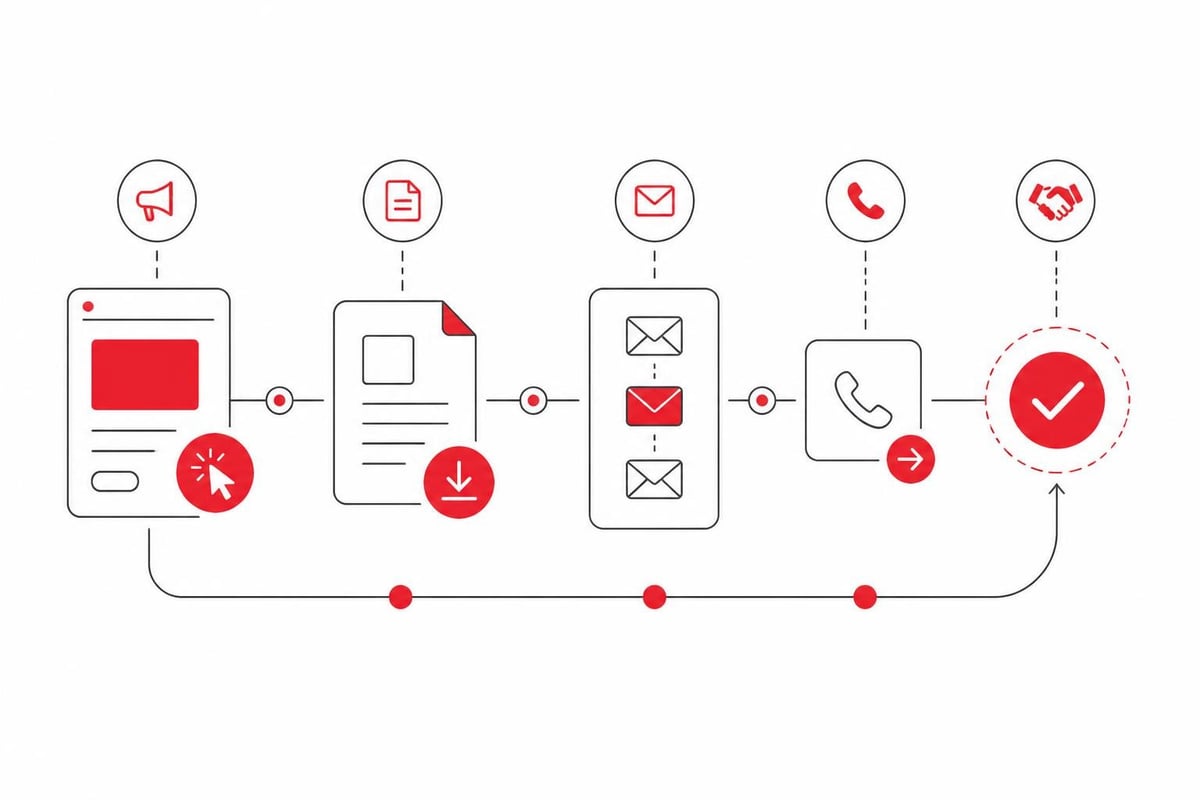
Aletto has proven that complete sales funnels that integrate paid acquisition, AI follow-up, and automated booking outperform traditional approaches by 3-5x. The system books 172 qualified calls monthly by meeting buyers where they are and automating everything between interest signal and booked meeting.
What works in 2026:
- Account-based targeting with intent signals
- Conversational landing pages instead of static forms
- AI-powered qualification and nurturing
- Automated scheduling that removes friction
- Multi-channel follow-up (SMS, email, voice)
What stopped working:
- Mass email blasts to purchased lists
- Generic "checking in" sequences
- LinkedIn connection requests with immediate pitches
- Gated content with no value exchange
- Manual lead follow-up with 24-48 hour delays
Organizations holding onto outdated tactics are seeing cost per lead increase 40-60% year-over-year while conversion rates decline. The market has fundamentally shifted, and lead generation methods must shift with it.
When it comes to generating company leads that actually convert into revenue, most B2B teams waste resources on outdated tactics that no longer work. Aletto's system proves there's a better way: integrating paid acquisition with AI-powered follow-up and automated booking delivers consistent, qualified sales calls without cold outreach.
Frequently Asked Questions
What is the average cost per company lead in B2B?
The average cost per company lead varies by industry and channel, ranging from $35 to $400. However, cost per lead is a misleading metric; cost per booked meeting (typically $250-$800) and cost per opportunity (typically $1,200-$3,500) better reflect actual efficiency. Focus on conversion rates, not raw lead volume, when evaluating channel performance and budget allocation.
How many company leads do you need to close one customer?
Most B2B companies need 20-50 qualified company leads to close one customer, though this varies by deal size and sales cycle complexity. The typical conversion funnel shows 20-30% of qualified leads book meetings, 40-50% of meetings create opportunities, and 20-30% of opportunities close. Improving qualification rigor at the top of the funnel dramatically improves downstream conversion rates.
What's the difference between MQL and SQL?
Marketing Qualified Leads (MQLs) meet demographic and behavioral criteria indicating potential fit but haven't been validated by sales. Sales Qualified Leads (SQLs) have been vetted by sales reps and demonstrate clear buying intent, authority, and timeline. The MQL-to-SQL conversion rate (typically 20-40%) measures alignment between marketing's qualification criteria and sales' acceptance standards.
How quickly should you follow up with company leads?
Company leads should receive initial contact within 5 minutes of expressing interest. Research shows that leads contacted within 5 minutes are 21x more likely to convert than those contacted after 30 minutes. Automated response systems (AI chatbots, instant SMS, email auto-responders) ensure immediate engagement while human sales reps prioritize the hottest prospects for personal follow-up.
Can you generate company leads without paid advertising?
Yes, through organic content marketing, SEO, social media, referrals, and partnerships. However, organic company lead generation typically takes 6-12 months to produce consistent volume and requires substantial content investment. Paid acquisition offers predictability and scale that organic methods cannot match in the short term. The most effective strategies combine both: paid for immediate results, organic for long-term efficiency.
Generating high-quality company leads requires precision targeting, rigorous qualification, and automated follow-up that meets buyers when they're ready. The gap between interest signal and booked meeting is where most B2B revenue dies, and manual processes cannot close that gap at scale. If you're ready to see exactly how integrated systems book qualified sales calls without cold outreach, the Free AI Call Booking Report reveals the complete process Aletto used to book 1,122 qualified calls in 11 months. Download it now to transform how your team generates and converts company leads into revenue.