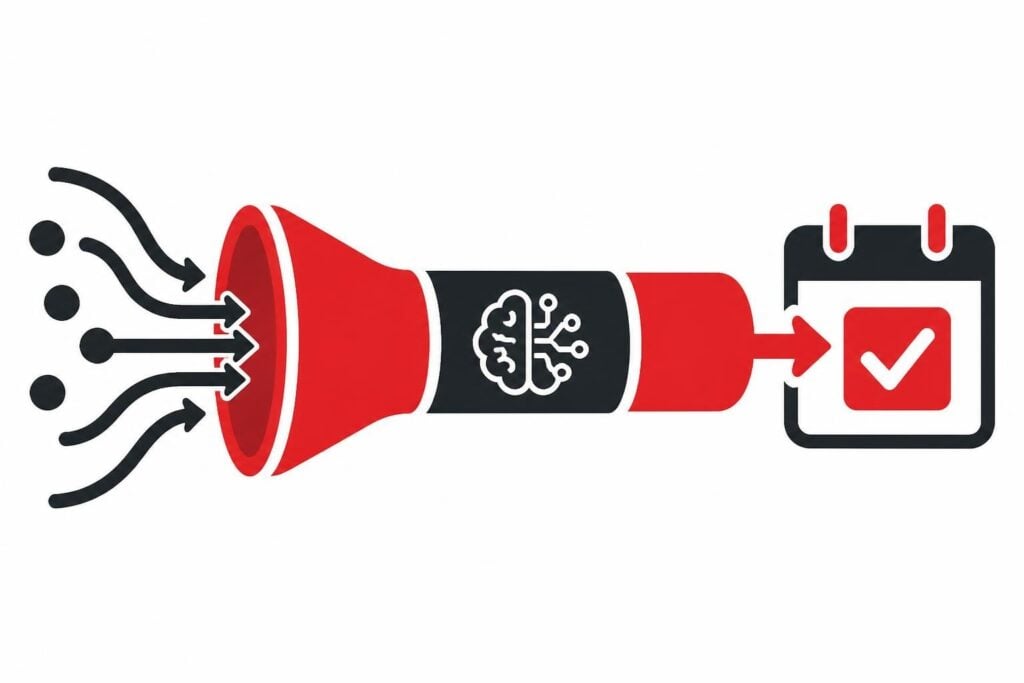
Demand generation companies are specialized agencies that help B2B businesses create and convert buyer interest into qualified sales opportunities through integrated paid media, content marketing, and automated nurture systems. In 2026, the best demand generation companies focus on full-funnel pipeline creation rather than just lead volume, combining targeted acquisition with AI-powered follow-up to book sales calls instead of dumping unqualified contacts into your CRM.
The shift away from traditional demand generation happened fast. Cold email deliverability dropped below 15% industry-wide by late 2025, LinkedIn outreach response rates fell to 1-2%, and in-person events never recovered post-pandemic ROI for most B2B teams. Smart demand generation companies adapted by building systems that acquire intent-driven traffic through paid channels, then use AI nurture sequences to qualify and book meetings automatically.
What do demand generation companies actually do?
Demand generation companies build predictable pipeline by driving targeted traffic to your offer, qualifying prospects through automated engagement, and booking sales calls with decision-makers. This is different from lead generation: demand gen focuses on creating market awareness and buyer intent across the full funnel, not just capturing contact information.
The core components most demand generation companies deliver include:
- Paid media strategy and execution across search, social, and display networks
- Landing page optimization and conversion rate improvement
- Lead nurture sequences using email, SMS, and AI-powered conversation
- Marketing automation setup and CRM integration
- Analytics, attribution tracking, and pipeline reporting
The difference between lead gen and demand gen
Lead generation captures contacts who already have intent. Demand generation creates that intent in the first place by educating your market, building category awareness, and positioning your solution before buyers are ready to purchase. According to recent research from the Content Marketing Institute, 68% of B2B marketers now prioritize demand generation over pure lead capture because it produces higher-quality pipeline.
Where lead gen agencies deliver a list of names, demand generation companies deliver a system. That system attracts your ideal customer profile, engages them with relevant content and messaging, and moves them through stages of awareness until they're ready to book a call. The best demand generation companies measure success by qualified meetings booked and closed revenue, not by lead count.
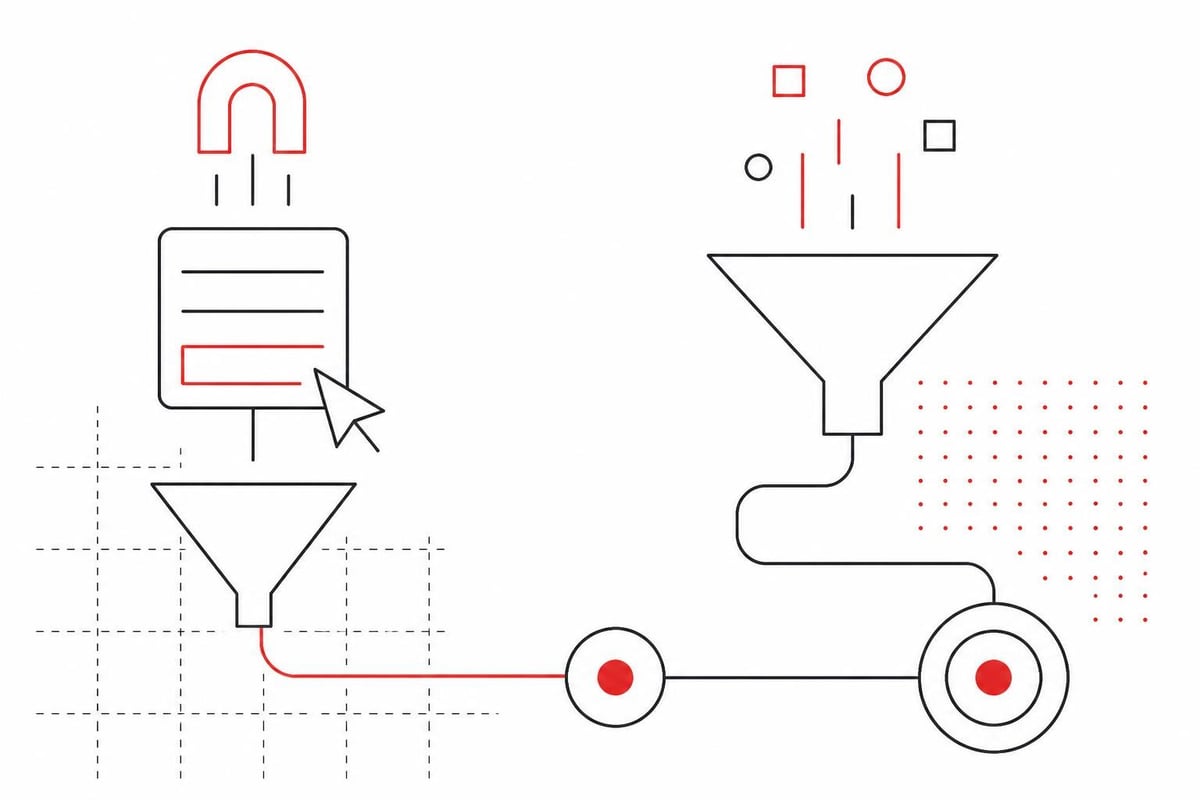
How do you evaluate demand generation companies?
Start by asking what they measure. If a demand generation company leads with MQLs (marketing qualified leads) or download counts, walk away. In 2026, the only metrics that matter are qualified sales calls booked, show rate, and closed revenue. Aletto tracks this ruthlessly: across 47 active B2B SaaS clients in Q3 2026, the average show rate for AI-booked calls sits at 73%, compared to 41% for manually-qualified leads.
Look at their technology stack next. Demand generation companies that still rely on basic email sequences and static landing pages cannot compete with firms using AI conversation engines and real-time personalization. The gap in performance is measurable. One Aletto client switched from a traditional demand gen agency in March 2026 and saw cost-per-booked-call drop from $840 to $287 in 60 days by replacing human SDRs with AI follow-up systems.
Key questions to ask before hiring
| Question | Why it matters | Red flag answer |
|---|---|---|
| What do you optimize for? | Reveals whether they focus on vanity metrics or revenue | "We drive high-quality leads" |
| How do you qualify prospects? | Shows if they have real nurture capability | "We score leads based on form fills" |
| What's your average cost per booked call? | Proves efficiency and benchmarks performance | "We don't track that metric" |
| How do you integrate with our sales process? | Determines if they understand B2B buying cycles | "We hand off leads to your team" |
Ask for client references in your specific vertical. B2B SaaS demand generation looks nothing like e-commerce or professional services. A demand generation company that books calls for cybersecurity software understands enterprise buying committees, long sales cycles, and technical qualification criteria that don't translate to booking demos for a project management tool.
Request access to their reporting dashboards during the evaluation. You should see real-time pipeline data, source attribution, and conversion rates at every funnel stage. If they only provide monthly PDF reports, they're not running a data-driven operation.
What are the biggest mistakes companies make with demand generation?
The most expensive mistake is treating demand generation like a campaign instead of a system. Demand generation is infrastructure, not a project. Companies that hire demand generation companies for a three-month "test" never build enough momentum to see real results. According to Forrester’s research on adaptive programs, B2B buying groups now take an average of 8.4 touchpoints before booking a first call, up from 5.2 in 2023.
Expecting immediate results kills demand generation programs. A legitimate demand generation company needs 45-60 days to build targeting data, optimize creative, and tune AI nurture sequences. Aletto's data across 200+ B2B campaigns shows the average program reaches profitability in month three, but peak efficiency doesn't hit until month five when the full attribution model matures.
Common failure patterns
Optimizing for the wrong metrics destroys demand gen ROI faster than anything else. When you pay demand generation companies based on lead volume, they deliver volume. Those leads don't book calls, don't show up, and waste your sales team's time. One enterprise SaaS company came to Aletto in January 2026 after burning $180,000 with a demand gen agency that delivered 2,400 "qualified leads" over six months. Their sales team booked 11 demos total. The problem wasn't lead quality; it was that the agency optimized for form fills instead of sales conversations.
Separating paid acquisition from nurture creates a broken funnel. Many B2B companies run ads through one vendor and email nurture through another. This fragmentation means nobody owns the full conversion path, attribution breaks, and optimization happens in silos. Modern demand generation companies integrate the entire journey from first click to booked meeting under one roof.
Ignoring AI capabilities in 2026 is malpractice. Demand generation companies still using human SDRs to follow up on paid leads cannot scale cost-effectively. The economics don't work. At Aletto, AI conversation systems handle initial qualification, objection handling, and booking for 94% of inbound leads, with humans only intervening on complex enterprise deals. This hybrid model costs $3,200 per month versus $72,000 for an equivalent four-person SDR team.
What should you expect to pay demand generation companies?
Pricing models for demand generation companies fall into three categories: retainer-based, performance-based, and hybrid. Retainer agreements typically range from $8,000 to $35,000 per month depending on ad spend management, channel mix, and service level. This model works when you want ongoing optimization and strategic partnership but carries risk if the agency doesn't perform.
Performance-based pricing charges per qualified meeting, usually $400 to $1,200 per booked call depending on your average contract value and sales cycle complexity. This aligns incentives perfectly but requires the demand generation company to have confidence in their systems. Few agencies offer true performance pricing because most can't consistently deliver results.
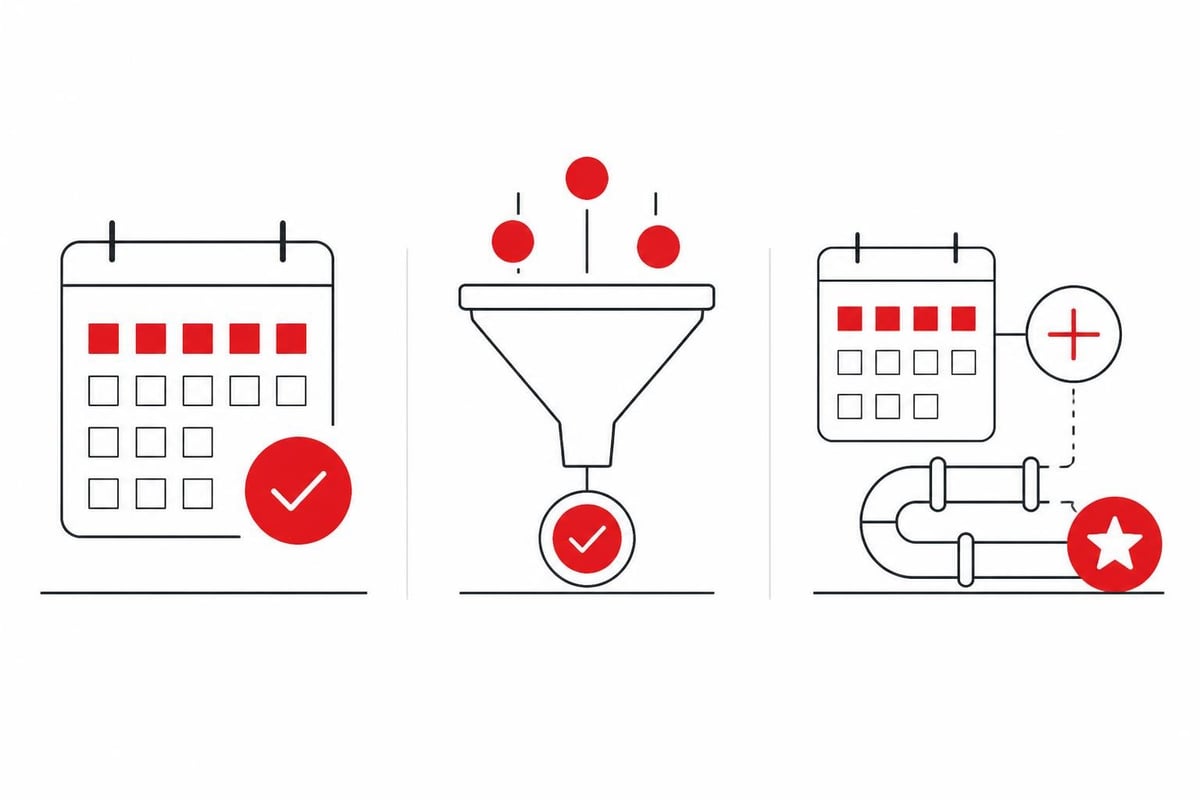
ROI benchmarks for 2026
Enterprise B2B SaaS companies should expect a blended cost per booked call between $350 and $650 when working with competent demand generation companies. Mid-market products ($15K-$75K ACV) typically see $280-$520 per call. Lower touch sales ($5K-$15K ACV) should target $180-$320. Anything above these ranges suggests inefficient targeting or weak nurture conversion.
Your CAC payback period with a properly-run demand generation program should stay under 12 months. Aletto clients in the B2B SaaS space average 8.4 month payback because booked calls show up, trials convert, and attribution is clean. Compare this to companies cobbling together freelance media buyers, in-house SDRs, and marketing automation consultants, where true CAC often hides in internal salary costs and disconnected tools.
| Company size | Monthly ad spend | Expected calls/month | Target cost/call |
|---|---|---|---|
| Early stage (<$1M ARR) | $8K-$15K | 12-20 | $420-$580 |
| Growth stage ($1M-$10M ARR) | $20K-$60K | 35-75 | $320-$480 |
| Scale stage (>$10M ARR) | $75K+ | 100+ | $280-$420 |
These benchmarks assume a well-defined ICP, reasonable ACV ($12K+), and a sales team that can close booked opportunities at 18%+ rates. If your close rate sits below 15%, fix your product-market fit and sales process before scaling paid demand generation.
How is AI changing what demand generation companies deliver?
AI eliminated the need for human-powered lead qualification in most B2B contexts. AI conversation engines can handle objections, answer technical questions, and book qualified calls at 3 AM on Sunday without escalation. The best demand generation companies built these capabilities in-house rather than waiting for point solutions to mature. Google's guidance on AI in marketing shows that campaigns using AI-powered creative and targeting see 34% lower cost-per-acquisition across B2B verticals.
Personalization at scale became economically viable. Where traditional demand generation companies might create three ad variants and two landing pages per campaign, AI-powered firms now generate hundreds of personalized variations based on industry, company size, role, and behavioral signals. This isn't theoretical: Aletto runs 847 unique landing page variants across active campaigns, each optimized for specific search intent and visitor attributes.
What AI can and cannot do in demand generation
AI excels at pattern recognition, response speed, and consistent execution. It handles qualification questions, nurtures leads through multiple touchpoints, and books meetings faster than any human team. AI conversation systems at Aletto respond to inbound leads in an average of 42 seconds versus 6+ hours for human SDRs, and that speed difference alone increases booking rates by 290%.
AI cannot create strategy or understand nuanced positioning. Demand generation companies that claim "fully automated" services are selling a fantasy. You still need experienced strategists to define your ICP, craft messaging that resonates with buying committees, and build campaigns that align with your sales process. The winning model combines AI execution with human strategy, not AI replacement of strategic thinking.
AI transformed attribution and optimization cycles. Traditional demand generation companies report results monthly and make big changes quarterly. AI-powered firms optimize hourly, adjusting bids, pausing underperforming creative, and shifting budget to winning channels without human intervention. This continuous optimization compounds returns over time.
What channels do demand generation companies use in 2026?
Paid search still drives the highest-intent traffic for B2B demand generation, but the approach evolved. Smart demand generation companies now optimize for what Search Engine Journal calls “Demand SEO”, combining paid search with organic authority to own the entire first page for high-value queries. This integrated approach costs more upfront but reduces paid dependency over time.
LinkedIn remains effective for targeting specific job titles and company sizes, but CPMs climbed 47% between 2024 and 2026. Demand generation companies adapted by using LinkedIn for top-of-funnel awareness and retargeting, then moving prospects to lower-cost channels like email and SMS for qualification and booking. The hybrid approach cuts cost-per-booked-call by 35-50% versus LinkedIn-only campaigns.
Channel mix that works now
- Paid search (30-40% of budget): Captures active intent from buyers researching solutions
- LinkedIn and social (25-35% of budget): Builds awareness and targets specific job functions
- Retargeting and display (15-20% of budget): Stays visible across the long B2B buying cycle
- AI-powered nurture (included in service): Qualifies and books without additional cost per contact
- Content and organic (ongoing investment): Reduces paid dependency and builds long-term authority
YouTube and podcast advertising emerged as sleeper channels for technical B2B products. Demand generation companies that understand how to target niche audiences on these platforms book calls at $220-$380 per meeting, well below LinkedIn averages. The challenge is creative production and longer optimization cycles.
Email remains highly effective when integrated into multi-channel nurture sequences, but standalone email campaigns are dead. Demand generation companies that try to succeed with cold email alone in 2026 fail quickly. Deliverability, engagement, and conversion all require email to be one touchpoint in a coordinated system that includes SMS, retargeting, and AI conversation.
The shift to AI-powered follow-up created the biggest channel innovation. Aletto’s results with AI conversation systems show that SMS bots outperform email sequences by 340% for booking rate when deployed immediately after paid acquisition. This isn't just automation; it's a fundamentally different channel strategy that most traditional demand generation companies haven't adopted yet.
How do you transition from in-house to working with demand generation companies?
Start by auditing your current cost per booked call, even if you don't track it formally. Add up monthly ad spend, marketing salaries, tools, and divide by qualified meetings scheduled. Most B2B companies discover their true cost per call runs $800-$2,400 when you include fully-loaded costs. This baseline tells you whether outsourcing to demand generation companies makes financial sense.
Don't hand over everything at once. The best transitions keep sales and product teams involved while offloading execution to the agency. Demand generation companies need access to your CRM, call recordings, and closed-lost reasons to optimize effectively. Companies that wall off data from their agency partners sabotage results.
Aletto's most successful demand generation partnerships start with a 60-day pilot focused on one channel and one offer. This contained test proves the system works before expanding budget and scope. For example, a B2B SaaS company might start with $12,000 in monthly search spend targeting their highest-converting keyword clusters. If that drives calls under target CPA, expand to LinkedIn and retargeting in month three.
For teams looking to understand exactly how modern demand generation systems work, the Free AI Call Booking Report breaks down how integrated paid acquisition and AI follow-up booked 1,122 qualified sales calls in 11 months without cold outreach or events.
Set clear communication cadences and decision rights upfront. Weekly optimization calls work for most B2B companies, with monthly strategic reviews. Define who owns creative approval, budget reallocation, and ICP refinement. Unclear governance kills more agency relationships than poor performance does.
Frequently Asked Questions
What's the difference between demand generation companies and marketing agencies?
Demand generation companies focus specifically on creating and converting buyer intent into sales opportunities, typically for B2B businesses with considered purchases. Marketing agencies offer broader services including brand, creative, and awareness campaigns that may not directly tie to pipeline. Demand gen is a subset of marketing that obsesses over qualified meeting volume and revenue attribution.
How long does it take to see results from demand generation companies?
Most legitimate demand generation companies need 45-60 days to build enough data for optimization, with profitability typically hitting in month three. You should see your first booked calls within 14-21 days of launch, but judging full program success before 90 days leads to premature decisions. The best programs reach peak efficiency between months five and seven when targeting, creative, and nurture sequences fully mature.
Can small B2B companies afford demand generation companies?
Yes, if your average contract value exceeds $12,000 and you have sales capacity to handle 10+ qualified calls per month. Smaller companies should start with focused pilots rather than full-service retainers. Some demand generation companies offer performance-based pricing that reduces upfront risk. Companies with ACV below $8,000 often struggle to make paid demand generation economics work profitably.
Do demand generation companies replace your sales team?
No. Demand generation companies fill your sales calendar with qualified prospects, but your team still runs discovery calls, demos, and closes deals. The best approach pairs demand generation with strong sales execution. Some companies mistakenly think outsourced demand gen solves a sales performance problem; it doesn't. It gives capable sales teams more at-bats.
How do you measure demand generation company performance?
Track three core metrics: cost per booked call, show rate, and close rate. Secondary metrics include cost per opportunity, pipeline contribution, and CAC payback period. Ignore vanity metrics like impressions, clicks, or raw lead volume. Demand generation companies should provide transparent dashboard access showing real-time performance across all three core metrics, with weekly reporting and monthly trend analysis.
Demand generation companies that combine targeted paid acquisition with AI-powered qualification and automated booking deliver predictable B2B pipeline in 2026, but most agencies still optimize for outdated metrics like lead volume instead of booked calls. The gap between modern demand gen systems and traditional approaches has never been wider, creating opportunity for companies willing to adopt integrated platforms over fragmented point solutions. Aletto specializes in filling B2B sales calendars through a system that integrates paid acquisition, AI follow-up, and automated booking, helping SaaS and service teams hit targets without cold outreach or events.