Lead gen data is the collection of contact information, firmographic details, behavioral signals, and intent indicators used to identify and qualify potential customers. In 2026, effective lead gen data combines first-party signals from paid acquisition with real-time behavioral tracking to fill sales calendars without cold outreach. The quality of your lead gen data directly determines whether your sales team spends time on qualified conversations or chases dead ends.
Most B2B teams treat lead gen data as a volume game. They buy lists, scrape LinkedIn, or dump every form fill into their CRM. That approach fails because it ignores data quality, consent compliance, and activation speed. The companies booking hundreds of qualified calls monthly focus on three elements: sourcing mechanisms that capture intent, validation processes that filter out noise, and activation systems that move prospects to conversations within hours.
What Makes Lead Gen Data Actually Valuable?
Lead gen data becomes valuable when it predicts buying intent and enables immediate action. A database of 10,000 contacts means nothing if none of them are in-market or reachable. Valuable lead gen data includes verified contact information, firmographic fit indicators, behavioral signals showing active research, and consent for outreach.
The shift toward privacy-first marketing has fundamentally changed what constitutes usable lead gen data. California’s CCPA and similar regulations now require explicit consent before processing personal information for marketing purposes. This means purchased lists and scraped data carry significant legal and deliverability risks.
First-party lead gen data outperforms third-party sources by 3-5x in conversion rates because it captures genuine interest. When someone clicks your ad, visits your pricing page, and fills out a form, that sequence reveals intent. Third-party data tells you someone might fit your ICP; first-party data proves they're actively looking.
The Four Components of High-Converting Lead Gen Data
Quality lead gen data contains four distinct layers:
- Contact verification: Email deliverability, phone number accuracy, decision-maker confirmation
- Firmographic qualification: Company size, revenue range, industry, technology stack
- Behavioral intent: Page views, content downloads, feature interest, timing signals
- Engagement readiness: Response to initial outreach, booking availability, buying timeline
Most teams collect only the first two layers and wonder why conversion rates stay below 2%. The difference between a contact record and a qualified opportunity lives in behavioral intent and engagement readiness.
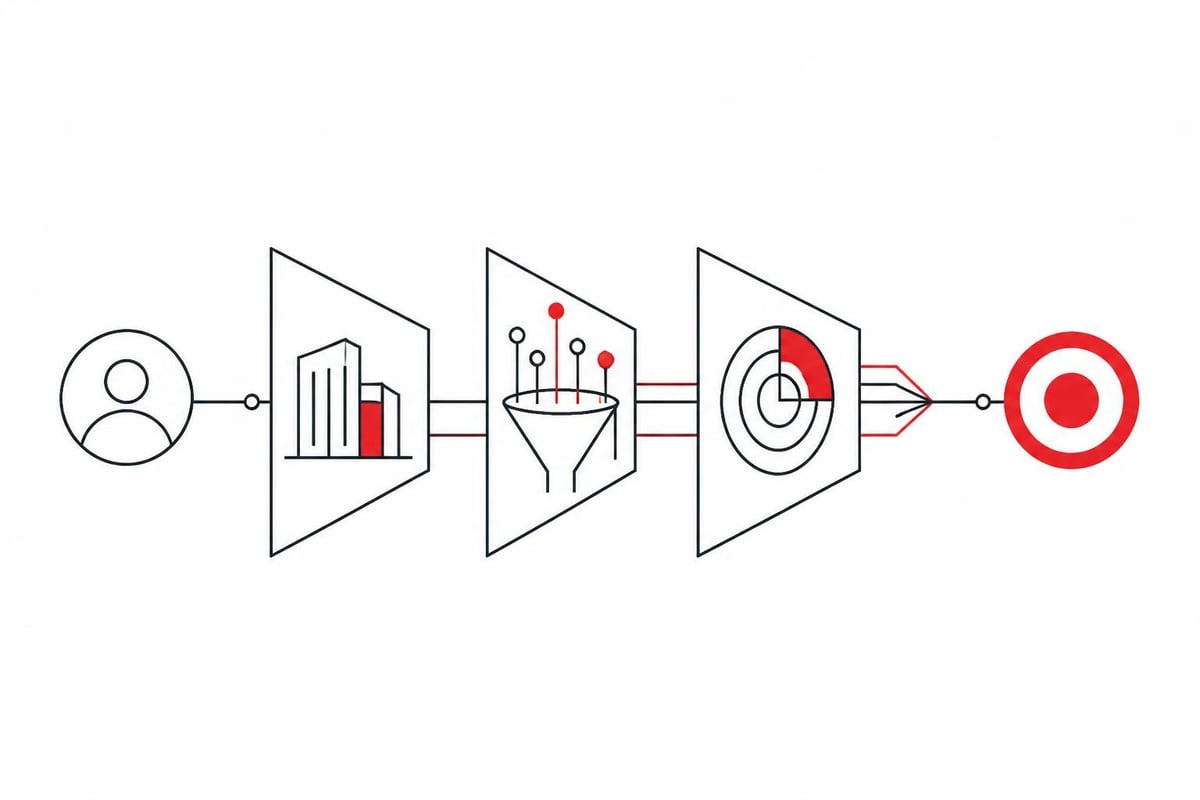
According to the IAB State of Data Report 2024, 73% of marketers now prioritize first-party data strategies over third-party sources. That shift reflects both privacy regulations and performance reality. First-party lead gen data converts because it's tied to actual behavior, not demographic assumptions.
How Do You Source Lead Gen Data That Converts?
You source converting lead gen data through paid acquisition channels that capture intent signals at the moment of research. This means running targeted ads on platforms where your ICP actively searches for solutions, then using landing pages and forms designed to qualify interest while collecting contact information.
The mistake most B2B teams make is optimizing for volume instead of signal quality. They drive traffic to generic "Download our guide" offers that attract researchers, not buyers. High-converting lead gen data comes from offers that require commitment: pricing calculator access, custom demos, ROI assessments, or implementation roadmaps.
Paid search captures bottom-funnel intent better than any other channel because prospects are literally typing their problems into Google. Someone searching "automated sales booking for B2B SaaS" is further along than someone who saw your LinkedIn post. The search query itself becomes valuable lead gen data because it reveals specific pain points.
Paid Acquisition + Behavioral Tracking Creates Complete Lead Profiles
Modern lead gen data collection doesn't stop at the form submission. The most effective systems track:
- Ad interaction history: Which headlines resonated, which pain points they clicked
- Landing page behavior: Time on page, scroll depth, video engagement
- Form completion patterns: Which fields caused hesitation, drop-off points
- Post-submission activity: Email opens, link clicks, booking page visits
This behavioral layer transforms a basic contact into a qualified prospect profile. Aletto uses this approach to track how prospects interact with AI-powered follow-up sequences, enabling sales teams to prioritize conversations with prospects showing multiple intent signals.
| Data Source | Conversion Rate | Consent Compliance | Cost per Lead | Speed to Contact |
|---|---|---|---|---|
| First-party (paid ads) | 8-15% | Full compliance | $80-200 | Immediate |
| Intent data providers | 3-6% | Varies | $150-400 | 24-48 hours |
| Purchased lists | 0.5-1% | High risk | $5-20 | Manual outreach |
| Event registrations | 5-10% | Full compliance | $200-500 | 1-7 days |
The table shows why paid acquisition-sourced lead gen data dominates. You get immediate access to prospects who raised their hand, full consent for follow-up, and behavioral context that enables personalized outreach.
Why Does Lead Gen Data Quality Matter More Than Volume?
Lead gen data quality determines sales efficiency and revenue per rep. A sales team working 1,000 high-quality leads will book more meetings and close more deals than the same team grinding through 10,000 unqualified contacts. Quality impacts every downstream metric: email deliverability, response rates, show rates, and close rates.
Forrester’s research on data quality found that poor data quality costs B2B companies 20-30% of revenue annually through wasted sales time, missed opportunities, and failed campaigns. When your CRM contains outdated contacts, wrong titles, or people who never consented to outreach, your team burns hours on unproductive activity.
Data decay affects lead gen data faster than most teams realize. Email addresses change at 22.5% annually, phone numbers at 18%, and job titles at 30%. A six-month-old lead database is already 15-20% inaccurate. This means you need continuous validation, not one-time scrubbing.
The Hidden Costs of Low-Quality Lead Gen Data
Poor lead gen data creates compounding problems:
- Deliverability damage: Bounced emails lower your sender reputation, affecting future campaigns
- Sales team demoralization: Reps lose confidence when most contacts are dead ends
- Wasted ad spend: You pay to acquire leads that sales can't reach or convert
- Compliance violations: Contacting people without proper consent risks fines and brand damage
- Inaccurate attribution: You can't optimize what you can't measure accurately
The shift to AI-powered sales processes makes data quality even more critical. AI follow-up systems personalize based on lead gen data attributes. If those attributes are wrong, your automation sounds tone-deaf and generic.
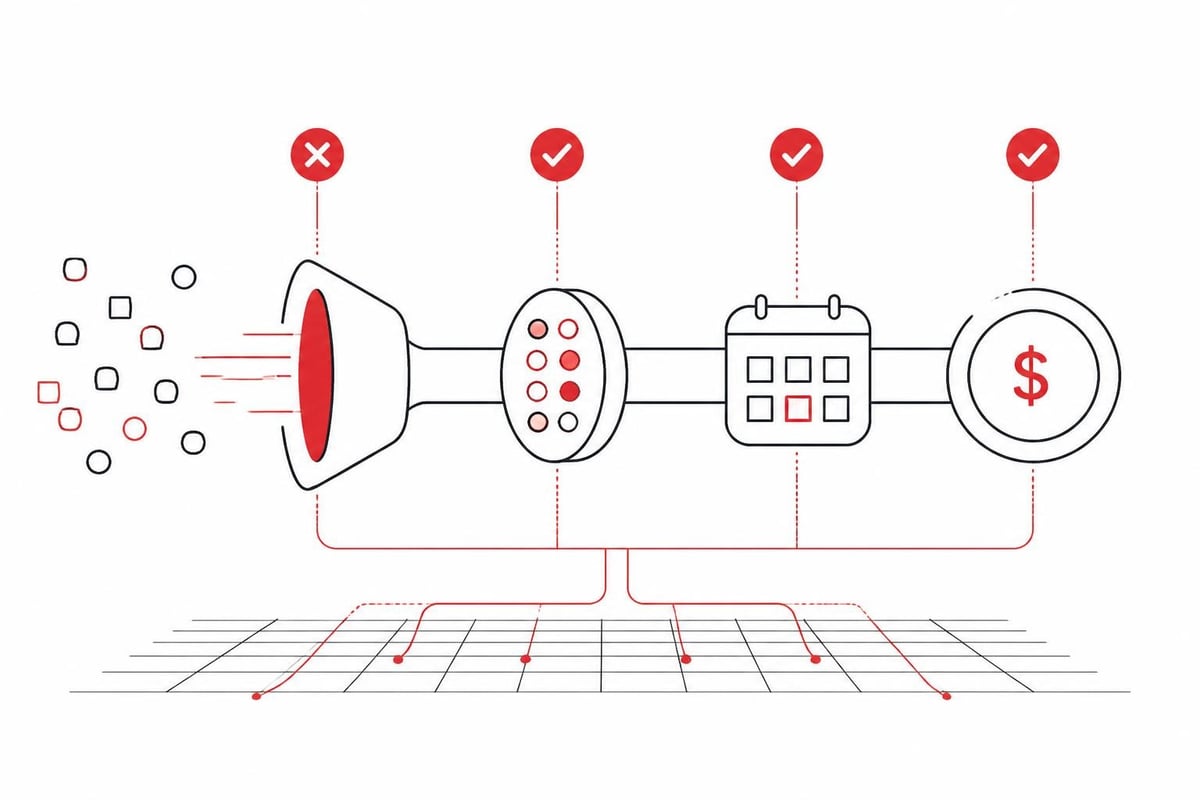
Consider a B2B SaaS company with 500 monthly leads. At 60% data quality, only 300 leads are reachable. With a 10% meeting rate, that's 30 meetings. Improve data quality to 90%, and you get 45 meetings from the same traffic, a 50% increase in pipeline without spending more on acquisition.
How Should You Validate and Enrich Lead Gen Data?
Validate lead gen data through automated verification at the point of capture and continuous enrichment post-acquisition. Email verification APIs check deliverability in real-time before the lead enters your CRM. Phone validation confirms numbers are mobile, active, and correctly formatted. Firmographic enrichment adds company data that enables better qualification and routing.
The best validation happens immediately, not in batch processes days later. When someone submits a form, run their email through verification before showing the thank-you page. If it bounces, prompt them to correct it while they're still engaged. This eliminates 80% of bad data before it enters your systems.
Real-time enrichment transforms minimal form data into complete prospect profiles. A prospect submits just their email and company name. Your enrichment stack adds company size, revenue, funding status, technology stack, and decision-maker contacts. This enhanced lead gen data enables immediate, personalized follow-up.
Building a Lead Gen Data Validation Stack
Modern validation requires multiple layers:
- Email verification: Real-time syntax checking, domain validation, mailbox existence confirmation
- Phone intelligence: Number type identification, carrier lookup, format standardization
- Firmographic enrichment: Company data append from sources like Clearbit, ZoomInfo, or LinkedIn
- Intent signal tracking: Website behavior, content engagement, product interest indicators
- Duplicate detection: Cross-reference against existing CRM records to prevent redundancy
Microsoft’s documentation on data transformation provides technical frameworks for cleaning and normalizing lead datasets at scale. These processes ensure consistency across sources and enable accurate reporting.
The validation investment pays immediate returns. Aletto's system validates every lead in real-time, ensuring sales teams only work verified, qualified prospects. This approach contributed to booking 1,122 qualified calls in 11 months by eliminating time wasted on unreachable contacts.
For teams serious about data quality, the Free AI Call Booking Report demonstrates exactly how proper lead validation and AI follow-up work together to maximize conversion. The methodology combines validated lead gen data with intelligent nurture sequences that move prospects to booked calls without manual outreach.

What Privacy and Compliance Issues Affect Lead Gen Data?
Privacy regulations require explicit consent before collecting and processing lead gen data for marketing purposes. CCPA, GDPR, and emerging state-level privacy laws mandate clear disclosure of data usage, easy opt-out mechanisms, and documented consent trails. Non-compliance carries fines up to $7,500 per violation and damages brand reputation.
The consent challenge affects lead gen data collection methods. Pre-checked boxes don't constitute valid consent under GDPR. Purchased lists rarely include documented consent chains. Scraped data from LinkedIn or directories violates most terms of service and privacy regulations. This means your lead sourcing strategy must prioritize first-party collection with clear consent language.
Cookie deprecation and tracking limitations further complicate lead gen data collection. Research on privacy banners and consent mechanisms shows that 40-60% of users reject tracking cookies, limiting your ability to build behavioral profiles. This makes every form submission and direct interaction more valuable because you can't rely on passive tracking.
Compliance Requirements for Lead Gen Data in 2026
Your lead gen data practices must address:
- Transparent collection: Clear privacy policies explaining what data you collect and why
- Consent documentation: Records proving each contact agreed to receive communications
- Data access rights: Systems enabling contacts to view, export, or delete their information
- Purpose limitation: Only using data for the purposes disclosed at collection
- Security measures: Encryption, access controls, and breach notification procedures
The operational impact is significant. You need consent management platforms (CMPs), documented opt-in processes, and regular audits. But compliance also improves performance. Prospects who explicitly opt-in convert better than those who were passively added to lists.
| Compliance Requirement | Implementation Method | Impact on Lead Quality |
|---|---|---|
| Explicit consent | Double opt-in for email lists | Higher engagement rates |
| Data minimization | Collect only essential fields | Reduced form abandonment |
| Access/deletion rights | Self-service data portals | Increased trust, better reputation |
| Processing transparency | Clear privacy policy links | Reduced spam complaints |
Many B2B lead generation companies ignore compliance until they face legal issues. The smarter approach builds consent into your acquisition process from the start, creating both legal protection and higher-quality lead gen data.
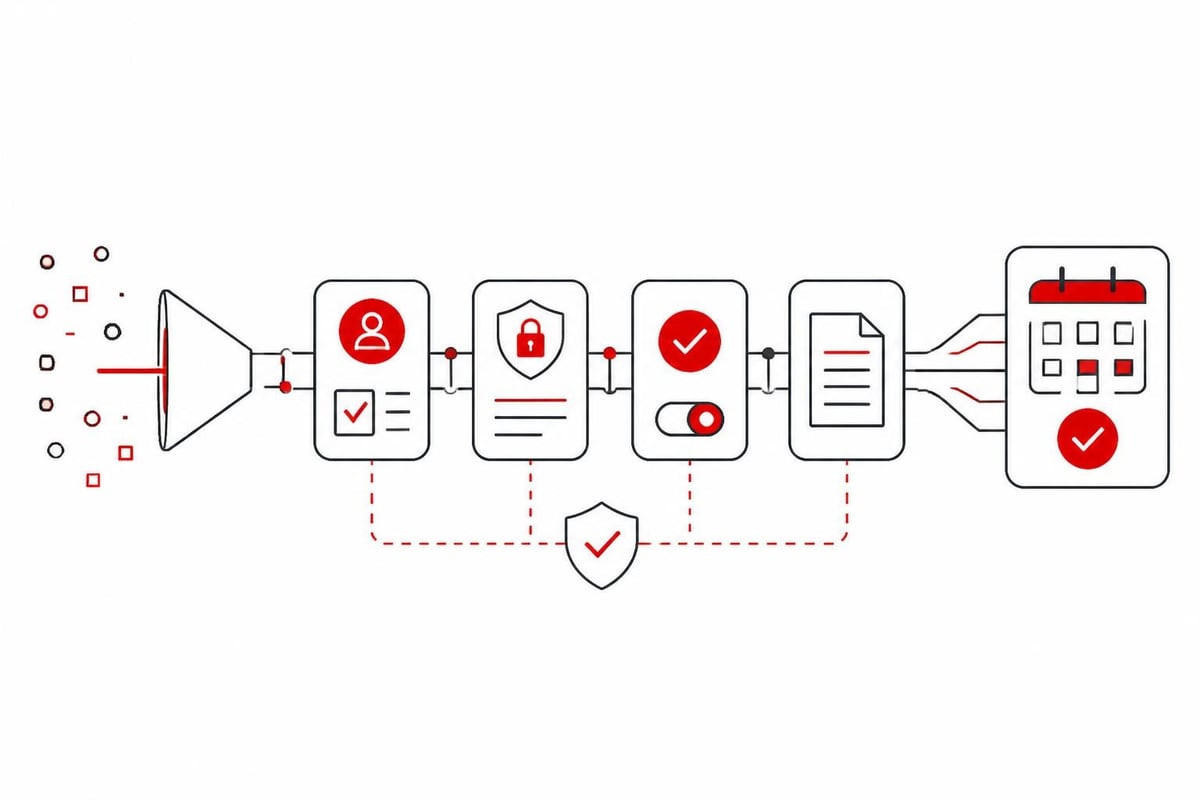
How Do You Activate Lead Gen Data for Revenue?
Activate lead gen data through automated systems that move prospects from initial capture to booked conversations within 24 hours. Speed matters because intent decays rapidly. A prospect who fills out a form today is 10x more likely to take a call this week than next month. Your activation system must qualify, nurture, and book without manual handoffs.
The traditional approach fails here. Sales receives leads, attempts manual outreach over several days, and most prospects go cold before contact. Modern activation uses AI follow-up sequences that respond in minutes, qualify through conversational interactions, and automatically book meetings when prospects show interest.
Immediate response is non-negotiable for lead gen data activation. Studies consistently show that contacting leads within five minutes produces 9x higher conversion than waiting an hour. Your system should trigger follow-up the moment a form submits or a high-intent behavior occurs.
The Automated Activation Sequence
Effective lead gen data activation follows this pattern:
- Instant acknowledgment: Automated email or SMS confirming receipt within 60 seconds
- Qualification conversation: AI-powered interactions that ask qualifying questions naturally
- Personalized nurture: Follow-up sequences tailored to prospect responses and behaviors
- Automated booking: Direct calendar links when prospects indicate readiness
- Pre-meeting preparation: Automated briefings for sales reps before calls
This sequence eliminates the lag time that kills conversion. Prospects move from interest to booked meeting while their intent is hot. Aletto's integrated system handles this entire flow automatically, which is how teams book qualified calls without cold outreach.
The data shows clear patterns. Leads contacted within one hour convert at 8-12%. Leads contacted after 24 hours convert at 1-2%. The same lead gen data produces dramatically different results based purely on activation speed.
What Metrics Indicate Lead Gen Data Performance?
Lead gen data performance is measured by conversion rates at each funnel stage, not total volume. The essential metrics are form-to-qualified rate (what percentage of submissions meet ICP criteria), qualified-to-meeting rate (what percentage book calls), and meeting-to-opportunity rate (what percentage enter sales pipeline).
Cost per qualified lead matters more than cost per contact. You might acquire leads at $50 each, but if only 20% qualify, your real cost per qualified lead is $250. Understanding this distinction prevents the false economy of buying cheap, low-quality lead gen data that never converts.
Time-to-contact and time-to-conversion metrics reveal activation efficiency. If your average lead takes 14 days from capture to first meeting, you're leaving money on the table. Top-performing teams book meetings within 48 hours of initial contact.
Lead Gen Data Performance Dashboard
Track these metrics weekly:
| Metric | Target Range | What It Reveals |
|---|---|---|
| Form completion rate | 15-30% | Landing page effectiveness |
| Email deliverability | >95% | Data quality, list hygiene |
| Form-to-qualified rate | 40-60% | Targeting accuracy |
| Qualified-to-meeting rate | 20-35% | Activation effectiveness |
| Meeting show rate | 65-80% | Qualification accuracy |
| Meeting-to-opportunity rate | 30-50% | Sales process efficiency |
Poor performance in early metrics (deliverability, qualification rate) indicates sourcing problems. Poor performance in later metrics (meeting rate, show rate) indicates activation or sales process issues. The data tells you exactly where to optimize.
Revenue attribution connects lead gen data directly to closed deals. Tag every lead with source, campaign, and first-touch data. Track that attribution through to close. This reveals which lead sources produce revenue, not just volume. Many teams discover their highest-volume sources produce the lowest revenue.
Frequently Asked Questions
What is lead gen data and why does it matter for B2B sales?
Lead gen data is the collection of contact information, firmographic details, and behavioral signals used to identify potential customers. It matters because sales teams need qualified prospects to fill their calendars. Poor lead gen data wastes time on unqualified contacts while high-quality data enables efficient pipeline building and predictable revenue.
How do you collect lead gen data compliantly in 2026?
Collect lead gen data through first-party sources like paid advertising, website forms, and content offers with explicit opt-in consent. Include clear privacy policy links, explain data usage upfront, and provide easy opt-out mechanisms. Avoid purchased lists and scraped data that lack documented consent. Use double opt-in for email communications to ensure genuine interest and regulatory compliance.
What's the difference between first-party and third-party lead gen data?
First-party lead gen data comes directly from prospects interacting with your marketing (ads, website, content). Third-party data is purchased from vendors or aggregated from external sources. First-party data converts 3-5x better because it captures actual intent and includes consent for outreach. Third-party data is cheaper per contact but rarely converts because it lacks behavioral context and often has compliance issues.
How often should you validate and clean lead gen data?
Validate lead gen data in real-time at the point of capture using email verification and phone validation APIs. Run comprehensive data cleaning monthly to identify duplicates, update job changes, and remove bounced contacts. Lead gen data decays at 20-30% annually, so continuous validation maintains quality better than periodic batch cleaning.
What lead gen data fields actually impact conversion rates?
Email address, direct phone number, and job title are baseline essentials. Fields that significantly impact conversion include current pain points, budget authority, buying timeline, and specific product interest. Behavioral data like pages viewed, content downloaded, and email engagement predict conversion better than static firmographic fields. Focus on collecting fewer fields that indicate intent rather than comprehensive profiles that slow form completion.
Quality lead gen data separates B2B teams that consistently hit revenue targets from those constantly chasing pipeline. The fundamentals remain unchanged: source from channels that capture intent, validate ruthlessly, maintain compliance, and activate immediately while prospects are engaged.
Most B2B sales teams struggle not because they lack leads but because their lead gen data is low-quality, poorly activated, or both. Aletto solves this by integrating paid acquisition, AI-powered follow-up, and automated booking into one system. The Free AI Call Booking Report shows exactly how this integrated approach booked 1,122 qualified sales calls in 11 months-no cold emails, no cold calls, no LinkedIn spam. If your current lead gen data isn't filling your calendar with qualified conversations, the report provides a proven alternative framework built for 2026's privacy-first, automation-first reality.