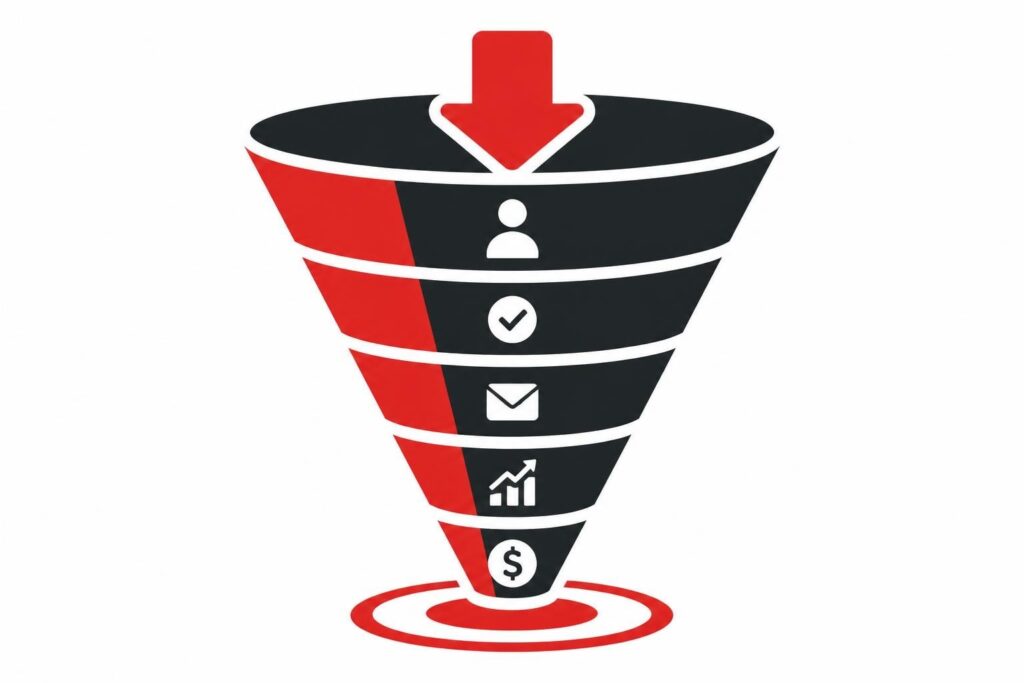
Sales funnel management is the systematic process of tracking, analyzing, and optimizing every stage of your buyer journey from initial contact to closed deal. For B2B teams in 2026, effective funnel management means identifying bottlenecks, forecasting revenue accurately, and allocating resources to the stages that actually move prospects forward. Without it, you're guessing which leads matter and why deals stall.
Most B2B sales teams treat their funnel as a reporting exercise rather than an operational system. They log activities in their CRM, run weekly pipeline reviews, and wonder why forecasts miss by 30%. The problem isn't effort-it's that traditional sales funnel management focuses on stage labels instead of the behaviors and signals that predict conversion. When your funnel reflects how buyers actually research, evaluate, and decide, you can engineer predictable growth instead of hoping leads convert.
What exactly is sales funnel management?
Sales funnel management is the discipline of governing how prospects enter, progress through, and exit each stage of your sales process. It encompasses stage definitions, entry and exit criteria, conversion metrics, velocity tracking, and the actions your team takes to move deals forward. The goal is visibility and control: knowing exactly where every opportunity stands and which interventions improve outcomes.
A well-managed funnel answers three questions at any moment: how many opportunities do we have at each stage, what's the probability each will close, and where are deals getting stuck? Building a healthy sales pipeline requires clear stage governance, consistent data hygiene, and regular analysis of conversion rates and cycle time. Without these fundamentals, your funnel becomes a junk drawer of stale leads and wishful thinking.
The difference between a sales funnel and a sales pipeline
The terms "funnel" and "pipeline" are often used interchangeably, but they measure different things. Your sales funnel tracks aggregate flow and conversion rates across all prospects-it's a diagnostic tool that shows where you lose people. Your pipeline is the inventory of active opportunities your team is working right now, valued and weighted by stage and close probability.
Think of it this way:
- Sales funnel: The system and conversion math (1,000 leads → 100 MQLs → 20 opportunities → 5 customers)
- Sales pipeline: The live deals in progress ($500K in discovery, $1.2M in proposal, $800K closing this month)
- Funnel management: The processes that keep both accurate and improving
Most B2B teams need both views. The funnel tells you if your lead generation and qualification process is healthy. The pipeline tells you if you'll hit this quarter's number.
Why does sales funnel management matter in 2026?
Buyers have fundamentally changed how they evaluate vendors. Forrester research shows that B2B buyers now complete 70% of their decision process before ever speaking to sales, relying on peer reviews, content, and self-service tools to build their shortlist. Your funnel must account for this invisible research phase, not just the stages where prospects raise their hand.
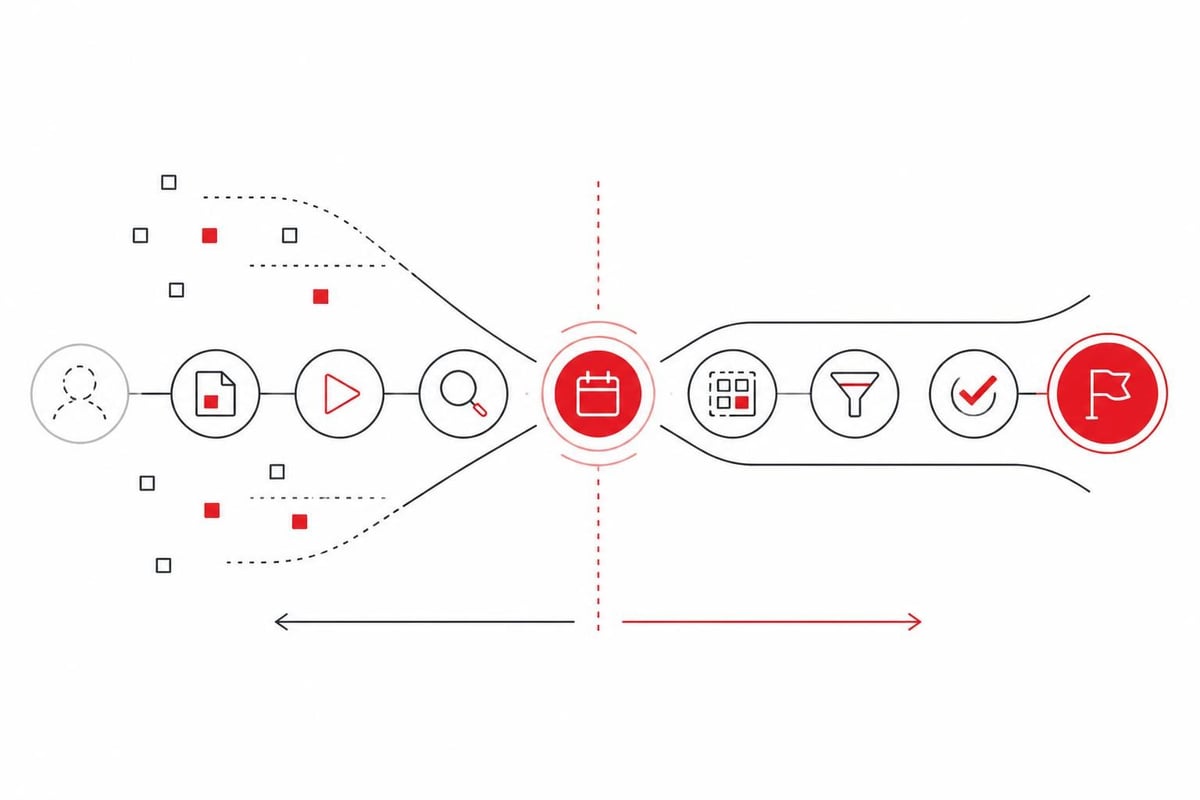
Traditional funnels that start at "demo requested" miss the entire demand creation and nurture process that determines whether qualified buyers even consider you. Modern sales funnel management integrates marketing signals, intent data, product usage, and engagement scoring to identify prospects who are in-market before they book a call. This is why B2B SaaS lead generation strategies now blend paid acquisition, content syndication, and automated follow-up into a single system.
The cost of poor funnel management
When you don't actively manage your sales funnel, three things happen: your forecast becomes fiction, your team wastes time on dead deals, and you can't diagnose why revenue misses targets. Aletto has analyzed hundreds of B2B funnels and consistently finds that companies lose 40-60% of qualified leads between initial engagement and first sales conversation simply because no system exists to track and re-engage them.
Specific failure modes we see:
- Leads enter the CRM but no one follows up within 24 hours (57% never get contacted)
- Opportunities sit in "proposal sent" for 90+ days with no next action defined
- Marketing and sales use different stage definitions, so handoff breaks down
- No one tracks why deals are lost, so the same issues repeat every quarter
The teams that hit their numbers treat sales funnel management as a daily operating discipline, not a monthly review meeting. They know conversion rates by source and stage, they measure time-to-progress, and they have playbooks for every transition point.
How do you build an effective sales funnel management system?
Start by defining stages that reflect buyer behavior, not your internal process. A stage like "contacted" tells you nothing about buyer intent or readiness. A stage like "problem confirmed, evaluating solutions" tells you exactly what conversation needs to happen next and what content the prospect needs.
Your stage definitions should answer: What does the buyer believe at this stage? What evidence proves they've reached this stage? What has to happen for them to move to the next stage? HubSpot’s lead generation funnel guide provides a framework for aligning stage criteria between marketing (MQL, SQL) and sales (opportunity stages) so both teams work from the same playbook.
Stage framework that actually works
Here's a funnel architecture we've seen work across B2B SaaS and services companies:
| Stage | Definition | Entry Criteria | Exit Criteria | Typical Conversion |
|---|---|---|---|---|
| Subscriber | Aware of your brand | Opted into content/email | Engages with 3+ pieces of content | 8-12% to MQL |
| MQL | Researching solutions | Matches ICP + intent signal | Books qualified meeting | 25-35% to SQL |
| SQL | Evaluating vendors | Discovery call completed, budget confirmed | Proposal requested | 40-50% to Opportunity |
| Opportunity | Active deal | Proposal sent, decision process defined | Verbal or written commitment | 25-35% to Close |
| Customer | Contract signed | Payment processed | Onboarding begins | N/A |
The conversion rates assume healthy funnel management. If yours are lower, you have a qualification problem (letting unqualified prospects advance) or a nurture problem (not providing what buyers need to progress).
Data hygiene and tracking infrastructure
Your funnel is only as good as your data. Salesforce’s data management best practices emphasize mandatory fields, validation rules, and regular audits to prevent garbage data from polluting your reports. At minimum, require reps to log: source/campaign, stage change dates, next action, and loss reason.
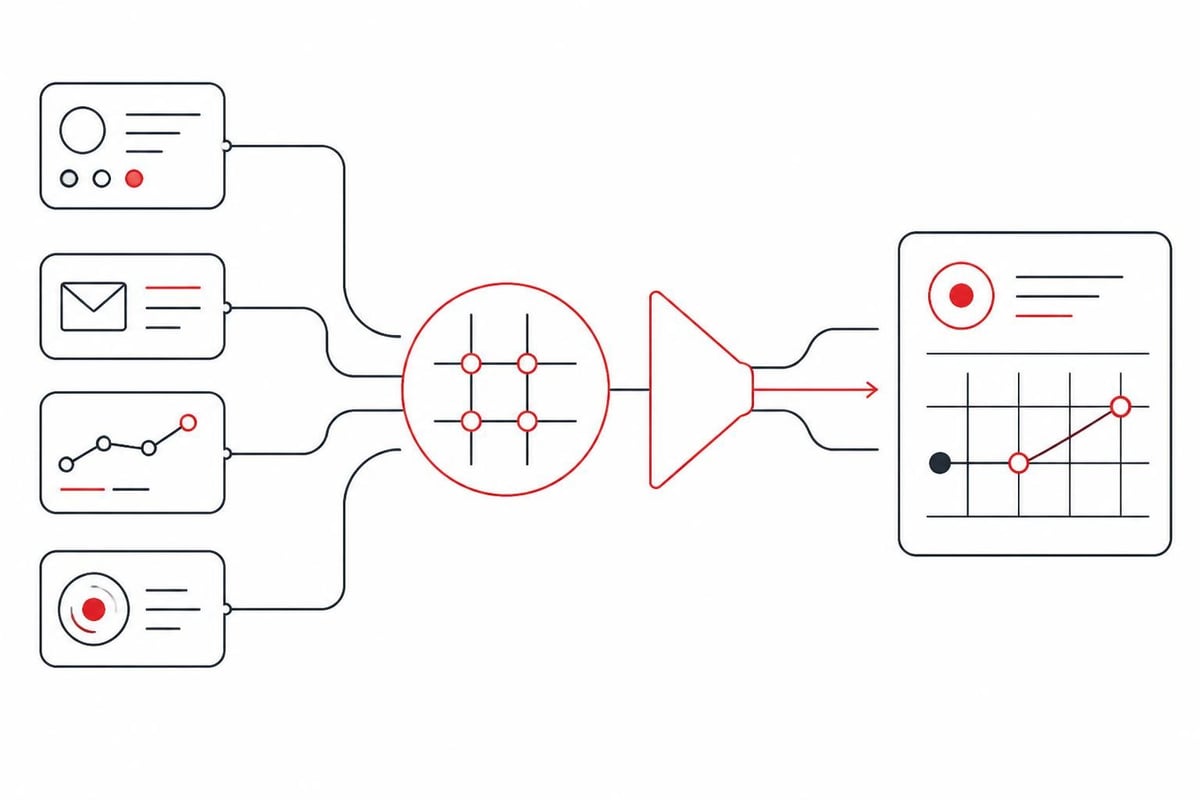
Most CRMs can't natively track the full buyer journey because leads often engage across multiple channels before converting. Modern sales funnel management systems integrate CRM with marketing automation, intent data platforms, and conversation intelligence tools to build a complete activity timeline. When a prospect visits your pricing page, downloads a case study, and then books a demo, you need all three signals in one view.
What metrics actually matter for sales funnel management?
Stop obsessing over vanity metrics like total leads or pipeline value. The numbers that predict revenue are conversion rates by stage, time in stage, and velocity through the full funnel. If you're converting 30% of SQLs to opportunities but the average deal sits in discovery for 47 days, you don't have a volume problem-you have a qualification or sales process problem.
Core metrics to track weekly:
- Stage conversion rates: Percentage moving from one stage to the next (by source and campaign)
- Time in stage: Median days spent at each funnel level before progressing or churning
- Funnel velocity: Total time from first touch to closed-won, broken down by segment
- Win rate by stage: Percentage of opportunities created that eventually close
- Pipeline coverage: Ratio of open pipeline value to quota (should be 3-4x for healthy funnels)
Track these by cohort (month of entry) and by source. Leads from paid search might convert faster but at lower rates than content marketing leads. Knowing this lets you optimize spend and follow-up sequences for each channel.
Leading vs. lagging indicators
Revenue is a lagging indicator-by the time it's low, you've already lost deals you should have won months ago. Leading indicators tell you what will happen next quarter. The best leading indicators for sales funnel management are: new MQLs generated, SQL-to-opportunity conversion rate, and average deal size in early stages.
If new MQLs drop 20% this month, your closed revenue will drop in 60-90 days. If SQL-to-opportunity conversion suddenly improves, either your qualification got better or your criteria got looser (check which). IBM’s research on sales productivity found that teams using leading indicators to guide resource allocation close 18% more deals than teams managing to lagging metrics alone.
How do you optimize funnel conversion at each stage?
Optimization starts with diagnosis. Pull conversion data for the last 90 days and identify your biggest drop-off point. Is it MQL to SQL? SQL to opportunity? Opportunity to close? The stage where you lose the most qualified prospects is where you should focus first.
For each problem stage, talk to 5-10 prospects who exited there. Ask what information they needed but didn't get, what concerns went unaddressed, and what their decision process actually looked like. You'll almost always find a mismatch between what you provided and what they needed to move forward. LinkedIn’s B2B benchmark research on the "Trust Funnel" reveals that buyers need different content at each stage: educational and unbiased early, specific and comparative mid-funnel, and risk-mitigation late.
Practical interventions that improve conversion
Early funnel (Subscriber to MQL):
- Segment by intent signal and industry, then personalize nurture sequences
- Use retargeting to stay visible during the research phase
- Offer high-value, ungated content that demonstrates expertise
- Implement lead scoring that combines firmographic fit and behavioral engagement
Mid-funnel (MQL to SQL to Opportunity):
- Speed to contact matters-respond within 5 minutes or use AI to book meetings instantly
- Pre-qualify with a diagnostic tool or assessment before the sales call
- Send relevant case studies and ROI calculators before the discovery call
- Define clear next steps and timeline expectations at every interaction
Late funnel (Opportunity to Close):
- Multi-thread by engaging multiple stakeholders, not just your champion
- Provide business case templates and internal pitch decks
- Address objections proactively with proof points (customer logos, data, guarantees)
- Shorten contract cycles with standardized agreements and e-signature
Many B2B companies are now using AI-powered follow-up systems to nurture leads between human touchpoints. Aletto's clients book qualified sales calls automatically by combining paid acquisition with AI follow-up that responds to prospect questions and schedules meetings without rep involvement. This approach eliminates the black hole where leads request information and then disappear because no one followed up fast enough.
A Free AI Call Booking Report shows exactly how this system books hundreds of qualified calls per month without cold outreach. It's a detailed breakdown of the mechanics, conversion math, and real campaign data that proves automated booking works for B2B services and SaaS.
How do digital tools integrate into sales funnel management?
The shift to digital-first selling means your funnel now includes touchpoints your reps never see: website visits, content downloads, email opens, social engagement, and product trials. Harvard Business Review’s research on integrating digital tools into sales strategy shows that high-performing teams combine human selling with analytics and automation at every funnel stage, not just top-of-funnel.
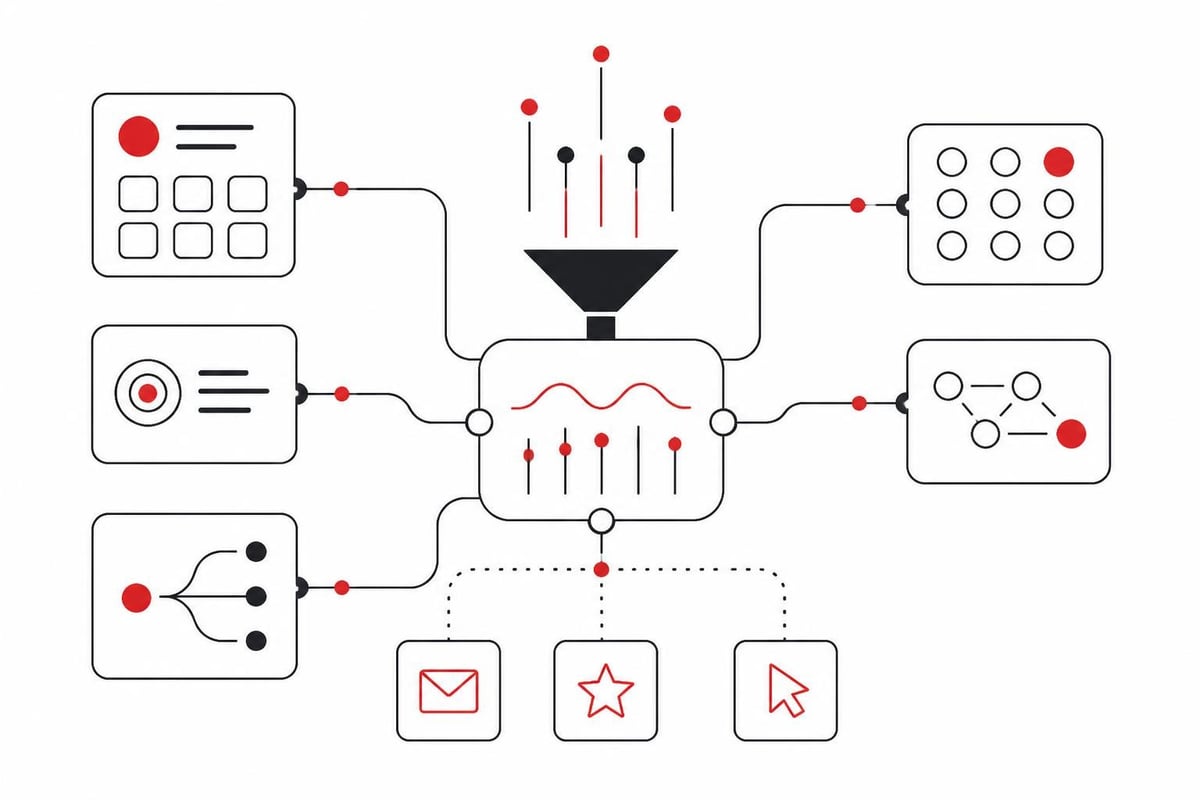
Your tech stack should answer: Who's engaging? What are they interested in? When should we reach out? What message resonates? At minimum, you need CRM, marketing automation, conversation intelligence, and analytics integrated so data flows bidirectionally. When a prospect books a demo, your CRM should auto-populate their engagement history so the rep can personalize the conversation.
Modern funnel technology stack:
- CRM: System of record for contacts, accounts, opportunities, and pipeline (Salesforce, HubSpot)
- Marketing automation: Email nurture, scoring, campaign tracking (Marketo, Pardot, ActiveCampaign)
- Intent data: Signals when prospects research your category (Bombora, 6sense, DemandScience)
- Conversation intelligence: Call recording, transcription, and deal insights (Gong, Chorus)
- Revenue analytics: Multi-touch attribution and funnel reporting (Bizible, Dreamdata)
- AI booking agents: Automated meeting scheduling and qualification (custom systems)
Don't buy tools just to have them. Start with the biggest gap in your current funnel visibility, solve that with one tool, then expand.
What role does sales and marketing alignment play?
Misalignment between sales and marketing is the number one cause of funnel leakage. Marketing generates leads, sales says they're unqualified, marketing says sales didn't follow up, and no one takes responsibility for the 50% of prospects who fall through the cracks. Sales funnel management requires a single shared definition of each stage and agreed-upon SLAs for handoffs.
Create a service-level agreement (SLA) that specifies: Marketing will deliver X SQLs per month that meet these criteria. Sales will contact each SQL within Y hours and log the outcome within Z hours. Both teams review conversion data weekly and adjust targeting or messaging based on what's working. When marketing and sales share a revenue goal (not separate MQL and pipeline goals), they start solving the same problem.
At Aletto, we see the best results when one team owns the entire funnel from ad click to booked call. When the same people who create the ads also manage the follow-up and booking, accountability is clear and optimization cycles are fast. That's how B2B lead generation companies that integrate acquisition and conversion outperform teams with separate demand gen and sales development functions.
Frequently Asked Questions
What's the ideal sales funnel conversion rate for B2B?
Benchmarks vary by industry, deal size, and sales cycle, but healthy B2B funnels convert 2-5% of raw leads to customers. Focus less on the total rate and more on each stage: MQL-to-SQL should be 25-40%, SQL-to-opportunity 40-60%, and opportunity-to-close 20-35%. If any stage is below these ranges, diagnose that specific transition.
How often should you review your sales funnel?
Weekly for pipeline reviews (opportunities likely to close this month/quarter) and monthly for full-funnel health (conversion rates, velocity, leading indicators by source). Quarterly, reassess stage definitions and criteria to ensure they still match buyer behavior. Annual strategy reviews should set funnel targets and resource allocation for the coming year.
Can you automate sales funnel management?
You can automate data capture, alerts, and reporting, but human judgment is still required for stage transitions, deal strategy, and process improvement. Use automation to eliminate manual logging and remind reps of next actions. AI can score leads, suggest content, and even handle initial qualification conversations, but final deal decisions still need a human.
What's the biggest mistake in sales funnel management?
Allowing unqualified prospects to advance to later stages. When your pipeline is full of deals that will never close, your forecast is wrong, your reps waste time, and you can't see the real opportunities. Enforce strict entry criteria for each stage and be willing to disqualify prospects who don't meet them, even if it lowers your pipeline number.
How do you manage a sales funnel with a long sales cycle?
Track micro-conversions (stakeholder meetings, business case shared, security review completed) as sub-stages so you can see progress even when deals take 6-12 months to close. Nurture long-cycle deals with value-add content and executive engagement so you stay top-of-mind. Monitor time-in-stage closely-if a deal hasn't progressed in 30 days, either push for next steps or disqualify it.
Sales funnel management is the difference between hoping you hit your number and engineering predictable revenue growth. By defining clear stages, tracking the right metrics, and optimizing conversion at every transition, you turn your funnel from a reporting exercise into a revenue machine. The teams winning in 2026 integrate their acquisition, follow-up, and booking into one system so nothing falls through the cracks. Aletto specializes in filling B2B sales calendars with qualified calls by combining paid acquisition, AI follow-up, and automated booking-eliminating the manual chaos that kills most funnels. If your current approach leaves revenue on the table, it's time to see what a truly managed funnel can deliver.