An ai funnel is a customer acquisition system that uses artificial intelligence to qualify leads, automate personalized follow-up, and book sales appointments without manual intervention. It replaces traditional manual nurture sequences with machine learning that adapts messaging and timing based on prospect behavior, filling sales calendars while sales teams focus on closing deals.
For B2B SaaS and service companies, the post-pandemic reality has made cold outreach, networking events, and manual email sequences increasingly ineffective. The ai funnel represents a fundamental shift: instead of sales reps chasing leads, the system orchestrates the entire journey from first click to booked appointment. Aletto has used this approach to book 1,122 qualified sales calls in 11 months by integrating paid acquisition with AI-driven follow-up and automated scheduling.
What makes an AI funnel different from traditional marketing funnels?
Traditional funnels rely on static email sequences, manual qualification calls, and sales reps following up with every lead. An ai funnel uses machine learning to analyze prospect behavior in real-time and adjust the journey dynamically. This means no two prospects receive the same experience, even if they enter at the same stage.
The core difference lies in decision-making speed and personalization scale. A traditional funnel sends the same Day 3 email to everyone who downloaded a white paper. An ai funnel evaluates each prospect's engagement level, company fit, recent website behavior, and response patterns to determine the next best action. That might be a text message, a video email, a case study, or a direct booking link.
The three layers of AI funnel intelligence
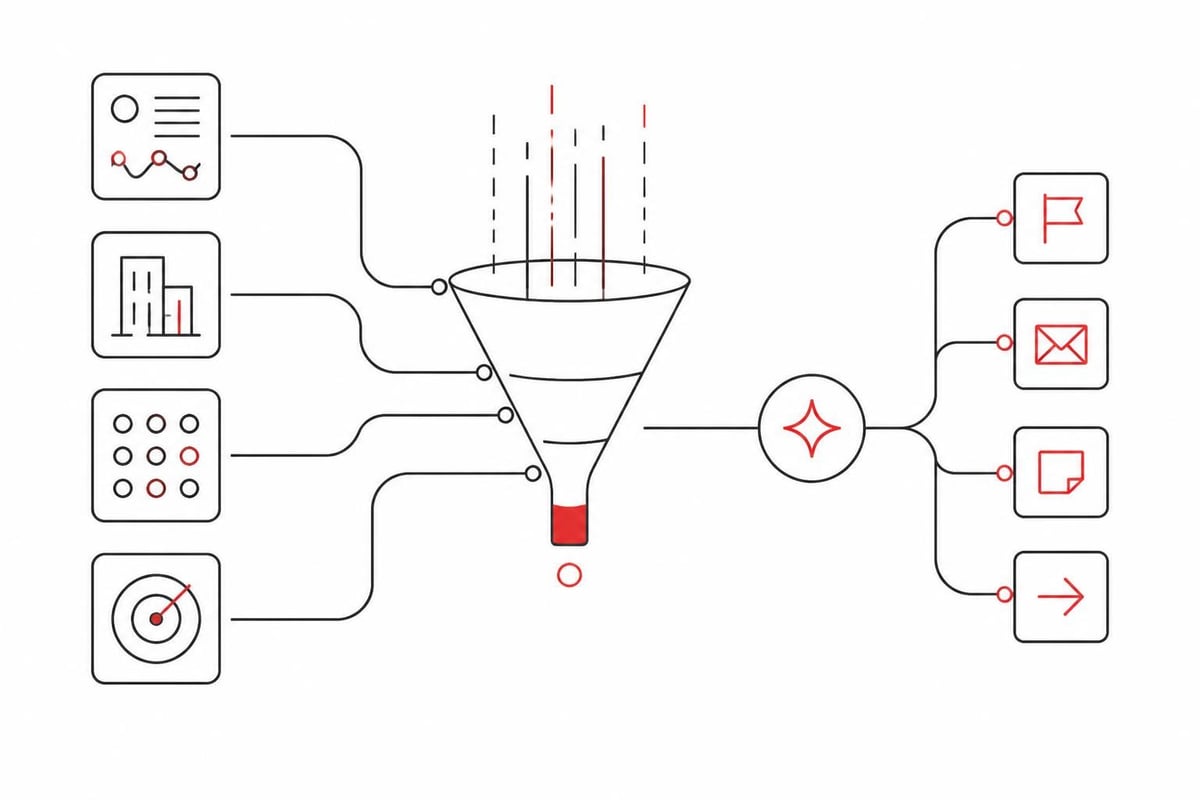
Modern AI funnels operate across three distinct intelligence layers that work together:
Acquisition intelligence determines which audiences, channels, and creative variations drive the highest-quality leads. Machine learning algorithms test thousands of audience combinations and automatically shift budget toward segments that book appointments, not just those that click or submit forms.
Conversation intelligence manages the follow-up sequence after a lead enters the funnel. Natural language processing interprets prospect responses, detects buying intent signals, and adjusts messaging tone and content. When a prospect asks about pricing, the AI recognizes this as high intent and accelerates the booking sequence.
Scheduling intelligence identifies the optimal moment to offer a calendar link based on engagement velocity, competitive research activity, and historical conversion patterns. Some prospects book immediately; others need three touchpoints over nine days. The system learns these patterns and adjusts accordingly.
According to Harvard Business Review’s framework on AI-powered marketing, this decomposition of the customer journey into distinct AI-enhanced stages enables companies to set specific objectives and measure AI impact at each phase rather than treating automation as a black box.
How does an AI funnel qualify leads without human intervention?
Manual qualification wastes sales time on prospects who will never buy. An ai funnel uses behavioral scoring, firmographic analysis, and engagement velocity to identify ready-to-buy prospects before a human ever touches them. The system assigns qualification scores continuously, not just at form submission.
Here's what happens when a prospect clicks an ad and lands on your site:
- Identity resolution matches the visitor to company data, revenue information, technology stack, and recent funding events
- Behavioral tracking monitors which pages they view, how long they spend on pricing, and whether they return within 24 hours
- Intent signal detection identifies high-value actions like viewing case studies in their industry or opening emails multiple times
- Predictive scoring compares the prospect's profile and behavior to historical data from closed deals
- Dynamic routing sends qualified prospects to booking flows and nurtures others with educational content
Aletto's system qualifies leads using 47 distinct data points that correlate with deal closure. Company size, industry, and job title matter, but behavioral signals like "viewed pricing page three times in two days" or "clicked competitor comparison link" provide stronger purchase intent indicators.
The qualification isn't binary. An ai funnel operates on a spectrum, continuously re-scoring prospects as new data arrives. A lead might enter at 32% qualified (too early for outreach), engage with three pieces of content over five days, and jump to 78% qualified, triggering an automated booking sequence.
| Qualification Tier | Score Range | AI Action | Human Involvement |
|---|---|---|---|
| Cold | 0-25% | Educational nurture, brand content | None |
| Warming | 26-50% | Problem-focused content, case studies | None |
| Qualified | 51-75% | Demo value propositions, competitive intel | None |
| Hot | 76-100% | Direct booking offer, SMS follow-up | Sales rep takes booked call |
Forrester’s analysis of marketing automation platforms emphasizes that real-time decisioning and identity resolution across funnel stages separate modern AI-driven systems from legacy automation that simply sends pre-programmed email sequences.
What role does AI play in follow-up and nurture?
Most leads don't book on first contact. Traditional sequences send the same five emails over two weeks regardless of engagement. An ai funnel analyzes response patterns and adjusts follow-up timing, channel, and content based on what moves each specific prospect forward.
Consider a real scenario: A prospect downloads a ROI calculator on Monday. Traditional sequence: Tuesday email with case study, Thursday email with founder story, following Monday with pricing. AI funnel approach: The prospect opened Tuesday's email twice but didn't click. Wednesday they visited the pricing page. The AI immediately sent a text message with a calendar link and a 2-minute video addressing common pricing questions. The prospect booked Thursday morning.
Multi-channel orchestration that adapts
The ai funnel doesn't just optimize email. It coordinates across email, SMS, retargeting ads, direct mail, and even phone calls based on channel effectiveness for each prospect segment.
- Email remains primary for detailed content and case studies
- SMS drives urgency for high-intent prospects who've gone quiet for 48 hours
- Retargeting ads reinforce value propositions when prospects research competitors
- Direct mail breaks through for enterprise accounts stuck in evaluation
- Voice AI conducts soft qualification calls for warm leads before human handoff
The system learns which channel combinations work for different company sizes and industries. SaaS companies under 50 employees often respond to SMS within 15 minutes. Enterprise contacts at companies over 500 employees respond better to email + LinkedIn retargeting combinations.
According to KPMG’s research on AI-driven customer experiences, orchestrating AI across channels requires governance frameworks that balance automation with brand consistency, a challenge that improves as the system accumulates interaction data.
How do you integrate AI into an existing sales funnel?
You don't rip out your entire funnel overnight. Start by layering AI into your highest-volume, lowest-conversion stage, proving ROI before expanding. For most B2B companies, that's the gap between form submission and first conversation.
The four-phase integration roadmap
Phase 1: AI-powered follow-up (Weeks 1-4)
Connect your form submissions to an AI follow-up system that sends personalized sequences based on prospect behavior. This requires minimal disruption to paid acquisition or sales processes. You're simply automating what SDRs currently do manually, but with better timing and personalization.
Aletto typically sees a 40-60% increase in response rates during this phase because the AI responds within 90 seconds of form submission and tailors the first message based on which ad creative and landing page the prospect engaged with.
Phase 2: Behavioral qualification (Weeks 5-8)
Add tracking across your website and emails to score prospects based on engagement velocity. Route high-scoring prospects directly to booking flows while continuing to nurture lower-scoring leads. This reduces sales rep time wasted on unqualified conversations.
Phase 3: Acquisition optimization (Weeks 9-16)
Connect your AI system to paid advertising platforms to shift budget toward audiences and creative that generate qualified opportunities, not just clicks. The AI identifies patterns human analysts miss, like "prospects who engage with video ads on mobile convert 3x better than desktop viewers of static ads."
Phase 4: Full funnel orchestration (Week 17+)
The AI now manages acquisition, qualification, follow-up, and booking as an integrated system. Sales reps only engage with prospects who've been qualified and have confirmed interest. The funnel continuously learns and optimizes based on which leads actually close into revenue.
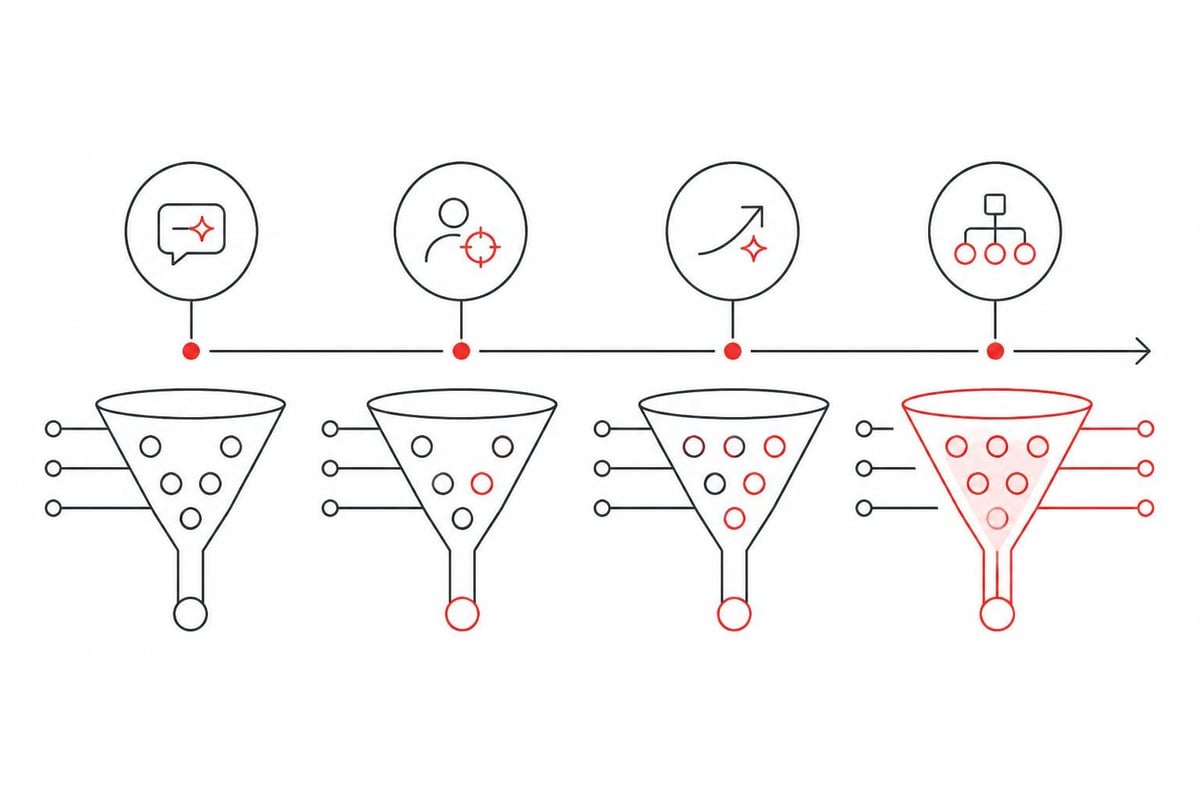
This is where the funnel in digital marketing evolves from a static framework into a dynamic system that improves with every prospect interaction.
What metrics prove an AI funnel is working?
Vanity metrics like email open rates and click-through rates don't matter in an ai funnel. The only metrics that count are qualified calls booked, show rate, and cost per booked opportunity. Everything else is noise.
Traditional funnel metrics optimize for activity. AI funnel metrics optimize for revenue outcomes. Here's what to track:
Core performance indicators
| Metric | Traditional Benchmark | AI Funnel Target | Why It Matters |
|---|---|---|---|
| Response rate (form to reply) | 15-25% | 45-65% | Measures engagement quality and speed |
| Qualification rate (reply to qualified) | 30-40% | 60-75% | Shows precision of behavioral scoring |
| Booking rate (qualified to call) | 20-35% | 50-70% | Indicates offer relevance and timing |
| Show rate (booked to attended) | 60-75% | 75-85% | Reflects qualification accuracy |
| Cost per booked call | $200-$400 | $80-$150 | Bottom-line efficiency measure |
The goal isn't to improve every metric slightly. It's to transform cost per booked call dramatically. When Aletto implemented ai funnel systems for B2B SaaS clients, average cost per qualified opportunity dropped from $347 to $118 over four months while booking volume increased 3x.
Pay attention to velocity metrics that traditional funnels ignore: How many days from first touch to booked call? How many touchpoints required? An ai funnel should reduce time-to-booking from 12-18 days to 4-7 days by identifying ready-to-buy signals faster and eliminating unnecessary nurture steps.
Leading indicators that predict performance
Before calls increase, watch for these signals that your ai funnel is working:
- Response time from form submission drops below 2 minutes
- Percentage of conversations handled by AI (no human touch) exceeds 60%
- Email reply rates climb 20+ percentage points
- Prospects self-qualify by asking about pricing or implementation before booking
- Same prospect reaches booking stage with fewer total touchpoints
Research published in Springer’s journal on AI and customer experience maps these application points across journey stages and identifies measurement gaps between AI activity and business outcomes, emphasizing the need to tie automation directly to conversion events rather than engagement proxies.
What are the biggest mistakes companies make with AI funnels?
The most expensive mistake is treating the ai funnel as a set-it-and-forget-it solution. Machine learning requires quality training data, and most companies don't feed their AI the closed-loop revenue data it needs to optimize for actual deals, not just surface-level engagement.
Mistake 1: Optimizing for the wrong outcome
Your AI will optimize for whatever goal you set. If you optimize for "meetings booked," you'll get calendar spam from unqualified prospects. If you optimize for "email opens," you'll get curiosity clicks that never buy. The AI doesn't know your business goals; it executes the objective function you define.
Set your ai funnel to optimize for "qualified opportunities that show up and progress to proposal stage." This requires connecting CRM data back to the AI so it learns which prospect profiles and behaviors actually correlate with revenue. Companies that fail to close this loop build funnels that generate activity, not pipeline.
Mistake 2: Insufficient volume to train the models
Machine learning needs data. An ai funnel processing 50 leads per month won't have enough signal to identify meaningful patterns. You need at least 500 qualified leads flowing through quarterly to give the AI sufficient training examples.
This is why B2B lead generation companies that layer AI into their processes focus on paid acquisition to generate consistent volume. Organic channels rarely provide the velocity required for AI to learn and adapt quickly.
Mistake 3: No human feedback loop
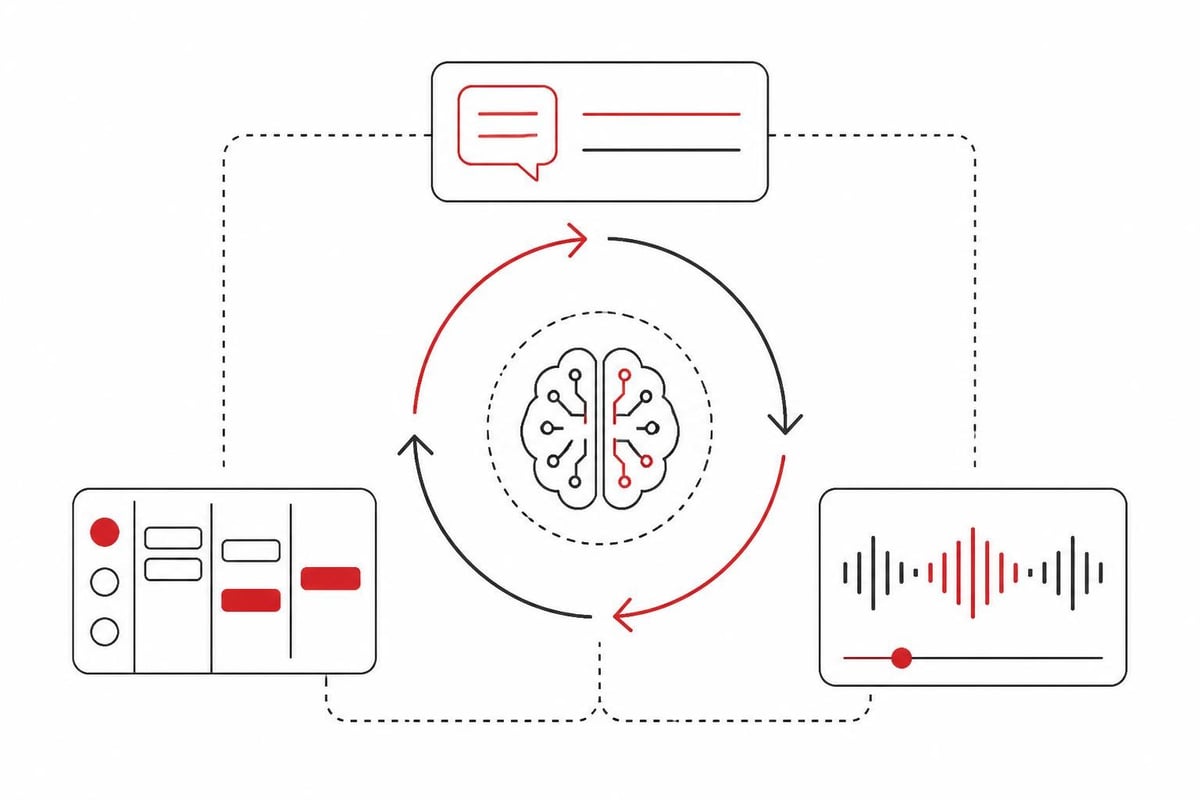
The AI can't tell if a "qualified" prospect was actually a terrible fit who wasted 30 minutes of sales time. Sales reps need a simple way to mark calls as "good" or "bad" so the system learns what real qualification looks like in your specific business.
Aletto built a Slack integration where sales reps react with thumbs up or thumbs down after each call. This feedback trains the AI to spot the difference between a prospect who matches your ICP on paper and a prospect who's actually ready to buy your solution.
Mistake 4: Ignoring the AI's suggestions
The ai funnel will surface insights human analysts miss: "Prospects who view your API documentation page are 4.2x more likely to close than those who only view feature pages." If you ignore these signals and keep optimizing for traditional MQL criteria, you waste the AI's core value.
When the system recommends increasing budget on a specific audience segment or testing a new follow-up sequence, validate the suggestion with a controlled test rather than dismissing it because it contradicts conventional wisdom.
For companies focused on B2B SaaS lead generation, this often means challenging assumptions about which job titles, company sizes, or industries actually convert best. The AI frequently identifies profitable micro-segments that human intuition overlooks.
How much does it cost to implement an AI funnel?
Implementation costs vary wildly based on whether you build custom, use platforms, or hire an agency. For most B2B companies spending $10,000+ monthly on paid acquisition, expect $3,000-$8,000 in monthly AI platform and management costs, plus one-time setup between $5,000-$15,000.
Breaking down the investment:
Platform costs: AI conversation tools like Drift, Qualified, or custom solutions run $1,500-$4,000 monthly depending on conversation volume. Add $800-$2,000 for predictive lead scoring platforms and $500-$1,500 for multi-channel orchestration tools.
Implementation labor: Expect 40-80 hours to configure the AI, integrate with your CRM and ad platforms, build conversation flows, and establish feedback loops. At $150-$250 per hour for qualified implementation partners, that's $6,000-$20,000 in setup.
Ongoing optimization: The ai funnel requires continuous refinement as market conditions and prospect behavior evolve. Budget $2,000-$5,000 monthly for a specialist to analyze performance, adjust AI parameters, and test new sequences.
For companies already using SaaS demand generation strategies and spending significantly on paid ads, the AI funnel often pays for itself by reducing cost per qualified opportunity by 50-70% while increasing volume.
Aletto's system that books qualified calls combines AI follow-up, behavioral scoring, and automated scheduling into one integrated approach. The Free AI Call Booking Report breaks down exactly how this system booked 1,122 qualified calls in 11 months, including the specific AI components, cost structure, and performance metrics at each funnel stage.
What technology stack powers an effective AI funnel?
You need five core components working together: visitor identification, behavioral tracking, conversation AI, predictive scoring, and scheduling automation. Each component feeds data to the others, creating a system that gets smarter with every interaction.
Essential technology components
Visitor identification: Tools like Clearbit, ZoomInfo, or 6sense identify anonymous website visitors and enrich them with firmographic data. This happens in milliseconds as prospects land on your site, enabling the AI to personalize the experience before they even submit a form.
Behavioral tracking: Segment, Heap, or custom event tracking monitors every click, page view, email open, and ad interaction. The AI ingests this stream of behavioral data to calculate engagement velocity and intent signals. A prospect who views your pricing page three times in 24 hours triggers different AI actions than someone who read one blog post.
Conversation AI: Natural language processing platforms like Drift's conversational AI, Ada, or custom GPT implementations manage the back-and-forth dialogue with prospects. These systems detect questions, qualify fit, handle objections, and determine when to route to a human or push for a booking.
Predictive scoring: Machine learning platforms like Madkudu, Infer, or custom models built on your CRM data assign qualification scores based on which attributes and behaviors correlate with closed deals. The scoring updates in real-time as new data arrives.
Scheduling automation: Calendly, Chili Piper, or custom booking flows remove friction by letting qualified prospects book directly into sales calendars. The AI determines when to surface the booking link based on qualification score and engagement trajectory.
All five components must share data in real-time. When a prospect moves from 45% to 78% qualified because they just viewed your ROI calculator, the conversation AI needs to know immediately so it can adjust its next message from educational to booking-focused.
Frequently Asked Questions
How long does it take to see results from an AI funnel?
Most B2B companies see measurable improvements in response rates and qualification accuracy within 3-4 weeks of implementing AI-powered follow-up. Full funnel optimization that includes acquisition and booking typically shows ROI within 90 days. The AI needs sufficient volume to learn patterns, so companies processing fewer than 200 leads monthly may require longer to see dramatic improvements.
Can an AI funnel work for complex enterprise sales cycles?
Yes, but the AI focuses on earlier stages like qualification and initial discovery rather than managing the entire multi-month sales cycle. For enterprise deals, the ai funnel books first conversations with qualified stakeholders faster and more efficiently than manual SDR outreach. The complex negotiation and relationship-building still require human sales expertise, but AI fills the calendar with better opportunities.
What happens when the AI makes a mistake or misqualifies a lead?
Sales rep feedback trains the AI to reduce future errors. Every misqualified lead that reaches a sales call should be flagged so the system learns which signals it misinterpreted. Over time, the qualification accuracy improves as the model incorporates more examples. Most systems reach 85-90% accuracy after processing 1,000+ leads with feedback.
Do you need a data scientist to manage an AI funnel?
No, but you need someone who understands your buyer journey and can interpret what the AI is learning. Modern platforms abstract the machine learning complexity behind business-friendly interfaces. The role requires more marketing and sales expertise than technical AI knowledge. You're telling the system what matters (job title, engagement velocity, company size) rather than building neural networks from scratch.
How does an AI funnel handle prospects who want to talk to a human immediately?
The best AI funnels include clear escape routes to human conversations at every stage. If a prospect replies "I want to speak with someone now" or types a complex question the AI can't handle, the system routes to a human within minutes or books an immediate call if sales reps are available. The goal is speed and relevance, not forcing everyone through an automated sequence.
Building an ai funnel transforms how B2B teams generate pipeline by eliminating manual qualification and follow-up that wastes time on prospects who will never buy. The integration of paid acquisition, behavioral AI, and automated booking creates a system that books qualified calls while sales teams focus entirely on closing deals. If your current funnel relies on SDRs chasing cold leads or waiting days to follow up with interested prospects, you're losing deals to competitors who respond in minutes with perfectly timed, personalized outreach. Aletto's free report shows the exact system that booked 1,122 qualified calls by integrating AI follow-up with paid acquisition and automated scheduling, breaking down the technology stack, cost structure, and month-by-month performance that transformed calendar fill rates for B2B SaaS teams. Get the Free AI Call Booking Report to see the specific AI components and implementation roadmap that eliminated dependence on cold outreach while reducing cost per booked call by 66%.