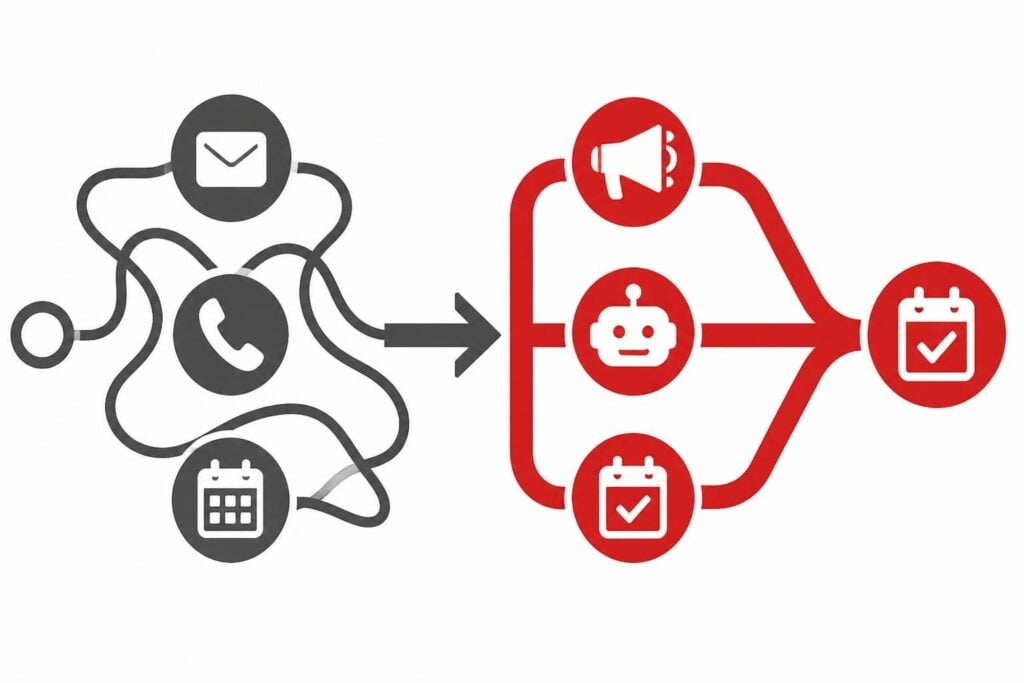
Sales outreach tools are software platforms designed to automate, scale, and manage the process of contacting potential buyers through email, phone, LinkedIn, and other channels. Most B2B teams waste thousands on outreach tools that tank their reply rates, because they prioritize volume over relevance and treat every prospect like a cold contact.
The typical SaaS sales team now uses 11 different sales tools, yet most struggle to book enough qualified meetings to hit quota, according to HubSpot’s 2024 State of Sales Report. The problem is not a shortage of sales outreach tools. The problem is that cold outreach itself no longer works the way it did in 2019, and no amount of automation fixes a fundamentally broken approach.
What exactly are sales outreach tools?
Sales outreach tools are platforms that help revenue teams initiate conversations with prospects at scale. These tools typically include features for email sequencing, call tracking, LinkedIn automation, template libraries, and performance analytics.
The category includes dedicated outreach platforms like Outreach and SalesLoft, email automation tools like Lemlist and Mailshake, LinkedIn automation tools like Dux-Soup and Phantombuster, and all-in-one CRMs with outreach modules like HubSpot Sales Hub and Salesforce Sales Cloud.
A sales outreach tool should reduce manual work while maintaining or improving response quality. That is the test. If your tool saves 10 hours per week but cuts your response rate in half, you have made a bad trade.
Here is what most vendors will not tell you: the majority of sales outreach tools are designed to maximize activity metrics (emails sent, calls logged, touches completed) rather than business outcomes (meetings booked, pipeline created, revenue closed). This creates dangerous misalignment between what the tool optimizes for and what your business actually needs.
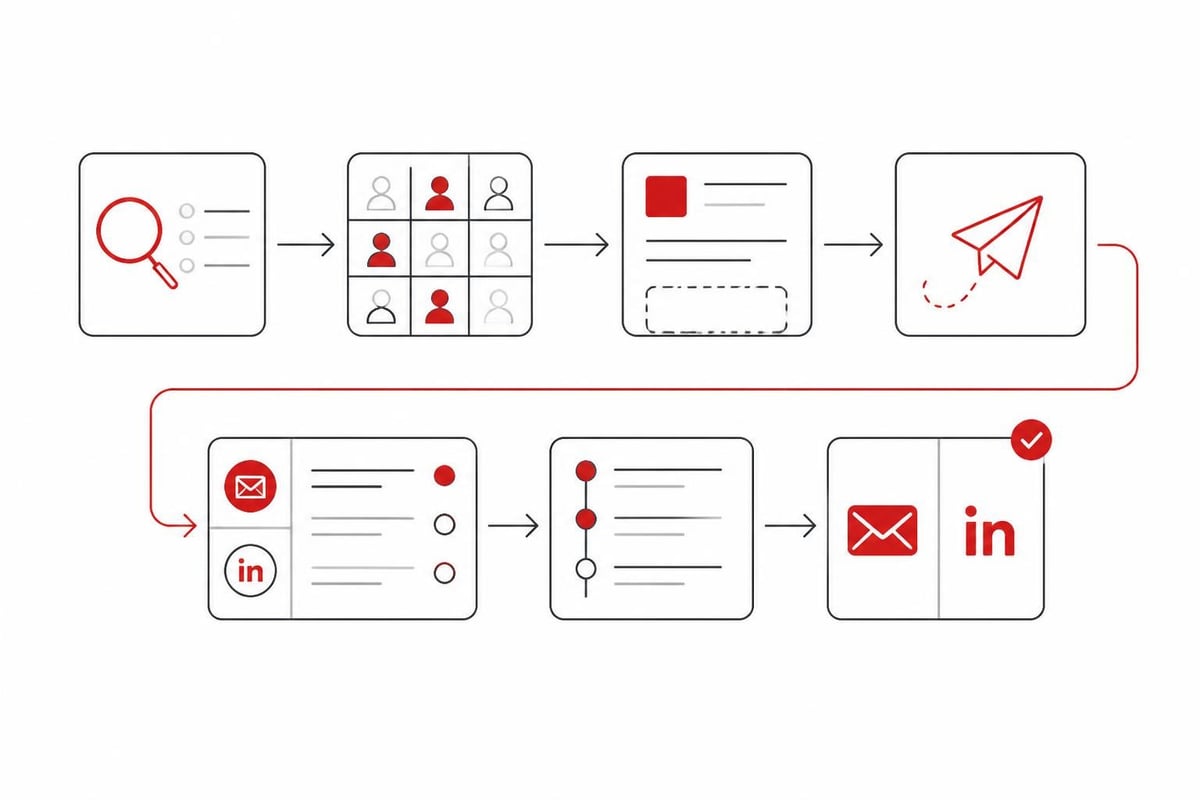
The core features that define outreach platforms
Most sales outreach tools share a common feature set, though implementation quality varies dramatically.
Email sequencing allows reps to create multi-step email campaigns with automated follow-ups based on prospect behavior. Sequences typically include delays, conditional logic, and personalization tokens.
Multi-channel coordination connects email, phone, LinkedIn, and sometimes direct mail into unified campaigns. The theory is sound but execution often results in over-touching prospects across too many channels simultaneously.
Template and content libraries provide pre-written messages that teams can customize and share. This feature improves consistency but often leads to generic, low-performing messages that get reused until they stop working entirely.
Analytics and reporting track opens, clicks, replies, and conversion rates across sequences and reps. These metrics matter, but teams often optimize for open rates rather than actual meetings booked.
CRM integration syncs prospect data, activity history, and deal status between the outreach tool and the system of record. Poor integration creates data quality nightmares and wasted rep time reconciling systems.
| Feature Category | Purpose | Common Problem |
|---|---|---|
| Email Sequencing | Automate follow-up cadence | Templates become stale and generic |
| Multi-channel | Increase touchpoints | Over-saturation damages brand |
| Personalization | Improve relevance | Fake personalization is obvious |
| Analytics | Measure performance | Optimize wrong metrics |
| Integration | Sync with CRM | Data quality degrades |
Why do most B2B teams get poor results from outreach tools?
The average cold email response rate fell to 1.3% in 2025, down from 8.5% in 2018, per Validity’s 2025 Email Deliverability Benchmark Report. The culprit is not the tools themselves but how teams use them.
Teams treat sales outreach tools as volume engines rather than relevance engines. When your primary metric is "touches per day," you inevitably sacrifice message quality, prospect research, and genuine personalization. The tools enable this mistake by making it trivially easy to send 500 generic emails versus 50 researched, contextual messages.
Most implementations fail because teams layer automation on top of a broken strategy. If your outreach approach is fundamentally sound (right audience, compelling offer, genuine value), tools amplify results. If your approach is flawed (wrong audience, weak offer, generic messaging), tools amplify failure faster and at greater scale.
The deliverability crisis nobody talks about
Sales outreach tools have created an arms race that damages sender reputation for everyone. When thousands of companies use the same platforms to send millions of unsolicited emails daily, inbox providers respond by tightening filters.
Gmail and Outlook now apply machine learning models that detect outreach-tool fingerprints (sending patterns, IP ranges, message structure) and route messages to spam or promotions tabs before recipients ever see them. This means your actual delivery rate is often 40-60% lower than your tool reports.
The GDPR data minimization principle further complicates outreach to European contacts. Tools that scrape LinkedIn profiles or purchase contact lists often violate consent requirements, exposing companies to regulatory risk and reputational damage.
Example scenario: A SaaS company uses a popular sales outreach tool to send 2,000 emails weekly. The tool reports 38% open rate and 2.1% reply rate. Reality: only 1,100 emails reached the inbox (55% delivery), the open rate is inflated by tracking pixel false positives, and 15 of the 42 "replies" are unsubscribe requests or angry responses. Actual interested prospects: 8. Meetings booked: 2. Cost per meeting when you include tool subscription, list costs, and rep time: $847.
What should you look for when choosing sales outreach tools?
The wrong question is "which tool has the most features?" The right question is "which tool best fits our actual sales motion and constraints?"
Start by mapping your current sales process end-to-end. Document how prospects currently enter your pipeline, what research reps do before first contact, how many touchpoints typically precede a meeting, and where deals stall or fall apart. Only then can you identify which parts of the process would genuinely benefit from automation.
Evaluation criteria that actually matter
Deliverability infrastructure should be your first concern, not your last. Ask vendors about dedicated IP pools, domain warming protocols, spam complaint rates, and relationships with major inbox providers. Request references from customers who send similar volume to similar audiences.
True personalization capability goes far beyond inserting a first name or company name. Look for tools that support custom fields, conditional content blocks, dynamic snippets, and integration with intent data or technographic enrichment services.
Compliance and data governance features protect your company from regulatory exposure. Evaluate how the tool handles consent tracking, opt-out management, data retention, and cross-border data transfers under GDPR, CCPA, and similar frameworks.
Integration quality with your CRM and other systems determines whether the tool saves time or creates work. Test the actual sync frequency, field mapping flexibility, and error handling before committing.
Reporting aligned to revenue metrics should connect outreach activity to pipeline creation and closed revenue, not just activity completion. Ask to see sample reports that link specific sequences or messages to actual deals won.
- Deliverability track record with your target industries
- Native integration with your CRM and tech stack
- Compliance controls for your geographic markets
- Pricing model that aligns with your team structure
- Customer support quality and response time
How do successful teams use outreach tools differently?
Companies that generate strong results from sales outreach tools share common practices that differ sharply from typical implementations. According to research from Forrester’s Sales Communications and Rep Advocacy Toolkit, high-performing teams focus on message quality and audience segmentation rather than contact volume.
They start with inbound signal and intent data rather than cold lists. Instead of purchasing contact databases and spraying generic messages, they use outreach tools to nurture prospects who have already raised their hand by downloading content, visiting pricing pages, or engaging with ads. This fundamental shift changes outreach from interruption to continuation of an existing conversation.
Aletto has observed that B2B teams fill their calendars most efficiently when they integrate paid acquisition strategies with intelligent follow-up automation, rather than relying on cold outreach tools to generate meetings from scratch.
The tight integration advantage
Harvard Business Review research on digital tool integration shows that sales teams achieve 2.3x higher win rates when outreach tools connect seamlessly with demand generation, content marketing, and customer success systems versus standalone implementations.
Successful teams treat outreach tools as one component in an integrated revenue system. Prospect tracking begins when someone clicks an ad or visits the website, continues through automated qualification and nurture sequences, triggers personalized outreach at high-intent moments, and flows into CRM as properly contextualized opportunities.
The tool itself matters less than the system design. A basic email sequencer used strategically within a well-designed demand system outperforms the most sophisticated outreach platform used in isolation.
Example scenario: A B2B services company abandons cold LinkedIn outreach and instead uses an outreach tool to follow up with people who attended their webinar. Sequences are triggered 2 hours after webinar end, reference specific topics the person asked about in Q&A, and offer a relevant case study. Reply rate jumps from 1.8% (cold) to 23% (warm), and 41% of replies convert to booked meetings. Same tool, different strategy, dramatically different results.
Measurement frameworks that drive improvement
The 2024 Marketing & Sales Metrics Study reveals that top-performing sales organizations track different metrics than average performers when evaluating outreach effectiveness.
| Metric Type | Average Teams Track | High-Performing Teams Track |
|---|---|---|
| Activity | Emails sent, calls made | Relevant contacts reached |
| Engagement | Open rate, click rate | Meaningful replies received |
| Efficiency | Cost per contact | Cost per qualified meeting |
| Quality | Response rate | Meeting-to-opportunity rate |
| Outcome | Meetings booked | Pipeline created, revenue influenced |
High performers obsess over reply quality and meeting qualification rate rather than raw reply volume. A 5% reply rate means nothing if 80% of replies are "not interested" or "remove me from your list." What matters is interested replies that lead to qualified conversations.
They also track sequence decay rates to identify when messages stop working. If a sequence that generated 15% positive reply rate in January now generates 3% in October, it is time to refresh the content, not send more volume through a broken sequence.
Understanding what works requires seeing the full picture. Aletto's approach demonstrates how integrating paid acquisition with AI-powered follow-up and automated booking generates qualified sales calls without cold outreach.
What are the biggest mistakes teams make with outreach tools?
The most expensive mistake is confusing activity with progress. Sales leaders celebrate "10,000 touchpoints this month" without asking how many meetings were booked or how many deals were created. Sales outreach tools make it easy to generate impressive activity reports while producing minimal revenue impact.
Buying before defining process leads to expensive shelfware. Teams purchase enterprise outreach platforms before mapping their sales process, defining their ideal customer profile, or creating message frameworks. The tool sits unused or underutilized because nobody knows exactly what problem it should solve.
Over-automating the human elements destroys authenticity and tanks response rates. Prospects can instantly detect when "personalization" is fake, when questions are not genuine, and when messages come from templates. The goal should be using tools to automate research and scheduling while preserving authentic human connection in actual messaging.
Ignoring deliverability fundamentals causes gradual performance decline that teams attribute to "market saturation" or "message fatigue" rather than the real culprit: their emails are going to spam. Without proper domain authentication, IP warming, engagement monitoring, and list hygiene, even the best outreach tool cannot deliver results.
Optimizing for the wrong metrics creates a culture of activity theater. When reps are measured on emails sent rather than meetings booked, they optimize for volume and speed rather than research and relevance. The tool enables this dysfunction by making bad behavior scalable.
The compliance blindspot
Many teams implement sales outreach tools without legal or compliance review, exposing the company to significant risk. Automated scraping of LinkedIn profiles, purchasing contact lists without verified consent, and continuing to email people who have unsubscribed all create liability under GDPR, CCPA, and similar privacy regulations.
The cost of a privacy violation far exceeds the cost of implementing proper consent management and data governance from the start. Tools should help you stay compliant, not make violations easier to commit at scale.
How is the outreach tool landscape changing?
The sales outreach tools category is undergoing rapid consolidation and transformation as standalone platforms struggle to compete with integrated suites and new entrants challenge the value proposition of traditional automation.
AI-powered personalization is moving beyond simple token insertion to generate contextual messages based on prospect research, conversation history, and intent signals. Early implementations often produce obviously AI-generated content, but the technology is improving rapidly.
Intent data integration allows outreach to trigger based on buying signals (visiting pricing pages, researching competitors, downloading technical documentation) rather than arbitrary cadences. This shift from time-based to signal-based outreach significantly improves relevance and response rates.
Conversation intelligence platforms now analyze sales calls and emails to identify what messaging actually works, then feed those insights back into outreach sequences. This creates a continuous improvement loop that traditional tools lack.
Privacy-first architecture is becoming a competitive differentiator as regulations tighten and buyers become more sophisticated about data practices. Tools that support true consent management, data minimization, and transparent tracking will gain share versus those that rely on questionable data acquisition methods.
The broader trend is away from cold outbound volume plays and toward warm, signal-based outreach integrated with demand generation and content marketing. Tools that facilitate this transition will thrive; tools that optimize for spray-and-pray will decline.
Frequently Asked Questions
What is the average cost of sales outreach tools?
Pricing varies from $50 per user monthly for basic email automation to $150+ per user monthly for enterprise platforms with multi-channel capabilities, advanced analytics, and premium support. Calculate total cost including integration, training, and list purchasing or enrichment services, which often exceed the base subscription cost.
How many touchpoints should a sales sequence include?
Research shows 8-12 touchpoints over 3-4 weeks generates optimal results for B2B outreach, but this varies dramatically by industry, deal size, and whether prospects are cold or warm. Cold prospects require fewer, higher-quality touches; warm prospects who showed intent can handle more frequent contact. Test and measure rather than following generic best practices.
Can you use sales outreach tools for warm leads?
Yes, and this is actually the highest-value use case. Outreach tools excel at nurturing warm prospects who downloaded content, attended events, or engaged with ads. Automated sequences triggered by intent signals generate 8-12x higher response rates than cold outreach while requiring the same tool investment and technical implementation.
Do sales outreach tools work for small businesses?
Small businesses with limited budgets often get better ROI from simple email automation plus strong manual prospecting than from enterprise outreach platforms. The key is matching tool sophistication to team capability and sales complexity. A three-person team selling a $15K annual contract rarely needs the same tooling as a 50-person team selling $500K deals.
How do you measure ROI on outreach tools?
Calculate meetings booked and pipeline created attributable to outreach sequences, then divide by total cost including subscription, list/enrichment fees, rep time, and integration overhead. Track this monthly to identify trends. Most teams overestimate ROI by ignoring soft costs and failing to properly attribute pipeline to specific outreach activities versus other demand sources.
Sales outreach tools can amplify results when used strategically within an integrated demand system, but they cannot fix fundamentally broken cold outreach approaches. The shift from volume-based cold outreach to signal-based warm engagement represents the future of B2B sales development.
If you are tired of cold outreach tools that burn budget without filling your calendar, Aletto’s free AI call booking report shows exactly how one B2B team booked 1,122 qualified sales calls in 11 months without cold emails, cold calls, LinkedIn spam, or outreach tool overload. The report breaks down the complete system integrating paid acquisition, AI follow-up, and automated booking that actually works in 2026. Get your free copy and see how to fill your calendar with qualified prospects who want to talk to you.