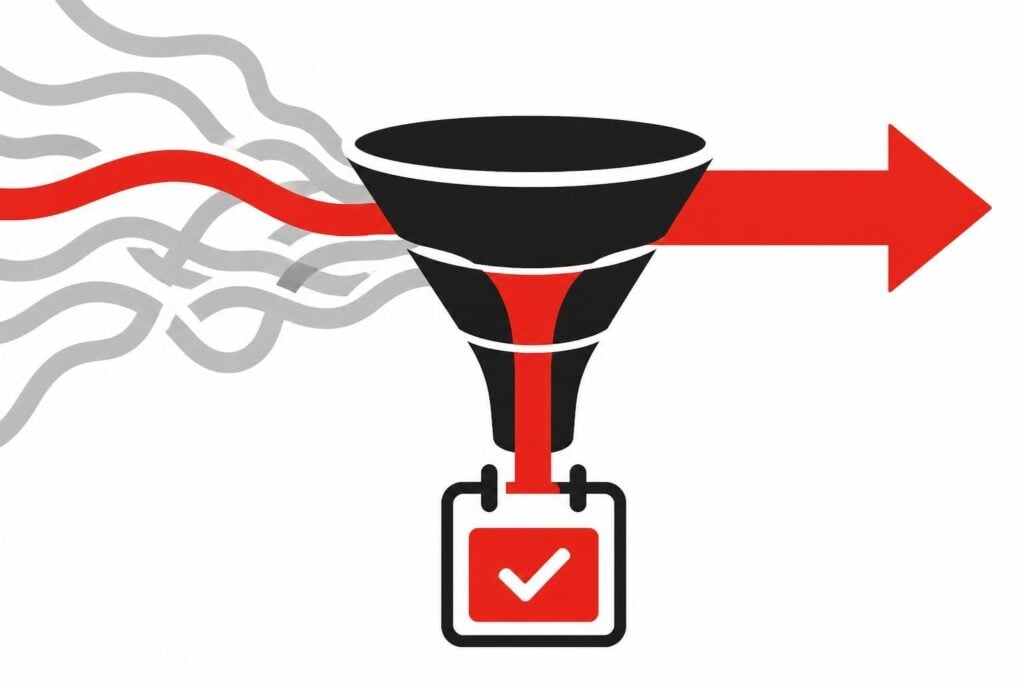
Automated leads are prospects that enter your pipeline, get qualified, and route to your sales team without manual intervention at each step. In 2026, B2B teams use automation to handle lead capture from ads, score and segment based on behavior, follow up via AI, and book qualified meetings-all while sales reps focus on closing. The systems that generate automated leads combine paid acquisition, CRM workflows, and AI-powered engagement to replace cold calling and manual prospecting.
Traditional lead generation requires a person to export lists, write emails, track responses, and schedule calls. Automated systems execute those tasks through software, triggered by prospect actions or time-based rules. The shift matters because manual methods don't scale past a small team, and prospects in 2026 expect instant responses and personalized experiences that only automation delivers consistently.
What Exactly Are Automated Leads and How Do They Work?
Automated leads are prospects acquired through paid or organic channels, then qualified and nurtured by software without human involvement until they're ready for a sales conversation. The automation covers lead capture (forms, chatbots, landing pages), qualification (scoring models, behavior tracking), follow-up (email sequences, SMS, AI chat), and booking (calendar integration, confirmation workflows).
A complete automated lead system starts with traffic. Paid ads on LinkedIn, Google, or Meta drive prospects to a landing page where they submit contact information in exchange for a report, demo, or consultation. The moment someone fills that form, automation takes over.
The Core Components of Lead Automation
Every automated lead system includes five elements:
- Traffic source: Paid ads, SEO, social, or referrals that bring prospects to your capture mechanism
- Capture mechanism: Forms, chatbots, or interactive tools that collect contact details and initial qualification data
- Qualification engine: Scoring rules or AI models that determine which leads are ready for sales and which need nurturing
- Follow-up system: Automated email, SMS, or chat sequences that engage leads based on their actions and score
- Booking interface: Calendar tools that let qualified leads schedule calls directly with sales reps
The entire flow runs on triggers. When a lead downloads a whitepaper, the system adds 10 points to their score. When they visit your pricing page twice, it sends a case study. When their score hits 50, it routes them to a sales rep and sends a booking link. No spreadsheets, no manual checks.
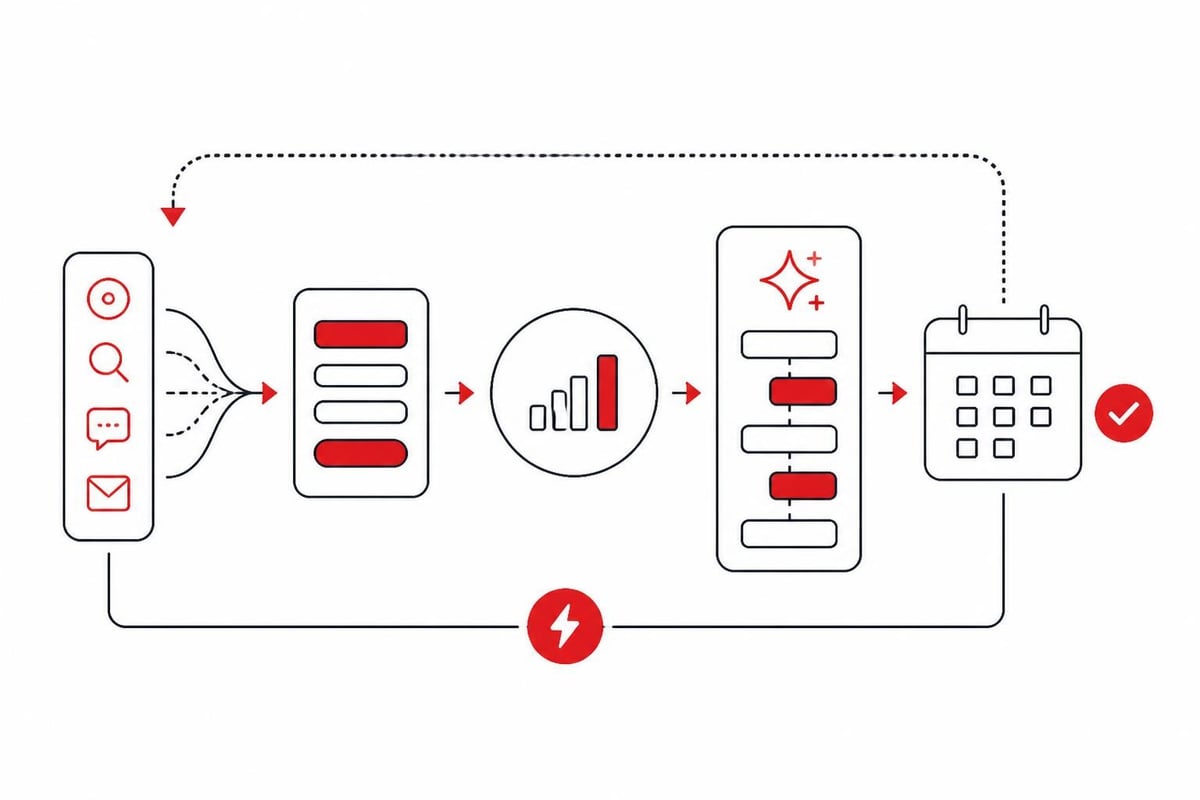
Companies like Aletto run this entire workflow for B2B SaaS and service teams, connecting paid acquisition to AI follow-up and automated booking. Aletto generated 1,122 qualified booked calls in 11 months using these systems-proof that automation works when the components integrate correctly.
Why Are Automated Leads Essential for B2B Teams in 2026?
Cold outreach is failing. Email open rates for cold campaigns dropped to 18% in 2025 (down from 24% in 2023), and LinkedIn connection requests from strangers now convert below 8%. Prospects ignore messages from people they don't know. Cold outreach doesn’t work because inboxes are flooded and trust is gone.
Automated leads solve the problem by attracting prospects who already have intent. Someone who clicks an ad about "automated sales pipeline tools" and downloads a guide wants that solution. They're not cold. Your follow-up isn't an interruption-it's expected.
The Cost and Speed Advantage
Manual lead generation costs more in time and money. A sales rep can make 50 cold calls per day and book maybe 2-3 meetings per week. An automated system can engage 500 leads per day, score them based on fit and behavior, and book 10-15 qualified calls per week for the same rep.
Aletto's data shows the unit economics: $87 cost per booked call using paid ads plus automation, compared to $200+ per call when factoring in rep salary and time for cold outreach. The automated approach scales linearly-double your ad spend and you roughly double your booked calls. Manual methods hit capacity limits.
Speed matters as much as cost. Automated systems respond to leads within seconds. Research from Springer confirms that lead scoring models paired with fast follow-up improve conversion rates by 23-41% compared to manual processes. The first company to respond wins, and automation guarantees you're first.
How Do You Build an Automated Lead System That Actually Books Calls?
Building automated leads starts with defining your ideal customer profile and the offer that attracts them. You need to know who you want, what problem keeps them up at night, and what asset (report, tool, demo) they'll trade their email for.
Step-by-Step: From Ad to Booked Call
- Create a high-value lead magnet: A free report, calculator, audit, or case study that solves a specific problem for your ICP
- Build a landing page with a form: Capture name, email, company, and 2-3 qualifying questions (company size, current solution, timeline)
- Set up your CRM automation: Use Salesforce Flow or HubSpot workflows to score leads based on form data and behavior
- Configure AI follow-up sequences: Email and SMS sequences that nurture leads based on their score and actions
- Integrate calendar booking: Tools like Calendly or Chili Piper that let qualified leads book directly when they're ready
The critical step most teams skip is the qualification logic. Not every lead deserves the same follow-up. A director at a 100-person company should get a different sequence than a coordinator at a 10-person shop.
| Lead Segment | Score Threshold | Follow-Up Sequence | Booking Trigger |
|---|---|---|---|
| Enterprise (500+ employees) | 60+ | Executive case studies, ROI calculator, CFO pitch | Pricing page visit + 2 emails opened |
| Mid-market (50-500) | 40+ | Use case guides, demo videos, implementation timeline | Demo request or high engagement |
| Small business (<50) | 30+ | Self-serve resources, community invite | Multiple resource downloads |
HubSpot’s guide to lead scoring walks through setting thresholds and triggers. The key principle: score on fit (company size, industry, role) and behavior (pages visited, emails opened, content downloaded).
The Role of AI in Automated Leads
AI changed lead automation in 2024-2026. Instead of writing 10 different email templates, you feed AI your ICP, your case studies, and your value proposition. It generates personalized follow-up based on each lead's behavior and company context.
Aletto uses AI to analyze lead responses and adjust messaging in real time. If a prospect mentions budget constraints, the AI shifts to ROI and cost-saving angles. If they ask about implementation time, it sends technical resources. Recent research on LLM-based lead scoring shows that AI models can predict lead quality 34% more accurately than rule-based systems.
AI also handles objections and answers questions before a human gets involved. A chatbot on your site can qualify leads by asking budget, timeline, and current solution-then route high-intent prospects straight to a booking link while nurturing others via email.
What Are the Biggest Mistakes Teams Make with Automated Leads?
The most common failure is treating automated leads like a "set it and forget it" system. You launch ads, build a form, turn on an email sequence, and wonder why nothing books. Automated doesn't mean hands-off. It means the system executes tasks you've optimized.
Over-Automation and Under-Personalization
Sending every lead the same five-email sequence is automation, but it's not effective. Prospects can smell generic follow-up. They delete it.
The fix: segment aggressively. Create sequences for different industries, company sizes, and pain points. A CFO needs different messaging than a VP of Sales. A retail company needs different case studies than a SaaS company.
Aletto's system segments leads across 12 different sequences based on industry, company size, and initial inquiry. A prospect from a 200-person healthcare company gets healthcare case studies and compliance-focused messaging. A 50-person tech startup gets speed-to-value and technical integration details.
Ignoring Deliverability and Sender Reputation
Automated email only works if it reaches the inbox. In 2026, Gmail and Outlook filter aggressively. If your domain has poor sender reputation or you're not authenticated properly, your sequences land in spam.
Critical deliverability requirements:
- SPF, DKIM, and DMARC authentication on your sending domain
- Warm up new domains gradually (start with 50 emails/day, increase 10% daily)
- Monitor bounce rates (keep under 2%) and spam complaints (under 0.1%)
- Use Google Postmaster Tools to track sender reputation
Most teams skip warmup and send 500 emails on day one from a new domain. Google sees that as spam behavior and blacklists the domain. You've killed your automation before it starts.
Poor Lead Magnet and Weak Offer
Automation can't fix a bad offer. If your lead magnet is a generic "10 Tips" PDF that provides no unique insight, qualified prospects won't download it. You'll attract tire-kickers and students, not buyers.
The best lead magnets provide immediate, specific value: a calculator that shows ROI, an audit that reveals problems, or a report with original research. Aletto's Free AI Call Booking Report works because it shows the exact system that generated 1,122 booked calls-complete with numbers, timelines, and methods. That's valuable.
Check whether your lead magnet would make a prospect say "I need to share this with my team" or "This just saved me 10 hours of research." If not, rebuild it.
How Do You Measure and Optimize Automated Lead Performance?
Automated leads generate data at every step: ad clicks, form submissions, email opens, page visits, and bookings. The challenge is knowing which metrics matter and which are vanity.
The Metrics That Predict Revenue
Focus on four KPIs:
- Cost per lead (CPL): Total ad spend divided by leads captured
- Lead-to-opportunity conversion rate: Percentage of leads that become qualified sales opportunities
- Cost per booked call: Total cost (ads + tools + time) divided by calls booked
- Booked call-to-close rate: Percentage of booked calls that become customers
Everything else-impressions, clicks, open rates-is diagnostic. If your cost per booked call is $150 and your average deal is $10,000, you can afford to scale. If it's $800, something in the funnel is broken.
| Metric | Good Benchmark (B2B SaaS) | Aletto Performance | What It Tells You |
|---|---|---|---|
| Cost per lead | $50-$150 | $42 | Ad targeting and offer effectiveness |
| Lead-to-opportunity rate | 15-25% | 31% | Qualification accuracy and follow-up quality |
| Cost per booked call | $100-$300 | $87 | End-to-end funnel efficiency |
| Call-to-close rate | 20-30% | 27% | Sales process and lead quality fit |
Think with Google’s measurement guidance recommends multi-touch attribution to understand which channels and touchpoints drive conversions. A lead might click a LinkedIn ad, visit your site twice via organic search, then convert on a retargeting ad. Crediting only the last click misses the full story.
A/B Testing Every Element
Automated systems make testing easy. Run two landing pages simultaneously with different headlines. Test three-email sequences against five-email sequences. Compare AI-generated copy to human-written copy.
Test one variable at a time and give each test enough volume. You need at least 100 conversions per variation to reach statistical significance. Small tests (30 leads per variation) produce noise, not insights.
Aletto tests ad creative, landing page copy, email subject lines, and booking page layouts every two weeks. Over 11 months, that continuous optimization improved cost per booked call by 43% compared to the launch baseline.
What Tools and Platforms Power Automated Leads?
The technology stack for automated leads combines acquisition, CRM, communication, and booking tools. You don't need 20 platforms-just the right integration of 4-6.
Essential Stack Components
Acquisition layer: Google Ads, LinkedIn Ads, Meta Ads, or SEO efforts that drive traffic
CRM and automation: Salesforce, HubSpot, or ActiveCampaign to manage contacts, score leads, and trigger workflows
Communication tools: Email (SendGrid, Mailgun), SMS (Twilio), and AI chat (Drift, Intercom)
Booking and scheduling: Calendly, Chili Piper, or custom integrations that sync with rep calendars
Analytics and attribution: Google Analytics 4, advanced marketing platforms, or custom dashboards to track performance
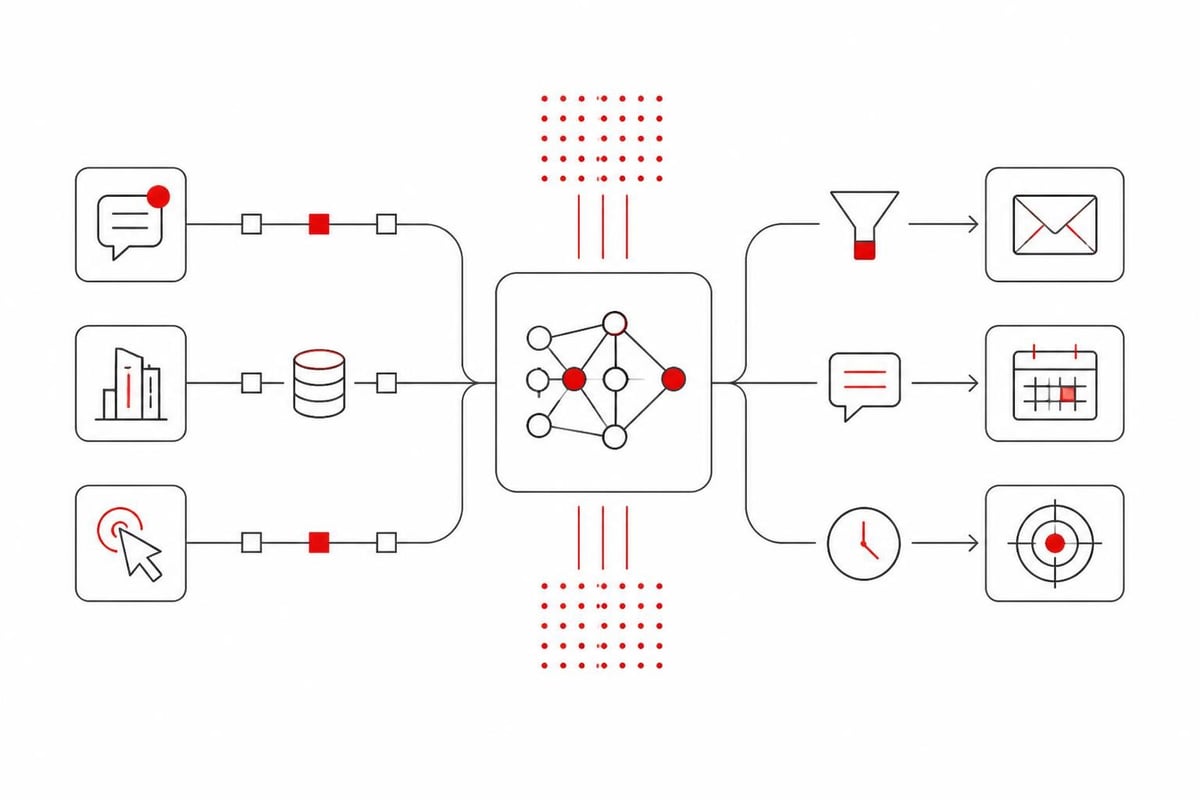
The key is integration. Your CRM needs to receive lead data from ads instantly. Your email tool needs to pull segmentation rules from your CRM. Your booking tool needs to check rep availability in real time.
Most teams fail because their tools don't talk to each other. A lead fills out a form on Monday, but it doesn't sync to the CRM until Tuesday night. By then, the lead is cold and has talked to a competitor.
Build vs. Buy Considerations
You can build an automated lead system in-house if you have engineering resources and time. It takes 3-6 months to wire together APIs, build scoring logic, create sequences, and troubleshoot edge cases.
Or you partner with a provider like Aletto that runs the entire system as a service. Aletto handles ad strategy, landing pages, AI follow-up, and booking-delivering qualified calls on your calendar. The build vs. buy decision depends on your core competency. SaaS B2B lead generation often requires specialized expertise that takes years to develop internally.
For most B2B teams under 50 people, buying is faster and cheaper. Your sales team should sell, not troubleshoot Zapier integrations.
Frequently Asked Questions
What's the difference between automated leads and traditional lead generation?
Automated leads use software to handle capture, qualification, follow-up, and booking without manual intervention at each step. Traditional lead generation relies on sales reps to manually export lists, write emails, track responses, and schedule calls. Automation scales instantly and responds in seconds; traditional methods hit capacity limits and slow as volume grows.
How long does it take to see results from automated lead systems?
Most B2B teams see their first booked calls within 7-14 days of launching paid ads with automated follow-up. It takes 60-90 days to optimize the full funnel (ad creative, landing pages, sequences, booking flow) and reach stable cost per booked call. Expect 3-6 months to build a predictable, scalable system that consistently hits pipeline targets.
Can small teams with limited budgets use lead automation effectively?
Yes. Start with a $2,000-$3,000/month ad budget, one strong lead magnet, and a simple three-email sequence in HubSpot or ActiveCampaign. Automated systems work at any scale because the cost is per lead, not per rep. A two-person sales team can handle 20-30 booked calls per month from automation without adding headcount.
What industries or business models benefit most from automated leads?
B2B SaaS, professional services, agencies, and high-ticket B2B products see the strongest ROI. Any business with a defined ICP, deal sizes above $5,000, and a consultative sales process benefits. Automated leads work poorly for commoditized products or highly relationship-driven sales where buyers require multiple in-person meetings before any digital engagement.
How do you prevent automated follow-up from feeling robotic or spammy?
Use personalization tokens (name, company, industry), segment sequences by pain point and role, and build AI logic that responds to prospect replies with context-aware answers. Avoid sending the same message to everyone. Keep sequences short (3-5 emails), provide value in each message (insights, tools, case studies), and always include an easy opt-out. Quality automation feels like a helpful assistant, not a broadcast.
Automated leads aren't a shortcut-they're a system that replaces the manual, unscalable work that kills B2B sales teams. The best automation connects paid acquisition, intelligent qualification, and AI-powered follow-up to fill your calendar with prospects who actually want to talk.
If you're ready to see how this works in practice, Aletto’s Free AI Call Booking Report breaks down the exact system that booked 1,122 qualified sales calls in 11 months without cold emails, cold calls, or LinkedIn spam. It's the playbook for filling your pipeline in 2026. Grab it, implement the framework, and stop chasing leads that go nowhere.