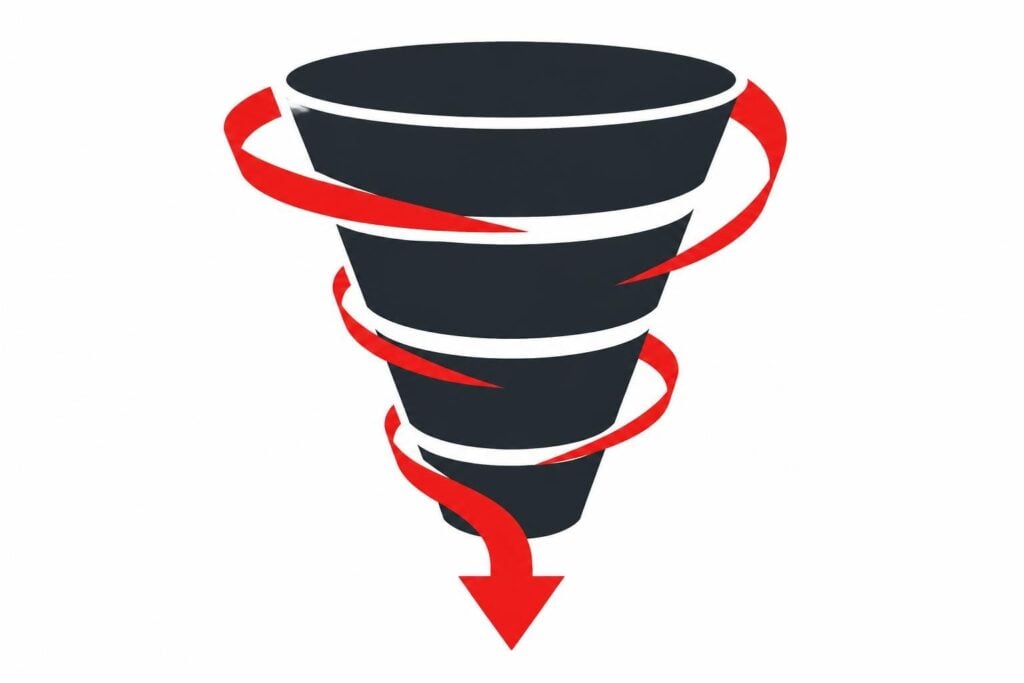
A saas sales funnel is the structured path prospects take from first awareness of your product to becoming paying customers and beyond. It maps every touchpoint-paid ads, landing pages, demos, trials, and onboarding-so you can measure conversion rates at each stage and identify exactly where deals stall or accelerate. For B2B SaaS teams in 2026, understanding your funnel is the difference between guessing why revenue is flat and systematically engineering growth.
The post-pandemic reality is brutal: cold outreach is dying, event budgets are shrinking, and buyers expect personalized, frictionless experiences before they'll talk to a human. A well-designed saas sales funnel addresses this by replacing manual prospecting with automated systems that qualify, nurture, and book meetings at scale. This article breaks down what works now-no fluff, just the stages, metrics, and tactics that fill calendars.
What are the core stages of a SaaS sales funnel?
Every saas sales funnel has four core stages: Awareness, Consideration, Decision, and Retention. Each stage requires different content, different metrics, and different follow-up mechanisms. Awareness is where prospects first discover you exist-through paid ads, content, or referrals. Consideration is when they're evaluating whether your solution fits their problem. Decision is the negotiation and purchase phase. Retention is everything after signup: onboarding, expansion, and preventing churn.
The mistake most B2B teams make is treating these stages as separate silos. Marketing owns awareness, sales owns decision, and customer success owns retention. But in 2026, the funnel is one continuous system. A prospect who clicks your ad expects AI-driven follow-up within minutes, not a cold email from an SDR three days later. HubSpot’s B2B funnel optimization guide emphasizes this: alignment between marketing, sales, and success teams directly correlates with conversion rate improvements.
How do you measure awareness-stage performance?
At the top of your saas sales funnel, you're measuring reach and engagement. Key metrics include cost per lead (CPL), landing page conversion rate, and traffic-to-MQL ratio. According to Unbounce’s 2024 Conversion Benchmark Report, SaaS landing pages convert at a median rate of 3.2%. If you're below that, your messaging or offer is off.
Awareness tactics that work in 2026:
- Paid search targeting high-intent keywords (e.g., "automated lead generation for SaaS")
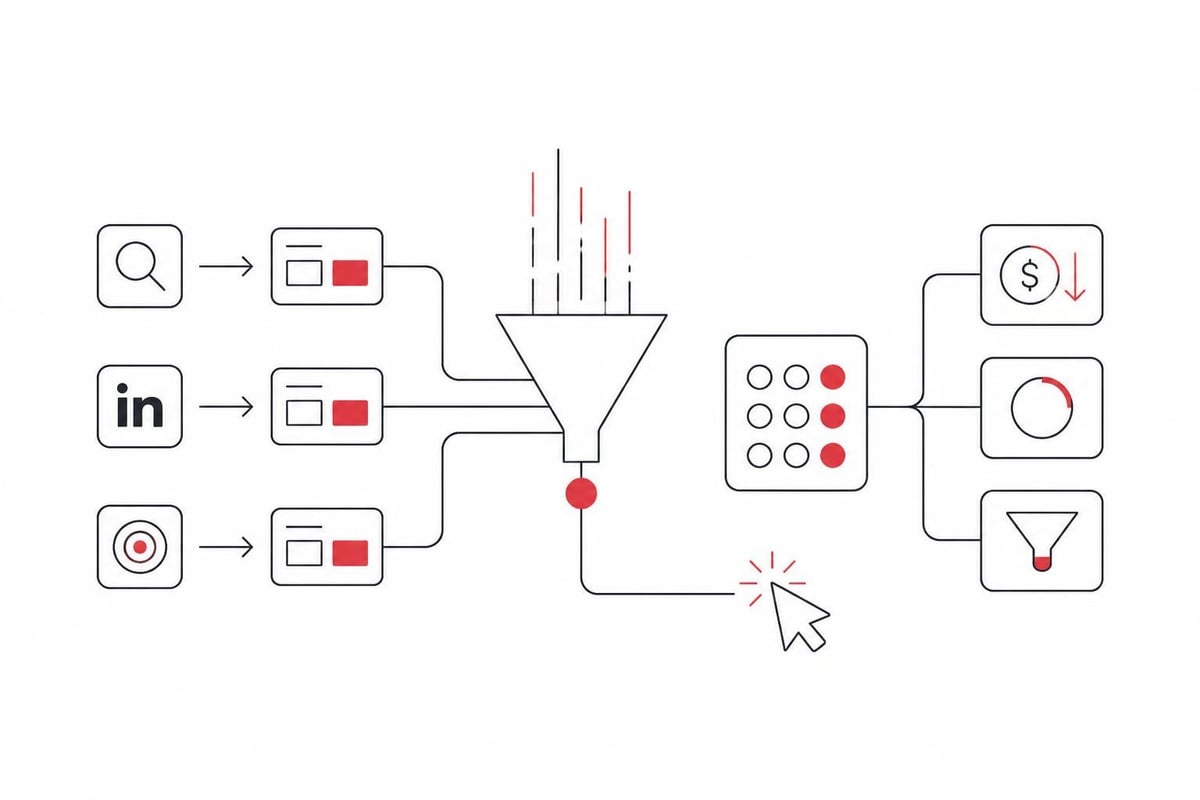
- LinkedIn ads to decision-makers with specific job titles and revenue thresholds
- Educational content (guides, reports, calculators) that solve a narrow problem
- Retargeting campaigns that follow visitors across platforms
The goal is not volume. The goal is attracting the right people. A thousand unqualified leads who ghost your sales team is worse than fifty who actually have budget and urgency. Aletto's approach to lead generation focuses on this principle: every prospect who enters the funnel has been pre-qualified by their behavior and firmographic fit.
What happens in the consideration stage of a SaaS sales funnel?
Consideration is where most deals die. Your prospect knows you exist, but they're also looking at three competitors, doing nothing, or building in-house. The saas sales funnel fails here because follow-up is slow, generic, or absent. Consideration-stage conversion rate (the percentage of MQLs who request a demo or trial) typically ranges from 10% to 30% for B2B SaaS, per High Alpha’s SaaS Benchmarks.
What separates high-performing funnels is speed and personalization. When someone downloads a resource or watches a demo video, they're signaling intent right now. If your sales team reaches out manually two days later, the moment is gone. AI-powered follow-up systems solve this by engaging instantly, answering common questions, and nudging prospects toward booking a call-all without human intervention.
Consider this scenario: A VP of Sales at a 50-person SaaS company visits your pricing page, downloads your ROI calculator, and leaves. In a manual funnel, they disappear. In an automated funnel, they receive a personalized email within five minutes addressing their specific pain points (based on the pages they viewed), an AI chatbot offers to answer questions, and they're retargeted with a case study of a similar company. Within 48 hours, they book a demo.
What content moves prospects through consideration?
The consideration stage demands proof, not promises. Prospects need to see that your solution works for companies like theirs. Effective content formats include:
- Case studies showing ROI with specific numbers (e.g., "How Company X booked 1,122 qualified calls in 11 months")
- Product demos (live or recorded) that address the top three objections
- Comparison guides (you vs. competitors or you vs. building in-house)
- Free trials or sandbox environments that let prospects self-serve
A common funnel mistake is gating everything. If someone has to fill out a form to see a demo video, you've just added friction. Ungated content builds trust faster. Save the forms for high-intent actions like requesting a custom demo or starting a trial. Aletto has seen this firsthand: reducing form fields from eight to three increased demo requests by 47%.
| Content Type | Conversion Lift | Best Use Case |
|---|---|---|
| Case study with named client | 22% | Enterprise prospects who need social proof |
| Interactive ROI calculator | 31% | Prospects evaluating budget and payback period |
| Self-service product tour | 18% | Technical evaluators who want to explore features |
| Comparison guide (you vs. competitor) | 25% | Prospects in final decision between two vendors |
How do you optimize the decision stage of your funnel?
The decision stage is where deals close or stall indefinitely. Your saas sales funnel needs to make buying easy: clear pricing, simple contracts, and fast onboarding. According to The Bridge Group’s research, average sales cycle length for B2B SaaS ranges from 30 days (for deals under $10K ACV) to 180+ days (for enterprise contracts over $100K ACV). Every unnecessary step adds weeks.
Win rate is your critical metric here. If you're closing less than 20% of qualified opportunities, something is broken-either your qualification is too loose, your pricing is misaligned with value, or your sales process introduces too much friction. HY’s SaaS & AI Pricing Report shows that transparent, value-based pricing models convert 30% better than custom quote models for deals under $50K ACV.
What kills deals in the decision stage?
Three things consistently kill saas sales funnel conversions at the decision stage: unclear ROI, procurement friction, and slow response times. When a prospect asks for a contract and your legal team takes two weeks to respond, they're evaluating competitors. When pricing requires a sales call and three meetings, smaller buyers ghost you.
Tactics to accelerate decisions:
- One-call close for qualified prospects: If they have budget, authority, need, and timeline, close on the first call
- Pre-approved contracts and order forms: Legal templates that sales can send immediately
- Instant trial-to-paid conversion: Let customers upgrade without talking to anyone
- Payment flexibility: Monthly vs. annual, net-30 terms, or financing for larger contracts
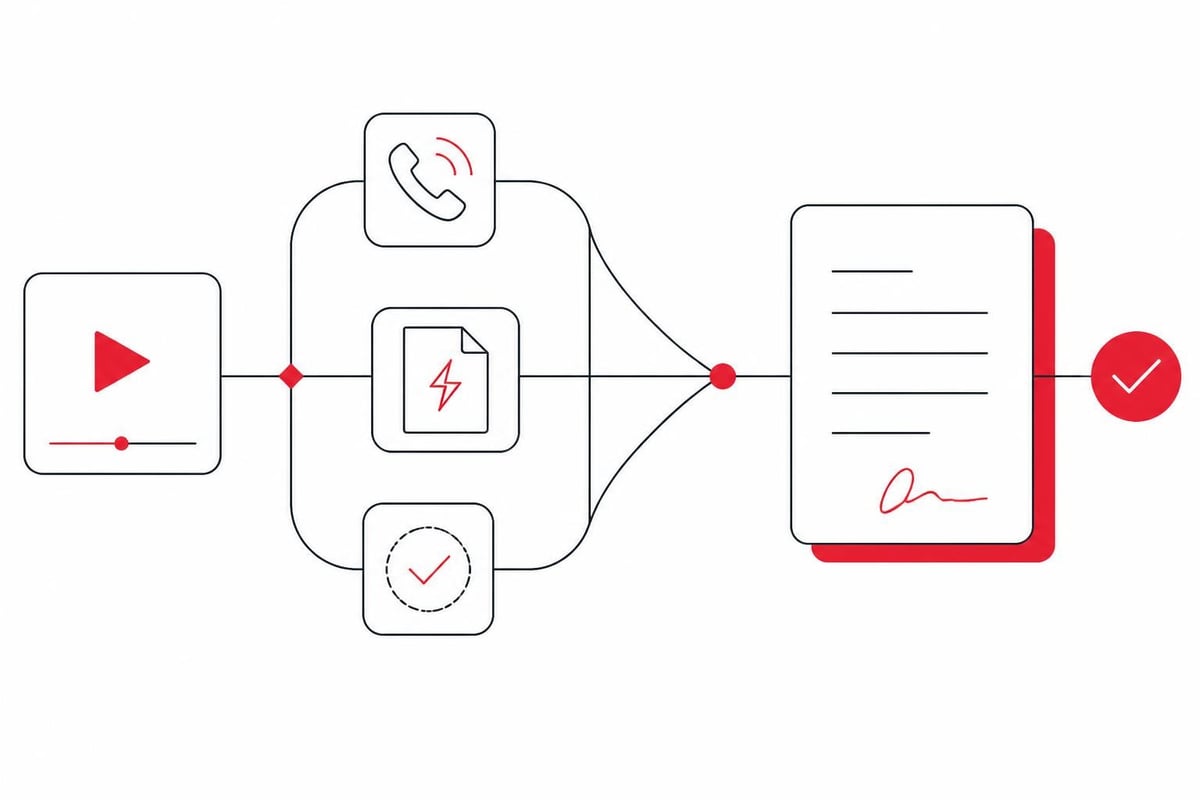
Example: A 30-person marketing agency books a demo for your analytics platform. They're currently using a competitor but frustrated with reporting limits. Your rep discovers they have $2K/month budget and need to switch by end of quarter (14 days away). Instead of scheduling a follow-up call, the rep sends a pre-approved contract with a 14-day onboarding guarantee. The prospect signs within 24 hours. That's funnel optimization.
Why is retention the most important part of your SaaS sales funnel?
Retention is where SaaS companies actually make money. Your net revenue retention (NRR) rate-the percentage of revenue retained from existing customers including expansions-determines whether you grow profitably or churn into oblivion. ChartMogul’s SaaS Retention Report found that top-quartile B2B SaaS companies maintain NRR above 110%, meaning they grow revenue from existing customers faster than they lose it to churn.
The saas sales funnel doesn't end at purchase. It extends through onboarding, activation, adoption, expansion, and advocacy. If your onboarding is broken-if customers don't reach their first value milestone within 30 days-they'll churn before renewal. Gainsight’s 2026 Customer Success research shows that companies with structured onboarding programs see 40% higher retention rates than those relying on ad-hoc support.
What metrics define retention success?
Track these retention metrics monthly:
- Gross revenue retention (GRR): Revenue retained excluding expansions (target: 90%+)
- Net revenue retention (NRR): Revenue retained including expansions (target: 110%+)
- Time to first value: Days until customer achieves their primary outcome (target: under 30 days)
- Feature adoption rate: Percentage of customers using core features weekly (target: 60%+)
- Customer health score: Composite metric based on usage, support tickets, and engagement
When Aletto analyzed 116 qualified booked calls and $100K in revenue generated in 30 days, the clients who converted fastest were those with the clearest time-to-value metrics. They knew exactly what "success" looked like in week one, week four, and month three. That clarity translated into faster expansion and referrals.
How do you fix a broken SaaS sales funnel?
Most saas sales funnel problems stem from three root causes: leaks (prospects dropping out between stages), clogs (bottlenecks where deals pile up), and misalignment (marketing and sales working against each other). Start by measuring conversion rates at every stage. If you're losing 95% of visitors before they become MQLs, you have a top-of-funnel problem. If MQLs aren't converting to opportunities, your qualification is off or your follow-up is too slow.
Funnel diagnosis process:
- Map every stage from first touch to renewal with conversion rates
- Identify the biggest drop-off (where you lose the most prospects percentage-wise)
- Benchmark against industry standards using SaaS Capital’s benchmarks
- Run experiments to improve that stage (faster follow-up, better content, clearer pricing)
- Measure results weekly and iterate
A real example: A Series A SaaS company had a 42% MQL-to-opportunity conversion rate but only 8% opportunity-to-close. Their funnel leaked at decision stage. After analyzing lost deals, they discovered pricing calls were taking 9 days to schedule. They implemented instant calendar booking via AI, cutting that to same-day or next-day. Close rate jumped to 18% in 60 days.
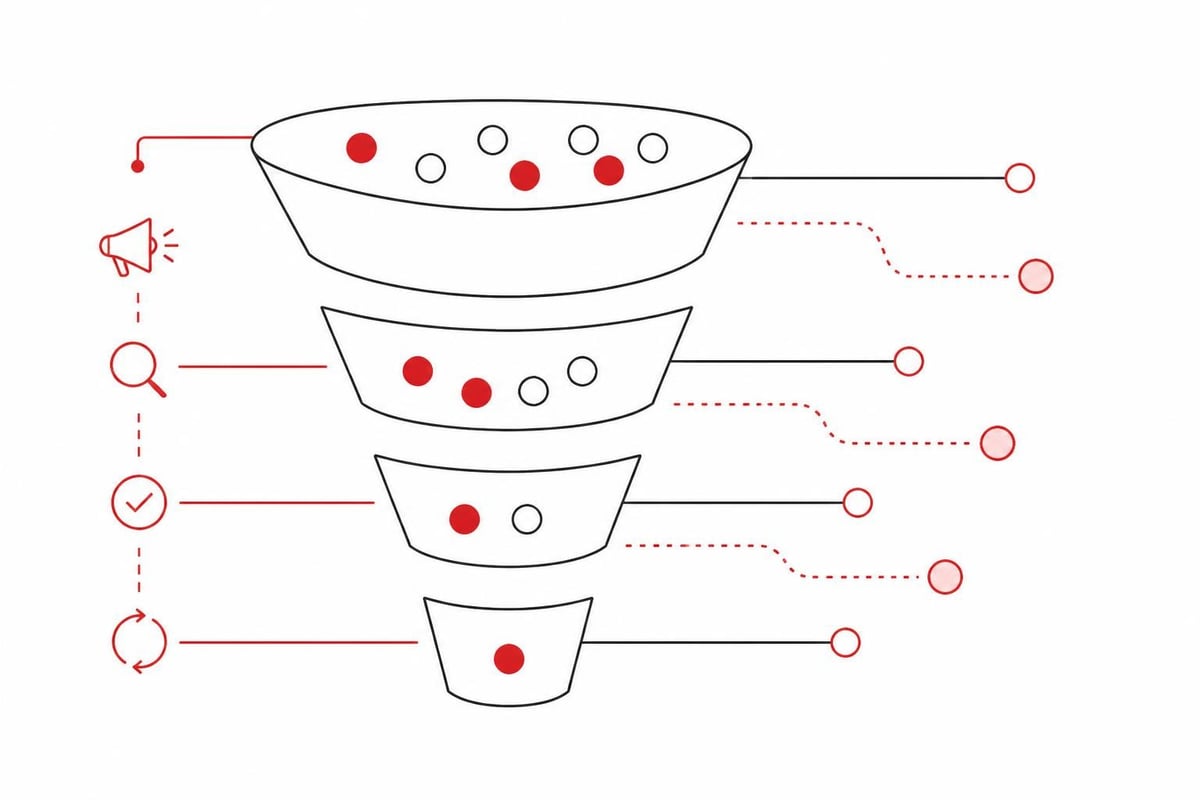
The most effective fix for modern saas sales funnel performance is replacing manual follow-up with AI-driven automation. Aletto's system integrates paid acquisition with AI follow-up and automated booking, which means prospects never wait for a human to respond. When someone shows intent-clicking an ad, visiting pricing, or downloading a guide-the system engages them immediately and books qualified calls without SDR involvement. This approach has generated 1,122 qualified calls in 11 months for B2B teams who were previously stuck in manual outreach loops.
What funnel mistakes are B2B SaaS teams making in 2026?
The biggest mistake is treating the saas sales funnel like it's 2019. Cold email still dominates sales development at most companies, even though open rates have collapsed to under 5% and reply rates hover around 0.5%. Teams are burning budget on LinkedIn outreach that gets ignored and trade show booths that generate unqualified badge scans. These tactics worked pre-pandemic when buyers had time and patience. They don't work now.
Three specific mistakes killing SaaS funnels today:
- Over-reliance on manual SDRs: Paying humans $60K-$80K/year to send cold emails that get 0.5% response rates is an expensive way to fail
- Ignoring speed-to-lead: Waiting hours or days to follow up with inbound leads while they evaluate competitors
- No post-demo nurture: 80% of demos don't close immediately, but most teams just send one follow-up email and give up
The fix is systematization. Build a funnel where every stage is automated until a human is actually needed (usually at the demo or negotiation stage). Use paid acquisition to target the exact ICP with proven messaging. Use AI to follow up instantly and answer questions 24/7. Use automated booking to get prospects on your calendar without the back-and-forth. This isn't theory-it's how businesses are working less and making more in 2026.
What tools and systems power high-converting SaaS funnels?
A modern saas sales funnel requires integration between marketing automation, CRM, AI engagement tools, and analytics platforms. The specific tools matter less than the integration. If your ad platform doesn't feed data to your CRM, which doesn't trigger follow-up sequences, which doesn't update your analytics dashboard, you're running blind.
| Funnel Stage | Tool Category | Key Capability |
|---|---|---|
| Awareness | Ad platforms (Meta, Google, LinkedIn) | Targeting and retargeting based on behavior |
| Consideration | AI chatbots and email automation | Instant engagement and qualification |
| Decision | CRM with automated booking (HubSpot, Salesforce) | Pipeline visibility and meeting scheduling |
| Retention | Customer success platforms (Gainsight, ChurnZero) | Health scoring and expansion triggers |
The critical capability is AI-powered follow-up. When a prospect takes an action, the system should respond within seconds-answering questions, sharing resources, and moving them toward a call. Aletto's AI sales bots have outperformed every other nurture tactic because they engage prospects the moment intent is shown, not when a sales rep logs in the next morning.
How do you benchmark your SaaS sales funnel performance?
Benchmarking tells you whether your funnel is competitive or broken. Compare your metrics against industry standards, then focus on improving the weakest stage first. Key benchmarks for B2B SaaS in 2026:
- Visitor-to-MQL conversion: 2-5% (higher for high-intent traffic)
- MQL-to-opportunity conversion: 15-30%
- Opportunity-to-close rate: 15-25%
- Customer acquisition cost (CAC) payback: 12-18 months
- Net revenue retention: 100-120%
If your CAC payback is over 24 months, you're spending too much to acquire customers or your pricing is too low. If your NRR is under 90%, you're churning faster than you're expanding. These aren't vanity metrics-they determine whether you hit your growth targets or burn through runway. Aletto tracks these metrics weekly and adjusts acquisition spend, messaging, and follow-up tactics based on what's converting. That's the difference between hoping the funnel works and knowing it does.
Frequently Asked Questions
What is a SaaS sales funnel?
A saas sales funnel is the structured path prospects follow from discovering your product to becoming customers and advocates. It includes awareness, consideration, decision, and retention stages, each with specific conversion metrics and tactics designed to move prospects forward systematically.
How long should a SaaS sales funnel be?
B2B SaaS sales cycles range from 30 days for low-touch deals under $10K to 180+ days for enterprise contracts. Your funnel length depends on your average contract value, buyer complexity, and sales motion. Optimize for speed without sacrificing qualification-every unnecessary step adds weeks.
What's a good conversion rate for a SaaS sales funnel?
Top-of-funnel visitor-to-MQL conversion should hit 2-5%. MQL-to-opportunity should be 15-30%. Opportunity-to-close should be 15-25%. If you're significantly below these benchmarks, diagnose the weakest stage and run experiments to improve it before optimizing other areas.
How do you automate a SaaS sales funnel?
Automate follow-up using AI chatbots and email sequences that respond instantly when prospects show intent. Use calendar booking tools to eliminate scheduling friction. Integrate your ad platforms, CRM, and analytics so data flows automatically. Reserve human involvement for high-value interactions like demos and negotiations.
What metrics matter most in a SaaS sales funnel?
Focus on conversion rates at each stage, customer acquisition cost, CAC payback period, net revenue retention, and time-to-first-value. These metrics directly impact growth and profitability. Vanity metrics like traffic or total leads don't matter if they don't convert to revenue.
Building a high-performing saas sales funnel in 2026 means replacing manual outreach with automated systems that qualify, nurture, and book meetings at scale. The teams hitting quota aren't relying on cold email or event leads-they're using paid acquisition, AI follow-up, and instant booking to fill their calendars with qualified prospects. If your funnel is leaking or your team is spending hours on unqualified leads, Aletto's Free AI Call Booking Report shows exactly how we booked 1,122 qualified calls in 11 months without cold outreach, and how you can replicate the system for your team.