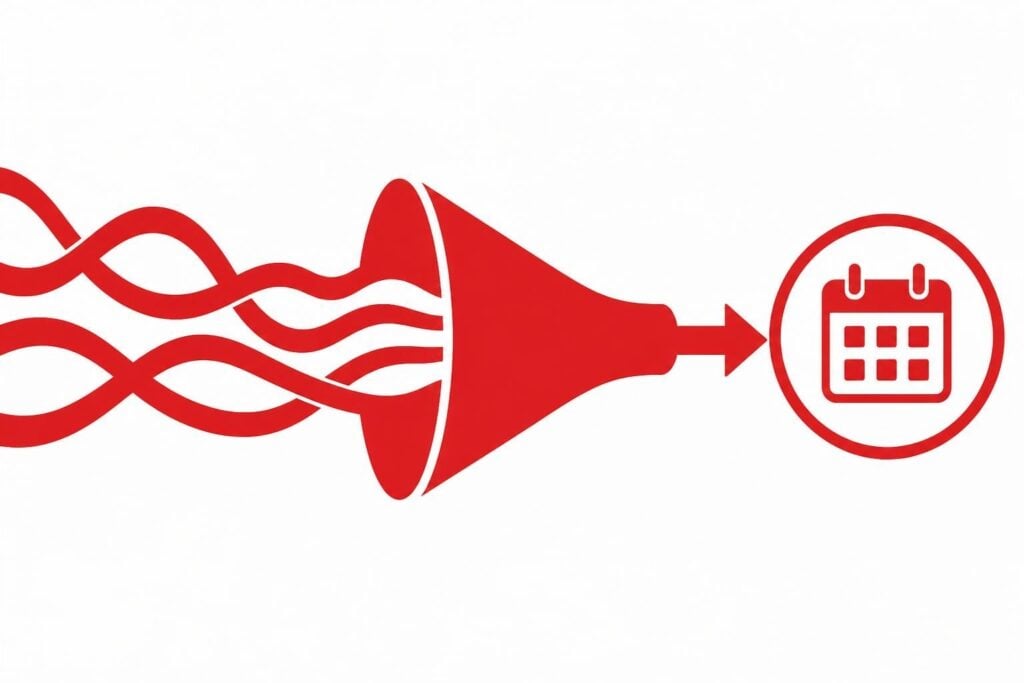
Salesforce lead gen is the practice of capturing, qualifying, and routing prospective customers through Salesforce's CRM platform to create sales opportunities. When configured properly, it transforms raw traffic into scheduled meetings by connecting acquisition channels, automated scoring rules, and booking workflows in a single system. Most B2B teams underutilize Salesforce for lead generation because they treat it as a passive database instead of an active conversion engine that orchestrates every step from first click to booked call.
The gap between potential and reality is wide. Companies spend thousands on Salesforce licenses yet still rely on spreadsheets, manual data entry, and disconnected tools that create friction at every handoff point. Modern salesforce lead gen requires integration across paid channels, intelligent automation, and a system design that prioritizes speed and relevance over complexity.
Why Most Salesforce Lead Gen Strategies Fail
The typical approach treats Salesforce as a repository where leads go to age, not a machine that drives revenue. Teams invest in campaigns, capture form fills, and watch those records sit untouched for days while competitors book the same prospects within minutes.
Three structural problems kill momentum:
- Delayed routing sends hot leads to cold reps hours or days later
- Poor scoring models treat all form fills equally instead of prioritizing buying intent
- Disconnected follow-up forces manual outreach instead of automated, personalized sequences
Salesforce becomes a graveyard when it operates as a ledger instead of a workflow engine. According to Harvard Business Review’s analysis of digital sales integration, companies that embed automation across the buyer journey see 3x higher conversion rates than those using CRM for record-keeping alone.
The post-pandemic reality compounds this. Cold outreach fatigues buyers. Events deliver inconsistent results. Referrals don't scale. B2B teams need systems that generate qualified interest and convert it immediately-not platforms that log activity after the deal dies.
The Hidden Cost of Manual Lead Handling
Every minute between lead capture and first response reduces conversion probability. Research from Aletto's client portfolio shows that leads contacted within five minutes convert at 9x the rate of those reached after an hour.
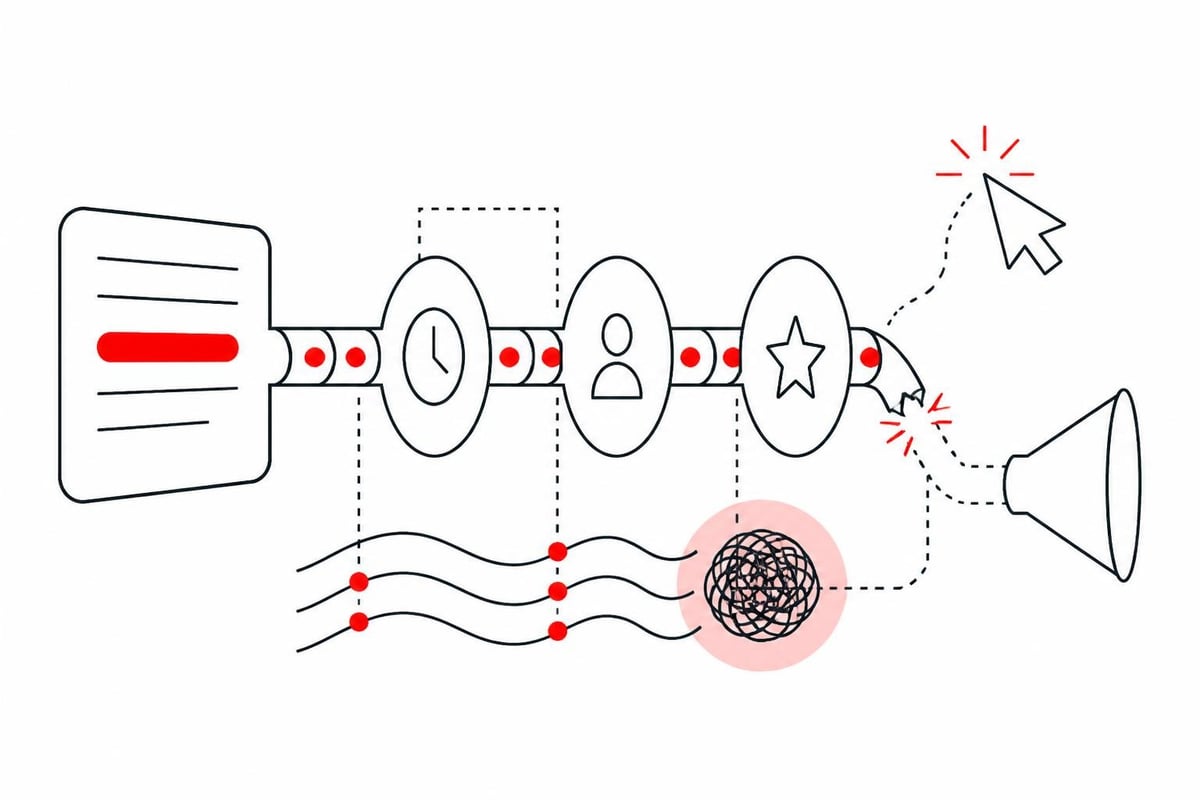
Manual processes guarantee delays. A prospect submits a demo request. The form data enters Salesforce. Someone notices. Assignment rules fire-eventually. A rep gets notified. They check their calendar. Send an email. Wait for a reply. Days pass.
Meanwhile, that prospect has already booked calls with two competitors who responded instantly with calendar links and confirmation texts.
What Makes Salesforce Lead Gen Actually Work in 2026
Effective salesforce lead gen connects three layers: acquisition, intelligence, and automation. Each layer feeds the next, creating a system where paid traffic becomes booked meetings without human intervention at every step.
Acquisition integration means your ad platforms, landing pages, and web properties push lead data directly into Salesforce with full attribution. No CSV uploads. No Zapier band-aids. Native connections that preserve campaign source, keyword data, and engagement history.
The Web-to-Lead configuration in Salesforce provides the technical foundation, but it's only valuable when paired with tracking parameters that tell you which specific ad, keyword, or landing page variant drove each record.
Intelligence separates signal from noise. Modern lead scoring evaluates dozens of behavioral signals-not just job title and company size. Forrester’s framework for individual interest scoring demonstrates that engagement patterns (content consumed, time on page, return visits, feature page views) predict conversion better than firmographic data alone.
Salesforce Einstein and third-party scoring tools can process these signals automatically, but the model only works if you define what "good" looks like based on actual closed deals, not assumptions.
| Lead Scoring Element | Weight | Example Trigger |
|---|---|---|
| Pricing page visit | +25 | Viewed within 24 hours |
| Case study download | +15 | B2B SaaS vertical match |
| Return visit | +10 | 3+ sessions in 7 days |
| Company size | +20 | 50-500 employees (ICP) |
| Generic form fill | +5 | Newsletter signup |
Automation executes immediately. When a high-scoring lead enters Salesforce, the system should trigger instant actions: send a personalized SMS, book a calendar slot, alert the assigned rep, launch a nurture sequence. Salesforce Flow, Process Builder, and integrated tools like Calendly or Chili Piper remove the delays that kill conversion.
Aletto's internal data shows that combining paid acquisition with AI-powered follow-up and automated booking fills calendars 6x faster than traditional SDR-driven models. The system books qualified calls while human reps focus on closing, not chasing.
Setting Up Web-to-Lead Forms That Actually Convert
Generic contact forms produce generic results. High-converting salesforce lead gen forms balance information capture with user experience, asking only what's necessary to route and qualify.
Essential fields for B2B salesforce lead gen:
- Email (for communication and enrichment lookup)
- Company name (for ICP matching and account creation)
- Role or title (for routing and personalization)
- Specific interest or use case (for segmentation)
Skip the fields you can enrich later. Tools like Clearbit, ZoomInfo, or HubSpot's Salesforce integration can append firmographic data after submission, reducing form friction while maintaining data quality.
The technical setup matters. Hidden fields should capture UTM parameters, GCLID for Google Ads, and referral source. Salesforce’s lead generation strategy module covers the tactical implementation, but the strategy determines what you track and why.
Test form length against conversion rate. Aletto's testing across B2B SaaS clients found that reducing fields from 8 to 4 increased form submissions by 47% while lead quality (measured by show rate) remained constant because backend enrichment filled gaps.
How to Build Salesforce Lead Scoring That Predicts Revenue
Generic scoring assigns points arbitrarily. Predictive scoring analyzes historical data to identify which combinations of attributes and behaviors correlate with closed-won deals.
Start by exporting your last 200 closed deals from Salesforce. Analyze common patterns across:
- Firmographic attributes: company size, industry, geography, tech stack
- Engagement behaviors: pages visited, content downloaded, email clicks, return frequency
- Intent signals: pricing page views, competitor comparison searches, demo requests
- Source attribution: which channels and campaigns produced buyers
Build your scoring model backward from revenue, not forward from assumptions. If 80% of your closed deals visited the pricing page within three days of first touch, that behavior deserves more weight than job title.
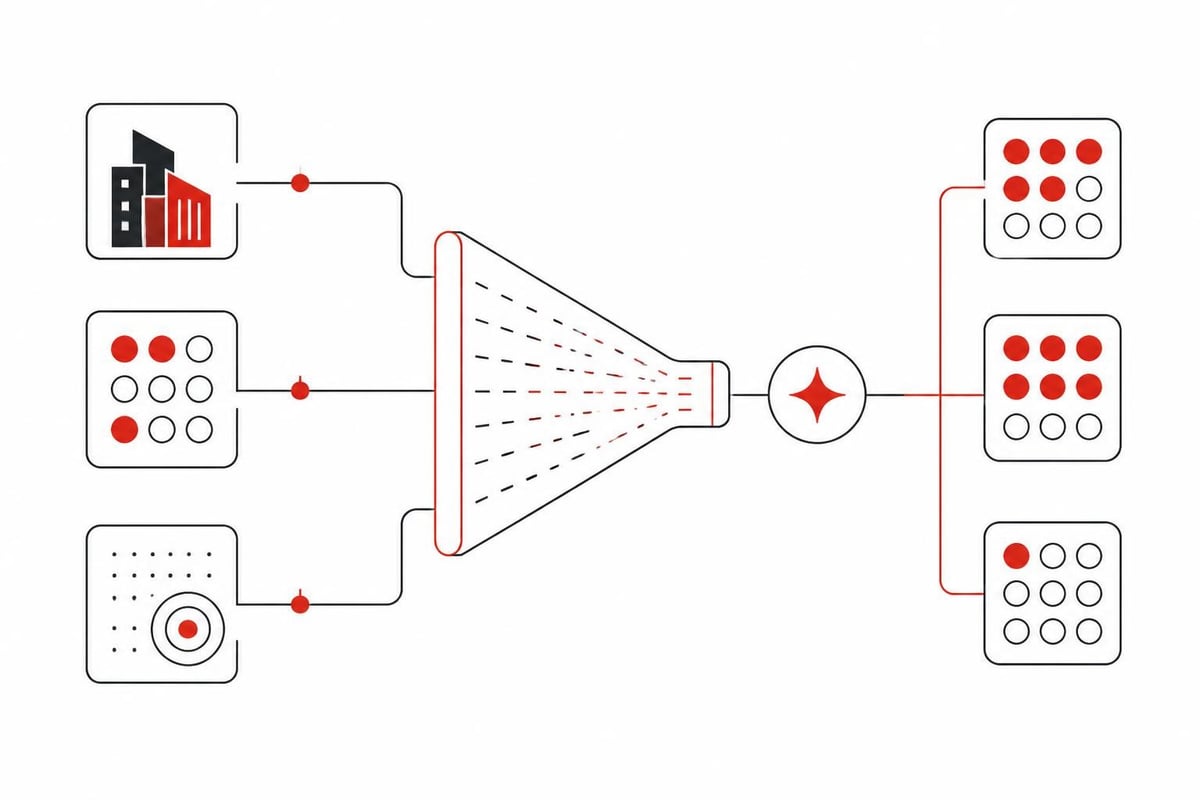
Salesforce Einstein Lead Scoring automates this analysis using machine learning, but it requires at least 1,000 leads and 120 days of history to generate reliable models. Smaller teams can start with rule-based scoring and iterate quarterly based on conversion data.
Dynamic Routing Rules That Match Leads to Reps
Assignment rules determine whether your salesforce lead gen system converts or stalls. Static round-robin distribution ignores context. Dynamic routing considers lead score, product interest, geography, rep capacity, and current pipeline stage.
Effective routing logic for B2B teams:
- High-score leads (80+ points) route to senior closers immediately
- Mid-score leads (50-79) enter automated nurture with calendar booking option
- Low-score leads (<50) receive educational content and re-score based on engagement
- Enterprise accounts (500+ employees) route to named account executives regardless of score
- Specific product interests route to specialists (e.g., API leads to technical reps)
Salesforce Flow enables conditional routing that evaluates multiple criteria before assignment. The goal is matching buying intent with sales capacity-not distributing leads evenly.
Aletto's testing shows that intelligent routing increases show rates by 34% compared to random assignment because prospects receive contextually relevant outreach from reps who understand their specific use case.
Integrating Paid Acquisition with Salesforce Lead Gen
Disconnected systems waste budget. When your ad platforms don't communicate with Salesforce, you're blind to which campaigns drive revenue, not just clicks or form fills.
Native integrations exist for Google Ads, LinkedIn Ads, and Facebook Ads, but most require configuration beyond the default settings to capture useful attribution data. The standard setup logs that a lead came from "Facebook" but doesn't tell you which campaign, ad set, creative, or audience segment actually converted.
Critical tracking parameters to preserve:
- Campaign name and ID
- Ad group or ad set
- Specific creative variation
- Keyword (for search campaigns)
- Audience segment (for social campaigns)
- Landing page URL and variant
This granularity enables ROI analysis at the campaign level. Instead of knowing "Google Ads generated 50 leads," you know "Google Ads campaign targeting SaaS CFOs with demo offer generated 12 leads, 8 qualified, 3 booked, 1 closed for $45K ARR."
Marketing attribution in Salesforce becomes actionable when you can kill underperforming campaigns and scale winners based on closed revenue, not vanity metrics. The best advertising platforms for SaaS companies deliver different results, and proper attribution reveals which channels suit your ICP.
Building Multi-Touch Attribution Models
First-touch and last-touch models oversimplify reality. Most B2B buyers engage multiple times across several channels before purchasing.
Salesforce's native attribution reports support linear (equal credit to all touches), time-decay (more credit to recent touches), U-shaped (credit to first and last), and custom models. Choose based on your actual sales cycle.
| Attribution Model | Best For | Weakness |
|---|---|---|
| First-touch | Understanding awareness channels | Ignores nurture and conversion touches |
| Last-touch | Measuring conversion tactics | Ignores top-of-funnel investment |
| Linear | Balanced view of full journey | Over-credits low-impact touches |
| Time-decay | Long sales cycles (6+ months) | Under-values early awareness |
| Custom weighted | Complex, multi-stakeholder deals | Requires extensive data to calibrate |
For B2B SaaS with 30-90 day sales cycles, time-decay or custom models typically provide the most useful insights. The key is consistency-pick a model, apply it for at least one full sales cycle, and compare campaign ROI using the same methodology.
AI and Automation in Modern Salesforce Lead Gen
Generative AI transforms salesforce lead gen from reactive to predictive. Deloitte’s analysis of AI in marketing and sales shows that AI-powered personalization increases engagement rates by 40-60% compared to static segmentation.
Salesforce Einstein GPT, Copilot, and third-party AI tools can:
- Generate personalized email sequences based on lead attributes and behavior
- Predict which leads are most likely to convert using historical pattern analysis
- Automate meeting scheduling by analyzing calendar availability and lead preferences
- Summarize lead activity for reps before calls, highlighting key engagement signals
- Recommend next-best actions based on similar successful deals
The automation layer matters most. AI insights mean nothing if they don't trigger action. Building systems that force leads to book sales calls requires connecting intelligence to workflow-when a lead hits a score threshold or completes a specific behavior, the system immediately offers a calendar link with personalized context.
Aletto uses this approach across client accounts, integrating Salesforce with AI chatbots that qualify leads through conversational flows and book meetings directly on rep calendars. The result: qualified call volume increased 380% without adding headcount.
Privacy and Compliance in Lead Data Collection
Salesforce lead gen operates within regulatory constraints. GDPR, CCPA, and emerging privacy laws require explicit consent, data minimization, and transparent handling of personal information.
The academic research on lead-marketing ecosystems documents serious privacy risks in common lead gen practices, including unauthorized data sharing, inadequate consent mechanisms, and opaque tracking.
Compliance requirements for salesforce lead gen:
- Clear consent language on forms explaining how data will be used
- Opt-in confirmation for marketing communications (required in EU, best practice globally)
- Data retention policies that automatically purge old, unengaged leads
- Access and deletion workflows enabling prospects to view or remove their data
- Third-party processor agreements with ad platforms and enrichment vendors
Salesforce's Consent Management tools help track and honor preferences, but legal compliance starts with ethical data practices. Don't buy lists. Don't scrape contacts. Don't spam people who downloaded a white paper three years ago.
Building trust accelerates salesforce lead gen more than aggressive tactics ever will.
Measuring What Actually Matters in Salesforce Lead Gen
Leads generated is a vanity metric. What matters is qualified pipeline and closed revenue per dollar invested.
Core KPIs for B2B salesforce lead gen:
- Cost per qualified lead: Total spend divided by leads that meet ICP criteria and score thresholds
- Lead-to-opportunity conversion rate: Percentage of leads that become sales opportunities
- Opportunity-to-close rate: Percentage of opportunities that become customers
- Time to first meeting: Hours between lead creation and first sales conversation
- Show rate: Percentage of booked meetings where prospect actually attends
- CAC payback period: Months required to recover acquisition cost through subscription revenue
Salesforce reports and dashboards surface these metrics, but only if your data architecture supports it. Lead source fields must be populated. Opportunity stages must reflect real pipeline progression. Closed-won amounts must be accurate.
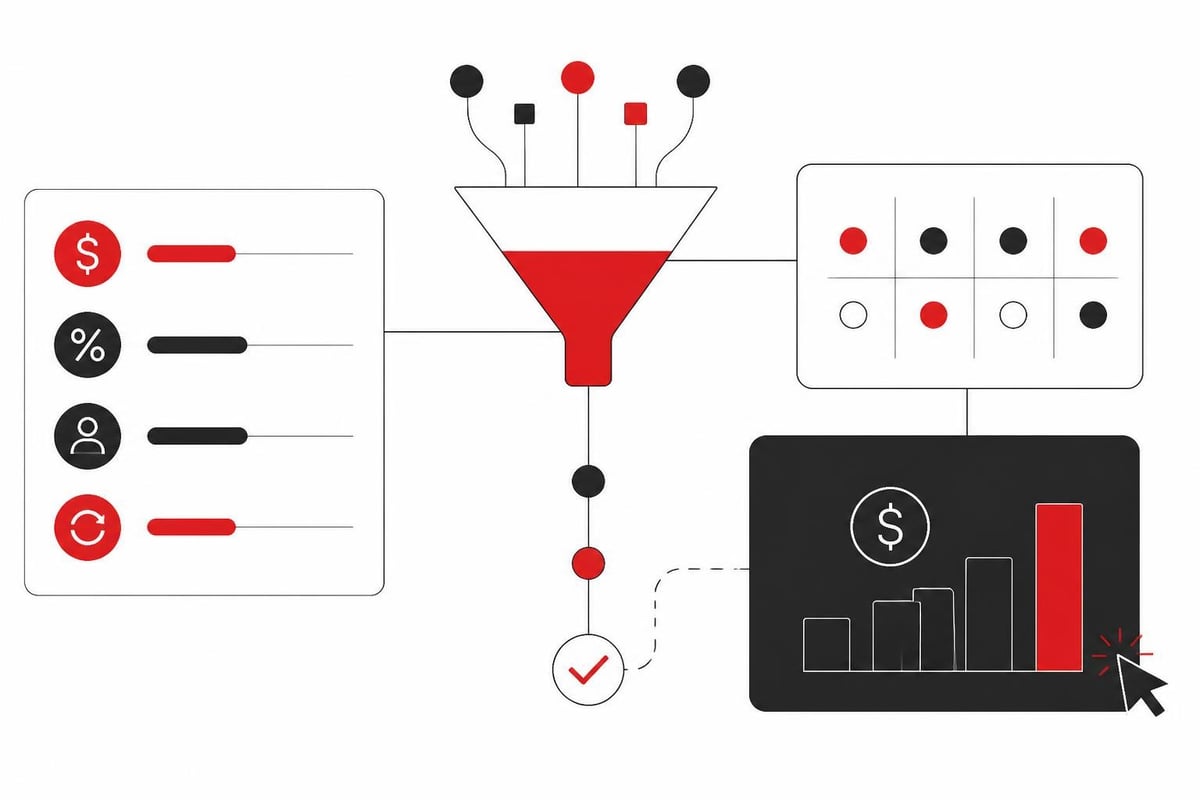
Create a weekly lead gen scorecard that tracks volume, quality, and conversion through the full funnel. Share it with sales and marketing leadership. Adjust targeting, messaging, and budget allocation based on what moves the needle on revenue, not impressions.
Building Feedback Loops Between Sales and Marketing
Salesforce lead gen improves when sales provides specific, timely feedback on lead quality. Generic complaints ("these leads are bad") don't help. Structured input does.
Implement a lead quality rating system where reps score each lead 1-5 within 24 hours of first contact based on:
- ICP fit (company size, industry, role)
- Awareness level (researching vs. ready to buy)
- Budget authority (can this person approve a purchase?)
- Timing (buying now vs. exploring for future)
Aggregate this feedback in Salesforce and correlate quality ratings with lead source, campaign, and score. If leads from LinkedIn ads consistently rate 4+ while Google Display averages 2, shift budget accordingly.
Marketing teams that treat sales feedback as data instead of opinion optimize faster. The market research process that generates thousands of qualified leads begins with understanding what sales actually needs, not what marketing wants to deliver.
Salesforce Lead Gen for Different Business Models
SaaS, professional services, and enterprise software require different salesforce lead gen approaches because buying cycles, deal sizes, and decision processes vary significantly.
For B2B SaaS (monthly subscriptions, $100-$2K ACV):
Focus on high-volume, low-touch conversion. Automate qualification and booking completely. Leads should self-schedule demos within minutes of form submission. Nurture sequences run automatically based on engagement. Sales touches only qualified, high-intent prospects.
For professional services (project-based, $25K-$200K deals):
Prioritize education and trust-building. Salesforce lead gen captures interest, but conversion requires consultative selling. Use case studies, ROI calculators, and industry-specific content to warm leads before sales contact. Longer nurture cycles (30-90 days) are normal.
For enterprise software (annual contracts, $100K+ ACV):
Account-based approaches work better than volume plays. Salesforce lead gen identifies stakeholders within target accounts, tracks engagement across multiple contacts, and orchestrates multi-threaded outreach. Named account executives own relationships, but marketing provides air cover through content, events, and automated touchpoints.
The technical salesforce lead gen setup remains similar across models-forms, scoring, routing-but the thresholds, timing, and messaging adapt to buying behavior.
Frequently Asked Questions
What is the difference between Salesforce lead gen and general lead generation?
Salesforce lead gen specifically refers to capturing and managing prospective customers within the Salesforce CRM platform, using its native tools like Web-to-Lead, lead scoring, routing rules, and integrations with marketing automation. General lead generation encompasses any tactic that identifies potential buyers, regardless of the system used to track them. The distinction matters because Salesforce provides workflow automation and attribution capabilities that spreadsheets and basic tools lack.
How much does it cost to implement salesforce lead gen effectively?
Implementation costs vary based on Salesforce edition, integrations, and automation requirements. Sales Cloud starts at $25 per user monthly, but effective salesforce lead gen typically requires Marketing Cloud, Pardot, or third-party tools adding $1,000-$5,000 monthly for small teams. Factor in integration setup ($2,000-$10,000 one-time), ad spend (varies by industry), and optimization time. Total first-year investment for a 5-person B2B team typically ranges $30,000-$75,000 including licenses, tools, and implementation.
Can small B2B teams use Salesforce for lead generation or is it only for enterprises?
Small teams absolutely benefit from salesforce lead gen, but they should start simple and scale complexity as revenue grows. Begin with Sales Cloud Essentials ($25/user/month), native Web-to-Lead forms, basic scoring rules, and free tools like Calendly for booking. This foundation handles lead capture, routing, and conversion tracking for under $200 monthly. Avoid over-engineering with enterprise features you won't use. Focus on speed and conversion, not sophistication.
How do I prevent duplicate leads in Salesforce?
Salesforce includes native duplicate matching rules based on email, name, or phone number. Configure these under Setup > Duplicate Management to alert users or block creation when duplicates are detected. For web forms, enable duplicate checking before submission. Third-party tools like RingLead, Cloudingo, or DemandTools provide advanced deduplication and merging. The best prevention is consistent data entry standards and enrichment tools that append complete information, making duplicates easier to identify automatically.
What is a good conversion rate for Salesforce lead gen campaigns?
Conversion rates vary dramatically by industry, offer, and stage. For B2B SaaS, 2-5% conversion from ad click to form submission is typical. Form submission to qualified lead averages 40-60%. Qualified lead to booked meeting runs 20-40%. Meeting to opportunity converts at 50-70%. Opportunity to close-won varies from 20-40%. In total, 0.5-2% of ad clicks become customers for well-optimized salesforce lead gen systems. Track each stage separately and improve the weakest link.
Salesforce lead gen works when you treat the platform as a conversion system, not a database. Speed, intelligence, and automation determine whether leads become revenue or records. Most B2B teams have the tools but lack the system design that connects acquisition to booked meetings without manual friction. If your calendar isn't full despite spending on ads and Salesforce licenses, the problem is process, not platform. Aletto specializes in building systems that integrate paid acquisition, AI follow-up, and automated booking to fill B2B sales calendars consistently. See exactly how this approach books qualified calls at scale in our FREE AI demo generation report showing the complete framework.