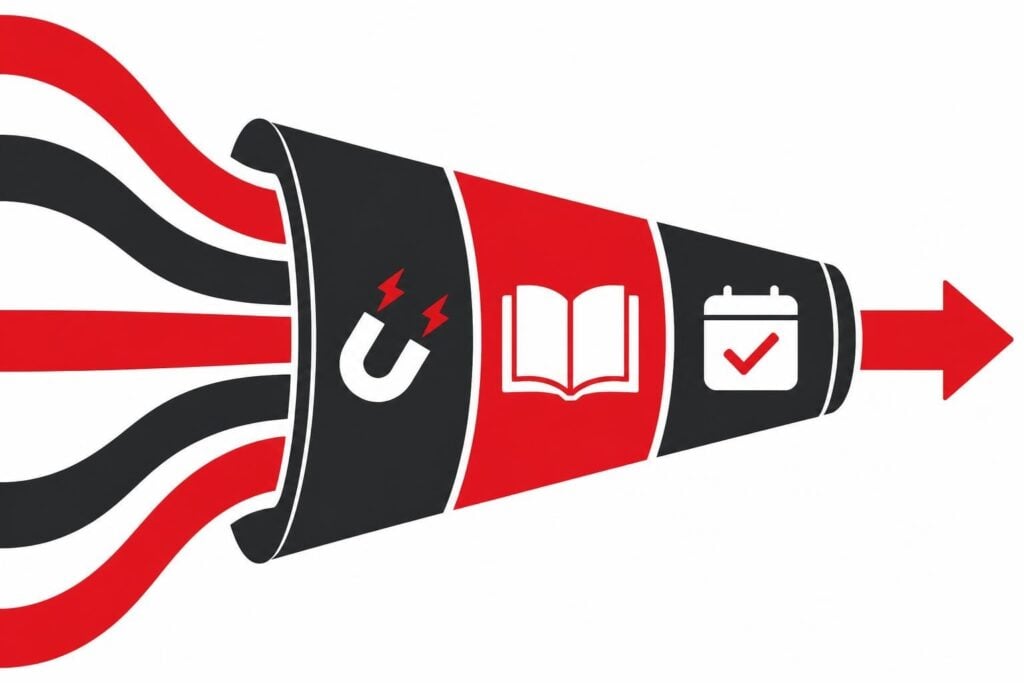
B2B demand generation is the systematic process of creating awareness, educating buyers, and generating qualified pipeline through integrated marketing and sales activities. In 2026, it means building systems that attract your ideal customer profile, nurture them with relevant content, and convert them into sales-ready opportunities without relying on cold outreach.
The game has changed. Traditional tactics like cold calling, LinkedIn spam, and trade show booths no longer deliver the return they once did. According to Forrester’s analysis of B2B buying behavior, modern buyers complete 70% of their research independently before engaging with sales. This shift demands a fundamentally different approach to filling your pipeline.
What is B2B Demand Generation and Why Does It Matter?
B2B demand generation encompasses all marketing and sales activities designed to create sustained interest in your solution and convert that interest into revenue opportunities.
Unlike lead generation, which focuses purely on volume, b2b demand generation prioritizes quality and buyer intent. You're not just collecting email addresses. You're identifying accounts that match your ideal customer profile, educating them on their problem and your solution, and guiding them toward a buying decision.
The distinction matters because it changes what you measure and how you operate. Lead generation teams celebrate form fills. Demand generation teams celebrate pipeline created and revenue influenced.
The Three Pillars of Modern Demand Generation
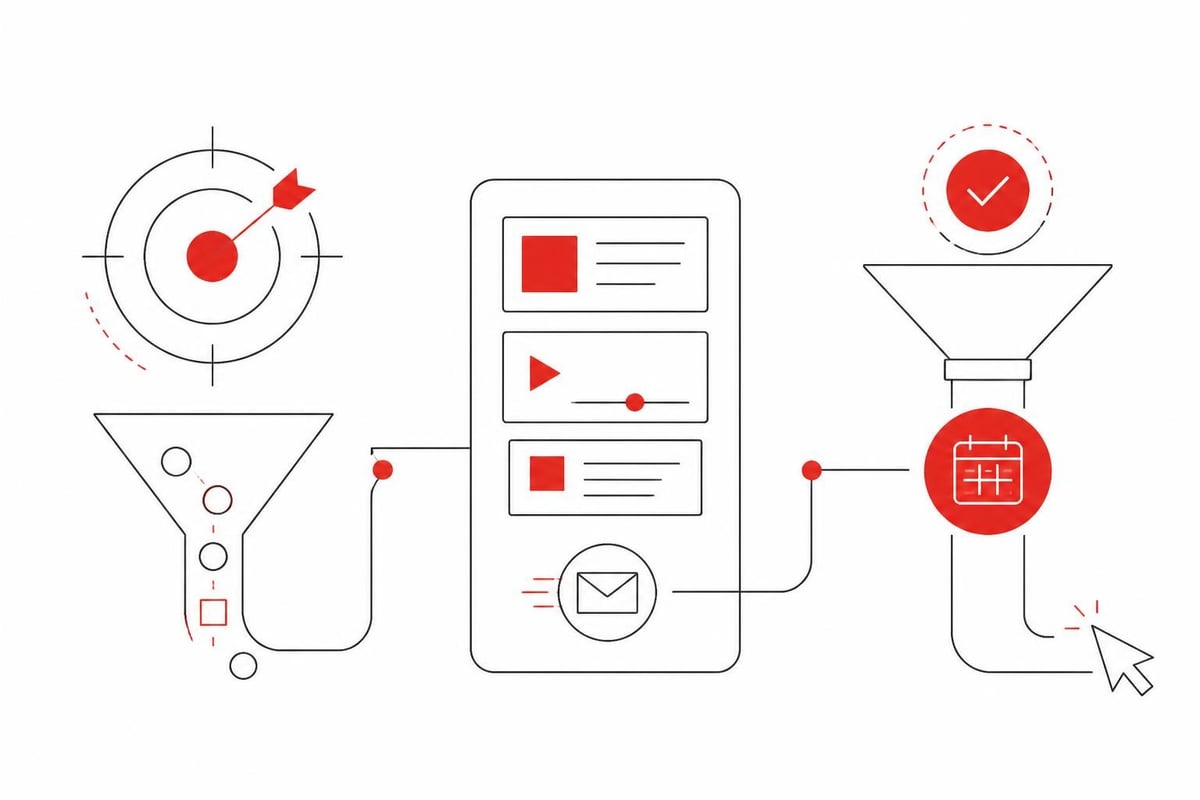
Every successful b2b demand generation system rests on three foundations:
- Targeted acquisition that reaches your ideal customers where they're actively looking for solutions
- Education-based nurture that moves prospects from problem-aware to solution-aware to product-aware
- Conversion mechanisms that make it easy for qualified buyers to take the next step
The companies winning in 2026 have integrated these pillars into a single, automated system. They've moved beyond departmental silos where marketing generates leads and sales works them independently.
How Do You Build a B2B Demand Generation Strategy That Actually Works?
Start by defining exactly who you're trying to reach and what problem you solve for them. This isn't marketing fluff. Your entire demand generation engine fails if you target the wrong accounts or message the wrong pain points.
Aletto has analyzed over 500 B2B campaigns and found that 63% fail because of poor account targeting, not execution problems. Companies chase too broad an audience or target titles instead of buying committees.
Step One: Define Your Ideal Customer Profile
Build your ICP around firmographics (company size, industry, revenue), technographics (current tools, tech stack), and behavioral signals (hiring patterns, funding events, competitor mentions).
Bad ICP: "B2B SaaS companies with 50-500 employees"
Good ICP: "B2B SaaS companies with 100-300 employees, $10M-50M ARR, using Salesforce, expanding their sales team by 20%+ in 2026, and currently reliant on outbound SDRs for pipeline generation"
The second example gives you targeting criteria for paid channels, content angles that resonate, and qualification criteria for your sales team.
Step Two: Map the Buyer Journey
Your prospects move through predictable stages. According to the 2025 State of Demand Generation report, 78% of B2B buyers engage with 3-7 pieces of content before requesting a demo.
Map what questions they ask at each stage:
- Problem awareness: "Why aren't our sales reps hitting quota?"
- Solution awareness: "What are alternatives to cold calling for B2B pipeline?"
- Product evaluation: "How does paid acquisition compare to SDR teams for SaaS?"
- Vendor selection: "What results has Aletto delivered for companies like ours?"
Create content that answers these questions in that order. Your demand generation system should detect which stage a prospect is in and serve the appropriate next step.
Step Three: Build Your Acquisition Engine
Organic content takes 6-12 months to generate meaningful traffic. If you need pipeline this quarter, you need paid acquisition.
The most effective channels for b2b demand generation in 2026:
| Channel | Best For | Typical CAC | Time to Results |
|---|---|---|---|
| LinkedIn Ads | Targeting specific titles/companies | $150-400 | 2-4 weeks |
| Google Search | Capturing active intent | $80-250 | 1-3 weeks |
| Meta Ads | Broader awareness, retargeting | $60-200 | 3-6 weeks |
| SEO/Content | Long-term, low-CAC growth | $20-100 | 6-12 months |
Most companies waste budget by spreading thin across all channels. Pick two channels where your buyers actually spend time and dominate them.
For SaaS demand generation specifically, LinkedIn and Google Search consistently outperform because buyers are actively researching solutions.
What Role Does AI Play in Modern B2B Demand Generation?
AI has shifted from experimental to essential for competitive b2b demand generation. According to Gartner’s 2026 research, 69% of B2B buyers now use AI tools during their research process and look to sales reps primarily to validate AI-generated insights.
This creates both a challenge and an opportunity. Your demand generation system must compete with AI assistants that can answer buyer questions instantly. But it also means buyers arrive more educated and ready for substantive conversations.
Where AI Actually Delivers Results
Stop using AI for generic content creation. Every competitor has access to the same tools, producing the same mediocre output.
Use AI where it provides unfair advantages:
- Prospect research and enrichment to understand individual buyer contexts before outreach
- Conversational follow-up that responds to prospect questions 24/7 without human intervention
- Intent signal detection that identifies when accounts move from research to evaluation mode
- Meeting scheduling that eliminates back-and-forth and books qualified calls automatically
Aletto's system uses AI specifically for follow-up and booking automation. After initial contact through paid acquisition, AI agents engage prospects in natural conversation, answer questions, qualify fit, and schedule calls with sales reps.
This approach has generated 1,122 qualified sales calls in 11 months without cold outreach. The AI doesn't replace human sellers. It handles the repetitive qualification and scheduling work that doesn't require human judgment.
Harvard Business Review’s analysis confirms this approach works because it allows AI to discover buyer needs through conversation while reserving human expertise for solution design and relationship building.
The AI Follow-Up Framework
Here's how to implement AI in your demand generation flow:
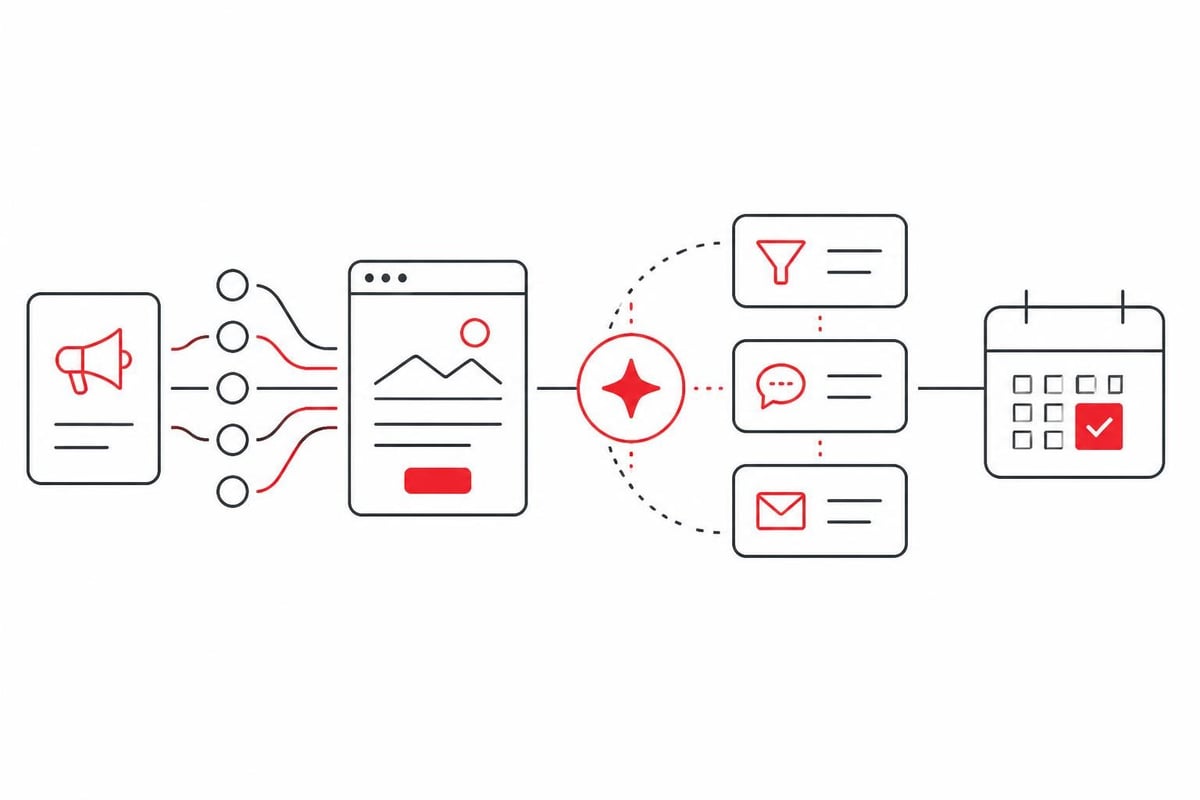
- Paid ad captures initial interest with a specific value proposition
- Landing page qualifies fit with strategic questions about company size, current challenges, timeline
- AI agent initiates conversation within 60 seconds of form submission
- Automated back-and-forth answers questions, shares relevant resources, overcomes common objections
- Calendar integration books qualified prospects directly into rep calendars when they indicate readiness
This system works because it respects buyer preferences. According to TechTarget’s 2025 predictions, 84% of B2B buyers prefer asynchronous communication early in the process. They want answers on their schedule, not forced into premature sales calls.
How Do You Measure B2B Demand Generation Success?
Most teams track vanity metrics like impressions, clicks, and form fills. These metrics matter for channel optimization but tell you nothing about revenue impact.
Track metrics that connect marketing activity to revenue outcomes:
Pipeline Metrics That Actually Matter
Marketing Qualified Leads (MQLs): Prospects who meet your ICP criteria and have demonstrated buying intent through engagement.
Sales Accepted Leads (SALs): MQLs that sales agrees to work based on qualification criteria.
Sales Qualified Opportunities (SQLOs): SALs that convert to genuine pipeline opportunities.
Pipeline Created: Total dollar value of opportunities generated by demand generation activities.
Pipeline Influenced: Dollar value of deals where demand generation touchpoints played a role.
Cost Per Pipeline Dollar: Total demand generation spend divided by pipeline created.
The EndeavorB2B 2024 benchmark report found that top-performing b2b demand generation teams maintain a 1:5 or better ratio of spend to pipeline created. If you spend $100K on demand generation, you should generate at least $500K in qualified pipeline.
The Attribution Problem
B2B buying journeys touch 7-13 interactions across multiple channels before conversion. Single-touch attribution (first or last touch) misrepresents reality. Multi-touch attribution is theoretically better but practically complex.
Use a hybrid model:
- Track first-touch source to understand acquisition efficiency
- Track program engagement to measure nurture effectiveness
- Use buyer surveys to understand what actually influenced decisions
- Focus on time-period cohorts rather than individual attribution
Ask every new customer: "What marketing touchpoints influenced your decision to buy?" You'll discover which channels and content types actually drive decisions versus which simply capture demand at the end.
What Are the Biggest B2B Demand Generation Mistakes to Avoid?
After building hundreds of demand generation systems, certain patterns consistently predict failure.
Mistake One: Optimizing for Volume Over Quality
Filling your CRM with 10,000 unqualified leads creates more problems than it solves. Your sales team wastes time sorting garbage. Your marketing team celebrates metrics that don't correlate with revenue.
The DemandGen Report survey revealed that 67% of B2B marketers struggle with lead quality, not lead volume. Yet most continue to optimize campaigns for maximum form fills rather than maximum qualified opportunities.
Tighten your qualification criteria. Better to generate 100 genuine prospects than 1,000 tire-kickers. Your lead generation strategy fails when you prioritize quantity over fit.
Mistake Two: Treating Demand Generation as a Marketing-Only Initiative
Demand generation requires tight alignment between marketing and sales. When marketing generates leads that sales ignores or sales complains that leads are garbage, you have an organizational problem, not a tactical one.
Establish shared definitions:
- What qualifies as an MQL?
- What's the SLA for sales follow-up?
- How do we define an opportunity?
- What information does sales need for effective conversations?
Weekly pipeline meetings between marketing and sales leaders identify disconnect points before they become systemic issues.
Mistake Three: No Systematic Follow-Up
According to Aletto's analysis of 500+ campaigns, 73% of marketing-generated leads never receive meaningful follow-up. Sales reps cherry-pick the most obvious opportunities and ignore the rest.
This isn't laziness. It's capacity. Sales reps can't manually work hundreds of leads while also closing deals and managing existing accounts.
Automation solves this. AI-powered nurture systems engage every lead immediately, qualify interest level, answer questions, and surface sales-ready prospects automatically.
Mistake Four: Ignoring the Calendar Booking Step
You can do everything right with targeting, messaging, and nurture, then lose deals because booking a meeting requires five emails back and forth finding a time that works.
Friction kills conversion. Every additional step between "interested" and "booked call" increases abandonment.
Embed calendar links directly in your nurture sequences. Use AI to handle scheduling coordination. Make booking a call as simple as clicking a button and choosing a time.
How Do You Build a Demand Generation System That Runs Without You?
The highest-performing b2b demand generation programs operate as systems, not dependent on individual effort or manual processes.
Here's the architecture Aletto has refined across 500+ implementations:
Component One: Paid Acquisition
Identify 2-3 channels where your ICP actively researches solutions. Build campaigns targeting specific pain points and desired outcomes rather than product features.
Run continuous tests across:
- Audience segments (job titles, company size, industries)
- Ad creative (video vs. static, problem-focused vs. solution-focused)
- Landing page offers (reports, calculators, demos, free trials)
- Qualification questions (explicit vs. implicit, short vs. long forms)
Scale what works. Kill what doesn't within 30 days. Best lead generation software can help identify and optimize these components, but the strategy matters more than the tools.
Component Two: AI Qualification and Nurture
The moment someone expresses interest, AI should begin a conversation. Not a generic drip campaign. An actual two-way dialogue that:
- Confirms they match your ICP
- Understands their specific situation and timeline
- Answers questions about your solution
- Shares relevant case studies and resources
- Identifies buying committee members and decision process
This replaces both the traditional email drip sequence and the SDR cold call. It's more responsive than email and more scalable than human reps.
Component Three: Automated Booking
When prospects indicate readiness (specific questions about pricing, implementation, or ROI), the AI should offer to book time with a specialist.
Integration with your calendar system enables instant booking. The prospect chooses a time. The meeting appears on your rep's calendar. Confirmation and reminder emails send automatically.
Aletto's system books qualified meetings while you sleep. No back-and-forth. No scheduling links buried in email signatures. No deals lost to coordination friction.
Understanding how to build systems that force leads to book separates companies that grow predictably from those that struggle with inconsistent pipeline.
Component Four: Performance Monitoring
Dashboard tracking in real-time:
| Metric | Target | Actual | Trend |
|---|---|---|---|
| Ad Spend | $15,000/mo | $14,200/mo | ↓ |
| Leads Generated | 400 | 387 | ↓ |
| Qualification Rate | 35% | 41% | ↑ |
| Meetings Booked | 140 | 159 | ↑ |
| Shows Rate | 70% | 73% | ↑ |
| Cost Per Meeting | $107 | $89 | ↓ |
Review these metrics weekly. Identify drop-off points. Test improvements systematically.
The system should surface problems automatically. If qualification rates drop, you're attracting the wrong audience. If booking rates drop, your nurture isn't building sufficient trust. If show rates drop, you're booking unqualified prospects or not sending effective reminders.
What Does the Future of B2B Demand Generation Look Like?
Three trends are reshaping b2b demand generation for 2027 and beyond:
Trend One: Intent data becomes table stakes. Every demand generation system will integrate signals from website behavior, content consumption, technographic changes, and third-party intent providers. Companies that can't identify when accounts enter buying mode will lose to competitors who can.
Trend Two: Human sellers focus exclusively on high-value interactions. AI handles initial outreach, qualification, education, and scheduling. Human expertise focuses on consultative selling, relationship building, and complex deal navigation. The economics force this shift as buyer expectations for instant response collide with rising rep costs.
Trend Three: Integrated platforms replace point solutions. The winning demand generation stack combines paid acquisition, CRM, nurture automation, AI conversation, and calendar booking in a single workflow. Companies maintaining six disconnected tools lose prospects in the handoffs between systems.
Companies that adapt to these trends will dominate their markets. Those clinging to 2020 playbooks will watch their cost-per-acquisition climb while conversion rates fall.
Frequently Asked Questions
What's the difference between lead generation and demand generation?
Lead generation focuses on capturing contact information and maximizing volume through tactics like gated content and list purchases. B2B demand generation takes a broader approach, building awareness and interest throughout the buyer journey, nurturing prospects with education, and prioritizing quality opportunities over raw lead counts. Demand generation creates pipeline, not just names in a database.
How much should we budget for B2B demand generation?
Industry benchmarks suggest 10-15% of target revenue for established companies and 15-25% for growth-stage companies. If you're targeting $5M in new revenue, allocate $500K-750K to demand generation. Within that budget, expect 40-50% for paid acquisition, 20-30% for content and creative, 15-25% for technology and tools, and 10-15% for personnel. Track cost-per-pipeline-dollar to ensure ROI remains positive.
How long does it take to see results from demand generation?
Paid acquisition can generate qualified meetings within 2-4 weeks. However, building a sustainable demand generation system that consistently fills your pipeline takes 90-120 days. You need time to test messaging, optimize conversion paths, refine qualification criteria, and build sufficient nurture content. Companies expecting overnight results typically abandon effective strategies before they mature.
Can demand generation work without a large marketing team?
Absolutely. Modern automation and AI enable small teams to execute sophisticated programs. Aletto has helped solo founders build systems that generate 100+ qualified meetings monthly. The key is choosing high-leverage activities (paid acquisition, AI follow-up, automated booking) rather than labor-intensive tactics (manual outreach, event marketing). Technology replaces headcount when deployed strategically.
What's the most important metric for demand generation?
Cost per qualified opportunity (CPQO) best measures demand generation efficiency. It accounts for both acquisition costs and qualification rates, connecting marketing spend directly to sales pipeline. Track CPQO by channel and campaign to identify your most efficient sources. Top-performing teams maintain CPQO at 10-15% of average deal size, ensuring positive ROI even before accounting for nurture and conversion optimization.
B2B demand generation in 2026 requires integrated systems that acquire, educate, and convert buyers through automation and AI, not manual outreach and hope. The companies filling their pipelines predictably have built machines that run 24/7, qualifying prospects and booking meetings while their competitors argue about whether to hire more SDRs. If your sales team needs a proven system that books qualified calls without cold outreach, Aletto’s free AI Call Booking Report shows exactly how we generated 1,122 qualified meetings in 11 months using paid acquisition, AI follow-up, and automated booking. It's the blueprint for building a demand generation system that actually works.