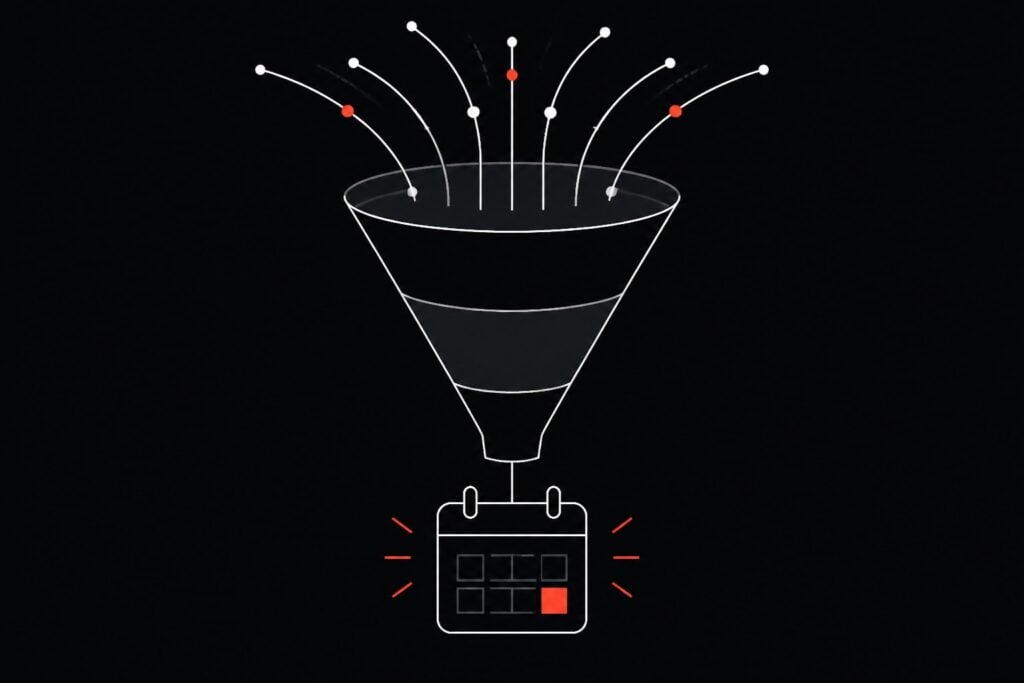
Web lead generation is the process of turning website visitors into identified prospects, then into booked sales conversations. For B2B teams, it works when paid traffic, a focused landing page, fast follow-up and automated scheduling operate as one system instead of four separate projects.
Most teams treat the website as a brochure and wonder why the calendar stays thin. The fix is rarely more traffic. It is a tighter path from first click to a booked meeting with a qualified buyer.
What Is Web Lead Generation?
Web lead generation is the practice of capturing contact details and buying intent from website visitors and routing them to sales. A website lead is a visitor who has identified themselves, usually through a form, a chat, or a booking page, and shown interest in a product or service.
Not every lead is equal. A newsletter signup is a contact. A visitor who books a 30-minute call after reading your pricing page is a sales-ready lead. Sales leaders get into trouble when they count both the same way and then wonder why reps ignore the CRM.
Example scenario: A B2B SaaS company with a $15,000 average contract value gets 400 form fills a month, but only 12 turn into meetings. The problem is not volume. Half the forms ask for a "demo" without any qualification, and follow-up takes a day. Fixing those two things will do more than doubling ad spend.
Why Does Web Lead Generation Still Matter for B2B Sales Teams?
Web lead generation matters because buyers research on their own before they ever talk to a rep, and your site is where that research happens. In Endeavor Business Media's 2024 survey, 55% of B2B marketers named website marketing among their most effective lead-generation tactics.
The same survey found that 57% of respondents said finding the right tactic to drive quality leads was a challenge. That matches what sales leaders report: volume is easy to buy, quality is not.
Buyer behavior explains the pressure. A 2025 survey of senior decision-makers found that most B2B buyers consider self-service tools critical when choosing a vendor. If a buyer cannot find answers or book a time without waiting for an email reply, they move to the next vendor.
My position is plain: cold outreach and event booths are a poor foundation for a predictable pipeline in 2026. Inbound web leads from paid and organic channels cost less to scale and are easier to measure, provided the follow-up is fast.
What Are the Main Types of Lead Generation?
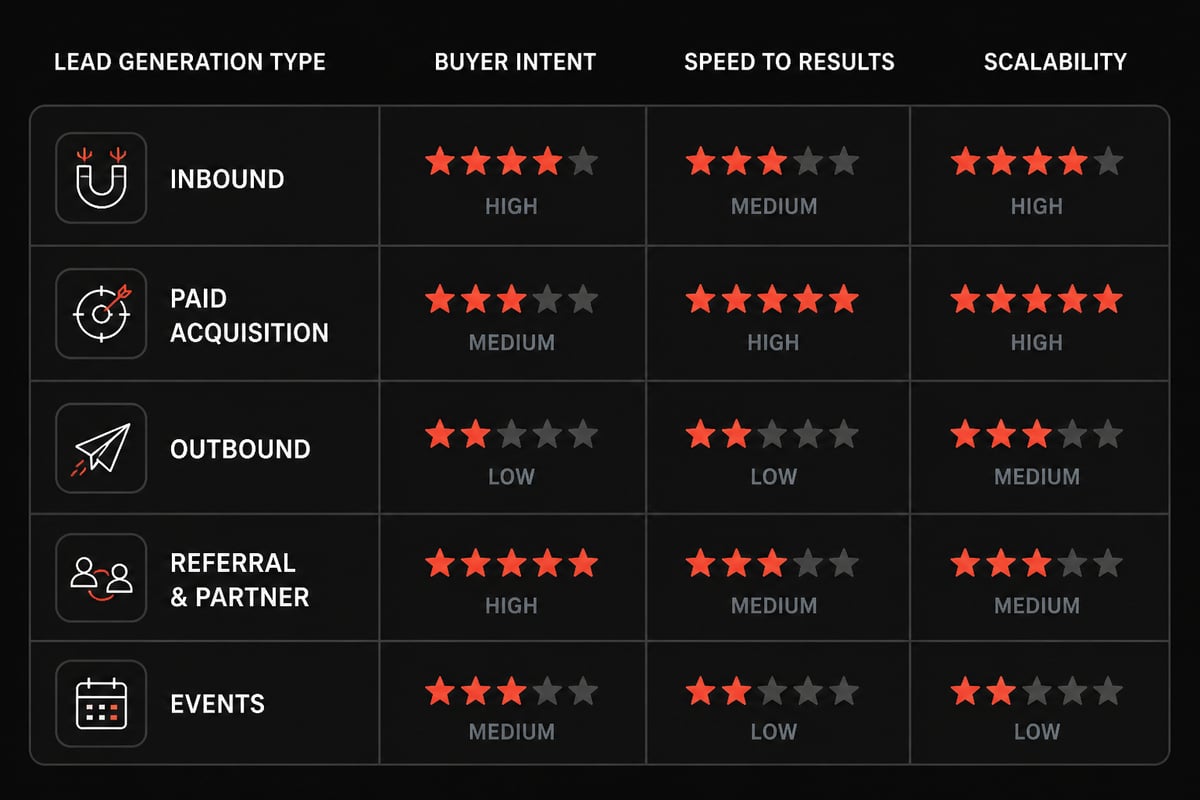
The main types of lead generation are inbound, outbound, paid, referral and partner-sourced. Each one produces leads at a different cost and level of intent.
- Inbound: Content, search and your website attract buyers who are already looking. Intent is high, but volume builds slowly.
- Paid acquisition: Ads on search and social send targeted traffic to a landing page. This is the fastest way to test demand.
- Outbound: Cold email, cold calling and LinkedIn outreach reach buyers who did not ask to hear from you. Response rates are low and brand risk is real.
- Referral and partner: Existing customers and allies introduce you. Quality is excellent, but you cannot scale it on demand.
- Events and webinars: Strong for relationship building, expensive per qualified meeting, and hard to repeat monthly.
For a deeper breakdown of how these fit together, Aletto's guide to building a lead generation strategy walks through channel selection by sales cycle length.
How Do You Build a Website That Actually Generates Leads?
A lead generation website has one job: move a qualified visitor to one clear next action. Everything else on the page either supports that action or competes with it.
Google's SEO Starter Guide describes SEO as helping search engines understand your content and helping users find your site. That is the foundation, but ranking only matters if the page converts the visitors it earns.
Five elements carry most of the weight:
- A specific value proposition. State who the product is for and what outcome it delivers, in one sentence above the fold.
- A dedicated landing page per offer. Sending ad traffic to a homepage with twelve navigation links is the most common waste of budget I see.
- A short form. Ask for name, work email and one qualifying question. Every extra field cuts completions.
- Proof near the action. Customer results, logos and specific numbers belong next to the button, not on a separate page.
- A booking step immediately after the form. The moment someone submits is the moment their intent peaks. Do not make them wait for a rep to email back.
Example scenario: A service business selling $4,000-per-month retainers replaces a "Contact us" form with a three-field form followed by a calendar. Leads that used to sit for two days in an inbox now land on the calendar within minutes of the form submit. Show rates improve because the prospect chose the slot themselves.
Aletto's article on how to build a lead generation website covers page structure in more detail.
How Do You Drive Qualified Traffic to Your Site?
Qualified traffic comes from matching your offer to what a buyer is already searching for or reacting to, then measuring each source against booked meetings rather than clicks. Traffic that never books a call is expensive noise.
Three sources deserve attention for B2B teams:
- Search (organic and paid): Capture buyers using problem-based and comparison keywords. Paid search gives you data in days, which helps you decide what to build for organic.
- Paid social: LinkedIn and Meta reach buyers before they search. Creative built from your customers' actual words outperforms generic feature claims.
- Content with a clear offer: A useful guide or report that sits on a landing page with a single call to action.
Whatever you run, tag every link so you know what produced a meeting. A link intelligence tool such as Trimy can handle link tracking, A/B tests and routing, so you see which campaign link produced a booked call and not just a click.
What does not work: buying a contact list and calling it web lead generation. A list is outbound with extra steps, and it carries all the same deliverability and reputation problems.
Why Does Speed to Follow-Up Decide Whether a Lead Becomes a Meeting?
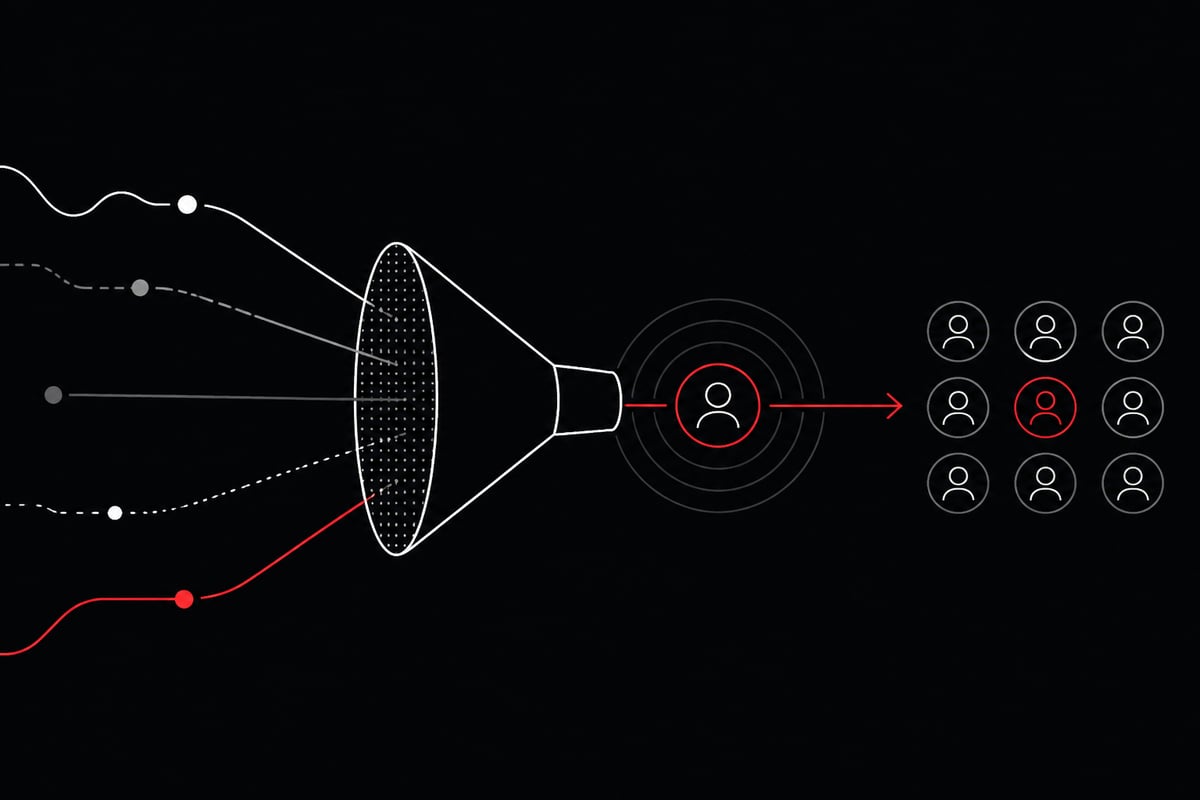
Speed to follow-up decides conversion because buyer interest fades within hours, and a slow reply gives a competitor the opening. A lead who submitted a form at 2 p.m. is comparing options at 2:05 p.m.
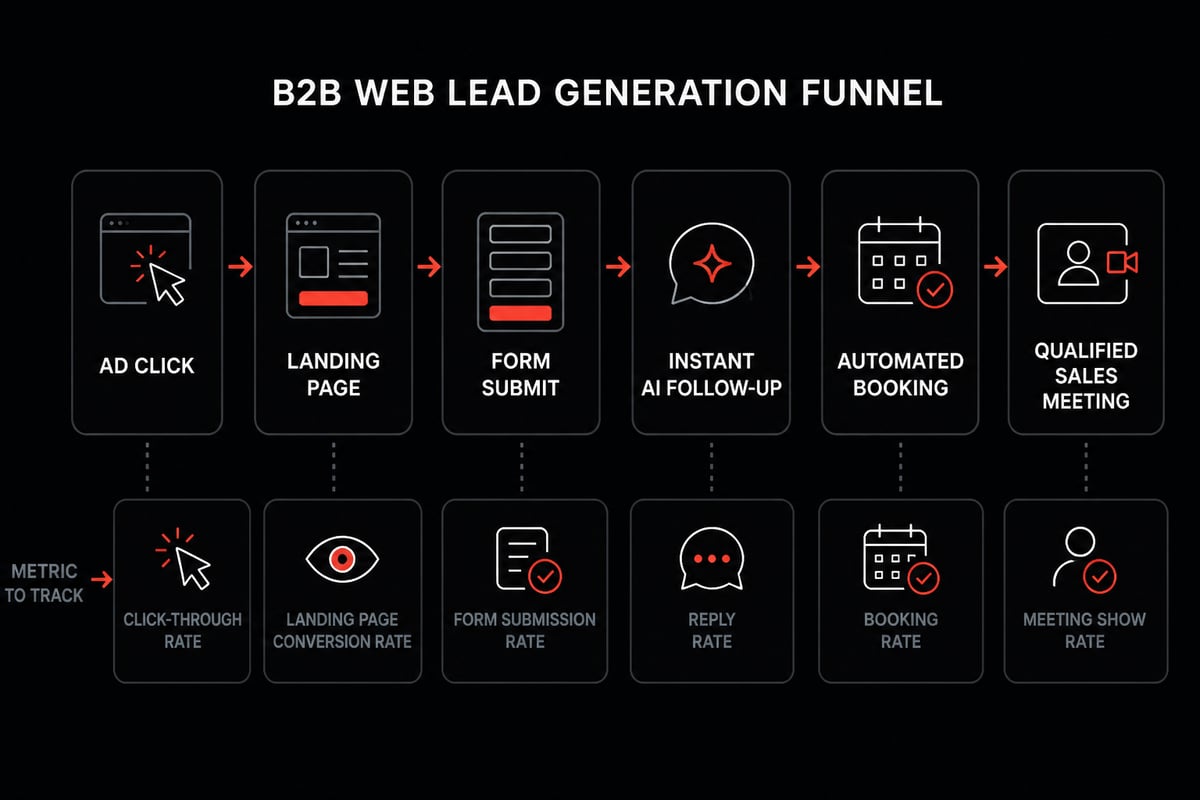
This is where most web lead generation programs leak. The ads and landing page work, then the lead waits for a human who is in another meeting. AI follow-up solves the timing problem: it replies instantly, asks one or two qualifying questions, answers common objections and offers a booking link while the buyer is still engaged.
At Aletto, this is the core of how we run every client account. Paid acquisition, AI follow-up and automated booking work as one system, and only qualified prospects reach a rep's calendar, so your team walks in ready to close.
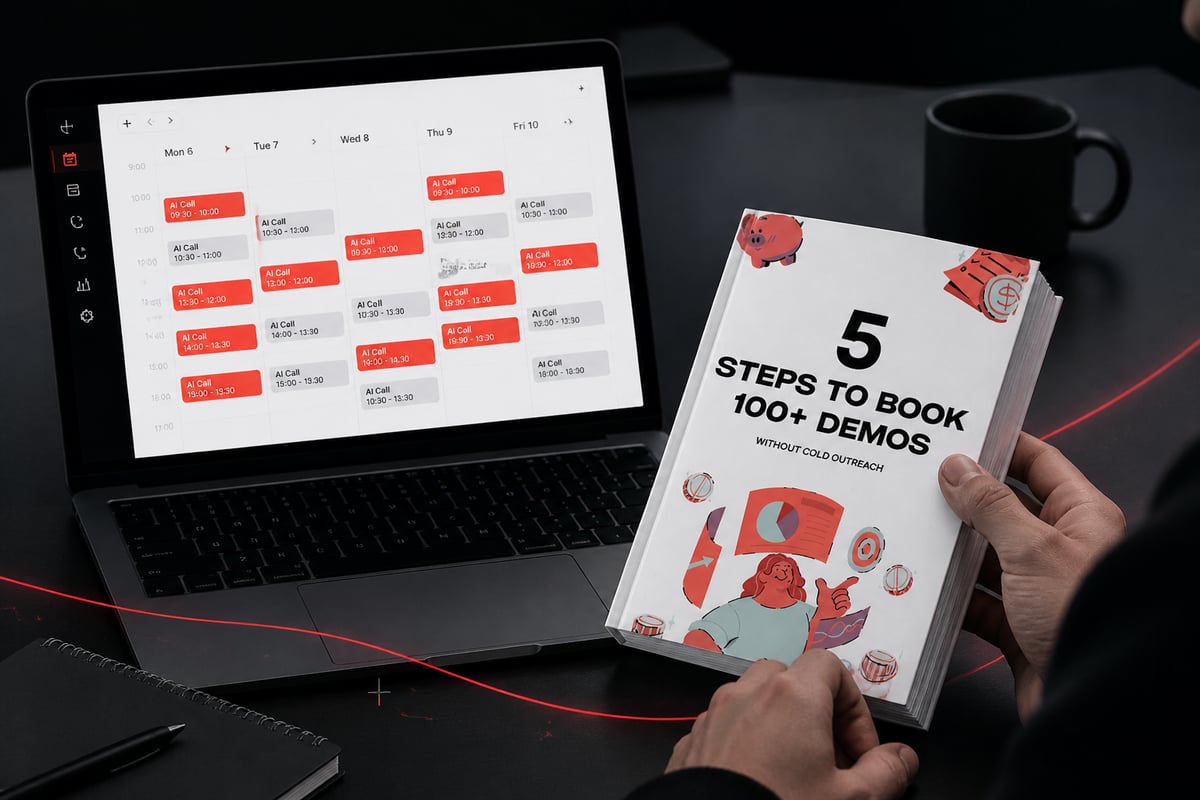
The Free AI Call Booking Report shows how that system booked 1,122 qualified sales calls in 11 months without cold emails, cold calls, LinkedIn outreach, events or referral begging.
What Should You Measure in Web Lead Generation?
You should measure cost per booked meeting, meeting-to-opportunity rate and pipeline value by source, because form fills and clicks do not pay salaries. Vanity numbers hide the real efficiency of your program.
A workable scorecard has five lines:
| Metric | What it tells you |
|---|---|
| Landing page conversion rate | Whether the offer and page match the traffic |
| Lead-to-meeting rate | Whether follow-up and qualification work |
| Show rate | Whether the prospect actually wanted the call |
| Cost per booked meeting | The real price of a sales conversation |
| Customer acquisition cost | Whether the whole system is profitable |
Attribution is the weak point for most teams. Platform dashboards over-claim credit, so a third-party attribution tool is worth the cost. Aletto's client results are verified by Hyros, and across managed accounts we have seen the average customer acquisition cost fall by 34%. Aletto has managed over $50M in ad spend, and 64% of client campaigns reach a home-run rate of 10x ROI or more. Those numbers come from disciplined testing: underperforming creative is cut, not monitored.
For a closer look at tracking, see Aletto's guide to SaaS lead generation tracking and attribution.
How Do You Qualify Web Leads Before They Reach Your Reps?
You qualify web leads by asking two or three questions before the booking step and by routing out anyone who does not fit your buyer profile. A rep's time is the most expensive asset in the funnel, so protect it.
Good qualifying questions are specific and quick to answer: company size, the problem they want to solve, and timeline. Avoid asking for a budget in the first form, since most buyers will not state it to a stranger.
Example scenario: A SaaS team sells to companies with 50 or more employees. A one-question dropdown for company size sends smaller companies to a self-serve resource and sends qualified leads to the calendar. Reps stop spending Tuesday afternoons on calls that never could close.
For frameworks on scoring and handoff, Aletto's piece on lead generation and qualification covers the criteria in detail.
Which Software Is Best for Web Lead Generation?
The best software is the smallest stack that covers four jobs: capture, follow-up, booking and attribution. A CRM such as HubSpot handles capture and records, a scheduling layer handles booking, and an attribution tool shows which spend produced meetings.
Buying more tools rarely fixes a weak funnel. Teams often run eight platforms that do not share data, then cannot tell which ad produced which call. Pick tools that integrate with your CRM, then decide what each one is accountable for.
If you are comparing options, Aletto has reviewed AI lead generation tools for B2B with a focus on what each tool does after the form is submitted. A 2025 buyer-experience study from 6sense is also useful context on how buyers behave before they contact a vendor.
A word of caution: software does not replace a managed system. If no one owns creative testing, kill decisions and follow-up quality, the tools just record your problems more neatly.
What Is the 3 3 3 Rule in Sales?
The 3 3 3 rule is a prospecting guideline that asks reps to spend three minutes researching a lead, three minutes personalizing the outreach and three touches over a short window before moving on. It is a useful discipline for outbound.
For web leads, the principle shifts. The lead raised their hand, so research should happen before the reply, automatically. That is why instant AI follow-up with enrichment beats a rep manually writing three emails to someone who already asked for a call.
Frequently Asked Questions
What are website leads?
Website leads are visitors who share contact details or book a call through your site, signaling interest in what you sell. They range from low-intent contacts, such as newsletter subscribers, to sales-ready prospects who booked a meeting after viewing pricing or a demo page.
How long does web lead generation take to produce meetings?
Paid campaigns can produce booked meetings within the first few weeks, since you control traffic directly. Organic search takes months to build. Most B2B teams run paid acquisition first to validate the offer and landing page, then layer content on top.
Do I need cold outreach alongside web lead generation?
No. Inbound web leads from paid and organic channels can fill a calendar without cold email or calling, provided follow-up is fast and qualification is built in. Cold outreach adds brand and deliverability risk, so treat it as optional, not required.
How many form fields should a B2B landing page have?
Three to five is a reasonable range: name, work email, company size and one qualifying question. Every added field reduces completions, so only keep the fields your reps need to decide whether a call is worth taking.
Your next step is to audit one landing page this week: count the fields on its form, time how long a new lead waits for a reply, and check whether a booking calendar appears right after submit. If those three answers are weak, you are paying for traffic that never reaches your reps. The Free AI Call Booking Report shows how Aletto built a system that booked 1,122 qualified sales calls in 11 months, and you can start free training with Aletto to see how paid acquisition, AI follow-up and automated booking could fill your own calendar.