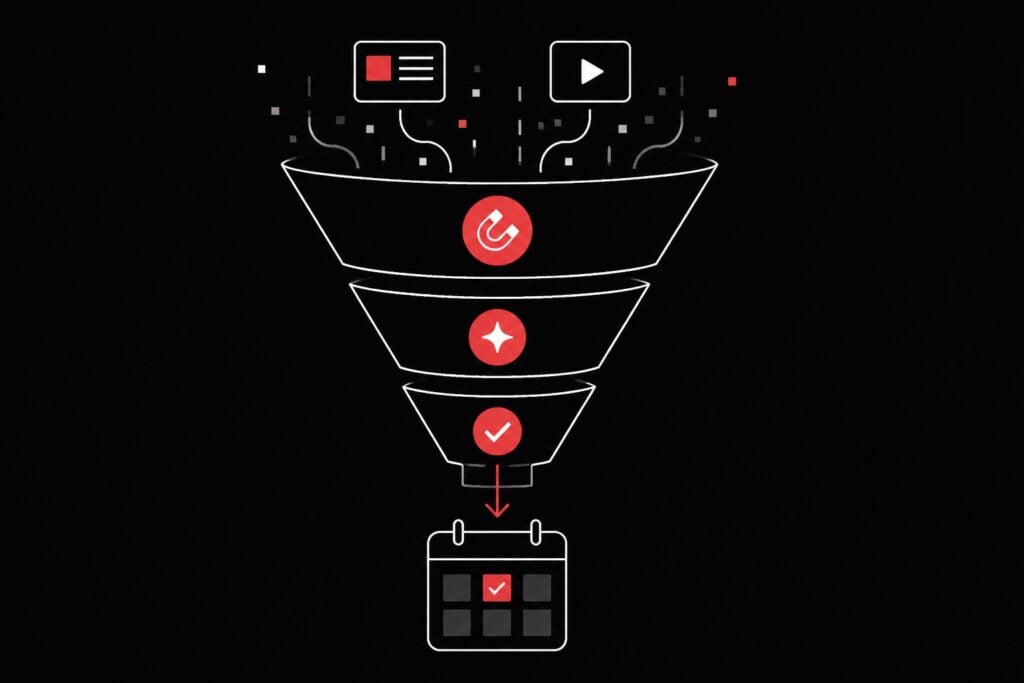
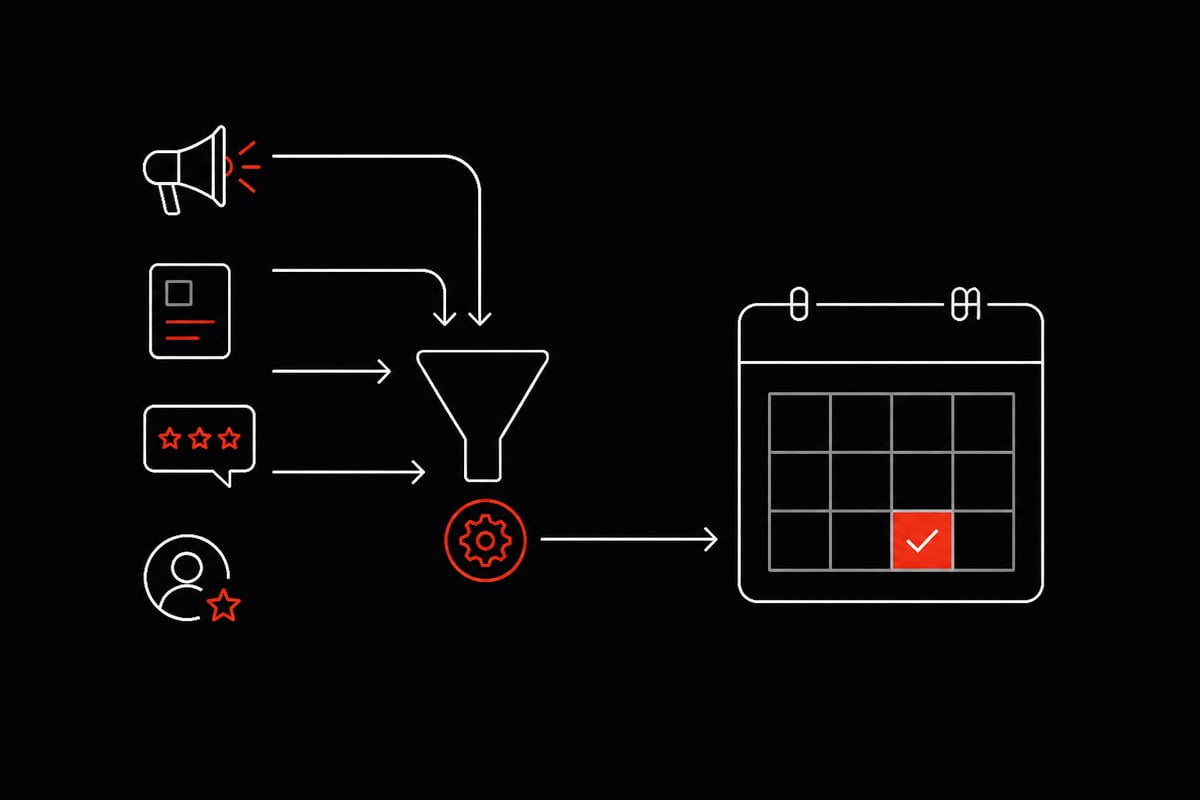
A lead generation marketing funnel is the system that turns strangers into qualified prospects and then into booked sales meetings, moving them through awareness, interest, evaluation and conversion. For B2B teams, a working funnel does one job: it puts the right buyers on your reps' calendars without relying on cold outreach.
Most funnels fail for the same reason. They collect names but never qualify them, so reps spend their week sorting through contacts who were never going to buy. The rest of this guide covers how each stage works, what to build at each one, and which numbers tell you the funnel is healthy.
What Is a Lead Generation Marketing Funnel?
A lead generation marketing funnel is a staged process that attracts a target audience, captures their contact details, qualifies their intent and hands the best prospects to sales. It narrows on purpose. Many people enter at the top, and only a small share reach a sales conversation.
Lead generation, in marketing terms, means attracting people who show interest in what you sell and getting their permission to follow up. The funnel is the structure around that activity: the channels that bring people in, the offers that capture them, the follow-up that warms them and the booking step that converts them into meetings.
It helps to separate two terms. A lead generation funnel ends at a qualified meeting. A sales funnel, the digital marketing term for the path from first contact to closed deal, picks up from there and covers discovery calls, proposals and negotiation. Marketing owns the first. Sales owns the second. The handoff between them is where most pipeline leaks.
How Does the Funnel Break Into Stages?
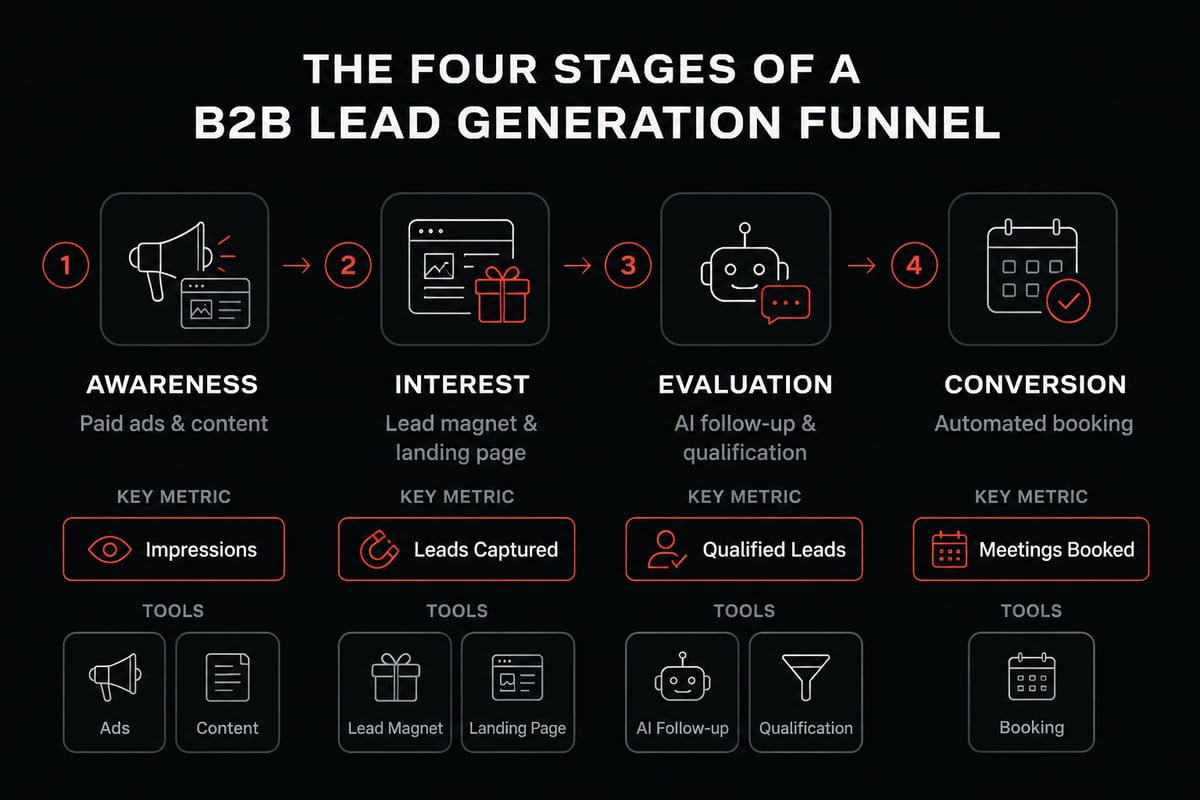
The funnel has four working stages: awareness, interest, evaluation and conversion. Each stage has one job and one metric.
| Stage | Buyer question | What you build | Metric to watch |
|---|---|---|---|
| Awareness | "Does anyone solve this problem?" | Paid ads, search content, video | Cost per click, cost per lead |
| Interest | "Is this relevant to my situation?" | Lead magnets, landing pages | Landing page conversion rate |
| Evaluation | "Can I trust you and is it worth my time?" | Automated follow-up, proof, qualification | Lead-to-qualified rate |
| Conversion | "Can I talk to someone this week?" | Instant booking, reminders | Show rate, meetings booked |
Hypothetical example: a B2B SaaS company selling scheduling software to clinics runs a short video ad aimed at practice managers. Those who click land on a one-page offer, submit an email, and receive a message within minutes asking two qualifying questions. Practice managers who fit the target profile see a booking link. Everyone else stays in a lighter nurture track. Four stages, one clear action at each.
Why Does the Linear Funnel Fall Short for B2B Buyers?
The classic funnel assumes buyers move in a straight line, and B2B buyers do not. They research alone, loop back, bring in colleagues and often decide on a vendor before they ever talk to sales.
The data backs this up. In the TrustRadius 2024 survey, most enterprise buyers had shortlisted a product they already knew before beginning research. If your brand is not on that list when the buyer starts looking, no amount of bottom-funnel polish will fix it.
Timing matters too. G2's 2024 survey of more than 1,900 software buyers found that the research stage was named the most useful time for a salesperson to contact them, ahead of evaluation and discovery. That argues against waiting until a prospect fills out a "contact sales" form. The buyers worth reaching are often reachable earlier, as long as the outreach is useful and invited.
My position: treat the funnel as a loop you can re-enter at any point, not a conveyor belt. Build for the buyer who has been quietly researching for weeks, and make the booking step available at every touchpoint.
How Do You Build the Top of the Funnel Without Cold Outreach?
Build the top of the funnel with paid acquisition aimed at a precisely defined buyer, using creative written in that buyer's own language. Cold email and cold calling add friction and damage domain reputation. Paid channels let you reach the same people when they are already scrolling, searching or watching.
Three habits separate productive ad programs from expensive ones:
- Define the buyer narrowly. Job title, company size and the specific problem you solve. "B2B companies" is not a target.
- Write from real buyer language. Pull phrases from sales calls, reviews and support tickets. Ad copy that sounds like the buyer's own thinking outperforms copy that sounds like a brand.
- Cut losers fast. Set a spend threshold and a cost-per-lead ceiling in advance. Creative that misses gets turned off, not "monitored for another week."
Aletto runs every ad account on that last rule. Underperforming creative is cut, new creative is tested weekly, and clients see every dollar of ad spend with no black box. Across its client work, Aletto has managed over $50M in ad spend.
Brand also pulls weight at this stage. Brand also matters at this stage, since trust and relevance carry real weight with B2B buyers, which supports pairing direct-response ads with consistent, credible messaging.
What Belongs in the Middle of the Funnel?
The middle of the funnel holds the offer, the landing page and the follow-up that together convert interest into a qualified lead. This is where most B2B funnels leak, because the offer is generic and the follow-up is slow.
Start with the offer. A generic ebook attracts downloaders, not buyers. A utility asset that solves a small, real problem, such as a benchmark report, a teardown or a calculator, signals buying intent far better. Offers tied to a specific outcome qualify themselves, because only people who care about that outcome will request them.
Then the landing page. Keep the form short, make one promise and remove navigation. Every extra field costs you leads, and every extra link gives them somewhere to leave.
Then speed. The first response should land in minutes, not the next business day. AI follow-up handles this well: it answers immediately, asks the qualifying questions a rep would ask and routes the prospect accordingly. For a closer look at how scoring and screening work in practice, see Aletto's guide to lead generation and qualification.
What does not work: dumping every form fill into a rep's inbox and calling it a handoff. Unqualified volume trains reps to ignore marketing.
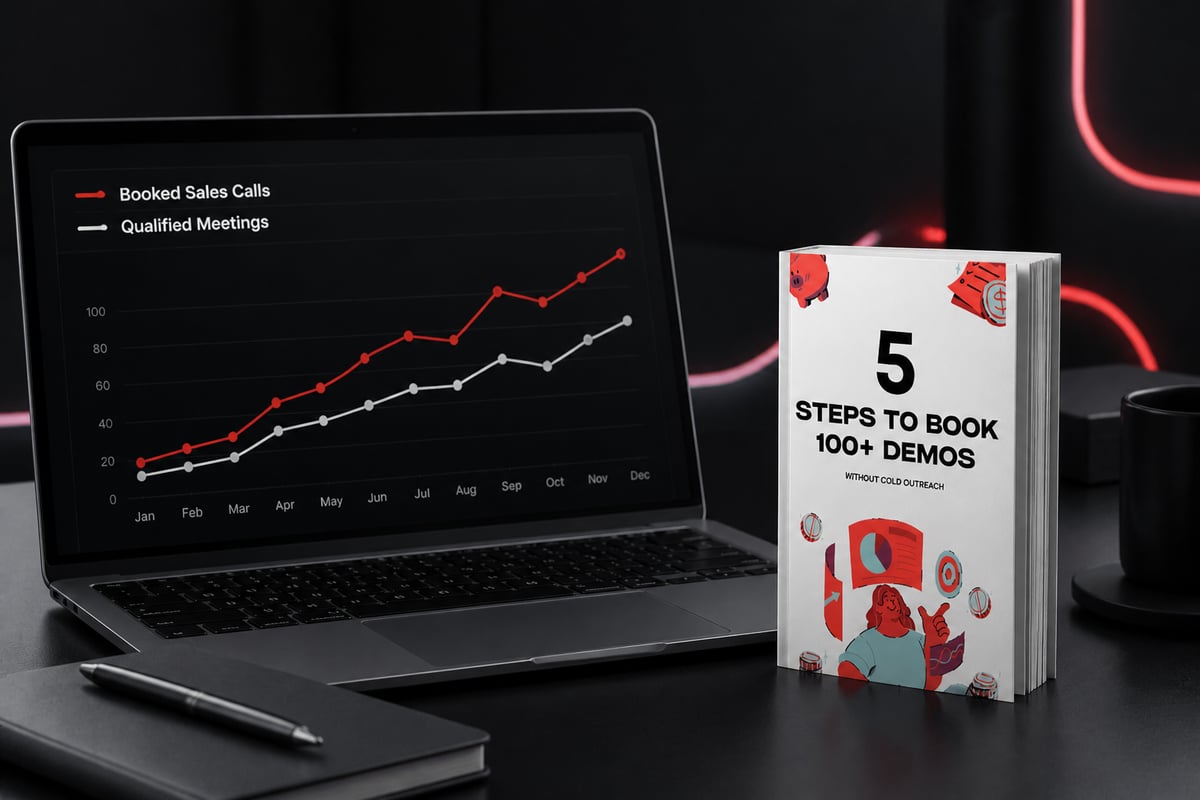
For a view of what this looks like at volume, the Free AI Call Booking Report shows how Aletto books qualified sales calls without cold emails, cold calls, LinkedIn outreach or events.
How Do You Convert Qualified Leads Into Booked Meetings?
You convert qualified leads by removing every step between "I'm interested" and a confirmed time on a rep's calendar. Automated booking, shown immediately after qualification, does this better than a "we'll be in touch" message.
Three mechanics matter:
- Show the calendar at the moment of intent. The booking link goes on the thank-you page and in the first follow-up message, not three emails later.
- Qualify before the calendar appears. Only prospects who fit your criteria see open slots. Reps then walk into meetings ready to close instead of screening.
- Confirm and remind automatically. Reminders by email and text protect your show rate.
Buyers also move quickly once they decide. The same TrustRadius survey found that most buyers completed their purchase within six months, and enterprise buyers were less likely to do so. A slow handoff can cost you a deal that was already in motion.
Hypothetical example: a managed IT services firm gets a steady stream of form submissions each week. Without qualification, a rep spends hours returning calls and books meetings, many of them poor fits. With automated qualification and booking, most of the submissions that pass screening book themselves, and the rep spends the saved hours preparing for those calls.
Which Metrics Show Whether the Funnel Works?
Track cost per qualified lead, lead-to-meeting rate, show rate and cost per meeting held, because those four numbers expose where the funnel is leaking. Vanity numbers like impressions and raw lead count tell you very little about pipeline.
- Cost per qualified lead: ad spend divided by leads that passed screening, not total form fills.
- Lead-to-meeting rate: the share of qualified leads that book.
- Show rate: booked meetings that actually happen.
- Cost per meeting held: total spend divided by completed meetings. This is the number to compare against deal value.
Attribution deserves care. If you cannot tie a closed deal back to the ad and message that started it, you will cut the wrong campaigns. Aletto's attribution is verified by Hyros, and the same principle applies whatever stack you use. Set up event-based conversions so every stage is measured the same way, and Google's documentation on creating conversions from Analytics events is a practical starting point. For a deeper look at tracking, Aletto's guide to SaaS lead generation tracking and attribution covers the setup.
Set expectations with buyers' own timelines in mind, too. G2's 2024 survey found that most buyers expected positive ROI within three months, so your funnel should surface proof points that speak to fast payback.
How Many People Are Really Involved in the Buying Decision?
More than one, and your funnel has to account for the whole committee. Forrester's 2024 State of Business Buying report examines how buying complexity has grown and how marketing and sales teams can support group decisions.
In practice, a single champion fills out your form, but a finance lead, a technical evaluator and an executive sponsor all have a say. If your follow-up speaks only to the champion, you leave the deal's hardest conversations to chance.
Two adjustments help. Create short, forwardable assets for each role, such as a one-page ROI summary for finance and a security overview for IT. And invite the champion to bring colleagues to the booked meeting, so the first call already includes the people who can say yes.
This is also where a funnel stops being purely about volume. A smaller number of well-qualified, well-informed accounts beats a large pool of single-contact leads.
Where Should You Start If Your Funnel Is Underperforming?
Start at the handoff between marketing and sales, because that is where qualified interest most often turns into lost pipeline. Before spending more on ads, check how fast leads get a response and how many qualified leads fail to book.
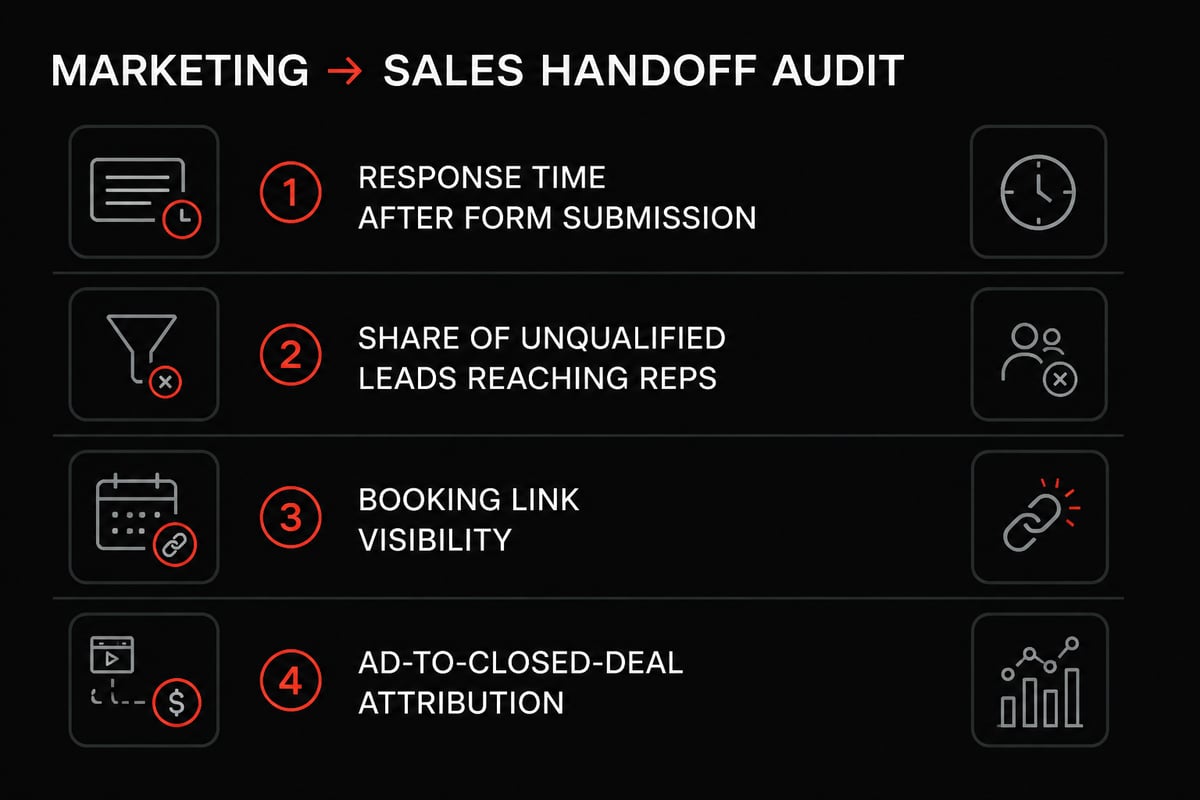
Run this short audit:
- Time the gap between a form submission and the first human or AI response.
- Count how many submissions reach reps unqualified.
- Compare your booking link's visibility against the number of clicks it gets.
- Check whether each ad can be traced to a booked meeting and a closed deal.
If two or more of those are weak, adding spend at the top will multiply the waste. Fix the middle first. Aletto's overview of the funnel system for marketing lays out how the pieces connect.
One small note on tooling beyond the funnel itself: for teams coordinating internal meeting schedules across several people, Groop Labs offers a coordination tool that handles scheduling logistics and presents clear options, which can cut the back-and-forth of finding a time.
Does Lead Generation Only Work Through Forms and Ads?
No, but forms and ads are the most controllable inputs, which is why they anchor a predictable funnel. Referrals, partnerships, organic search and events all feed pipeline, but they are hard to scale on demand and hard to measure cleanly.
The best funnels combine channels without losing discipline. Paid acquisition supplies repeatable volume, content and review sites support trust, and automated follow-up converts both. Public review sites matter more than many teams assume: G2's 2024 buyer survey found they were among the most consulted sources for buyers planning a company purchase. Keep your profiles current and your proof visible, because buyers will check them before they book.
Frequently Asked Questions
What is meant by lead generation in marketing?
Lead generation is the process of attracting people who show interest in your product or service and capturing their contact details so you can follow up. In B2B, it usually means turning ad clicks, content downloads or form fills into qualified prospects who can be booked into sales meetings.
What is the sales funnel in digital marketing?
The sales funnel in digital marketing is the path a prospect takes from first online contact to closed deal, typically moving through awareness, interest, evaluation and purchase. Lead generation covers the early stages up to a qualified meeting. The sales team then manages discovery, proposal and close.
Is lead generation illegal?
No, lead generation is legal when it follows consent and privacy rules. Collect contact details with clear permission, honor opt-outs and comply with regulations such as CAN-SPAM, GDPR and local telemarketing laws. Buying unverified lists and ignoring unsubscribe requests are where most legal and deliverability problems start.
How is a lead generation funnel different from a sales funnel?
A lead generation funnel ends when a qualified prospect books a meeting. A sales funnel begins there and runs through to a signed deal. Separating them lets you measure marketing on qualified meetings and sales on close rate, which makes it clear where each team needs to improve.
Pull up your last 30 days of leads and time how long each one waited for a first response, since that single number usually shows where the funnel is leaking. If you want to see what a fully connected system looks like, Aletto's Free AI Call Booking Report breaks down how its paid acquisition, AI follow-up and automated booking produced 1,122 qualified calls in 11 months. To learn how that system is built for your own pipeline, start free training and see how a managed lead generation marketing funnel fills a calendar without cold outreach.