


In 2025, lead gen sales is more competitive, data-driven, and automated than ever before. The way buyers research and make decisions is shifting, and only the most adaptable sales teams will thrive.
This guide gives you the latest frameworks, actionable strategies, and proven tools to master lead gen sales in today’s dynamic environment. You will discover the essentials of modern prospecting, learn how to blend inbound and outbound tactics, and see how AI can fill your pipeline with high-quality leads. Apply these insights now to outperform the competition and hit your sales targets with confidence.
Understanding Lead Generation in 2025
The world of lead gen sales is transforming rapidly in 2025. What once worked for filling your pipeline may now fall flat. To win in this environment, you need to understand how the definition of a lead, the purpose of lead generation, and the latest trends have all evolved.
The Evolving Definition of a Sales Lead
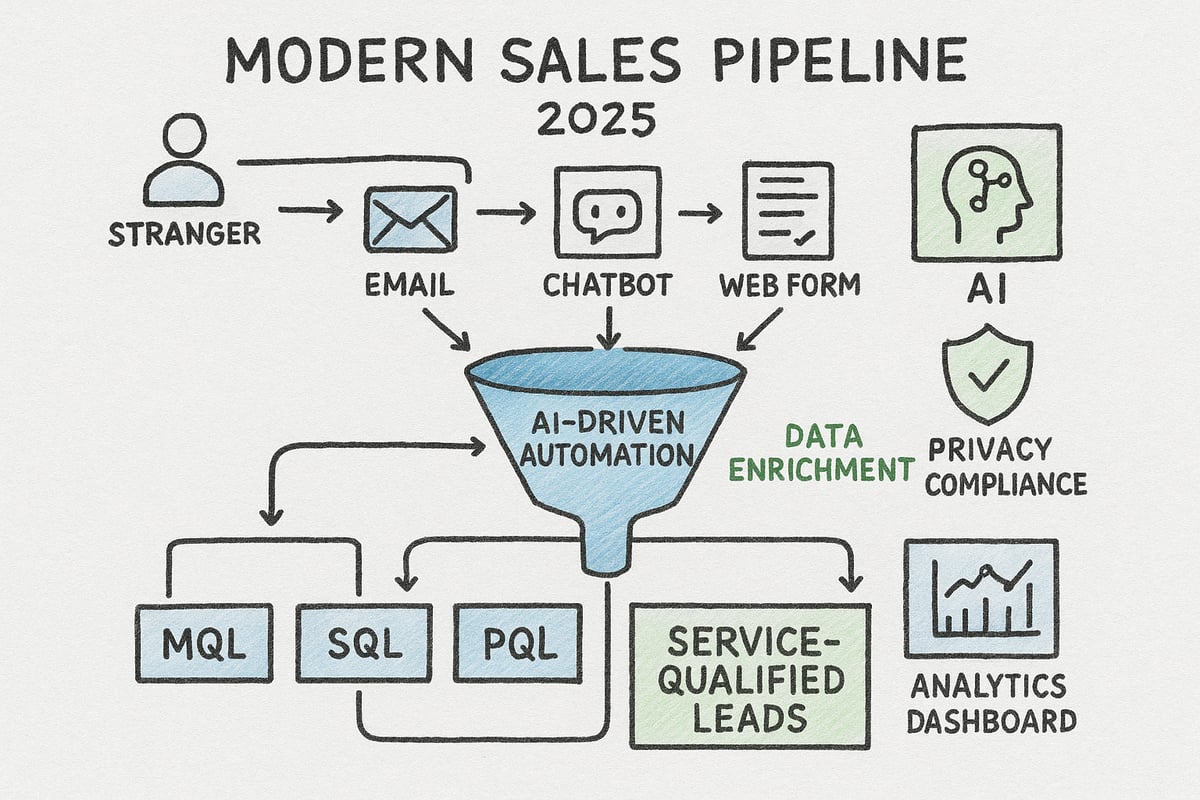
In 2025, a lead is no longer just a name and email on a spreadsheet. The bar has risen. Today, lead gen sales teams prioritize intent, engagement, and qualification. High-quality leads are those who have shown real interest, fit your ideal customer profile, and are ready for action.
There are several types of leads you’ll encounter:
| Lead Type | Description |
|---|---|
| MQL (Marketing Qualified) | Interested, fits marketing criteria |
| SQL (Sales Qualified) | Ready for sales engagement |
| PQL (Product Qualified) | Used product, shown buying signals |
| Service-Qualified | Interested in a specific service |
Industry leaders like Salesforce and Zendesk agree: it’s better to have fewer, higher-quality leads than a bloated list of cold contacts. For example, a simple web form, when combined with behavioral data, can turn a stranger into a hot lead. According to Zendesk, 50% of marketers see higher conversion rates when using lead magnets to capture intent.
Modern lead gen sales depend on multi-channel, data-enriched profiles. To master these strategies, check out Proven lead generation strategies for actionable frameworks that work in today’s market.
Why Lead Generation is Critical for Sales Success
A steady stream of qualified leads is the lifeblood of predictable revenue. Lead gen sales is about more than filling the top of your funnel—it’s about building trust and credibility with every prospect interaction.
When you deliver value at every touchpoint, you earn the right to progress conversations. This approach bridges the gap between marketing and sales, ensuring both teams are aligned on what makes a lead sales-ready.
Here’s the impact:
- Companies with robust lead gen sales processes see higher ROI and faster sales cycles.
- AI and automation save time, letting your team focus on building relationships.
- Businesses using these tools report measurable increases in conversion rates, according to Salesforce.
Ultimately, effective lead gen sales gives your team the confidence that every hour spent prospecting is invested in real opportunities. This alignment fuels growth, drives efficiency, and positions you ahead of competitors.
Key Lead Generation Trends for 2025
To stay ahead in 2025, you need to embrace the trends shaping lead gen sales. AI-powered lead scoring and automation are now essential for qualifying and prioritizing prospects at scale.
Personalization is another game-changer. Segmentation by behavior, interest, and lifecycle stage boosts engagement rates and moves leads through the funnel faster.
But with great data comes great responsibility. Privacy, consent, and compliance are non-negotiable. Modern buyers expect transparency and control over their information.
Finally, omni-channel integration is the new standard. Successful lead gen sales teams blend social media, email, live chat, and even SMS to reach prospects wherever they are.
Staying current with these trends ensures your lead gen sales strategy remains relevant, compliant, and highly effective.
Inbound and Outbound Lead Generation Strategies
Lead gen sales in 2025 require a blend of creativity, automation, and precision targeting. The secret lies in mastering both inbound and outbound strategies to reach high-quality prospects wherever they are. Let’s break down both approaches and see how you can balance them for unstoppable pipeline growth.
Inbound Lead Generation: Attracting High-Intent Prospects
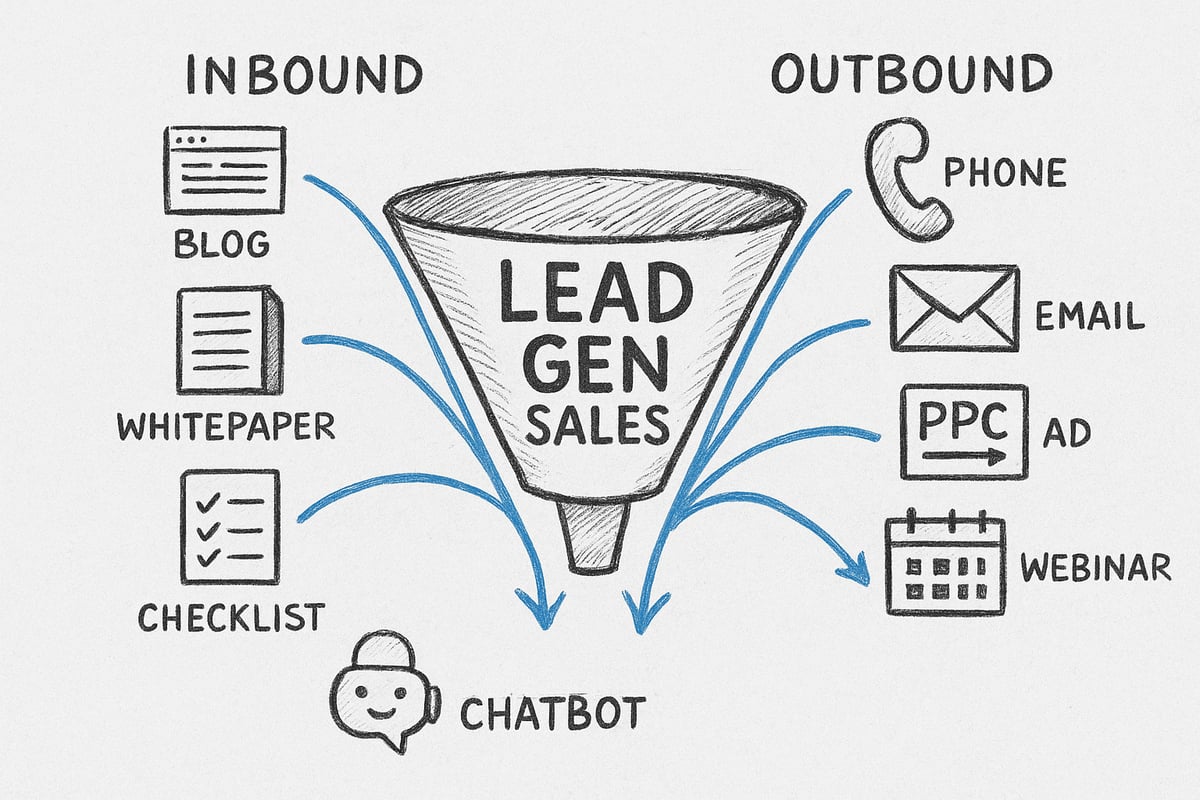
Inbound lead gen sales focus on drawing prospects to you with valuable, relevant content. In 2025, your inbound engine needs to be data-driven and hyper-personalized.
Start with content marketing that targets buyer intent. SEO-optimized blogs, in-depth white papers, and original research attract visitors searching for solutions. According to Zendesk, marketers see conversion rates soar when using compelling lead magnets like discounts, ebooks, checklists, and webinars. For example, an outdoor gear company might offer a targeted checklist for hiking essentials, qualifying leads based on their interests and needs.
Website optimization is non-negotiable. High-converting landing pages, streamlined lead capture forms, and AI-powered chatbots make it easy for prospects to engage. Chatbots, in particular, enable instant qualification and handoff, boosting conversion rates and freeing your sales team to focus on closing.
Social media is another inbound powerhouse. Community building and direct engagement on platforms like LinkedIn or Instagram nurture trust and credibility. Remember, inbound lead gen sales are about attracting those who are already searching for what you offer—so make every touchpoint count.
Outbound Lead Generation: Proactive Prospecting
Outbound lead gen sales put you in the driver’s seat, allowing you to reach out directly to your ideal prospects. This approach is all about proactive engagement and smart targeting.
Traditional methods like cold emails and cold calling still work when personalized and data-informed. Modern sales teams use advanced prospecting tools to research and segment leads, ensuring every outreach feels tailored. Pay-per-click (PPC) ads and retargeting campaigns help keep your brand top-of-mind, especially for high-value accounts.
Direct mail and event outreach, while less common, can cut through the digital noise if executed thoughtfully. For example, a B2B software company might invite prospects to an educational webinar, using it as both a value-driven touchpoint and a qualification tool.
Sales automation is critical for outbound effectiveness. Tools that automate follow-ups, schedule appointments, and track engagement allow your team to scale efforts without sacrificing personalization. The key is to ensure every outbound interaction feels human, relevant, and timely, maximizing your lead gen sales opportunities.
Balancing Inbound and Outbound for Maximum Pipeline Health
The real magic in lead gen sales happens when you integrate inbound and outbound strategies for full-funnel coverage. Data from inbound channels can inform your outbound targeting, enabling you to approach prospects with context and relevance.
For example, companies that combine both strategies often see higher pipeline velocity and improved win rates. They use insights from inbound engagement—such as which content a lead downloaded or which webinar they attended—to personalize outbound messages and offers. This synergy creates a seamless buyer journey, reducing friction and increasing trust.
A recent Lead Generation Statistics & Trends 2025 report highlights that businesses leveraging multi-channel approaches outperform those relying on a single tactic. By aligning your inbound and outbound efforts, you ensure no opportunity slips through the cracks.
In summary, the most successful lead gen sales strategies in 2025 are dynamic, data-driven, and holistic. Embrace both inbound and outbound, harness automation, and continually optimize your approach for a thriving sales pipeline.
The 4-Step Lead Generation Process for 2025
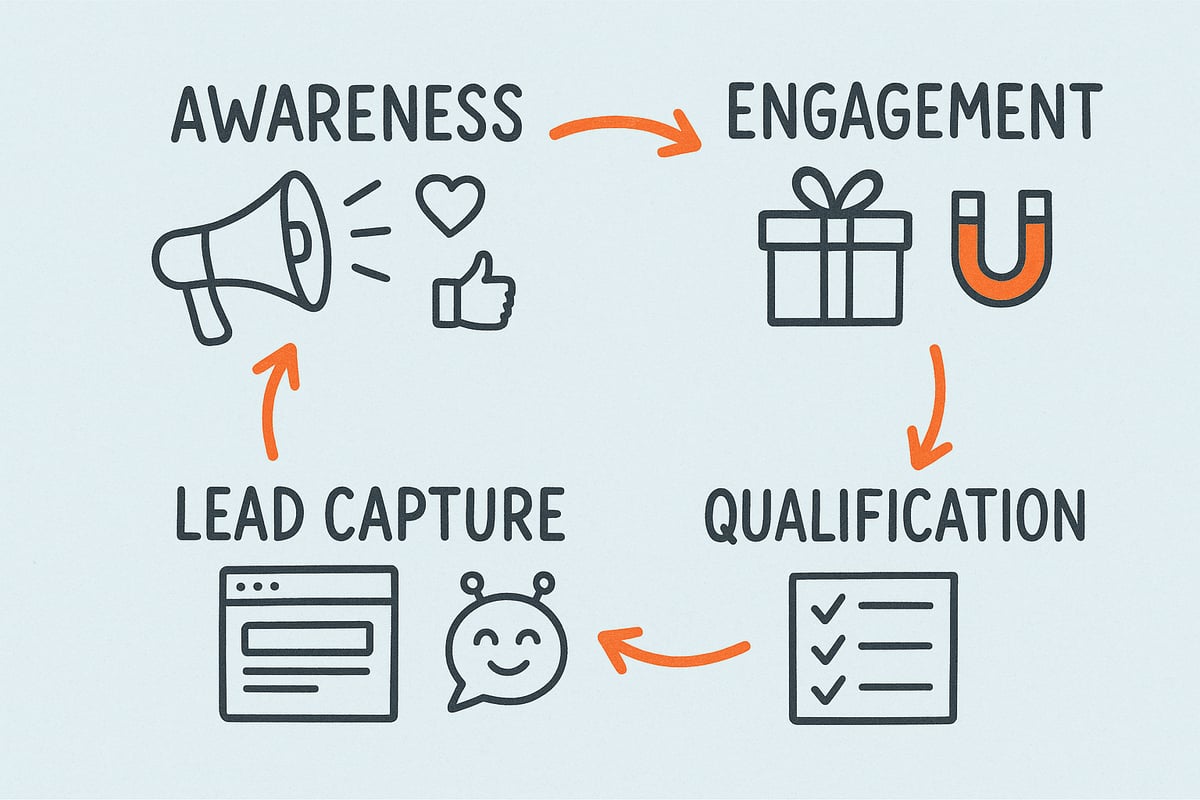
In 2025, winning at lead gen sales means following a proven, repeatable process that turns strangers into sales-ready prospects. A structured approach not only boosts your pipeline, but also ensures your team spends time on the leads most likely to convert. Let’s break down the essential four steps that high-performing sales teams rely on.
To see how this process drives results in real businesses, check out The complete sales funnel guide for a deep dive into sales funnel optimization.
| Step | Focus | Example Tactic |
|---|---|---|
| Awareness | Capturing attention | Multi-channel campaigns |
| Engagement | Compelling offers to drive action | Interactive content |
| Lead Capture | Optimized forms and chatbots | AI-powered chatbots |
| Qualification | Prioritizing sales-ready leads | Automated lead scoring |
Step 1: Awareness—Capturing Attention in a Crowded Market
The first step in any lead gen sales process is grabbing the attention of the right audience. In a noisy digital world, multi-channel campaigns are essential to break through. Combine blog content, social media, pay-per-click ads, and virtual events to maximize your reach and visibility.
Personalization is your secret weapon. AI tools can help segment your audience, allowing you to serve tailored content that resonates with each group. For example, a SaaS provider might use AI to identify key pain points and deliver targeted blog posts or ads. This approach ensures your lead gen sales efforts attract high-quality prospects from the start.
The goal is simple: get noticed and spark curiosity, so potential leads want to learn more about your solution.
Step 2: Engagement—Driving Action with Compelling Offers
Once you have their attention, your lead gen sales strategy needs to convert interest into action. This is where irresistible offers come in. Think about lead magnets such as discounts, ebooks, or exclusive webinars that provide real value.
Interactive content stands out in 2025. Quizzes, calculators, and live Q&A sessions encourage participation and help you learn more about your prospects. Gated content, like a white paper or industry report, can act as a qualifier for B2B leads, ensuring only serious prospects enter your pipeline.
The more engaging your offer, the more likely leads are to share their information and move closer to a buying decision.
Step 3: Lead Capture—Optimizing Forms and Chatbots
Effective lead gen sales depend on capturing prospect information with as little friction as possible. Keep your forms short and mobile-friendly—only ask for what you truly need at this stage.
AI-powered chatbots are game changers for real-time qualification. They greet visitors instantly, answer questions, and even schedule appointments, all while gathering key data. For instance, a chatbot can qualify leads based on their responses, automatically routing high-intent prospects to your sales team.
The result is a smoother user experience and higher conversion rates, making your pipeline stronger and more efficient.
Step 4: Qualification—Scoring and Prioritizing Leads
Not all leads are created equal. The final step in the lead gen sales process is qualification, where automation and analytics play a key role. Use behavioral and demographic data to score leads, prioritizing those most likely to buy.
Align marketing and sales teams on what makes a lead sales-ready. CRM analytics can reveal which prospects are engaging with your content, opening emails, or requesting demos. This data-driven approach means your team spends time on leads with the highest potential, shortening sales cycles and improving close rates.
By following these four steps, you create a scalable, predictable lead gen sales engine that consistently fills your pipeline with high-quality prospects.
Leveraging AI, Automation, and Tools in Lead Gen Sales
The world of lead gen sales is transforming rapidly as we enter 2025. AI, automation, and next-generation tools are rewriting the rules, allowing sales teams to work smarter, not harder. Staying ahead means embracing technologies that boost efficiency, personalize outreach, and optimize every stage of your pipeline.
The Impact of AI on Lead Generation
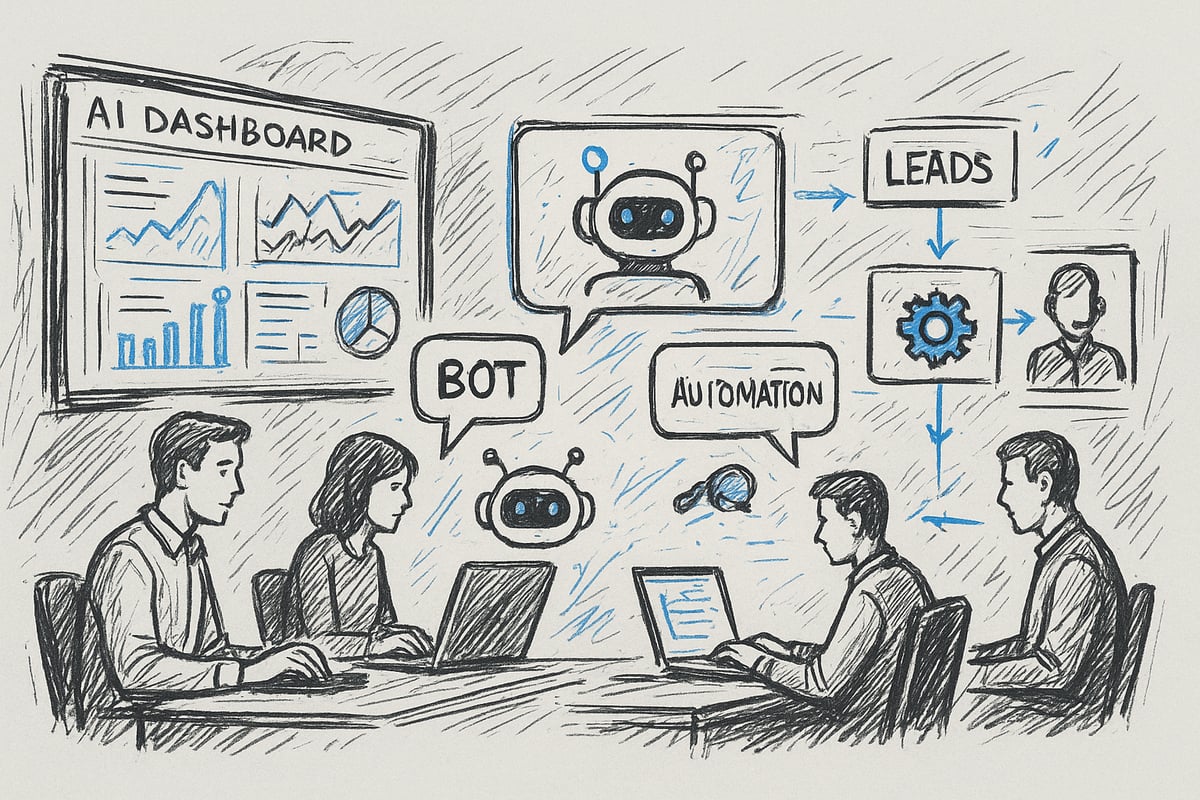
AI is the engine powering the next wave of lead gen sales success. Today, machine learning algorithms analyze massive datasets to score leads, predict buying intent, and recommend personalized next steps. This means sales teams can focus on prospects most likely to convert, saving time and increasing close rates.
AI-driven lead scoring is a game changer. It evaluates behavioral and demographic signals, prioritizing high-quality opportunities. These insights help you allocate resources where they matter most in lead gen sales. Imagine knowing which leads are ready to buy, and which need more nurturing—AI makes this possible.
Personalization at scale is another breakthrough. AI tools dynamically adjust messaging and offers for each prospect. Automated chatbots now engage leads 24/7, qualifying them instantly and booking meetings directly into your calendar. Businesses leveraging these AI-powered bots for lead nurturing often outperform traditional tactics. For real-world examples, check out how AI sales bots for lead nurturing are reshaping the sales landscape.
According to Salesforce, companies using AI in lead gen sales report improved conversion rates and greater efficiency. The data speaks for itself: AI not only accelerates the sales cycle but also delivers a more tailored, memorable experience for prospects.
Essential Lead Generation Tools for 2025
Choosing the right tech stack is vital for lead gen sales in 2025. CRM platforms have evolved into powerful hubs, integrating lead capture, scoring, and sales automation. These platforms centralize data, making it easy to track every interaction and optimize follow-up.
Marketing automation tools handle email campaigns, social media scheduling, and PPC ad management. By automating repetitive tasks, they free up sales reps to focus on building real relationships. Analytics platforms provide real-time insights, spotlighting bottlenecks and opportunities throughout your lead gen sales process.
Here’s a quick comparison of traditional vs. AI-powered lead gen sales tools:
| Feature | Traditional Tools | AI-Powered Tools |
|---|---|---|
| Lead Scoring | Manual | Predictive Analytics |
| Personalization | Limited | Dynamic, Real-Time |
| Lead Nurturing | Scheduled Emails | 24/7 AI Chatbots |
| Campaign Optimization | Basic Reporting | Advanced Insights |
Key tools for lead gen sales in 2025 include:
- CRMs (Salesforce, HubSpot): Centralize and automate lead management.
- Marketing Automation (Marketo, Mailchimp): Scale outreach across channels.
- AI Chatbots (Drift, Intercom): Instantly engage and qualify leads.
- Analytics Platforms (Google Analytics, Databox): Optimize campaigns with data.
Companies using end-to-end CRM solutions report smoother handoffs between marketing and sales, as well as higher conversion rates. Integrating these tools into your lead gen sales strategy ensures your team is always a step ahead, maximizing every lead’s potential.
Multi-Channel Lead Nurturing and Conversion Strategies
In the fast-changing world of lead gen sales, nurturing prospects across multiple channels is essential for turning leads into loyal customers. Today’s buyers expect a seamless, personalized journey, no matter where they interact with your brand. By mastering multi-channel nurturing and optimizing conversion strategies, you can build trust, increase engagement, and move leads smoothly through your pipeline.
Personalizing the Buyer Journey Across Channels
Personalization is the backbone of successful lead gen sales in 2025. Buyers want to feel understood and valued, not just targeted. To achieve this, start by segmenting your audience based on interests, behaviors, and buying stages.
Create tailored email nurturing sequences that deliver relevant content at the right time. For example, a B2B company can use targeted email workflows to guide prospects from initial awareness to sales-qualified lead status, resulting in higher conversion rates.
Leverage retargeting and remarketing strategies to stay top-of-mind after initial contact. Display ads and personalized messaging on social platforms like LinkedIn and Facebook help you reconnect with leads who have already shown interest.
Social selling is another powerful tool for lead gen sales. Building relationships through direct messages, content sharing, and community engagement can establish trust and credibility over time. According to B2B Lead Generation Insights 2025, companies integrating automation and personalization see higher engagement and lead-to-customer rates.
- Segment by buyer stage and behavior
- Tailor content and offers for each channel
- Combine email, social, and retargeting for a unified experience
A personalized, multi-channel approach ensures your prospects feel seen and understood at every step.
Aligning Sales and Marketing for Seamless Handoffs
Alignment between sales and marketing is vital for lead gen sales success. Without clear communication, leads can fall through the cracks, and opportunities may be lost. The key is to define lead stages and establish service level agreements (SLAs) between teams.
Use shared CRM data to track every interaction and monitor pipeline progress. This transparency helps both teams stay informed and quickly identify when a lead is ready for a sales conversation.
Regular feedback loops are essential. Schedule joint meetings to review lead quality, discuss messaging effectiveness, and refine offers based on real-world results. Companies with strong sales-marketing alignment can achieve up to 36 percent higher customer retention, demonstrating the impact of collaboration.
- Define MQL, SQL, and handoff criteria
- Use a unified CRM for data sharing
- Set up recurring alignment meetings
By bridging the gap between marketing and sales, you create a cohesive journey that maximizes every lead gen sales opportunity.
Optimizing for Conversion: Testing, Analytics, and Continuous Improvement
Continuous optimization is the secret weapon for high-performing lead gen sales teams. Start by implementing A/B testing on calls to action, landing pages, and email campaigns. Even small changes can lead to significant improvements in conversion rates.
Leverage analytics platforms to track where leads drop off and identify bottlenecks in your funnel. Regularly reviewing these insights helps you make data-driven decisions and refine your strategies.
Iterative improvements are key. For example, by experimenting with different lead form layouts or email subject lines, companies often see a steady increase in conversions over time. Using the right Lead Generation Metrics and Tools allows your team to measure what works and focus resources on the most effective tactics.
- Test and refine CTAs and forms
- Monitor performance with analytics dashboards
- Adjust strategies based on data
With a commitment to testing and improvement, your lead gen sales process will become more efficient, predictable, and profitable.
Overcoming Common Lead Generation Challenges in 2025
In 2025, lead gen sales face more obstacles than ever, but overcoming them is possible with the right approach. Businesses must address new buyer expectations, stricter data regulations, and the need to prove ROI, all while future-proofing their strategies. Let’s break down the most pressing challenges and how to tackle them for lasting success.
Adapting to Changing Buyer Behaviors and Expectations
Today’s buyers are more informed, expect instant responses, and want personalized experiences. For lead gen sales, this means traditional tactics are not enough. Prospects demand value from the first interaction, and any delay can send them to a competitor.
To keep up, sales teams must leverage AI-powered chatbots and automated workflows. These tools respond instantly and customize offers based on real-time data. For example, a chatbot can qualify a lead, answer questions, and schedule a demo within minutes.
Companies that adapt quickly to these expectations increase engagement and conversion rates. The key is to always meet buyers where they are, using the channels and messaging they prefer.
Ensuring Data Privacy, Compliance, and Trust
Data privacy is now a top concern for both businesses and consumers. With regulations like GDPR and CCPA evolving, lead gen sales strategies must prioritize compliance and transparency at every stage.
Building clear opt-in processes and explicit consent management builds trust. Use concise forms and privacy notices that explain how data will be used. When leads trust your brand, they are more likely to engage and share accurate information.
Regularly audit your data collection and storage practices. This ensures your pipeline remains healthy and compliant. Businesses that focus on privacy see higher-quality leads and stronger relationships.
Avoiding Common Pitfalls: Quality Over Quantity
Chasing every lead can drain resources and hurt conversion rates. The smartest lead gen sales teams focus on lead quality, not just volume. This means aligning marketing and sales on what makes a lead truly qualified.
Regularly clean and enrich your lead database. Use behavioral and demographic data to score leads and prioritize follow-up. Companies that align on MQL and SQL definitions report shorter sales cycles and higher ROI.
Curious why some lead gen sales strategies fall short? Dive deeper into Why lead generation strategies fail for actionable tips on avoiding common pitfalls in your process.
Measuring and Proving ROI of Lead Gen Efforts
Measuring ROI is essential for lead gen sales success. Set clear KPIs such as conversion rates, cost per lead, and pipeline velocity. Track every touchpoint to see which sources drive the best results.
Use analytics platforms and attribution models to map the journey from first contact to closed sale. This data helps you allocate resources efficiently and justify your budget. Marketers who use analytics forecast better and make smarter investments.
For more insights and statistics about overcoming obstacles, check out Lead Generation Challenges and Solutions, which highlights common hurdles and proven ways to measure success.
Future-Proofing Your Lead Gen Sales Strategy
Staying ahead in lead gen sales means embracing change. Regularly assess new tools, channels, and buyer trends. Invest in ongoing training for your team, so they stay sharp and ready for what’s next.
Early adoption of AI and automation gives you a competitive edge. These tools help you scale, personalize, and optimize your strategy. Agile teams that adapt to change are best positioned for growth in 2025.
Remember, the market will keep evolving. By staying proactive and flexible, your lead gen sales efforts will remain effective and resilient.
Now that you’ve seen how AI and smart strategies are reshaping lead generation for 2025, imagine what you could accomplish with a custom plan built just for your business. If you’re ready to fill your pipeline with high quality leads, streamline your sales process, and finally align marketing and sales for predictable growth, let’s take the next step together. I’d love to help you uncover hidden opportunities and show you exactly how Adstra’s AI powered approach can make a real difference. Ready to get started? Book a FREE Strategy Call and let’s set your sales team up for success!