
In 2025, the digital marketplace is more crowded than ever, making it crucial to have the right tools lead generation strategy in place if you want to win high-quality prospects. Are you confident your current approach will keep you ahead of your competitors?
This article uncovers the 7 must-try tools lead generation solutions that can transform how you attract, nurture, and convert leads. Discover innovative platforms, compare standout features and pricing, and gain insights to help you choose the perfect fit for your business goals. Get ready to supercharge your pipeline and outpace the competition.
The Evolution of Lead Generation Tools in 2025
In 2025, the landscape for tools lead generation is evolving at a rapid pace. Businesses can no longer rely on outdated tactics or manual prospecting. To compete, you need to understand the innovations shaping modern lead generation and how to harness them for maximum impact.
The Changing Landscape of Lead Generation
The shift from manual prospecting to sophisticated tools lead generation is unmistakable. AI-driven and automated solutions are now front and center, allowing teams to focus on high-value interactions rather than tedious tasks. Omnichannel marketing and sales platforms are merging, giving companies a unified view of their pipeline.
Data privacy is also a top priority. New tools are designed to capture leads while complying with regulations, so you can build trust with prospects. Personalization and predictive analytics are rising, helping you target the right audience at the right time. According to industry surveys, 80% of top-performing businesses plan to increase investment in AI-powered lead tools lead generation.
Key Features Modern Businesses Demand
When evaluating tools lead generation, modern businesses have a clear checklist of must-have features. Real-time lead scoring and qualification are standard, ensuring you focus on the most promising opportunities. Seamless CRM and third-party integrations allow for smooth workflow and data sharing.
Automated multi-channel outreach, including email, chat, SMS, and social media, expands your reach. Robust analytics and reporting dashboards provide actionable insights, while mobile accessibility keeps remote sales teams connected. Companies demand these features to streamline processes and maximize ROI from tools lead generation.
Key Features Checklist:
- Real-time lead scoring
- CRM and app integrations
- Automated outreach across channels
- In-depth analytics
- Mobile accessibility
Impact of AI and Automation on Lead Quality
Artificial intelligence is redefining how tools lead generation deliver results. AI-driven segmentation boosts conversion rates by targeting the right prospects with personalized messaging. Automation handles repetitive tasks like follow-ups, freeing your team to focus on closing deals.
Predictive modeling identifies prospects who are most likely to convert, so you can prioritize your efforts. Companies using these advancements report a 50% increase in lead conversion efficiency. For more practical strategies, check out How AI is Changing Lead Generation, which explores how AI tools lead generation are transforming real-world campaigns.
Data-Driven Decision Making in Lead Generation
Success with tools lead generation increasingly depends on data-driven strategies. Analytics help you optimize campaigns and channels, revealing which sources deliver the best results. A/B testing and conversion optimization for landing pages ensure every touchpoint is fine-tuned.
Intent data allows you to focus on leads most likely to buy, reducing wasted effort. Businesses leveraging analytics see up to 30% faster sales cycles compared to those relying on guesswork. By making data central to your tools lead generation strategy, you can adapt quickly and maintain a competitive edge.
7 Must-Try Tools Lead Generation Solutions for 2025
Are you searching for the best tools lead generation can offer in 2025? The right solution can transform your pipeline, automate mundane tasks, and skyrocket your conversions. Below, we break down the top seven must-try tools lead generation platforms dominating the landscape, each designed to help you capture, nurture, and close high-quality leads efficiently.
Curious how these solutions compare to others on the market? Explore more in-depth reviews of Lead Generation Tools and Strategies to inform your decision.
Adstra: AI-Powered Lead Generation & Appointment Setting
If you want to automate and upgrade your tools lead generation process, Adstra is a game changer. Adstra’s AI-first approach pinpoints your ideal prospects, automates appointment booking, and nurtures leads without manual intervention.
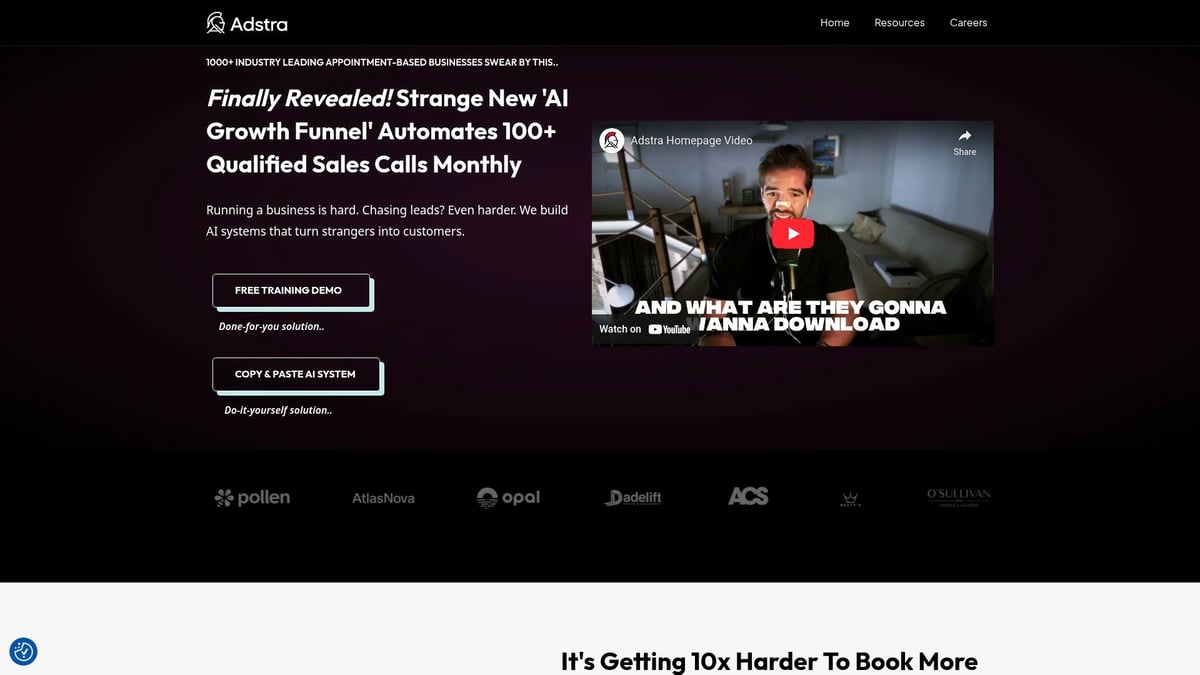
Pricing: Custom, with free lead training for new users.
Core Features:
- Advanced AI-driven lead identification
- Automated appointment scheduling and reminders
- Hands-off lead nurturing sequences
- Free educational resources for sales teams
Key Benefits:
Adstra delivers pre-qualified, ready-to-buy leads directly to your sales calendar. This means your team spends less time prospecting and more time closing. Its automation ensures your pipeline never runs dry.
Unique Selling Points:
- AI-first, data-driven strategies
- Guaranteed growth partnership
- Full transparency and regular reporting
- Tailored for appointment-based businesses
Ideal Use Cases:
Perfect for agencies, consultancies, clinics, and financial advisors—any business that lives or dies by booked appointments.
Pros:
- Reduces manual prospecting dramatically
- Boosts sales team efficiency
- Scales seamlessly as your business grows
Cons:
- Pricing isn’t public
- Best suited for appointment-based models
Adstra stands out for its ability to automate every aspect of tools lead generation, from targeting to booking.
HubSpot Marketing Hub
When it comes to all-in-one tools lead generation, HubSpot Marketing Hub is a top contender. It centralizes your marketing, sales, and lead management in one intuitive dashboard.
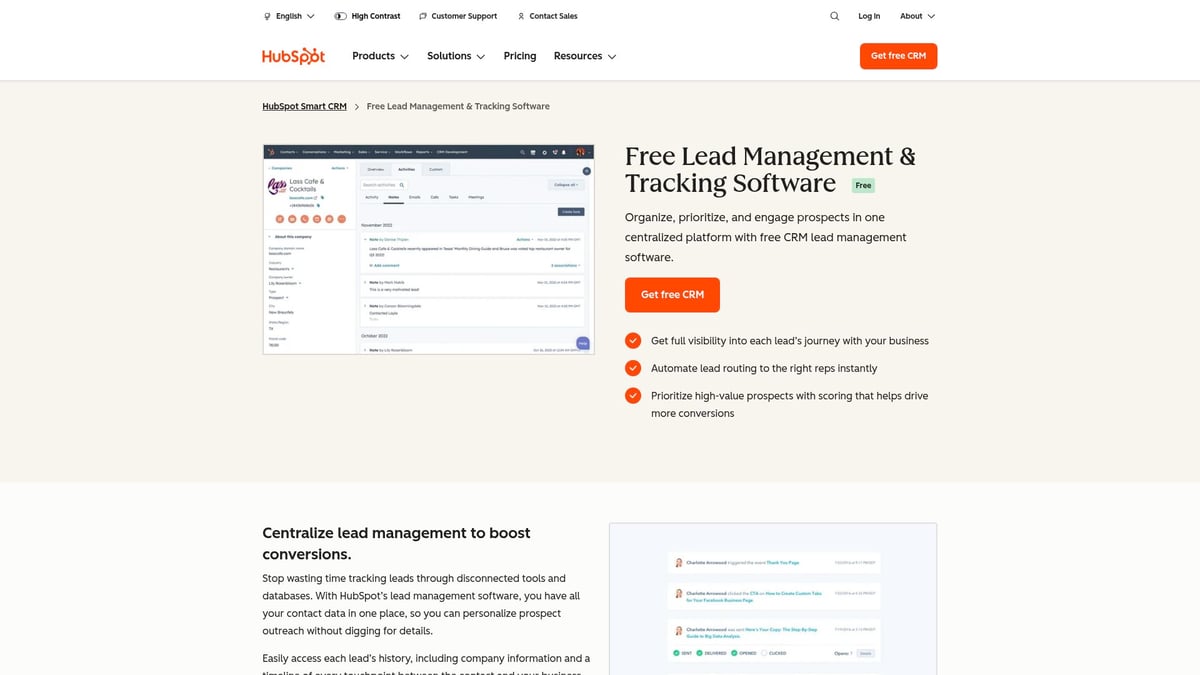
Pricing: Free plan available; paid plans start at $50/month.
Core Features:
- Inbound marketing automation
- Customizable website forms and pop-ups
- Live chat, chatbots, and automated workflows
- Performance analytics and reporting
Key Benefits:
HubSpot seamlessly integrates with its CRM and supports robust lead capture, nurturing, and campaign management. Its analytics spotlight what works best in your tools lead generation strategy.
Unique Selling Points:
- Massive integration ecosystem (over 1,000 apps)
- Real-time customer support
- Scalable for startups and enterprises
Ideal Use Cases:
Businesses of any size looking to centralize marketing efforts and manage leads efficiently.
Pros:
- Free tier for new users
- Deep feature set
- Strong support and community
Cons:
- Advanced features can be pricey
- Some users report a learning curve
HubSpot makes tools lead generation accessible, scalable, and data-driven for teams at every stage.
Pipedrive
Pipedrive is the visual sales pipeline solution built for SMBs and sales-focused teams. For those who want clarity and automation in their tools lead generation process, Pipedrive delivers.
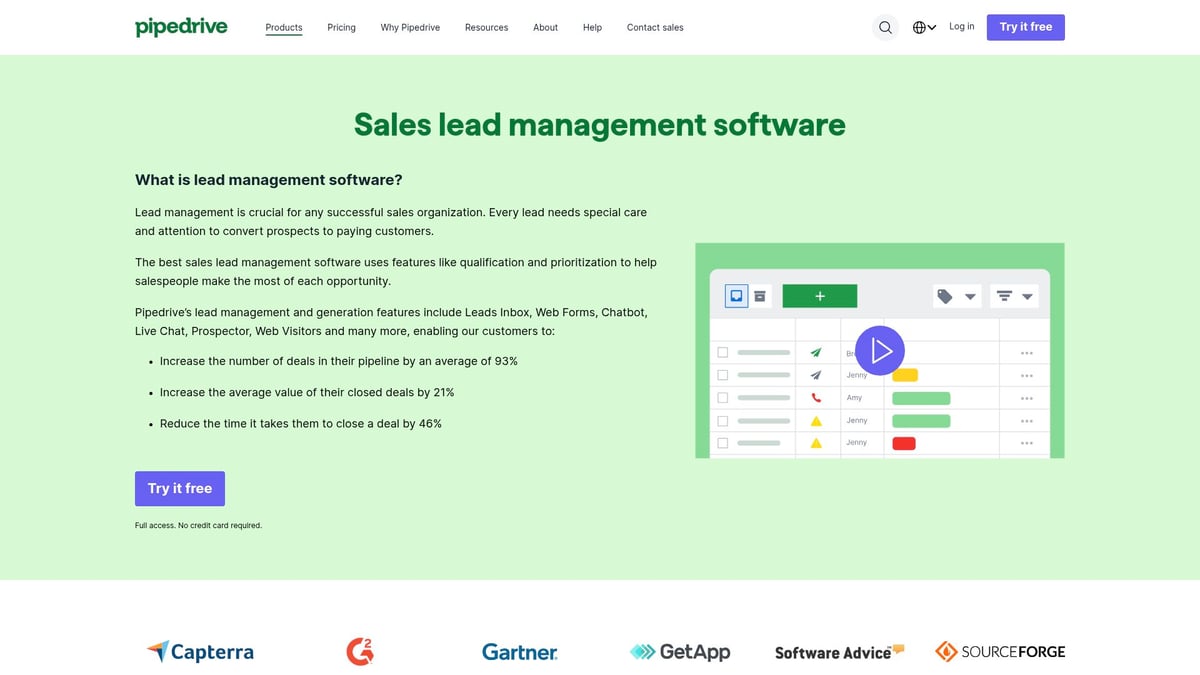
Pricing: Starts at $14 per seat/month (billed annually); 14-day free trial.
Core Features:
- Visual, drag-and-drop sales pipeline
- LeadBooster add-on for prospecting
- Web forms and smart contact data
- Dedicated lead inbox
Key Benefits:
With Pipedrive, you get real-time insights, automated tasks, and easy customization. Its mobile app empowers sales reps to manage leads on the go, keeping your tools lead generation efforts agile.
Unique Selling Points:
- Deal rotting alerts to avoid missed opportunities
- Visual contact history for each lead
- Automation of repetitive sales tasks
Ideal Use Cases:
Small and mid-sized businesses needing simple, effective pipeline visibility.
Pros:
- User-friendly interface
- Affordable entry price
- Responsive support
Cons:
- Advanced features require add-ons
- Occasional technical bugs
Pipedrive’s visual approach makes tools lead generation transparent and actionable for growing teams.
OptinMonster
OptinMonster is the go-to platform for conversion rate optimization and on-site lead capture. If you’re serious about maximizing every website visitor, this tool should be in your tools lead generation stack.
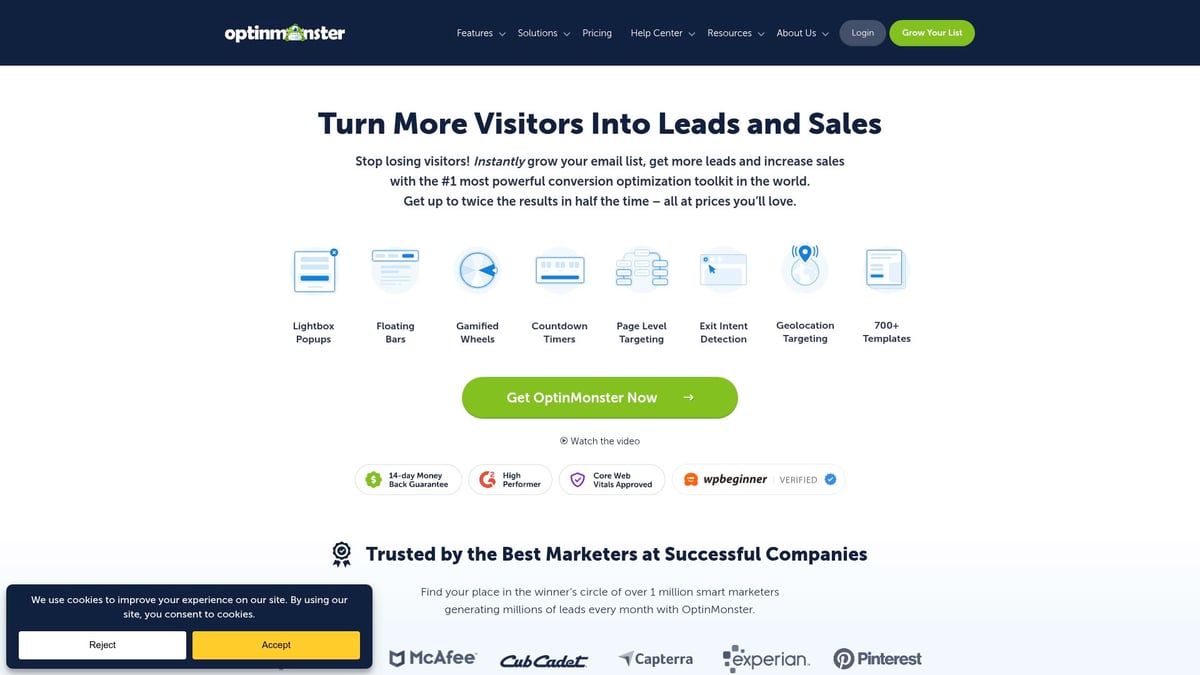
Pricing: Starts at $9/month (billed annually); no free plan.
Core Features:
- Pop-ups, floating bars, and slide-ins
- Exit-intent technology to capture abandoning visitors
- Advanced targeting and segmentation
- A/B testing for continuous improvement
Key Benefits:
OptinMonster increases website conversion rates by delivering personalized messages at the right time. Its drag-and-drop builder lets anyone craft high-converting campaigns, fueling your tools lead generation.
Unique Selling Points:
- Real-time behavior automation
- Actionable analytics for campaign optimization
- Integrates with all major email platforms
Ideal Use Cases:
E-commerce, SaaS, blogs, and any business focused on growing email lists and conversions.
Pros:
- Easy to use, even for beginners
- Powerful targeting and rules
- Rapid email list growth
Cons:
- No free plan
- Reporting features limited on lower tiers
OptinMonster ensures your tools lead generation efforts convert more visitors, every day.
Salesforce Marketing Cloud
Salesforce Marketing Cloud sets the standard for enterprise-level tools lead generation. Its robust automation and AI capabilities empower organizations to orchestrate multi-channel campaigns and manage leads at scale.
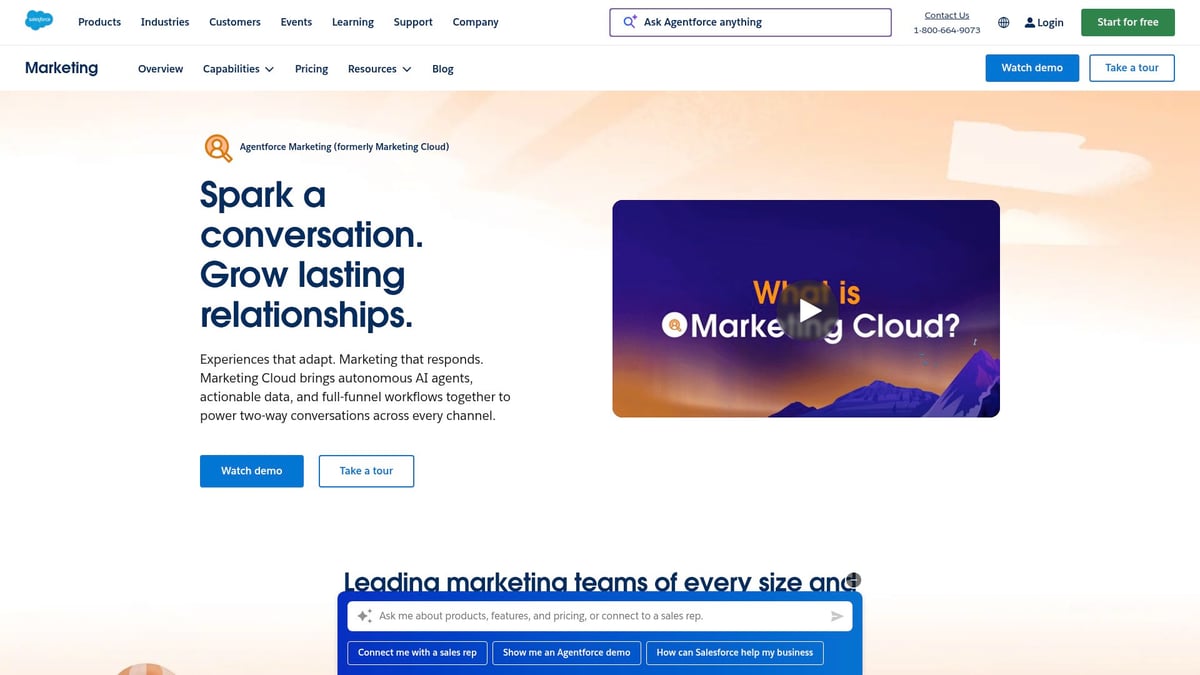
Pricing: Starts at $25/user/month; 30-day free trial.
Core Features:
- Full-featured enterprise CRM
- Multi-channel campaign management
- AI-driven personalization and lead scoring
- Advanced analytics and reporting
Key Benefits:
Salesforce delivers end-to-end lead management, integrating seamlessly with sales and service. Its AI (Einstein) predicts which leads are most likely to convert, powering your tools lead generation with actionable intelligence.
Unique Selling Points:
- Highly scalable for large organizations
- Strong security and compliance features
- Market-leading AI and automation
Ideal Use Cases:
Enterprises and high-growth businesses with complex marketing needs.
Pros:
- Comprehensive features and integrations
- Strong support and resources
- Highly customizable workflows
Cons:
- Steep learning curve
- Higher costs for advanced tools
Salesforce is the backbone for tools lead generation in enterprise environments.
LeadsBridge
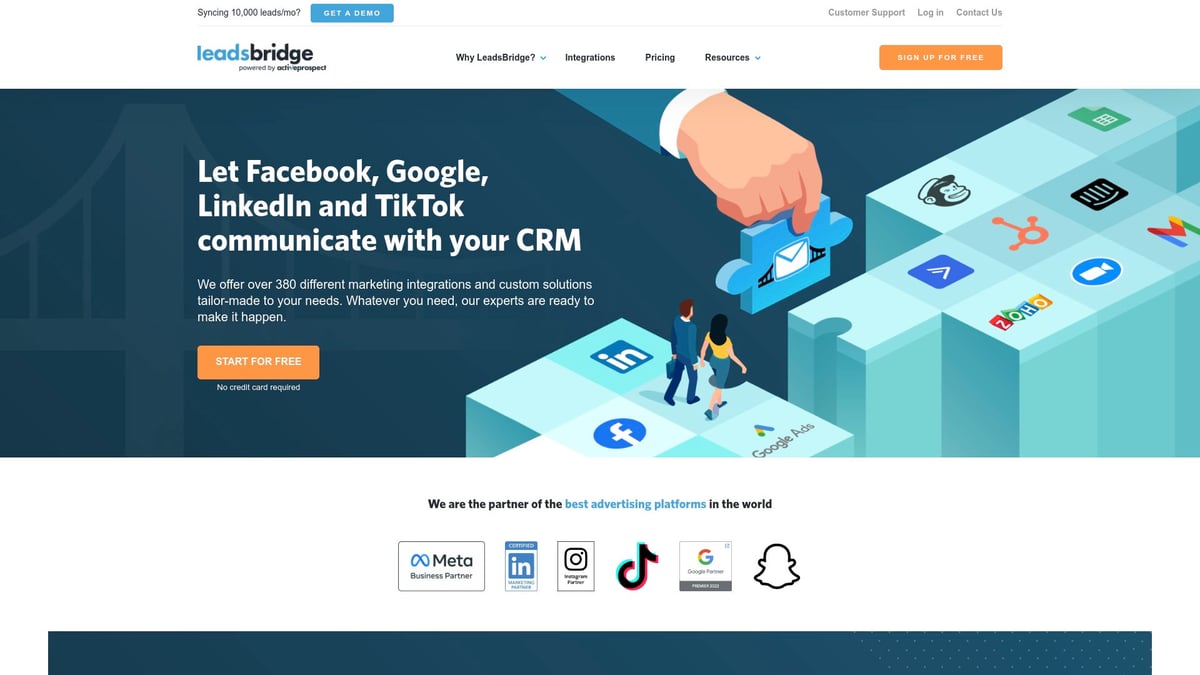
Managing ad-driven leads across multiple platforms can be a challenge. LeadsBridge bridges the gap, automating lead transfers and syncing data to your CRM in real time, making it a vital part of any tools lead generation setup.
Pricing: Free plan; paid plans from $22/month.
Core Features:
- Integration between ad platforms (Meta, Google, LinkedIn) and CRMs
- Real-time lead syncing
- Audience segmentation and privacy compliance
Key Benefits:
LeadsBridge streamlines your workflow by automatically moving leads from ads into your CRM, reducing manual entry and errors. It supports over 370 integrations, making tools lead generation seamless across your stack.
Unique Selling Points:
- Real-time lead delivery
- Privacy-compliant data handling
- Extensive integration options
Ideal Use Cases:
Businesses running paid ads on multiple platforms needing efficient CRM sync.
Pros:
- Saves time and increases data accuracy
- Affordable entry
- Scalable for growing ad campaigns
Cons:
- Some integrations require higher-tier plans
- Setup can be technical for beginners
LeadsBridge ensures every lead from your ads enters your tools lead generation system without friction.
Calendly
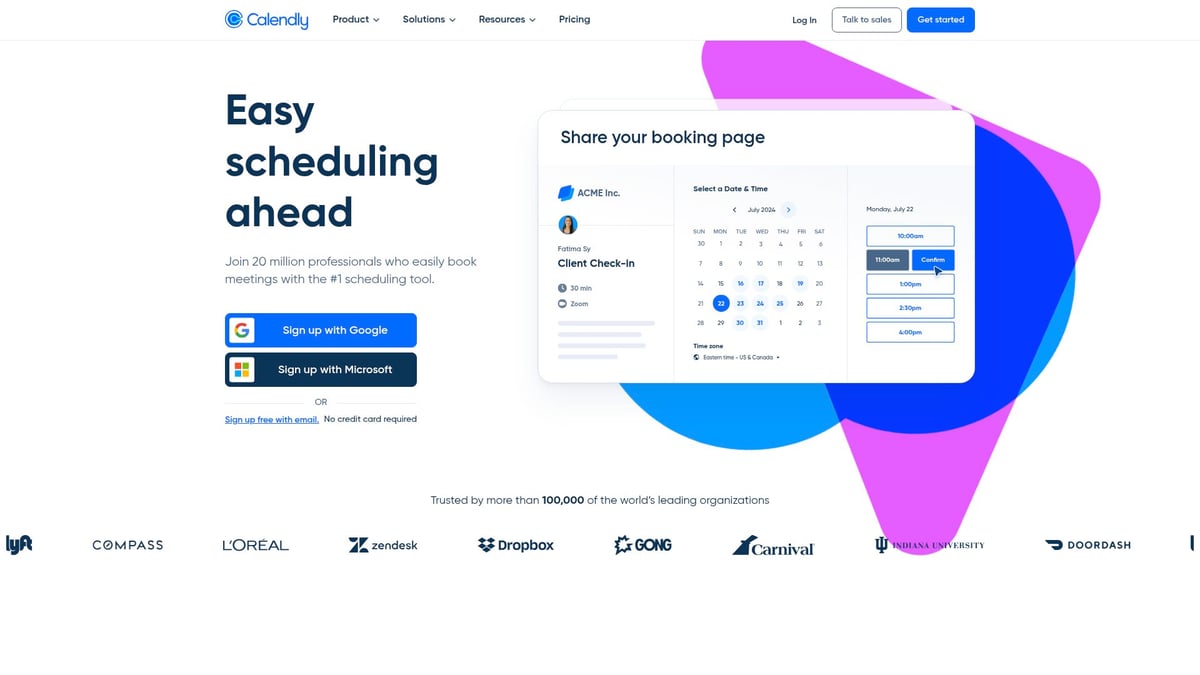
Calendly is the world’s favorite scheduling automation platform, streamlining appointment booking in your tools lead generation process. It removes the back-and-forth, letting prospects book time instantly.
Pricing: Free plan; paid plans from $10/user/month.
Core Features:
- Automated appointment scheduling
- Calendar integrations (Google, Outlook, iCloud)
- Customizable booking links and reminders
Key Benefits:
Calendly eliminates scheduling headaches, keeps your pipeline moving, and integrates with CRMs and video conferencing tools.
Unique Selling Points:
- User-friendly interface
- Group scheduling and time zone detection
- Reduces no-shows with reminders
Ideal Use Cases:
Sales teams, consultants, and service providers eager to streamline their lead-to-appointment flow.
Pros:
- Free forever plan
- Easy to set up
- Reliable
Cons:
- Some features are paid-only
- Limited branding on free tier
Calendly is the glue that holds together the appointment side of your tools lead generation strategy.
Comparison Table: Top Tools Lead Generation Solutions for 2025
| Tool | Best For | Starting Price | Key Feature | Unique Benefit |
|---|---|---|---|---|
| Adstra | Appointment businesses | Custom | AI appointment setting | Pre-qualified, ready-to-buy leads |
| HubSpot | All-in-one marketing | Free/$50/mo | CRM integration | Centralized lead management |
| Pipedrive | SMB sales teams | $14/mo | Visual pipeline | Drag-and-drop simplicity |
| OptinMonster | Website conversions | $9/mo | Pop-up & A/B testing | Exit-intent capture |
| Salesforce | Enterprises | $25/mo | AI-powered campaigns | Full-funnel automation |
| LeadsBridge | Ad-driven businesses | Free/$22/mo | Ad-to-CRM integrations | Real-time sync and compliance |
| Calendly | Scheduling automation | Free/$10/mo | Calendar integrations | Eliminates scheduling friction |
With these tools lead generation becomes not only streamlined but also scalable for any business size. Choose the platform that best fits your workflow, budget, and growth goals, and watch your pipeline fill with qualified leads.
How to Select the Right Lead Generation Tool for Your Business
Choosing the right tools lead generation solution can transform your sales pipeline and accelerate business growth. With so many options available, finding your perfect match means looking beyond shiny features and focusing on real alignment with your core objectives. Let’s break down the key steps to make a confident, ROI-driven decision.
Assessing Your Business Needs and Goals
Start by clearly defining what you want to achieve with tools lead generation. Are you focused on high lead volume, targeting niche industries, or improving lead quality? Pinpoint bottlenecks in your sales process, such as slow response times or manual data entry.
List out required integrations, for example, CRM, email, or analytics platforms. Evaluate your team’s size and technical expertise to ensure smooth adoption. If you’re a B2B firm, you might prioritize account-based marketing capabilities.
For a deeper dive into building a system that converts leads into booked calls, check out Building a Lead Generation System.
Comparing Features, Pricing, and Scalability
Not all tools lead generation platforms are created equal. Create a simple comparison table to evaluate core features, such as automation, AI capabilities, reporting, and outreach channels.
| Tool | Automation | AI | Reporting | Outreach | Price |
|---|---|---|---|---|---|
| Tool A | Yes | Yes | Advanced | Multi | $$ |
| Tool B | Limited | No | Basic | $ |
Check if free trials or entry-level plans fit your budget. Think about future growth—will the platform scale with your business? Remember, 60% of SMBs rank scalability as a top factor in software selection.
Evaluating User Experience and Support
Your team’s success with tools lead generation depends on usability and support. Test drive user interfaces for ease of use and customization. Look for robust onboarding, live chat, and knowledge base resources.
Read real-world user reviews and case studies to uncover potential friction points or hidden benefits. Solutions with active support communities can speed up onboarding and minimize downtime. Prioritizing support ensures your investment pays off quickly.
Ensuring Security and Compliance
Security and compliance are non-negotiable with tools lead generation, especially if you handle sensitive data. Confirm the platform follows GDPR, CCPA, and other relevant regulations.
Verify backup procedures, encryption standards, and clear privacy policies. For regulated industries, ensure secure lead storage and safe data transfer. Taking these steps protects both your business and your prospects’ trust.
Best Practices to Maximize ROI with Lead Generation Tools
Unlocking the full potential of tools lead generation requires more than just selecting top platforms. To maximize ROI, businesses must integrate these solutions seamlessly, analyze performance, empower their teams, and stay ahead of evolving trends. Let’s break down the proven best practices that separate high-performing companies from the rest.
Integrating Tools into Your Sales and Marketing Workflow
Seamless integration is the backbone of successful tools lead generation strategies. Start by mapping your sales and marketing processes, then align tool features to automate manual tasks. For example, connect your CRM with scheduling platforms to ensure no lead slips through the cracks.
Use integrations to sync data between platforms like email, CRM, and ad channels. This ensures every touchpoint is tracked and nurtured. Automate lead capture and follow-up so your team spends more time closing deals. According to Best Practices for Lead Generation in 2025, high-performing businesses prioritize workflow alignment and automation for better results. Regularly review your setup for gaps and optimize as your needs evolve.
Leveraging Analytics for Continuous Improvement
Analytics are essential for extracting maximum value from tools lead generation. Track key performance indicators like conversion rates, cost per lead, and lead response time. Set up dashboards that provide real-time insights into your campaigns.
Utilize A/B testing to refine forms, pop-ups, and email outreach. Analyze which channels deliver the highest ROI, and shift resources accordingly. Businesses that leverage analytics see up to 30 percent faster sales cycles. Make data-driven decisions to identify bottlenecks and opportunities. The right analytics tools help you visualize trends, compare performance, and adjust strategies quickly for better outcomes.
Training Your Team for Effective Usage
Even the most advanced tools lead generation solutions fall short without a well-trained team. Begin with a structured onboarding program covering core features and best practices. Offer continuous learning opportunities, such as webinars and internal workshops.
Encourage sharing of success stories and tips among team members to foster a culture of growth. Collect feedback regularly to identify pain points and adapt training materials. Well-trained teams are more likely to adopt new features, avoid costly mistakes, and achieve consistent results. Make training an ongoing investment, not a one-time event, to ensure your team stays ahead.
Staying Updated with Emerging Trends and Features
The landscape of tools lead generation is constantly evolving, so staying informed is crucial. Subscribe to vendor updates, attend industry webinars, and join user groups to learn about the latest advancements.
Early adoption of new features, such as AI-driven automation or enhanced personalization, can give your business a competitive edge. Monitor the market for emerging best practices and adjust your strategy as needed. Engaged businesses that stay current with trends are better positioned to capitalize on innovation and outperform competitors. Regularly evaluate new options to keep your lead generation efforts fresh and effective.
Ready to put these insights into action and see real results in your lead generation for 2025 If you’re eager to move beyond theory and discover how the right AI powered tools can fill your sales pipeline with qualified leads, why not get some tailored advice We’ve helped businesses like yours automate appointment booking and turn cold prospects into ready to buy customers with proven strategies. If you’re serious about predictable growth and tired of guesswork let’s chat about your unique goals and challenges. Book a spot for a personalized session and let’s build your success roadmap together Book a FREE Strategy Call