
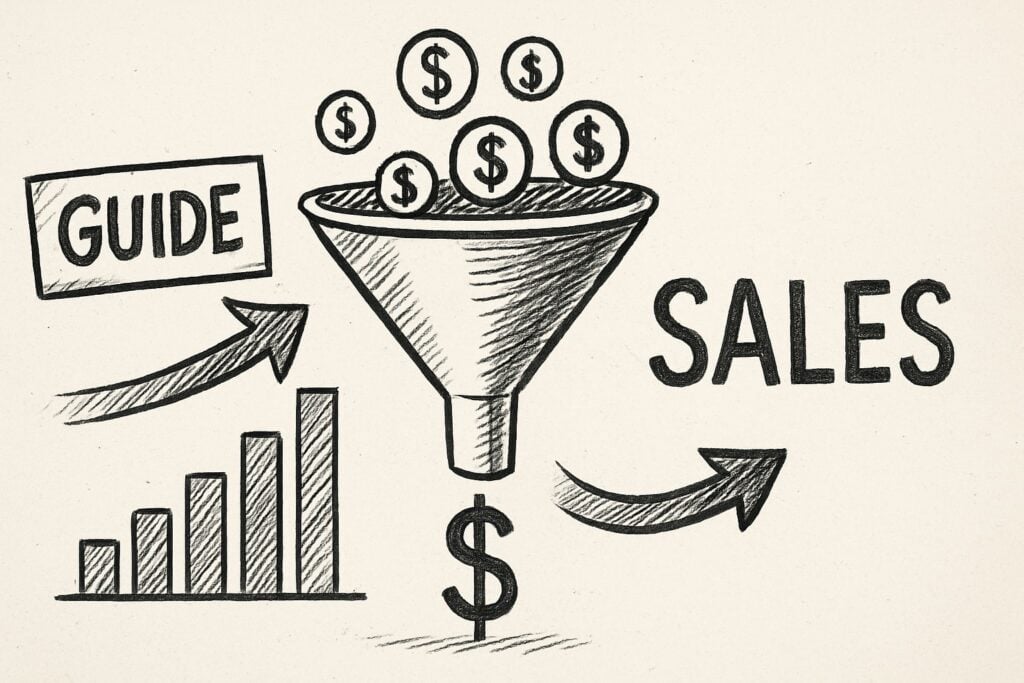
Struggling to turn leads into loyal customers? In today’s crowded digital landscape, mastering your funnel for sales is more crucial than ever. Buyer behaviors are shifting, and competition keeps rising, making it vital to stand out and convert efficiently.
A well-structured funnel for sales can dramatically increase your conversion rates and customer value. In this guide, you’ll discover actionable strategies and the latest insights to optimize every stage of your funnel.
Follow along to transform your conversion strategy for 2025. We’ll cover funnel fundamentals, key stages, optimization tactics, advanced strategies, measurement, and trends to future-proof your success.
Understanding the Modern Sales Funnel
The funnel for sales has undergone a dramatic transformation in recent years. Traditional, one-way sales paths have become relics, replaced by dynamic, multi-touch journeys that reflect today’s empowered buyers. Digital disruption and rising competition demand a smarter, more adaptive approach to every funnel for sales.
In 2025, winning businesses know that a modern funnel for sales is no longer a static pipeline. Instead, it’s a living, evolving process shaped by technology, data, and shifting customer expectations.
The Evolution of Sales Funnels
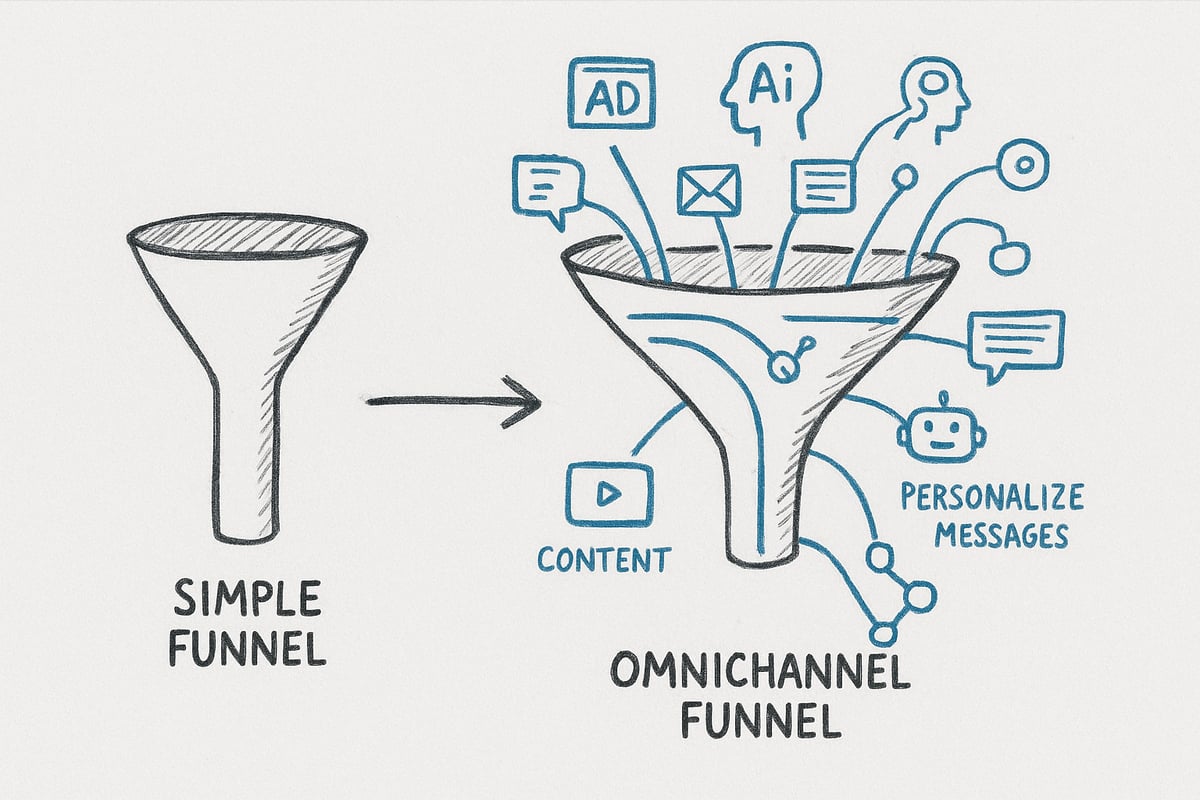
Not long ago, the funnel for sales was linear, moving prospects through a rigid sequence of steps. Today, the journey is anything but straightforward. Buyers now interact with brands across multiple channels—social media, email, paid ads, and even AI-powered chatbots—before ever speaking to sales.
Digital transformation has been a game changer for the funnel for sales. Tools like automation and AI enable businesses to personalize touchpoints and nurture leads with precision. For example, cold calling has largely given way to inbound lead nurturing, where prospects engage with tailored content and automated follow-ups.
Personalization is now the cornerstone of a successful funnel for sales. Automation tools segment audiences, trigger timely emails, and adapt messaging in real time. According to OptimizePress, up to 72% of company revenue now comes from existing customers, highlighting the value of building loyalty across the entire funnel for sales.
To explore foundational concepts in more depth, check out this funnel in sales fundamentals guide for a comprehensive overview.
The key takeaway? A modern funnel for sales is dynamic and requires constant optimization to keep up with evolving buyer behaviors.
Core Stages of a Sales Funnel
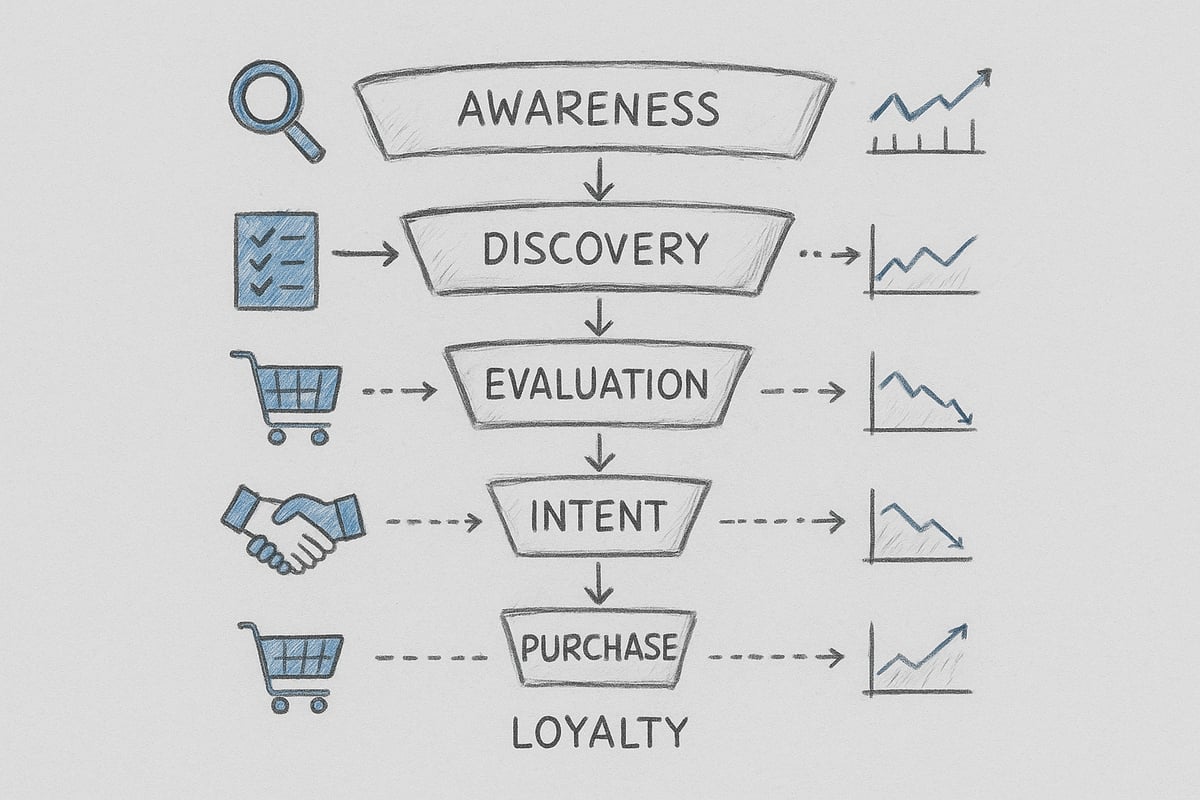
Every funnel for sales is built on a series of core stages, each designed to move prospects closer to conversion and loyalty.
- Awareness: Prospects first discover your brand through content, ads, or referrals.
- Discovery: They start researching your offer, comparing you to competitors.
- Evaluation: Deeper investigation follows, with a focus on features, pricing, and social proof.
- Intent: Buyers signal readiness to act, such as adding items to a cart or booking a demo.
- Purchase: The conversion moment—sale, signup, or booking.
- Loyalty: Post-purchase engagement, upsells, and turning customers into advocates.
For example, a SaaS funnel for sales might start with a blog post, then progress to a free trial, followed by a product demo, and finally, a subscription. Notably, prospects rarely move in a perfect line. Some may drop off and return later, making retargeting an essential part of the funnel for sales.
The best funnels are mapped to real buyer journeys, ensuring each stage is optimized for the right message and action.
Why Funnels Matter for Conversion Strategy
Why is a well-structured funnel for sales so critical? First, it provides a clear framework for qualifying and nurturing leads, ensuring no opportunity slips through the cracks.
Second, the funnel for sales allows for precise, targeted messaging at every stage. Instead of blasting generic emails, you can deliver content that matches exactly where the prospect is on their journey. This tailored approach boosts engagement and accelerates conversions.
Third, a data-driven funnel for sales enables continual improvement. By tracking conversion rates, lead quality, and customer lifetime value, you can identify weak points and rapidly test new strategies. Companies with optimized funnels consistently achieve higher conversion rates and lower churn.
Consider this quick comparison:
| With Funnel for Sales | Without Funnel for Sales |
|---|---|
| Targeted messaging | Scattered efforts |
| Higher ROI | Wasted budget |
| Improved retention | High churn |
Without a clear funnel for sales, marketing and sales teams operate in silos, leading to inefficiency and missed revenue. Mastering your funnel for sales is the fastest path to predictable, scalable growth.
Step-by-Step: Building a High-Converting Funnel for Sales in 2025
Are you ready to create a funnel for sales that consistently drives results? Let’s break down the process into actionable steps you can implement immediately. Each stage plays a unique role in guiding prospects from strangers to loyal customers. Follow this blueprint to ensure your funnel for sales is fine-tuned for 2025’s digital landscape.
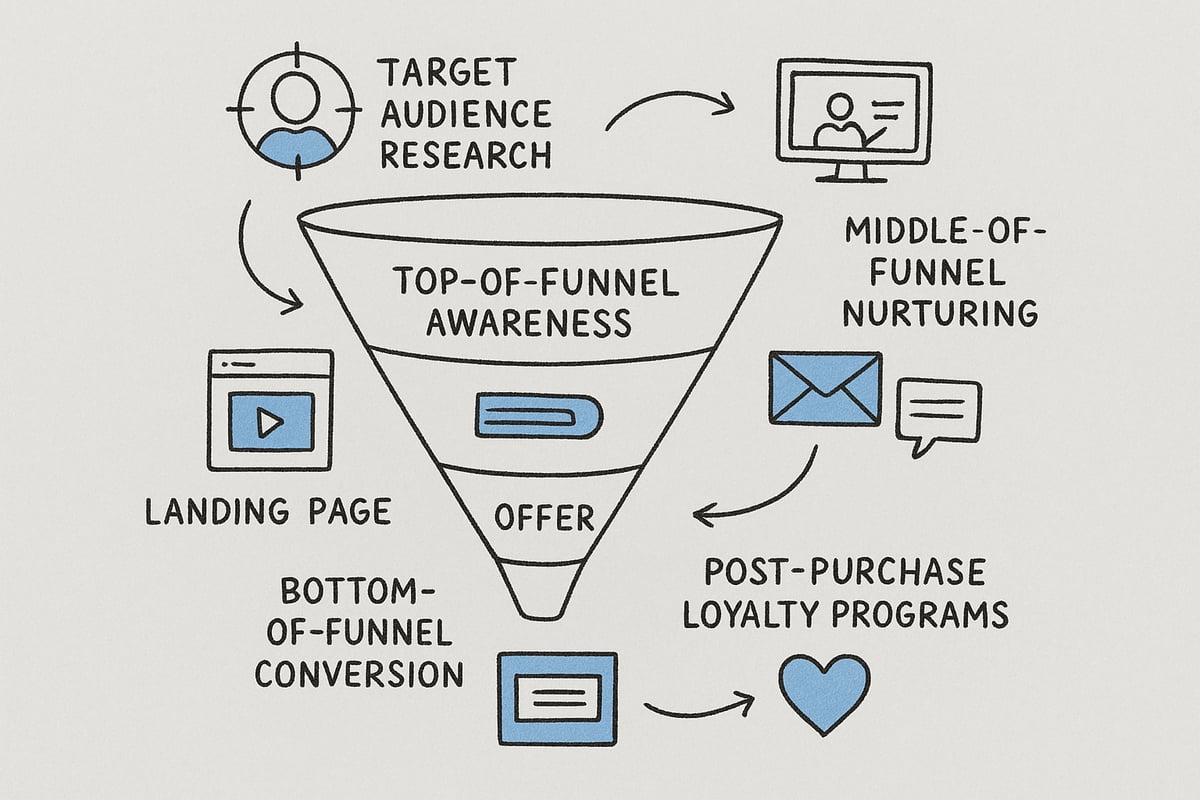
Step 1: Define Your Target Audience & Buyer Personas
The first step to building a high-converting funnel for sales is understanding exactly who you want to reach. Start by conducting detailed persona research, which uncovers the motivations, pain points, and buying triggers of your ideal customers. Use surveys, website analytics, and direct customer interviews to gather data.
Consider the differences between B2B and B2C approaches. For B2B, focus on decision-maker roles, company size, and industry pain points. For B2C, prioritize demographics, interests, and lifestyle habits.
| Funnel for Sales Persona | B2B Approach | B2C Approach |
|---|---|---|
| Key Factors | Job Title, Industry, Company Size | Age, Gender, Interests |
| Buying Trigger | ROI, Efficiency | Price, Experience |
| Decision Process | Team/Committee | Individual/Impulse |
Personalization is the cornerstone of a successful funnel for sales. The more you know your audience, the more relevant and persuasive your messaging becomes. This foundation ensures every stage of your funnel for sales resonates and converts.
Step 2: Crafting the Perfect Top-of-Funnel (TOFU)
At the top of your funnel for sales, your goal is to capture attention and generate qualified leads. This begins with sharing valuable content across channels, such as blog posts, social media ads, and SEO-optimized landing pages. Use targeted lead magnets like eBooks, checklists, or webinars to entice prospects to share their contact details.
A classic example is the squeeze page funnel, which offers a compelling resource in exchange for an email address. The right TOFU strategy can dramatically increase your lead capture rates and set the tone for the rest of your funnel for sales.
If you want to see a real-world application, check out this Complete sales funnel example to gain insights into how successful brands structure their TOFU for maximum impact.
Remember, the first impression matters. Optimize every element, from headline to call-to-action, to ensure your funnel for sales stands out in a crowded digital space.
Step 3: Nurturing in the Middle-of-Funnel (MOFU)
Once prospects have entered your funnel for sales, nurturing becomes crucial. Use automated email sequences to deliver educational content, case studies, and testimonials that build trust. Retargeting ads can remind prospects of your value, while interactive webinars provide a platform for real-time engagement and personalized answers.
Demonstrate your expertise by sharing customer success stories and offering free demos. These tactics help move leads from initial interest to serious intent, reducing friction and skepticism.
MOFU is where you solidify the relationship. By focusing on value and relevance, your funnel for sales keeps prospects engaged and motivated to take the next step.
Step 4: Optimizing the Bottom-of-Funnel (BOFU)
At the bottom of your funnel for sales, conversion is the main objective. Design landing pages that are clear, focused, and persuasive. Use techniques like scarcity (limited-time offers), money-back guarantees, and strong calls-to-action to overcome last-minute objections.
One effective strategy is the tripwire funnel, where you offer a low-cost, high-value product to encourage an initial purchase. This not only boosts conversions but also builds immediate trust and credibility.
Every detail counts at this stage. Analyze user behavior, test different offers, and ensure your funnel for sales removes friction from the buying process. The decisions made here determine your revenue and future growth.
Step 5: Post-Purchase and Loyalty Strategies
The journey doesn’t end at the sale. The final step in your funnel for sales is about turning new customers into loyal advocates. Start with a seamless onboarding process and offer exceptional customer support.
Use feedback loops to gather insights, then introduce upsell and cross-sell opportunities that genuinely solve customer needs. Launch loyalty programs and referral incentives to inspire repeat business and word-of-mouth growth.
Did you know that up to 72% of company revenue comes from existing customers? That’s why post-sale engagement is vital for maximizing lifetime value. A well-structured funnel for sales continues to nurture relationships long after the initial conversion, ensuring sustainable, predictable growth.
Advanced Funnel Optimization Tactics for 2025
Modern buyers expect more than generic messaging and predictable touchpoints. Businesses looking to dominate with their funnel for sales in 2025 must embrace advanced optimization tactics that leverage technology, personalization, and omnichannel strategies. Let’s break down what works now—and what will set you apart in the coming year.
Leveraging AI and Automation
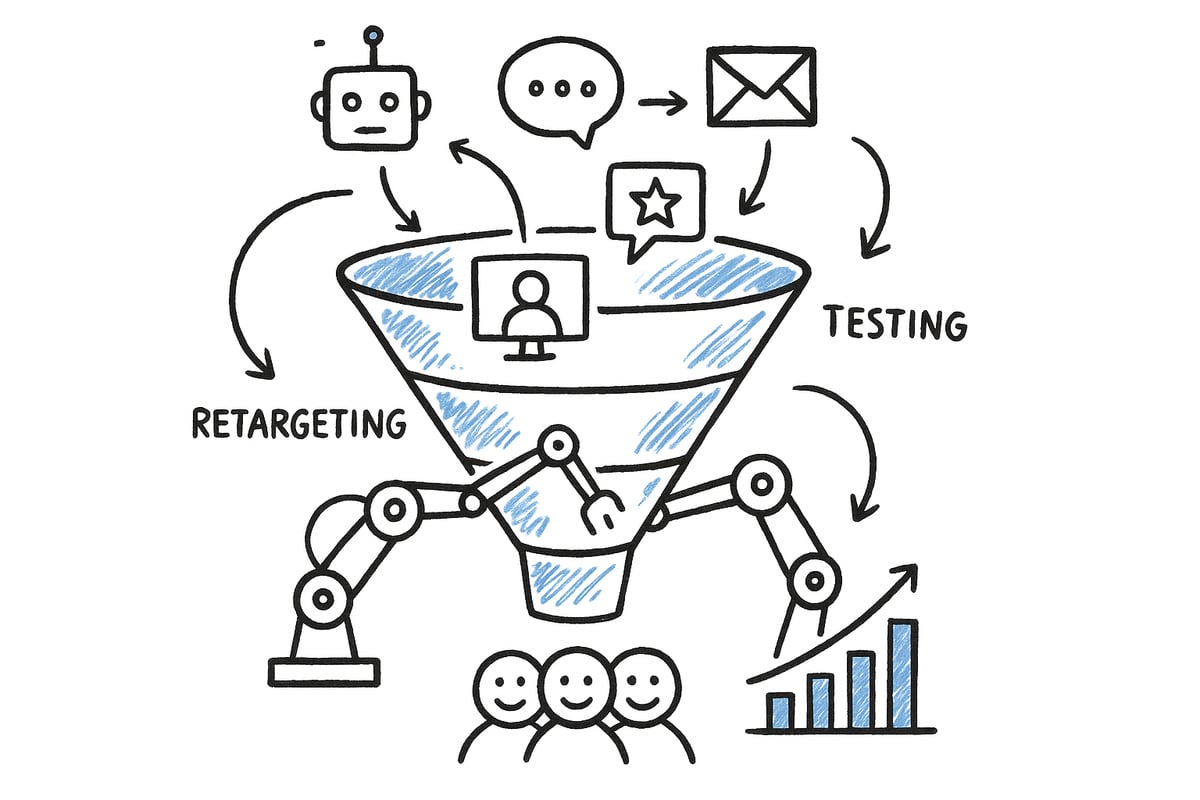
Artificial intelligence is rapidly transforming every funnel for sales. AI-driven lead scoring helps teams prioritize the hottest prospects, while automation tools streamline nurturing and follow-up.
Consider these automation breakthroughs:
- AI chatbots that qualify leads 24/7
- Automated email workflows triggered by user behavior
- AI-powered appointment booking that eliminates manual scheduling
A prime example is the rise of the AI-powered sales funnel, which uses machine learning to adapt messaging and timing for every lead. This approach not only saves time but also ensures consistency and scale, letting your team focus on closing deals. For a deeper dive, check out The AI-powered sales funnel.
By letting AI handle the repetitive tasks, your funnel for sales becomes more efficient, responsive, and ready to meet the demands of 2025.
Personalization at Scale
Generic content is no longer enough to move leads through your funnel for sales. Today, personalization is the secret weapon for boosting engagement and conversions.
Effective tactics include:
- Dynamic website content that changes based on user actions
- Personalized product recommendations using browsing behavior
- Tailored email sequences based on persona data
A simple comparison:
| Personalization Tactic | Impact on Funnel for Sales |
|---|---|
| Static landing page | Low engagement |
| Dynamic content blocks | Higher click-through rates |
| AI-driven product suggestions | Increased average order value |
Personalization at scale means every touchpoint feels custom, even for thousands of leads. When you make prospects feel understood, your funnel for sales builds trust and drives action.
Multi-Channel Funnel Integration
A single-channel approach no longer cuts it for a high-performing funnel for sales. Integrating multiple channels creates a seamless experience and maximizes reach.
Key channels to combine:
- Email: For nurturing and direct communication
- Social media: For initial engagement and retargeting
- SMS: For timely reminders and offers
- Retargeting ads: To re-engage prospects who drop off
Imagine a prospect who attends your webinar, gets an immediate follow-up email, sees your retargeting ad on social, and receives a personalized SMS offer. Each channel reinforces the funnel for sales, increasing the likelihood of conversion.
The result is an omnipresent brand experience that meets leads wherever they are, keeping your funnel for sales top of mind.
Testing and Iteration
Optimization never stops. Constant testing is the backbone of every successful funnel for sales. Without data-driven improvements, even the best funnel can stagnate.
Best practices include:
- A/B testing landing pages for headline and CTA effectiveness
- Multivariate testing emails to refine messaging
- Analyzing funnel drop-off points using heatmaps and user recordings
Example code for simple A/B split in email subject lines:
if user_group == 'A':
    send_email(subject="Unlock Your Free Guide")
else:
    send_email(subject="Get the Secrets to Sales Success")
By regularly testing and refining each step, you ensure your funnel for sales adapts to changing behaviors and preferences. Small tweaks can lead to major gains in conversions and revenue.
Measuring Funnel Performance and Conversion Success
Tracking the effectiveness of your funnel for sales is essential if you want reliable, scalable growth. Without clear measurement, even the best strategies can fall flat. Let’s break down how to evaluate, diagnose, and improve every stage of your funnel for sales so you can maximize conversions and return on investment.
Key Funnel Metrics to Track
To optimize your funnel for sales, you need to monitor the right metrics at each stage. Start with conversion rates—track how many leads move from awareness to discovery, then through evaluation, intent, and purchase. Consider these key metrics:
- Conversion rates by stage (awareness, consideration, purchase, loyalty)
- Lead quality and cost per acquisition (CPA)
- Customer lifetime value (CLV)
- Retention and churn rates
A simple analytics dashboard can make these numbers visible and actionable. Companies that consistently track their funnel for sales metrics outperform those that guess. For a deeper dive on optimization and measurement, check out Sales Funnel Optimization Strategies for 2025.
Diagnosing and Fixing Funnel Leaks
Even the most robust funnel for sales can spring leaks, causing valuable prospects to drop off unexpectedly. Pinpointing these weak spots is crucial. Common causes include unclear messaging, friction in forms, or poor follow-up.
Use heatmaps, user recordings, and exit surveys to spot where users abandon the journey. For example, a sudden drop at the evaluation stage may indicate missing social proof or confusing pricing. Surveys and feedback loops can reveal hidden barriers.
Quick fixes might involve simplifying forms, clarifying calls-to-action, or improving follow-up sequences. For more actionable solutions, explore these 10 Best Practices for Sales Funnel Optimization in 2025. Small tweaks can deliver big gains in your funnel for sales performance.
Aligning Sales and Marketing for Funnel Success
A seamless funnel for sales depends on strong alignment between sales and marketing teams. Shared goals, transparent communication, and clearly defined handoffs keep prospects moving smoothly through each stage.
Consider setting up service level agreements (SLAs) to outline expectations for lead qualification and follow-up. Regular joint meetings to review funnel performance ensure both teams stay accountable.
When sales and marketing operate as a unified force, every prospect gets the attention they need. This collaboration is the backbone of a high-performing funnel for sales, driving efficiency and boosting conversion rates.
Future-Proofing Your Funnel: Trends and Innovations for 2025
Staying ahead in the digital landscape means your funnel for sales must evolve with emerging trends and innovations. As we look to 2025, businesses that adapt quickly to new funnel strategies will outpace competitors and build lasting customer relationships.
The Rise of Conversational Funnels
Conversational funnels are transforming the way businesses engage prospects. In 2025, live chat, chatbots, and conversational AI will be essential for a high-performing funnel for sales. These tools provide instant responses, answer questions, and guide leads through your offers in real time.
Imagine a visitor landing on your site and instantly chatting with an AI assistant. They can schedule a demo, get product info, or even watch a live video walkthrough. This quick engagement cuts response time, builds trust, and nudges prospects toward conversion.
Key benefits include:
- Faster lead response and qualification
- Personalized recommendations at scale
- Seamless scheduling for demos or calls
Companies using conversational funnels report higher conversion rates and improved customer satisfaction. Integrating these tools at the top and middle of your funnel for sales ensures you never miss a hot lead.
Video and Interactive Content in Funnels
Video and interactive content are quickly becoming non-negotiable elements in a successful funnel for sales. Video sales letters (VSLs), explainer videos, and interactive quizzes keep prospects engaged and help communicate complex offers simply.
VSLs, in particular, are driving impressive results for businesses looking to boost bottom-of-funnel conversions. For a deep dive into crafting high-converting video funnels, explore this VSL strategy for lead generation. Interactive quizzes also provide personalized recommendations and pre-qualify leads, increasing the likelihood of conversion.
Key advantages:
- Builds trust and credibility
- Delivers information visually and memorably
- Encourages action with interactive elements
Using video and interactive content throughout your funnel for sales will help you stand out and drive more qualified leads toward purchase.
Privacy, Trust, and Data Compliance
As privacy regulations like GDPR and CCPA evolve, building trust through transparent data practices is now a core part of your funnel for sales. Buyers demand clear opt-in processes, honest communication, and an understanding of how their data is used.
To future-proof your funnel, focus on:
- Transparent opt-in forms and privacy policies
- Value-driven lead magnets that justify data collection
- Regular audits to ensure compliance
Trust is a powerful differentiator in crowded markets. When prospects feel secure, they’re more likely to move through your funnel for sales and become loyal customers.
Funnel Personalization with Predictive Analytics
Predictive analytics is revolutionizing how businesses personalize the funnel for sales. By analyzing buyer behavior, AI-driven models can suggest the right offer at the perfect moment, increasing both engagement and revenue.
For example, e-commerce sites now recommend products based on browsing history, while SaaS providers offer tailored demos depending on user actions. Predictive analytics enables:
- Proactive upselling and cross-selling
- Timely follow-ups based on lead scoring
- Customized email sequences for each segment
This level of personalization makes your funnel for sales more effective, ensuring every touchpoint feels relevant and timely for your audience.
Preparing for AI-Driven Funnel Evolution
The future of the funnel for sales will be shaped by rapid advances in AI and automation. Expect smarter content creation tools, AI-powered campaign optimization, and real-time analytics that spot opportunities instantly.
To stay ahead:
- Invest in AI tools that streamline funnel management
- Train your team to adapt quickly to new technologies
- Regularly review emerging trends and best practices
For actionable guidance on optimizing your funnel for the future, check out these 10 Sales Funnel Optimization Strategies for 2025. Embracing innovation now means your funnel for sales will thrive, no matter what changes 2025 brings.
If you’re ready to stop guessing and start seeing predictable growth, let’s put these funnel strategies into action together. You’ve seen how AI, automation, and a clear step-by-step process can transform cold leads into loyal customers and boost your revenue in 2025. Imagine what’s possible when you have a tailored plan designed for your business goals and challenges. I’d love to help you map out your unique funnel and answer your questions directly—no strings attached. Take the next step toward mastering your conversion strategy and Book a FREE Strategy Call today.