


Imagine doubling your qualified leads in 2026 without hiring more salespeople or increasing your budget. With lead ai, this is not just possible, it is becoming the new standard for ambitious businesses.
This guide will show you how to master intelligent lead strategies using the latest AI tools. You will discover how lead ai automates tedious tasks, personalizes outreach, and predicts buying intent for scalable, predictable growth.
We will explore the evolution of lead generation, compare traditional and AI-powered methods, reveal the top benefits, and give you actionable steps to implement lead ai. The future of lead management is here—let's get you ahead of the competition.
The Evolution of AI in Lead Generation
The world of lead ai has transformed dramatically over the past decade. Not long ago, businesses relied on manual research, tedious cold outreach, and generic campaigns to find potential customers. Sales teams would sift through spreadsheets, make endless phone calls, and hope that broad targeting would eventually yield results.
Today, the rise of lead ai is rewriting the playbook for how companies identify and nurture leads. Instead of relying on guesswork, organizations now leverage advanced machine learning, natural language processing, and predictive analytics to pinpoint high-intent prospects with incredible accuracy.
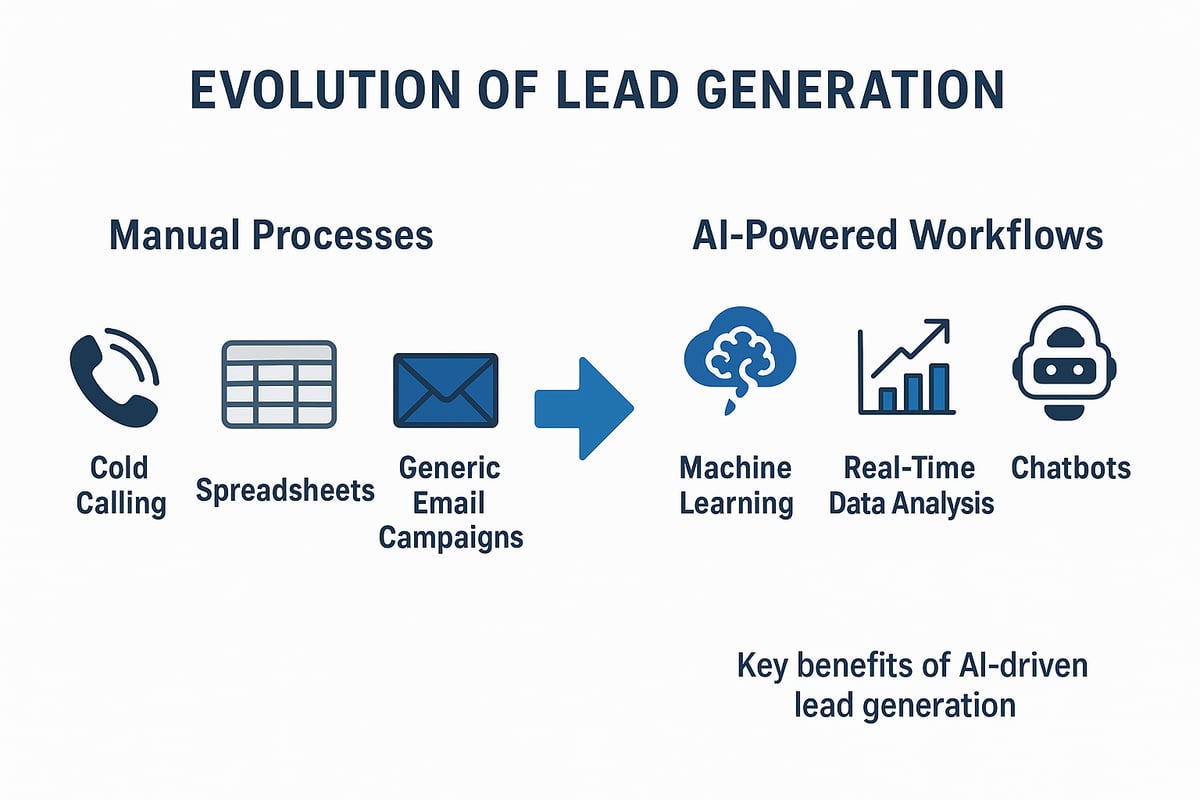
The Shift from Manual to Intelligent Automation
Traditional lead generation was slow, labor-intensive, and inconsistent. Sales reps often spent hours on tasks like:
- Scraping contact lists from directories
- Sending mass emails with little personalization
- Logging interactions manually in CRM systems
These processes made it nearly impossible to scale outreach or tailor messages to individual prospects. As a result, most leads were either missed or not properly qualified.
The advent of lead ai has changed everything. AI systems now analyze website interactions, social media engagement, and CRM data in real time. This allows businesses to surface high-intent prospects the moment they show buying signals. For example, if a visitor downloads a whitepaper and revisits your pricing page, a lead ai platform can instantly flag them as a priority for your sales team.
Why has this shift happened so quickly? The key drivers include:
- The need for scalability without huge increases in headcount
- Demand for personalized outreach at every stage of the buyer journey
- The power of data-driven decision making
Consider this comparison:
| Traditional Lead Gen | AI-Powered Lead Gen |
|---|---|
| Manual research | Automated data analysis |
| Cold calling | Predictive scoring |
| Generic campaigns | Hyper-personalized messaging |
| Slow qualification | Real-time prioritization |
| High labor cost | Scalable, efficient workflows |
The impact is undeniable. According to Monday.com, 90% of commercial leaders expect to use generative AI solutions frequently in the coming years. Companies that have already embraced lead ai report up to a 50% increase in leads and appointments.
Another critical benefit is speed. AI platforms can analyze thousands of prospects in minutes, whereas manual methods might only touch a handful each day. This means your team can focus on closing deals instead of chasing dead ends.
Still on the fence? Businesses that integrate lead ai into their sales process enjoy faster, more accurate lead qualification and prioritization, dramatically reducing wasted effort. As detailed in AI-Powered Lead Generation Strategies, these innovations are not just incremental improvements—they are redefining what’s possible for revenue growth.
The bottom line: Adopting lead ai is no longer optional. Companies that fail to adapt risk falling behind in efficiency, conversion rates, and overall competitiveness. The future belongs to those who harness intelligent automation to drive predictable growth.
Traditional vs. AI-Powered Lead Strategies: What’s Changed?
The world of lead generation has transformed dramatically in recent years. Businesses that once relied on manual prospecting and generic outreach are now experiencing a revolution, thanks to lead ai. This shift is not just about efficiency, but about unlocking new levels of precision and growth.
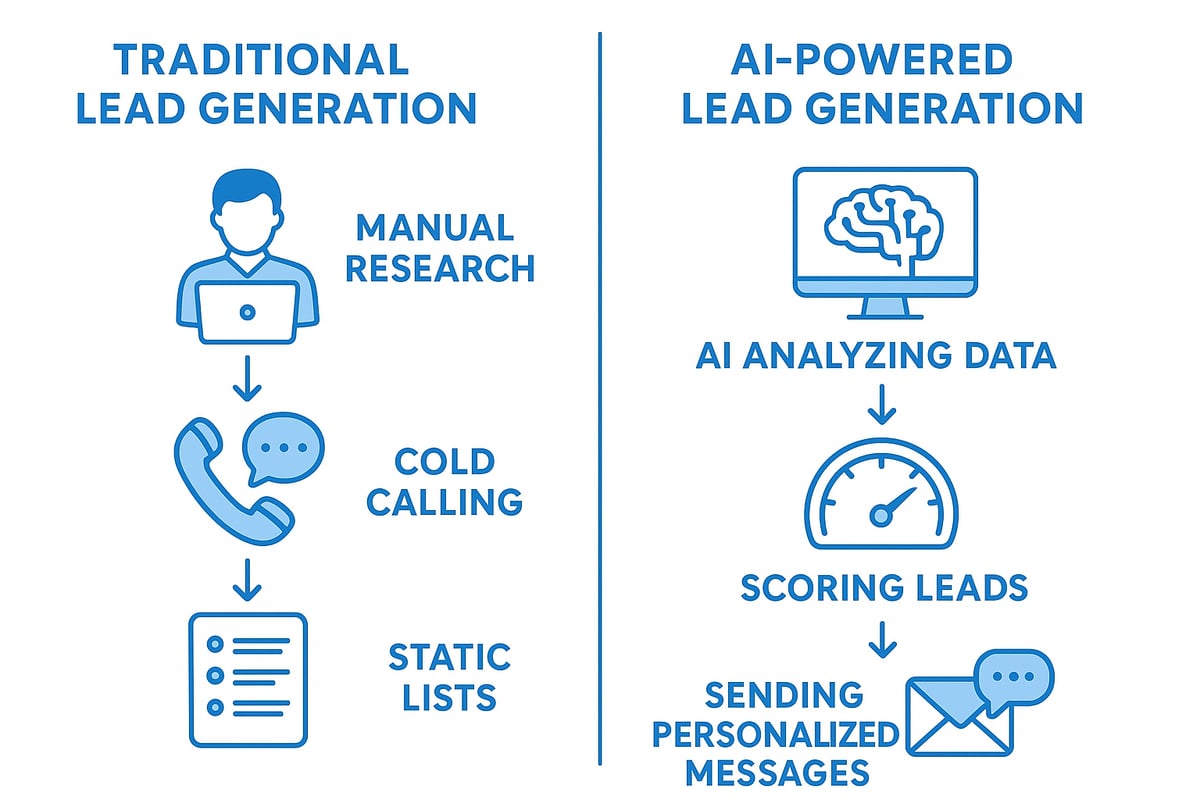
Manual Processes vs. AI Workflows
Traditional lead generation involved cold calling, static lists, and repetitive messaging. Sales teams could only manage a limited number of prospects each day. Lead ai, however, replaces these labor-intensive tasks with automated, data-driven workflows.
AI systems scan thousands of leads in minutes, analyze behavior and firmographics, and prioritize high-fit prospects. This means your team can focus on connecting with the right people, not wasting hours on low-interest contacts.
| Feature | Traditional Approach | AI-Powered Approach |
|---|---|---|
| Prospect Volume | 20/day (manual) | Thousands/minute (AI) |
| Targeting | Broad, generic | Precise, data-driven |
| Personalization | Templates, mail merge | Real-time, tailored messages |
| Availability | Business hours only | 24/7 engagement (chatbots) |
With lead ai, every stage of the process becomes smarter and more scalable.
Speed, Quality, and Personalization
One of the biggest advantages of lead ai is speed. AI can evaluate thousands of prospects in the time a human team handles a handful. This rapid analysis leads to better lead quality, as AI leverages behavioral and firmographic data for accurate scoring.
Personalization is another game changer. AI crafts unique messages based on real-time signals. Instead of sending the same email to every prospect, lead ai enables tailored communication that resonates and converts.
Scalability is also a major win. AI reduces the cost per lead and eliminates the need to hire more staff as your pipeline grows. According to industry data, 87% of organizations believe AI gives them a competitive edge in lead generation.
The New Standard: AI-Driven Strategies
AI chatbots now engage and qualify website visitors around the clock, ensuring no opportunity is missed outside business hours. These systems nurture prospects automatically, freeing your team to focus on closing deals.
The difference is clear: lead ai delivers higher conversion rates, better ROI, and a more predictable sales pipeline. Companies embracing this shift are seeing measurable results, like a 35% increase in conversions and a 40% boost in lead scoring efficiency.
If you want to understand how this transformation works in practice, Building an AI Sales Funnel offers a deep dive into the evolution from traditional to AI-driven sales strategies.
Choosing lead ai is no longer optional. It is the path to sustainable growth and a future-proof business.
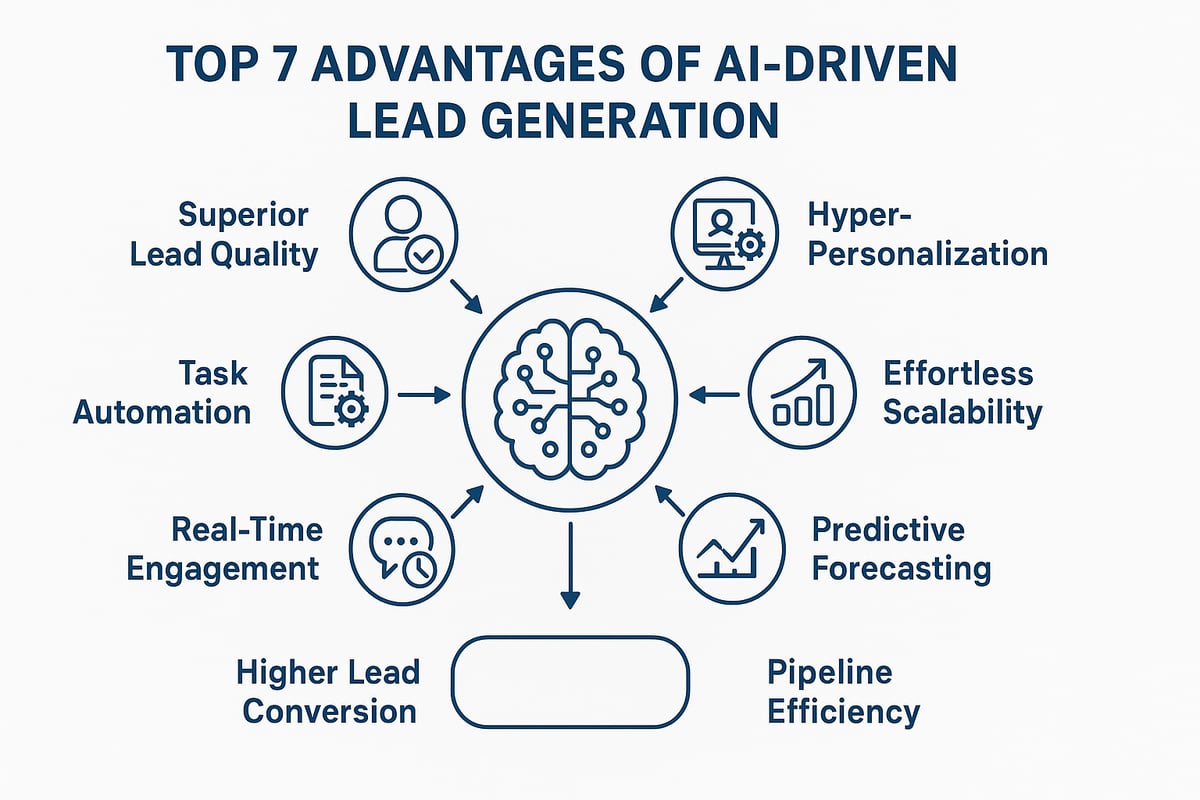
The Top 7 Advantages of AI-Driven Lead Generation
Artificial intelligence is transforming how companies generate and nurture leads. By integrating lead ai solutions, businesses gain a strategic edge in today’s hyper-competitive market. Let’s break down the seven most powerful advantages you can unlock with AI-driven lead generation.
1. Superior Lead Quality and Predictive Scoring
With lead ai, you can instantly pinpoint prospects most likely to buy. AI analyzes behavioral signals, such as website clicks and time-on-page, alongside CRM and historical sales data. This enables predictive lead scoring that ranks prospects by purchase intent.
For example, AI can prioritize leads who revisit your pricing page or engage with product demos. According to recent research, AI-driven lead intelligence increases conversion by 35%, making it a game-changer for sales teams.
2. Hyper-Personalization at Scale
Manual outreach often feels generic, but lead ai brings true personalization. AI customizes messages, timing, and content based on each prospect’s digital footprint and previous behaviors.
Dynamic email subject lines, tailored offers, and even personalized website experiences boost engagement. Businesses see higher open and response rates when using AI-powered campaigns versus traditional blasts.
3. Automation of Repetitive Tasks
AI excels at handling repetitive, time-consuming tasks. With lead ai, data entry, lead segmentation, follow-ups, and calendar bookings are automated.
Sales reps are freed to focus on high-value conversations and closing deals. For example, automated scheduling tools ensure that qualified prospects can book meetings instantly, eliminating back-and-forth emails.
4. Effortless Scalability
Scaling manual processes means hiring more staff. In contrast, lead ai processes millions of data points and prospects simultaneously without increasing your budget or headcount.
AI-driven systems streamline outreach and qualification, letting you grow your pipeline efficiently. This means you can pursue new markets and customer segments without missing a beat.
5. Real-Time Engagement and Nurturing
AI chatbots and nurture engines engage leads immediately, answering questions and qualifying prospects around the clock. This ensures no opportunity is missed due to time zones or staff availability.
Lead ai maintains engagement through timely follow-ups, moving leads down the funnel until they are sales-ready. Real-time nurturing increases conversion rates and shortens the sales cycle.
6. Unified Prospect View and Data Enrichment
AI brings together every interaction a lead has with your brand into a single, unified view. Lead ai tools automatically update records, enrich profiles with new information, and surface relevant news or company changes.
This 360-degree perspective helps sales teams deliver timely, relevant outreach. You always know the latest context for every prospect, leading to more meaningful conversations.
7. Predictive Forecasting and Analytics
With lead ai, you can forecast pipeline performance and revenue outcomes with impressive accuracy. AI analyzes historical data, current engagement, and buying signals to project future results.
Revenue leaders use this insight to adjust strategies proactively and avoid surprises. Over time, these advantages compound, giving your business a sustainable competitive edge.
Summary Table: 7 Advantages of AI-Driven Lead Generation
| Advantage | Key Benefit |
|---|---|
| Superior Lead Quality | Higher conversion rates |
| Hyper-Personalization | Better engagement and response |
| Automation of Repetitive Tasks | More time for selling |
| Effortless Scalability | Grow pipeline without additional resources |
| Real-Time Engagement and Nurturing | No missed opportunities, faster conversions |
| Unified Prospect View & Data Enrichment | Complete, updated lead profiles |
| Predictive Forecasting & Analytics | Accurate forecasting, strategic agility |
Lead ai is no longer just an option, it’s the roadmap to predictable, scalable growth in 2026.
Step-by-Step: How to Implement Intelligent AI Lead Strategies in 2026
Ready to turn your pipeline into a well-oiled machine? By following this blueprint, you can take full advantage of lead ai to supercharge your sales funnel. Each step brings you closer to predictable, scalable growth.
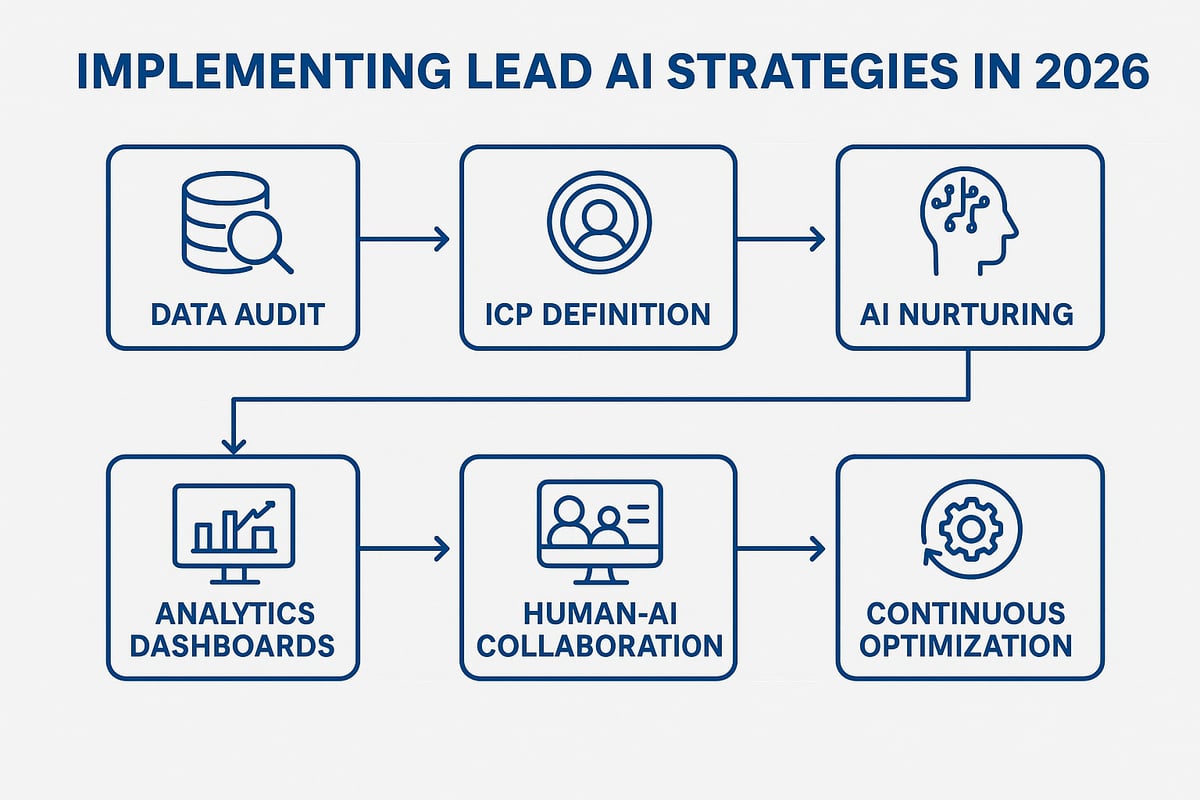
Step 1: Audit Your Current Lead Generation and CRM Processes
Start with a comprehensive audit of your existing workflows. Clean, accurate data is the backbone of any successful lead ai strategy.
- Review CRM records for duplicates and missing fields.
- Identify manual or repetitive tasks that slow down your team.
- Document current lead sources and qualification criteria.
Without solid data hygiene, lead ai tools will struggle to deliver accurate insights. By resolving data issues now, you set the stage for smarter automation and better results.
Step 2: Define Your Ideal Customer Profile and Key Scoring Criteria
Establishing a clear Ideal Customer Profile (ICP) is crucial for targeting the right prospects with lead ai. Analyze historical sales data and segment by industry, company size, and buying behavior.
- Use AI to identify patterns in your highest-value customers.
- Set up lead scoring models that weigh firmographics and engagement signals.
- Continuously refine your ICP as new data comes in.
According to AI-driven lead scoring improves efficiency by 40%, organizations leveraging AI for lead scoring see measurable gains. This step ensures you prioritize leads most likely to convert.
Step 3: Deploy AI Tools for Prospecting and Qualification
Now it’s time to put lead ai to work identifying and qualifying new opportunities. Modern AI-driven platforms scan massive datasets in seconds.
- Integrate AI tools that analyze website activity, social signals, and CRM history.
- Surface high-fit prospects based on real-time firmographic and behavioral data.
- Automate the initial qualification process.
With lead ai, you’ll never miss a hot prospect or waste time on low-potential leads. The result? A higher-quality pipeline and less manual effort.
Step 4: Automate Lead Nurturing and Engagement
Leverage lead ai to handle follow-ups, content delivery, and nurturing sequences. AI-driven chatbots and nurture engines engage leads around the clock.
- Set up AI chatbots for instant qualification on your website.
- Use AI to personalize outreach via email, SMS, and social media.
- Automate reminders and content sharing based on lead behavior.
By automating these touchpoints, lead ai ensures prospects stay engaged until they’re ready for a sales conversation.
Step 5: Integrate Predictive Analytics and Real-Time Dashboards
Visibility is key for optimizing your sales process. Predictive analytics, powered by lead ai, provide actionable insights for your team.
- Build dashboards to track conversion rates, lead quality, and pipeline health.
- Use AI to forecast deal closures and revenue trends.
- Monitor real-time engagement signals for timely follow-ups.
With lead ai dashboards, you can spot bottlenecks instantly and adjust strategies for maximum impact.
Step 6: Combine Human Expertise with AI Insights
The most successful teams blend human intuition with lead ai recommendations. Train your sales reps to interpret AI-driven insights and act decisively.
- Establish clear handoff points from AI qualification to human selling.
- Encourage collaboration between marketing and sales.
- Use AI suggestions to prioritize outreach and personalize conversations.
By leveraging both human skills and lead ai, you create a seamless, customer-centric buying experience.
Step 7: Continuously Optimize and Expand AI Capabilities
Lead ai thrives on constant improvement. Regularly review performance metrics and refine your approach.
- Analyze which AI-driven tactics deliver the best ROI.
- Expand automation to new channels or processes as your team grows.
- Stay informed about emerging AI tools and industry trends.
Continuous optimization keeps your lead ai strategy ahead of the curve and ensures your business remains competitive.
7 Proven AI Strategies for Lead Generation and Nurturing
Unlocking the full power of lead ai means going beyond automation. To truly dominate in 2026, you need a toolkit of proven strategies that work together for maximum impact. Let’s break down the seven most effective approaches, so you can build a scalable, intelligent pipeline that delivers results.
1. AI-Powered Lead Scoring and Segmentation
With lead ai, you can build custom scoring models that use demographic and behavioral data to identify top prospects. AI continuously learns from new interactions, refining the accuracy of its scoring over time.
For example, monday CRM’s AI Blocks empower even non-technical teams to create tailored rules for segmenting leads. This means your sales team can focus on the highest-value opportunities while AI handles the heavy lifting behind the scenes.
- AI-driven segmentation improves targeting precision
- Scoring models adapt as your customer data evolves
By leveraging lead ai, you ensure that no promising lead slips through the cracks.
2. Deploy Conversational AI Chatbots
Conversational AI chatbots are a game changer for instant engagement. With lead ai, your website visitors can interact with chatbots that capture information, answer questions, and qualify prospects 24/7.
These bots do more than just chat; they book demos, handle FAQs, and route leads to the right sales reps in real time. According to AI Sales Bots for Lead Nurturing, organizations see higher conversion rates and faster response times with AI bots compared to manual follow-ups.
- Never miss a lead, even outside business hours
- Consistent qualification and handoff to sales
Adding lead ai chatbots means your funnel works non-stop to capture and nurture prospects.
3. Hyper-Personalized Multichannel Outreach
Generic outreach is dead. Lead ai analyzes every touchpoint in a prospect’s digital footprint, so your messaging is always relevant and timely. AI can reference recent company news, pain points, or industry trends within every email or SMS.
Real-world results prove the impact. As highlighted in Practical AI Marketing Results, AI-powered campaigns are outperforming traditional tactics with higher open and response rates.
- Automated, dynamic personalization at scale
- Multichannel: email, SMS, LinkedIn, and more
Lead ai makes every prospect feel like your top priority, driving stronger engagement.
4. Predictive Analytics for Buying Readiness
Anticipating when a lead is ready to buy is the holy grail of sales. Lead ai leverages predictive analytics to spot signals that indicate a prospect’s intent—like engagement spikes or activity from multiple stakeholders.
You can set up instant alerts so your sales team reaches out at the perfect moment. This proactive approach means more closed deals and less wasted effort.
- Identify hot leads before competitors do
- Time outreach for maximum impact
With lead ai, you move from guesswork to data-driven action.
5. Seamless AI Platform Integrations
For lead ai strategies to work, your tools must talk to each other. Choose AI solutions that integrate easily with your CRM and marketing platforms. This creates a unified workflow where prospects are pulled from multiple sources and managed in one place.
Integration reduces data silos and ensures your team always has up-to-date information. It also enables automation across the entire sales funnel.
- Centralized prospect management
- Automated handoffs and updates
Lead ai integrations remove friction, so you can scale without chaos.
6. Human-AI Collaboration for Consultative Selling
AI handles the repetitive and analytical tasks, but human expertise is still essential. Lead ai empowers your sales reps to focus on high-value conversations and consultative selling.
Train your team to interpret AI insights and act on prioritized leads. This partnership between people and AI delivers a more personalized experience for prospects and drives higher conversions.
- AI does the groundwork, humans close the deal
- Ongoing training maximizes ROI
Blending human skill with lead ai intelligence is the secret to unbeatable sales results.
7. Real-Time Performance Tracking and Optimization
Success with lead ai is not set-and-forget. Use AI-powered dashboards to monitor lead quality, conversion rates, and campaign ROI in real time. These insights help you spot trends, identify bottlenecks, and refine your strategies for continuous improvement.
Regular optimization ensures your pipeline stays healthy and your tactics evolve with changing buyer behaviors.
- Visualize performance at a glance
- Data-driven tweaks for ongoing growth
With lead ai, you’re always a step ahead—adapting quickly to win more business.
Future Trends: The Next Frontier of Intelligent Lead Strategies
The future of lead ai is unfolding rapidly, promising to redefine how businesses find, qualify, and convert prospects. As we look ahead to 2026, the landscape is shifting from basic automation to truly intelligent, adaptive systems that learn and evolve alongside your business.
Agentic and Multimodal AI: The New Standard
Agentic AI systems are emerging as powerful autonomous agents. They can engage leads across multiple channels—text, voice, and even video—creating richer, more human-like interactions. Multimodal AI interprets data from various sources, allowing lead ai platforms to understand complex customer signals and respond appropriately. This means your outreach is smarter, more relevant, and always on.
AI-Driven Intent Data and Autonomous Lead Generation
Next-generation lead ai tools go beyond static lists. They analyze intent signals like funding rounds, leadership changes, and technology adoption. By leveraging these cues, AI can identify high-intent prospects before competitors. Autonomous lead generation agents now research, qualify, and nurture leads with minimal human oversight, ensuring your pipeline is always full.
- Detects buying signals from public and private data
- Prioritizes leads based on real-time engagement
- Reduces time wasted on unqualified prospects
Hyper-Automation and End-to-End Funnel Management
Hyper-automation combines lead ai with robotic process automation (RPA), orchestrating every stage from initial contact to deal closure. This seamless integration means less manual work, fewer errors, and faster movement through the sales funnel. Imagine a system where every touchpoint is optimized by AI—no more missed follow-ups or stale leads.
Ethical AI and Data Privacy: Building Trust
As lead ai grows more powerful, ethical considerations and data privacy move to the forefront. Companies must prioritize transparency, consent, and compliance with evolving regulations. Permission-based outreach is replacing outdated spray-and-pray tactics. Trust becomes a core differentiator in your lead ai strategy, ensuring prospects feel secure and valued.
Precision Targeting Over Cold Outreach
One of the most exciting shifts is the move from mass cold outreach to precision targeting. Lead ai enables businesses to focus on high-intent, inbound prospects, dramatically increasing conversion rates. Instead of guessing, you know exactly who to contact, when, and with what message.
The Business Impact: Forecasts and Competitive Advantage
The numbers tell a compelling story. According to IBM’s insights on AI-driven lead generation, companies leveraging lead ai report higher forecast accuracy and lower customer acquisition costs. As AI in marketing is projected to reach $82.23 billion by 2030, future investments in lead ai will only accelerate, giving early adopters a lasting edge.
| Trend | Impact on Lead AI | Business Value |
|---|---|---|
| Agentic/Multimodal AI | Richer engagement, automation | Higher conversion, efficiency |
| Intent Data & Autonomy | Proactive targeting | Faster pipeline, less waste |
| Hyper-Automation | End-to-end optimization | Lower cost, scalable growth |
| Ethical AI/Data Privacy | Compliance, trust | Brand loyalty, reduced risk |
What’s Next: Staying Ahead in Lead AI
To thrive, organizations must commit to continuous learning, investing in the latest lead ai solutions and upskilling teams. The companies that adapt quickly will be best positioned to capture new opportunities, stay compliant, and build sustainable revenue streams. Embrace the future of lead ai now, and ensure your business is not left behind as intelligent lead management evolves.
If you’re ready to put these AI-driven lead strategies into action and see real results in your business, why not take the next step? We’ve helped hundreds of teams just like yours transform their pipelines, cut wasted hours, and boost revenue—all by harnessing the power of intelligent automation. You don’t have to figure it out alone. Let’s pinpoint your biggest opportunities and map out a custom plan for predictable growth in 2026. It’s your chance to see firsthand how AI can deliver more qualified leads, better appointments, and real peace of mind.
Book a FREE Strategy Call