


The landscape of business growth has fundamentally changed. Companies that once relied solely on internal teams now recognize the strategic advantage of partnering with specialized experts who bring cutting-edge technology, proven methodologies, and dedicated focus to revenue generation. A sales and marketing agency serves as a growth accelerator, combining strategic insight with tactical execution to deliver measurable results. In 2026, the most successful businesses aren't just hiring agencies-they're forming strategic partnerships with teams that genuinely invest in their success and leverage advanced systems to guarantee outcomes.
Understanding the Modern Sales and Marketing Agency Model
Today's sales and marketing agency operates fundamentally differently from traditional advertising firms. Rather than simply creating campaigns and hoping for results, modern agencies build comprehensive systems that generate predictable revenue growth. According to recent industry statistics, the global marketing agency industry continues to expand rapidly, with digital services accounting for the majority of revenue growth.
The Evolution Beyond Traditional Advertising
Traditional agencies focused primarily on brand awareness and creative execution. Modern agencies like those specializing in lead generation with AI combine multiple disciplines into cohesive revenue-generation systems. This evolution represents a fundamental shift in how businesses approach growth.
Key differences include:
- Outcome-based partnerships rather than retainer-only arrangements
- Advanced technology integration including AI and automation
- Transparent reporting with real-time performance metrics
- Guaranteed results tied to specific business outcomes
- Strategic alignment where agency success depends on client success
This transformation reflects broader market demands. Companies no longer want beautiful campaigns that don't convert-they need qualified leads, booked appointments, and closed deals. The sales and marketing agency model has adapted to deliver exactly that.
Core Services That Drive Business Growth
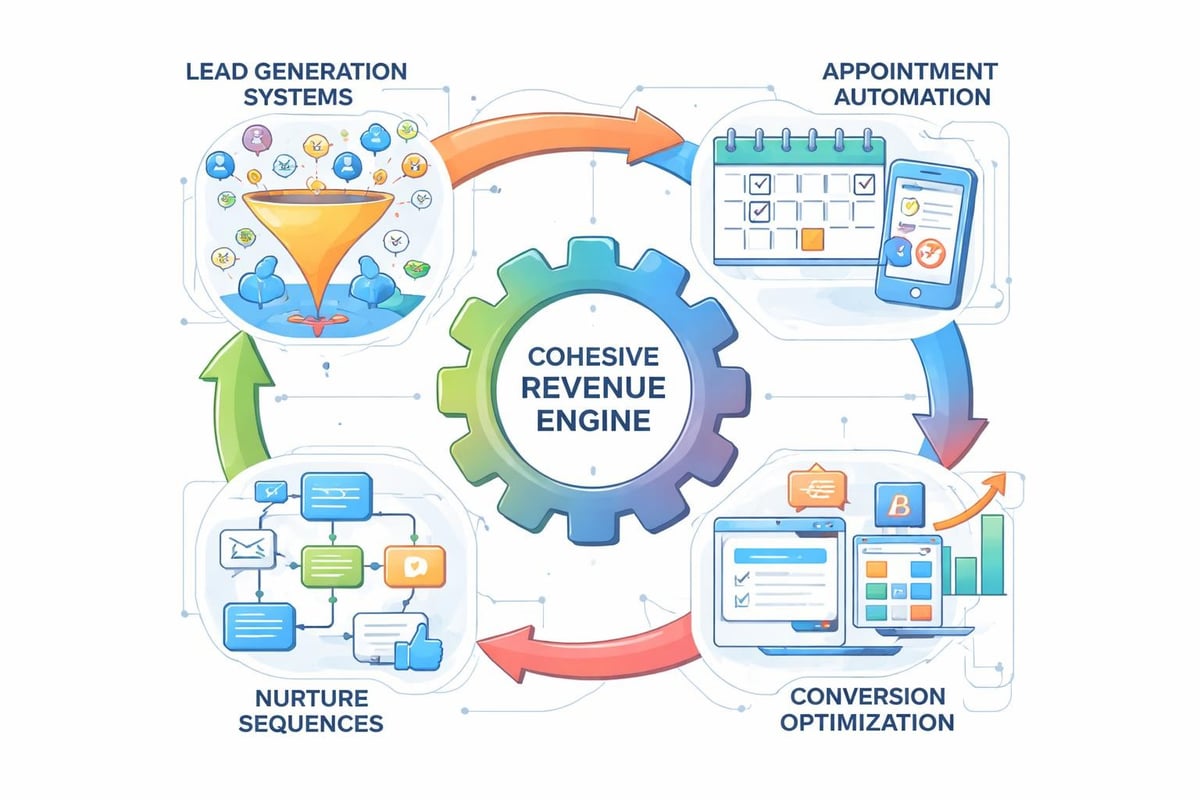
A comprehensive sales and marketing agency provides far more than individual tactics. The most effective partnerships involve integrated systems where each component amplifies the others. Understanding these services helps businesses select agencies that truly align with their growth objectives.
Lead Generation and Qualification Systems
Effective lead generation forms the foundation of any successful sales operation. Modern agencies deploy sophisticated targeting methods that identify prospects already experiencing the problems your solution solves. This approach, detailed in strategies for building a lead generation website, ensures your sales team spends time with qualified prospects rather than chasing uninterested contacts.
| Service Component | Traditional Approach | Modern AI-Driven Approach |
|---|---|---|
| Lead Identification | Purchased lists, cold outreach | Behavioral targeting, intent signals |
| Qualification Process | Manual SDR screening | Automated AI scoring and nurturing |
| Appointment Setting | Phone calls, email sequences | Multi-channel automation with AI conversations |
| Conversion Rates | 1-3% typical | 5-12% with proper systems |
The difference in performance stems from precision. Rather than casting wide nets and hoping for catches, advanced systems identify prospects displaying active buying signals. Data shows that agencies specializing in digital marketing increasingly adopt AI and machine learning to enhance targeting accuracy and improve conversion rates.
Automated Appointment Booking Infrastructure
Appointment automation represents one of the most transformative services modern agencies provide. Instead of relying solely on human follow-up-which inevitably leads to dropped prospects-automated systems ensure every qualified lead receives timely, personalized outreach until they book a meeting or clearly opt out.
- Initial engagement through targeted content and offers
- Qualification automation using conversational AI to identify fit
- Intelligent scheduling that respects both prospect and sales team availability
- Reminder sequences that reduce no-shows by 60-80%
- Follow-up systems for prospects not ready to commit immediately
This infrastructure transforms sales operations. Teams that once spent hours manually following up can focus entirely on conducting meetings and closing deals. For businesses exploring B2B corporate lead generation, appointment automation proves especially valuable given longer sales cycles and multiple stakeholder involvement.
Strategic Marketing Campaigns and Content
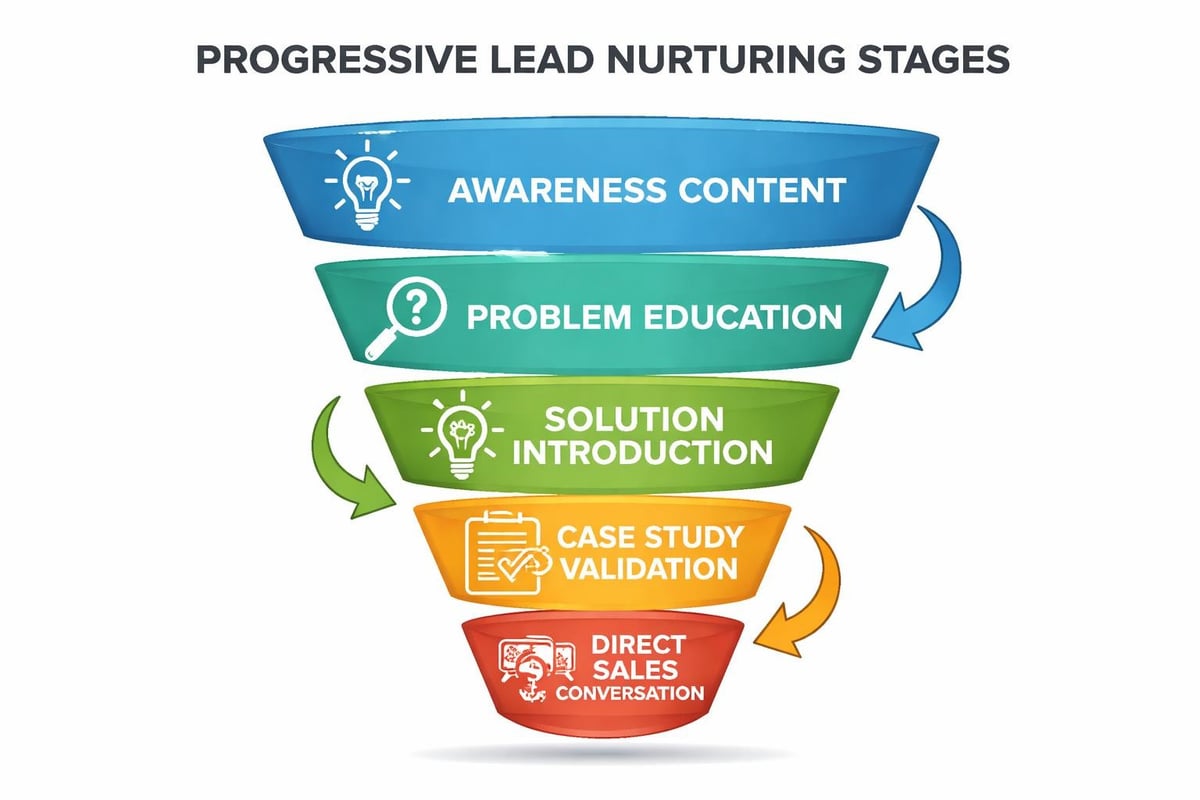
While lead generation focuses on bottom-funnel activities, strategic marketing builds the foundation that makes everything else more effective. A full-service sales and marketing agency creates campaigns that educate prospects, establish authority, and warm cold audiences before direct sales contact.
Effective campaigns incorporate:
- Educational content addressing specific prospect pain points
- Case studies demonstrating proven results
- Thought leadership positioning your team as industry experts
- Multi-channel distribution ensuring consistent message reinforcement
- Performance tracking connecting marketing efforts to revenue outcomes
The shift from vanity metrics to revenue attribution has fundamentally changed how agencies approach campaigns. Best practices for working with marketing and sales agencies emphasize aligning every marketing initiative with specific business goals and measuring results through closed deals rather than likes or impressions.
The Technology Advantage: AI-Powered Growth Systems
Technology separates average agencies from exceptional ones in 2026. The most effective sales and marketing agency partners leverage advanced AI systems to deliver results that would be impossible with manual processes alone. Understanding these technological advantages helps businesses evaluate potential agency partnerships.
Machine Learning for Prospect Targeting
AI-driven targeting systems analyze thousands of data points to identify prospects most likely to convert. Rather than demographic guessing, these systems identify behavioral patterns indicating active buying interest. Companies implementing best marketing platforms with AI capabilities consistently outperform competitors relying on traditional targeting methods.
The precision advantage compounds over time. As AI systems process more campaign data, they continuously refine targeting parameters, improving performance with each iteration. This creates a flywheel effect where campaigns become progressively more effective without proportional cost increases.
Conversational AI for Qualification and Nurturing
Perhaps the most transformative technology involves AI systems that conduct natural conversations with prospects. These aren't simple chatbots following decision trees-they're sophisticated systems that understand context, respond appropriately, and guide prospects toward booking appointments.
Benefits include:
- 24/7 availability ensuring no prospect waits for human response
- Consistent qualification ensuring every lead receives proper evaluation
- Personalized conversations adapting to individual prospect responses
- Scalability handling thousands of simultaneous conversations
- Cost efficiency dramatically reducing per-lead acquisition costs
Businesses implementing these systems report transformation in their sales operations. According to trends shaping the marketing agency industry, AI-powered automation represents one of the most significant shifts affecting agency capabilities and client results.
Predictive Analytics for Campaign Optimization
Advanced analytics move beyond reporting what happened to predicting what will happen and prescribing optimal actions. Modern sales and marketing agency partners deploy predictive models that forecast campaign performance, identify optimization opportunities, and recommend strategic adjustments before performance declines.
| Analytics Type | Information Provided | Business Impact |
|---|---|---|
| Descriptive | What happened in past campaigns | Historical context |
| Diagnostic | Why specific results occurred | Understanding causation |
| Predictive | What outcomes to expect | Proactive planning |
| Prescriptive | Which actions to take | Optimized decision-making |
This analytical sophistication enables continuous improvement. Rather than running campaigns for months before determining effectiveness, predictive systems provide early performance indicators and optimization recommendations within days or even hours of launch.
Selecting the Right Agency Partnership
Choosing a sales and marketing agency represents a strategic decision with significant impact on business growth. The wrong partnership wastes resources and opportunity. The right partnership accelerates revenue and builds competitive advantages. Several critical factors separate exceptional agencies from mediocre ones.
Alignment of Interests Through Guaranteed Results
Performance guarantees fundamentally change the agency-client relationship. When agencies guarantee specific outcomes-whether qualified leads, booked appointments, or closed deals-they align their interests completely with client success. This contrasts sharply with traditional retainer models where agencies profit regardless of results.
Questions to ask prospective agencies:
- Do you guarantee specific performance outcomes?
- What happens if guaranteed results aren't delivered?
- How do you define and measure success?
- What skin do you have in the game beyond monthly fees?
- Can you provide client references who've achieved guaranteed results?
Agencies offering genuine guarantees typically demonstrate confidence born from proven systems and repeatable processes. They've refined their methodologies to the point where they can predict outcomes with sufficient accuracy to stake their own revenue on performance.
Transparency in Operations and Reporting
Complete transparency should be non-negotiable when selecting agency partners. You deserve real-time visibility into campaign performance, clear understanding of methodologies being deployed, and honest communication about what's working and what isn't. Research on digital marketing trends indicates that agencies prioritizing transparency and data analytics investments consistently retain clients longer and deliver superior results.
Transparency indicators include:
- Dashboard access showing live campaign performance
- Regular communication with proactive updates rather than reactive responses
- Clear methodology explanation of exactly how systems work
- Honest attribution acknowledging both successes and failures
- Open collaboration treating you as partner rather than client
Agencies hiding behind proprietary "secret sauce" often lack genuine competitive advantages. The best partners eagerly explain their systems because their true value lies in execution excellence rather than mysterious techniques.
Specialization Versus Generalization
Industry specialization matters significantly in agency selection. A sales and marketing agency focusing specifically on your industry or business model brings invaluable context that generalists can't match. They understand your prospects' pain points, competitive landscape, regulatory considerations, and effective messaging without requiring extensive education.
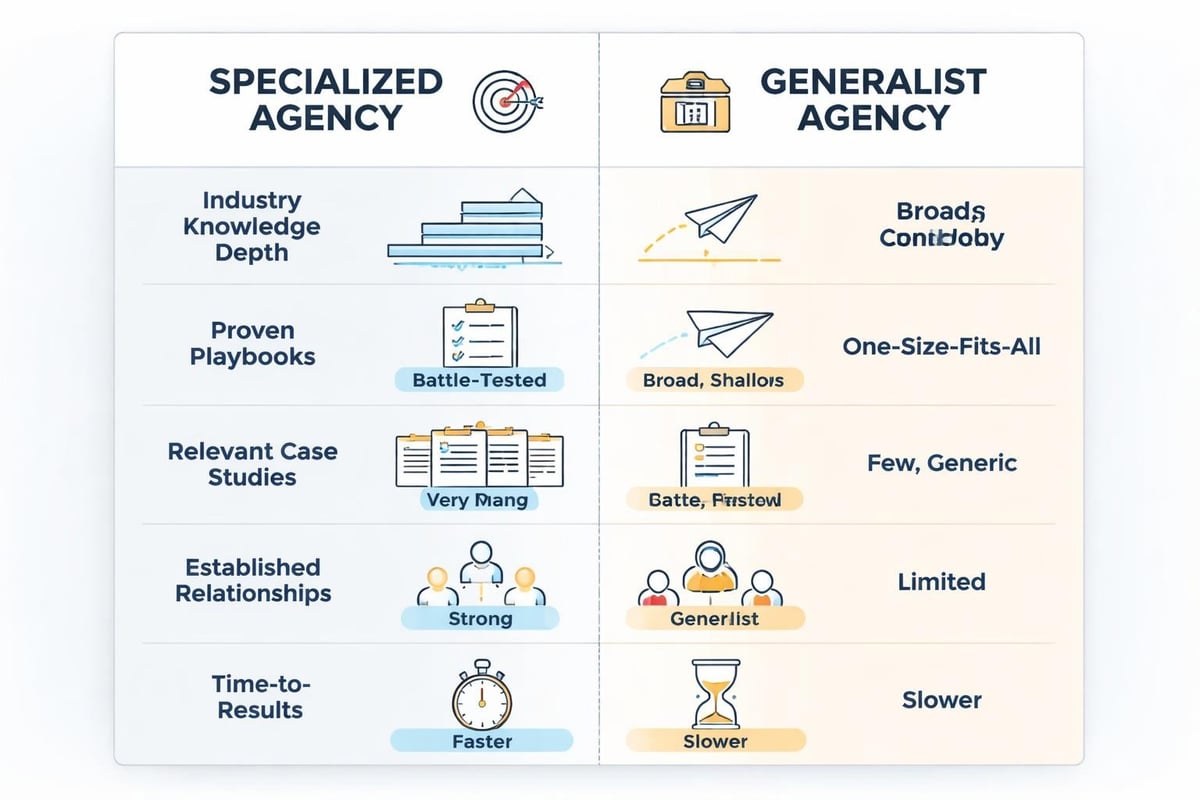
However, technology specialization-particularly in AI-driven lead generation-can trump industry specialization in certain situations. Agencies deploying cutting-edge systems often deliver superior results even without deep industry experience because their technological advantages overcome knowledge gaps.
Measuring Success and ROI
Effective measurement separates strategic partnerships from expensive experiments. When working with a sales and marketing agency, establishing clear metrics and attribution models ensures accountability and enables data-driven optimization. The metrics that matter most have evolved significantly as marketing technology has advanced.
Beyond Vanity Metrics to Revenue Attribution
Revenue attribution represents the ultimate success metric. While intermediate metrics like website traffic, social engagement, and email open rates provide useful signals, they mean nothing without connection to actual revenue generation. Modern attribution models track prospect journeys from initial awareness through closed deals, assigning appropriate value to each touchpoint.
Critical revenue metrics include:
- Cost per qualified lead measuring efficiency of targeting and conversion
- Lead-to-appointment conversion rate indicating qualification accuracy
- Appointment-to-close ratio revealing sales process effectiveness
- Customer acquisition cost showing total investment required per new customer
- Customer lifetime value demonstrating long-term return on acquisition investment
Current trends in agency marketing emphasize the critical importance of proving value through clear ROI demonstration. Agencies that can't show direct revenue impact increasingly struggle to retain clients, while those providing transparent attribution build long-term partnerships.
Leading Indicators for Predictive Monitoring
While revenue metrics show ultimate success, leading indicators provide early warning systems for performance issues and optimization opportunities. These metrics change faster than revenue numbers, enabling proactive adjustments before problems significantly impact results.
| Metric Category | Example Indicators | What They Reveal |
|---|---|---|
| Engagement Quality | Time on page, scroll depth, content consumption | Audience relevance and interest level |
| Conversion Signals | Form starts, chat initiations, content downloads | Prospect movement toward action |
| Nurture Effectiveness | Email response rates, click patterns, conversation completion | System performance in warming cold leads |
| Sales Readiness | Questions asked, objections raised, timeline discussions | Proximity to purchase decision |
Monitoring these indicators enables continuous optimization. Rather than waiting months to determine campaign effectiveness, modern systems provide actionable insights within days, allowing rapid testing and refinement.
Setting Realistic Expectations and Timelines
Realistic timelines prevent frustration and enable strategic patience. While some agencies promise immediate results, sustainable growth typically requires systematic building. Understanding natural development phases helps set appropriate expectations.
Most effective sales and marketing agency partnerships follow this progression:
- Foundation building (Weeks 1-4): System setup, targeting refinement, initial testing
- Data collection (Weeks 5-8): Performance monitoring, audience learning, initial optimization
- Optimization phase (Weeks 9-16): Systematic refinement based on performance data
- Scaling period (Weeks 17+): Expansion of proven strategies, increased investment in winners
Companies expecting immediate massive results often make premature judgments and abandon effective strategies before they reach full potential. Conversely, those willing to invest in proper development phases typically achieve sustainable, scalable growth that compounds over time.
The Future of Sales and Marketing Agencies
The sales and marketing agency landscape continues evolving rapidly. Understanding emerging trends helps businesses select partners positioned for long-term success rather than those relying on outdated methodologies. Several clear trajectories are reshaping the industry in 2026 and beyond.
AI Integration Deepening Across All Functions
Artificial intelligence will pervade every aspect of agency operations, from prospect research through campaign execution to performance optimization. Agencies failing to integrate AI capabilities will find themselves increasingly unable to compete with those leveraging these technological advantages. The transformation extends far beyond simple automation-AI is fundamentally reimagining what's possible in prospect targeting, message personalization, and conversion optimization.
Forward-thinking agencies invest heavily in AI infrastructure, develop proprietary systems, and train teams to work alongside AI rather than be replaced by it. This human-AI collaboration represents the future of effective marketing and sales operations.
Shift Toward Outcome-Based Partnerships
Performance-based models will increasingly replace traditional retainer arrangements as businesses demand accountability and agencies confident in their systems embrace risk-sharing. This shift benefits both parties-clients pay only for results while agencies demonstrating consistent performance earn premium compensation tied to the value they create.
This trend accelerates the professionalization of the industry. Agencies lacking proven systems and repeatable processes can't survive on performance-based models, naturally elevating industry standards and weeding out ineffective operators.
Hyper-Specialization in Vertical Markets
While some agencies maintain broad focus, the most successful increasingly specialize deeply in specific industries or business models. This specialization enables development of refined playbooks, accumulation of market intelligence, and establishment of industry authority that generalists can't match. Businesses benefit from partnering with agencies that speak their language and understand their unique challenges without extensive education periods.
For companies seeking partners who understand their specific growth challenges, selecting a sales and marketing agency with relevant specialization delivers faster results and higher ultimate performance than working with generalists attempting to serve all industries.
Implementation Strategies for Maximum Impact
Selecting the right sales and marketing agency represents only the first step. Effective collaboration requires active participation, clear communication, and strategic alignment. Businesses that treat agency partnerships as true collaborations rather than vendor relationships consistently achieve superior results. Several specific practices maximize partnership effectiveness.
Establishing Clear Communication Protocols
Structured communication prevents misunderstandings and ensures alignment. Rather than ad-hoc updates and reactive problem-solving, establish regular cadences for strategic reviews, performance discussions, and tactical adjustments. Weekly operational check-ins paired with monthly strategic reviews create rhythm that maintains momentum while enabling course corrections.
Effective communication protocols include:
- Designated point people on both sides preventing confusion
- Scheduled meetings with clear agendas and documented outcomes
- Shared dashboards providing continuous performance visibility
- Escalation procedures for addressing issues before they become problems
- Celebration rituals acknowledging wins and maintaining positive momentum
Teams implementing these structures report dramatically improved satisfaction with agency partnerships and measurably better campaign performance.
Providing Context and Strategic Input
Your sales and marketing agency needs deep context about your business, customers, and competitive landscape to deliver optimal results. While specialized agencies bring market knowledge, you possess unique insights about your specific business that no external partner can match. Sharing this context enables agencies to craft more effective strategies and avoid false starts.
Critical context includes:
- Customer pain points and buying motivations discovered through sales conversations
- Competitive positioning and differentiation factors that influence decisions
- Internal capabilities and constraints affecting what you can deliver
- Strategic priorities and growth goals guiding tactical decisions
- Brand standards and messaging guidelines ensuring consistency
Companies providing rich context enable agencies to function as true extensions of internal teams rather than external vendors operating with incomplete information.
Investing in Proper Integration
System integration dramatically impacts partnership effectiveness. When your CRM, scheduling tools, and communication platforms connect seamlessly with agency systems, data flows automatically and insights become immediately actionable. Conversely, manual data transfers create friction, introduce errors, and slow response times.
Modern agencies offer integration capabilities with most common business systems. Taking time to properly configure these connections during onboarding pays continuous dividends throughout the partnership. The efficiency gains from automation and the intelligence benefits from unified data justify the initial integration investment many times over.
Partnering with the right sales and marketing agency can transform your business growth trajectory, but success requires choosing partners who align with your goals, leverage cutting-edge technology, and guarantee measurable results. If you're ready to move beyond traditional agencies that deliver mediocre outcomes and work with a team that genuinely invests in your success, Adstra provides AI-driven lead generation systems, automated appointment booking, and a guaranteed growth partnership model designed to deliver predictable revenue growth. Stop settling for agencies that treat you like a number-discover what's possible when your partner's success depends entirely on yours.