


The marketing landscape has fundamentally changed. Traditional tactics that once generated consistent results are now producing diminishing returns, while businesses that embrace artificial intelligence are experiencing exponential growth. An effective ai marketing strategy isn't just about adopting new tools-it's about reimagining how you identify, engage, and convert prospects into customers. Companies implementing comprehensive AI systems are seeing 3-5x improvements in lead quality, 60% reductions in customer acquisition costs, and unprecedented scalability. If you're still relying on manual prospecting and generic outreach, you're already behind.
Why Traditional Marketing Fails in the AI Era
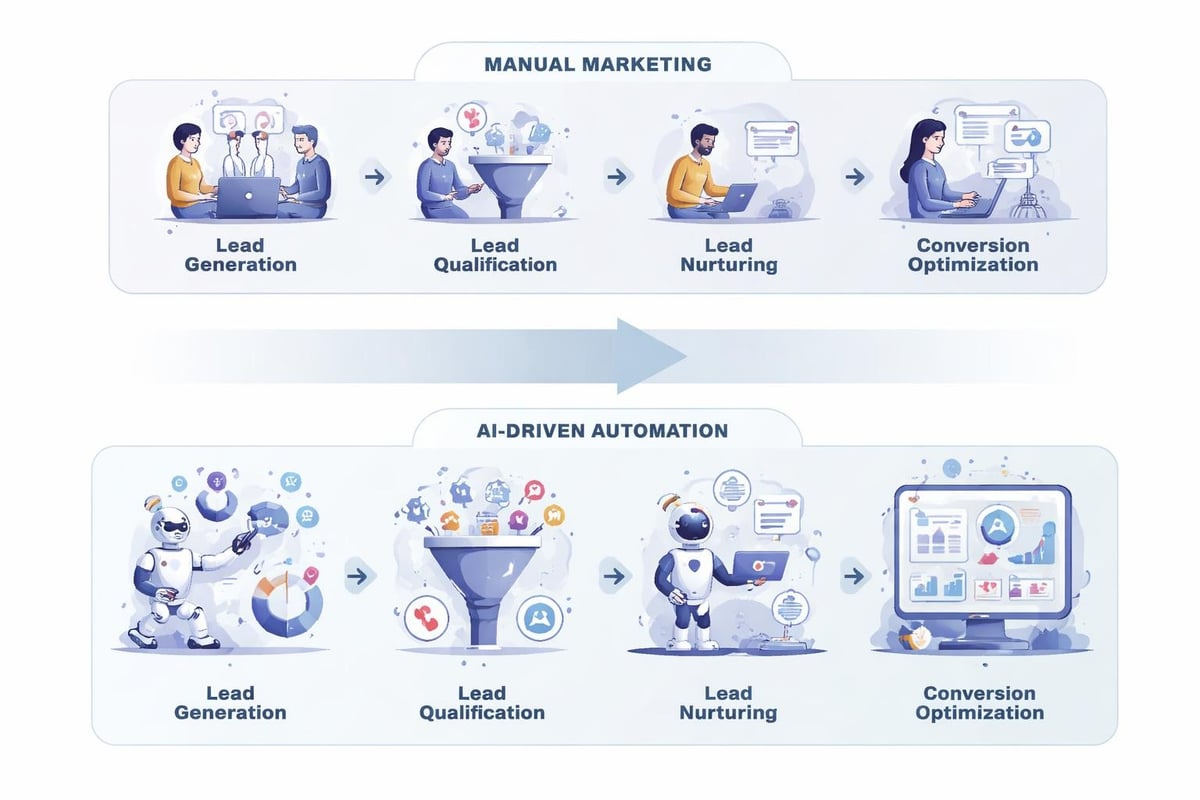
The old playbook is broken. Cold calling, mass email blasts, and spray-and-pray advertising no longer deliver the ROI businesses need to survive. Consumer behavior has evolved dramatically-people expect personalized experiences, instant responses, and relevant content that addresses their specific pain points.
Here's what's happening:
- Average email open rates have plummeted to 15-20% as inboxes become increasingly saturated
- Cold call connection rates hover around 2%, wasting countless hours of sales team productivity
- Generic advertising campaigns generate impressions but fail to convert quality leads
- Manual lead qualification processes create bottlenecks that slow revenue growth
The gap between businesses using AI and those clinging to outdated methods is widening every month. According to comprehensive AI research, companies integrating artificial intelligence into their marketing operations are achieving measurably superior outcomes across every key performance indicator.
The Cost of Inaction
Delaying AI adoption isn't just a missed opportunity-it's an existential threat. Your competitors are already using intelligent systems to identify your ideal customers, engage them with personalized messaging, and book qualified appointments while you're still manually sorting through spreadsheets.
Consider this reality: a business implementing an ai marketing strategy can analyze thousands of potential leads simultaneously, score them based on buying intent, and trigger personalized engagement sequences-all without human intervention. Meanwhile, traditional teams struggle to process dozens of leads effectively.
Building Your AI Marketing Strategy Foundation
Success starts with strategic architecture, not random tool adoption. Too many businesses make the mistake of implementing AI solutions without understanding how they fit into a cohesive growth system. Your ai marketing strategy must address three critical components: data infrastructure, intelligent automation, and continuous optimization.
Data Infrastructure Requirements
| Component | Purpose | Impact |
|---|---|---|
| Customer Data Platform | Centralizes all prospect and customer information | Enables 360-degree view for personalization |
| Behavioral Tracking | Monitors engagement across all touchpoints | Powers predictive lead scoring |
| Integration Layer | Connects marketing tools and systems | Eliminates data silos and manual transfers |
| Analytics Engine | Processes performance metrics in real-time | Drives continuous improvement decisions |
Your AI systems are only as effective as the data they can access. Fragmented information across multiple platforms creates blind spots that undermine even the most sophisticated algorithms. Research on explainable AI frameworks demonstrates that integrated data ecosystems dramatically improve marketing campaign performance and content relevance.
The businesses winning with lead generation with AI have invested in robust data foundations that feed their intelligent systems with comprehensive, accurate information.
Intelligent Automation Architecture
Automation without intelligence creates robotic experiences that repel prospects. Your ai marketing strategy must leverage machine learning to make your automation feel personal and contextually relevant.
Core automation workflows to implement:
- Intelligent lead capture – AI-powered forms and chatbots that qualify prospects in real-time
- Dynamic content personalization – Messaging that adapts based on behavioral signals and demographics
- Predictive lead scoring – Algorithms that identify which prospects are ready to buy
- Automated nurture sequences – Multi-channel campaigns that respond to prospect actions
- Smart scheduling – Systems that book appointments without human coordination
The most powerful application is combining these elements into a unified system. When a prospect visits your website, AI should instantly assess their intent, serve personalized content, qualify their fit, and guide them toward booking a conversation-all within minutes of their first interaction.
Advanced AI Marketing Tactics Driving Results Now
Generic strategies produce generic results. The businesses experiencing breakthrough growth in 2026 are implementing specific, data-driven tactics that leverage AI's unique capabilities. These aren't theoretical concepts-they're proven methodologies generating measurable returns.
Predictive Audience Modeling
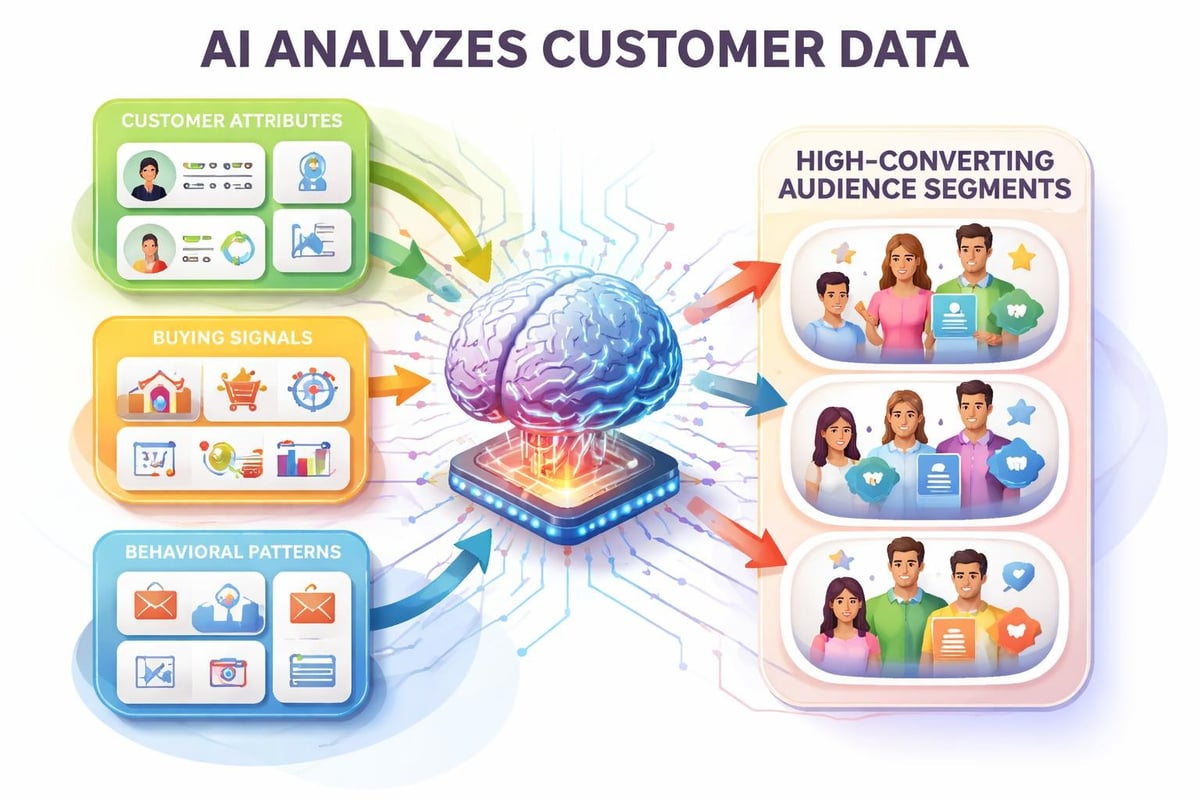
Traditional targeting relies on demographics and basic interests. AI-powered audience modeling analyzes thousands of behavioral signals to identify prospects who match your ideal customer profile with stunning accuracy. This approach has transformed how B2B corporate lead generation operates.
Machine learning algorithms examine your existing customer base, identify patterns invisible to human analysis, and build lookalike audiences that convert at 4-6x higher rates than standard targeting methods. The system continuously refines these models based on real engagement data, improving performance over time.
Conversational AI for Lead Qualification
The qualification bottleneck kills growth. Sales teams spend hours asking discovery questions to determine if prospects are legitimate opportunities. AI conversation agents handle this process instantly, engaging leads 24/7 and routing only qualified opportunities to your team.
Modern conversational AI goes far beyond simple chatbots. These systems understand context, ask intelligent follow-up questions, handle objections, and even schedule appointments directly on your calendar. They're learning from every interaction, becoming more effective at identifying buying signals and guiding prospects toward conversion.
Businesses implementing these systems report 70-80% time savings in lead qualification while simultaneously improving lead quality. Your sales team focuses exclusively on closing ready-to-buy prospects instead of chasing unqualified tire-kickers.
AI-Powered Content Strategy
Content creation at scale has always been challenging. An effective ai marketing strategy solves this through intelligent content systems that research topics, identify gaps, generate drafts, and optimize for engagement-all based on real performance data.
The SOMONITOR framework demonstrates how AI and large language models can enhance marketing analytics and content creation, providing explainable insights that drive campaign execution.
| Content Type | AI Application | Result |
|---|---|---|
| Blog Articles | Topic research, outline generation, SEO optimization | 10x content production speed |
| Social Media | Performance analysis, scheduling, engagement prediction | 3-4x higher engagement rates |
| Email Campaigns | Subject line testing, personalization, send-time optimization | 40-60% open rate improvement |
| Ad Copy | Multivariate testing, audience matching, creative generation | 2-3x better conversion rates |
What separates winning strategies from failed experiments is the human-AI collaboration model. Machines handle data analysis, pattern recognition, and production at scale. Humans provide strategic direction, creative vision, and quality control. This partnership creates marketing assets impossible to produce through either approach alone.
Optimizing for AI Discovery and Visibility
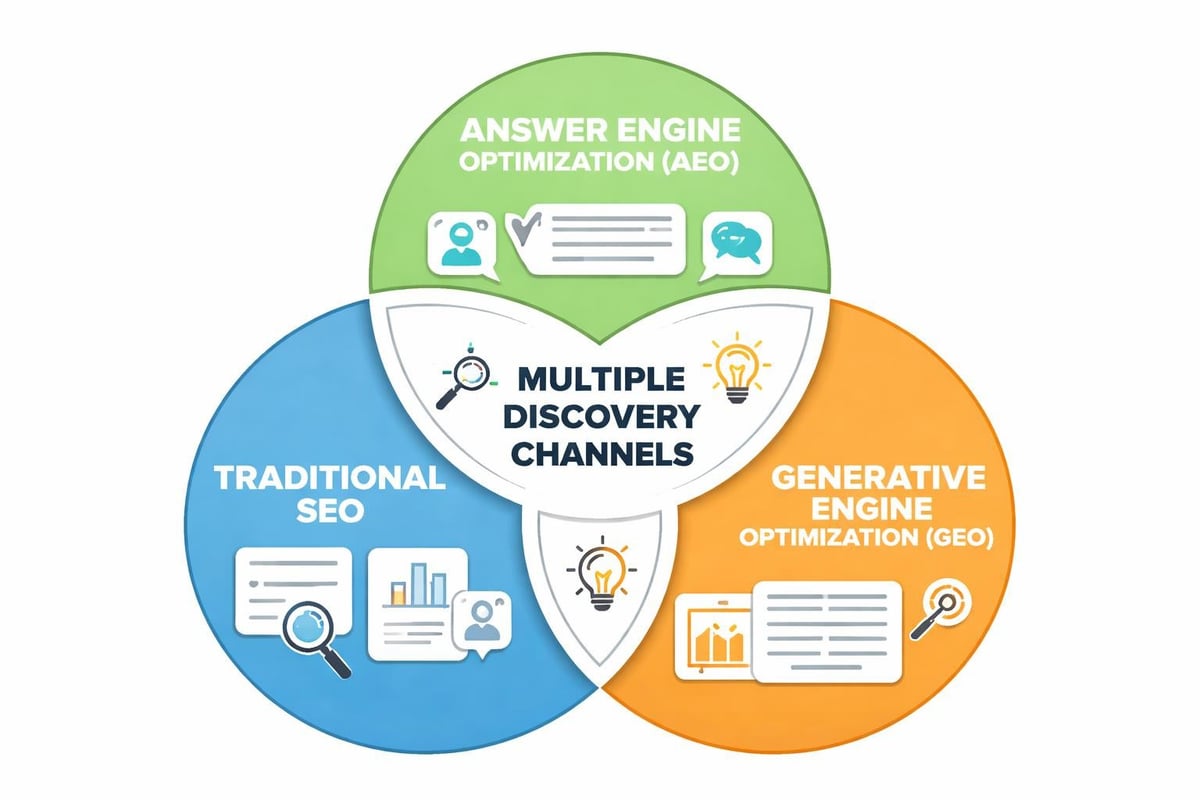
Here's a reality most businesses are ignoring: your future customers aren't just using Google anymore. They're asking ChatGPT, Perplexity, and other AI systems for recommendations. If your business isn't optimized for AI discovery, you're invisible to an increasingly large segment of your market.
Traditional SEO focused on ranking for keywords. The new game is Answer Engine Optimization, which requires structuring your content to provide direct, concise answers that AI systems can extract and cite. This shift is fundamentally changing how businesses approach content strategy.
Generative Engine Optimization Tactics
Generative Engine Optimization represents the next evolution of digital visibility. Your ai marketing strategy must include tactics that help AI systems understand, trust, and recommend your business.
Implementation priorities:
- Structured data markup – Schema that helps AI systems parse your content accurately
- Authority building – Creating comprehensive resources that AI models cite as authoritative
- Entity optimization – Ensuring AI systems correctly identify your brand, products, and expertise
- Question-answer formatting – Structuring content to directly address common queries
- Citation-worthy content – Developing in-depth resources that become reference materials
Businesses that master these tactics are seeing significant advantages. As AI redefines digital marketing performance in 2026, the brands winning are those that AI systems consistently cite as authoritative sources.
Think about the implications: when potential customers ask AI assistants for recommendations in your category, will your business be mentioned? The companies investing in GEO now are building sustainable competitive advantages that compound over time.
Trust Signals That AI Systems Value
Artificial intelligence evaluates credibility differently than humans. Your ai marketing strategy needs to account for the signals that machine learning algorithms prioritize when determining authority and trustworthiness.
AI trust factors to strengthen:
- Content depth and comprehensiveness – Detailed resources outperform surface-level content
- Factual accuracy – Verifiable claims backed by data and citations
- Consistent entity mentions – Regular coverage across multiple authoritative sources
- Structured information architecture – Clear hierarchies that AI can parse effectively
- Original research and insights – Unique data that other sources reference
The challenge is balancing optimization for AI systems while maintaining human appeal. Content that feels robotic or overly technical will fail regardless of its technical optimization. The sweet spot is information-rich, well-structured content that serves both audiences effectively.
Measuring AI Marketing Performance
You can't optimize what you don't measure. An effective ai marketing strategy requires sophisticated analytics that go beyond vanity metrics like impressions and clicks. You need to understand the full customer journey, from first interaction through conversion and beyond.
Key Performance Indicators That Matter
Lead quality metrics:
- MQL-to-SQL conversion rate – Percentage of marketing qualified leads that become sales qualified
- Lead-to-appointment rate – How many leads actually schedule conversations
- Show rate – Percentage of scheduled appointments that occur
- Close rate – Conversion from qualified appointment to customer
- Customer acquisition cost (CAC) – Total marketing spend divided by new customers acquired
Traditional attribution models break down in AI-driven systems because the customer journey is non-linear. Prospects might engage with multiple touchpoints across various channels before converting. Your analytics must account for this complexity.
AI-powered attribution solves this by analyzing all interactions and assigning weighted credit based on influence. This reveals which marketing activities genuinely drive revenue versus those that simply look good on surface-level reports.
The Reality of AI Marketing ROI
Let's address the elephant in the room: implementing an ai marketing strategy requires investment. Tools, systems, data infrastructure, and expertise all come with costs. The question isn't whether AI marketing is expensive-it's whether the returns justify the investment.
| Investment Area | Typical Cost | Expected Return | Payback Period |
|---|---|---|---|
| Marketing automation platform | $500-2,000/month | 5-10x efficiency gain | 2-4 months |
| Conversational AI system | $300-1,500/month | 70% time savings on qualification | 1-3 months |
| Predictive analytics tools | $200-1,000/month | 3-4x improvement in targeting ROI | 3-6 months |
| Content AI systems | $100-500/month | 10x content production speed | 1-2 months |
These numbers assume proper implementation and strategic use. Simply purchasing tools without integrating them into a cohesive system rarely produces results. The businesses seeing transformational outcomes are those that approach AI as a strategic initiative, not a technology expense.
Understanding how to generate qualified leads through AI-powered systems fundamentally changes your unit economics. When your cost per qualified lead drops by 60-70% while conversion rates double or triple, the investment becomes obviously worthwhile.
Implementation Roadmap for AI Marketing Success
Starting from zero can feel overwhelming. Where do you begin when the possibilities seem endless? Follow this phased approach to build momentum while managing risk and investment.
Phase 1: Foundation (Months 1-2)
Start with data consolidation and basic automation. Implement a customer data platform that centralizes all prospect information. Set up behavioral tracking across your website and key touchpoints. Deploy simple automation for lead capture and initial engagement.
This phase establishes the infrastructure everything else builds upon. Don't rush it-poor foundations undermine even the most sophisticated AI systems.
Phase 2: Intelligence Layer (Months 3-4)
Add machine learning capabilities to your existing workflows. Implement predictive lead scoring to prioritize your sales team's efforts. Deploy conversational AI for initial qualification. Set up dynamic content personalization based on behavioral signals.
The goal is making your existing processes smarter without completely rebuilding them. This incremental approach reduces disruption while proving AI's value to stakeholders.
Phase 3: Advanced Optimization (Months 5-6)
Scale what's working and optimize based on real performance data. Expand your AI-powered content strategy. Implement advanced attribution modeling. Deploy sophisticated audience modeling for paid campaigns. Build custom AI workflows for your unique business processes.
By this phase, you have enough data to make informed decisions about where AI provides the highest ROI. Focus resources on your highest-impact opportunities rather than trying to do everything simultaneously.
Phase 4: Continuous Evolution (Ongoing)
AI marketing isn't a destination-it's a continuous improvement process. Your ai marketing strategy should evolve as new capabilities emerge, your business grows, and market conditions change. Allocate resources for ongoing optimization, testing, and expansion.
The businesses winning long-term treat AI as a core competency they continuously develop rather than a one-time implementation project. This mindset shift is what separates transformational results from incremental improvements.
Common AI Marketing Mistakes to Avoid
Learning from others' failures accelerates your success. These are the most costly mistakes businesses make when implementing their ai marketing strategy-and how to avoid them.
Tool Hoarding Without Strategy
Purchasing every AI tool that promises results creates complexity without coherence. You end up with disconnected systems that don't communicate, duplicate costs, and confused team members who don't know which platform to use for what purpose.
The solution: Start with your desired outcomes and work backward to identify the specific capabilities needed. Choose integrated platforms that work together rather than accumulating point solutions.
Ignoring the Human Element
AI handles analysis and automation brilliantly, but relationships still close deals. Businesses that remove human touchpoints entirely often see conversion rates plummet. Your prospects want to interact with technology for efficiency and with people for trust.
Your ai marketing strategy should enhance human capabilities, not replace them. Use AI to handle repetitive tasks, qualification, and data analysis. Reserve human interaction for high-value conversations, relationship building, and complex problem-solving.
Insufficient Data Hygiene
Garbage in, garbage out. AI systems trained on poor-quality data produce poor-quality results. If your customer database is filled with duplicate records, outdated information, and incomplete profiles, your AI will make flawed decisions.
Invest in data cleaning before deploying sophisticated AI systems. Establish governance processes that maintain data quality over time. The improved performance more than justifies the effort.
Over-Automation of Creative Work
AI excels at production and optimization but struggles with genuine creativity and strategic thinking. Businesses that let algorithms completely control their brand voice, creative direction, and messaging often end up with technically optimized content that feels soulless.
Maintain human oversight of creative strategy while leveraging AI for execution, testing, and refinement. This balance produces marketing that connects emotionally while performing analytically.
Neglecting Ethical Considerations
The challenges of AI-fabricated disinformation in marketing are real and growing. Using AI to create deceptive content, manipulate prospects, or violate privacy expectations will eventually damage your reputation and potentially create legal liability.
Build ethical guardrails into your ai marketing strategy from the beginning. Be transparent about AI use, respect privacy, prioritize accuracy, and maintain human accountability for decisions. Long-term success requires trust, which can't be automated.
The Competitive Advantage of Early AI Adoption
First-mover advantage is real in AI marketing. The businesses implementing comprehensive strategies now are building data moats, optimizing algorithms, and establishing market positions that become increasingly difficult for competitors to overcome.
Every customer interaction feeds your AI systems more data, making them smarter and more effective. Your predictive models become more accurate. Your content recommendations become more relevant. Your qualification processes become more precise. This compounds over time, creating exponential advantages over businesses still using traditional methods.
The gap between AI-powered marketing operations and manual processes is already substantial. By 2027-2028, it will be insurmountable. Companies delaying implementation aren't just missing current opportunities-they're falling behind in a race where catching up becomes exponentially harder with each passing month.
Your competitors are making this decision right now. Some are investing aggressively in AI capabilities. Others are waiting, hoping the technology will mature or become cheaper. The businesses that will dominate your market in three years are those taking decisive action today.
Consider how the best marketing platforms have evolved. The winners aren't necessarily those with the best features-they're the platforms that help businesses implement effective AI marketing strategies most efficiently.
Integration with Existing Marketing Systems
You don't need to rip out your entire marketing stack to implement AI. Strategic integration allows you to enhance existing workflows while gradually building more sophisticated capabilities.
Integration priorities:
- CRM connection – Ensure AI systems sync with your customer relationship management platform
- Email marketing – Connect AI insights to your email campaigns for better personalization
- Advertising platforms – Feed predictive audiences into your paid media campaigns
- Analytics tools – Centralize performance data from all AI systems in your reporting
- Communication platforms – Integrate conversational AI with your existing chat and messaging tools
The goal is creating a unified ecosystem where data flows seamlessly between systems. This eliminates manual transfers, reduces errors, and enables sophisticated workflows that leverage multiple tools simultaneously.
Many businesses successfully implement their ai marketing strategy while continuing to use familiar platforms like HubSpot, Salesforce, or Mailchimp. The key is choosing AI solutions with robust APIs and pre-built integrations that work with your existing infrastructure.
Think of AI as an enhancement layer that makes your current tools more intelligent rather than a complete replacement. This approach reduces implementation risk, manages costs, and accelerates time-to-value.
An effective ai marketing strategy isn't optional anymore-it's the difference between predictable growth and constant struggle. The businesses thriving in 2026 have embraced intelligent systems that identify ideal prospects, engage them with personalized messaging, and convert them into customers with remarkable efficiency. If you're ready to transform your lead generation with advanced AI systems that actually deliver results, Adstra specializes in building automated marketing infrastructures that generate qualified appointments and drive predictable revenue growth. Our guaranteed partnership model means we're invested in your success, not just selling you another platform.