
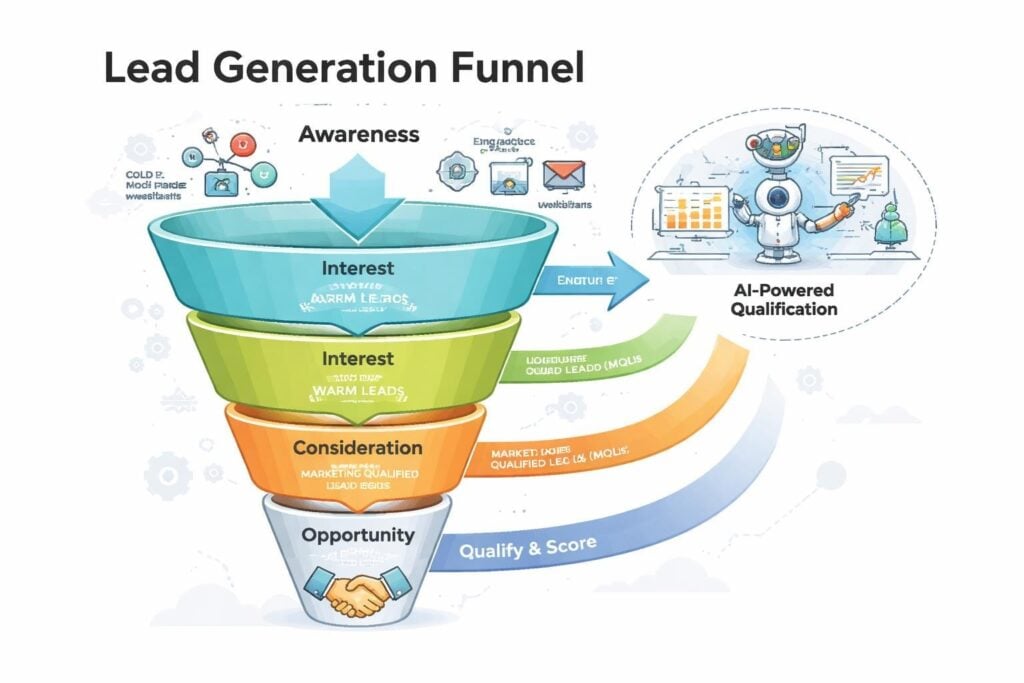
The landscape of acquiring new business leads has fundamentally shifted in 2026. Traditional cold calling and generic email blasts no longer cut through the noise, and businesses that rely on outdated tactics watch their competitors sprint ahead. The companies winning right now understand that generating new business leads isn't just about volume-it's about precision, timing, and delivering value before asking for anything in return. With AI-powered systems and data-driven strategies, businesses can now transform their lead generation from an unpredictable game of numbers into a systematic revenue engine that produces consistent, measurable results.
Understanding What Makes New Business Leads Valuable
Not all new business leads carry equal weight. A lead that matches your ideal customer profile, demonstrates clear buying intent, and has the budget to invest in your solution is worth exponentially more than a thousand cold contacts scraped from LinkedIn.
Quality indicators for new business leads include:
- Budget availability and decision-making authority
- Active pain points that your solution directly addresses
- Timeline urgency for implementing a solution
- Company size and growth trajectory alignment
- Previous engagement with your content or brand
The problem most businesses face isn't finding contact information-it's identifying which prospects are actually ready to buy. Lead scoring methodologies help quantify prospect value by assigning points based on demographic data, behavioral signals, and engagement patterns. This systematic approach ensures your sales team focuses energy on opportunities most likely to convert rather than wasting time on tire-kickers.
According to recent lead generation statistics, companies that excel at lead nurturing generate 50% more sales-ready leads at 33% lower cost. The math is compelling: invest in qualification systems upfront, and your entire sales process becomes dramatically more efficient.
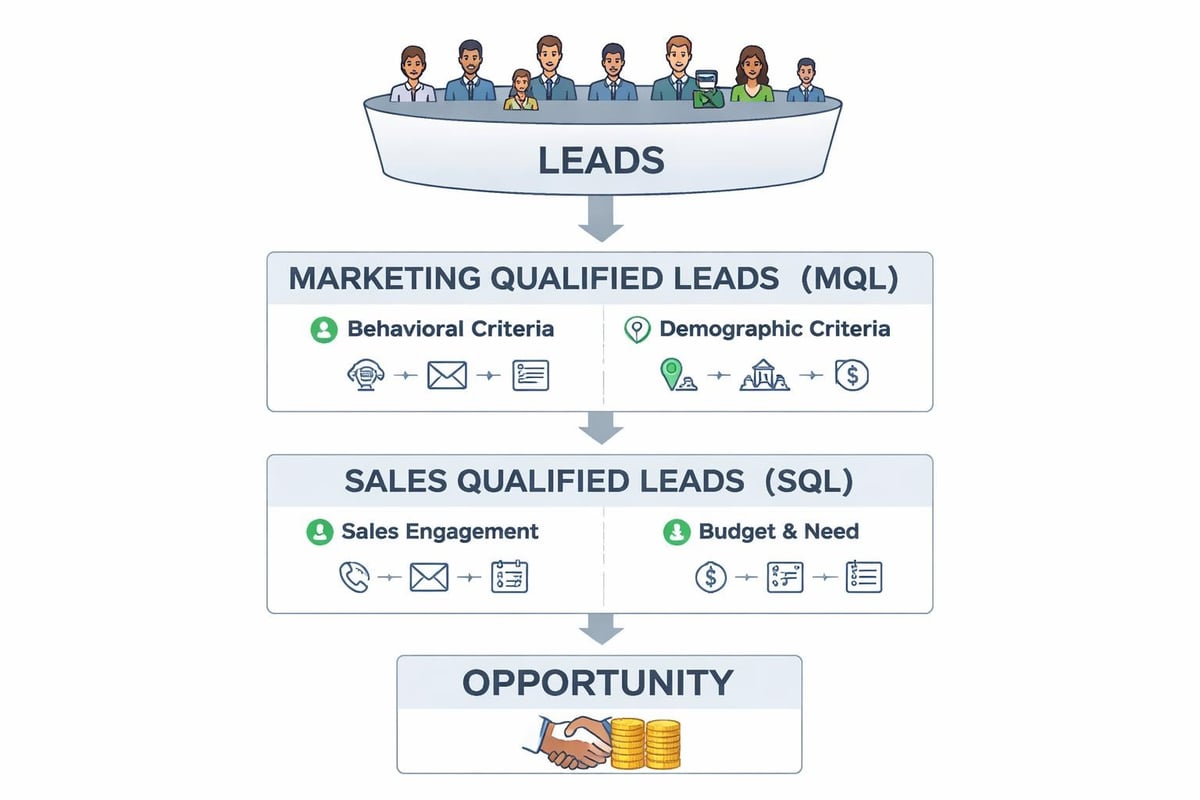
The Cost of Poor Lead Quality
Chasing unqualified leads drains resources faster than almost any other business mistake. Your sales team spends hours on discovery calls with prospects who lack budget, authority, or genuine need. Marketing dollars get burned on campaigns targeting the wrong audiences. Morale suffers when conversion rates stay stubbornly low despite heroic effort.
Smart businesses recognize that generating new business leads requires filtering mechanisms at every stage. They build qualification criteria into their lead capture forms, use progressive profiling to gather information gradually, and implement automated scoring to prioritize follow-up. The investment in these systems pays dividends through higher close rates and shorter sales cycles.
Leveraging AI Systems for Lead Generation
Artificial intelligence has revolutionized how businesses identify and engage new business leads. Modern AI systems analyze thousands of data points to predict which prospects are most likely to convert, personalizing outreach at scale in ways humans simply cannot match.
Advanced tools for lead generation now incorporate machine learning algorithms that continuously optimize based on performance data. These platforms identify patterns in successful conversions, then automatically adjust targeting criteria, messaging, and timing to replicate those wins across your entire prospect database.
| AI Capability | Traditional Approach | AI-Powered Approach | Impact on Results |
|---|---|---|---|
| Prospect Research | 30 mins per lead | 30 seconds per lead | 60x faster |
| Message Personalization | Generic templates | Dynamic content based on behavior | 3-5x higher response |
| Optimal Contact Timing | Random or scheduled | Predictive based on engagement patterns | 2x more meetings booked |
| Lead Scoring | Manual point assignment | Continuous learning from outcomes | 45% more accurate qualification |
The transformation happens when businesses move from treating lead generation as a volume game to viewing it as a precision operation. AI doesn't just work faster-it identifies opportunities human analysts would miss and eliminates bias from the qualification process.
Building a Systematic Approach to New Business Leads
Random acts of marketing produce random results. Businesses that consistently generate high-quality new business leads follow documented systems that create predictable outcomes. These systems encompass everything from initial awareness through conversion and include specific triggers, timeframes, and success metrics.
Creating Your Lead Generation Blueprint
Start by mapping your ideal customer's journey from complete stranger to paying client. Identify every touchpoint where value exchange occurs and document what information prospects need at each stage to move forward. This blueprint becomes the foundation for all your lead generation activities.
Essential components of a lead generation system:
- Awareness mechanisms that introduce your solution to prospects experiencing relevant pain points
- Value delivery systems that establish expertise and build trust before asking for meetings
- Qualification frameworks that separate genuine opportunities from casual browsers
- Nurture sequences that maintain engagement with prospects not yet ready to buy
- Conversion pathways that make scheduling appointments or requesting proposals frictionless
Modern end-to-end marketing approaches integrate these components into seamless experiences where each interaction builds naturally on the last. Prospects don't feel pushed or manipulated-they feel understood and supported in solving their challenges.
The businesses generating the most new business leads in 2026 have abandoned spray-and-pray tactics entirely. They've built targeted campaigns that speak directly to specific audience segments, addressing precise pain points with customized solutions. This level of personalization requires upfront investment but delivers exponentially better returns than generic outreach.
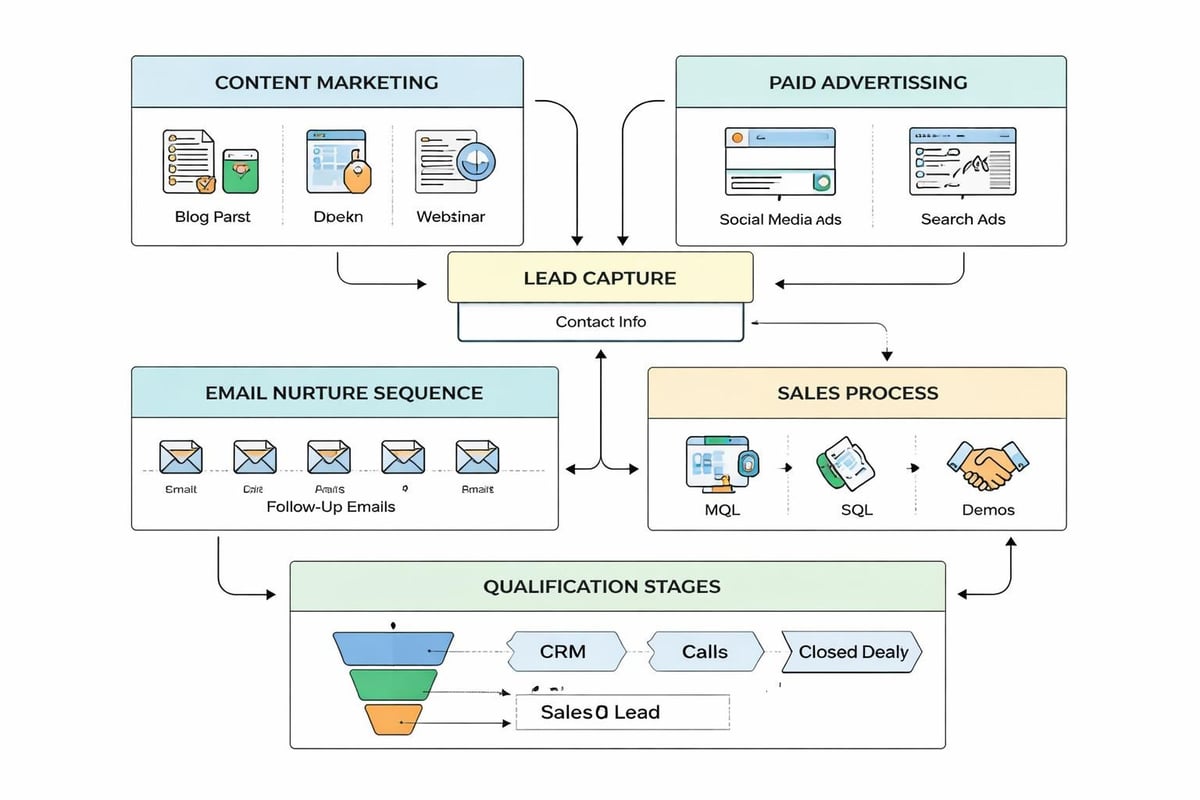
Content Marketing as a Lead Generation Engine
The most cost-effective new business leads often come from prospects who discover your business organically through valuable content. Educational resources that solve real problems position your company as the obvious choice when prospects are ready to buy.
Effective lead generation strategies emphasize creating content that answers the specific questions your ideal customers are already asking. This approach attracts genuinely interested prospects rather than interrupting strangers with unwanted pitches.
Consider how different content types serve different stages of the buyer journey:
- Blog posts and articles attract prospects in early research phases seeking to understand their problems
- Case studies and testimonials provide social proof for prospects comparing solution providers
- Webinars and workshops demonstrate expertise while qualifying prospect engagement levels
- Templates and tools deliver immediate value while capturing contact information for follow-up
- Comparison guides help decision-stage prospects understand why your solution fits their needs best
The key is matching content format to prospect intent. Someone just becoming aware of a problem needs educational resources, while someone actively evaluating vendors needs detailed specifications and customer success stories.
SEO and Organic Lead Generation
Search engine optimization remains one of the highest-ROI channels for new business leads because it captures demand that already exists. When prospects search for solutions to their problems, appearing in those results puts your business in front of highly qualified audiences at the exact moment they're seeking help.
Building organic visibility requires consistent effort over time, but the compounding returns make it worthwhile. Each piece of optimized content continues generating new business leads long after publication, creating an asset that appreciates rather than depletes like paid advertising.
Smart businesses combine sales lead generator systems with organic content strategies to capture both active searchers and passive prospects who aren't yet looking for solutions. This multi-channel approach ensures no opportunity falls through the cracks.
Paid Advertising for Immediate Lead Flow
While organic strategies build long-term assets, paid advertising delivers immediate new business leads when campaigns are structured properly. The critical difference between profitable and wasteful ad spending comes down to targeting precision and offer alignment.
Modern advertising platforms provide unprecedented targeting capabilities, allowing businesses to show messages exclusively to prospects matching specific criteria. Geographic location, job titles, company size, industry, behavioral signals-all become filters for reaching exactly the right audiences.
However, targeting alone doesn't guarantee results. The offer presented must match where prospects are in their buying journey. Cold audiences need educational content that builds awareness and trust. Warm audiences who've engaged with your brand respond to case studies and demonstrations. Hot audiences ready to buy need clear calls-to-action and easy conversion pathways.
High-performing paid lead generation campaigns include:
- Audience segmentation based on awareness level and buying stage
- Ad creative that speaks to specific pain points rather than generic benefits
- Landing pages aligned precisely with ad messaging to maintain consistency
- Progressive offers that request information proportional to value delivered
- Retargeting sequences that re-engage prospects who didn't convert initially
Businesses leveraging Facebook for real estate lead generation and other industries demonstrate how platform-specific strategies can outperform generic approaches. Understanding each platform's unique audience behaviors and ad formats allows optimization impossible with one-size-fits-all campaigns.
Qualifying and Nurturing New Business Leads
Generating contact information represents only the first step. The real work begins in determining which leads deserve immediate sales attention and which need continued marketing nurture before they're ready to buy.
Lead qualification separates qualified leads from casual inquiries through strategic questioning and behavioral analysis. Qualification frameworks like BANT (Budget, Authority, Need, Timeline) or CHAMP (Challenges, Authority, Money, Prioritization) provide structure for these conversations.
| Qualification Criteria | Questions to Ask | Green Flag Indicators | Red Flag Indicators |
|---|---|---|---|
| Budget | What range are you working within? | Specific number or range mentioned | "We haven't really thought about that" |
| Authority | Who else is involved in this decision? | Decision-maker or strong influencer | Multiple approval layers required |
| Need | What happens if you don't solve this? | Significant business impact described | Vague or hypothetical problems |
| Timeline | When do you need this implemented? | Specific date or urgent timeframe | "Just looking around for now" |
Not every prospect that enters your funnel will qualify immediately. Building nurture sequences that keep your business top-of-mind with future buyers ensures leads don't go cold while they work through internal approval processes or wait for budget availability.
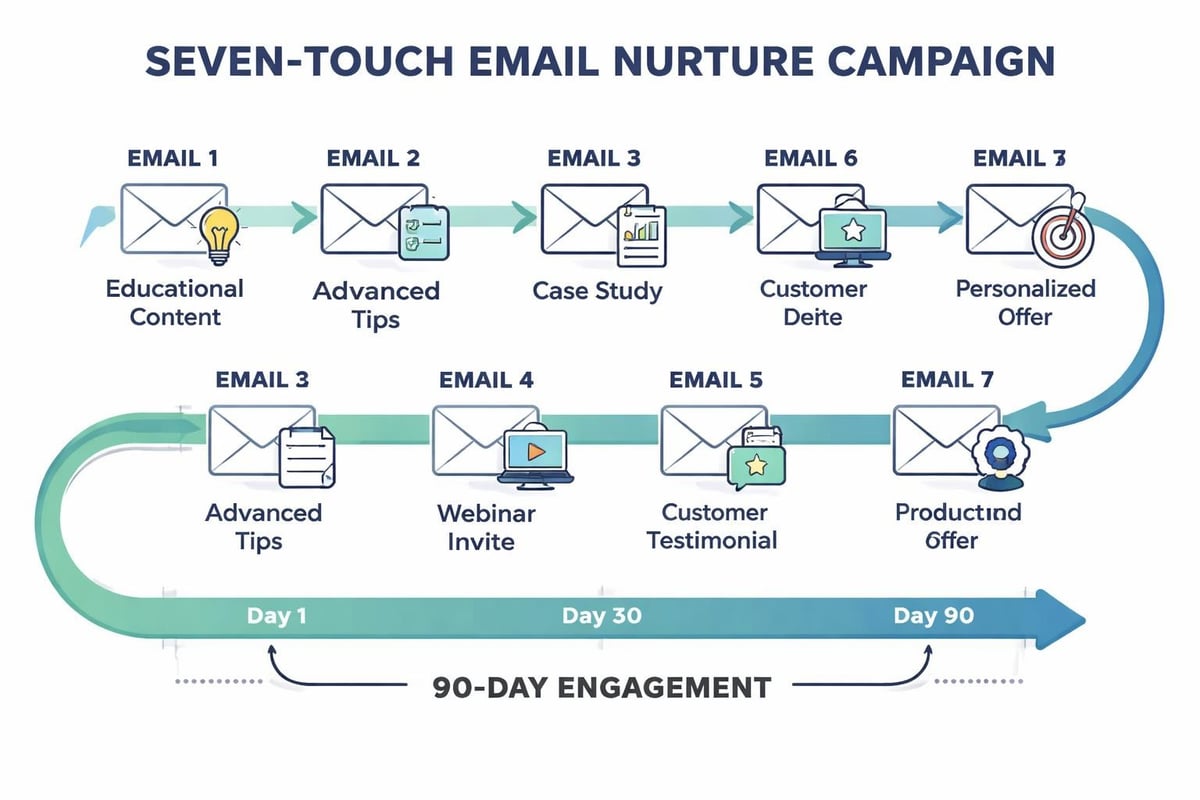
Automation Without Losing Personalization
Modern marketing automation platforms enable personalized communication at scale, but the challenge lies in maintaining authentic human connection while leveraging technology. The businesses winning with new business leads understand automation should enhance relationships, not replace them.
Effective automation uses behavioral triggers to send relevant content based on prospect actions rather than arbitrary time delays. When someone downloads a guide about solving specific problems, the follow-up should reference that guide and offer the next logical resource. This contextual relevance makes automation feel helpful rather than robotic.
Next-best-action marketing takes this concept further by using predictive algorithms to determine the optimal outreach for each individual prospect based on their unique profile and behavior patterns. This sophisticated approach maximizes engagement by always offering the most relevant next step in the buying journey.
Referrals and Partnership Channels
The highest-converting new business leads often come from referrals because trust transfers from the referring party to your business. A warm introduction from a satisfied customer or respected industry peer carries exponentially more weight than any cold outreach campaign.
Building systematic referral generation requires making the process frictionless for advocates. Clear instructions on who makes an ideal referral, simple mechanisms for making introductions, and recognition or rewards for successful referrals all increase participation rates.
Partnership channels extend this principle to other businesses serving your target audience. Strategic partnerships with complementary service providers create win-win scenarios where both parties generate new business leads through cross-promotion and shared expertise.
Effective partnership strategies include:
- Identifying non-competitive businesses with overlapping target audiences
- Creating co-marketed resources that deliver value to both customer bases
- Establishing clear referral agreements with defined terms and compensation
- Building integration partnerships where services work better together
- Hosting joint events or webinars that showcase combined expertise
These collaborative approaches to lead generation often produce higher-quality prospects than solo marketing efforts because the implicit endorsement from a trusted partner pre-qualifies leads and reduces sales friction.
Measuring and Optimizing Lead Generation Performance
What gets measured gets managed, and generating new business leads requires rigorous tracking to identify what's working and what's wasting resources. Modern analytics platforms provide granular visibility into every stage of the lead generation funnel, from initial touchpoint through closed revenue.
Key metrics for lead generation performance include:
- Cost per lead across different channels and campaigns
- Lead-to-opportunity conversion rate showing qualification effectiveness
- Opportunity-to-customer conversion rate measuring sales process efficiency
- Customer acquisition cost factoring all marketing and sales expenses
- Time to conversion tracking how long prospects take to buy
- Customer lifetime value ensuring acquisition costs align with long-term returns
Smart businesses establish these metrics as dashboards updated in real-time, allowing rapid course correction when performance drifts from targets. Rather than waiting for monthly reports, they monitor leading indicators daily and adjust tactics based on emerging patterns.
According to resources on how to generate leads, businesses that align sales and marketing around shared metrics and regular performance reviews generate 209% more revenue from marketing efforts. This alignment ensures both teams work toward common goals rather than optimizing for conflicting objectives.
Scaling New Business Leads Sustainably
The ultimate goal isn't just generating more new business leads-it's building systems that scale efficiently as your business grows. What works at 10 leads per month often breaks at 100, and processes that succeed at 100 collapse at 1,000.
Sustainable scaling requires documenting processes, training teams on consistent execution, and implementing technology that handles increased volume without proportional cost increases. Businesses that successfully scale lead generation invest heavily in systems and automation while maintaining quality standards through rigorous testing and optimization.
The companies dominating their markets in 2026 didn't get there through sporadic effort or wishful thinking. They built comprehensive strategies combining multiple channels, rigorous qualification systems, and continuous optimization based on performance data. They understand that generating new business leads is both an art and a science-requiring creativity in messaging and offers while maintaining analytical rigor in measurement and improvement.
Following best practices for businesses ensures your lead generation efforts build on proven foundations rather than reinventing wheels. The fundamentals haven't changed: understand your audience deeply, deliver genuine value, make buying easy, and continuously improve based on results.
Generating consistent, high-quality new business leads requires strategic systems that combine AI-powered precision with authentic value delivery. The businesses thriving in 2026 have moved beyond generic outreach to build sophisticated lead generation engines that produce predictable revenue growth. If you're ready to transform your lead generation from unpredictable to systematic, Adstra specializes in building AI-powered systems that generate qualified leads and automate appointment booking, ensuring your sales calendar stays full with ready-to-buy prospects. Our guaranteed growth partnership model aligns our success with yours, delivering the transparent, results-driven marketing approach your business deserves.