


The landscape of local businesses advertising has transformed dramatically over the past decade, forcing business owners to abandon outdated tactics and embrace data-driven strategies that deliver measurable results. In 2026, the most successful local companies are those that understand how to leverage technology, automation, and targeted messaging to convert strangers into paying customers. This shift isn't just about keeping up with trends; it's about survival in an increasingly competitive marketplace where consumer attention is the most valuable commodity.
The Current State of Local Businesses Advertising
Traditional advertising channels are experiencing unprecedented disruption. Local TV has lost more than half of its share of media spending since 2017, signaling a fundamental shift in how consumers discover and engage with businesses. This dramatic decline isn't happening in isolation; it reflects broader changes in consumer behavior, media consumption patterns, and technological capabilities.
The statistics paint a clear picture:
- Small businesses are redirecting budgets from traditional media to digital platforms
- Consumer trust in paid advertising has reached all-time lows
- Search engines and social media now dominate discovery channels
- Mobile devices account for the majority of local business searches
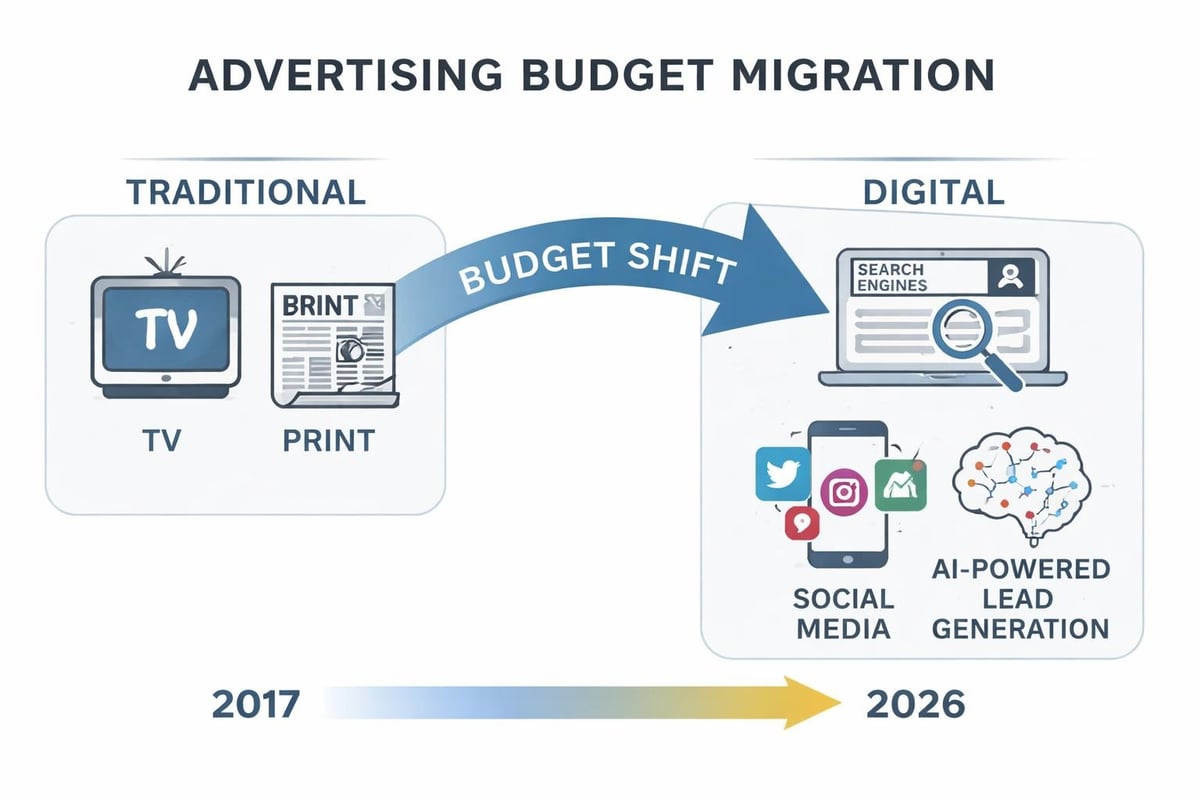
What makes this transformation particularly challenging is that many business owners still cling to familiar methods despite mounting evidence of their ineffectiveness. The comfort of billboard placements, newspaper ads, and radio spots has given way to confusion about Facebook pixels, Google Business Profiles, and AI-powered marketing systems.
Why Traditional Methods Are Failing
The failure of conventional local businesses advertising approaches stems from three fundamental problems: lack of targeting precision, inability to track ROI accurately, and disconnection from modern consumer behavior patterns.
Modern consumers research extensively before making purchase decisions. They read online reviews, compare options across multiple platforms, and expect personalized experiences. Traditional advertising methods simply cannot deliver this level of sophistication.
Consider the typical newspaper ad: it reaches a broad audience with no guarantee that readers are in-market for your services, provides no way to track which customers came from the ad, and offers zero opportunity for retargeting or follow-up engagement. This spray-and-pray approach wastes budget and produces unpredictable results.
Digital Transformation in Local Businesses Advertising
The most effective local marketing strategies for small businesses now center on digital channels that offer precise targeting, measurable outcomes, and the ability to nurture leads over time.
Search Engine Dominance
Google has fundamentally changed the rules of local businesses advertising. In 2024, the company implemented a policy requiring verified Google Business Profiles for Local Services ads, emphasizing the critical importance of profile optimization. This move wasn't arbitrary; it reflected Google's commitment to connecting searchers with legitimate, high-quality local businesses.
Optimizing your Google presence requires:
- Claiming and verifying your Google Business Profile
- Maintaining accurate business information across all platforms
- Actively collecting and responding to customer reviews
- Publishing regular updates and posts
- Leveraging Google's Q&A features to address common questions
The power of local search cannot be overstated. When someone searches for services in your area, appearing in the top three map pack results dramatically increases your chances of winning that customer. Statistics show that 88% of consumers who search for local businesses on mobile devices call or visit within 24 hours.
Social Media as a Lead Generation Engine
Social media platforms have evolved from simple broadcasting channels into sophisticated lead generation machines. The key is understanding that effective local businesses advertising on these platforms requires more than posting pretty pictures and inspirational quotes.
Your social media strategy should focus on conversion pathways:
- Creating content that addresses specific customer pain points
- Using platform-specific advertising tools to target local audiences
- Implementing retargeting campaigns to nurture interested prospects
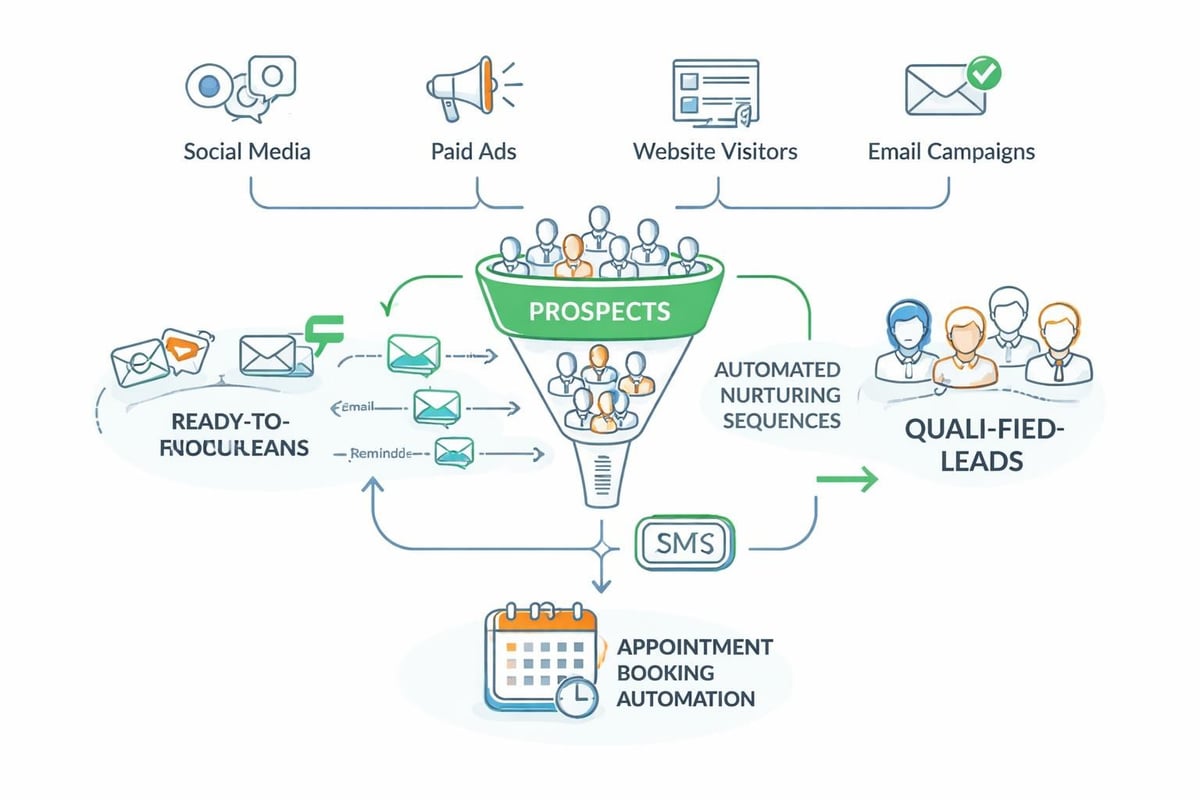
- Developing automated sequences that move leads toward booking
Many businesses waste thousands of dollars on social media advertising because they lack proper funnel architecture. Tools for lead generation have become essential for turning social media engagement into qualified sales conversations rather than vanity metrics.
Building a High-Converting Local Advertising System
The difference between struggling businesses and thriving ones often comes down to systems. Random acts of marketing produce random results. Systematic approaches to local businesses advertising create predictable revenue growth.
| Traditional Approach | Systematic Approach |
|---|---|
| Post occasionally when remembering | Content calendar with strategic messaging |
| Hope people call | Automated appointment booking funnels |
| Guess at ROI | Track every dollar spent to revenue generated |
| Treat all leads equally | Segment and nurture based on intent signals |
| Manual follow-up | AI-powered lead qualification and routing |
The Role of AI in Modern Local Advertising
Artificial intelligence has shifted from futuristic concept to practical necessity. The businesses winning in local markets are those leveraging AI to automate repetitive tasks, personalize communications at scale, and identify high-intent prospects.
AI systems can now handle tasks that previously required entire teams: analyzing customer data to identify patterns, creating personalized ad copy variations, optimizing bidding strategies in real-time, and qualifying leads based on behavioral signals.
This doesn't mean replacing human judgment with robots. It means freeing your team from tedious tasks so they can focus on strategy, creativity, and building genuine customer relationships. The most effective local businesses advertising campaigns in 2026 blend AI efficiency with human empathy.
AI applications that drive results:
- Chatbots that qualify leads 24/7 and book appointments automatically
- Predictive analytics that identify which prospects are most likely to convert
- Dynamic ad creative that adapts based on viewer characteristics
- Sentiment analysis that monitors brand reputation across platforms
- Automated email sequences that nurture leads without manual intervention
Community-Centric Advertising Approaches
While technology enables unprecedented targeting and automation, successful local businesses advertising never loses sight of the community element. Local advertising ideas that incorporate community engagement consistently outperform purely digital tactics.
Sponsorships and Partnerships
Strategic partnerships with complementary businesses and community organizations create referral networks that traditional advertising cannot replicate. When you sponsor a local youth sports team, you're not just getting your logo on jerseys; you're building goodwill with hundreds of families who trust the organization.
The key is selecting partnerships that align with your target customer demographics. A home services company might sponsor little league teams, knowing that homeowners with children are prime prospects. A B2B service provider might join the chamber of commerce to access decision-makers at other local businesses.
Event Marketing and Experiential Engagement
Hosting or participating in local events creates memorable experiences that stick with potential customers far longer than digital ads. Whether it's a workshop, networking mixer, or charity fundraiser, events position your business as a community leader rather than just another vendor.
Studies indicate that experiential marketing generates higher emotional connections and better recall than traditional advertising formats. When someone attends your educational workshop and receives genuine value, they remember you when they need your services.
Measuring What Matters in Local Businesses Advertising
The abundance of data available to modern marketers creates both opportunity and confusion. Tracking every possible metric leads to paralysis. The solution is focusing on key performance indicators that directly correlate with business growth.
Essential Metrics to Monitor
Lead generation metrics:
- Cost per lead across different channels
- Lead-to-customer conversion rate
- Time from first contact to closed deal
- Customer acquisition cost (CAC)
- Lifetime value of customers from each source
Engagement indicators:
- Website traffic from local searches
- Phone calls and form submissions
- Google Business Profile views and actions
- Social media engagement rates
- Email open and click-through rates
Creating qualified leads requires understanding which metrics actually predict revenue. A campaign generating 100 low-quality leads is far less valuable than one producing 20 prospects who are ready to buy.
| Vanity Metrics | Revenue Metrics |
|---|---|
| Page likes | Booked appointments |
| Impressions | Qualified conversations |
| Website visits | Conversion rate |
| Followers gained | Customer lifetime value |
| Post shares | Return on ad spend |
Attribution Challenges and Solutions
One persistent challenge in local businesses advertising is accurately attributing sales to specific marketing efforts. Customers typically interact with your brand multiple times across various channels before purchasing.
Multi-touch attribution modeling acknowledges this reality by assigning value to each touchpoint in the customer journey. Someone might discover you through a Google search, check reviews, visit your Facebook page, read blog content, and finally call after seeing a retargeting ad. Which channel deserves credit for the sale?
Advanced tracking systems and proper implementation of conversion tracking solve this puzzle. Tools that integrate your advertising platforms with your CRM provide complete visibility into how prospects move through your funnel.
Budget Allocation Strategies for Maximum ROI
Small business marketing budgets vary widely, but the principles of smart allocation remain constant. Successful local businesses advertising strategies balance proven channels with experimental tactics.
The 70-20-10 Framework
This budget allocation model has proven effective across industries:
- 70% to proven performers: Channels and campaigns that consistently deliver qualified leads at acceptable costs
- 20% to scaling opportunities: Tactics showing promise that deserve increased investment
- 10% to experimentation: Testing new platforms, messages, or strategies
This framework prevents the common mistake of abandoning working strategies to chase shiny objects while ensuring you stay innovative and adaptive.
Seasonal Adjustments and Opportunistic Spending
Local businesses advertising effectiveness fluctuates throughout the year. Home services companies see different demand patterns than retailers. Understanding your seasonal cycles allows strategic budget shifting that maximizes returns.
During peak seasons, increase spending to capture maximum market share when demand is highest. In slow periods, focus on brand building and nurturing existing leads rather than expensive acquisition campaigns.
Content Marketing as an Advertising Multiplier
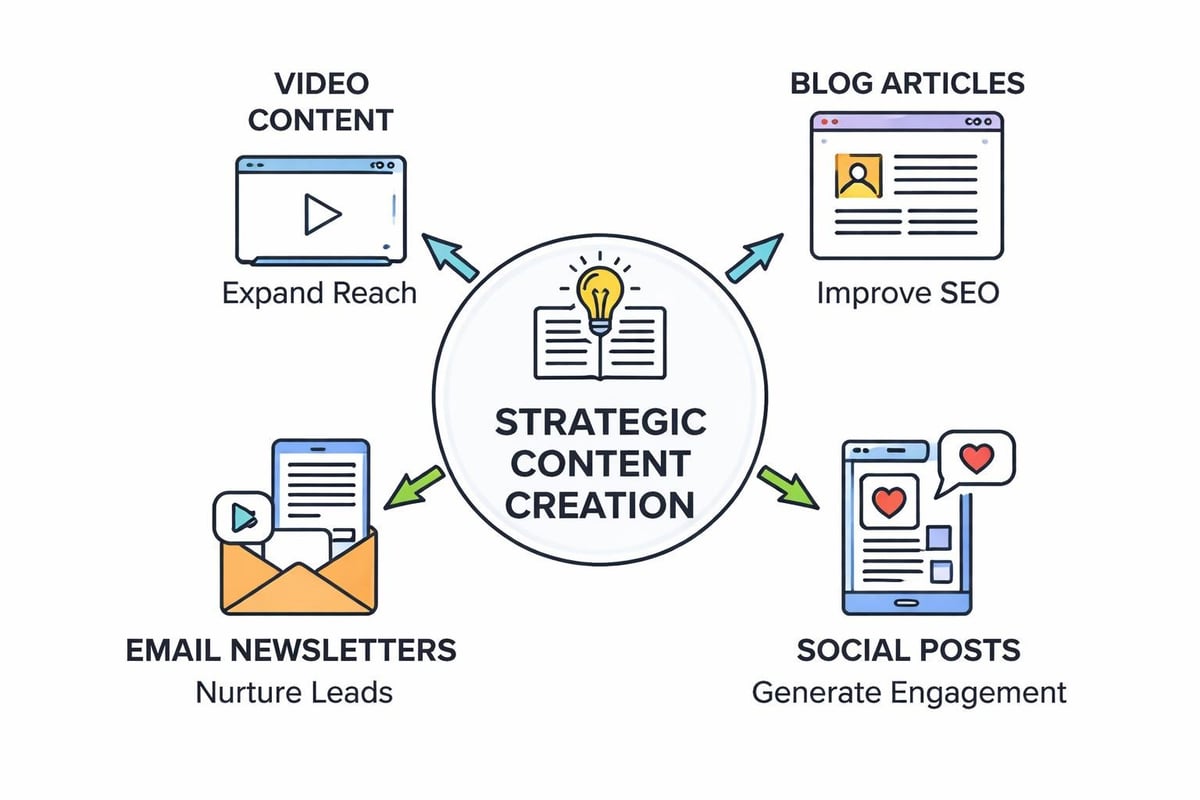
Quality content serves multiple functions in modern local businesses advertising: it improves search rankings, establishes expertise, nurtures leads, and provides material for social media and email campaigns.
Creating Content That Converts
Effective content addresses specific questions and concerns your prospects have at different stages of their buying journey. Someone just becoming aware of their problem needs educational content. Someone comparing solutions needs detailed comparisons and case studies. Someone ready to buy needs clear calls-to-action and easy next steps.
Strategies for boosting brand awareness locally include creating neighborhood-specific landing pages, publishing case studies featuring local clients, and developing resources that address community-specific challenges.
Content types that drive local engagement:
- Neighborhood guides and local resource compilations
- Before-and-after case studies from area customers
- Video testimonials from recognizable community members
- How-to guides addressing common local problems
- Local industry trend analyses and predictions
Distribution Channels Beyond Your Website
Creating excellent content is only half the battle. Strategic distribution ensures it reaches your target audience. Repurpose blog posts into social media snippets, email newsletters, video scripts, and podcast talking points.
Guest posting on local news sites and industry publications expands your reach beyond your existing audience. When you contribute valuable insights to established platforms, you tap into their credibility and readership.
Converting Leads Into Customers Through Automation
The gap between lead generation and revenue closes through systematic follow-up and nurturing. Most businesses lose potential customers because they lack automated systems that maintain engagement until prospects are ready to buy.
Appointment Booking Automation
Modern consumers expect convenience. Making them call during business hours or wait for email responses creates unnecessary friction. Automated appointment booking removes these barriers by allowing prospects to schedule consultations whenever it's convenient for them.
Integration between your advertising platforms, website, and calendar system creates seamless experiences. Someone clicking an ad can land on a page where they immediately book a time slot without any human intervention required.
Multi-Channel Nurturing Sequences
Different prospects prefer different communication channels. Some respond best to email, others to text messages, and some prefer phone calls. Effective nurturing leverages multiple channels based on individual preferences and behaviors.
Components of high-converting nurture sequences:
- Initial automated response within seconds of inquiry
- Educational content delivery over multiple touchpoints
- Personalized messages based on services of interest
- Social proof and testimonials from similar customers
- Clear next-step guidance at every stage
Getting new customers consistently requires systems that work while you sleep. The businesses dominating local markets in 2026 have eliminated manual lead follow-up entirely, replacing it with intelligent automation that feels personal and timely.
Privacy, Compliance, and Ethical Advertising
As local businesses advertising becomes increasingly sophisticated, privacy regulations and ethical considerations grow more important. Building sustainable businesses requires respecting customer data and maintaining transparent practices.
Navigating Data Privacy Regulations
GDPR, CCPA, and emerging privacy laws affect how businesses collect, store, and use customer information. Non-compliance carries serious financial penalties and reputation damage.
Best practices for compliant local advertising:
- Obtain explicit consent before adding people to marketing lists
- Provide clear opt-out mechanisms in all communications
- Store customer data securely with appropriate protections
- Honor deletion requests promptly and completely
- Be transparent about how you use customer information
Building Trust Through Transparency
Beyond legal compliance, ethical advertising practices build long-term customer relationships. Effective small business advertising methods prioritize value delivery over manipulation.
This means avoiding dark patterns that trick people into purchases, being honest about pricing and terms, honoring commitments made in advertising, and admitting mistakes when they occur. Trust is the foundation of sustainable business growth, and it's earned through consistent ethical behavior.
Integration and Automation for Scalable Growth
The most successful local businesses advertising strategies in 2026 leverage integrated systems where every component works together seamlessly. Disconnected tools create data silos and manual work that limits growth.
Technology Stack Essentials
Building a modern marketing technology stack requires selecting tools that integrate smoothly and serve specific functions:
| Function | Purpose | Integration Needs |
|---|---|---|
| CRM | Centralize customer data and interactions | Connect with ad platforms and communication tools |
| Marketing automation | Nurture leads at scale | Sync with CRM and analytics |
| Ad management | Run campaigns across platforms | Feed conversion data back to optimize |
| Analytics | Track performance and ROI | Pull data from all marketing sources |
| Appointment scheduling | Automate booking process | Integrate with CRM and calendar |
The goal is creating a system where data flows automatically between platforms, eliminating manual data entry and ensuring every team member has access to current customer information.
Effective local businesses advertising in 2026 requires abandoning outdated tactics and embracing systematic, technology-enabled approaches that generate predictable results. The businesses thriving in competitive local markets have built integrated systems that attract qualified prospects, nurture them through automated sequences, and convert them into customers without constant manual intervention. Adstra specializes in building exactly these types of systems for local businesses, leveraging advanced AI to generate qualified leads and automate appointment bookings while operating on a guaranteed growth partnership model that aligns our success with yours. If you're ready to transform your advertising from expensive guesswork into a predictable revenue engine, let's talk about how we can help you dominate your local market.