
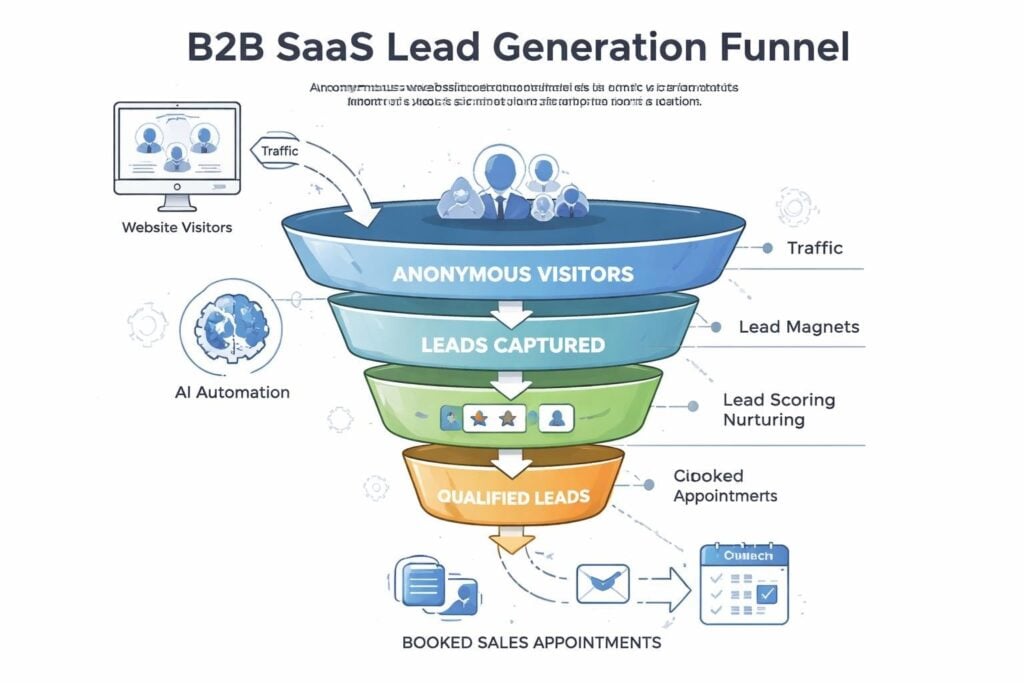
The B2B SaaS landscape has transformed dramatically over the past few years, making traditional lead generation approaches increasingly ineffective. Companies spending thousands on outdated tactics are discovering their pipelines running dry while competitors leverage advanced systems to generate predictable revenue. The difference between struggling SaaS companies and those experiencing exponential growth often comes down to one critical factor: their approach to attracting and converting qualified leads. In 2026, winning the lead generation game requires combining strategic positioning, AI-powered automation, and genuine value delivery in ways that resonate with increasingly sophisticated buyers.
The Modern B2B SaaS Lead Generation Landscape
B2B SaaS lead generation has evolved beyond simple cold outreach and paid advertising campaigns. Today's buyers conduct extensive research before ever speaking with a sales representative, consuming an average of 13 content pieces before making purchase decisions.
The shift is unmistakable. Decision-makers now demand personalized experiences, educational content, and proof of value before committing to conversations. This fundamental change means companies must build comprehensive systems that address prospects at every stage of their buying journey.
Why Traditional Approaches Fail
Most SaaS companies waste resources on tactics that worked five years ago but produce diminishing returns today:
- Generic cold emails that get ignored or marked as spam
- Untargeted paid ads that burn budgets without generating qualified conversations
- One-size-fits-all messaging that fails to resonate with specific buyer personas
- Manual processes that can't scale with growth ambitions
The companies winning in 2026 understand that successful lead generation strategies require sophisticated systems combining multiple channels, personalized messaging, and automated nurturing sequences. They're moving beyond volume-based approaches toward precision targeting that identifies and engages ideal customers.
Strategic Foundation for SaaS Lead Generation Success
Before implementing tactical campaigns, establishing the right strategic foundation determines everything that follows. Companies that skip this critical step inevitably waste resources chasing unqualified prospects.
Defining Your Ideal Customer Profile
Successful b2b saas lead generation starts with crystal-clear customer definition. Generic targeting produces generic results. You need to identify:
- Company characteristics: Industry verticals, revenue ranges, employee counts, technology stacks
- Decision-maker profiles: Job titles, responsibilities, pain points, goals
- Behavioral indicators: Content consumption patterns, search behaviors, engagement signals
- Buying triggers: Events that prompt solution searches (funding rounds, leadership changes, regulatory shifts)
This precision allows you to craft messaging that speaks directly to specific challenges and aspirations. When prospects feel understood immediately, conversion rates skyrocket.
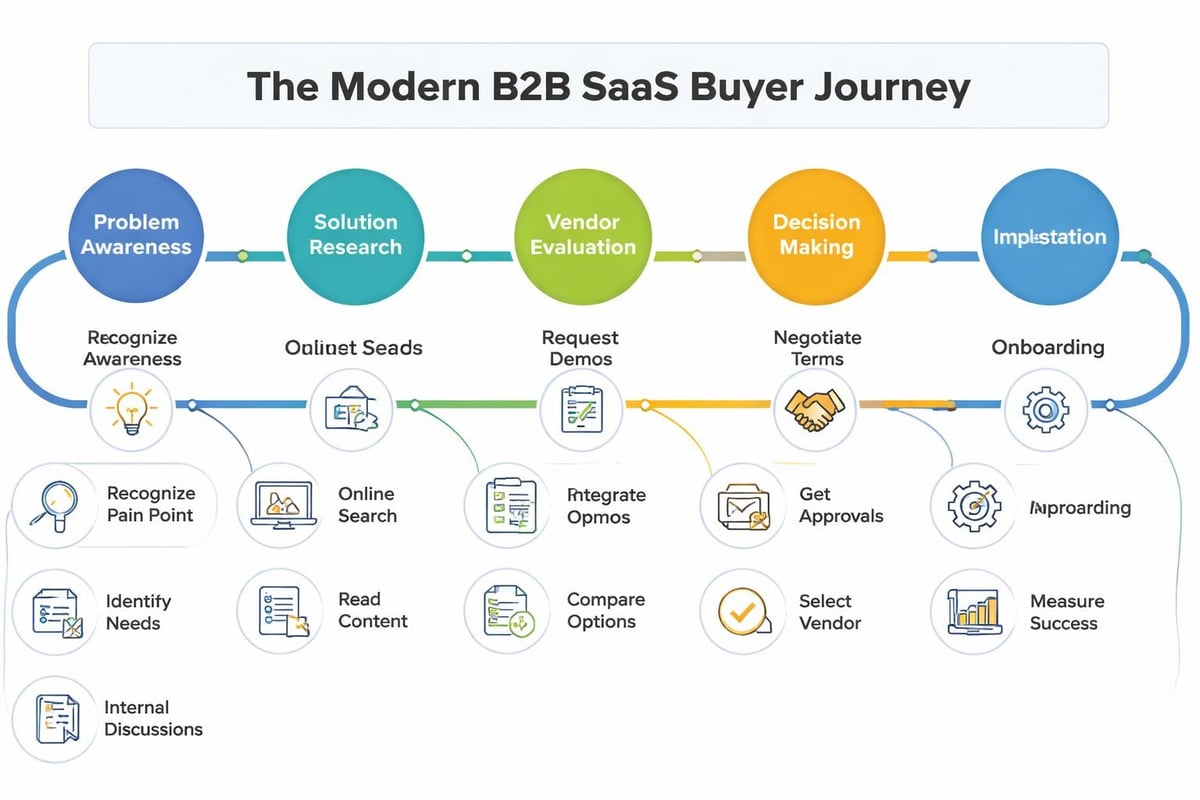
Mapping the Buyer Journey
Different prospects require different approaches depending on their awareness level. Your lead generation system must address each stage:
| Journey Stage | Prospect Mindset | Content Strategy | Lead Quality |
|---|---|---|---|
| Problem Aware | Recognizing pain points | Educational content, thought leadership | Low (nurture required) |
| Solution Aware | Researching approaches | Comparison guides, frameworks | Medium (qualify intent) |
| Product Aware | Evaluating vendors | Case studies, demonstrations | High (ready for sales) |
| Decision Ready | Selecting provider | ROI calculators, testimonials | Very High (immediate opportunity) |
Understanding where prospects sit in this journey allows you to deliver precisely the right content at the right time, accelerating movement toward purchase decisions.
High-Impact Inbound Lead Generation Tactics
Inbound strategies attract prospects already seeking solutions, producing higher-quality leads than interruption-based outbound approaches. These tactics build sustainable lead generation engines that compound over time.
Search-Driven Lead Acquisition
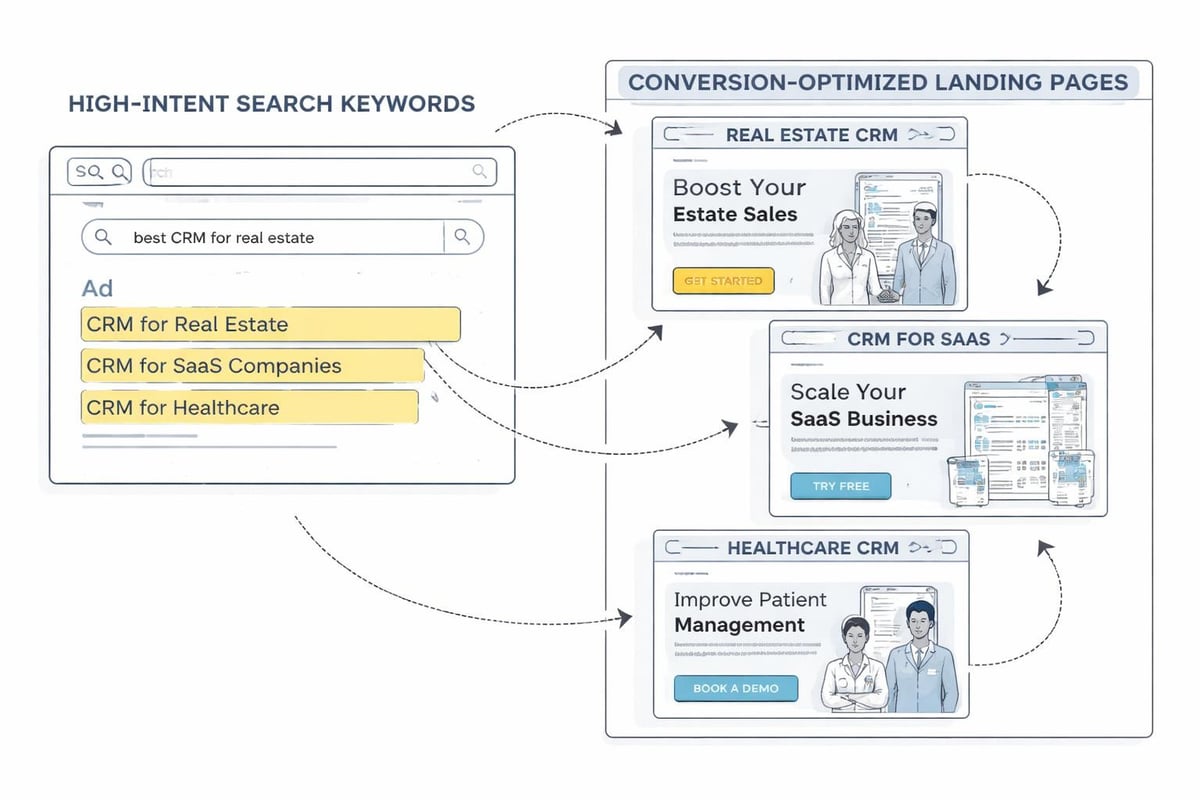
Companies that master search-driven strategies capture prospects at critical decision moments. Focusing on high-intent search terms and optimizing conversion paths has helped B2B SaaS companies achieve remarkable results, including 61% increases in qualified leads.
The key lies in targeting bottom-of-funnel keywords that indicate immediate purchase intent. Instead of broad terms like "project management software," focus on specific phrases like "project management software for remote teams under 50 employees" or "Asana alternative with better time tracking."
Pair this targeting with conversion-optimized landing pages that:
- Address specific pain points immediately in headlines
- Demonstrate clear differentiation from competitors
- Include compelling social proof from similar customers
- Minimize friction with streamlined forms
- Offer immediate value in exchange for contact information
Content Marketing That Actually Converts
Most SaaS companies produce content that nobody reads. The difference between content that generates leads and content that wastes resources comes down to strategic approach. Proven B2B SaaS lead generation tactics emphasize creating assets that solve real problems while positioning your solution as the natural next step.
Effective content formats for SaaS lead generation include:
- In-depth guides addressing specific workflows or challenges
- Industry benchmarks and original research reports
- Interactive tools like calculators, assessments, or configurators
- Video demonstrations showing product value quickly
- Customer success stories with measurable outcomes
The secret is gating the right content. Top-of-funnel educational pieces should remain ungated to maximize reach and build authority. Reserve gating for high-value assets that prospects gladly exchange information to access: comprehensive guides, exclusive research, or personalized tools.
Strategic Webinar Programs
Webinars remain one of the highest-converting b2b saas lead generation channels when executed properly. They allow prospects to experience your expertise firsthand while qualifying their interest through attendance and engagement.
Successful webinar programs avoid generic product demonstrations in favor of educational sessions that deliver immediate value. Topics should address pressing challenges your ideal customers face, with your solution presented as the logical implementation vehicle rather than the primary focus.
Best practices for lead-generating webinars:
- Partner with complementary vendors or industry influencers to expand reach
- Promote through multiple channels (email, social, paid ads) for 2-3 weeks minimum
- Include interactive elements (polls, Q&A, live demonstrations) to boost engagement
- Follow up within 24 hours with recordings and next-step offers
- Segment attendees versus registrants for tailored nurturing sequences
Leveraging AI and Automation for Scale
The competitive advantage in 2026 belongs to companies deploying advanced AI systems for lead generation. Manual processes simply cannot match the speed, personalization, and efficiency that intelligent automation delivers. At Adstra, we've seen firsthand how AI-powered systems transform lead generation economics by identifying qualified prospects and nurturing them toward sales conversations without constant human intervention.
Intelligent Lead Scoring and Qualification
Traditional lead scoring relies on simple point systems that miss nuanced buying signals. Modern AI-powered scoring analyzes hundreds of data points to predict purchase likelihood with remarkable accuracy:
- Behavioral patterns across website visits, content engagement, and email interactions
- Firmographic data indicating company fit with ideal customer profiles
- Technographic signals showing compatible or competitive tool usage
- Intent data revealing active solution research across the web
- Engagement velocity tracking acceleration or deceleration in interest
This sophisticated scoring ensures sales teams focus energy on prospects most likely to convert, dramatically improving close rates while reducing wasted effort on tire-kickers.
Automated Personalization at Scale
Generic messaging kills conversion rates. Yet personalizing outreach for hundreds or thousands of prospects manually is impossible. AI bridges this gap by analyzing prospect data to generate customized communications that feel individually crafted.
Modern personalization goes far beyond inserting first names. Advanced systems reference specific company challenges, recent news events, competitive situations, and industry trends relevant to each prospect. This depth of customization produces response rates 3-5x higher than generic campaigns.
The systems that work best combine multiple data sources (CRM records, website behavior, third-party enrichment, social profiles) to build comprehensive prospect profiles, then use AI to craft messaging that resonates with specific situations and pain points.
Outbound Strategies That Actually Work
While inbound tactics build sustainable lead flow, strategic outbound efforts accelerate pipeline growth by proactively reaching ideal prospects. The key word is strategic. Spray-and-pray approaches destroy brand reputation while generating minimal results.
Account-Based Marketing for Enterprise Deals
For B2B SaaS companies targeting enterprise customers or high-value accounts, account-based marketing (ABM) delivers superior returns compared to broad-based campaigns. ABM focuses resources on specific target accounts, orchestrating personalized touchpoints across multiple stakeholders.
Effective ABM programs include:
- Account selection: Identifying 50-200 ideal target companies based on fit scores and opportunity size
- Stakeholder mapping: Researching key decision-makers and influencers within each account
- Multi-channel orchestration: Coordinating touchpoints across email, social, direct mail, events, and advertising
- Personalized content: Creating custom assets addressing specific account challenges and goals
- Sales and marketing alignment: Ensuring coordinated outreach and consistent messaging
This concentrated approach produces higher win rates and larger deal sizes because prospects experience cohesive, relevant engagement throughout their buying journey.
LinkedIn for Targeted Prospecting
LinkedIn remains the most effective platform for B2B SaaS lead generation when used strategically. The platform's targeting capabilities and professional context make it ideal for connecting with decision-makers.
Rather than immediately pitching products, successful LinkedIn strategies focus on building relationships through value delivery:
- Share insights addressing prospect pain points in posts and articles
- Engage authentically with target accounts' content before reaching out
- Personalize connection requests by referencing specific common interests or challenges
- Provide helpful resources in initial messages rather than sales pitches
- Use LinkedIn Sales Navigator to identify prospects showing buying signals
Companies that treat LinkedIn as a relationship-building platform rather than a cold-calling database see dramatically higher acceptance and response rates. Understanding how AI tools enhance marketing efforts can further amplify LinkedIn prospecting results.
Converting Leads Into Qualified Opportunities
Generating leads means nothing if they don't convert into revenue. The gap between lead volume and actual sales often reveals broken nurturing and qualification processes.
Strategic Lead Nurturing Sequences
Most leads aren't ready to buy immediately. Best practices for B2B SaaS lead generation emphasize systematic nurturing that maintains engagement while moving prospects toward purchase readiness.
Effective nurturing sequences include:
- Educational content that deepens understanding of problems and solutions
- Social proof demonstrating successful customer outcomes
- Product education showing specific feature value without aggressive selling
- Engagement opportunities like webinars, demos, or consultations
- Timely follow-up on behavioral signals indicating increased interest
The best sequences adapt based on prospect behavior. Someone who downloads a pricing guide needs different messaging than someone who attended a webinar but hasn't visited the website since. Dynamic nurturing adjusts content and timing based on engagement patterns.
Qualification Frameworks That Work
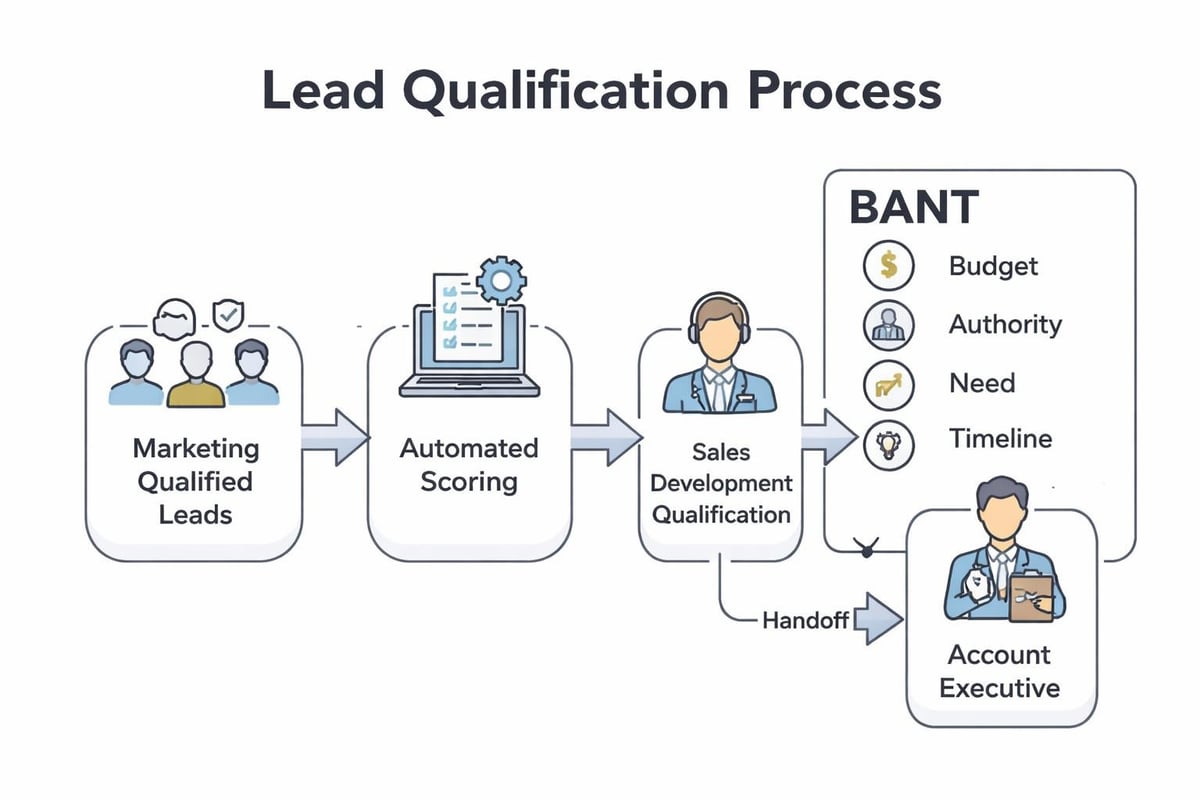
Not every lead deserves immediate sales attention. Proper qualification prevents wasted effort on prospects who will never buy while accelerating engagement with serious buyers. Successful companies in the lead generation space implement clear qualification criteria that sales and marketing teams both understand and respect.
| Qualification Criteria | Questions to Answer | Action If Yes | Action If No |
|---|---|---|---|
| Budget Availability | Can they afford your solution? | Proceed to next criteria | Nurture until budget allocated |
| Authority Identified | Are you engaging decision-makers? | Proceed to next criteria | Map stakeholders, engage influencers |
| Need Confirmed | Do they have problems you solve? | Proceed to next criteria | Educate on problem impact |
| Timeline Established | When will they make a decision? | Prioritize based on urgency | Set future follow-up cadence |
This framework (often called BANT) prevents premature handoffs to sales while ensuring genuinely qualified opportunities receive immediate attention. Companies finding success with proven lead generation tools typically integrate qualification scoring directly into their CRM systems.
Measuring and Optimizing Performance
Sustainable b2b saas lead generation requires obsessive focus on metrics that matter. Vanity metrics like total leads or website traffic mean nothing if they don't correlate with revenue growth.
Critical Metrics to Track
The metrics you monitor determine what you optimize. Companies that track the right indicators make better decisions and achieve better results:
- Cost per qualified lead: Total marketing spend divided by qualified opportunities generated
- Lead-to-opportunity conversion rate: Percentage of leads becoming qualified sales opportunities
- Opportunity-to-customer conversion rate: Percentage of opportunities closing as customers
- Customer acquisition cost (CAC): Total sales and marketing expenses divided by new customers
- Time to conversion: Average duration from first touch to closed deal
- Lead source ROI: Revenue attributed to each channel divided by channel investment
These metrics reveal which tactics deserve increased investment and which waste resources. Companies that ruthlessly optimize based on data consistently outperform those making decisions based on intuition or industry conventional wisdom.
Continuous Testing and Refinement
The best-performing lead generation systems continuously evolve through systematic testing. Small improvements across multiple variables compound into dramatic performance gains over time.
High-impact testing opportunities include:
- Landing page headlines, copy, and design elements
- Call-to-action placement, wording, and visual prominence
- Form length and field requirements
- Email subject lines, send times, and content formats
- Ad targeting parameters, creative variations, and bidding strategies
- Nurture sequence timing, content selection, and personalization depth
The key is testing one variable at a time with statistically significant sample sizes. Companies that embrace experimentation as core practice build compounding advantages over static competitors.
Building Systematic Predictability
The ultimate goal of b2b saas lead generation isn't generating random spikes of activity but building predictable systems that deliver consistent results. Predictability enables accurate forecasting, confident hiring decisions, and sustainable scaling.
Creating Repeatable Processes
Systematic lead generation requires documenting what works and creating repeatable processes others can execute. This transforms individual tactics into organizational capabilities that survive personnel changes and scale with growth.
Key elements of repeatable processes include:
- Clear standard operating procedures for each tactic
- Templates and frameworks that maintain quality while enabling speed
- Defined handoff points between marketing and sales
- Automated workflows that reduce manual intervention
- Regular review cycles that identify improvement opportunities
Companies that invest in process documentation and training build lead generation machines that operate efficiently regardless of individual team member expertise levels.
Aligning Teams Around Revenue Goals
B2B SaaS lead generation fails when marketing and sales operate as separate entities with conflicting priorities. Alignment around shared revenue goals transforms these functions into collaborative partners driving toward common objectives.
Successful alignment requires:
- Shared definitions of what constitutes a qualified lead
- Service-level agreements specifying lead response times and follow-up commitments
- Regular communication reviewing pipeline health and addressing bottlenecks
- Joint accountability for revenue outcomes rather than activity metrics
- Coordinated messaging ensuring consistent prospect experiences
When marketing understands sales challenges and sales appreciates marketing's contribution to pipeline, companies generate better results with less friction and wasted effort. Organizations exploring strategies for acquiring quality leads benefit tremendously from this cross-functional collaboration.
Advanced Strategies for Competitive Advantage
Companies that master foundational tactics can explore advanced strategies that create substantial competitive differentiation. These approaches require more sophistication but deliver outsized returns.
Partner and Referral Programs
Your existing customers and complementary vendors represent powerful lead generation channels most companies underutilize. Strategic partner and referral programs systematically tap these networks.
Effective partner programs identify:
- Technology vendors serving similar customers with complementary solutions
- Consultants and agencies who recommend tools to clients
- Industry associations and communities where ideal customers congregate
- Existing customers willing to advocate for your solution
The key is making participation valuable for partners. Provide co-marketing support, revenue sharing, and resources that help partners succeed rather than simply asking them to promote your product.
Community Building and Thought Leadership
The most valuable leads come from prospects who already know, trust, and respect your company before engaging with sales. Building communities and establishing thought leadership creates this pre-existing relationship at scale.
Successful community strategies might include:
- Creating private forums where customers and prospects exchange insights
- Hosting regular virtual or in-person events that facilitate networking
- Publishing original research that advances industry understanding
- Speaking at conferences and contributing to industry publications
- Building open-source tools or frameworks that demonstrate expertise
These initiatives require patience because results accumulate gradually. However, companies that commit to long-term community building establish competitive moats that pure performance marketing cannot replicate.
Mastering b2b saas lead generation in 2026 requires combining strategic positioning, advanced technology, and systematic execution in ways that deliver predictable results. The companies winning this game understand that sustainable growth comes from building comprehensive systems rather than relying on isolated tactics. If you're ready to transform your lead generation from unpredictable guesswork into a systematic growth engine, Adstra specializes in leveraging advanced AI systems to generate qualified leads and automate appointment bookings for B2B SaaS companies. Our guaranteed growth partnership model ensures we're invested in your success, delivering the transparency and results you deserve.