
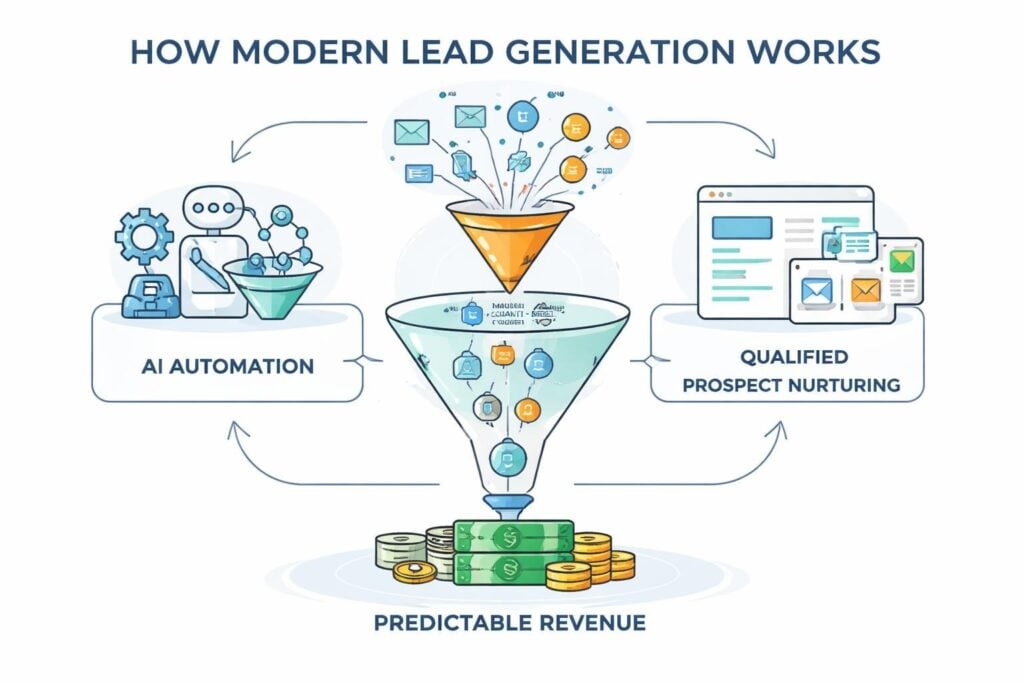
The landscape of business growth has fundamentally shifted. Companies that master lead generation work don't just survive-they dominate their markets, predictably filling their sales calendars with qualified prospects ready to make purchasing decisions. In 2026, the businesses thriving aren't those spending the most on advertising, but those implementing systematic approaches to attract, qualify, and convert prospects into loyal customers. Understanding how lead generation work functions at its core separates companies experiencing explosive growth from those struggling to meet revenue targets quarter after quarter.
Understanding the Foundation of Lead Generation Work
Lead generation work encompasses the systematic processes, strategies, and technologies businesses use to attract potential customers and guide them toward purchasing decisions. This isn't about collecting random names and email addresses-it's about building a predictable pipeline of qualified prospects who match your ideal customer profile and demonstrate genuine buying intent.
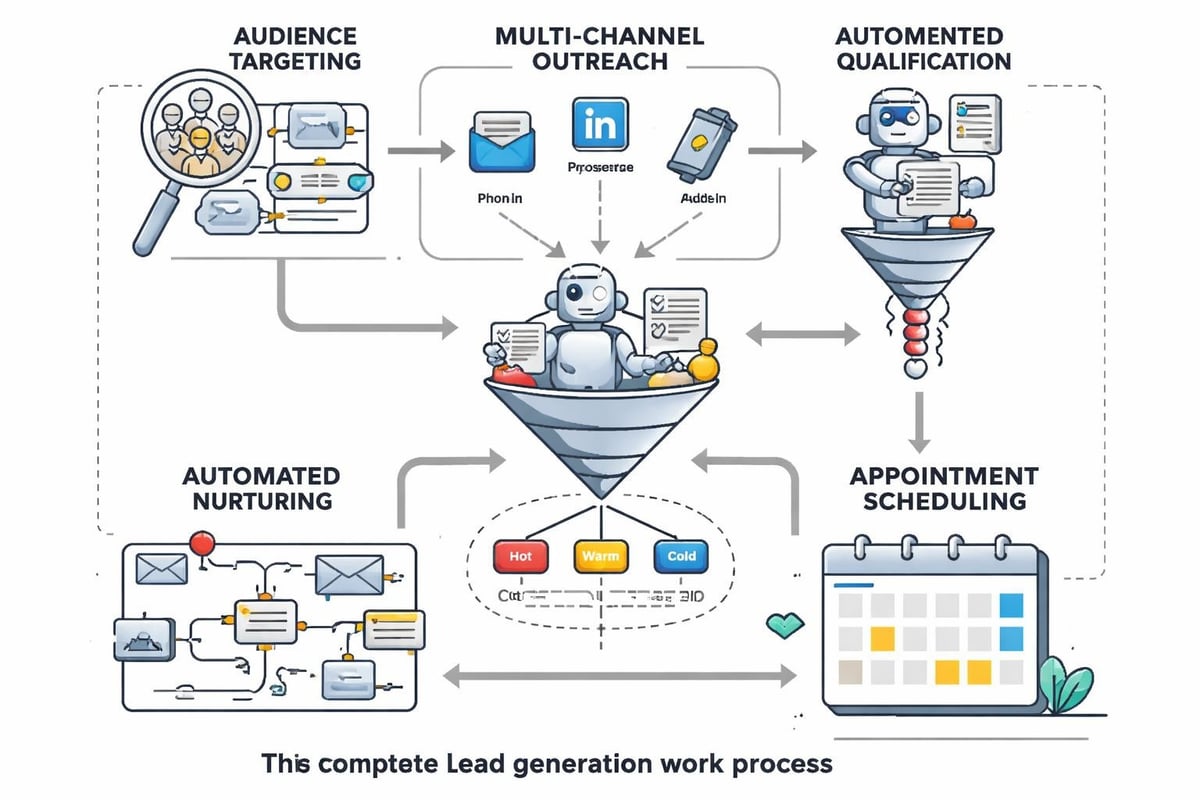
The mechanics of successful lead generation work involve multiple interconnected components. First, you identify your target audience with surgical precision, understanding their pain points, purchasing behaviors, and decision-making processes. Second, you create compelling value propositions that resonate with their specific needs. Third, you deploy multi-channel strategies to reach prospects where they actively seek solutions.
According to comprehensive research on lead generation methods, businesses that implement structured lead generation work see significantly higher conversion rates and lower customer acquisition costs compared to those relying on sporadic marketing efforts.
The Evolution of Lead Generation Work in 2026
Traditional lead generation tactics that worked five years ago have become increasingly ineffective. Cold calling interrupts prospects who haven't expressed interest. Generic email blasts get filtered into spam folders. Banner ads generate impressions but fail to capture attention.
Modern lead generation work leverages advanced AI systems and data-driven insights to personalize every touchpoint. Companies now use predictive analytics to identify prospects most likely to convert, deploy chatbots that qualify leads 24/7, and create hyper-targeted campaigns that speak directly to individual prospect concerns.
The shift toward automated appointment booking systems has revolutionized how businesses handle inbound interest. When a prospect expresses interest, AI-powered systems immediately engage them, qualify their needs, and schedule consultations without human intervention-transforming hours of manual work into seconds of automated efficiency.
Core Strategies That Make Lead Generation Work Effective
Successful lead generation work requires implementing proven strategies that consistently attract qualified prospects. The following approaches have demonstrated measurable results across industries in 2026.
Content Marketing That Actually Converts
Content marketing remains one of the highest-ROI components of lead generation work when executed strategically. But creating content isn't enough-you need content specifically designed to capture leads at different stages of the buying journey.
Top-of-funnel content educates prospects about problems they're experiencing, positioning your brand as a trusted authority. Middle-funnel content compares solutions and demonstrates your unique approach. Bottom-funnel content addresses specific objections and provides social proof that motivates purchasing decisions.
Consider implementing these content formats:
- Educational blog posts targeting high-intent keywords
- Video tutorials demonstrating your expertise
- Downloadable resources requiring email opt-in
- Case studies showcasing measurable client results
- Interactive tools that provide personalized insights
The key is ensuring every piece of content includes clear calls-to-action that guide prospects toward the next step in your sales process. Exploring various lead generation tools can help you identify which platforms and technologies best support your content distribution strategy.
Multi-Channel Outreach Systems
Relying on a single channel for lead generation work creates unnecessary risk and limits your growth potential. The most successful businesses in 2026 deploy integrated multi-channel systems that reach prospects through their preferred communication methods.
| Channel | Primary Use Case | Average Conversion Rate | Best For |
|---|---|---|---|
| Paid Social | Brand awareness & targeting | 2-4% | Visual products, B2C |
| Search Ads | High-intent capture | 5-10% | Solution-aware prospects |
| Email Marketing | Nurturing & reengagement | 1-3% | Existing relationships |
| LinkedIn Outreach | B2B relationship building | 3-8% | High-ticket services |
| Webinars | Education & demonstration | 20-40% | Complex solutions |
The magic happens when these channels work together synergistically. A prospect might first encounter your brand through social media, research your solution via search, consume your educational content, and finally book a consultation after receiving a targeted email sequence.
Understanding how to construct effective funnels in digital marketing enables you to map out these multi-touchpoint journeys that convert cold prospects into enthusiastic buyers.
Advanced Tactics for Optimizing Lead Generation Work
Once you've established foundational systems, optimizing lead generation work requires implementing advanced tactics that maximize efficiency and conversion rates.
AI-Powered Lead Qualification
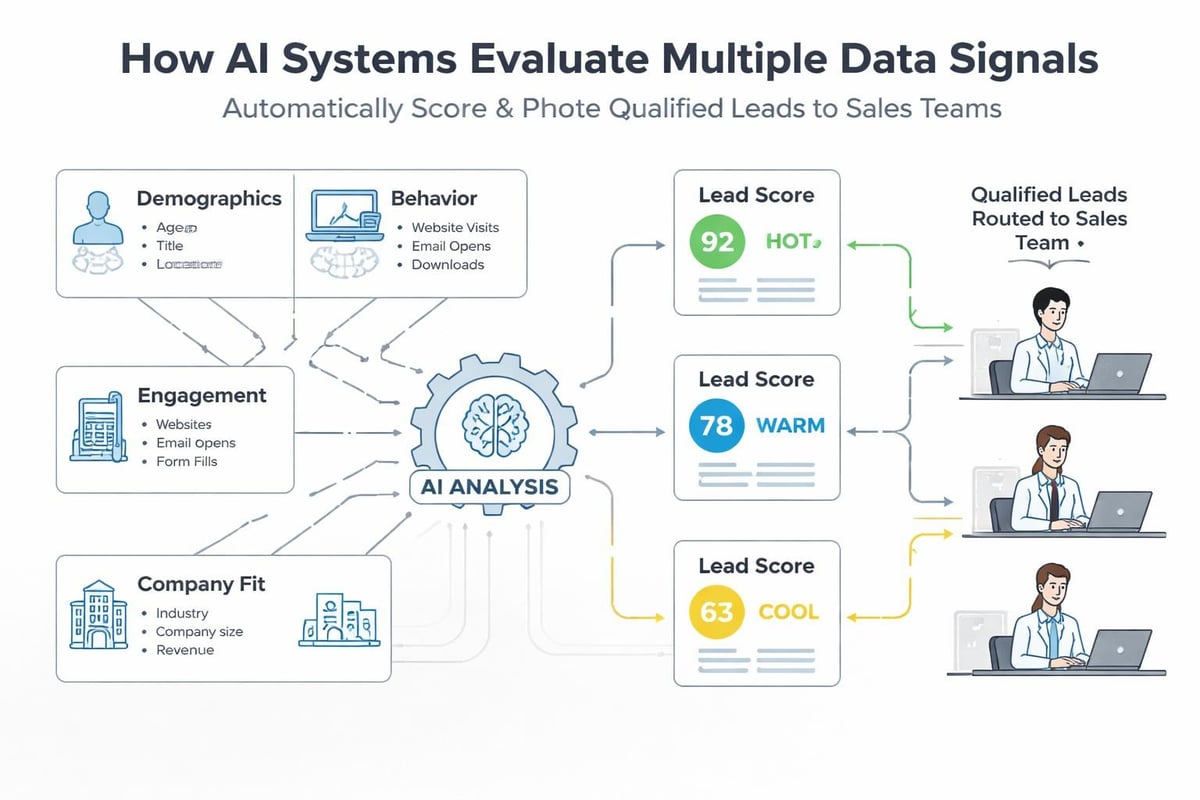
Not all leads are created equal. Spending sales resources on unqualified prospects wastes time and money while letting hot prospects grow cold. This is where AI-powered qualification transforms lead generation work.
Modern AI systems analyze dozens of data points to score leads based on their likelihood to convert. These systems evaluate:
- Demographic fit with your ideal customer profile
- Behavioral signals indicating buying intent
- Engagement patterns across your content
- Company size, revenue, and growth trajectory
- Technology stack and existing solutions
When a lead reaches a predetermined score threshold, the system automatically routes them to your sales team with complete context about their journey, eliminating the guesswork from prioritization decisions.
Conversion Rate Optimization Through Testing
Small improvements in conversion rates create exponential growth in lead generation work outcomes. A landing page converting at 2% generates 50% more leads than one converting at 1.5%-without spending an additional dollar on traffic.
Systematic testing should focus on these high-impact elements:
- Headlines that immediately communicate value
- Call-to-action button copy and placement
- Form length and field requirements
- Social proof positioning and formatting
- Page load speed and mobile responsiveness
- Visual hierarchy and information architecture
Run A/B tests changing one element at a time, allowing sufficient traffic to reach statistical significance before declaring winners. Document every test result to build institutional knowledge about what resonates with your specific audience.
Many businesses discover that implementing strategic marketing agency approaches provides frameworks for continuous optimization that compound results over time.
Building Scalable Lead Generation Work Systems
The difference between sporadic lead flow and predictable revenue growth lies in building systems that scale without proportional increases in effort or cost.
Automation Infrastructure
Manual lead generation work creates bottlenecks that limit growth. Automation infrastructure eliminates these constraints while improving response times and consistency.
Essential automation components include:
- CRM integration that captures every prospect interaction
- Email sequences triggered by specific behaviors
- SMS follow-up for high-intent actions
- Calendar scheduling that eliminates back-and-forth
- Lead routing based on qualification criteria
- Retargeting campaigns for engaged prospects
When properly configured, these systems work 24/7, ensuring no lead falls through the cracks while freeing your team to focus on high-value activities like closing deals and refining strategy.
The best marketing platforms in 2026 offer native automation capabilities that integrate seamlessly with your existing technology stack, reducing implementation complexity.
Partnership and Referral Programs
Your existing customers represent one of the most powerful yet underutilized sources of lead generation work. People trust recommendations from peers far more than any marketing message.
Structured referral programs incentivize customers to introduce your solutions to their networks. The most effective programs offer mutual value-rewarding both the referrer and the new customer.
Consider implementing tiered rewards that increase with referral volume, creating super-advocates who actively promote your business. Track referral sources meticulously to identify your highest-value customer segments and double down on serving similar prospects.
According to proven lead generation strategies, businesses with formal referral programs see 30-50% lower customer acquisition costs compared to those relying solely on outbound tactics.
Measuring and Improving Lead Generation Work Performance
What gets measured gets managed. Without clear metrics, you're flying blind-unable to identify what's working, what's failing, and where to allocate resources for maximum impact.
Key Performance Indicators That Matter
Focus on metrics that directly correlate with revenue outcomes rather than vanity metrics that look impressive but don't drive business results.
Critical KPIs for lead generation work:
- Cost per lead (CPL): Total marketing spend divided by leads generated
- Lead-to-customer conversion rate: Percentage of leads that become paying customers
- Customer acquisition cost (CAC): Total sales and marketing costs per new customer
- Return on ad spend (ROAS): Revenue generated per dollar spent on advertising
- Time to conversion: Average days from first touch to closed deal
- Lead quality score: Aggregate measure of lead fit and intent
Track these metrics weekly, identifying trends before they become problems. A rising CPL might indicate audience saturation, requiring creative refresh or audience expansion. Declining conversion rates could signal messaging misalignment or qualification issues.
| Metric | Good Performance | Action Threshold | Red Flag |
|---|---|---|---|
| CPL | < $50 | $50-$100 | > $100 |
| Conversion Rate | > 5% | 2-5% | < 2% |
| CAC:LTV Ratio | > 1:5 | 1:3-1:5 | < 1:3 |
| ROAS | > 400% | 200-400% | < 200% |
Attribution and Channel Performance
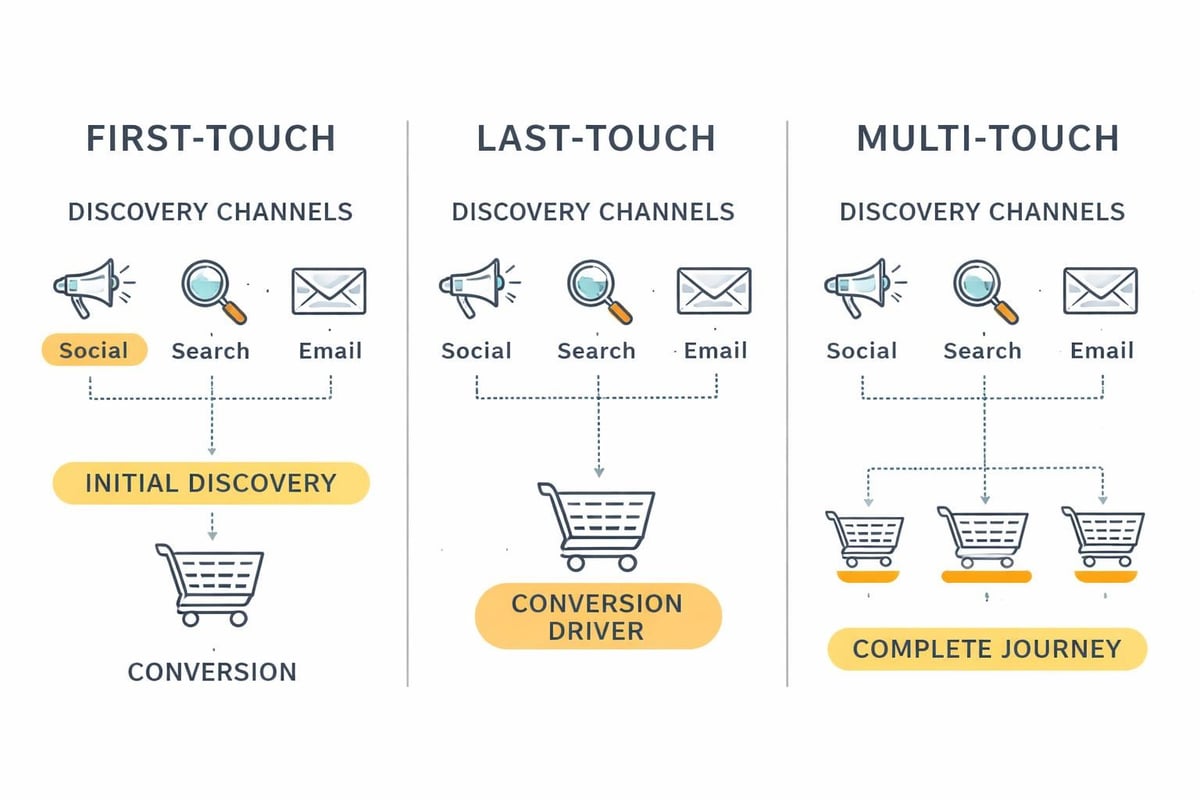
Understanding which channels drive your most valuable leads enables smarter budget allocation. Multi-touch attribution models reveal how different touchpoints contribute to conversions throughout the customer journey.
First-touch attribution shows which channels initially attract prospects. Last-touch attribution identifies what finally convinced them to convert. Multi-touch models distribute credit across every interaction, providing the most accurate picture of channel performance.
Many businesses discover that certain channels excel at awareness while others dominate conversion-both are valuable but serve different purposes in your lead generation work ecosystem.
Industry-Specific Lead Generation Work Approaches
Different industries require tailored approaches to lead generation work. What works brilliantly for e-commerce might fail spectacularly for professional services.
B2B Lead Generation Work
B2B lead generation work typically involves longer sales cycles, multiple decision-makers, and higher deal values. Success requires building trust and demonstrating expertise throughout extended nurturing periods.
Effective B2B tactics include thought leadership content, industry-specific webinars, LinkedIn outreach to decision-makers, and account-based marketing targeting specific high-value prospects. B2B lead generation companies often specialize in navigating complex organizational structures to identify and engage the right stakeholders.
The key is providing value at every touchpoint-educational resources, data-driven insights, and personalized consultations that address specific business challenges. Generic messaging gets ignored; hyper-relevant communication breaks through.
Service-Based Business Lead Generation
Service providers face unique challenges in lead generation work. Your offering is intangible, making it harder to demonstrate value before purchase. Trust becomes the primary conversion factor.
Effective service-based lead generation emphasizes:
- Case studies with quantifiable client outcomes
- Video testimonials from satisfied customers
- Free assessments or audits providing immediate value
- Educational content demonstrating expertise
- Transparent pricing and process explanations
For specialized fields like financial advisor lead generation, establishing credibility through certifications, media appearances, and third-party validation significantly impacts conversion rates.
Local Business Lead Generation
Local businesses benefit from geographic targeting and community engagement that larger competitors can't replicate. Your lead generation work should leverage local SEO, Google Business Profile optimization, community partnerships, and location-based advertising.
Reviews and ratings disproportionately impact local lead generation work. A business with 200+ positive reviews outperforms competitors with superior services but limited social proof. Implement systematic review collection processes, making it effortless for satisfied customers to share their experiences.
Real estate professionals, for instance, find that Facebook real estate lead generation combined with hyperlocal content creates powerful positioning in specific neighborhoods and communities.
Overcoming Common Lead Generation Work Challenges
Even with solid strategies, businesses encounter obstacles that derail their lead generation work. Recognizing and addressing these challenges separates consistent performers from those experiencing feast-or-famine cycles.
Ad Fatigue and Audience Saturation
Running the same campaigns to the same audiences inevitably leads to declining performance. Click-through rates drop, cost per lead increases, and conversion quality deteriorates.
Combat ad fatigue through creative rotation, audience expansion, and message variation. Develop multiple creative concepts testing different angles, benefits, and formats. Refresh campaigns every 3-4 weeks even when performance remains strong-proactive refreshes prevent decline rather than reacting after results suffer.
Expand into lookalike audiences based on your best customers, test new channels reaching similar demographics, and continuously refine targeting parameters based on performance data.
Lead Quality Versus Quantity Balance
It's tempting to optimize purely for lead volume, but 100 unqualified leads have less value than 10 prospects ready to buy. This balance represents one of the most critical decisions in lead generation work.
Implement qualification mechanisms that filter prospects before they consume sales resources. Progressive profiling gradually collects information across multiple interactions. Behavioral scoring identifies genuine interest through content consumption and engagement patterns.
Don't be afraid to disqualify prospects who don't fit your ideal customer profile. Saying "no" to bad-fit leads allows you to say "yes" to serving great-fit customers who generate referrals, testimonials, and long-term value.
Understanding how to generate qualified sales calls requires aligning marketing and sales around shared definitions of lead quality and readiness.
Budget Constraints and Resource Allocation
Limited budgets require strategic prioritization. You can't do everything, so you must identify highest-impact activities and allocate resources accordingly.
Start by calculating the lifetime value of your average customer. This number determines how much you can profitably spend acquiring new customers. If your average customer generates $5,000 in lifetime profit, you can afford to spend $1,000-$1,500 on acquisition while maintaining healthy margins.
Focus initial efforts on one or two channels where your target audience actively seeks solutions. Master these channels before expanding. Shallow efforts across many channels underperform deep expertise in few.
Many small businesses discover that low-cost lead generation strategies like content marketing and organic social media provide excellent ROI when executed consistently over time.
Future-Proofing Your Lead Generation Work
The tactics working today won't necessarily work tomorrow. Technology evolves, algorithms change, and consumer behaviors shift. Building adaptable systems ensures your lead generation work remains effective regardless of external changes.
Embracing AI and Machine Learning
Artificial intelligence isn't replacing human marketers-it's amplifying their capabilities. AI excels at analyzing massive datasets, identifying patterns humans miss, predicting outcomes, and automating repetitive tasks.
Forward-thinking businesses integrate AI across their lead generation work: predictive lead scoring, personalized content recommendations, optimal send-time prediction, chatbot qualification, and dynamic landing page optimization.
The competitive advantage goes to companies that combine human creativity and strategic thinking with AI-powered execution and optimization. Neither succeeds alone; together, they create unstoppable lead generation machines.
Building First-Party Data Assets
Privacy regulations and platform changes are making third-party data less reliable and accessible. Building robust first-party data assets-information you collect directly from prospects and customers-provides sustainable competitive advantages.
Every email subscriber, form completion, and customer interaction adds to your data asset. This information enables more precise targeting, better personalization, and deeper customer understanding independent of external platforms.
Invest in CRM systems that capture comprehensive interaction histories. Implement progressive profiling that gradually builds complete prospect profiles. Create compelling reasons for prospects to voluntarily share information through valuable exchanges.
Continuous Learning and Adaptation
The most dangerous phrase in business is "we've always done it this way." Markets evolve, competitors innovate, and technologies emerge. Your lead generation work must evolve accordingly.
Dedicate time weekly to studying industry trends, analyzing competitor strategies, and testing new approaches. Attend conferences, join peer communities, and invest in training that expands your capabilities.
Review performance data monthly, identifying patterns and anomalies. What changed? Why? What can you learn? This analytical mindset transforms every campaign into a learning opportunity that compounds your expertise over time.
Exploring resources about high-performing lead generation strategies keeps you informed about emerging tactics and evolving best practices as the landscape continues shifting.
Mastering lead generation work in 2026 requires combining proven strategies with cutting-edge technologies, creating systems that consistently attract and convert qualified prospects into loyal customers. The businesses experiencing predictable growth aren't relying on luck-they're implementing systematic approaches that transform cold prospects into enthusiastic buyers. If you're ready to build a lead generation system that fills your sales calendar with qualified appointments while you focus on closing deals, Adstra leverages advanced AI systems and proven strategies to deliver guaranteed growth. Our partnership model aligns our success with yours, ensuring we're invested in generating the qualified leads that drive your revenue growth.