
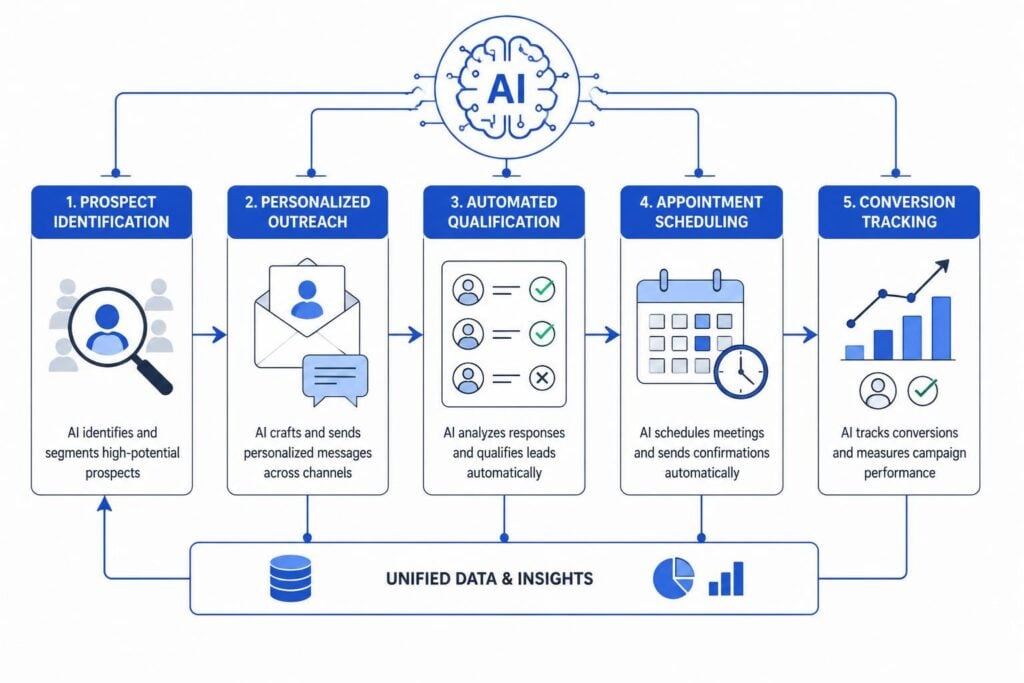
The marketing landscape has fundamentally changed. Traditional approaches that once generated predictable results now struggle to cut through the noise, while businesses compete for the same saturated audiences using outdated tactics. Enter artificial intelligence: the game-changing technology that's transforming how companies identify prospects, engage leads, and close deals. Today's most successful marketers aren't just using AI as a novelty-they're building entire revenue engines around intelligent systems that work 24/7 to deliver qualified opportunities. If you're still relying solely on manual processes for lead generation and customer acquisition, you're leaving serious money on the table while your competitors pull ahead.
The Competitive Advantage of AI Tools Marketing
Smart businesses recognize that ai tools marketing represents far more than technological innovation. It's a fundamental shift in how companies compete for market share.
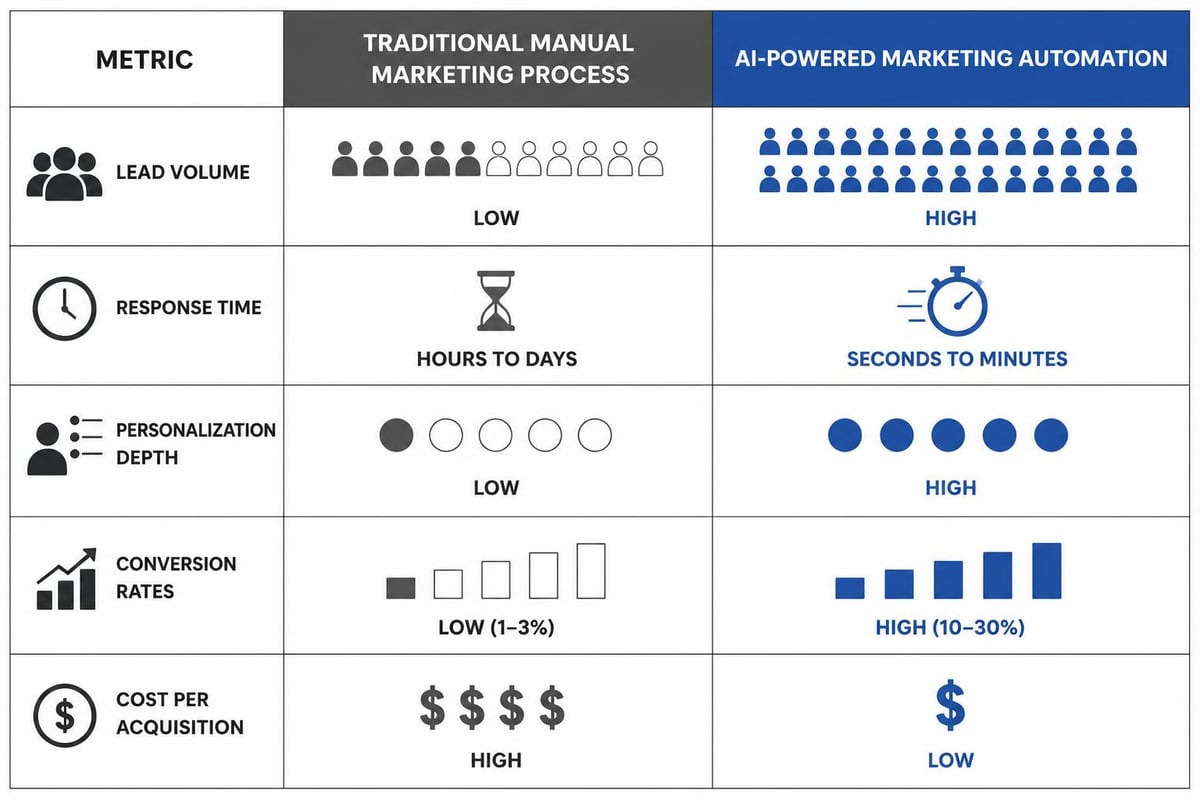
The data speaks volumes. Companies implementing AI-driven marketing strategies report 45-60% higher conversion rates compared to traditional methods. Why? Because artificial intelligence eliminates guesswork, personalizes experiences at scale, and identifies buying signals that humans consistently miss.
Why Traditional Marketing Falls Short
Manual marketing approaches face insurmountable challenges in 2026:
- Limited scalability: Human teams can only manage finite prospect volumes
- Inconsistent execution: Quality varies based on individual performance and availability
- Delayed response times: Prospects expect instant engagement across multiple channels
- Poor data utilization: Valuable insights remain buried in spreadsheets and disconnected systems
- Higher operational costs: Labor-intensive processes drain budgets without proportional returns
Meanwhile, ai tools marketing systems process thousands of data points simultaneously, identify ideal prospects with precision, and engage them with personalized messaging exactly when they're most receptive. The best marketing platforms now integrate AI capabilities as standard features rather than premium add-ons.
Essential Categories of AI Marketing Tools
The ai tools marketing ecosystem has matured significantly, offering specialized solutions for every stage of the customer journey. Understanding which tools deliver maximum impact requires knowing where your biggest bottlenecks exist.
Content Creation and Optimization
AI writing assistants have evolved beyond simple text generation. Today's top AI writing tools understand brand voice, optimize for search intent, and adapt messaging based on audience segments.
| Tool Category | Primary Function | Business Impact |
|---|---|---|
| Content Generators | Produce blog posts, emails, ad copy | 70% faster content production |
| SEO Optimizers | Keyword research, on-page optimization | 40% increase in organic traffic |
| Video Creation | Script writing, automated video production | 5x higher engagement rates |
These systems don't just save time-they improve quality through data-driven insights that human writers might overlook. For businesses focused on lead generation, content that ranks well and converts visitors into prospects becomes your most valuable asset.
Prospect Identification and Qualification
Finding the right prospects separates successful campaigns from budget-draining failures. Modern AI systems analyze millions of signals to identify companies and individuals most likely to purchase.
Advanced platforms now combine:
- Behavioral analysis: Website visits, content consumption, email engagement
- Firmographic data: Company size, industry, growth indicators, technology stack
- Intent signals: Active research behavior, competitive intelligence, buying timeline indicators
- Predictive scoring: Machine learning models that forecast conversion probability
This sophisticated approach to B2B lead gen eliminates wasted effort on low-quality prospects. Your sales team focuses exclusively on opportunities with genuine purchase intent.
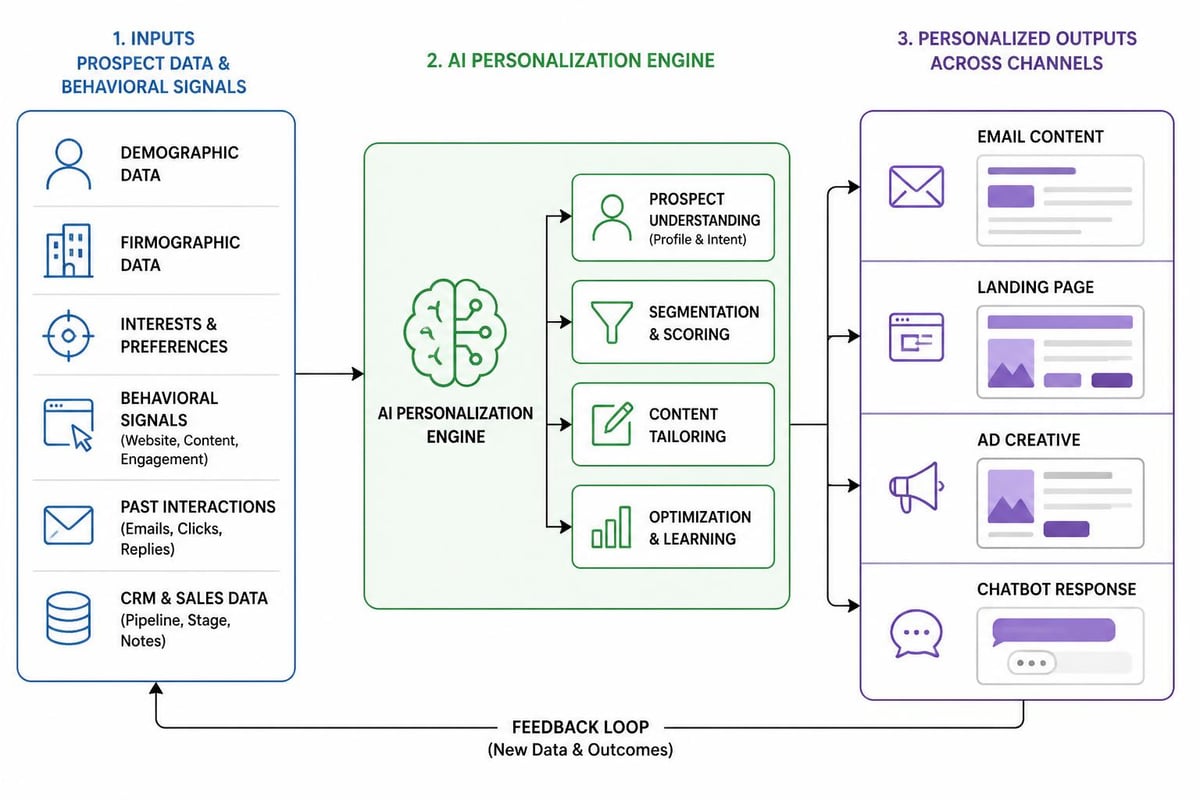
Automated Personalization Engines
Generic messaging doesn't work anymore. Today's buyers expect relevance.
AI personalization platforms dynamically adjust:
- Email subject lines and body content based on recipient behavior
- Landing page headlines, imagery, and calls-to-action aligned with visitor source
- Ad creative variations optimized for different audience segments
- Chatbot conversations that adapt based on user responses and intent
- Product recommendations reflecting individual preferences and purchase history
The best AI marketing tools make personalization scalable, delivering customized experiences to thousands of prospects simultaneously while maintaining authentic, relevant communication.
Implementing AI Tools Marketing for Lead Generation
Strategy matters more than technology. The most sophisticated ai tools marketing platforms deliver mediocre results when deployed without clear objectives and proper integration.
Building Your AI Marketing Stack
Start with your biggest pain point. Don't attempt to overhaul your entire marketing operation overnight. Identify where AI can deliver immediate, measurable improvement.
For most B2B companies, that means lead qualification. Traditional methods struggle to distinguish genuinely interested prospects from tire-kickers. AI excels at this critical distinction.
Consider this strategic implementation framework:
- Phase 1: Deploy AI for lead scoring and qualification (30-60 days)
- Phase 2: Implement automated email personalization and nurture sequences (60-90 days)
- Phase 3: Add AI-powered content creation and optimization (90-120 days)
- Phase 4: Integrate predictive analytics and advanced segmentation (120+ days)
This phased approach generates ROI at each stage while building organizational competency. Teams learn to trust AI insights before relying on them for strategic decisions.
Integration with Existing Systems
Your CRM, marketing automation platform, and analytics tools must communicate seamlessly. Disconnected data creates blind spots that undermine AI effectiveness.
| Integration Priority | Business Benefit | Implementation Complexity |
|---|---|---|
| CRM Connection | Complete lead tracking, attribution | Medium |
| Email Platform | Automated personalization, send optimization | Low |
| Analytics Dashboard | Performance measurement, ROI validation | Medium |
| Calendar Systems | Automated appointment booking | Low |
| Advertising Platforms | Dynamic bidding, creative optimization | High |
The most effective tools for lead generation work within your existing ecosystem rather than requiring complete replacement. Look for solutions offering robust APIs and pre-built integrations with popular platforms.
Data Quality and AI Performance
Garbage in, garbage out. AI systems require clean, comprehensive data to generate accurate insights and recommendations.
Audit your current data health:
- Are contact records complete with accurate company information?
- Do you track engagement consistently across channels?
- Can you connect website behavior to individual prospects?
- Are sales outcomes properly attributed to marketing activities?
Without solid data foundations, even the most advanced ai tools marketing platforms will underperform. Invest time cleaning your database before expecting AI miracles.
Advanced AI Applications Transforming Marketing ROI
Beyond basic automation, cutting-edge AI capabilities are redefining what's possible in customer acquisition and revenue generation.
Conversational AI and Automated Qualification
Modern chatbots and virtual assistants qualify prospects through intelligent dialogue, asking relevant questions based on previous responses and behavioral data. Unlike static forms, conversational AI feels natural while capturing richer information.
Qualification accuracy improves by 65% when AI handles initial prospect conversations. The system never gets tired, maintains consistency, and can engage unlimited simultaneous conversations. For companies managing high lead volumes, this represents transformative efficiency.
Quality B2B lead generation tools now incorporate conversational AI as standard functionality, recognizing that prospect engagement determines conversion rates more than traffic volume.
Predictive Analytics and Revenue Forecasting
Which prospects will close this quarter? What messaging resonates with decision-makers in specific industries? How should you allocate budget across channels for maximum return?
AI answers these questions with statistical confidence rather than educated guesses. By analyzing historical patterns across thousands of deals, machine learning models identify success indicators that humans overlook.
This predictive power transforms LinkedIn B2B lead generation from spray-and-pray outreach to surgical targeting of high-probability accounts.
Dynamic Creative Optimization
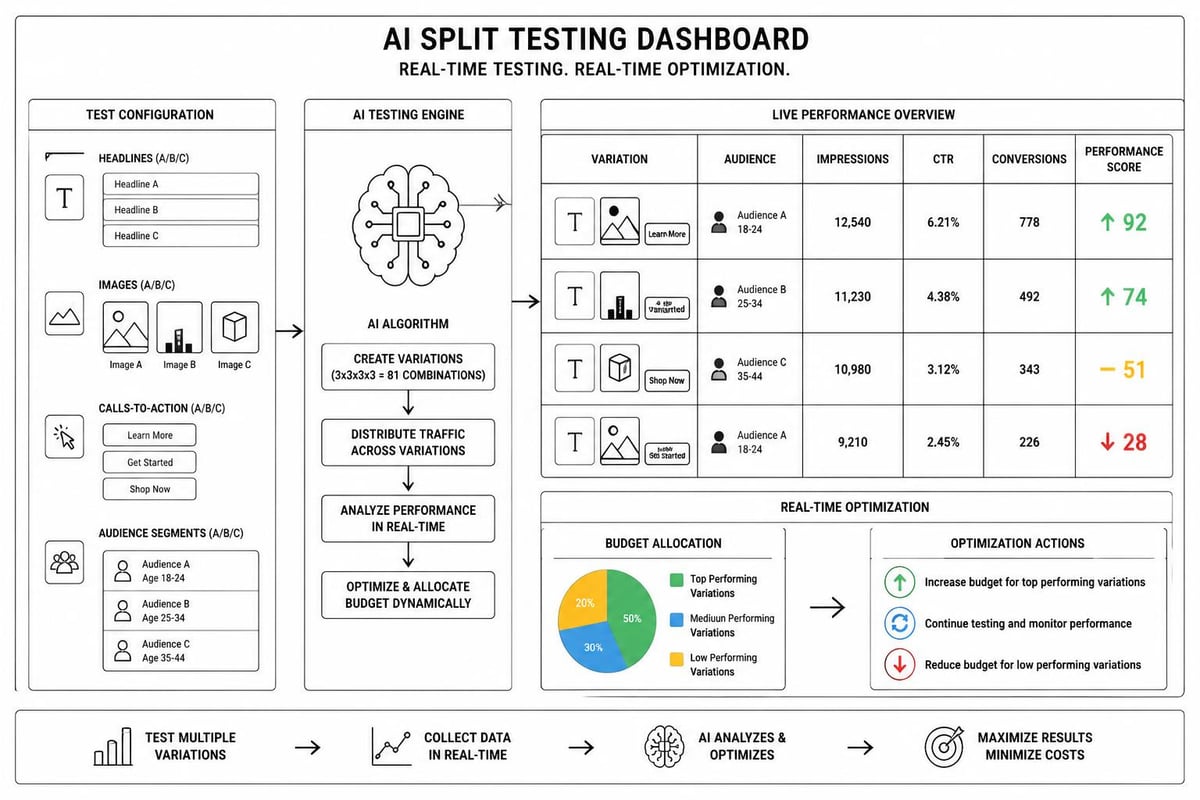
Static ads are dead. Winners test dozens of variations simultaneously, letting AI identify which combinations of headlines, images, and calls-to-action generate optimal results for each audience segment.
Video content particularly benefits from AI optimization. Platforms like AdsRaw enable businesses to create realistic, user-generated content style video ads using AI, producing high-performing ad creatives in minutes without hiring production teams. This democratizes video advertising for companies previously priced out of the medium.
The comprehensive guide to AI tools showcases how creative automation has matured, with platforms now generating professional-quality assets that outperform many human-created alternatives in A/B testing.
Measuring AI Marketing Performance
Implementing ai tools marketing without proper measurement leaves you flying blind. Establish clear KPIs before deployment, then track relentlessly.
Essential Metrics for AI Marketing Systems
Lead quality trumps lead quantity. Many businesses discover their AI systems generate impressive lead volumes that sales teams can't convert. Focus on outcomes, not vanity metrics.
Track these critical indicators:
- Lead-to-opportunity conversion rate: What percentage of AI-generated leads advance to qualified sales opportunities?
- Cost per qualified lead: Total AI system investment divided by sales-accepted leads
- Sales cycle length: Time from first contact to closed deal for AI-sourced opportunities
- Customer acquisition cost: Complete investment required to convert an AI-generated lead to paying customer
- Return on AI investment: Revenue attributed to AI marketing divided by total AI costs
Compare these metrics against your pre-AI baseline. Expect 90-120 days before meaningful patterns emerge. AI systems improve continuously as they process more data and refine their models.
Attribution and Revenue Impact
Which AI tools actually drive revenue? Multi-touch attribution reveals how different AI capabilities contribute throughout the buyer journey.
A prospect might discover your content through AI-optimized SEO, engage with a personalized email sequence, qualify through conversational AI, and schedule a meeting via intelligent calendar automation. Each touchpoint adds value. Single-touch attribution models miss this complexity.
Modern AI analytics platforms track the complete journey, assigning appropriate credit to each interaction. This granular visibility enables smart budget allocation, doubling down on what works while eliminating what doesn't.
Overcoming Common AI Implementation Challenges
Every marketing team encounters obstacles when adopting AI tools marketing systems. Anticipating these challenges accelerates your path to results.
Team Adoption and Change Management
Resistance is natural. Marketing professionals worry AI will replace them rather than augment their capabilities. Address this fear directly through education and involvement.
Smart implementation strategies include:
- Demonstrating how AI eliminates tedious tasks, freeing time for strategic work
- Celebrating early wins publicly to build confidence and momentum
- Providing comprehensive training that builds genuine competency
- Creating feedback loops where team members influence AI configuration
- Establishing clear human oversight for all AI-generated content and decisions
Your people determine whether AI tools deliver value or gather digital dust. Invest in change management as heavily as you invest in technology.
Privacy, Compliance, and Ethical Considerations
AI systems that scrape data indiscriminately or personalize creepily damage brand reputation and potentially violate regulations. Implement AI marketing within clear ethical boundaries.
Key compliance requirements:
- GDPR and CCPA data handling regulations for international and California prospects
- CAN-SPAM requirements for AI-generated email campaigns
- Truth in advertising standards for AI-created marketing claims
- Transparent disclosure when AI systems interact with prospects
The top AI marketing tools for 2025 include robust compliance features, but configuration responsibility falls on your team. Don't assume default settings meet your regulatory obligations.
Budget Allocation and ROI Expectations
How much should you invest in ai tools marketing? The answer depends on your current marketing spend, growth objectives, and competitive dynamics.
General guidelines for B2B companies:
| Annual Revenue | Recommended AI Marketing Budget | Expected ROI Timeline |
|---|---|---|
| Under $5M | $1,500-$5,000/month | 4-6 months |
| $5M-$20M | $5,000-$15,000/month | 3-5 months |
| $20M-$50M | $15,000-$40,000/month | 2-4 months |
| Over $50M | $40,000+/month | 2-3 months |
These ranges include platform costs, implementation support, and team training. Larger organizations see faster returns because they have more data for AI systems to analyze and optimize against.
Start conservatively. Prove ROI with focused implementations before expanding your AI marketing footprint. This approach builds internal credibility while minimizing risk.
Selecting the Right AI Marketing Platform
The ai tools marketing landscape includes hundreds of vendors making ambitious claims. Separate substance from hype by evaluating platforms against your specific requirements.
Critical Selection Criteria
Integration capabilities matter most. The most powerful AI tool delivers minimal value if it can't access your prospect data or push qualified leads into your CRM.
Prioritize platforms offering:
- Pre-built integrations with your existing marketing technology stack
- Open APIs for custom connections as your needs evolve
- Bi-directional data sync that keeps all systems current
- Webhook support for real-time event triggering
- SOC 2 compliance and enterprise-grade security
Review detailed assessments from sources like Backlinko’s AI marketing tools analysis and ClickUp’s comprehensive AI marketing tools guide to understand real-world performance across different business contexts.
Vendor Support and Training
Technology alone doesn't guarantee success. Responsive vendor support accelerates time-to-value while preventing costly mistakes.
Evaluate vendor support quality:
- What onboarding and training resources do they provide?
- How quickly do they respond to technical support requests?
- Do they offer strategic consultation or just technical troubleshooting?
- What does their customer community look like for peer learning?
- Can they provide case studies from similar businesses in your industry?
The best vendors act as partners invested in your success rather than just selling software licenses. Look for companies offering guaranteed results or performance-based pricing models that align their incentives with your outcomes.
Scalability and Future-Proofing
Your business will grow. Your AI marketing capabilities should grow with it.
Choose platforms that scale efficiently without requiring migration to different solutions. Ask vendors how their pricing, features, and performance change as you add users, contacts, or transaction volume.
Future-proofing considerations:
- How frequently does the vendor release new AI capabilities?
- Do they incorporate latest machine learning advances automatically?
- Will your current plan accommodate 2-3x growth without major cost increases?
- Does the platform support international expansion if relevant to your roadmap?
Switching AI marketing platforms disrupts operations and wastes the learning investment your team has made. Choose wisely upfront to avoid costly transitions later.
Real-World AI Marketing Success Patterns
Studying how leading companies leverage ai tools marketing reveals actionable patterns you can replicate.
Case Pattern: Automated Lead Qualification at Scale
Challenge: A B2B software company generated 2,000+ monthly leads but lacked resources to qualify them promptly. Sales team wasted time on unqualified prospects while genuine opportunities went cold.
AI Solution: Implemented conversational AI that engaged every lead within 60 seconds, asked qualifying questions based on their source and behavior, and scheduled appointments with sales reps only for prospects meeting minimum criteria.
Results:
- Lead-to-opportunity conversion improved from 8% to 23%
- Sales team focused on 40% fewer leads but closed 85% more deals
- Average time from lead to first sales conversation dropped from 6 days to 12 minutes
- Customer acquisition cost decreased by 52%
This transformation mirrors results that innovative approaches to converting cold call leads achieve when AI handles initial qualification and nurturing.
Case Pattern: Hyper-Personalized Outbound Campaigns
Another company struggled with low response rates on outbound campaigns. Generic messaging failed to resonate with decision-makers receiving hundreds of similar emails weekly.
AI Implementation: Deployed ai tools marketing platform that researched each prospect's company, identified relevant business challenges based on industry and growth stage, and generated personalized email copy referencing specific pain points.
Outcome: Email response rates increased from 2.3% to 14.7%, with recipients frequently commenting on the message relevance. Sales pipeline from outbound efforts tripled within 90 days.
Platforms highlighted in this evaluation of AI marketing tools for 2026 enable similar personalization without requiring massive research teams.
Pattern Recognition Across Industries
Successful ai tools marketing implementations share common elements regardless of industry:
- Clear objectives defined before technology selection
- Data quality addressed as a foundational requirement
- Phased rollout rather than attempting complete transformation simultaneously
- Continuous optimization based on performance data and AI recommendations
- Human oversight maintaining brand voice and ethical standards
Companies working with specialized providers like top lead generation companies benefit from established playbooks and proven implementation frameworks that accelerate results while avoiding common pitfalls.
The Competitive Imperative of AI Adoption
Your competitors are already implementing ai tools marketing systems. Every month you delay represents market share erosion and opportunity cost.
Market Dynamics Favoring Early Adopters
AI creates winner-take-most dynamics in many markets. Companies that build sophisticated AI capabilities early accumulate data advantages that become nearly impossible for late adopters to overcome.
Consider this competitive reality: An AI system trained on 100,000 prospect interactions makes dramatically better predictions than one trained on 1,000 interactions. First movers accumulate data faster, creating self-reinforcing competitive advantages.
Additionally, as more companies deploy AI marketing systems, the baseline expectations shift. What feels like impressive personalization today becomes table stakes tomorrow. Prospects increasingly expect instant responses, relevant messaging, and frictionless experiences. Companies still operating manually simply can't compete on these dimensions.
Cost Efficiency and Resource Allocation
AI doesn't just improve marketing effectiveness-it fundamentally changes cost structures.
Traditional marketing requires linear resource scaling. Want to double lead volume? You need roughly double the team size. AI breaks this constraint through automation and optimization that handles exponentially more work without proportional cost increases.
Smart businesses redirect savings from operational efficiency toward strategic initiatives: better creative development, deeper market research, expanded channel testing, or enhanced sales enablement. This creates a flywheel where AI-driven efficiency funds growth initiatives that generate more data for AI systems to optimize against.
Innovation Velocity
Markets reward fast learners. AI marketing systems test, learn, and optimize faster than any human team possibly could.
While traditional marketers run quarterly campaigns and review results in retrospect, AI systems conduct thousands of micro-experiments daily. Machine learning models identify winning patterns within days or weeks rather than months or quarters.
This acceleration in learning velocity means AI-powered marketing organizations adapt to market shifts, competitive moves, and customer preference changes faster than competitors still relying on quarterly planning cycles and annual strategic reviews.
Artificial intelligence has fundamentally transformed how successful businesses approach marketing, lead generation, and customer acquisition. The companies winning in 2026 aren't just using AI tools-they're building entire growth engines around intelligent systems that identify ideal prospects, engage them with personalized messaging, and convert them into qualified opportunities with unprecedented efficiency. If you're ready to stop competing with one hand tied behind your back and start leveraging AI to generate predictable revenue growth, Adstra combines cutting-edge AI systems with proven lead generation strategies to deliver qualified appointments and guaranteed results. We don't just provide technology-we partner with you to transform cold prospects into ready-to-buy customers through transparent, value-driven marketing that actually works.