


The landscape of business development has fundamentally shifted in 2026, and traditional approaches to customer acquisition no longer deliver the results modern businesses demand. A sales and marketing company that understands this evolution doesn't just create campaigns or make cold calls-it architects complete systems that transform strangers into customers with predictable consistency. The difference between thriving businesses and those struggling to maintain growth often comes down to one critical factor: the quality and integration of their sales and marketing operations.
The Evolution of Sales and Marketing Integration
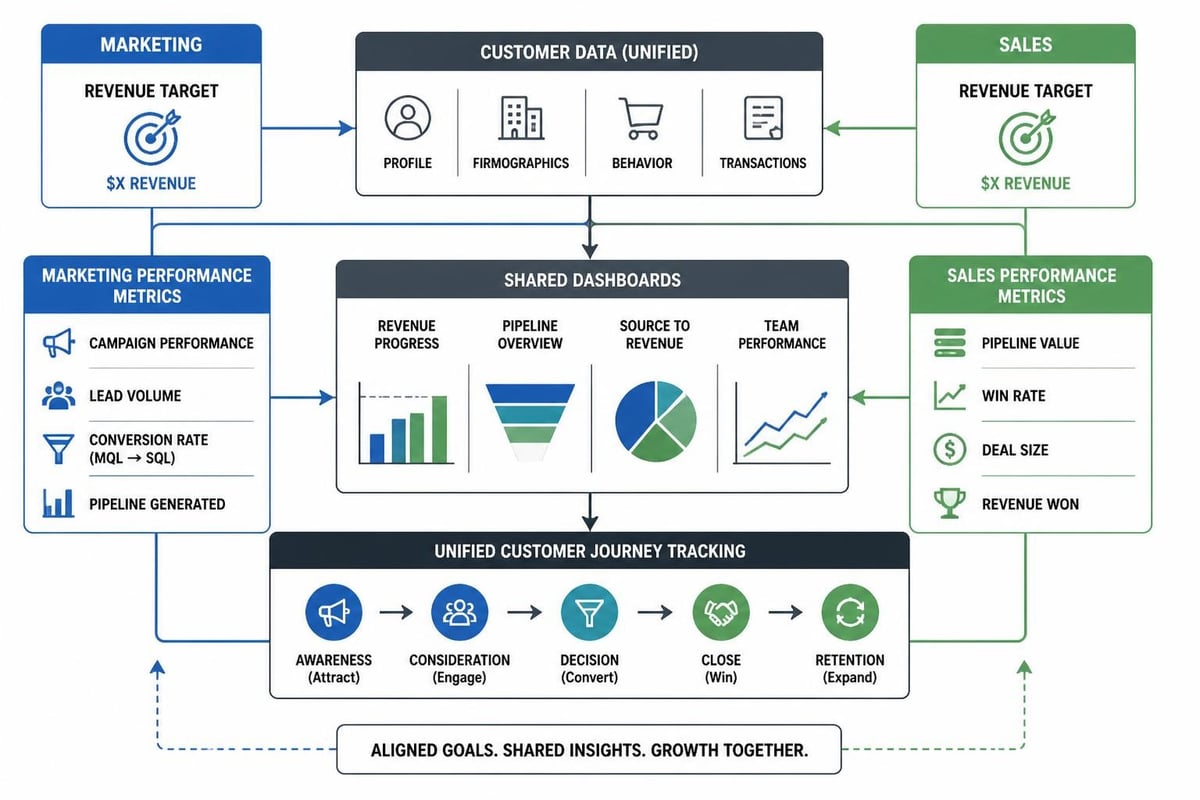
The old model of sales and marketing operating in separate silos has become obsolete. Today's successful businesses recognize that these two functions must work as a unified force, sharing data, goals, and accountability.
Modern sales and marketing alignment creates:
- 38% higher sales win rates
- 36% better customer retention
- 208% more revenue from marketing efforts
- Shorter sales cycles and reduced customer acquisition costs
The challenge isn't just getting these teams to talk to each other. It requires fundamental changes in how organizations structure incentives, measure success, and deploy technology. Sales and marketing alignment best practices emphasize that both departments must share revenue targets rather than maintaining separate metrics that can create conflicting priorities.
Why Traditional Agencies Fall Short
Most conventional agencies still operate under the old model: create campaigns, generate reports, and bill monthly retainers regardless of results. This misalignment of incentives means agencies profit even when clients don't see growth.
A truly effective sales and marketing company invests in your outcomes, not just activities. The difference manifests in several critical ways:
| Traditional Agency | Results-Driven Partnership |
|---|---|
| Bills for hours and deliverables | Compensated based on actual results |
| Focuses on vanity metrics | Tracks qualified leads and revenue |
| Separate sales/marketing efforts | Integrated systems and workflows |
| Generic strategies | Customized for your specific market |
When evaluating potential partners, examine their willingness to tie compensation to performance. Companies that guarantee results demonstrate confidence in their systems and genuine alignment with your success.
AI-Powered Lead Generation Systems
Artificial intelligence has revolutionized how sophisticated organizations identify, qualify, and convert prospects. However, AI isn't magic-it's a tool that amplifies strategy when deployed correctly.
The most effective lead generation approaches for IT companies and other B2B sectors now incorporate machine learning algorithms that:
- Analyze thousands of data points to identify ideal customer profiles
- Predict which prospects are most likely to convert
- Automate personalized outreach at scale
- Optimize messaging based on engagement patterns
- Schedule appointments when prospects show genuine interest
Building Your AI-Driven Qualification System
A sales and marketing company worth partnering with doesn't just use AI as a buzzword. They implement specific systems that transform raw data into qualified opportunities.
The qualification process should include:
- Data enrichment: Automatically gathering firmographic and behavioral data about prospects
- Scoring algorithms: Assigning values based on fit and engagement signals
- Progressive profiling: Collecting information gradually without overwhelming prospects
- Automated nurturing: Delivering relevant content based on prospect behavior
- Intelligent routing: Directing hot leads to sales immediately while nurturing others
The integration of AI-powered advertising systems enables companies to test hundreds of creative variations, identify winning patterns, and scale successful campaigns faster than human teams alone could achieve. But technology must support strategy, not replace it.
When evaluating the best marketing platforms for your needs, prioritize those offering deep integration capabilities. Your CRM, advertising platforms, email systems, and analytics tools should communicate seamlessly, creating a unified view of every customer interaction.
Transforming Cold Leads Into Ready-to-Buy Customers
The real value of a sophisticated sales and marketing company lies in its ability to move prospects through the buyer's journey efficiently. This transformation doesn't happen by accident-it requires deliberate system design.
Mapping the Complete Customer Journey
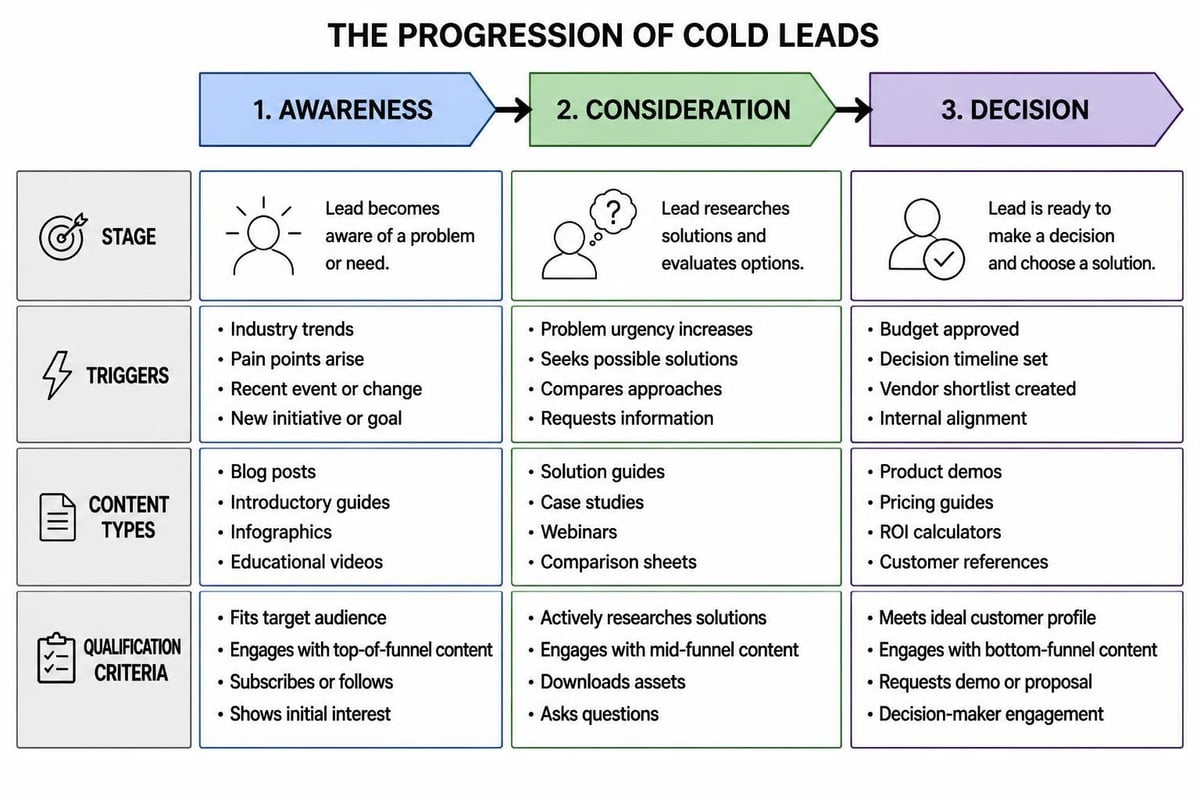
Understanding how prospects progress from awareness to purchase enables you to build appropriate nurture sequences for each stage. Research on qualified leads shows that companies mapping this journey generate 50% more sales-ready leads at 33% lower cost.
The stages require different approaches:
- Awareness: Educational content that addresses pain points without selling
- Consideration: Comparative information and proof of concept
- Decision: Case studies, ROI calculators, and specific solution details
- Action: Clear calls-to-action and friction-free conversion paths
Most businesses lose opportunities by pushing for sales too early or nurturing for too long. A data-driven sales and marketing company uses engagement signals to determine when prospects are ready to advance, automatically adjusting communication cadence and content accordingly.
The Power of Automated Appointment Setting
Manual appointment scheduling wastes countless hours and introduces unnecessary friction. Modern systems eliminate this bottleneck entirely.
Advanced appointment automation considers:
- Prospect qualification status
- Sales rep availability and specialization
- Time zone optimization
- Meeting preparation requirements
- No-show probability scoring
When prospects demonstrate buying signals, they receive immediate scheduling options without waiting for human intervention. This responsiveness dramatically increases conversion rates while freeing your sales team to focus on actual conversations rather than administrative coordination.
Guaranteed Growth Partnership Models
The most significant innovation in how progressive companies structure sales and marketing relationships is the shift toward true partnerships where both parties share risk and reward.
How Performance-Based Models Work
Rather than charging flat monthly fees regardless of results, a forward-thinking sales and marketing company structures agreements around actual outcomes. This alignment creates powerful incentives for both parties to optimize performance continuously.
Performance-based structures typically include:
- Baseline fees covering essential operations
- Success bonuses tied to qualified lead volume
- Revenue sharing based on closed deals
- Milestone achievements for campaign performance
- Long-term retention incentives
The specifics vary based on industry, deal size, and sales cycle length, but the principle remains constant: your partner should win when you win, and feel pressure when results lag.
Effective sales and marketing alignment strategies emphasize this shared accountability as foundational to success. When external partners operate under the same pressures as internal teams, they behave differently-making bolder investments, iterating faster, and maintaining focus on activities that actually drive revenue.
Transparency and Reporting Standards
Partnership models only work when both parties have complete visibility into performance metrics. A trustworthy sales and marketing company provides real-time access to:
| Metric Category | Specific Measurements |
|---|---|
| Lead Quality | Qualification score, engagement level, fit criteria |
| Conversion Rates | Landing page, form, appointment, close rates |
| Campaign Performance | Cost per lead, ROI by channel, creative effectiveness |
| Sales Outcomes | Deal velocity, win rate, customer lifetime value |
| System Health | Data accuracy, automation effectiveness, integration status |
Monthly reports aren't enough. You need dashboard access showing current performance so you can identify trends, spot problems early, and capitalize on opportunities immediately.
Building Multi-Channel Lead Generation Funnels
Relying on a single channel creates dangerous vulnerability. Successful demand generation strategies integrate multiple touchpoints that reinforce each other while providing backup options when individual channels underperform.
Channel Selection and Optimization
Not every channel works for every business. A sophisticated sales and marketing company conducts testing to identify which combinations deliver optimal results for your specific situation.
Primary B2B channels to consider:
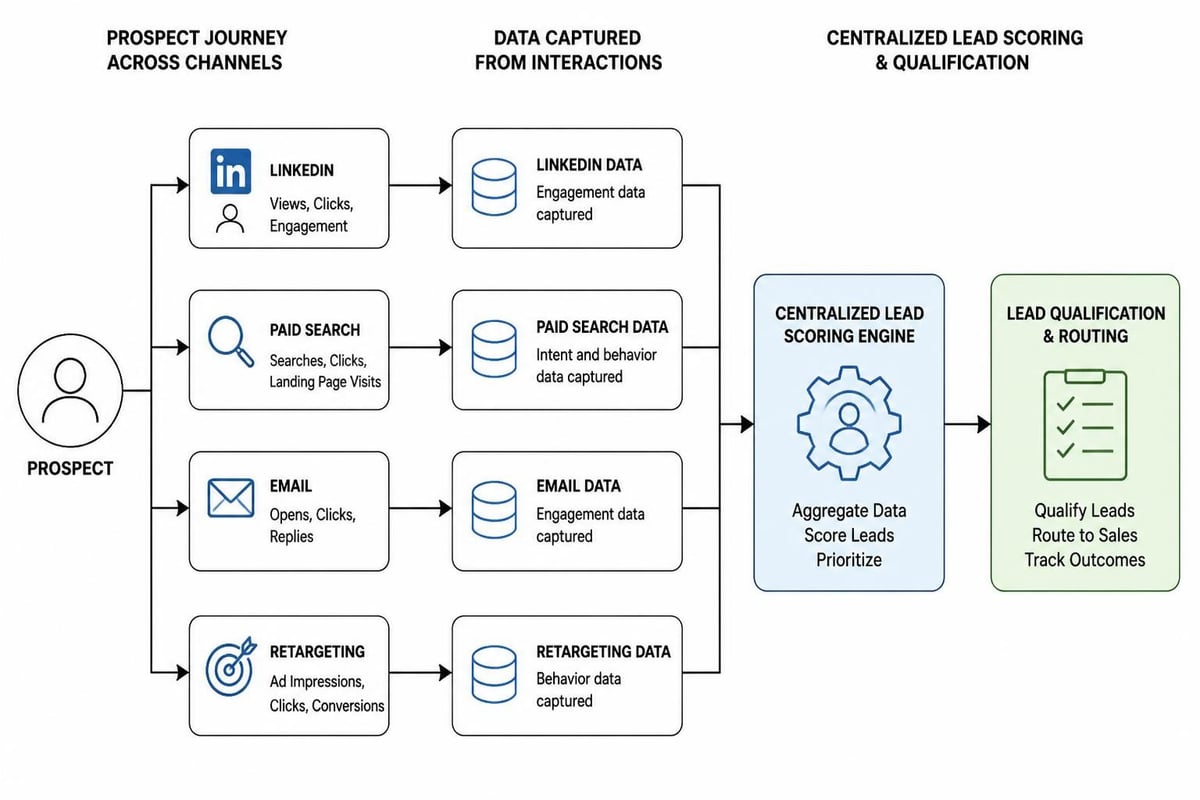
- LinkedIn outreach: Direct messaging to decision-makers with personalized value propositions
- Paid search: Capturing active demand from prospects already seeking solutions
- Content marketing: Building authority and trust through valuable information
- Email sequences: Nurturing relationships over time with relevant touchpoints
- Retargeting campaigns: Re-engaging prospects who showed initial interest
- Partnership referrals: Leveraging complementary businesses for introductions
The key is integration. Someone who sees your LinkedIn ad, visits your website, downloads content, and receives email follow-up experiences far more influence than someone exposed to just one touchpoint.
Testing should be continuous and systematic. Marketing agency strategy approaches that work today may underperform tomorrow as platforms evolve, audiences shift, and competitors adjust tactics.
Creating Cohesive Cross-Channel Messaging
Your message must remain consistent even as format and platform change. This doesn't mean identical copy everywhere-each channel has unique requirements and user expectations-but your core value proposition and brand positioning should reinforce across touchpoints.
Message consistency frameworks include:
- Central value statement: What unique benefit you provide
- Key differentiators: Why prospects should choose you specifically
- Proof elements: Evidence supporting your claims
- Call-to-action hierarchy: Primary and secondary desired actions
- Tone and voice guidelines: How your brand communicates
When prospects encounter your brand multiple times across different channels, they should recognize you immediately and feel increasing familiarity rather than confusion about who you are and what you offer.
Talent and Technology Infrastructure
A sales and marketing company is only as effective as the people and systems it deploys. The difference between mediocre and exceptional performance often comes down to these infrastructure elements.
Building High-Performance Teams
The skills required for modern lead generation have evolved dramatically. Finding qualified AI talent has become critical as automation and machine learning capabilities increasingly differentiate top performers from average agencies.
Your partner's team should include:
- Data scientists: Building and optimizing predictive models
- Marketing technologists: Implementing and integrating complex systems
- Copywriters: Crafting compelling messages that drive action
- Media buyers: Optimizing advertising spend across platforms
- Sales development reps: Conducting personalized outreach and qualification
- Project managers: Coordinating complex multi-channel initiatives
The combination of technical expertise and marketing acumen creates capabilities that neither purely technical nor purely creative teams can match.
Technology Stack Essentials
The platforms and tools your sales and marketing company uses directly impact what's possible. Outdated technology creates limitations that no amount of strategy can overcome.
Critical system categories include:
- CRM platforms for managing customer relationships and pipeline
- Marketing automation for email sequences and lead nurturing
- Advertising platforms for paid media campaign management
- Analytics tools for tracking performance and attribution
- Appointment scheduling systems for friction-free booking
- Communication platforms for team collaboration
- Data enrichment services for prospect intelligence
Integration between these systems matters as much as the tools themselves. When data flows seamlessly between platforms, you gain real-time insights and automation capabilities impossible with disconnected point solutions.
Industry-Specific Customization
Generic approaches rarely produce exceptional results. A sales and marketing company that truly drives growth customizes strategies based on your specific market dynamics, competitive landscape, and ideal customer profile.
Vertical Market Expertise
Different industries require fundamentally different approaches. What works for acquiring B2B sales leads in software differs dramatically from successful strategies in professional services, manufacturing, or healthcare.
Industry-specific considerations include:
- Decision-making processes and buying committees
- Typical sales cycle length and complexity
- Regulatory requirements and compliance needs
- Competitive differentiation opportunities
- Channel preferences of target buyers
- Content formats that establish credibility
When evaluating potential partners, examine their experience in your specific vertical. Case studies and client testimonials from similar businesses provide valuable signals about relevant expertise.
Account-Based Marketing for Enterprise Targets
For companies pursuing large enterprise accounts, traditional lead generation gives way to account-based marketing where entire organizations receive coordinated attention.
Comprehensive guides on sales and marketing alignment emphasize that ABM requires even tighter coordination between teams as personalization increases and buying committees expand.
A sales and marketing company executing ABM effectively:
- Identifies specific target accounts based on ideal customer profiles
- Maps organizational structures and decision-makers
- Develops customized value propositions for each account
- Coordinates multi-channel touchpoints across the buying committee
- Tracks engagement at both individual and account levels
- Adjusts messaging based on account-specific signals and feedback
This approach demands significantly more research and customization upfront but generates dramatically higher conversion rates when targeting high-value opportunities.
Measuring Real ROI and Attribution
Vanity metrics provide false comfort while obscuring actual performance. A results-oriented sales and marketing company obsesses over measurements that directly connect to revenue growth.
Beyond Surface-Level Metrics
Impressions, clicks, and even leads mean nothing if they don't generate profitable customers. Best practices for sales and marketing alignment emphasize connecting every activity to revenue outcomes.
The metrics that actually matter:
| Metric | Why It Matters | Target Benchmark |
|---|---|---|
| Cost Per Qualified Lead | Efficiency of acquisition | Industry-dependent |
| Lead-to-Customer Rate | Quality of lead generation | 15-20% for B2B |
| Customer Acquisition Cost | Total investment required | <33% of LTV |
| Time to Revenue | Sales cycle efficiency | Decreasing quarter over quarter |
| Customer Lifetime Value | Long-term relationship worth | 3x+ CAC |
Surface metrics like email open rates or social media engagement only matter to the extent they influence these deeper outcomes. A sophisticated partner tracks both leading and lagging indicators, using early signals to predict and influence ultimate results.
Multi-Touch Attribution Models
Modern buyer journeys involve multiple touchpoints before conversion. Understanding which interactions deserve credit for outcomes enables smarter resource allocation.
Common attribution models include:
- First-touch: Credits the initial interaction that created awareness
- Last-touch: Assigns value to the final touchpoint before conversion
- Linear: Distributes credit equally across all touchpoints
- Time-decay: Gives more weight to recent interactions
- Position-based: Emphasizes first and last touches most heavily
- Data-driven: Uses machine learning to determine actual influence
No single model provides perfect accuracy, but combining multiple perspectives creates a clearer picture than relying on any single approach. Your sales and marketing company should be able to explain attribution methodology and adjust models based on your specific sales process.
Scaling Systems for Predictable Growth
Once you've identified what works, the next challenge becomes scaling those successes without proportional cost increases. This is where systems thinking and automation deliver transformative value.
From Campaigns to Evergreen Systems
Most companies think in terms of campaigns-discrete initiatives with beginnings and endings. This approach creates constant pressure to develop new ideas and leaves revenue vulnerable to creative droughts.
Effective lead generation companies build evergreen systems that generate qualified opportunities continuously without constant reinvention. These systems include:
- Automated nurture sequences that adapt based on prospect behavior
- Self-optimizing advertising campaigns that test and scale winners
- Content libraries addressing every stage of the buyer journey
- Referral programs that systematically generate introductions
- Onboarding sequences that create advocates from customers
Systems require upfront investment to build but generate compounding returns over time as optimization improves performance and automation reduces manual effort.
Building Scalable Processes
Rapid growth often creates chaos as companies struggle to maintain quality while expanding capacity. A professional sales and marketing company designs processes that scale gracefully.
Scalability requirements include:
- Documentation: Clear procedures anyone can follow
- Templates: Standardized formats that maintain quality
- Approval workflows: Quality control without bottlenecks
- Performance monitoring: Automated alerts for anomalies
- Continuous training: Keeping teams current as systems evolve
When building digital products that support sales and marketing, focusing on clean architecture and maintainable code creates systems that remain reliable and adaptable as requirements evolve.
Selecting the Right Sales and Marketing Company
Not all partners deliver equal value. The decision you make about which sales and marketing company to trust with your growth can define your trajectory for years.
Essential Evaluation Criteria
Look beyond marketing materials and polished presentations. Sales and marketing alignment guides stress that successful partnerships require cultural compatibility and operational transparency.
Critical questions to ask potential partners:
- How do you tie your compensation to our actual results?
- What specific technologies and systems will you implement?
- Can we speak with current clients in similar industries?
- How do you handle underperformance if results lag?
- What level of transparency and reporting will we receive?
- How do you integrate with our existing sales team?
- What guarantees or commitments will you make?
Sophisticated buyers don't just evaluate capabilities-they assess alignment of incentives, cultural fit, and long-term partnership potential.
Red Flags to Avoid
Certain warning signs indicate partners unlikely to deliver sustainable growth:
- Guaranteed results without performance-based fees: If they're certain of results, they should be willing to bet on them
- Proprietary black-box systems: You should understand and own the systems they build
- No client references: Successful partnerships create enthusiastic advocates
- Focus on activity rather than outcomes: Hours worked matter less than results achieved
- Resistance to transparency: Partners should provide complete visibility
- Overpromising timelines: Sustainable growth takes consistent effort over time
Trust your instincts. If something feels misaligned during sales conversations, those concerns rarely improve after signing contracts.
The difference between businesses that grow predictably and those stuck in feast-or-famine cycles often comes down to the sophistication of their sales and marketing systems. By integrating advanced AI capabilities with proven strategies and aligning incentives around actual results, modern approaches transform lead generation from an expense into a predictable growth engine. Aletto specializes in building these AI-powered systems that convert cold leads into ready-to-buy customers, offering guaranteed growth partnerships where we invest in your success and win when you win. If you're ready to move beyond traditional agency models and build a true growth partnership, let's talk about what's possible for your business.