
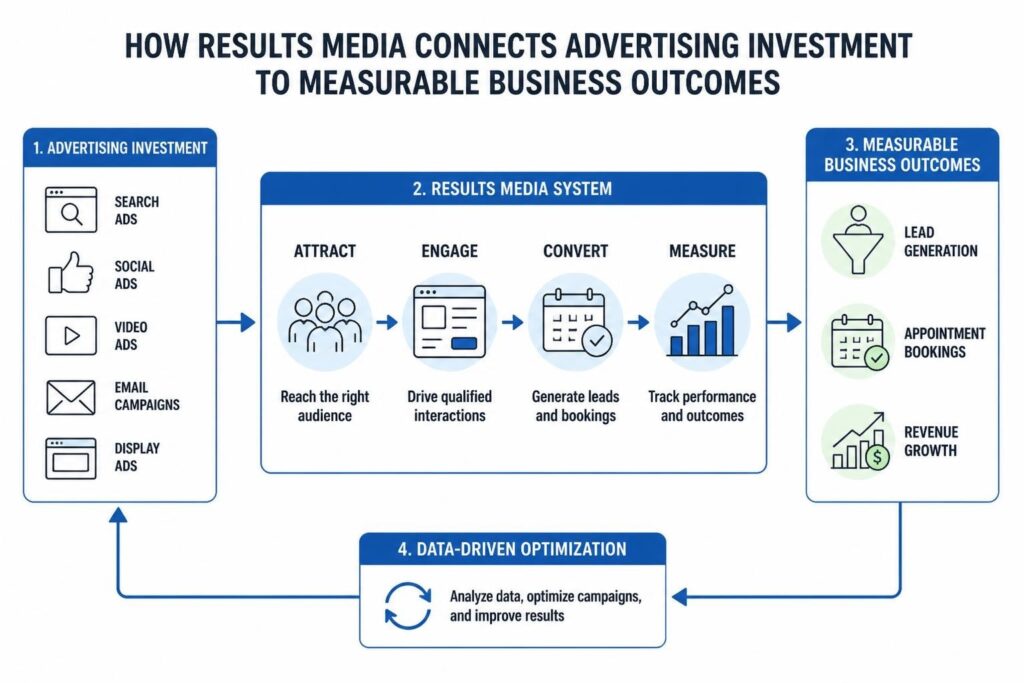
The marketing landscape has shifted dramatically over the past decade. Businesses no longer tolerate vague promises about brand awareness or impressions that never translate into revenue. Today's decision-makers demand accountability, transparency, and measurable returns on every dollar invested. This fundamental shift has given rise to results media, a performance-focused approach that aligns marketing spend directly with tangible business outcomes. Unlike traditional advertising models where agencies profit regardless of campaign success, results media creates a partnership where success is mutual and measured in real revenue, qualified leads, and booked appointments.
Understanding the Results Media Revolution
Results media represents a fundamental departure from traditional advertising methodologies. Instead of paying for exposure, reach, or engagement metrics that may never convert, businesses invest in campaigns engineered to deliver specific, measurable outcomes.
The core principle is simple: you only achieve success when your campaigns generate qualified leads, completed sales, or scheduled appointments. This accountability transforms the client-agency relationship from a vendor transaction into a genuine growth partnership.
Performance marketing has evolved to emphasize data-driven decision making and continuous optimization. Results media takes this evolution further by implementing AI-powered systems that identify high-intent prospects and automate the conversion process.
Key Components of Results Media Success
A comprehensive results media strategy integrates several critical elements:
- Advanced audience targeting using AI algorithms to identify buyers at the decision-making stage
- Conversion-optimized landing pages aligned precisely with ad messaging and prospect intent
- Automated follow-up systems that nurture leads through the sales funnel without manual intervention
- Real-time performance analytics providing complete transparency into campaign effectiveness
- Continuous split testing of ad creative, messaging, and targeting parameters
What separates results media from conventional advertising is the relentless focus on outcomes that matter to your bottom line. Every campaign element exists to move prospects toward a conversion event, whether that's scheduling a consultation, requesting a quote, or making a purchase.
The Financial Model That Aligns Incentives
Traditional marketing agencies operate on retainer or hourly billing models that create perverse incentives. They're compensated for activity rather than results, meaning they profit whether your campaigns succeed or fail spectacularly.
Results media inverts this outdated model entirely.
Performance-Based Compensation Structures
| Traditional Agency Model | Results Media Model |
|---|---|
| Monthly retainer fee regardless of outcomes | Payment tied to qualified leads generated |
| Billable hours for tasks and meetings | Success fees based on appointments booked |
| Profit from campaign spend markup | Shared risk with guaranteed performance minimums |
| No accountability for poor results | Refunds or extended campaigns for underperformance |
This alignment of incentives creates a partnership where both parties win together. When your business generates revenue from qualified leads, your results media partner earns their compensation. When campaigns underperform, they absorb the cost of optimization and additional testing.
Understanding performance media versus performance marketing helps clarify how these models differ from traditional approaches. The distinction lies in how closely compensation correlates with specific business metrics rather than vanity measurements.
Many businesses have discovered that implementing demand generation strategies through a results-focused lens dramatically improves campaign ROI while reducing wasted ad spend on unqualified traffic.
AI-Powered Lead Qualification and Nurturing
The automation revolution has transformed how results media campaigns identify, qualify, and convert prospects into customers. Advanced AI systems now handle tasks that previously required extensive manual effort and subjective judgment.
Intelligent Lead Scoring Systems
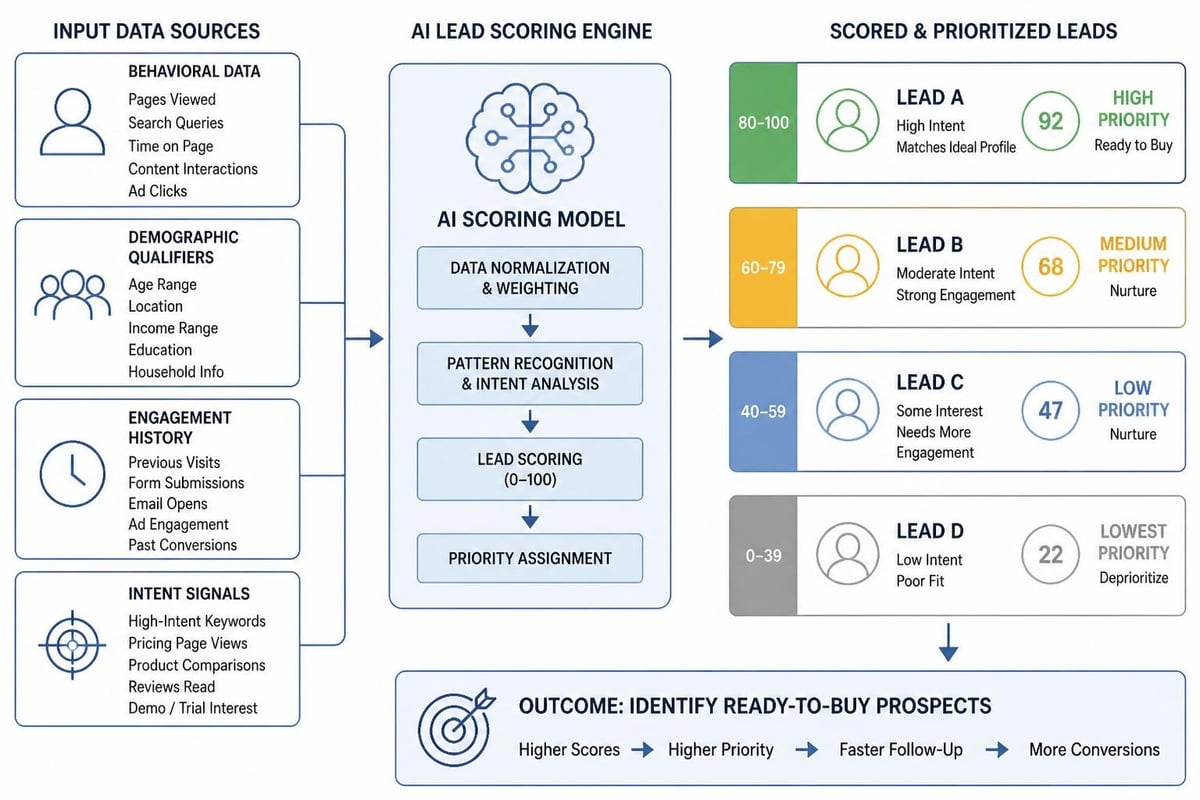
Modern results media platforms employ machine learning algorithms that analyze hundreds of data points to predict which leads are most likely to convert. These systems examine:
- Behavioral signals including website browsing patterns, content engagement, and time spent on key pages
- Demographic qualifiers such as company size, industry, job title, and geographic location
- Engagement history tracking email opens, link clicks, and previous interactions with your brand
- Intent indicators revealed through search queries, download patterns, and question topics
- Timing factors identifying when prospects are actively researching solutions versus passive browsing
This sophisticated scoring ensures your sales team focuses exclusively on high-probability opportunities rather than wasting time on tire-kickers who'll never buy.
The integration of AI in advertising has accelerated dramatically in 2026, enabling campaign optimizations that would be impossible through manual analysis. Results media harnesses these capabilities to continuously refine targeting and messaging.
Automated Appointment Booking That Converts
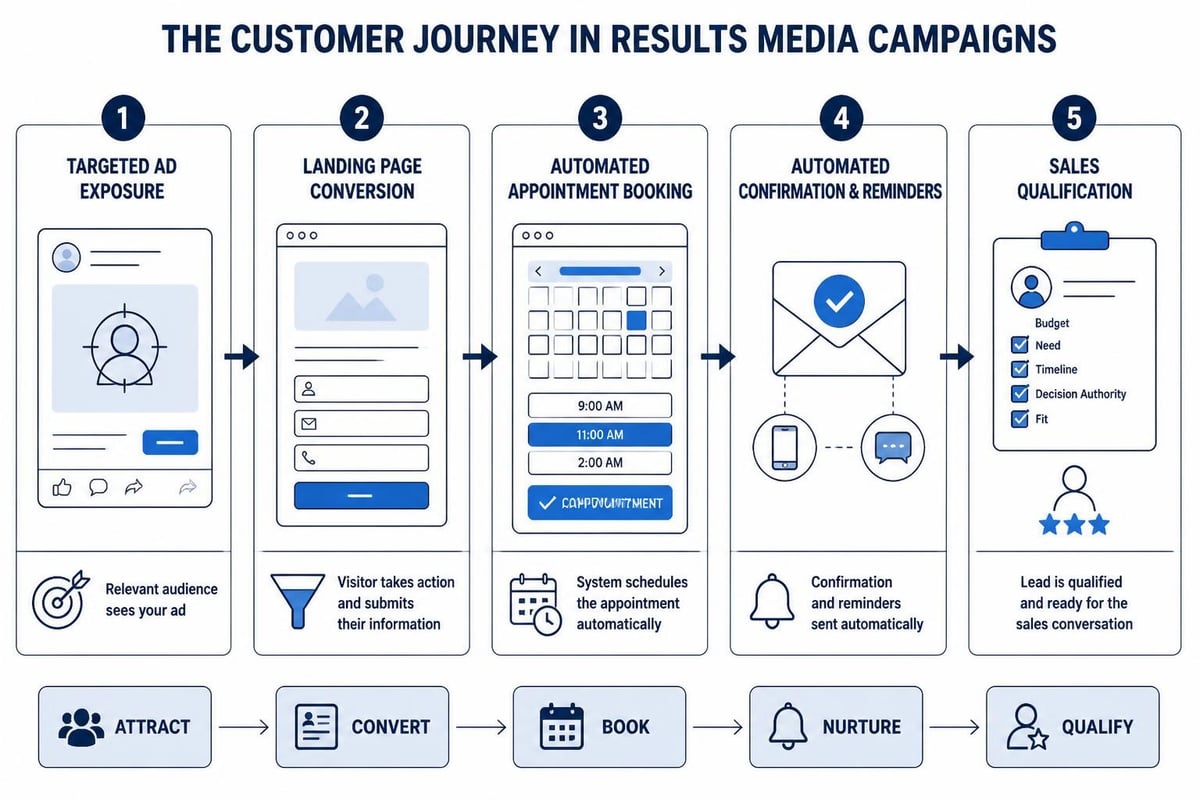
Once a prospect reaches a specific qualification threshold, results media systems automatically transition them into appointment booking workflows. These intelligent systems:
- Send personalized outreach based on the prospect's specific interests and pain points
- Offer calendar integration allowing instant scheduling without back-and-forth emails
- Provide pre-appointment educational content that warms prospects before calls
- Send automated reminders reducing no-show rates by up to 60%
- Sync seamlessly with CRM platforms maintaining perfect data hygiene
Transparency and Real-Time Performance Tracking
One of the most frustrating aspects of traditional marketing is the black box problem. Agencies present monthly reports filled with impressive-looking charts, but decision-makers struggle to connect those metrics to actual business impact.
Results media eliminates this opacity completely.
Dashboard Metrics That Matter
Rather than celebrating vanity metrics like impressions or reach, results media focuses on business-critical measurements:
- Cost per qualified lead showing exactly what you're paying for each prospect meeting your criteria
- Lead-to-appointment conversion rate revealing how effectively campaigns move prospects toward sales conversations
- Appointment show rate indicating the quality of booked meetings and scheduling effectiveness
- Cost per booked appointment calculating the true acquisition cost for sales opportunities
- Projected lifetime value estimating the long-term revenue potential of generated leads
This transparency extends beyond simple reporting. Best marketing platforms now offer real-time dashboards where you can monitor campaign performance at any moment, watching leads enter your funnel and appointments schedule themselves.
When evaluating lead generation companies, the ability to track these specific metrics in real-time separates legitimate results media partners from agencies still operating on outdated models.
Building Results Media Campaigns That Scale
Launching successful campaigns requires careful planning and systematic execution. Results media isn't about launching ads and hoping for the best, it's about engineering predictable growth systems.
The Campaign Development Process
Phase 1: Audience Research and Ideal Customer Profiling
Before spending a single advertising dollar, results media campaigns begin with exhaustive research into your highest-value customers. This involves analyzing existing client data, conducting market research, and identifying the specific characteristics that predict successful sales.
Phase 2: Offer Engineering and Value Proposition Development
Your offer must be compelling enough to motivate action while filtering out unqualified prospects. Results media specialists craft offers that appeal specifically to decision-makers experiencing acute pain points your solution addresses.
Phase 3: Landing Page Creation and Conversion Optimization
Performance marketing services emphasize that landing pages must align perfectly with ad messaging while guiding visitors toward a single conversion goal. Every element, from headline to form fields to trust indicators, exists to facilitate that conversion.
Phase 4: Multi-Channel Campaign Launch
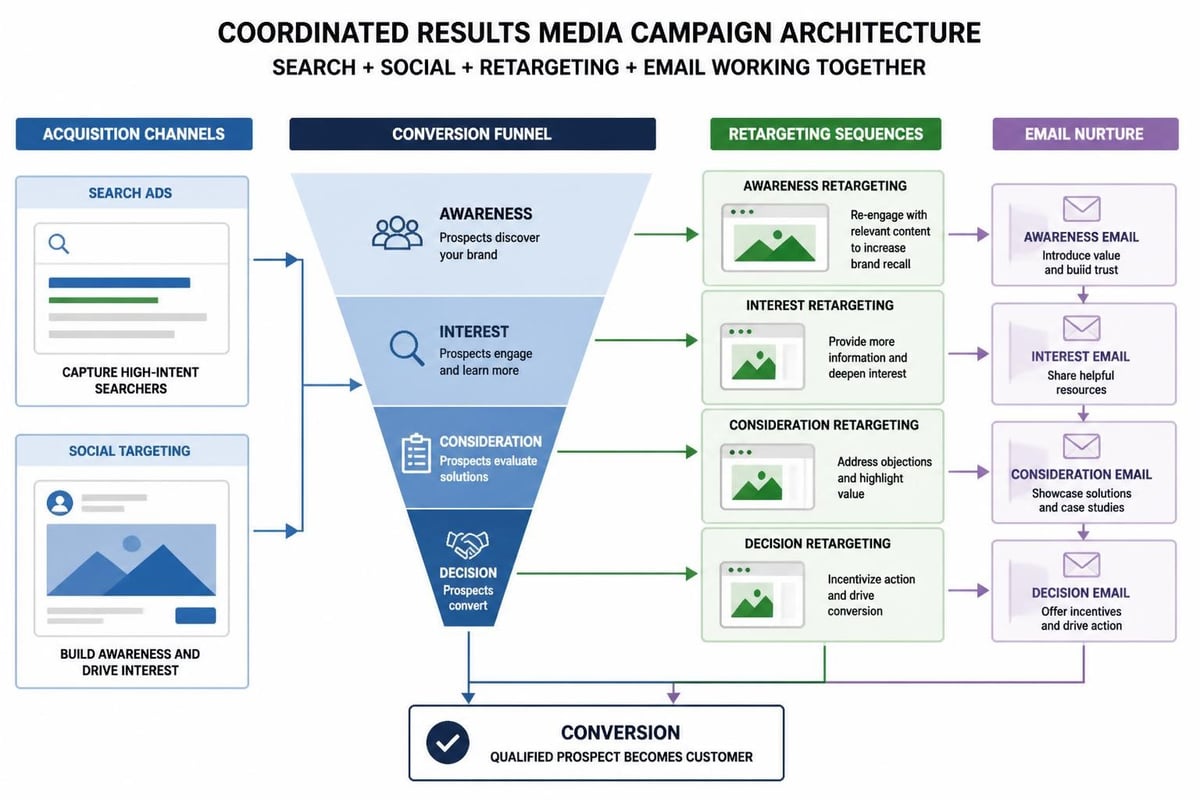
Results media campaigns typically deploy across several channels simultaneously:
- Search advertising targeting high-intent keywords indicating buying readiness
- Social media campaigns reaching decision-makers based on detailed demographic and behavioral targeting
- Retargeting sequences re-engaging prospects who showed interest but didn't convert initially
- Email nurturing workflows maintaining engagement with qualified leads not yet ready to buy
Phase 5: Continuous Testing and Optimization
The most critical phase is never-ending. Successful results media campaigns continuously test ad creative variations, adjust targeting parameters, refine messaging, and optimize conversion paths based on performance data.
Advanced Targeting Strategies for Maximum ROI
Generic targeting wastes budget on audiences unlikely to convert. Results media employs sophisticated segmentation to ensure ads reach only the most relevant prospects.
Layered Targeting Approaches
| Targeting Layer | Purpose | Example Parameters |
|---|---|---|
| Demographic | Basic qualification filtering | Company size: 50-500 employees |
| Geographic | Regional or location-specific targeting | Metro areas in specific states |
| Behavioral | Action-based interest indicators | Downloaded competitor whitepapers |
| Contextual | Content relevance alignment | Reading industry-specific publications |
| Lookalike | Expansion based on best customers | 1-3% similarity to existing clients |
Implementing tools for lead generation that support these layered targeting approaches dramatically improves campaign efficiency while reducing cost per acquisition.
The most sophisticated results media strategies also incorporate account-based marketing principles, identifying specific high-value companies and creating personalized campaigns targeting decision-makers at those organizations.
Measuring and Improving Campaign Performance
Data without action is just noise. Results media distinguishes itself through systematic analysis and rapid optimization based on performance insights.
Critical Performance Indicators
Beyond basic conversion metrics, sophisticated results media tracking examines:
- Audience segment performance comparing conversion rates across different demographic and behavioral groups
- Channel attribution identifying which platforms generate the highest-quality leads
- Time-to-conversion analysis understanding how long prospects take to move through your funnel
- Creative performance breakdowns revealing which messaging and visual approaches resonate most effectively
- Competitive displacement metrics tracking how many conversions come from competitor alternatives
When working with B2B lead generation companies, insist on access to these granular performance breakdowns rather than accepting surface-level reporting.
The Optimization Cycle
Effective results media follows a continuous improvement methodology:
- Weekly performance reviews identifying underperforming elements requiring immediate attention
- Bi-weekly creative refreshes introducing new ad variations to combat audience fatigue
- Monthly strategic assessments evaluating overall campaign direction and target audience refinement
- Quarterly deep dives conducting comprehensive audits and planning strategic pivots
This disciplined approach to optimization is what separates campaigns that deliver consistent results from those that spike briefly before declining.
Integration with Sales Systems and CRM Platforms
Results media doesn't exist in isolation. The most effective implementations integrate seamlessly with existing sales infrastructure, creating a cohesive lead-to-customer workflow.
Seamless Data Flow Architecture
Modern results media platforms connect with:
- CRM systems automatically creating lead records with complete campaign source attribution
- Sales engagement tools triggering automated outreach sequences when leads meet qualification thresholds
- Calendar applications enabling direct appointment booking without manual sales team coordination
- Marketing automation platforms maintaining nurture sequences for leads not yet ready to buy
- Analytics dashboards providing unified reporting across all marketing and sales activities
Companies investing in outsourced B2B lead generation should verify that partners offer these integration capabilities as standard rather than requiring custom development.
The goal is eliminating manual data transfer, reducing response time, and ensuring no qualified lead falls through administrative cracks.
The Guaranteed Growth Partnership Model
Perhaps the most revolutionary aspect of results media is the shift toward risk-sharing arrangements that guarantee baseline performance levels.
How Performance Guarantees Work
Rather than simply promising "best efforts," leading results media partners commit to specific outcomes:
- Minimum lead volume guarantees ensuring you receive a predetermined number of qualified leads monthly
- Quality thresholds defining acceptable lead qualification criteria and refunding for substandard prospects
- Appointment booking commitments guaranteeing a specific number of scheduled sales conversations
- Extended campaign periods providing additional months of service if initial periods underperform
This model aligns perfectly with how businesses actually evaluate marketing success. You're not buying activity or impressions; you're purchasing qualified sales opportunities.
When examining various marketing agency strategies, the presence or absence of performance guarantees reveals how confident agencies are in their actual capabilities versus their marketing claims.
Common Results Media Mistakes to Avoid
Even with the best intentions, businesses often undermine their results media campaigns through preventable errors.
Campaign-Killing Missteps
Impatience with optimization cycles: Results media requires 60-90 days of data collection and testing before campaigns reach peak efficiency. Businesses that panic and make dramatic changes after two weeks rarely achieve optimal performance.
Inadequate sales follow-up: Generating qualified leads means nothing if your sales team lacks the capacity or process to convert them. Ensure sales infrastructure can handle increased appointment volume before scaling campaigns.
Misaligned qualification criteria: Defining "qualified lead" too broadly floods sales with poor prospects, while overly restrictive criteria artificially limits volume. Finding the right balance requires honest assessment of your sales team's capabilities.
Neglecting the post-conversion experience: Results media delivers prospects to your door, but disappointing sales experiences or poor onboarding damage reputation and waste campaign investment.
Choosing partners based solely on price: The cheapest results media provider typically delivers exactly the value you pay for. Focus on proven performance and alignment rather than lowest cost.
Understanding these pitfalls helps businesses maximize their leads for business generation efforts while avoiding expensive learning curves.
The Future of Results-Driven Marketing
As we progress through 2026, results media continues evolving with emerging technologies and changing buyer behaviors.
Emerging Trends Shaping the Industry
Predictive AI getting more sophisticated: Machine learning models now predict not just which leads will convert, but which specific messaging and offers will resonate with individual prospects. This hyper-personalization dramatically improves conversion rates while reducing cost per acquisition.
Privacy-first targeting adaptation: As third-party cookies disappear and privacy regulations tighten, results media pioneers are developing first-party data strategies and contextual targeting approaches that maintain effectiveness within new constraints.
Voice and conversational AI integration: Automated appointment booking increasingly happens through natural language conversations rather than form submissions, creating more engaging prospect experiences while maintaining qualification effectiveness.
Video and interactive content dominance: Static image ads are giving way to dynamic video content and interactive experiences that engage prospects more deeply while providing richer behavioral data for optimization.
Performance media strategies incorporating these emerging capabilities position businesses at the competitive forefront while early adopters capture market share from slower-moving competitors.
The trajectory is clear: marketing accountability will only intensify, making results media approaches essential rather than optional for growth-focused businesses.
Results media represents the natural evolution of marketing in an accountability-driven business environment where outcomes matter more than activities. By aligning compensation with actual business results and leveraging AI-powered systems to identify and convert qualified prospects, this approach delivers predictable revenue growth while eliminating wasted ad spend. Aletto specializes in transforming this results media philosophy into customized lead generation systems that guarantee qualified appointments and sales-ready prospects for your business. Partner with a team that only succeeds when you do, and discover how performance-based marketing can revolutionize your growth trajectory.