
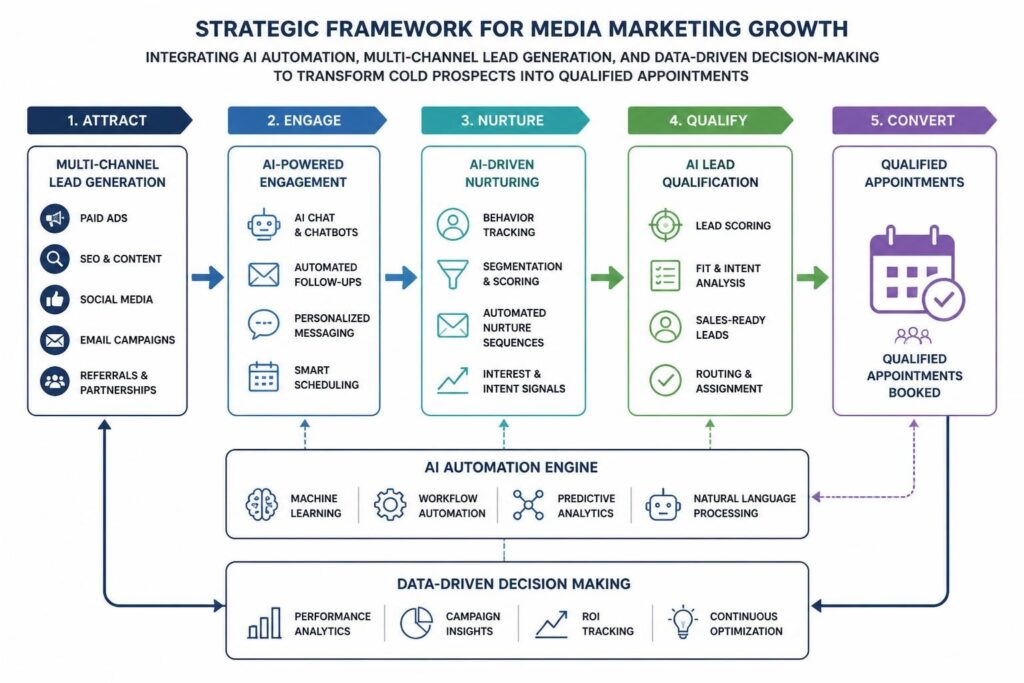
The landscape of media marketing business operations has transformed dramatically in 2026, driven by artificial intelligence, automation, and increasingly sophisticated consumer expectations. Companies that once relied on traditional advertising models now face the challenge of building integrated systems that not only attract attention but also convert interest into qualified sales conversations. The most successful media marketing business models today combine strategic media planning with advanced lead generation technologies, creating predictable revenue streams rather than hoping for sporadic client wins. This shift requires understanding both the timeless principles of media strategy and the cutting-edge tools that separate industry leaders from those struggling to stay relevant.
Building a Foundation for Media Marketing Success
Every thriving media marketing business starts with a clear understanding of its core value proposition. You cannot be everything to everyone, especially when competing against established agencies with decades of market presence. Instead, focus on solving specific problems for defined audiences.
The most critical foundation elements include:
- Deep audience research that goes beyond demographics into psychographic profiling
- Proprietary systems that deliver measurable results consistently
- Technology infrastructure supporting automation and scalability
- Clear differentiation from traditional agencies offering generic services
The traditional agency model charges for activities rather than outcomes, creating misaligned incentives between service providers and clients. A modern media marketing business flips this equation by guaranteeing results and sharing risk with clients. This approach requires confidence in your systems and processes, but it also builds trust faster than any marketing campaign could achieve.
Defining Your Ideal Client Profile
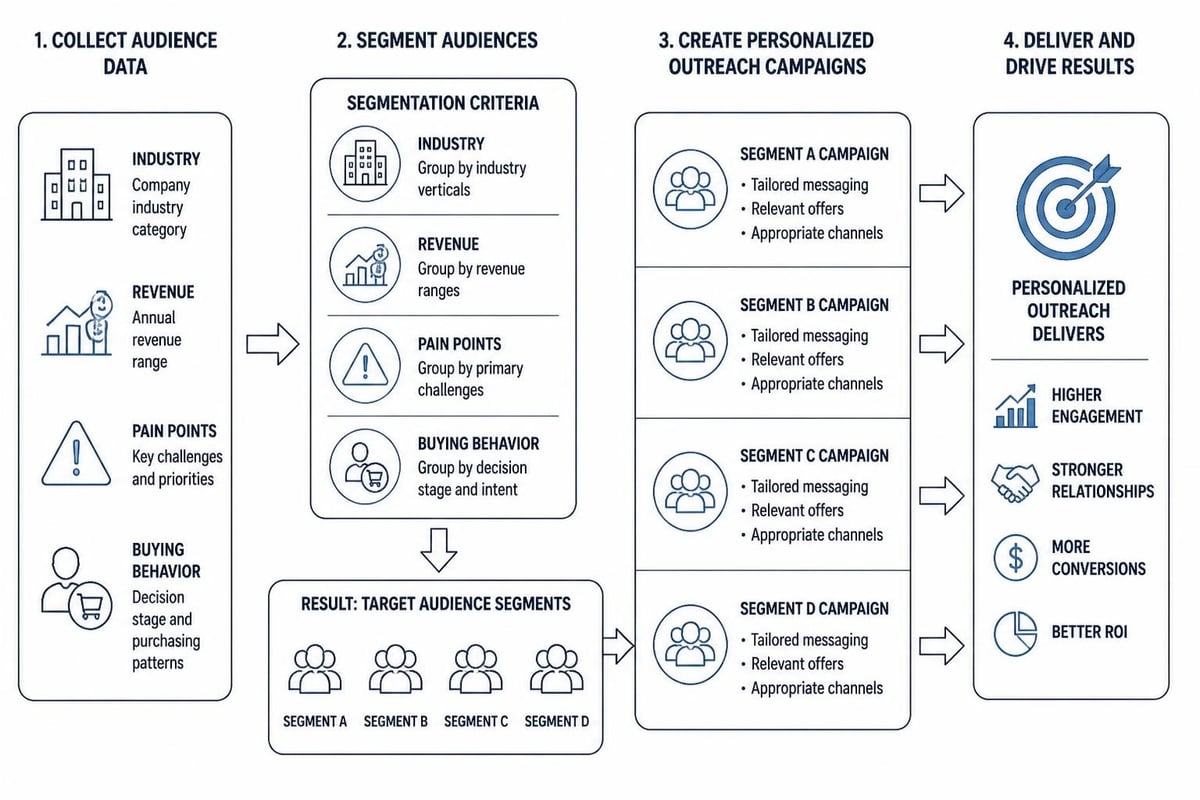
Generic targeting wastes resources and dilutes messaging effectiveness. Professional lead generation services rely on precision targeting to maximize conversion rates while minimizing acquisition costs.
Start by analyzing your best existing clients or the clients you want to attract. What industries do they represent? What revenue range puts them in the sweet spot where they desperately need your services but can afford premium pricing? Understanding these parameters helps you build a comprehensive media marketing framework that addresses specific pain points rather than making broad promises.
Leveraging AI Systems for Competitive Advantage
Artificial intelligence has moved from experimental technology to essential infrastructure for any serious media marketing business. AI doesn't replace human strategy, but it amplifies your ability to execute at scale while maintaining personalization.
Modern AI systems enable you to:
- Analyze thousands of data points to identify ideal prospects matching your client profiles
- Automate initial outreach sequences that feel personal and contextually relevant
- Score lead quality in real-time based on engagement patterns and behavioral signals
- Optimize messaging variations through continuous A/B testing across channels
- Predict conversion likelihood before investing significant resources in nurturing
The comprehensive media marketing framework outlines how audience segmentation, messaging, and media mix work together to create cohesive campaigns. When you layer AI capabilities into this framework, you gain the ability to execute strategies that would require armies of people using traditional methods.
Transforming Cold Leads Into Qualified Appointments
The gap between lead generation and sales conversion represents where most media marketing business models fail. Generating thousands of contacts means nothing if those contacts never become customers. This is where appointment setting automation becomes crucial.
| Traditional Approach | AI-Powered Approach | Result Difference |
|---|---|---|
| Manual lead qualification | Automated scoring algorithms | 73% time savings |
| Generic email sequences | Dynamic personalization | 3.2x response rates |
| Random follow-up timing | Behavioral trigger-based | 58% more bookings |
| Sales rep cold calling | Warm handoffs from AI | 4.1x close rates |
Understanding why cold outreach is failing in 2025 helps you avoid the mistakes that sink competitors. The answer isn't abandoning outreach entirely but rather making it smarter, more contextual, and value-focused from the first interaction.
Multi-Channel Media Strategy Execution
A successful media marketing business doesn't rely on a single traffic source or platform. Channel diversification protects against algorithm changes, platform policy updates, and shifting consumer behavior patterns.
Your media mix should strategically combine:
- Paid advertising on platforms where your ideal clients consume content
- Organic social media building authority and community engagement
- Content marketing establishing thought leadership and SEO dominance
- Email marketing nurturing relationships over extended sales cycles
- Direct outreach creating immediate conversations with decision-makers
The social media best practices for 2026 emphasize platform selection, customer care integration, and content creation that resonates with specific audience segments. Rather than maintaining mediocre presence everywhere, dominate the channels where your prospects actually spend time and make buying decisions.
Creating a Data-Driven Media Planning Process
Intuition and creativity matter, but they must be validated with data. Developing data-driven media strategies requires proactive planning and flexibility to adjust based on performance metrics.
Start every campaign with clear KPIs tied directly to business outcomes. Vanity metrics like impressions and reach feel good but don't pay bills. Focus instead on metrics that indicate movement toward revenue goals.
Essential tracking metrics include:
- Cost per qualified lead across each channel
- Lead-to-appointment conversion rates
- Appointment-to-customer close rates
- Customer lifetime value by acquisition source
- Return on ad spend for paid media investments
This data informs where to allocate budget, which creative approaches resonate, and what messaging frameworks drive action. A media marketing business built on data rather than assumptions scales predictably because you know exactly what inputs generate desired outputs.
Content Creation That Converts
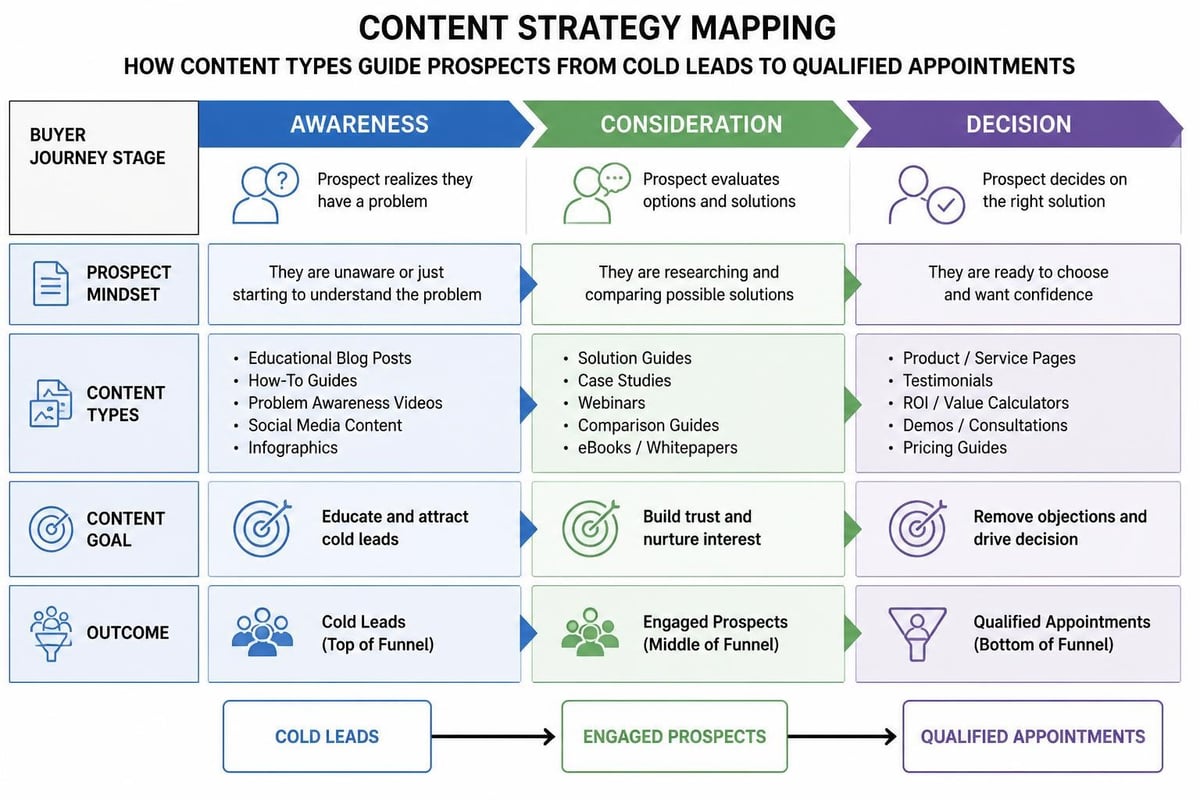
Content fuels your entire media marketing business ecosystem. Quality content attracts organic traffic, educates prospects, overcomes objections, and positions your brand as the obvious choice when buying decisions happen.
However, content creation for conversion differs fundamentally from content designed purely for engagement. Every piece should move readers closer to a specific action, whether that's booking a consultation, downloading a resource, or sharing contact information.
The demand funnel approach recognizes that prospects exist at different awareness stages. Top-of-funnel content builds awareness and educates on problems. Middle-funnel content presents solutions and establishes credibility. Bottom-funnel content handles objections and facilitates decisions.
Optimizing Social Media for Lead Generation
Social platforms offer unprecedented access to targeted audiences, but most businesses waste this opportunity with aimless posting and inconsistent messaging. Social media funnel optimization creates systematic processes that turn followers into leads and leads into customers.
Your social media strategy should include:
- Attention-grabbing hooks that stop scrolling in crowded feeds
- Value-first content that gives before asking for anything in return
- Clear calls-to-action guiding viewers toward next steps
- Retargeting sequences bringing warm traffic back to conversion points
- Community engagement building relationships beyond transactional interactions
The social media marketing best practices for 2025 highlight AI integration and global brand compliance as critical success factors. These considerations become even more important as platforms introduce stricter policies and users develop higher expectations for personalized experiences.
Building Systems for Scalable Growth
The difference between a freelancer and a media marketing business is systems. Systems allow you to deliver consistent results regardless of who's executing tasks. They enable training new team members efficiently. They create transferable value if you ever want to sell your business.
Core systems every media marketing business needs:
| System Category | Purpose | Key Components |
|---|---|---|
| Lead Generation | Attracting qualified prospects | Traffic sources, landing pages, lead magnets |
| Qualification | Identifying ready-to-buy leads | Scoring models, qualification questions, CRM automation |
| Nurture | Building relationships over time | Email sequences, content delivery, engagement tracking |
| Conversion | Turning leads into customers | Sales processes, appointment setting, proposal templates |
| Delivery | Fulfilling client commitments | Project management, reporting, communication protocols |
When you have documented, repeatable systems in place, your media marketing business becomes an asset rather than a job. You work on the business instead of in it, focusing on strategy and growth while systems handle execution.
Implementing Marketing Automation Technology
Tools for lead generation have evolved far beyond simple email autoresponders. Today's technology stack enables sophisticated workflows that respond dynamically to prospect behavior and engagement patterns.
Your automation platform should integrate with your CRM, advertising accounts, website analytics, and communication tools. This integration creates a unified view of each prospect's journey, allowing you to deliver the right message through the right channel at precisely the right time.
The most effective automation sequences feel personal despite being systematized. They reference specific behaviors, acknowledge previous interactions, and adapt messaging based on demonstrated interests. This level of sophistication separates professional operations from amateurs sending batch-and-blast campaigns.
Measuring ROI and Proving Value
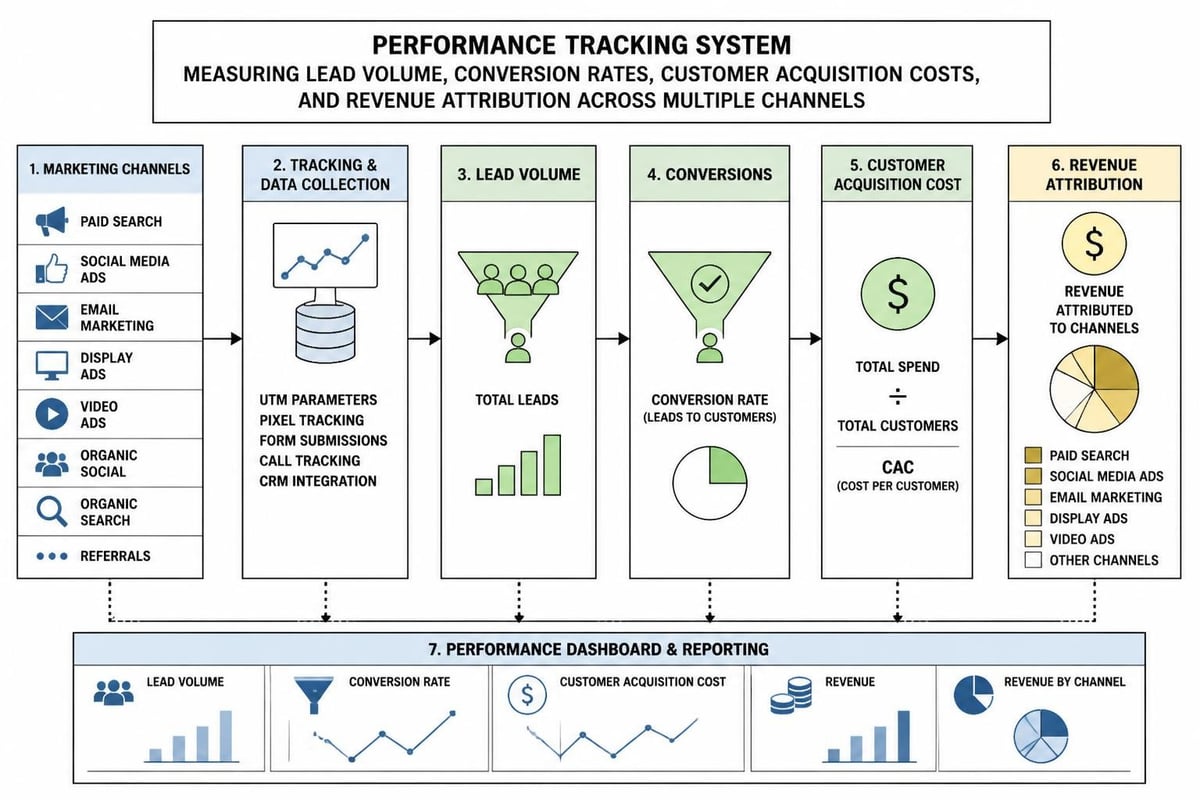
Clients investing in your media marketing business want proof their money generates returns. Vague promises about brand awareness and thought leadership don't satisfy decision-makers who answer to stakeholders demanding measurable outcomes.
Establish clear attribution models tracking every dollar spent back to revenue generated. This transparency builds trust and justifies premium pricing when you can demonstrate definitive ROI.
Essential reporting elements include:
- Monthly lead volume by source and quality tier
- Conversion rates at each funnel stage
- Customer acquisition cost compared to lifetime value
- Revenue directly attributable to marketing activities
- Year-over-year growth metrics showing trajectory
Regular reporting keeps clients informed and engaged with the process. It also provides opportunities to demonstrate wins, address concerns before they become problems, and recommend strategic adjustments based on data trends.
Aligning Incentives Through Performance Guarantees
The traditional agency model creates inherent conflicts of interest. Agencies profit from activities regardless of results, while clients bear all the risk. This dynamic breeds skepticism and makes building long-term partnerships difficult.
A modern media marketing business flips this equation by offering performance guarantees. You only win when clients win, aligning incentives and demonstrating confidence in your systems. This approach requires proven processes that deliver predictably, but it also eliminates the biggest objection prospects have about working with marketing providers.
Lead generation agency models built on guaranteed outcomes attract higher-quality clients willing to invest in growth because they understand the risk-sharing arrangement protects their interests.
Staying Current With Industry Evolution
The media marketing business landscape changes constantly. Platforms update algorithms. Consumer preferences shift. New technologies emerge. Regulatory environments evolve. Businesses that fail to adapt quickly find themselves irrelevant.
Commit to continuous learning and experimentation. Allocate budget and time for testing new approaches, platforms, and technologies before they become mainstream. Being an early adopter creates competitive advantages that last until competitors catch up.
Monitor consumer brand media network best practices in 2026 to understand how editorial identity and audience engagement strategies are evolving. These insights inform your own approach and help you anticipate client needs before they articulate them.
Building Strategic Partnerships
No media marketing business succeeds in isolation. Strategic partnerships multiply your capabilities, expand your reach, and create referral networks that generate consistent new business.
Identify complementary service providers serving similar client profiles. These might include:
- Web design and development agencies needing marketing partners
- Business consultants whose clients require growth systems
- Technology companies selling tools requiring marketing expertise
- Industry associations connecting members with trusted service providers
Rather than viewing these relationships as competitors, recognize how collaboration creates win-win scenarios. You refer clients needing services you don't provide, and partners reciprocate when their clients need media marketing expertise.
Creating Competitive Differentiation
Thousands of media marketing business options exist for every prospect. Standing out requires more than claiming you're better, faster, or cheaper than competitors. You need genuine differentiation rooted in unique methodologies, proprietary technology, or specialized expertise.
Effective differentiation strategies include:
- Vertical specialization serving specific industries exclusively
- Proprietary AI systems competitors cannot easily replicate
- Guarantee structures eliminating client risk entirely
- Hybrid models combining services typically purchased separately
- Thought leadership establishing you as the category authority
Understanding B2B lead generation companies that dominate their markets reveals patterns worth emulating. The common thread is clear positioning that makes the value proposition immediately obvious to ideal prospects.
Developing Your Unique Methodology
Package your approach into a branded methodology that simplifies complex processes for prospects. This framework becomes your signature system, referenced in all marketing materials and sales conversations.
Your methodology should outline the specific steps you take clients through from initial engagement to achieving their goals. It demonstrates thoughtfulness, builds credibility, and shows prospects exactly what working with you looks like before they commit.
Give your methodology a memorable name and create visual representations that make it easy to understand at a glance. This intellectual property becomes a key differentiator that competitors cannot duplicate without looking derivative.
Optimizing the Client Acquisition Process
Your media marketing business must excel at the very services you sell to clients. If your own lead generation and conversion processes are weak, prospects rightfully question your ability to help them succeed.
Apply the same rigor to your internal systems as you do for client campaigns. Track metrics, optimize conversion points, test messaging variations, and continuously improve performance. Your results become case studies demonstrating expertise and building confidence.
The funnel system marketing approach provides frameworks for moving prospects systematically from awareness to action. Implement these principles in your own business before attempting to deploy them for clients.
Optimize these critical touchpoints:
- First impression: Website, social profiles, and initial outreach must communicate professionalism and competence immediately
- Discovery process: Qualification questions that assess fit while demonstrating expertise
- Proposal presentation: Clear value propositions tied directly to prospect goals and pain points
- Objection handling: Pre-prepared responses to common concerns and hesitations
- Onboarding experience: Smooth transitions from sale to delivery that exceed expectations
Each interaction either builds or erodes confidence. Treating client acquisition as a strategic process rather than random activities dramatically improves conversion rates and deal sizes.
Building a successful media marketing business in 2026 requires combining timeless marketing principles with cutting-edge technology and business models that align your success with client outcomes. The companies winning today have moved beyond traditional agency structures to create systemized, guaranteed approaches that transform how businesses acquire and convert leads. If you're ready to leverage AI-powered lead generation and automated appointment setting to drive predictable revenue growth, Aletto provides the proven systems and partnership model that turns marketing investment into measurable returns.