
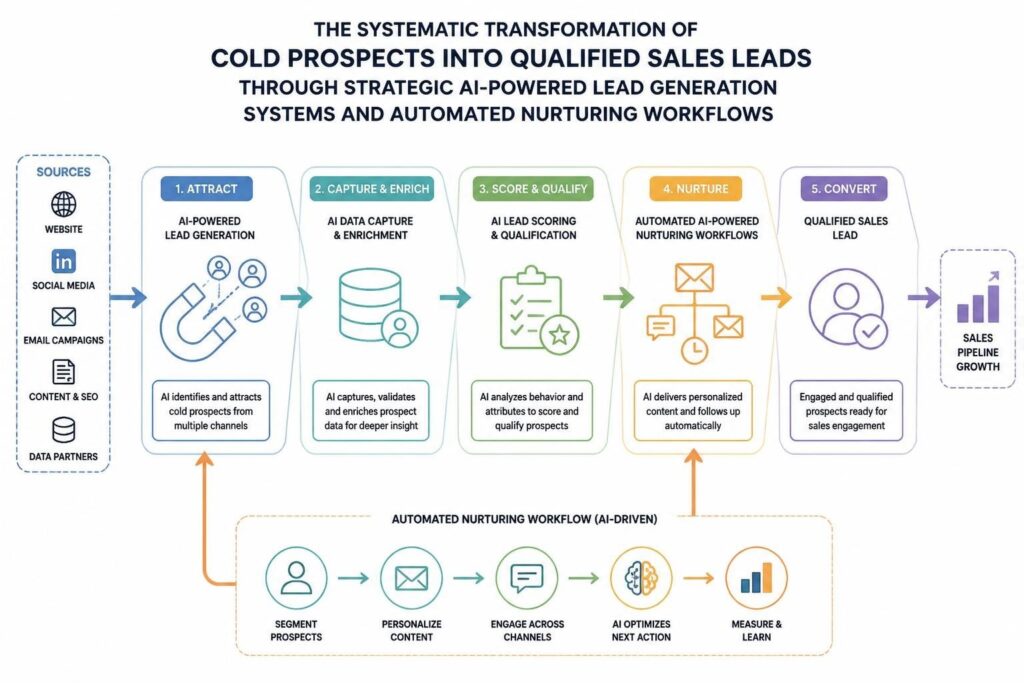
The business landscape in 2026 demands more than just collecting contact information and hoping for conversions. Every successful company needs a reliable leads maker – a systematic approach that consistently identifies, attracts, and qualifies prospects who are genuinely ready to engage with your solutions. Whether you're a growing startup or an established enterprise, understanding how to build and optimize your lead generation engine determines whether you'll hit your revenue targets or fall short. The difference between companies that thrive and those that struggle often comes down to having a predictable, scalable system for filling their sales pipeline with qualified opportunities.
Understanding What Makes an Effective Leads Maker
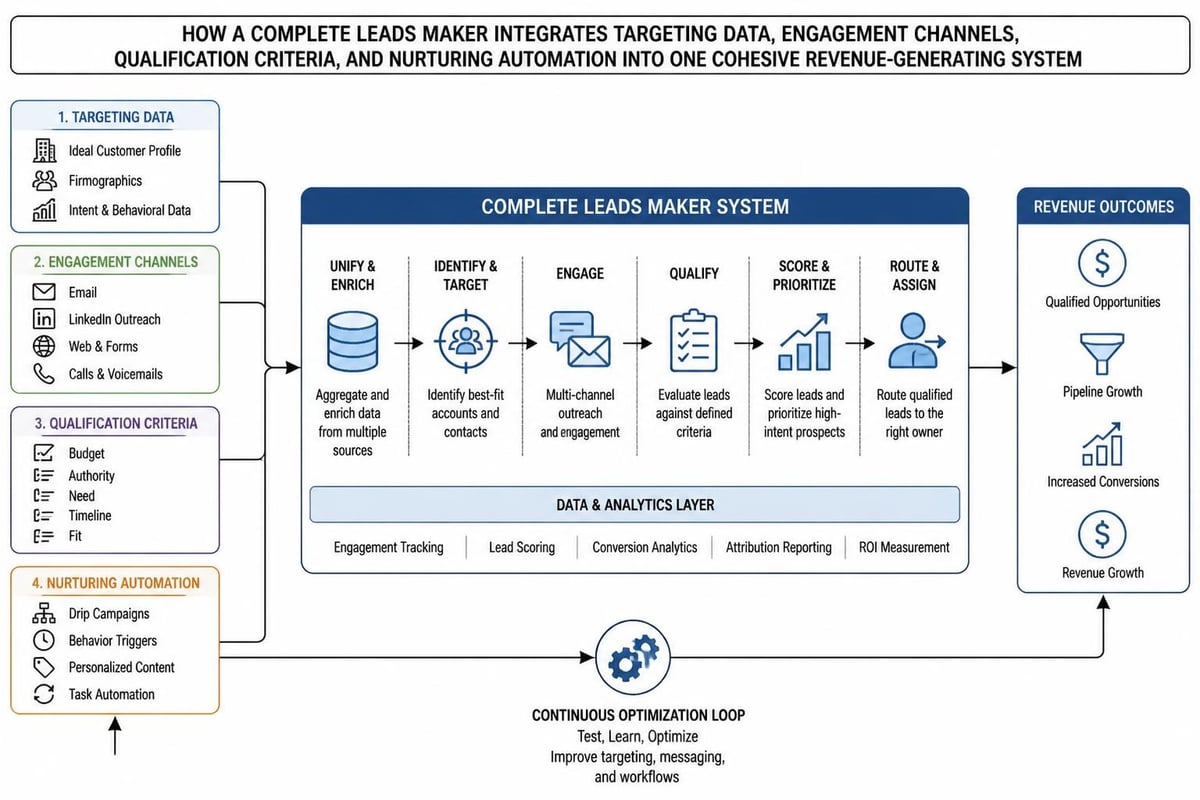
A leads maker encompasses far more than a single tool or tactic. It represents an integrated ecosystem of strategies, technologies, and processes working together to attract your ideal customers at the exact moment they're seeking solutions.
The modern leads maker operates on three fundamental pillars:
- Data-driven targeting that identifies prospects matching your ideal customer profile
- Multi-channel engagement that reaches decision-makers where they're most active
- Intelligent qualification that separates window shoppers from serious buyers
When you examine lead generation fundamentals, you'll discover that successful companies don't rely on guesswork. They build repeatable systems that generate predictable results month after month.
The transformation from traditional marketing to AI-powered lead generation represents a seismic shift in how businesses acquire customers. According to recent B2B lead generation statistics, companies using AI-enhanced systems report 50% higher qualified lead rates compared to manual approaches. This isn't just incremental improvement – it's a complete reimagining of what's possible.
Building Your Foundation with Strategic Targeting
Every leads maker starts with crystal-clear targeting. Generic campaigns waste resources and generate unqualified prospects who never convert. Strategic targeting means defining exactly who needs your solution and why they'd choose you over alternatives.
Effective targeting requires you to:
- Analyze your current best customers to identify common characteristics
- Research market segments showing high intent and buying power
- Create detailed profiles including pain points, triggers, and decision criteria
- Map the buyer journey from awareness through consideration to decision
- Identify the channels and content types that resonate at each stage
When developing your comprehensive marketing agency strategy, remember that targeting isn't about casting the widest net. It's about focusing your resources where they'll generate the highest return. Companies implementing precise targeting reduce acquisition costs by 40-60% while simultaneously improving conversion rates.
Choosing the Right Channels for Your Leads Maker
Your leads maker needs to meet prospects where they actually spend time, not where you wish they'd be. Different industries and buyer personas demand different channel strategies.
| Channel Type | Best For | Average Response Rate | Implementation Complexity |
|---|---|---|---|
| Email Outreach | B2B services, high-ticket items | 8-12% | Medium |
| Social Media | Brand awareness, relationship building | 3-5% | Low-Medium |
| Content Marketing | Thought leadership, SEO | 2-4% conversion | Medium-High |
| Paid Advertising | Rapid testing, scale | 2-3% | Medium |
| Referral Programs | Service businesses, B2B | 25-35% | Low |
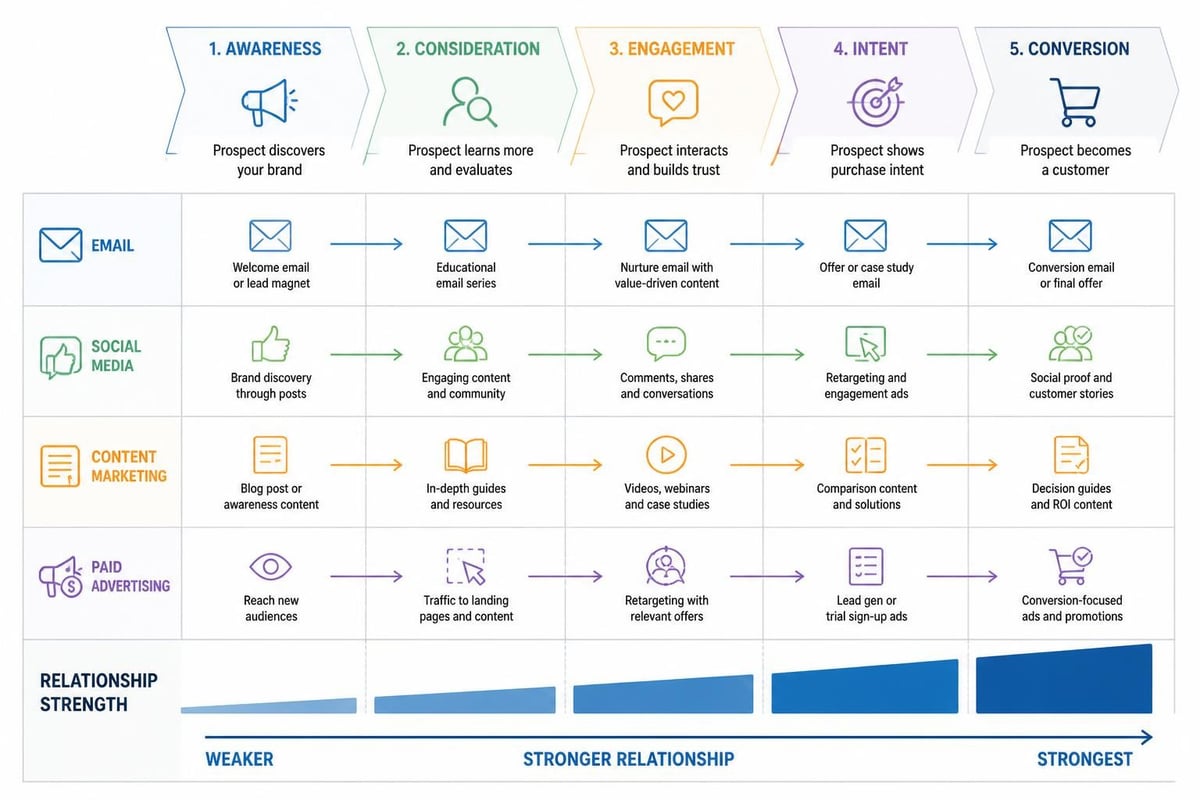
Understanding effective lead generation strategies helps you allocate budget and effort appropriately. The most successful businesses don't rely on a single channel – they orchestrate multiple touchpoints that reinforce each other.
Optimizing Your Multi-Channel Approach
A sophisticated leads maker coordinates messaging across channels to create cohesive experiences. When a prospect sees your LinkedIn ad, receives a personalized email, and encounters your content during research, each interaction should feel connected and relevant.
Multi-channel excellence requires:
- Consistent messaging that adapts to each platform's unique characteristics
- Tracking systems that attribute leads accurately across touchpoints
- Automated workflows that trigger appropriate follow-ups based on engagement
- Testing protocols that identify which combinations drive best results
The data shows that prospects engaging with brands across 3-4 channels convert at rates 250% higher than single-channel interactions. Your leads maker should create these orchestrated experiences automatically, ensuring no opportunity falls through the cracks.
Implementing AI-Powered Qualification Systems
The most valuable function of any leads maker is distinguishing between tire-kickers and serious buyers. Traditional qualification methods rely on manual scoring and subjective judgment. AI-powered systems analyze hundreds of data points to predict conversion likelihood with remarkable accuracy.
When exploring modern B2B lead generation approaches, you'll find that qualification automation has become table stakes. Companies still relying on basic demographic scoring leave money on the table by pursuing poor-fit prospects while neglecting high-intent opportunities.
Creating Intelligent Scoring Models
Your leads maker should automatically score prospects based on both explicit and implicit signals:
Explicit signals include:
- Company size and revenue
- Industry and market segment
- Role and decision-making authority
- Budget and timeline information
Implicit signals reveal buying intent:
- Pages visited and content consumed
- Email engagement patterns
- Return visit frequency
- Search terms and referral sources
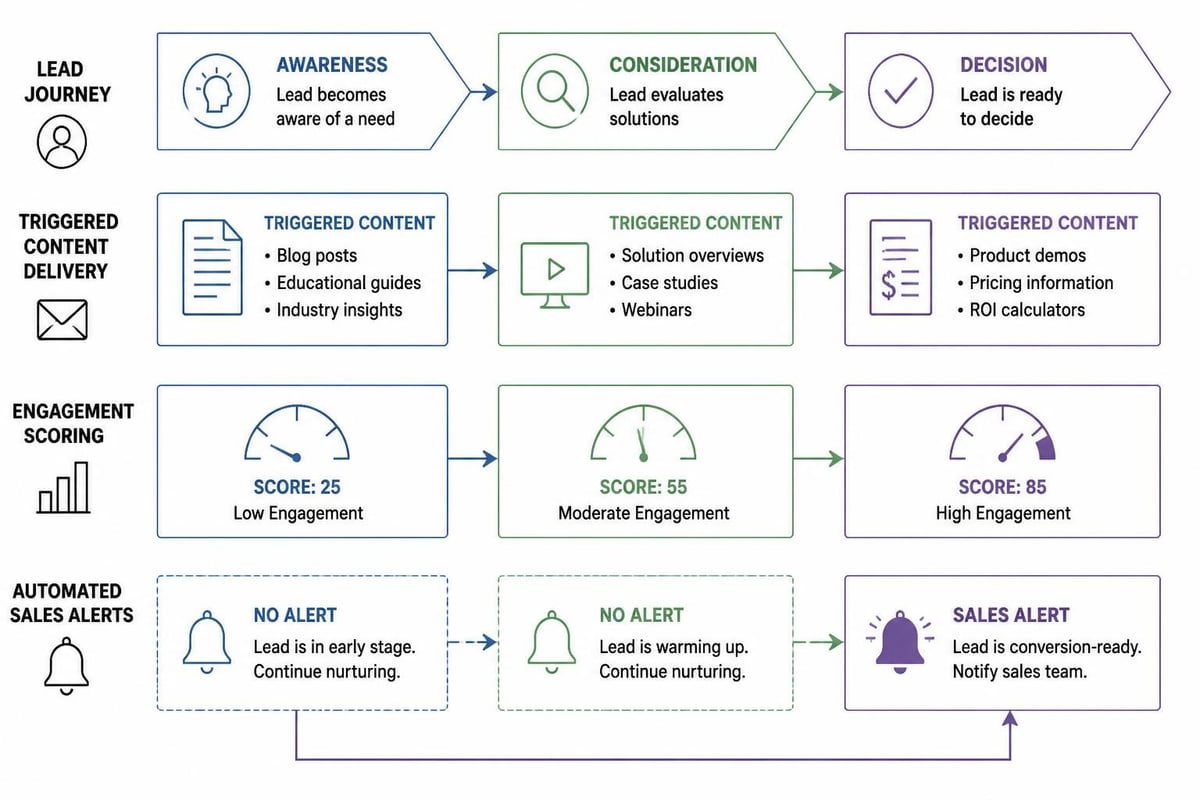
Advanced systems combine these signals to create dynamic scores that update in real-time. A prospect who downloads your pricing guide, visits your case studies page three times, and opens five consecutive emails clearly demonstrates higher intent than someone who clicked one ad and bounced.
Automating Follow-Up and Nurturing Sequences
Even perfectly qualified leads rarely convert on first contact. Your leads maker must include sophisticated nurturing that maintains engagement without overwhelming your sales team.
According to lead generation best practices research, companies with structured nurturing programs generate 50% more sales-ready leads at 33% lower cost. The key lies in delivering relevant value at appropriate intervals.
Effective nurturing sequences should:
- Segment prospects by industry, pain point, and buying stage
- Deliver educational content that addresses specific challenges
- Gradually introduce proof points like case studies and testimonials
- Create urgency through limited-time opportunities or scarcity
- Trigger sales handoff when engagement reaches threshold levels
Your automation shouldn't feel robotic. The best systems personalize messaging based on prospect behavior, creating experiences that feel thoughtfully curated rather than mass-produced. When someone engages with content about a specific challenge, your next message should acknowledge that interest and provide deeper insights on that topic.
Measuring and Optimizing Your Leads Maker Performance
What gets measured gets improved. Your leads maker requires constant monitoring and optimization to maintain peak performance.
Essential metrics to track include:
- Cost per lead across all channels
- Lead-to-opportunity conversion rate
- Opportunity-to-customer conversion rate
- Average deal size by lead source
- Sales cycle length from first touch to close
- Customer acquisition cost (CAC)
- Lifetime value to CAC ratio
Smart businesses track these metrics in real-time dashboards that reveal exactly which elements of their leads maker deliver results. When you notice email nurturing sequences converting at 12% while social media generates only 3%, you can reallocate resources accordingly.
Implementing Continuous Testing Protocols
The most effective leads maker never remains static. Market conditions shift, competitor strategies evolve, and buyer preferences change. Your system must adapt continuously through structured testing.
| Test Type | Impact Level | Testing Frequency | Typical Lift |
|---|---|---|---|
| Subject lines | High | Weekly | 10-25% |
| Landing page copy | High | Bi-weekly | 15-40% |
| Offer positioning | Very High | Monthly | 25-60% |
| Channel mix | Medium | Quarterly | 10-30% |
| Targeting criteria | Very High | Quarterly | 30-70% |
When examining best marketing platforms for lead generation, remember that platform capabilities matter less than how effectively you use them. A sophisticated leads maker on a simple platform outperforms a basic approach on the most advanced technology.
Scaling Your Leads Maker Without Sacrificing Quality
Growth creates challenges. The leads maker that generated 50 qualified opportunities monthly might buckle under pressure to deliver 500. Scaling requires infrastructure that maintains quality while increasing volume.
Key scaling considerations include:
- Automation that handles increased volume without human intervention
- Quality control mechanisms that flag low-fit prospects automatically
- Team training to manage higher lead flow effectively
- Technology integration ensuring seamless data flow between systems
- Process documentation enabling consistent execution as teams grow
Companies exploring new business lead generation tactics often make the mistake of prioritizing quantity over quality. Your leads maker should establish minimum qualification thresholds that remain constant regardless of volume. Better to deliver 100 excellent leads than 500 mediocre ones.
Building Sustainable Growth Engines
Sustainable scaling means creating systems that improve over time rather than degrading under pressure. Your leads maker should incorporate machine learning that gets smarter with every interaction.
The AI systems powering modern lead generation analyze patterns across thousands of interactions, identifying subtle signals human reviewers might miss. They recognize that prospects who engage with content on Tuesday afternoons convert at higher rates, or that companies in specific sub-industries have different buying triggers than broader category averages.
Integrating Your Leads Maker with Sales Operations
The handoff between marketing and sales represents a critical failure point for many organizations. Your leads maker must create seamless transitions that equip sales teams with everything they need to close deals.
Effective integration requires:
- Clear definitions of what constitutes a qualified lead
- Automated alerts when prospects reach sales-ready status
- Complete engagement history accessible to sales teams
- Established SLAs for follow-up timing and methodology
- Feedback loops reporting conversion outcomes back to marketing
When sales and marketing align around shared definitions and goals, conversion rates typically improve by 30-50%. Your leads maker should facilitate this alignment through transparent data sharing and regular communication protocols.
Understanding the broader landscape of B2B lead acquisition strategies helps contextualize where your specific approach fits within industry best practices. The companies seeing best results don't just implement isolated tactics – they build cohesive systems where every component reinforces the others.
Avoiding Common Leads Maker Pitfalls
Even sophisticated organizations make predictable mistakes when building their lead generation systems. Awareness of these pitfalls helps you avoid costly detours.
The most damaging mistakes include:
- Pursuing volume metrics instead of quality outcomes
- Failing to nurture leads that aren't immediately sales-ready
- Neglecting to update targeting as markets evolve
- Implementing technology without clear process design
- Ignoring attribution data that reveals true performance
Research from ClickFunnels on lead generation practices demonstrates that businesses focusing on conversion optimization typically outperform those chasing traffic volume by 3-5x in revenue terms. Your leads maker should prioritize the right metrics from day one.
Maintaining Data Quality and Compliance
A leads maker is only as good as the data powering it. Garbage in means garbage out. Establish rigorous data hygiene practices ensuring every prospect record contains accurate, current information.
Equally important: maintain strict compliance with privacy regulations. The consequences of violations extend beyond fines to include damaged reputation and lost customer trust. Your systems should obtain proper consent, honor opt-out requests immediately, and handle data securely throughout its lifecycle.
Future-Proofing Your Lead Generation Systems
The leads maker you build today must remain effective as technology and buyer behavior evolve. Future-proofing requires balancing current optimization with strategic flexibility.
Forward-thinking approaches include:
- Choosing platforms with robust API ecosystems enabling easy integration
- Building modular processes that swap components without breaking entire systems
- Maintaining direct relationships with prospects rather than renting attention
- Investing in owned media properties that compound value over time
- Developing unique data assets competitors can't easily replicate
When evaluating lead generation companies and partnerships, consider not just current capabilities but innovation velocity. The landscape changes rapidly, and your partners should evolve alongside market demands.
The shift toward AI-powered systems continues accelerating. Companies implementing intelligent automation today position themselves to capture disproportionate market share as competitors struggle with outdated manual processes. Your leads maker should incorporate the latest innovations while maintaining focus on fundamental principles that remain constant regardless of technological change.
Building a high-performing leads maker requires strategic thinking, sophisticated technology, and relentless optimization. The businesses winning in 2026 treat lead generation as a core competency rather than an afterthought, investing in systems that deliver predictable, scalable growth. Aletto transforms your lead generation from unpredictable hope to guaranteed results, leveraging advanced AI systems that identify qualified prospects, automate nurturing, and deliver sales-ready opportunities consistently. Ready to build a leads maker that actually drives revenue?