
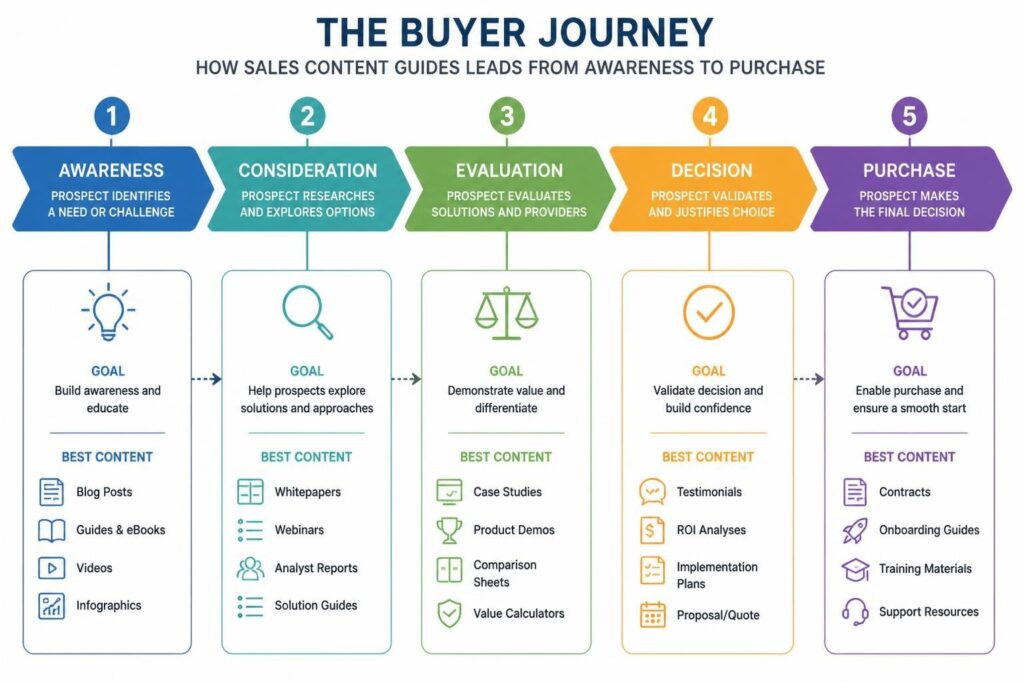
Your sales team faces a brutal reality every single day: prospects are overwhelmed with information, suspicious of traditional pitches, and more self-directed than ever before. The game has fundamentally changed. While your competitors scramble with outdated tactics, there's a proven approach that's quietly dominating the market in 2026. Strategic sales content doesn't just support your revenue goals; it becomes your most powerful conversion engine. This approach transforms how prospects perceive your offer, shortens sales cycles, and creates predictable growth that traditional methods simply cannot match. The businesses winning right now understand that sales content isn't an afterthought; it's the foundation of every qualified conversation.
Why Sales Content Drives Modern Revenue Growth
Traditional cold outreach is dying a slow, expensive death. Your prospects research solutions before they ever speak with a sales representative, consuming an average of 13 pieces of content before making purchasing decisions. This shift creates both a challenge and an extraordinary opportunity.
Sales content bridges the gap between marketing promises and closed deals. When executed strategically, it educates prospects, addresses objections before they surface, and positions your solution as the obvious choice. For lead generation businesses specifically, this content demonstrates expertise while building the trust necessary for prospects to share their most valuable asset: qualified leads.
The most successful companies in 2026 treat sales content as a strategic asset that guides prospects through their buying journey with precision. They're not creating random blog posts or generic brochures. Every piece serves a specific purpose, answers specific questions, and moves prospects toward a specific action.
The ROI Reality Check
Consider these compelling statistics:
- Sales teams using strategic content close 67% more deals than those relying solely on conversations
- Content-supported sales cycles are 23% shorter on average
- Prospects who engage with educational content spend 47% more than those who don't
- 89% of B2B buyers consider content quality when evaluating vendors
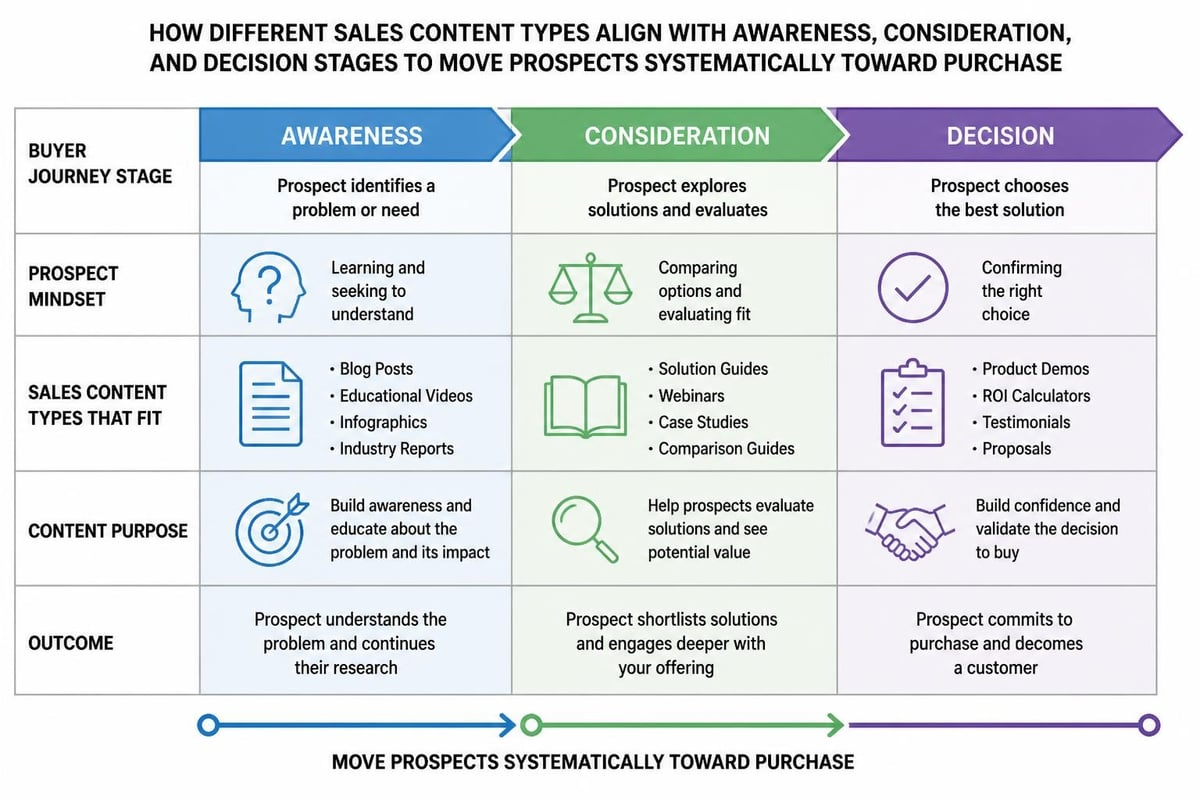
These numbers don't lie. Your ability to deploy the right content at the right moment directly impacts your bottom line. When a prospect receives a case study that mirrors their exact situation at the precise moment they're evaluating solutions, your close rate skyrockets.
Building Your Sales Content Arsenal
Not all content carries equal weight in the sales process. Understanding which assets to create and when to deploy them separates top performers from everyone else struggling with inconsistent results.
Essential Content Types for Maximum Impact
| Content Type | Primary Purpose | Best Use Stage | Conversion Impact |
|---|---|---|---|
| Case Studies | Proof and social validation | Decision stage | Very High |
| ROI Calculators | Quantify value proposition | Consideration | High |
| Comparison Guides | Differentiate from competitors | Evaluation | Very High |
| Implementation Roadmaps | Reduce perceived risk | Decision | High |
| Industry Reports | Establish authority | Awareness | Medium |
| Video Demos | Show product capabilities | Consideration | Very High |
Your sales content strategy should include a balanced mix that supports prospects through every stage. A comprehensive sales enablement content strategy ensures your team has exactly what they need when opportunity knocks.
Case studies remain the heavyweight champion of sales content. They provide irrefutable proof that your solution delivers results for businesses similar to your prospects. When crafting case studies, focus on specific, measurable outcomes. "We helped Company X generate 340 qualified leads in 60 days, resulting in $890K in new revenue" converts infinitely better than vague claims about "improving results."
ROI calculators transform abstract value into concrete numbers. Prospects can input their specific metrics and see personalized projections. This interactive approach creates ownership of the outcome before they've even purchased.
Content for Lead Generation Specialists
For businesses in the lead generation space, your sales content must accomplish dual objectives: demonstrate your expertise in generating leads while simultaneously generating leads for your own pipeline. This meta-challenge requires surgical precision.
Your content should showcase actual results from campaigns you've managed. Transparency builds credibility faster than anything else. Share the exact frameworks, targeting parameters, and conversion metrics from successful client engagements. When prospects see proven strategies for Facebook lead campaigns that generated measurable results, they envision those same outcomes for their business.
Creating Sales Content That Actually Converts
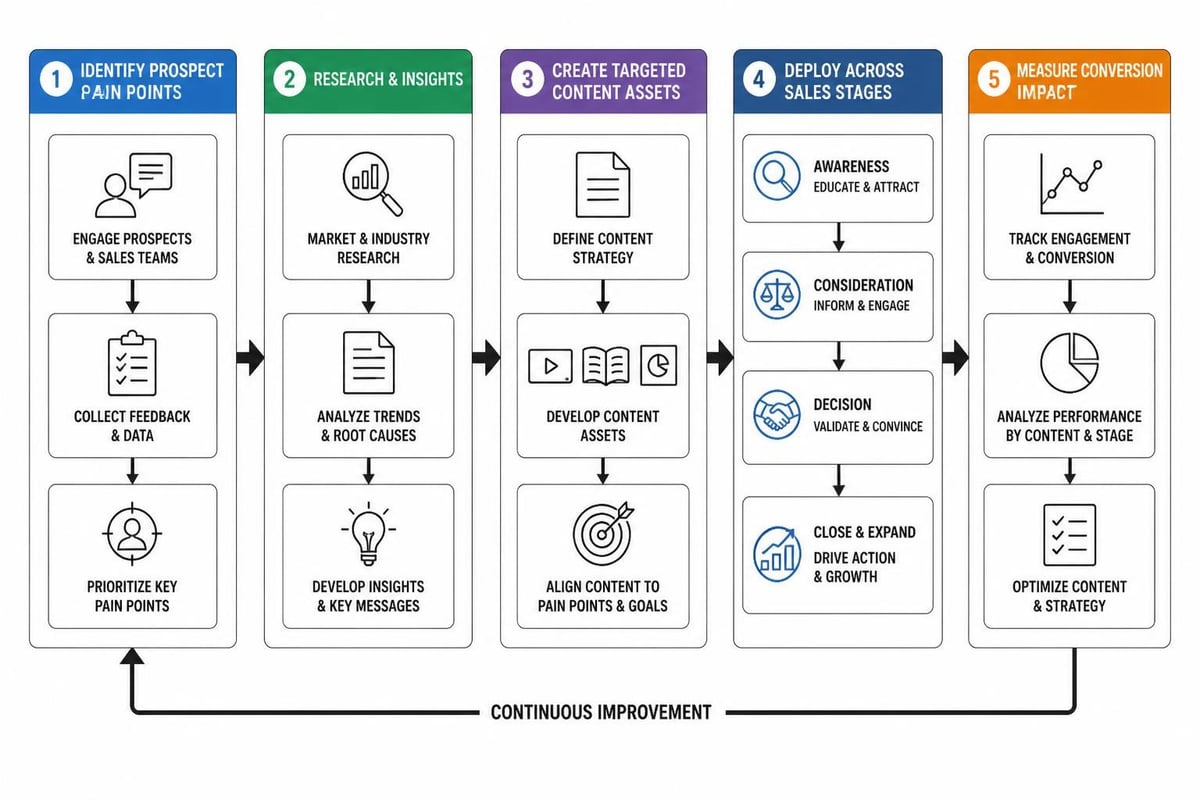
Here's where most businesses fail spectacularly: they create content for themselves rather than their prospects. Every sentence in your sales content should answer the silent question running through every prospect's mind: "What's in this for me?"
The IMPACT Framework
- Identify the specific pain point your prospect experiences daily
- Measure the cost of that pain in time, money, or opportunity
- Present your solution as the logical bridge to their desired outcome
- Articulate clear benefits using the prospect's language, not industry jargon
- Cite specific evidence through data, testimonials, or case studies
- Trigger the next action with a clear, compelling call-to-action
This framework ensures every piece of sales content maintains laser focus on prospect needs rather than your features. Features tell; benefits sell. Prospects don't care about your "advanced AI-powered lead scoring algorithm." They care that they'll stop wasting hours calling unqualified leads who never convert.
The Power of Specificity
Generic claims die on arrival. Specific details command attention and build belief. Compare these approaches:
Generic: "Our system helps businesses get more leads."
Specific: "Our AI qualification system analyzed 47,000 leads for a commercial real estate client, identifying the 340 prospects most likely to close within 30 days. The sales team focused exclusively on these qualified opportunities, closing 89 deals worth $12.3M in revenue."
The second example creates a vivid mental picture. Prospects can visualize exactly what success looks like. They're not buying a vague promise; they're buying a proven, repeatable process with documented results.
Organizing Content for Sales Success
Creating brilliant sales content means nothing if your team can't find and deploy it effectively. Sales content management separates organizations that consistently hit quota from those that struggle despite having quality materials.
Your Content Command Center
Build a centralized content library organized by:
- Sales stage (awareness, consideration, decision)
- Prospect industry or vertical
- Common objections addressed
- Content format (video, PDF, interactive tool)
- Recency and relevance to current market conditions
This organization allows sales representatives to locate the perfect asset in seconds rather than minutes. When a prospect raises a specific concern about implementation timelines, your rep immediately accesses case studies showing successful rapid deployments.
Enable search functionality that actually works. Tag every asset with relevant keywords, industries, pain points, and outcomes. Your sales team shouldn't need a treasure map to find the ROI calculator when they're on a call with a hot prospect.
Version Control Saves Deals
Nothing kills credibility faster than sending outdated information. Implement strict version control ensuring every team member accesses current, approved materials. When you update your pricing or service offerings, old collateral disappears immediately.
Establish a quarterly content audit process:
- Review performance metrics for each asset
- Update statistics and case studies with recent data
- Retire underperforming content
- Create new assets addressing emerging objections
- Gather feedback from sales teams on content gaps
Measuring What Matters in Sales Content
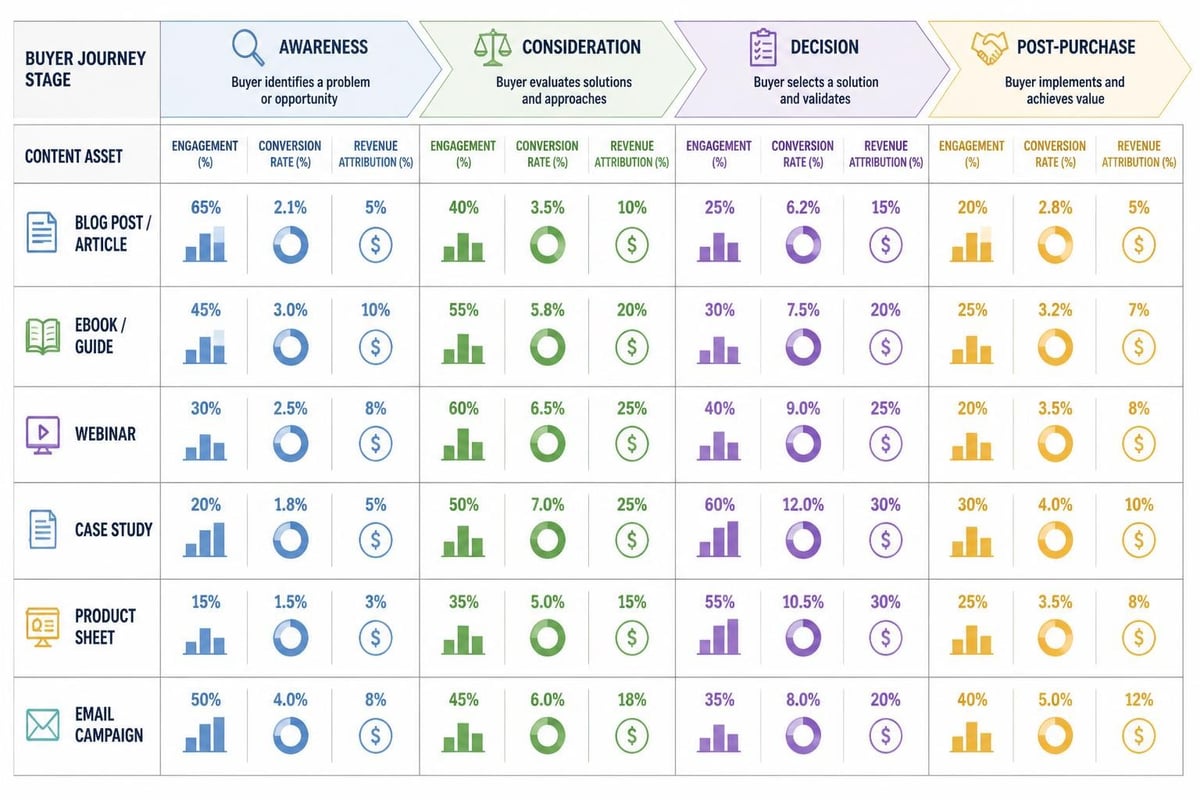
You can't improve what you don't measure. The most sophisticated sales organizations in 2026 track content performance with the same rigor they apply to revenue metrics.
Key Performance Indicators
| Metric | What It Reveals | Target Benchmark |
|---|---|---|
| Content Engagement Rate | Prospect interest level | 45%+ open/view rate |
| Time Spent with Content | Depth of consideration | 3+ minutes average |
| Content-to-Meeting Ratio | Qualification effectiveness | 1:4 ratio |
| Content-Influenced Deals | Revenue impact | 60%+ of closed deals |
| Sales Velocity Impact | Cycle time reduction | 20%+ faster close |
These metrics reveal which content assets genuinely drive results versus those collecting digital dust. When you discover that prospects who watch your implementation roadmap video close at 3.2x the rate of those who don't, you make that video mandatory for every qualified opportunity.
Track content attribution throughout your entire funnel. Modern CRM systems can show you exactly which assets prospects engaged with before converting. This visibility allows you to double down on winners and eliminate losers.
A/B Testing for Continuous Improvement
Never settle for "good enough" when you can systematically improve every asset. Test different:
- Headlines and subject lines
- Video lengths and formats
- Data visualization approaches
- Call-to-action placement and wording
- Social proof positioning
A simple headline change on a case study increased engagement by 127% for one client. That's the power of continuous optimization. When you understand which marketing platforms deliver the best ROI for content distribution, you can focus resources where they generate maximum impact.
Aligning Sales and Marketing Around Content
The most common breakdown in sales content effectiveness occurs at the sales-marketing interface. These teams often operate in separate universes, creating friction that costs deals and wastes resources.
Breaking Down the Silos
Establish weekly content sync meetings where sales and marketing teams:
- Share feedback on content performance in real conversations
- Identify emerging objections requiring new content
- Discuss competitive intelligence and market shifts
- Prioritize content creation based on revenue impact
- Celebrate wins and analyze losses
This collaboration ensures marketing creates content that sales actually uses, while sales provides the frontline intelligence that makes content relevant and powerful. The alignment between these functions directly predicts revenue outcomes.
Create feedback loops that capture insights. When a sales representative closes a significant deal, immediately debrief which content assets proved most influential. When they lose a deal to a competitor, understand what content might have changed the outcome.
Empowering Sales with Content Access
Your sales team needs content at their fingertips during live conversations. Implement tools that allow them to:
- Send relevant assets with a single click
- Track when prospects engage with materials
- Receive notifications when prospects view content
- Customize templates while maintaining brand consistency
- Access content from mobile devices during travel
The friction between "I should send them that case study" and actually sending it costs countless opportunities. Eliminate every unnecessary click and second of delay.
Personalizing Content at Scale
Generic content gets generic results. The winning approach in 2026 combines scalable frameworks with personalized elements that make each prospect feel like you created the content specifically for them.
Strategic Personalization Tactics
Industry-specific examples resonate dramatically more than general scenarios. A case study featuring a manufacturing client will underperform with healthcare prospects, even if the underlying challenges are similar. Create industry variants of your strongest assets.
Dynamic content insertion allows you to personalize key elements without creating entirely separate assets. Merge fields can automatically insert:
- Prospect company name
- Industry-specific pain points
- Relevant case study examples
- Customized ROI projections
- Geographic market considerations
This approach gives you the efficiency of templates with the impact of custom creation. Understanding how to qualify any leads in your pipeline helps you determine the appropriate personalization level for each opportunity.
When to Go Full Custom
Reserve fully customized content for high-value opportunities in late sales stages. A prospect representing $500K in annual revenue deserves a custom proposal and implementation plan. A $5K opportunity does not.
Establish clear thresholds:
- Opportunities above $100K: Custom proposals, personalized ROI models, tailored case studies
- Opportunities $25K-$100K: Semi-customized templates with personalized examples
- Opportunities under $25K: Standard assets with basic personalization
This tiered approach ensures you invest content creation resources proportionally to deal value while maintaining efficiency.
Content That Handles Objections Before They Surface
Every industry faces predictable objections. Smart sales content addresses these concerns proactively, removing barriers before prospects even articulate them. This approach demonstrates you understand their world while positioning your solution as the obvious answer.
Common Objection Categories
Cost concerns: Create detailed ROI calculators and payback period analyses showing how your solution pays for itself. Include financing options or implementation phases that reduce upfront investment.
Implementation complexity: Develop step-by-step roadmaps showing exactly how clients go from contract signature to full deployment. Include realistic timelines, required resources, and support mechanisms.
Risk aversion: Showcase your guarantee structure, client testimonials addressing initial concerns, and case studies from risk-averse industries. When prospects see that companies like theirs successfully implemented your solution, perceived risk plummets.
Competitive alternatives: Build honest comparison guides that acknowledge competitor strengths while clearly articulating your differentiation. Prospects appreciate transparency and will trust you more when you're fair rather than dismissive.
The most effective approach involves creating a comprehensive sales strategy that anticipates every potential concern and addresses it with specific content assets deployed at optimal moments.
Future-Proofing Your Sales Content Strategy
The content landscape evolves constantly. What works brilliantly today might underperform tomorrow as prospect preferences shift and new technologies emerge. Build adaptability into your content approach from day one.
Emerging Trends to Watch
Interactive content consistently outperforms static assets. Quizzes, assessments, calculators, and configurators engage prospects actively rather than passively. This engagement drives deeper understanding and stronger commitment.
Video continues its dominance across all sales stages. Prospects would rather watch a 3-minute explanation than read a 10-page document. Invest in quality video production capabilities or partner with specialists who can execute your vision.
AI-powered personalization will become table stakes by 2027. Systems that automatically customize content based on prospect behavior, industry, company size, and engagement history will separate market leaders from everyone else.
Conversational content experiences blend content with chat interfaces, allowing prospects to ask questions and receive relevant assets in real-time. This approach combines the scalability of content with the responsiveness of human interaction.
Building Your Content Machine
Stop treating sales content as a project with a finish line. Build it as an ongoing system that continuously produces, tests, optimizes, and deploys assets that drive revenue. Your content machine should include:
- Dedicated content creation resources (internal or outsourced)
- Regular production schedules ensuring consistent output
- Quality control processes maintaining brand standards
- Distribution mechanisms across multiple channels
- Analytics dashboards tracking performance metrics
- Feedback loops capturing sales team insights
When you establish this infrastructure, sales content becomes a predictable revenue driver rather than a sporadic effort that produces inconsistent results. The businesses dominating lead generation in 2026 have sales enablement systems that operate with machine-like efficiency while maintaining human relevance.
Strategic sales content transforms how prospects perceive your value and dramatically accelerates their journey from awareness to purchase. When you implement these frameworks systematically, you create a competitive advantage that compounds over time as your content library grows and performance data guides continuous improvement. If you're ready to build a lead generation system that leverages AI-powered qualification and strategic content to convert cold prospects into ready-to-buy customers, Aletto provides the guaranteed growth partnership that aligns our success with yours, delivering predictable revenue through transparency and proven systems.