
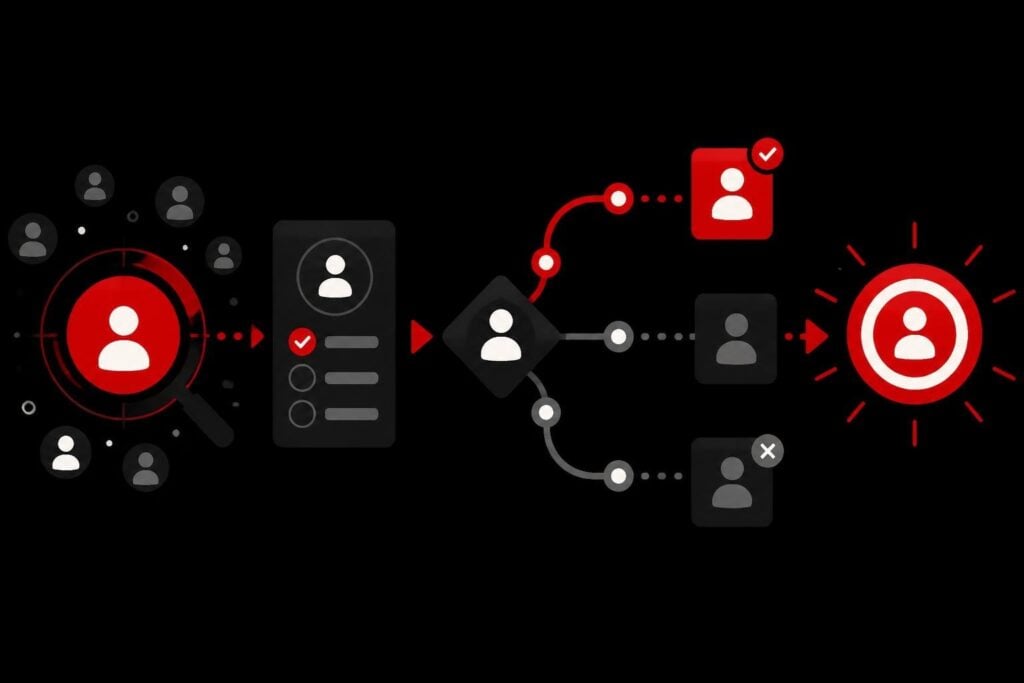
Finding the right prospects at the right time remains one of the most persistent challenges in modern business growth. While companies invest heavily in marketing campaigns and sales teams, the gap between generating interest and converting customers continues to widen. A leads navigator changes this equation fundamentally by creating an intelligent system that guides prospects through your sales journey while giving your team unprecedented visibility and control over the entire process.
Understanding the Leads Navigator Framework
A leads navigator functions as your strategic command center for prospect management, combining automation with human intelligence to optimize every touchpoint. Unlike traditional CRM systems that simply store contact information, this approach actively directs leads through predetermined pathways based on behavior, engagement level, and conversion readiness.
The framework operates on three core principles:
- Intelligent routing that matches leads with the right resources at optimal moments
- Behavioral tracking that reveals genuine buying intent beyond surface-level metrics
- Automated progression that moves qualified prospects forward without manual intervention
Modern businesses struggle with lead leakage, where promising prospects disappear between marketing touchpoints and sales conversations. Research shows that effective lead generation strategies require sophisticated tracking and nurturing systems that prevent this costly attrition. The leads navigator addresses this challenge by creating multiple safety nets throughout your funnel.
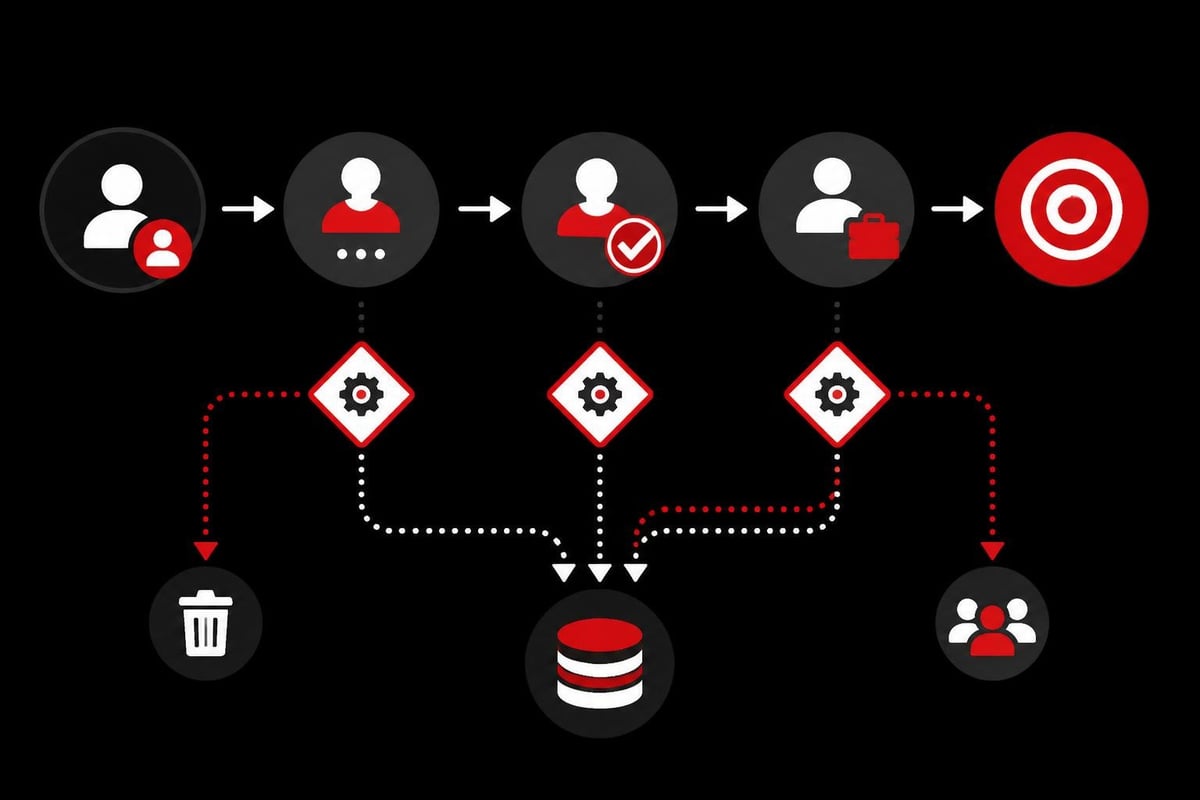
Building Your Navigation System Architecture
Creating an effective leads navigator requires strategic planning around your specific buyer journey and sales process. The architecture must accommodate different lead sources, qualification criteria, and conversion pathways while maintaining flexibility for optimization.
Defining Your Lead Scoring Parameters
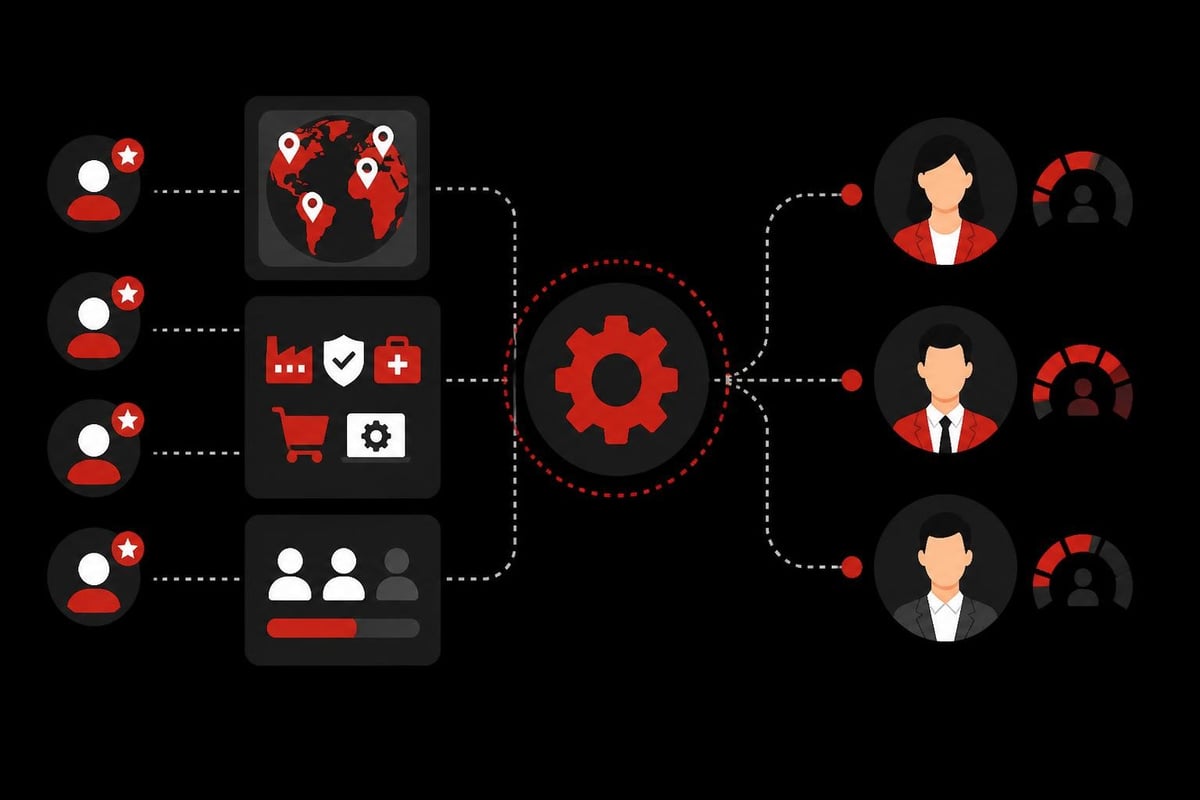
Your scoring model determines which prospects receive priority attention and automated nurturing sequences. Start by identifying behavioral signals that correlate with purchase intent:
- Engagement metrics: Email opens, website visits, content downloads, and social interactions
- Demographic alignment: Company size, industry, job title, and budget authority
- Timing indicators: Quarter-end proximity, contract expiration dates, and growth phases
- Competitive signals: Mentions of competitors, comparison searches, and pricing inquiries
Advanced lead generation measurement techniques emphasize the importance of continuous refinement based on conversion data. Your leads navigator should automatically adjust scoring weights as you gather more intelligence about what actually drives sales.
Implementing Multi-Channel Tracking
Today's buyers interact with your brand across numerous touchpoints before making purchase decisions. Your navigation system must unify data from email campaigns, paid advertising, website behavior, social media engagement, and direct outreach into a single coherent view.
| Channel Type | Primary Purpose | Key Metrics | Integration Priority |
|---|---|---|---|
| Email Marketing | Nurture and education | Open rate, click-through, response | High |
| Paid Advertising | Initial awareness and retargeting | Cost per lead, conversion rate | High |
| Website Behavior | Intent signaling | Page depth, time on site, return visits | Critical |
| Social Media | Relationship building | Engagement rate, share of voice | Medium |
| Direct Outreach | High-value conversion | Response rate, meeting booked | Critical |
Tools like Trimy enable sophisticated link tracking and campaign attribution, providing the granular data your leads navigator needs to make intelligent routing decisions. When you can see exactly which touchpoints influence conversion, you optimize your entire funnel systematically.
Automating Lead Progression Without Losing Personalization
The paradox of modern lead management involves scaling your outreach while maintaining genuine human connection. Your leads navigator solves this by automating decision-making and administrative tasks while preserving personalized communication at critical moments.
Creating Dynamic Nurture Sequences
Static email sequences fail because they ignore individual prospect behavior and readiness. Dynamic nurturing adjusts messaging, timing, and content based on real-time engagement signals. When a lead demonstrates high intent through multiple website visits or content downloads, your system should accelerate outreach rather than waiting for the next scheduled email.
Consider implementing conditional logic that triggers different pathways:
- High engagement path: Immediate sales notification with personalized outreach within 24 hours
- Moderate engagement path: Educational content series with soft conversion opportunities
- Low engagement path: Brand awareness touchpoints with periodic value demonstrations
- Dormant lead path: Re-engagement campaigns with fresh angles and offers
This approach to demand generation marketing ensures prospects receive relevant messages that match their current position in the buying journey.
Implementing Intelligent Alert Systems
Your sales team cannot monitor every lead interaction manually, but they need immediate notification when opportunities emerge. Configure your leads navigator to trigger alerts based on specific combinations of behaviors that indicate purchase readiness.
Priority alert triggers might include:
- Multiple decision-maker contacts from the same company visiting your site
- Pricing page visits following case study or demo video engagement
- Direct competitor comparison searches that lead to your content
- Return visits within 48 hours after initial discovery
- Form submissions requesting specific product information or custom quotes
These intelligent notifications transform your team's effectiveness by focusing attention where it matters most. Rather than cold calling hundreds of leads, your representatives engage warm prospects at exactly the right moment.
Optimizing Conversion Rates Through Strategic Navigation
The true power of a leads navigator emerges when you analyze conversion patterns and systematically improve weak points in your funnel. This requires establishing clear metrics, running controlled experiments, and implementing changes based on data rather than assumptions.
Identifying Bottlenecks and Drop-Off Points
Track progression rates between each stage of your funnel to pinpoint where prospects stall or abandon the journey. Common problem areas include:
- Initial qualification: Too restrictive criteria filtering out viable prospects
- Middle-funnel engagement: Content failing to address specific objections or questions
- Sales handoff: Timing gaps or context loss between marketing and sales teams
- Final decision: Unclear value proposition or competitive differentiation
When you map these friction points precisely, you can design targeted interventions. For instance, if prospects frequently visit your pricing page but don't convert, you might need clearer package differentiation or more compelling ROI calculators.
A/B Testing Navigation Pathways
Different prospect segments respond to varied approaches, and your leads navigator should facilitate continuous experimentation. Test alternative sequences for specific industries, company sizes, or behavioral patterns to discover optimal pathways.
| Test Variable | Option A | Option B | Winning Metric |
|---|---|---|---|
| Initial contact timing | Immediate (< 5 minutes) | Strategic delay (2 hours) | Meeting booking rate |
| Content sequence | Education-first approach | Value proposition-first | Email engagement |
| Offer presentation | Free trial emphasis | ROI calculator focus | Trial conversion |
| Follow-up cadence | Daily touchpoints (5 days) | Every other day (10 days) | Response rate |
The insights from these experiments inform your broader strategy while your system automatically scales winning approaches. This data-driven methodology aligns with proven lead generation best practices that emphasize continuous optimization over static campaigns.
Integrating AI-Powered Prediction and Prioritization
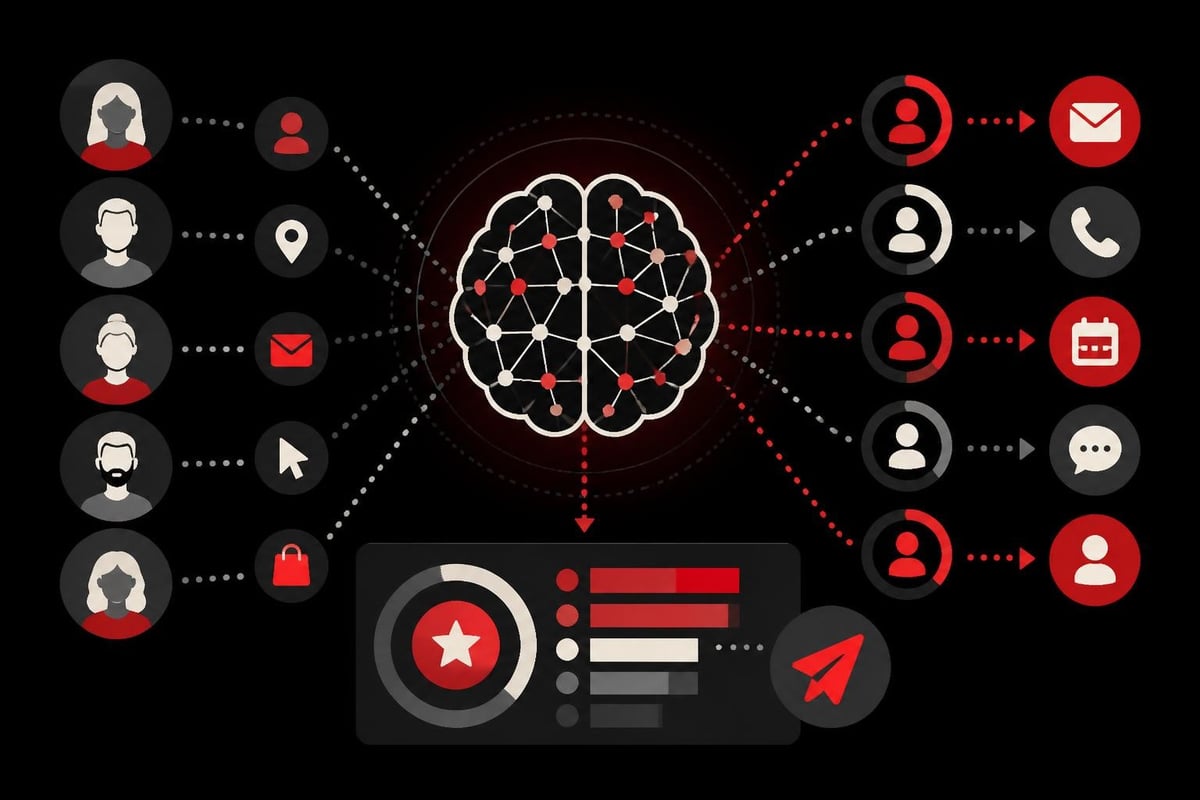
Artificial intelligence elevates your leads navigator from a tracking system to a predictive engine that forecasts conversion likelihood and recommends optimal actions. Machine learning models analyze historical conversion data to identify patterns human observers might miss.
Predictive Lead Scoring Models
Traditional lead scoring assigns fixed point values to specific actions or attributes. AI-powered prediction continuously refines these valuations based on actual outcomes, considering hundreds of variables simultaneously to calculate true conversion probability.
Your system learns that certain combinations of signals predict success more reliably than others. Perhaps leads from manufacturing companies who visit your integration documentation page and download technical specifications convert at 47% compared to a baseline 12% rate. This intelligence allows surgical resource allocation.
Key predictive factors might include:
- Sequence and timing of content consumption patterns
- Historical conversion rates for similar firmographic profiles
- Engagement velocity trends over the first 14 days
- Communication channel preferences and response patterns
When integrated with your B2B lead generation strategy, these models transform how your team allocates time and budget across your prospect universe.
Automated Qualification and Routing
Manual lead qualification consumes countless hours while introducing inconsistency and bias. Your leads navigator should automatically assess incoming prospects against your ideal customer profile, assigning qualification scores and routing accordingly.
High-scoring leads receive immediate attention from senior sales representatives with full context about their journey. Mid-tier prospects enter targeted nurture sequences designed to build engagement. Low-scoring contacts might receive periodic brand awareness touchpoints without consuming expensive sales resources.
This automation doesn't replace human judgment but amplifies its impact by ensuring your team focuses on genuinely qualified opportunities rather than sorting through unqualified inquiries.
Measuring Success and ROI
Implementing a leads navigator represents a significant investment in technology, process design, and team training. Demonstrating clear return requires establishing specific metrics that connect navigation improvements to revenue outcomes.
Core Performance Indicators
Beyond vanity metrics like total leads generated, focus on indicators that reflect genuine business impact:
- Lead-to-opportunity conversion rate: Percentage of qualified leads advancing to sales opportunities
- Opportunity-to-customer conversion rate: Closing effectiveness once prospects reach decision stage
- Sales cycle length: Time from initial contact to closed deal, segmented by source and segment
- Cost per acquisition: Total marketing and sales investment divided by new customers
- Customer lifetime value by source: Revenue generated from customers acquired through different channels
These metrics reveal whether your navigation system actually improves outcomes or simply generates activity. Understanding how to measure lead generation success provides the foundation for continuous optimization and stakeholder buy-in.
Attribution and Source Analysis
Your leads navigator must track which marketing investments and touchpoints contribute to conversions. Multi-touch attribution models reveal the true impact of each channel and campaign rather than crediting only the last interaction before purchase.
Compare attribution models to understand your funnel dynamics:
| Attribution Model | Best Use Case | Key Advantage | Limitation |
|---|---|---|---|
| First-touch | Understanding awareness drivers | Simple implementation | Ignores nurture impact |
| Last-touch | Evaluating closing tactics | Clear conversion path | Overlooks early influencers |
| Linear | Valuing all touchpoints equally | Comprehensive view | May overweight minor interactions |
| Time-decay | Emphasizing recent engagement | Logical weighting | Complex calculation |
| Data-driven | Machine learning optimization | Most accurate | Requires substantial data volume |
This analytical depth, combined with platforms that offer comprehensive lead generation tools, enables strategic budget allocation and campaign optimization that drives sustainable growth.
Scaling Your Navigation System
As your business grows, your leads navigator must evolve to handle increased volume, complexity, and sophistication without losing effectiveness. Scalability requires both technical infrastructure and process maturity.
Managing Increased Lead Volume
When prospect numbers multiply, manual processes break down quickly. Your navigation system should maintain consistent qualification standards, response times, and nurture quality regardless of volume fluctuations.
Scalability strategies include:
- Implementing tiered response protocols based on lead score and source
- Deploying chatbots for initial qualification and FAQ handling
- Creating self-service resources that enable prospects to progress independently
- Establishing clear handoff protocols between marketing automation and sales outreach
- Building capacity buffers that prevent bottlenecks during peak periods
Companies that master B2B lead generation online recognize that volume without quality destroys conversion rates and wastes resources. Your navigation system must filter effectively while nurturing genuinely promising prospects.
Expanding to New Markets and Segments
Entering new industries, geographic regions, or customer segments requires adapting your navigation logic while preserving core principles. Different audiences respond to varied messaging, timing, and channel preferences.
Build segment-specific pathways that reflect unique buying behaviors and decision-making processes. Enterprise customers typically require longer nurture cycles with multiple stakeholder engagement compared to small business buyers who make faster decisions with fewer approvals.
Your leads navigator should facilitate this complexity through flexible routing rules and dynamic content libraries that personalize experiences without requiring complete system redesigns for each new segment. This strategic approach supports the end-to-end marketing vision that drives predictable revenue growth.
Future-Proofing Your Lead Navigation Strategy
The landscape of lead generation and sales automation continues evolving rapidly with new technologies, platforms, and buyer expectations. Building adaptability into your navigation system ensures continued effectiveness despite changing conditions.
Emerging Technologies and Capabilities
Several technological trends will reshape lead navigation over the next few years:
- Conversational AI: Advanced chatbots and voice assistants that qualify leads through natural dialogue
- Predictive analytics: More sophisticated forecasting that anticipates buyer needs before explicit signals
- Privacy-first tracking: Cookie-less attribution and consent-based data collection frameworks
- Integration ecosystems: Seamless data flow between marketing, sales, and customer success platforms
Staying current with multichannel lead generation best practices positions your navigation system to leverage these innovations as they mature and become accessible to businesses of all sizes.
Continuous Improvement Culture
Technology alone doesn't guarantee results. Building a culture of continuous improvement ensures your team actively refines navigation logic, experiments with new approaches, and shares insights across the organization.
Establish regular review cycles where stakeholders examine funnel performance, discuss anomalies, and propose optimization experiments. Create feedback loops where sales representatives share insights about lead quality and readiness, informing upstream marketing adjustments.
This collaborative approach transforms your leads navigator from a static system into a dynamic competitive advantage that compounds value over time. When everyone contributes to optimization, you build institutional knowledge that transcends individual team members or vendor relationships.
A leads navigator transforms chaotic prospect management into a strategic system that guides buyers efficiently while maximizing your team's impact. By combining intelligent automation, predictive analytics, and continuous optimization, you create a sustainable competitive advantage that generates predictable revenue growth regardless of market conditions. Aletto specializes in building these sophisticated navigation systems, leveraging advanced AI to transform cold leads into ready-to-buy customers through guaranteed growth partnerships that align our success with yours.