

Building a profitable business in 2026 requires more than sporadic marketing tactics and hoping the phone rings. You need a lead generation system that consistently attracts, qualifies, and converts prospects into customers on autopilot. While individual campaigns may deliver short-term wins, only a comprehensive system delivers predictable, scalable revenue growth month after month. The difference between struggling businesses and market leaders often comes down to whether they've invested in building systematic lead generation infrastructure versus relying on fragmented efforts.
What Makes a Lead Generation System Different from Random Tactics
A lead generation system is a structured, repeatable framework that captures prospects, qualifies their interest and fit, nurtures them through decision stages, and hands them to sales when they're ready to buy. Unlike one-off campaigns, a system integrates multiple channels, automation technologies, qualification frameworks, and measurement protocols into a cohesive engine.
The Core Components Every System Needs
Effective lead generation systems share five essential elements:
- Multi-channel acquisition infrastructure that captures prospects from paid advertising, organic search, social media, referrals, and content marketing
- Automated qualification mechanisms that score and segment leads based on demographic fit, behavioral signals, and engagement patterns
- Nurture sequences that educate, build trust, and move prospects closer to purchase readiness
- Sales handoff protocols that ensure qualified leads reach the right team members at the optimal moment
- Closed-loop analytics that track every lead from first touch through revenue, revealing which channels and tactics drive actual business results
The lead generation funnel framework breaks down how these components work together across awareness, consideration, and decision stages. Without integrating all five elements, you're left with gaps that cause prospects to fall through the cracks.

Building Your Acquisition Engine: Where Qualified Leads Come From
The foundation of any lead generation system starts with strategic channel selection and optimization. In 2026, the most successful systems don't spread efforts thin across every platform. Instead, they identify the 2-3 channels that deliver the highest quality prospects for their specific business model and dominate those spaces.
Paid Advertising That Generates Predictable Pipeline
For B2B businesses, targeted advertising continues to deliver the fastest path to qualified leads when executed systematically. The B2B Advertising Trends Report 2026 reveals that companies investing in signal-based targeting and multi-touch attribution see 3-4x higher conversion rates than those using demographic targeting alone.
Your paid acquisition strategy should include:
- Retargeting campaigns that recapture website visitors who didn't convert initially
- Lookalike audiences built from your best existing customers
- Intent-based targeting that reaches prospects actively researching solutions in your category
- Account-based campaigns for high-value enterprise prospects requiring personalized approaches
The key is building campaigns that feed directly into your qualification and nurture systems rather than treating each channel as an isolated effort. Understanding demand generation versus lead generation helps you balance awareness-building activities with conversion-focused tactics.
Organic Channels That Scale Without Increasing Ad Spend
While paid channels deliver immediate results, organic strategies provide compounding returns. Content marketing, SEO, and social selling require upfront investment but generate increasingly valuable returns over time without proportional cost increases.
High-performing organic acquisition tactics include:
- Publishing educational content that ranks for high-intent search queries your prospects use when researching solutions
- Building automated email sequences that convert newsletter subscribers into qualified sales conversations
- Leveraging strategic partnerships and referral programs that tap into complementary audiences
- Creating interactive tools, calculators, or assessments that provide immediate value while capturing contact information
The 2025 REALTORS® Technology Survey demonstrates how specific channels perform across different industries. This data-driven approach to channel selection ensures your system focuses resources where they'll generate the highest return.
The Qualification Framework: Separating Tire-Kickers from Ready Buyers
Capturing contact information is just the beginning. The most critical function of your lead generation system is identifying which prospects are worth your sales team's time. Without rigorous qualification, your team wastes hours on unqualified conversations while real opportunities go cold.
Implementing Lead Scoring That Actually Predicts Conversion
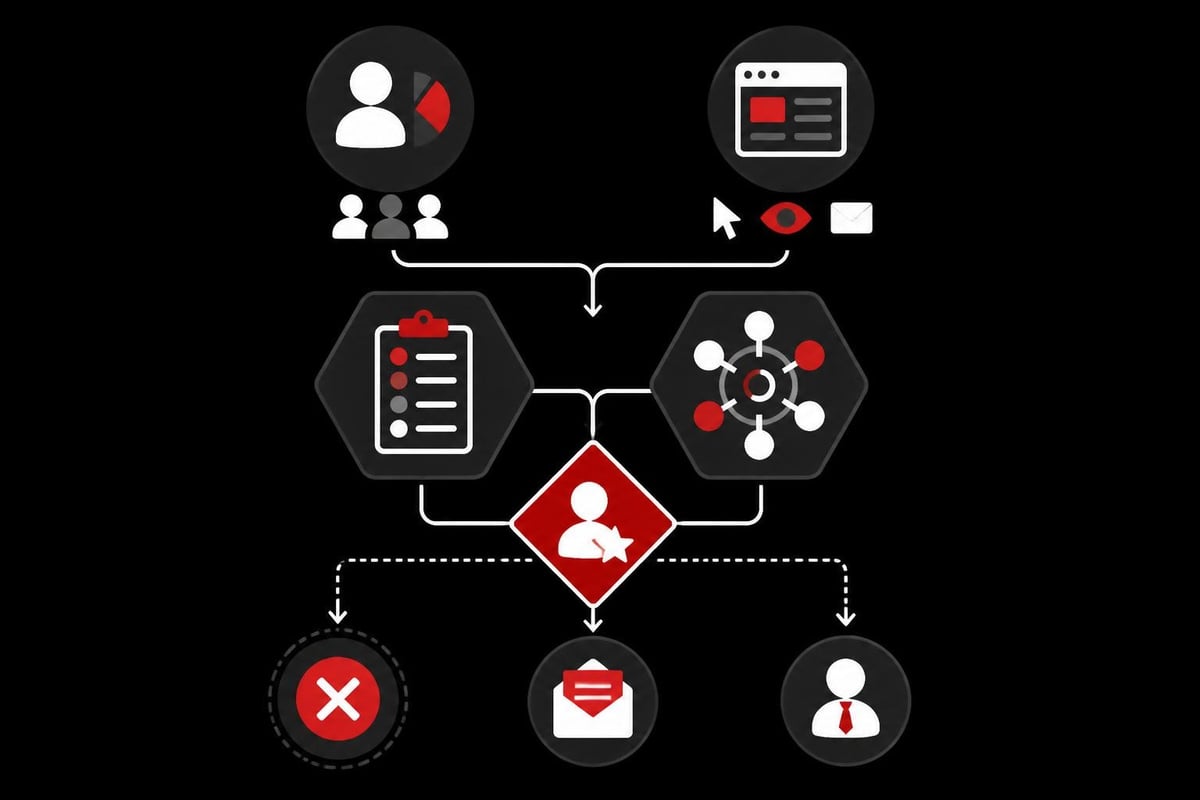
Modern lead scoring combines demographic data (company size, industry, role) with behavioral signals (pages viewed, emails opened, resources downloaded) to create a composite score indicating purchase readiness. The system should automatically assign points for positive indicators and subtract points for disqualifying factors.
| Scoring Category | Positive Indicators | Point Value | Negative Indicators | Point Deduction |
|---|---|---|---|---|
| Company Fit | Target industry match | +15 | Outside service area | -30 |
| Budget Authority | C-level title | +20 | Student/personal email | -25 |
| Engagement | Pricing page visit | +25 | Only blog visits | 0 |
| Timing Signals | Demo request | +50 | Unsubscribe click | -100 |
This seven-step lead qualification process provides a detailed framework for building scoring models that align with your specific sales criteria. The goal is creating clear thresholds where leads automatically route to sales versus remaining in nurturing sequences.
Qualification Frameworks: BANT, MEDDIC, and Modern Alternatives
Traditional qualification frameworks still provide valuable structure. BANT (Budget, Authority, Need, Timeline) helps verify prospects can actually purchase. MEDDIC (Metrics, Economic Buyer, Decision Criteria, Decision Process, Identify Pain, Champion) goes deeper for complex enterprise sales.
In 2026, forward-thinking businesses also consider:
- Intent signals from buyer behavior across multiple touchpoints
- Engagement velocity showing how quickly prospects are moving through research stages
- Technology stack compatibility revealing how easily your solution integrates with their existing systems
- Historical patterns from similar customers who successfully converted
The lead qualification checklist for 2026 offers updated criteria reflecting how AI and automation have changed buyer journeys. Your qualification system should continuously refine based on which indicators most accurately predict closed deals.
Nurture Sequences That Build Trust and Accelerate Decisions
Most prospects aren't ready to buy the moment they enter your system. Strategic nurture sequences educate, address objections, demonstrate value, and maintain engagement until timing aligns with budget cycles and internal priorities.
Mapping Content to the Buyer Journey
Different stages require different messaging. Awareness-stage prospects need educational content explaining problems and potential solutions. Consideration-stage leads want detailed comparisons and proof points. Decision-stage opportunities require case studies, pricing information, and risk-mitigation resources.
Your nurture system should deliver the right content at the right time based on:
- Lifecycle stage (subscriber, marketing qualified lead, sales qualified lead)
- Engagement patterns (active researcher vs. passive observer)
- Expressed interests (specific features, use cases, or industries they've indicated)
- Time in system (recent lead vs. long-term prospect)
Building these funnel systems in marketing requires mapping every touchpoint from awareness through purchase and retention. The most effective systems deliver value in every communication rather than just pushing for meetings.
Automation That Feels Personal
Modern marketing automation platforms enable sophisticated personalization without manual effort. Dynamic content blocks change email text based on industry, company size, or previous behaviors. Smart sending times optimize delivery for when each prospect typically engages. Progressive profiling gradually collects information across multiple interactions rather than demanding lengthy forms upfront.
Key automation workflows include:
- Welcome series introducing new subscribers to your value proposition and best resources
- Re-engagement campaigns reviving cold leads who stopped interacting
- Event-triggered sequences responding to specific actions like pricing page visits or competitor comparison downloads
- Cross-sell nurtures educating existing customers about complementary offerings
The difference between generic drip campaigns and effective nurture systems lies in relevance. Every message should move prospects closer to purchase by addressing their specific situation and stage.
The Sales Handoff: Where Marketing Systems Meet Revenue
Even the most sophisticated lead generation system fails if qualified prospects don't convert to customers. The transition from marketing to sales represents the most critical moment in your entire process.
Defining When Leads Are Sales-Ready
Clear service-level agreements (SLAs) between marketing and sales prevent finger-pointing and lost opportunities. Your system should automatically route leads to sales when they reach predetermined qualification thresholds, but both teams must agree on what constitutes a "qualified" lead.
Marketing qualified leads (MQLs) have shown sufficient engagement and fit to warrant sales attention. Sales qualified leads (SQLs) have been verified by a sales rep as having genuine purchase intent, budget, and timeline. Understanding lead management in sales clarifies how capture, scoring, routing, and tracking create a complete system.
| Lead Stage | Definition | Required Actions | Ownership |
|---|---|---|---|
| Subscriber | Opted into communications | Nurture sequences | Marketing |
| MQL | Met scoring threshold | Sales outreach within 5 minutes | Sales |
| SQL | Confirmed budget/timeline | Discovery meeting scheduled | Sales |
| Opportunity | Active deal in pipeline | Proposal/demo delivered | Sales |
Technology Stack Integration That Eliminates Friction
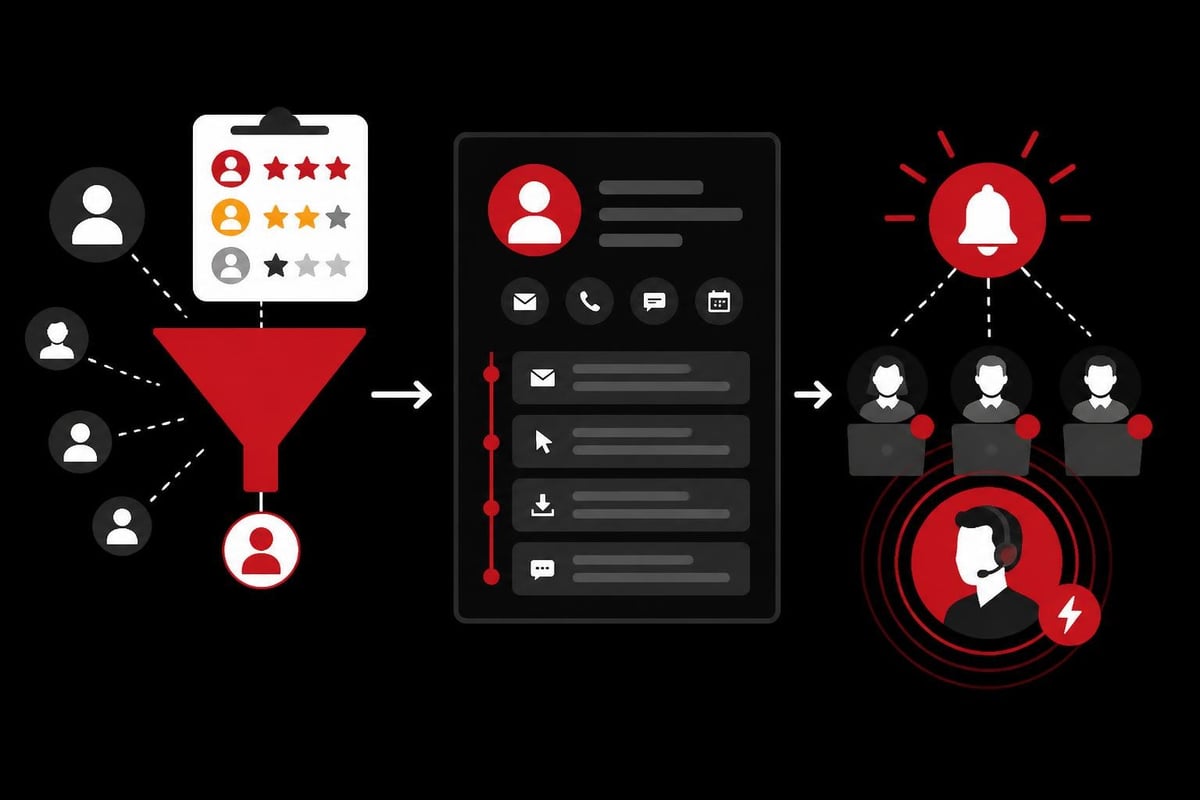
Your lead generation system requires seamless data flow between marketing automation, CRM, communication tools, and analytics platforms. When sales reps receive a hot lead, they should instantly access complete context: every page visited, email opened, form submitted, and campaign touched.
Modern stacks typically include:
- Marketing automation platform (HubSpot, Marketo, Pardot)
- CRM system (Salesforce, HubSpot CRM, Pipedrive)
- Conversation intelligence tools capturing call insights
- Analytics platforms tracking attribution and ROI
- Appointment scheduling automation reducing back-and-forth
The introduction to modern lead generation frameworks emphasizes system integration as essential infrastructure. Without it, valuable insights get trapped in isolated platforms where they can't inform decisions.
Measuring What Actually Matters: System Performance Metrics
You can't optimize what you don't measure. Comprehensive analytics separate high-performing systems from those that waste budget on vanity metrics. In 2026, as AI search transforms B2B marketing accountability, attribution and measurement become even more critical.
Leading Indicators That Predict Revenue
While closed deals represent the ultimate success metric, tracking leading indicators enables proactive optimization. Monitor these metrics weekly:
- Cost per qualified lead showing acquisition efficiency
- Lead-to-SQL conversion rate revealing qualification accuracy
- SQL-to-customer conversion rate indicating sales effectiveness
- Average days to close highlighting process bottlenecks
- Customer acquisition cost combining marketing and sales expenses
Compare performance across channels to identify where to increase investment versus where to cut spending. The goal isn't maximizing total leads, but maximizing revenue per dollar invested in your system.
Attribution Models That Reveal True ROI
Single-touch attribution (first or last touch) oversimplifies the complex journeys modern buyers take. Multi-touch attribution models credit every touchpoint that influenced the final purchase decision. This reveals which channels and tactics assist conversions even when they don't directly close deals.
Attribution approaches to consider:
- Linear attribution distributing equal credit across all touchpoints
- Time-decay attribution giving more credit to recent interactions
- Position-based attribution emphasizing first touch and last touch
- Custom attribution weighting based on your specific sales cycle patterns
Implementing proper attribution requires integrating data from all marketing and sales platforms into a unified analytics system. This investment pays dividends by illuminating which system components drive actual revenue growth versus just activity.
AI and Automation: The 2026 Competitive Advantage
Artificial intelligence has transformed lead generation from labor-intensive manual work to scalable automated systems. AI-powered tools now handle tasks that previously required entire teams, from identifying ideal prospects to personalizing outreach at scale.
Predictive Lead Scoring and Behavioral Analysis
Machine learning algorithms analyze thousands of historical leads to identify patterns invisible to human observers. These systems predict conversion likelihood with 85-90% accuracy by recognizing subtle combinations of factors that correlate with purchase decisions.
Advanced AI applications include:
- Conversation intelligence analyzing sales calls to identify winning messaging and objection-handling tactics
- Content optimization testing subject lines, CTAs, and page elements to maximize conversion rates
- Channel recommendation engines suggesting optimal budget allocation based on performance patterns
- Churn prediction identifying at-risk customers before they leave
Companies leveraging AI in digital advertising report 40-60% improvements in cost per acquisition compared to manual campaign management. The technology continues advancing rapidly, making early adoption a significant competitive advantage.
Automated Outreach That Maintains Human Connection
While automation handles repetitive tasks, the best systems preserve genuine human interaction at key moments. AI personalizes emails based on prospect data, but experienced sales professionals handle discovery calls and negotiations where relationship-building matters most.
Effective automation strategies include:
- Using chatbots for initial qualification and information gathering, then routing qualified prospects to human reps
- Automating meeting scheduling and reminder sequences to reduce administrative burden
- Personalizing video messages at scale using AI avatars for the introduction, with real follow-up from actual team members
- Deploying AI writing assistants that draft personalized outreach based on prospect research
The goal is creating systems that feel personal and relevant despite operating automatically. When prospects receive timely, helpful communication addressing their specific needs, they rarely notice or care whether the initial touchpoint was automated.
Building vs. Buying: System Implementation Strategies
Every business faces the decision: build your lead generation system internally or partner with specialists who've already solved these challenges. Both approaches have merits, and the right choice depends on your resources, timeline, and core competencies.
When In-House Systems Make Sense
Building internally works best when you have:
- Dedicated marketing and sales operations talent with experience implementing and managing complex technology stacks
- Sufficient budget for software licenses, integrations, and ongoing optimization (typically $5,000-15,000 monthly minimum)
- Time to experiment and refine before expecting consistent results (6-12 months for mature systems)
- Unique requirements not addressed by standard approaches
Even when building internally, most businesses benefit from consulting expertise during initial setup. The best marketing platforms and tools provide powerful capabilities, but configuring them optimally requires specialized knowledge.
The Partnership Advantage
Working with qualified lead generation specialists accelerates time-to-value and reduces risk. Experienced partners bring proven frameworks, established technology relationships, and pattern recognition from implementing systems across dozens or hundreds of clients.
Partnership benefits include:
- Immediate access to mature systems without building from scratch
- Ongoing optimization based on cross-client performance data
- Guaranteed results models aligning incentives (you only pay for actual outcomes)
- Scalability to handle growth without hiring additional internal staff
The key is selecting partners who treat your success as their success. Traditional agencies charging retainers regardless of results create misaligned incentives. Modern performance partnerships, where compensation ties directly to leads generated or revenue delivered, ensure everyone wins together.
Common System Failures and How to Avoid Them
Even well-intentioned lead generation systems fail when critical elements get overlooked. Understanding these pitfalls helps you build resilient infrastructure that delivers consistent results.
Misalignment Between Marketing and Sales
When marketing optimizes for lead volume while sales cares about lead quality, the system breaks down. Marketing celebrates hitting MQL targets while sales complains about wasted time on unqualified conversations. This disconnect destroys trust and results.
Solutions include:
- Joint target-setting where both teams agree on SQL and revenue goals
- Shared compensation models rewarding both departments for actual closed deals
- Regular feedback loops where sales communicates what makes leads valuable
- Unified reporting showing conversion rates from MQL through customer
Treating marketing and sales as integrated functions within one revenue team rather than separate departments eliminates most alignment issues.
Neglecting Post-Lead Activities
Some businesses obsess over lead generation while ignoring what happens after leads arrive. Without systematic follow-up, even perfect leads go cold. Sales teams must respond within minutes to hot inquiries, yet many companies take days to reach out.
Your system should include:
- Automated instant acknowledgment when prospects submit forms
- Real-time notifications to sales reps for high-priority leads
- Escalation protocols ensuring no lead falls through the cracks
- Nurture sequences maintaining engagement when prospects aren't ready for immediate sales conversation
Remember that generating the lead represents only 20% of the battle. The other 80% is converting that lead into a paying customer through persistent, valuable follow-up.
Insufficient Testing and Optimization
Launch your system, then continuously improve it. Too many businesses build lead generation infrastructure once and assume it'll perform forever without refinement. Markets change, buyer preferences evolve, and competitors adapt. Your system must too.
Establish regular optimization cycles:
- A/B test landing pages, form fields, and calls-to-action monthly
- Review channel performance quarterly and reallocate budget to top performers
- Analyze conversion bottlenecks and implement specific improvements
- Survey lost opportunities to understand why they chose competitors
Treating your lead generation system as a living organism requiring constant attention rather than a "set and forget" solution separates market leaders from the companies struggling to maintain growth.
Industry-Specific System Considerations
While core principles apply universally, effective lead generation systems adapt to industry nuances. B2B software sales require different approaches than professional services or e-commerce businesses.
B2B Complex Sales Environments
Longer sales cycles, multiple decision-makers, and higher deal values characterize B2B lead generation. Your system must nurture prospects over months while maintaining engagement across buying committees. Account-based marketing tactics that coordinate campaigns across all stakeholders within target companies often outperform individual lead approaches.
Understanding B2B lead generation strategies specific to enterprise sales helps you build systems matching these complex buyer journeys.
Service-Based Businesses
Professional services firms, agencies, and consultancies face unique challenges. Prospects evaluate not just capabilities but cultural fit and personal chemistry. Your system should incorporate relationship-building elements like thought leadership content, case studies demonstrating similar client successes, and opportunities for low-risk initial engagement.
Transaction-Based Businesses
E-commerce and transactional businesses optimize for immediate conversion rather than lengthy nurture cycles. Systems should emphasize retargeting, abandoned cart recovery, and promotional sequences driving urgency. The focus shifts from appointment setting to removing friction from the purchase process.
Regardless of industry, the fundamental system components remain consistent. The key is configuring timing, messaging, and qualification criteria to match your specific buyer behavior patterns.
Building a lead generation system that consistently delivers qualified prospects ready to buy transforms business predictability and growth potential. The difference between hoping for leads and systematically generating them on demand determines whether you control your revenue or it controls you. Aletto specializes in designing and implementing AI-powered lead generation systems that guarantee results, turning cold prospects into ready-to-buy customers through proven frameworks and transparent partnerships. If you're ready to move beyond random tactics and build a revenue engine that scales, partner with a team that invests in your success as much as you do.