

In today's hyper-competitive business landscape, company leads represent the lifeblood of sustainable growth. Every organization, from nimble startups to established enterprises, faces the same fundamental challenge: identifying, attracting, and converting prospects into paying customers. Yet the methods that worked even two years ago have become increasingly obsolete. The old playbook of cold calling, generic email blasts, and spray-and-pray advertising no longer delivers the results your business demands. Instead, modern businesses need sophisticated, AI-powered approaches that generate qualified leads at scale while maintaining the personal touch that drives conversions.
The Evolution of Lead Generation in 2026
The landscape of company leads has undergone a radical transformation. According to research from The CMO Survey, marketing technology spending continues to accelerate, with companies investing heavily in systems that automate lead identification and qualification.
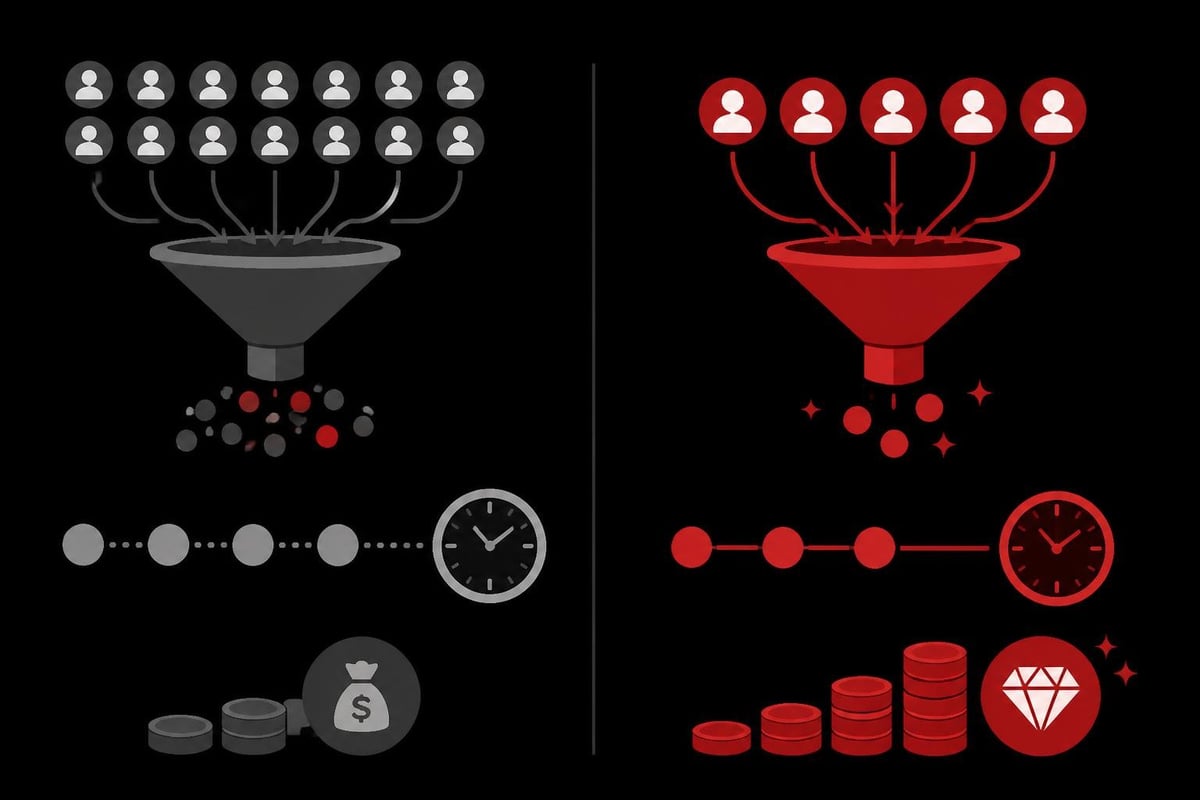
This shift reflects a fundamental truth: manual lead generation simply cannot compete with intelligent automation. Businesses that cling to outdated methods find themselves buried under mountains of unqualified contacts while their competitors leverage AI to identify high-intent prospects with surgical precision.
Why Traditional Lead Generation Fails
Traditional approaches to generating company leads suffer from three critical flaws:
- Volume over quality: Mass outreach campaigns generate thousands of contacts, but most lack genuine buying intent
- Manual qualification bottlenecks: Sales teams waste countless hours sorting through unqualified prospects
- Inconsistent follow-up: Human-dependent processes create gaps where promising leads fall through the cracks
- Poor data hygiene: Outdated contact information and incomplete profiles undermine targeting accuracy
These limitations don't just waste resources; they create opportunity costs that compound over time. Every hour your sales team spends chasing dead-end leads is an hour they're not closing deals with ready-to-buy prospects.
Building a High-Performance Lead System
Successful company leads generation starts with systematic thinking. Harvard Business Review research emphasizes that companies achieving exceptional growth place marketing at the strategic center of their operations, not as a support function.
This organizational alignment enables businesses to build integrated systems where every touchpoint feeds intelligence back into the lead generation engine. The result? Continuously improving targeting, messaging, and conversion rates.
The Four Pillars of Modern Lead Generation
| Pillar | Function | Business Impact |
|---|---|---|
| AI-Powered Targeting | Identifies ideal customer profiles using behavioral and firmographic signals | 3-5x improvement in lead quality scores |
| Automated Qualification | Scores and segments leads based on engagement and intent | 60% reduction in sales time waste |
| Intelligent Nurturing | Delivers personalized content sequences based on prospect behavior | 2-3x increase in conversion rates |
| Predictive Analytics | Forecasts which leads will convert and when | 40% shorter sales cycles |
These pillars work together synergistically. AI targeting fills your pipeline with the right prospects, automated qualification ensures your team focuses on high-potential opportunities, intelligent nurturing moves prospects toward buying decisions, and predictive analytics tells you exactly when to strike.
Leveraging AI for Qualified Company Leads
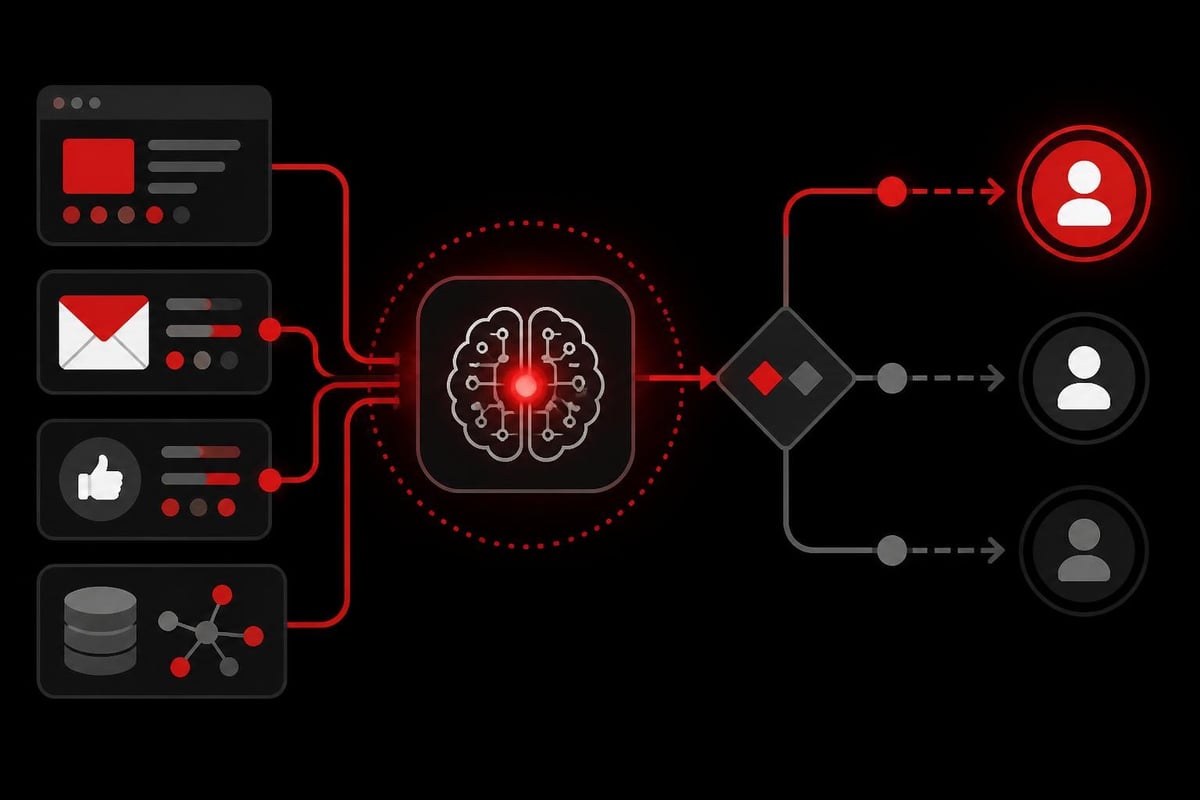
The integration of artificial intelligence into lead generation represents more than incremental improvement. It's a fundamental reimagining of how businesses identify and engage prospects. Modern AI systems analyze thousands of data points-from website behavior to social media engagement to third-party intent signals-to identify company leads demonstrating genuine buying interest.
For businesses exploring lead generation strategies, AI offers three transformative capabilities:
- Pattern recognition: AI identifies characteristics common to your best customers, then finds similar prospects at scale
- Behavioral analysis: Machine learning tracks how prospects interact with your content to gauge interest level
- Optimal timing: Predictive models determine the perfect moment to reach out based on engagement signals
These capabilities don't replace human judgment; they amplify it. Your sales team still closes deals, but they're working with prospects AI has identified as 95% matches for your ideal customer profile.
Real-Time Lead Scoring and Prioritization
Static lead scoring models that assign fixed points for job titles or company size can't compete with dynamic, AI-driven approaches. Modern systems continuously update lead scores based on real-time behavior:
- Website visits to pricing pages
- Downloads of product comparison guides
- Engagement with case studies
- Attendance at webinars or product demos
- Social media interactions with your brand
This real-time intelligence enables sales teams to strike while iron is hot, reaching out to prospects exactly when they're most receptive to conversations. Understanding how to acquire leads effectively means recognizing that timing often matters more than messaging.
Content-Driven Lead Attraction
While AI handles the mechanical aspects of lead generation, content remains the magnet that attracts company leads into your ecosystem. According to Forrester’s 2025 B2B content research, operational excellence in content creation and distribution pays significant dividends in lead engagement and conversion.
The most effective content strategies align with prospect journey stages:
Awareness Stage Content
- Educational blog posts addressing industry challenges
- Research reports and original data studies
- Thought leadership articles
- Social media content that sparks conversations
Consideration Stage Content
- Product comparison guides
- Case studies demonstrating ROI
- Webinars and video demonstrations
- Interactive tools and calculators
Decision Stage Content
- Free trials and product demos
- Implementation roadmaps
- Pricing transparency and package comparisons
- Customer testimonials and success stories
Each content piece serves dual purposes: providing genuine value while simultaneously qualifying prospects. Someone downloading your "Ultimate Guide to AI-Powered Sales" reveals both their interest in the topic and their willingness to exchange contact information for quality content.
Nurturing Company Leads Through the Funnel
Generating company leads represents only the beginning. Forrester research on long-term nurturing demonstrates that disciplined nurture programs significantly accelerate the journey from prospect to customer.
Effective nurturing requires three elements:
Segmentation
Not all leads enter your funnel at the same stage or with identical needs. Segmenting company leads by industry, company size, role, and engagement level enables personalized messaging that resonates.
For instance, C-suite executives require different content than mid-level managers. Enterprise prospects need different case studies than small businesses. Creating qualified leads means recognizing these distinctions and tailoring your approach accordingly.
Multi-Channel Engagement
Modern prospects consume information across multiple channels. An effective nurture strategy coordinates touchpoints:
- Email sequences delivering educational content
- Retargeting ads reinforcing key messages
- LinkedIn outreach from sales development reps
- Direct mail for high-value accounts
- Personalized video messages
This orchestrated approach keeps your brand top-of-mind without overwhelming prospects with a single-channel barrage.
Progressive Profiling
Each interaction should deepen your understanding of the prospect. Progressive profiling gradually builds comprehensive profiles by requesting different information at each touchpoint. Your first form might ask only for email and company name. Subsequent interactions gather role, company size, current challenges, and budget authority.
This approach reduces friction while building the intelligence needed to convert leads effectively.
Measuring and Optimizing Lead Performance
You cannot improve what you don't measure. Tracking the right metrics transforms company leads generation from a cost center into a predictable revenue engine.
Critical Lead Metrics
| Metric | What It Measures | Target Benchmark |
|---|---|---|
| Lead-to-Opportunity Rate | Percentage of leads qualifying for sales engagement | 15-25% |
| Cost Per Qualified Lead | Marketing spend divided by qualified leads generated | Industry-dependent |
| Lead Velocity Rate | Month-over-month growth in qualified leads | 10-15% monthly |
| Time to Conversion | Average days from first contact to closed deal | 30-90 days (varies by industry) |
| Lead Source ROI | Revenue generated per dollar spent on each channel | 5:1 minimum |
These metrics reveal which strategies generate the highest-quality company leads at the most efficient cost. Businesses exploring B2B leads generation should establish baseline measurements before implementing new strategies, enabling clear before-and-after comparisons.
Continuous Optimization Framework
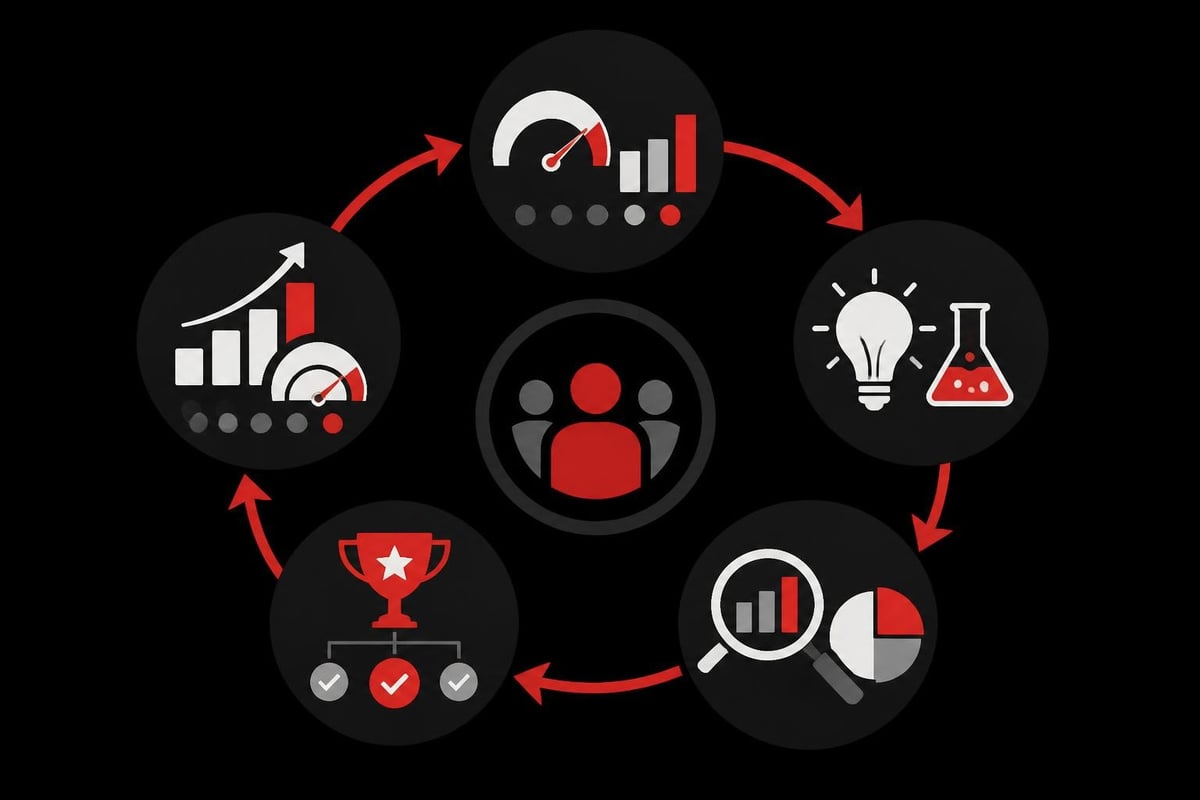
Top-performing organizations treat lead generation as an ongoing laboratory:
- Hypothesis formation: Identify specific areas for potential improvement
- Test design: Create controlled experiments isolating single variables
- Implementation: Run tests for statistically significant periods
- Analysis: Evaluate results against predetermined success criteria
- Iteration: Scale winning approaches and refine or eliminate underperformers
This scientific approach removes guesswork, replacing intuition with data-driven decisions. Working with experienced lead generation companies can accelerate this optimization process through proven testing frameworks.
Compliance and Trust in Lead Generation
As privacy regulations evolve, maintaining compliant lead generation practices protects both your business and your prospects. New consent record standards like ISO/IEC TS 27560:2023 establish machine-readable frameworks for capturing and auditing consent.
Building trust requires transparency:
- Clear value exchange when requesting contact information
- Explicit opt-in for communications
- Easy unsubscribe mechanisms
- Transparent data usage policies
- Secure storage and handling of prospect information
Prospects who trust your brand engage more deeply and convert at higher rates. Company leads generated through transparent, value-first approaches outperform those acquired through manipulative tactics.
Scaling Lead Generation Predictably
The ultimate goal isn't just generating more company leads-it's creating a scalable, predictable system that reliably delivers qualified prospects aligned with your sales capacity. Understanding demand generation principles helps build this systematic approach.
Scalability requires:
- Documented processes: Every step from targeting to handoff clearly defined
- Technology infrastructure: CRM, marketing automation, and AI tools properly integrated
- Team alignment: Marketing and sales operating from shared definitions and goals
- Continuous training: Team skills evolving alongside tools and strategies
- Budget flexibility: Resources allocated based on performance data
When these elements align, businesses can confidently increase lead generation investment knowing each dollar will produce predictable returns. This transforms marketing from an expense into a strategic growth driver.
The Partnership Model for Lead Success
Traditional agency relationships often misalign incentives. Agencies profit from activity regardless of results, while businesses care only about outcomes. This fundamental disconnect explains why so many lead generation initiatives disappoint.
The partnership model flips this dynamic. When agencies invest in client success and tie compensation to results, everything changes. Both parties focus obsessively on the metrics that matter: qualified company leads, conversion rates, and revenue growth.
This alignment eliminates the classic agency-client tensions. No more debates about vanity metrics or activity reports. Just shared focus on generating the business outcomes that drive growth.
For organizations evaluating potential partners, look for these commitment signals:
- Performance-based pricing models
- Shared investment in technology and systems
- Long-term partnership orientation versus project-based engagements
- Transparency in reporting and methodology
- Proven track record with similar businesses
The right partnership transforms company leads generation from a persistent challenge into a competitive advantage.
Generating high-quality company leads in 2026 demands sophisticated systems that blend AI-powered intelligence with human insight and proven marketing principles. Success requires moving beyond outdated tactics toward integrated approaches that attract, qualify, and convert prospects at scale. Aletto specializes in building these exact systems, leveraging advanced AI to generate qualified sales leads and automate appointment bookings while aligning our success directly with yours. If you're ready to transform your lead generation from a cost center into a predictable revenue engine, let's start a conversation about your growth goals.