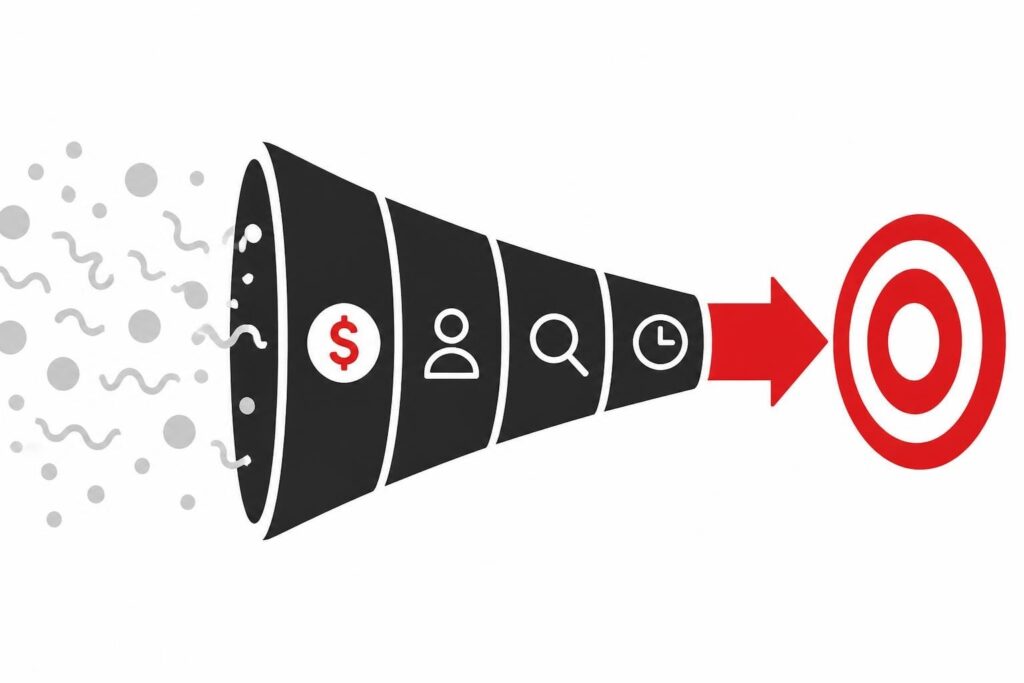
Qualified sales leads are prospects who meet your ideal customer profile and have demonstrated intent to purchase through specific behaviors and criteria verification. In 2026, identifying truly qualified leads means combining traditional BANT (Budget, Authority, Need, Timeline) frameworks with behavioral signals, intent data, and AI-powered scoring to separate serious buyers from tire-kickers.
The gap between generating leads and closing deals has never been wider. Most B2B teams drown in unqualified contacts while missing genuine opportunities buried in their CRM. The difference between a contact and a qualified sales lead determines whether your sales team spends time on productive conversations or wastes hours chasing dead ends.
What Makes a Sales Lead Qualified?
A qualified sales lead has passed through specific verification checkpoints that indicate genuine purchase potential and fit with your solution. The distinction matters because not all leads deserve equal attention from your sales team.
HubSpot’s sales lead framework breaks qualification into marketing-qualified leads (MQLs) and sales-qualified leads (SQLs), but 2026 best practices demand more nuance. Traditional lead qualification relied on demographic data and single interactions. Modern qualification combines firmographic fit, behavioral engagement, and validated need.
The Core Qualification Criteria
Budget verification confirms the prospect can afford your solution. This doesn't mean asking "What's your budget?" in discovery. It means understanding company revenue, funding stage, and whether they currently pay for similar solutions.
Authority assessment identifies decision-makers and influencers. In complex B2B sales, qualified sales leads often include buying committees, not just individual contacts. You need access to economic buyers, technical evaluators, and executive sponsors.
Need validation proves the prospect has a problem your solution solves. Generic interest doesn't qualify a lead. Specific pain points, current workarounds, and quantified business impact separate qualified opportunities from educational conversations.
Timeline evaluation establishes purchase urgency. Leads exploring solutions "someday" aren't qualified for sales engagement today. Qualified sales leads have compelling events: contract renewals, product launches, regulatory deadlines, or operational crises forcing change.
How Do You Identify Qualified Sales Leads?
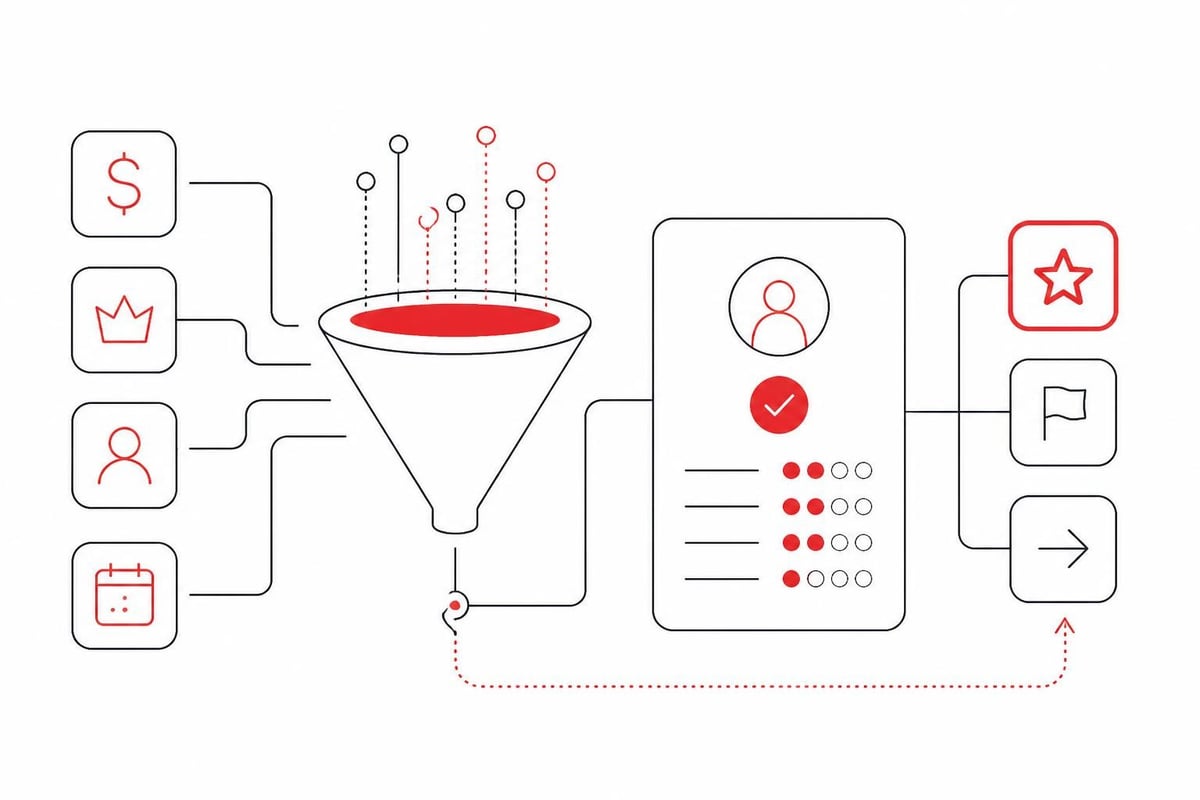
Identification starts with defining your ideal customer profile (ICP) based on company size, industry, technology stack, and growth stage. Qualified sales leads match this profile before behavioral scoring begins.
Behavioral signals reveal intent. Prospects who view pricing pages, download ROI calculators, attend product demos, or engage with bottom-funnel content demonstrate higher qualification than those reading awareness-stage blog posts. Forrester’s research on interest scoring provides frameworks for weighting these interactions.
Lead Scoring Models That Work
Effective scoring assigns point values to demographic attributes and engagement behaviors. A enterprise contact (50 points) who attended a webinar (30 points) and requested a demo (70 points) scores 150 points. Your threshold for "qualified" depends on conversion data analysis.
Negative scoring matters equally. Competitors, students, personal email addresses, and wrong company sizes receive negative points. This prevents unqualified contacts from consuming sales capacity.
| Scoring Factor | Point Value | Qualification Impact |
|---|---|---|
| Director+ title | +40 | Decision authority |
| Pricing page view | +50 | Purchase intent |
| Demo request | +80 | Active evaluation |
| Personal email | -50 | Disqualifies entirely |
| Competitor domain | -100 | Remove from pipeline |
Predictive scoring uses machine learning to identify patterns in converted customers. Academic research demonstrates that AI models outperform manual scoring by 30-40% when trained on sufficient historical data. The model identifies non-obvious correlations between lead attributes and closure rates.
Real-World Application Example
Consider a B2B SaaS company selling project management software at $15,000 annually. An unqualified lead is a freelance designer who downloaded a template. A qualified sales lead is a VP of Operations at a 200-person agency who viewed pricing, compared your product to competitors on G2, attended a webinar, and works at a company currently using a legacy solution that's being sunsetted.
The difference is obvious in isolation but harder to detect at scale across thousands of monthly contacts. That's why systematic qualification matters.
What's the Difference Between MQLs and SQLs?
Marketing-qualified leads meet demographic criteria and show engagement indicating interest. Sales-qualified leads have been vetted by sales development representatives and confirm budget, authority, need, and timeline.
The handoff from marketing to sales happens when behavioral scoring indicates readiness, but true qualification requires human verification. An MQL might score 100 points through content downloads. An SQL has confirmed they're evaluating solutions this quarter with allocated budget.
The gap between MQL and SQL causes most sales and marketing alignment problems. Marketing celebrates lead volume while sales complains about quality. Defining explicit MQL-to-SQL criteria eliminates this friction.
Qualification Stage Progression
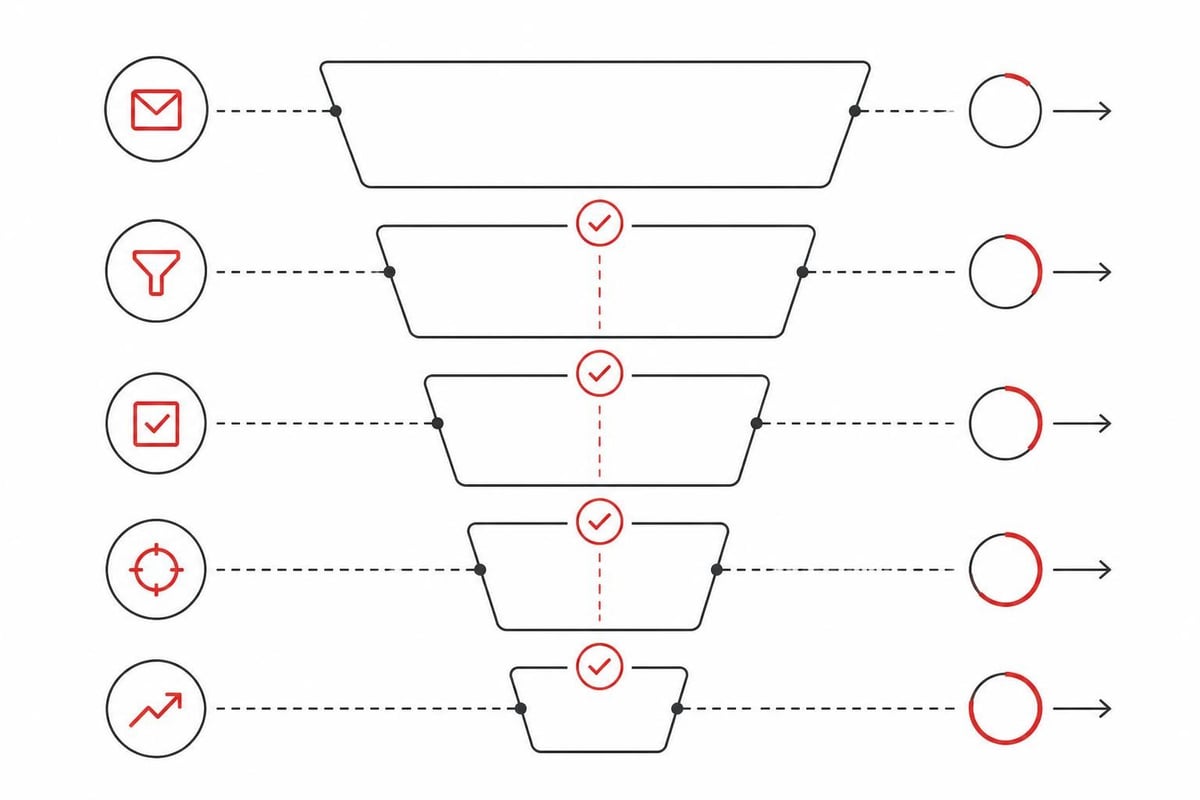
- Inquiry: Contact submitted form, unknown qualification
- MQL: Matches ICP, shows engagement, meets score threshold
- SAL (Sales-Accepted Lead): Sales agrees lead warrants follow-up
- SQL: Discovery call confirms BANT, ready for demo/proposal
- Opportunity: SQL advances to formal sales process with deal value
Not every contact progresses linearly. Some enterprise buyers skip MQL stages and directly request proposals. Others recycle between stages as circumstances change. Salesforce’s qualification framework provides operational guidance for tracking these transitions in your CRM.
Why Do Most Teams Struggle with Lead Qualification?
The primary failure mode is inconsistent application of qualification criteria. Sales reps cherry-pick attractive leads while avoiding systematic verification. Marketing inflates MQL counts with low-quality contacts to hit volume targets.
Misaligned incentives create qualification theater. When marketing is measured on MQL volume and sales on closed revenue, neither owns the quality of qualified sales leads. The gap between departments becomes a blame game rather than a process problem to solve.
Common Qualification Mistakes
Subjective gut-feel qualification produces inconsistent results. One rep disqualifies a prospect as "not ready" while another closes similar deals in weeks. Without documented criteria and scoring, qualification becomes personal opinion.
Over-qualification paralyzes pipeline development. Teams that demand perfect fit, confirmed budget, and signed proposals before calling something qualified miss opportunities. Buyers don't reveal everything in first conversations. Qualification is progressive verification, not a binary checklist.
Forrester identifies intent data mistakes including over-reliance on third-party signals without first-party validation. A contact researching your category doesn't mean they're qualified for your specific product. Intent indicates direction, not destination.
Under-qualification wastes sales capacity more than over-qualification. When unvetted leads flood sales calendars, reps spend hours on discovery calls that should have been disqualified through basic research. A 15-minute LinkedIn review prevents a 45-minute wasted demo.
Privacy and Compliance Constraints
GDPR and CCPA complicate lead qualification by restricting data collection and usage. You can't score or qualify contacts based on information obtained without proper consent. Privacy compliance requirements force legitimate interest assessments for automated qualification processes.
Responsible qualification requires transparency about data usage, opt-in consent for tracking, and documented legitimate business purposes for scoring. The days of scraping LinkedIn and silently tracking every website visitor without disclosure are ending.
How Should Modern Teams Generate Qualified Sales Leads?
Traditional outbound approaches-cold calls, cold emails, LinkedIn spam-generate contacts but rarely produce truly qualified sales leads. Response rates below 2% mean massive volume is required to find qualified opportunities. This approach doesn't scale for most B2B teams.
Inbound methodology attracts pre-qualified prospects. Content marketing, SEO, and thought leadership bring contacts who already recognize they have problems and are researching solutions. These leads self-qualify through their research behavior before ever contacting you.
Paid acquisition targets specific accounts and personas with relevant offers. Unlike spray-and-pray advertising, account-based approaches focus budget on companies matching your ICP. The leads generated have higher baseline qualification because targeting excluded poor fits.
For teams focused on B2B SaaS lead generation, combining paid traffic with AI-powered follow-up and automated qualification creates systematic qualified sales leads generation. This integrated approach eliminates the traditional bottleneck where marketing generates volume but sales can't process it effectively.
The Integrated Qualification System
Modern qualified sales leads generation requires four connected components: targeted acquisition, behavioral tracking, automated scoring, and intelligent routing.
Targeted acquisition brings the right contacts into your ecosystem. This includes paid search for high-intent keywords, targeted social advertising to decision-makers, content syndication in industry publications, and partnership referrals from complementary vendors.
Behavioral tracking monitors every interaction across channels. Website visits, email engagement, content downloads, webinar attendance, and product trial usage all feed qualification scores. Modern marketing automation platforms centralize this data for analysis.
Automated scoring applies your qualification model in real-time. When a contact crosses your SQL threshold, they trigger workflows for immediate sales outreach. Speed-to-lead matters: contacts reached within five minutes are 21x more likely to convert than those contacted after 30 minutes.
Intelligent routing assigns qualified sales leads to the right reps based on territory, industry expertise, company size, or product specialization. Round-robin assignment wastes qualification by matching leads randomly rather than optimizing for conversion probability.
Aletto's approach integrates these components into a single system that fills sales calendars without manual lead qualification. By combining paid acquisition targeting your ICP with AI-powered follow-up that verifies qualification criteria and automated booking when leads meet SQL thresholds, B2B teams generate consistent qualified opportunities. This eliminates the feast-or-famine cycle where pipeline depends on individual rep effort.
What Metrics Indicate Healthy Lead Qualification?
MQL-to-SQL conversion rate reveals qualification accuracy. Industry benchmarks range from 10-30% depending on ICP specificity and scoring rigor. Below 10% indicates over-generous MQL definitions or poor targeting. Above 30% might mean under-qualification that's missing opportunities.
SQL-to-opportunity conversion shows whether sales agrees with qualification assessments. This should exceed 50% because sales development has already verified BANT before passing to account executives. Low conversion means sales and marketing define "qualified" differently.
Average time-to-qualify measures process efficiency. How long from first touch to SQL designation? Faster qualification accelerates pipeline velocity. Measuring this by channel reveals which sources produce ready-to-buy leads versus long-nurture prospects.
| Metric | Healthy Range | What It Reveals |
|---|---|---|
| MQL-to-SQL conversion | 15-25% | Scoring accuracy |
| SQL-to-opportunity | 50-70% | Sales alignment |
| Average days to SQL | 14-45 | Process efficiency |
| SQL-to-close rate | 20-35% | Quality of qualification |
| Cost per SQL | Varies by ACV | Acquisition efficiency |
Cost per qualified sales lead matters more than cost per contact. Paying $500 per SQL that closes at 25% is more profitable than $50 MQLs that convert at 2%. Total cost divided by SQL volume reveals true acquisition efficiency.
Velocity metrics track how quickly qualified sales leads move through your pipeline. Stalled opportunities indicate qualification problems: leads advanced prematurely before need was urgent or budget confirmed.
How Does AI Change Lead Qualification?
Artificial intelligence processes signals humans miss and operates at scale impossible manually. Machine learning models identify patterns correlating with conversion that defy simple if-then rules.
Predictive scoring trained on historical data outperforms manual models. AI identifies that prospects who view your pricing page on mobile after 8 PM and work in companies with 50-200 employees convert 3x higher than average-a correlation you'd never code manually.
Natural language processing analyzes form submissions, chat conversations, and email replies to extract intent signals. When a prospect writes "We're currently evaluating project management solutions for Q1 implementation," AI flags urgency and timeline automatically.
Behavioral clustering groups similar prospects and applies qualification learnings across segments. If enterprise healthcare buyers typically take 90 days to close but manufacturing buyers close in 45, AI adjusts qualification criteria and timing by industry.
Limitations and Risks
AI qualification requires clean training data. Models learn from historical patterns, so if past qualification was biased or inconsistent, AI perpetuates those errors. Garbage in, garbage out applies to lead scoring.
Over-automation loses human judgment. Not everything reduces to numbers. A strategic partnership opportunity or unusual use case might score low but represent significant value. The best systems combine AI efficiency with human override.
Transparency matters for both internal adoption and regulatory compliance. Sales teams need to understand why leads are qualified or disqualified. Black-box AI scoring creates distrust when reps can't explain recommendations to prospects or managers.
Frequently Asked Questions
What's the difference between a lead and a qualified sales lead?
A lead is any contact who has shown interest in your company through form submission, content download, or engagement. A qualified sales lead has been verified against specific criteria (budget, authority, need, timeline) and is ready for sales engagement. The qualification process separates tire-kickers from genuine prospects worth sales team time and resources.
How many touches does it take to qualify a B2B lead?
Most B2B qualified sales leads require 8-12 meaningful touches across multiple channels before qualification. These include email nurture sequences, content engagement, webinar attendance, sales outreach, and direct conversations. The number varies by deal complexity, average contract value, and buying committee size. Enterprise deals require more touches than SMB sales.
Should marketing or sales own lead qualification?
Both teams share qualification responsibility at different stages. Marketing qualifies leads to MQL status using demographic fit and behavioral scoring. Sales development qualifies MQLs to SQL status through direct conversation verifying BANT criteria. Clear handoff definitions and shared SLAs prevent qualification gaps. Neither team can succeed alone in generating qualified sales leads.
What qualification criteria matter most in 2026?
Budget and timeline verification matter most because they indicate immediate opportunity. Many prospects have authority and need but lack allocated budget or urgency. Modern qualification also weighs intent signals from first-party data (website behavior, email engagement) more heavily than third-party intent data due to accuracy and privacy concerns. Behavioral demonstration of active evaluation trumps demographic fit alone.
How do you maintain lead quality while scaling volume?
Implement systematic scoring models that automatically filter low-quality contacts before human review. Use negative scoring to disqualify poor fits immediately. Establish minimum qualification thresholds that balance volume and quality based on sales capacity. Regularly analyze SQL-to-close rates by source and adjust targeting to improve quality. Consider that generating qualified sales leads through targeted channels outperforms filtering massive unqualified volume.
Generating qualified sales leads requires systematic identification, verification, and routing rather than hoping sales reps can sort quality from volume manually. The teams winning in 2026 combine targeted acquisition with AI-powered qualification and automated processes that deliver ready-to-buy prospects to sales calendars. If your pipeline is full of unqualified contacts while sales complains about lack of opportunities, it's time to fix qualification at the system level. Aletto specializes in filling B2B sales calendars with qualified opportunities through integrated paid acquisition, AI follow-up, and automated booking-eliminating the qualification bottleneck entirely.