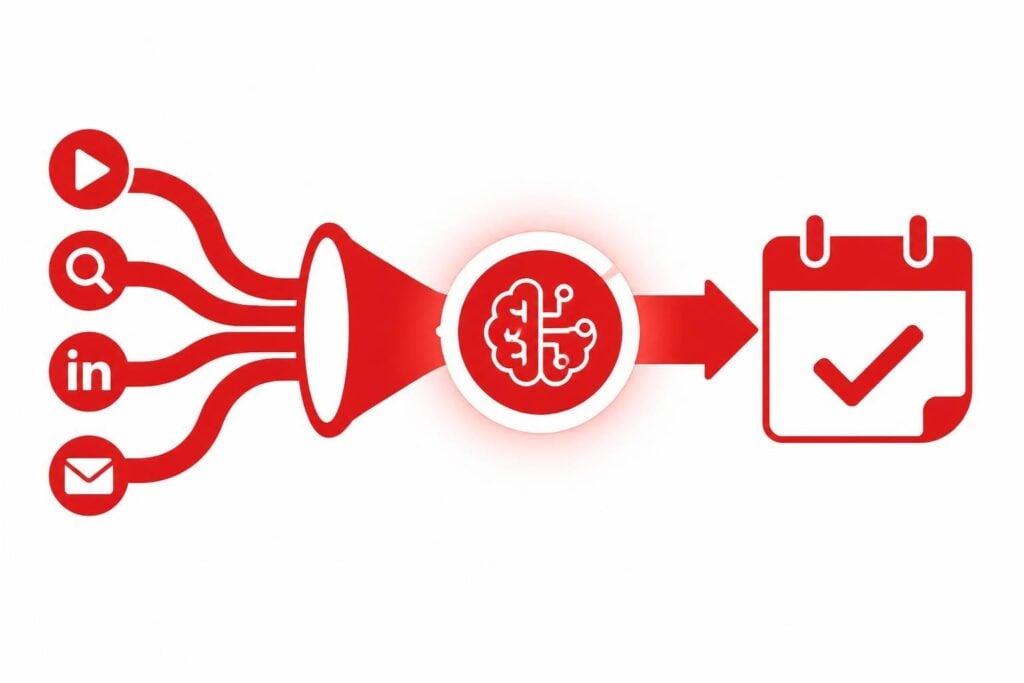
SaaS lead gen is the process of attracting and converting potential software buyers into qualified sales opportunities through paid advertising, content marketing, and automation. In 2026, effective SaaS lead generation means integrating paid acquisition with AI-powered follow-up and automated booking systems to fill sales calendars without manual outreach or expensive events. The traditional playbook of cold emails, LinkedIn spam, and trade show booths has flatlined for most B2B SaaS teams.
The reality is harsh: most SaaS companies are burning cash on tactics that stopped working in 2023. They're hiring SDR teams that can't hit quota, running ads that generate tire-kickers, and attending conferences that produce business cards instead of pipeline. The post-pandemic buyer has changed. They research independently, ignore cold outreach, and only engage when they're ready on their timeline. Your saas lead gen system needs to meet them there.
What Makes SaaS Lead Gen Different From Other B2B Lead Generation?
SaaS lead generation operates in a fundamentally different environment than traditional B2B sales because software buyers evaluate products through free trials, demos, and self-service research rather than responding to sales pressure. The buying cycle is compressed, the switching costs are lower, and the evaluation criteria are more technical.
Your prospects are comparing you to three other tools right now in open browser tabs. They've already read your competitor's comparison pages, checked G2 reviews, and asked their network on Slack. By the time they talk to sales, they're 70% through their decision process.
This creates three non-negotiable requirements for saas lead gen in 2026:
- Speed to contact: Responding in 5 minutes instead of 5 hours increases conversion by 391%, and in SaaS, that window is even tighter because prospects are actively evaluating alternatives
- Product-qualified signals: Not all form fills are equal; someone who started a trial, hit a paywall, or invited teammates is fundamentally different from someone who downloaded a generic ebook
- Technical credibility: Your follow-up needs to answer real implementation questions, not pitch features, because SaaS buyers are evaluating technical fit and integration complexity
The traditional lead generation strategy focused on volume and MQL counts doesn't map to how software is actually bought. A director evaluating project management software doesn't care about your 47-page buyer's guide. They want to see if your tool integrates with Slack, supports their team size, and can replace the spreadsheet chaos by next quarter.
The Attribution Problem in SaaS Lead Gen
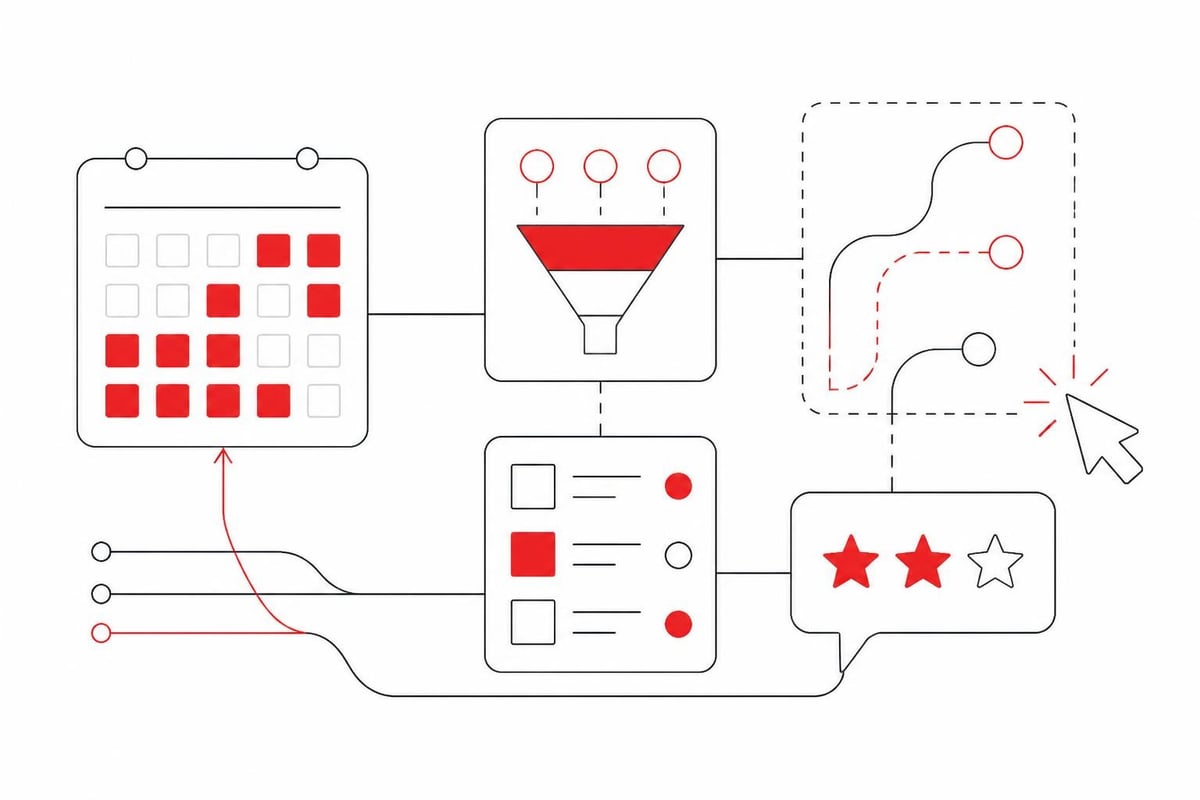
Here's what nobody tells you: most SaaS attribution models are fiction. A prospect sees your LinkedIn ad, Googles your brand three days later, watches a YouTube review, clicks a retargeting ad, then signs up for a trial. Your analytics platform credits "organic search" as the source. You defund LinkedIn ads. Pipeline drops 40% the next quarter.
Aletto tracks genuine source attribution by tagging every touchpoint and conversation, revealing that 72% of "organic" SaaS signups had prior paid exposure. The typical SaaS buyer has 8-12 touchpoints before converting, and single-touch attribution systematically undermines the channels that create awareness.
| Attribution Model | What It Credits | What It Misses |
|---|---|---|
| First-touch | Initial ad click | All nurture, reviews, comparisons |
| Last-touch | Final conversion source | Entire awareness journey |
| Linear | Equal credit to all | Channel influence timing |
| Multi-touch | Weighted touchpoints | Offline conversations |
The practical implication: if you're running saas lead gen based on last-click conversion data, you're optimizing for the wrong thing. The channels that start conversations (paid social, content, comparison SEO) get starved while you overfund bottom-funnel retargeting that harvests demand someone else created.
How Do You Generate High-Quality Leads for SaaS in 2026?
High-quality SaaS leads come from intent-based paid acquisition combined with immediate AI-powered qualification and automated calendar booking, not from batch-and-blast campaigns or manual SDR follow-up. The specific tactic matters less than the system architecture: capture attention, qualify instantly, book immediately.
Here's the framework that's actually working:
Paid Acquisition Targeting Buyer Intent
Generic "brand awareness" campaigns are budget incinerators for SaaS. The only paid acquisition worth running targets active buyer intent through high-intent keywords, competitor comparisons, and in-market audiences. When someone searches "alternative to [your competitor]" or "best [category] for [use case]," they're not browsing. They're shopping.
LinkedIn B2B advertising benchmarks show that accounts demonstrating "in-market" signals convert at 6-8x higher rates than cold audiences. That means targeting companies that recently hired for roles your product supports, raised funding, or engaged with competitor content.
The 2026 playbook:
- Search campaigns on comparison keywords – "ProductA vs ProductB" terms have 10x higher trial-start rates than generic category terms
- Retargeting site visitors who hit pricing or demo pages – These aren't casual browsers; they're evaluating cost and implementation
- Lookalike audiences of churned competitors' customers – If they switched away from a competitor, they're open to switching again
- Account-based targeting of companies showing intent signals – Technology install data, hiring patterns, and content engagement predict buying windows
The mistake most SaaS teams make is running top-of-funnel awareness campaigns to cold audiences and wondering why their cost-per-demo exceeds their average contract value. Awareness doesn't pay the bills. Capturing active intent does.
AI Follow-Up That Qualifies and Routes Immediately
Here's what kills saas lead gen conversion: the gap between interest and response. Someone fills out your demo form at 11 PM on Thursday. Your SDR sees it Friday morning, sends a templated email Friday afternoon, and follows up Monday. The prospect has already started trials with two competitors and forgotten your company name.
AI follow-up means instant qualification through conversational interaction, not a chatbot that says "someone will contact you." The system asks qualifying questions, confirms fit, identifies urgency, and books calendar time while the prospect is still engaged. This happens in minutes, not days.
Aletto's data shows that AI-qualified leads convert to booked meetings at 34% compared to 8% for SDR-qualified leads because there's zero delay and no human inconsistency in the qualification process. The AI asks the same questions in the same order every time, routes based on actual answers (not demographic guesses), and books directly into the right rep's calendar.
The technical requirements matter:
- Natural language processing that handles real answers, not just button clicks
- CRM integration that logs qualification data automatically
- Calendar routing rules based on territory, product fit, and deal size
- Escalation to humans for edge cases that need judgment
This isn't about replacing salespeople. It's about eliminating the 3-day delay between "interested" and "talking to sales" that lets competitors steal your pipeline.
Automated Booking With Zero Friction
The last conversion killer in saas lead gen is the back-and-forth email tennis to find a meeting time. "What's your availability?" "I'm free Tuesday or Thursday." "Tuesday doesn't work, how about Wednesday at 2?" "Actually, let me check with my team." Three days and seven emails later, nobody remembers why they were talking.
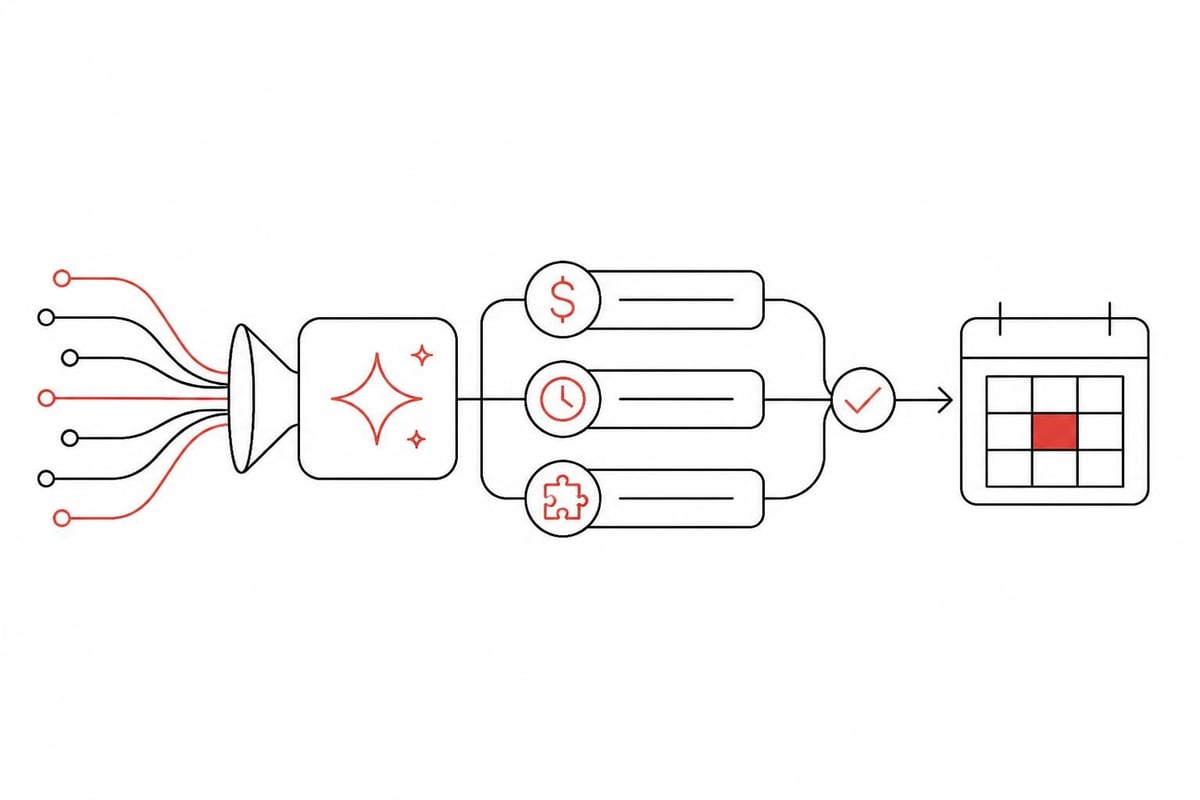
Automated booking means the qualification flow ends with available calendar slots and one-click confirmation. The prospect sees real availability, picks a time, and gets a calendar invite with prep materials instantly. No email. No scheduling links sent in separate messages. No friction.
The conversion data is brutal: every additional step in your booking process cuts conversion by 20-30%. Sending a Calendly link in a follow-up email versus showing available slots in the same conversation isn't a minor detail. It's the difference between 40% booking rates and 12% booking rates.
For B2B SaaS selling five-figure annual contracts, those percentage points represent millions in pipeline. If you're generating 200 qualified leads per month and your booking rate moves from 12% to 40%, that's 56 additional demos monthly. At 25% demo-to-close, that's 168 additional customers per year.
You can explore more detailed SaaS B2B lead generation tactics that break down channel-specific strategies and conversion optimization.
What SaaS Lead Gen Channels Actually Deliver ROI?
The channels that deliver positive ROI for SaaS lead gen are paid search on high-intent keywords, LinkedIn ads to in-market accounts, SEO-driven comparison content, and product-led free trials, while cold email, generic content marketing, and trade shows consistently underperform. Forrester research on B2B marketing and sales trends confirms the shift toward digital self-serve channels and away from traditional interruption tactics.
Here's the unvarnished truth from working with 50+ SaaS companies:
| Channel | Avg CAC | Time to ROI | What Works | What Doesn't |
|---|---|---|---|---|
| Paid Search (Intent) | $180-400 | 2-3 months | Competitor, comparison terms | Generic category keywords |
| LinkedIn Ads | $250-600 | 3-4 months | Account-based, retargeting | Cold prospecting to job titles |
| SEO/Content | $120-300 | 6-12 months | Comparison pages, use cases | Generic blog posts |
| Product-Led (PLG) | $40-150 | 1-2 months | Self-serve trial, freemium | High-touch demos required |
| Cold Email | $300-800 | Never | Nothing (in 2026) | Everything |
Cold outreach is dead for SaaS lead gen. Not declining. Not "harder." Dead. Open rates below 15%, response rates below 1%, and most responses are unsubscribes or angry replies. The cost per qualified conversation exceeds $800, and half those conversations are prospects who had already found you organically but are now annoyed.
LinkedIn outreach is only marginally better. Connection request acceptance rates dropped from 42% in 2022 to 18% in 2026 as buyers became immune to "I see you're interested in [generic pain point]" templates.
What's Actually Working: Intent-Based Paid + Content
The winning combination for saas lead gen in 2026 is paid acquisition targeting active buying signals combined with content that answers comparison questions. Someone searching "Salesforce alternative for startups" is telling you exactly what they need. Your ad should acknowledge that, your landing page should compare features and pricing directly, and your follow-up should address migration complexity.
This is where SaaS SEO strategies become critical. Comparison content, category pages, and use-case guides capture prospects who are actively evaluating solutions. These pages convert 4-6x better than generic "benefits of [category]" content because they match search intent.
The specific content formats that drive saas lead gen results:
- Competitor comparison pages (HubSpot vs Marketo, Asana vs Monday) with honest feature tables
- Category buyer's guides that explain evaluation criteria, not just your features
- ROI calculators that quantify the business case with prospect's actual numbers
- Integration documentation that proves technical compatibility before the sales call
The revenue team at Aletto has documented how applying simple lead generation tactics across paid and organic channels generated over 1,000 qualified sales calls in less than a year without relying on cold outreach.
Product-Led Growth as Lead Generation
The highest-converting saas lead gen channel is often the product itself through free trials, freemium models, or interactive demos. When prospects can evaluate your software hands-on without talking to sales, they qualify themselves through actual usage instead of demographic assumptions.
Product-qualified leads (PQLs) who've used core features, invited teammates, or hit usage limits convert at 3-4x higher rates than marketing-qualified leads (MQLs) who downloaded a whitepaper. The behavior signals buying intent more accurately than any form field.
The catch: PLG only works if your product has a self-service onboarding experience that delivers value in the first session. If your software requires a 90-minute implementation call and custom configuration, free trials generate support burden without pipeline.
Effective PLG for saas lead gen requires:
- Time-to-value under 15 minutes – Users should accomplish something meaningful in their first session
- Clear upgrade paths – When they hit a limit or need a feature, the upsell should be obvious
- Usage-based routing to sales – High-engagement users get white-glove outreach; everyone else stays self-serve
- In-app education that reduces support tickets and increases feature adoption
How Do You Measure SaaS Lead Gen Performance?
SaaS lead gen performance is measured by cost per booked meeting, meeting-to-opportunity conversion rate, and fully-loaded customer acquisition cost, not vanity metrics like form fills or MQLs. The only numbers that matter are how much you spend to get a qualified prospect on your calendar and how many of those conversations turn into paying customers.
Most SaaS marketing teams track the wrong metrics. They optimize for lead volume, content downloads, and email list growth while their sales team complains about lead quality and their CFO questions marketing ROI. The disconnect happens because marketing measures activity (inputs) instead of revenue (outputs).
The Metrics That Actually Matter
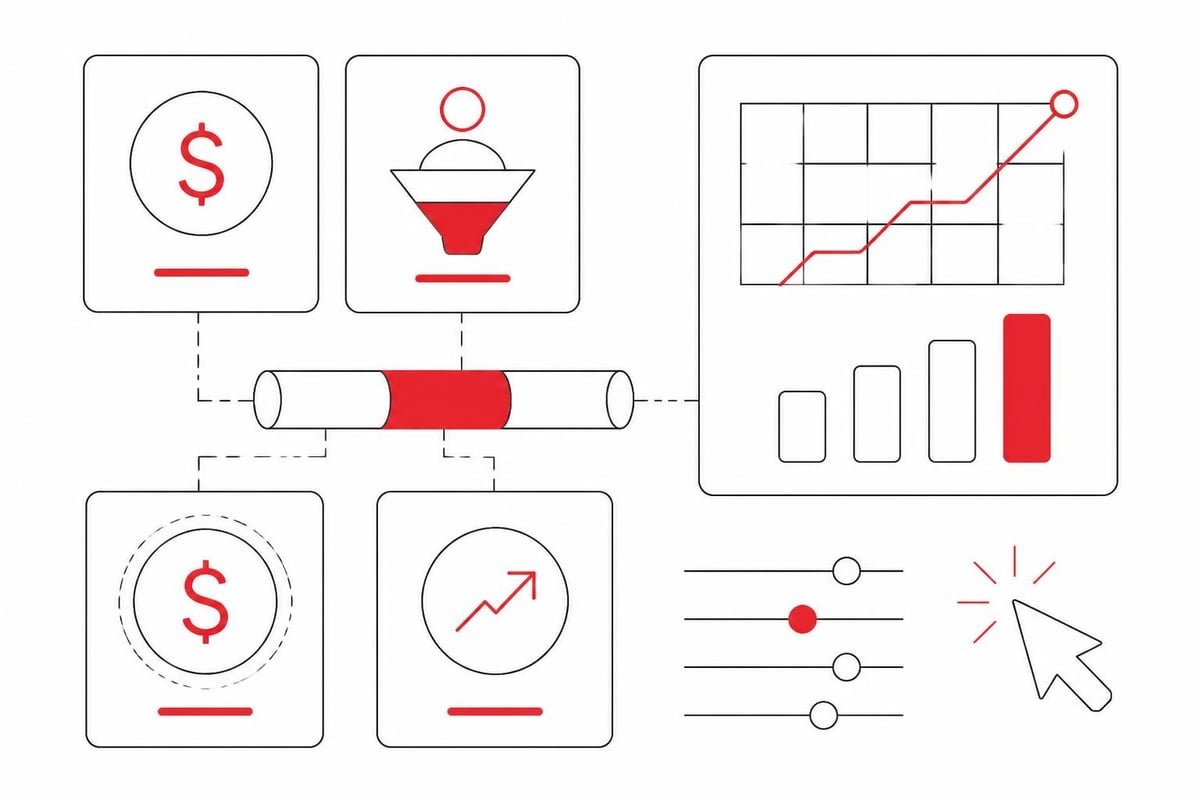
Cost per booked meeting (CPBM) is the foundational metric for saas lead gen. It includes all acquisition costs (ad spend, content, tools, salaries) divided by the number of qualified sales conversations booked. If you spent $50,000 and booked 100 meetings, your CPBM is $500. This number needs to be substantially lower than your average contract value to justify the channel.
Meeting-to-opportunity conversion tells you if you're booking the right meetings. If 50% of your booked calls turn into qualified opportunities, your targeting and qualification are working. If it's below 25%, you're either attracting the wrong prospects or your qualification process isn't filtering effectively.
Customer acquisition cost (CAC) is CPBM divided by your meeting-to-close rate. If your CPBM is $500 and you close 20% of booked meetings, your CAC is $2,500. For a SaaS product with $10,000 annual contract value and 80% gross margin, that's healthy. For a $3,000 ACV product, it's fatal.
The benchmark ratios that indicate healthy SaaS lead gen economics:
- LTV:CAC ratio above 3:1 – Customer lifetime value should be at least 3x acquisition cost
- CAC payback under 12 months – You should recover acquisition cost within a year
- Meeting-to-opportunity above 30% – Less than this suggests targeting or qualification problems
- Opportunity-to-close above 20% – Lower indicates product-market fit or sales execution issues
Track these weekly, not monthly. Saas lead gen economics can deteriorate quickly if ad costs spike, conversion rates drop, or sales cycle extends. Monthly reporting means you're six weeks behind problems that are bleeding cash.
The Death of MQLs
Marketing Qualified Leads as a metric has become meaningless for SaaS companies. The original concept (someone who matches your ideal customer profile and has shown interest) made sense. The reality (someone who downloaded anything or filled any form) doesn't.
Aletto stopped counting MQLs in 2024 because the correlation to revenue was essentially zero. A marketing team could double MQLs by running a generic ebook campaign while actually decreasing pipeline because sales spent time on unqualified conversations. The metric incentivized the wrong behavior.
What replaced it: conversation-qualified leads. Did the prospect have a real conversation (with AI or a human) where they confirmed budget, timeline, authority, and need? If yes, book them. If no, nurture them. The binary filter eliminates the gray area of "kind of qualified" leads that clog pipeline.
What Are the Biggest SaaS Lead Gen Mistakes to Avoid?
The biggest SaaS lead gen mistakes are optimizing for lead volume over quality, relying on manual follow-up instead of automation, running cold outbound campaigns that damage brand reputation, and failing to track full-funnel metrics from click to closed revenue. These errors burn budgets and demoralize sales teams.
Mistake 1: Confusing Activity With Progress
Running more campaigns, creating more content, and generating more form fills feels productive. It's measurable, reportable, and keeps marketing teams busy. It also means nothing if those activities don't translate to revenue.
The symptom: your marketing dashboard shows growth in every metric (traffic up 40%, leads up 60%, email subscribers up 35%) while your sales team says marketing leads are garbage and they're missing quota. This disconnect happens when marketing optimizes for metrics they control (volume) instead of metrics that matter (revenue).
The fix is painful: cut every campaign and content piece that doesn't directly contribute to booked meetings or product signups. That thought leadership blog series your VP loves? If it generates 10,000 views and zero trials, kill it. The weekly newsletter that gets 25% open rates? If the click-through doesn't lead to conversions, repurpose the effort.
Mistake 2: Human-Dependent Follow-Up Processes
Relying on SDRs to manually qualify and follow up with inbound leads guarantees inconsistency, delay, and conversion loss. Humans get sick, go on vacation, handle leads differently, forget to follow up, and process information at wildly different speeds. For high-volume saas lead gen, human dependency is the bottleneck.
The math is simple: if your SDR team can handle 100 inbound leads per week and you're generating 150, you're losing 50 opportunities. You can hire more SDRs (expensive, slow to ramp), reduce lead volume (stupid), or automate qualification (scalable).
Aletto's system handles the first conversation, qualification, and booking automatically. Humans only engage after a meeting is confirmed on the calendar with a qualified prospect. This means the same team that handled 100 leads can now handle 500+ because they're not doing the repetitive qualification work.
For companies exploring free lead generation tactics, automation becomes even more critical because free channels often generate higher volumes with lower initial qualification.
Mistake 3: Generic Targeting and Messaging
"Our software helps companies be more productive" could describe 10,000 SaaS products. Generic positioning attracts generic leads who are comparison shopping on price alone. Specific positioning ("project management for remote creative teams with 10-50 people") attracts prospects with clear fit criteria.
The same applies to ad targeting. Running LinkedIn campaigns to "VP of Marketing" at "companies with 50-500 employees" is shooting blind. Running campaigns to "VP of Marketing who recently hired demand gen managers at B2B SaaS companies that raised Series A in the last 12 months" is precision targeting.
Specific targeting costs more per impression but converts at 5-10x higher rates because you're reaching people with the actual problem your product solves at the moment they're empowered to solve it.
Frequently Asked Questions
What is a good cost per lead for SaaS companies in 2026?
A good cost per lead for SaaS ranges from $100-400 depending on your ACV and market, but cost per booked meeting ($300-800) and cost per closed customer (CAC) are better metrics because lead quality varies dramatically. Focus on fully-loaded CAC staying below 33% of first-year contract value to maintain healthy unit economics.
How long does it take to see results from SaaS lead generation?
Paid acquisition channels deliver booked meetings within 2-4 weeks, but optimizing for positive ROI takes 2-3 months as you refine targeting and creative. SEO and content-driven lead gen requires 6-12 months to generate meaningful volume. The fastest path combines paid for immediate pipeline and content for long-term efficiency.
Should SaaS companies focus on inbound or outbound lead generation?
SaaS companies should prioritize inbound and intent-based paid acquisition over cold outbound because buyer behavior has shifted to self-directed research and outbound response rates have collapsed below viable economics. Cold email and LinkedIn outreach deliver 10-20x higher CAC than paid search and content in 2026. Outbound only works for enterprise deals with highly specific account lists.
How many leads do you need to hit SaaS revenue targets?
Work backward from your revenue target using actual conversion rates. If you need $1M in new ARR, your average deal size is $20K, and you close 20% of opportunities from 30% of booked meetings, you need approximately 834 qualified leads. Most SaaS teams overestimate conversion rates and underestimate required lead volume by 40-60%.
What's the difference between demand generation and lead generation for SaaS?
Demand generation creates market awareness and buyer interest in your category or solution (top of funnel), while lead generation captures and converts that existing demand into sales opportunities (bottom of funnel). Effective SaaS demand generation requires both: content and thought leadership to build category awareness, and conversion-focused campaigns to capture prospects actively evaluating solutions.
The saas lead gen playbook has fundamentally changed. What worked in 2022 (cold outreach, generic content, manual follow-up) burns cash in 2026. The teams winning are combining intent-based paid acquisition with instant AI qualification and automated booking to fill calendars with qualified prospects. If you're still relying on SDRs to manually work inbound leads or sending cold emails hoping for 2% response rates, you're competing with one hand tied behind your back. Aletto's Free AI Call Booking Report reveals exactly how one system booked 1,122 qualified sales calls in 11 months without cold outreach, events, or massive ad budgets – get the full breakdown here to see if the same approach could work for your team.