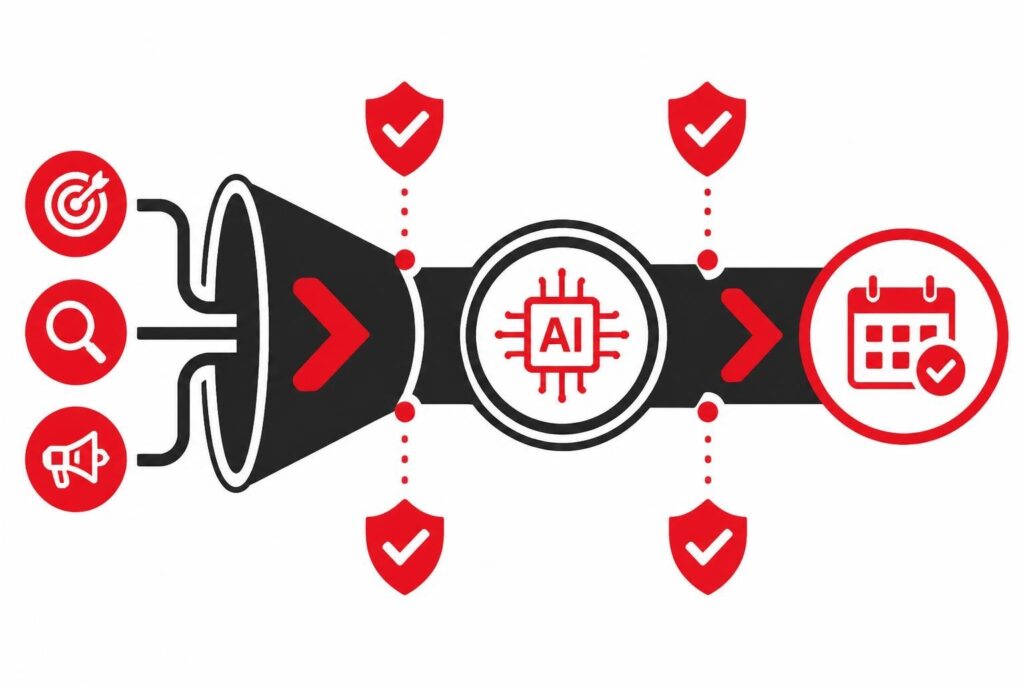
Outsourced lead generation is the practice of hiring an external agency or provider to identify, qualify, and deliver sales-ready prospects to your B2B sales team instead of building and managing that capability in-house. This approach eliminates the need to recruit, train, and supervise SDRs while providing access to specialized technology, tested processes, and performance guarantees that most internal teams cannot match.
The market shifted dramatically after 2020. Cold email deliverability dropped below 15% for most senders by 2024, LinkedIn restricted automation tools, and buyers stopped answering cold calls altogether. B2B SaaS and service companies needed a new way to maintain pipeline velocity without burning budget on tactics that stopped working. By 2026, B2B buying behavior has fundamentally changed, forcing revenue leaders to reconsider how they source meetings.
Why do companies outsource lead generation in 2026?
Three primary drivers push companies toward outsourced lead generation: speed to market, cost predictability, and access to specialized infrastructure that would take 12-18 months to build internally.
Internal SDR teams require 4-6 months to reach full productivity after hiring. You pay salaries, benefits, management overhead, software licenses, and training costs during that ramp period with zero return. When a rep leaves, the cycle repeats. Outsourced providers eliminate this lag because they maintain trained capacity and operate at scale across multiple clients.
Cost structure matters. A single mid-level SDR costs $85,000-$120,000 annually when you include salary, payroll taxes, benefits, software stack, and management time. That budget gets you one person making 50-80 dials daily. An outsourced provider typically charges $3,000-$8,000 monthly per dedicated resource but delivers 200-400 daily touchpoints across paid, organic, and automated channels because they own the infrastructure.
The technology gap widened significantly in 2025-2026. Modern lead generation requires integration between paid acquisition platforms, AI-powered follow-up systems, intent data providers, CRM automation, and booking infrastructure. Building this stack internally costs $50,000-$150,000 in first-year licenses and integration work. Providers amortize these costs across their client base.
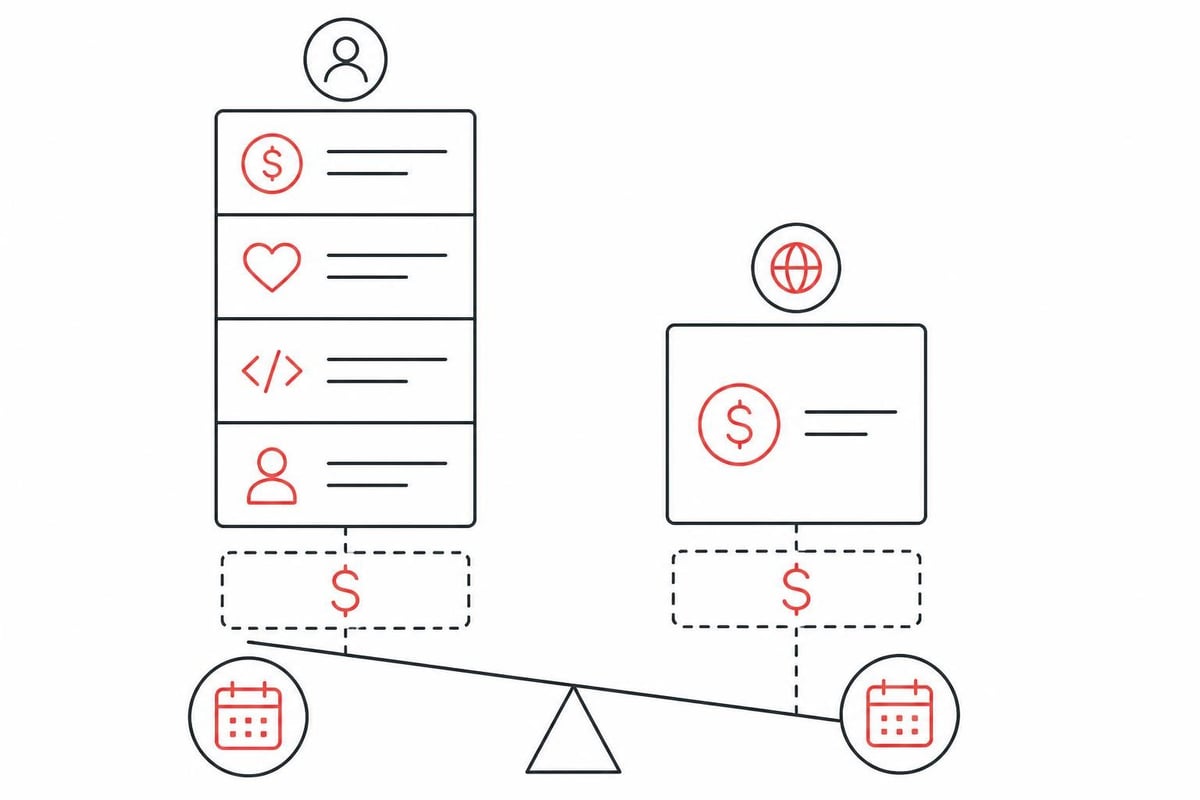
What internal teams cannot replicate
Channel diversification represents the biggest advantage external providers hold. Your internal team runs LinkedIn and email because that's what they know. Specialist firms run 8-12 acquisition channels simultaneously: paid search, paid social, programmatic display, intent-based targeting, content syndication, review site placement, podcast sponsorships, and partnership networks.
Research on intent-based lead generation shows companies using multiple intent signals generate 3.2x more qualified pipeline than single-channel approaches. Internal teams rarely access or integrate third-party intent data because the licensing costs only make sense at scale.
Testing velocity determines campaign success. A provider running campaigns for 15-30 clients can test 200+ variations monthly across audiences, messaging, offers, and channels. Your internal team might test 10-15 variations. The learning curve advantage compounds over time.
How does outsourced lead generation actually work?
The operational model breaks into three distinct phases: campaign design and setup, active lead acquisition and qualification, and handoff to sales with performance tracking.
Phase one starts with market research and offer positioning. The provider analyzes your ideal customer profile, competitive landscape, and existing conversion data to identify which buyer personas respond to which messages through which channels. This process typically takes 2-3 weeks and produces audience segments, messaging frameworks, and channel recommendations. Companies that skip this step and jump straight to execution waste 40-60% of their budget on generic targeting.
Phase two deploys acquisition campaigns across selected channels while simultaneously building automated qualification and nurture sequences. Paid campaigns drive prospects into conversational AI systems that engage, qualify, and route based on fit and timing. This is not someone manually sending emails. Modern providers use AI agents that maintain context across multiple touchpoints and escalate to human representatives only when prospects demonstrate buying intent.
Aletto has used this exact approach to generate measurable results for B2B clients. Our system combines paid acquisition with AI follow-up and automated booking, eliminating the manual handoffs that kill conversion rates. The data proves the model: when qualification and booking happen automatically within the campaign flow, show rates increase 35-50% compared to traditional SDR handoffs.
| Process Step | Internal Team Approach | Outsourced Provider Model |
|---|---|---|
| Lead acquisition | Manual prospecting, list building | Multi-channel paid + organic |
| First contact | Personal email/call | Automated + AI-powered |
| Qualification | Phone screening | Conversational AI + rules |
| Booking | Back-and-forth email | Automated calendar integration |
| Follow-up | Manual task management | Triggered sequences |
| Reporting | Weekly manual updates | Real-time dashboard |
Phase three focuses on continuous optimization and reporting. Quality providers deliver weekly performance reviews showing cost per meeting, meeting show rate, SQL conversion rate, and pipeline contribution. They adjust channel mix, messaging, and targeting based on what's converting, not what sounds good in theory.
What should you look for in an outsourced lead generation provider?
Vendor selection determines success more than budget or industry. The wrong partner burns money on vanity metrics while the right one becomes a revenue multiplier.
Start with their delivery model. Does the provider own the technology infrastructure or resell someone else's platform? Resellers add markup and coordination delays. Direct technology owners control quality, pricing, and integration. Ask to see their tech stack and confirm they own or have direct enterprise agreements with core platforms.
Performance guarantees separate serious operators from marketing agencies playing in lead gen. Legitimate providers guarantee minimum meeting volumes, show rates, or cost-per-meeting thresholds with refund clauses when they miss targets. If a vendor won't guarantee outcomes, they're selling effort, not results.
Review their quality control process in detail. How do they define a qualified meeting? What prevents them from booking junk appointments to hit volume targets? The best providers tie payment to meetings that show, involve decision-makers, and match your ICP criteria. Some structure pricing with a lower upfront fee plus bonuses for meetings that convert to opportunities.
Reporting transparency reveals operational maturity. Request sample dashboards and weekly reports from current clients. You should see granular data: channel performance, message variant testing results, qualification criteria pass rates, and actual sales outcomes. Providers hiding behind high-level metrics probably cannot deliver consistent quality.
Questions that expose vendor weaknesses
Ask how they handle prospects who don't book immediately. Weak providers stop following up after 2-3 touches. Strong ones maintain nurture sequences for 6-12 months because buying cycles extend beyond initial contact. Request their nurture sequence documentation and ask for performance data on long-cycle conversions.
Inquire about their AI and automation strategy. Generative AI is fundamentally reshaping how contact centers and engagement teams operate. Providers not deploying AI for qualification, follow-up, and scheduling will be obsolete by 2027. Ask specifically which AI tools they use, how they train models on your brand voice, and what quality controls prevent AI from delivering poor prospect experiences.
Check client tenure and churn rates. If most clients leave within 6-9 months, the provider cannot sustain performance beyond the initial campaign honeymoon. Request references from clients active for 18+ months and ask about year-over-year improvement in cost per acquisition and meeting quality.
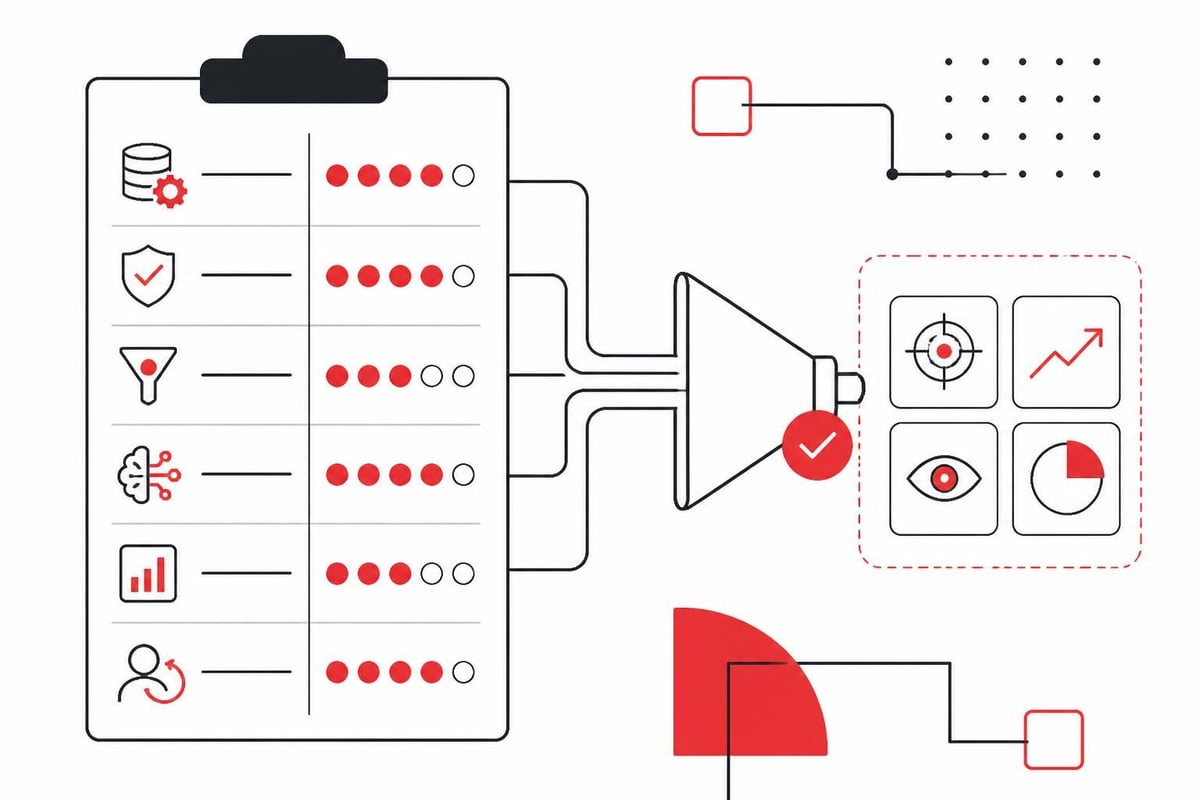
What are the different types of outsourced lead generation models?
The industry segments into four distinct operating models, each with different cost structures, control levels, and performance characteristics.
Dedicated SDR model: The provider assigns specific representatives to work exclusively on your account, functioning as an extension of your team. You get consistent brand representation and deep product knowledge, but you pay for capacity whether they're producing or not. Pricing typically ranges from $4,000-$8,000 per month per SDR with 6-12 month commitments. This model works for companies needing tight brand control and complex technical selling.
Shared capacity model: You purchase a volume of deliverables (meetings, qualified leads, SQLs) from a pool of resources working across multiple clients. Lower cost per unit but less customization and longer feedback loops. Typical pricing runs $2,500-$5,000 monthly for 8-15 qualified meetings. Best for companies with straightforward value propositions and quick qualification criteria.
Performance-based model: Payment ties directly to outcomes, not effort. You might pay $150-$400 per qualified meeting that shows, or $500-$1,500 per SQL that enters your pipeline. Zero upfront fees or minimal platform access costs. Providers assume performance risk but cherry-pick clients and often require 3-6 month ramp periods before guarantees kick in. This model suits companies with proven conversion funnels who can close what they're handed.
Technology platform model: The vendor provides software and methodology while your team executes campaigns. You maintain control but handle all operational work. Monthly platform fees range from $500-$3,000 depending on features and user count. This is not truly outsourced lead generation but rather outsourced infrastructure. Companies choosing this path must still hire, train, and manage execution resources.
The model you select should align with your internal capabilities and growth stage. Early-stage companies without established sales processes benefit from performance-based models because they minimize risk while proving out a repeatable motion. Growth-stage companies with product-market fit but capacity constraints typically choose dedicated or shared models to scale quickly. Enterprise buyers often blend models, using dedicated resources for strategic accounts and shared capacity for mid-market volume.
How much does outsourced lead generation actually cost?
Pricing varies dramatically based on model, industry, deal size, and cycle length, but realistic 2026 benchmarks help set expectations.
For B2B SaaS companies selling products with $15,000-$50,000 annual contract values, expect to invest $5,000-$12,000 monthly to generate 12-25 qualified sales meetings. That translates to $400-$600 per meeting when the system reaches steady state, typically month 3-4 of the engagement.
Higher-ticket services and enterprise software require more sophisticated targeting and longer nurture cycles. Companies selling $100,000+ deals should budget $8,000-$20,000 monthly for 8-15 highly qualified meetings at $1,000-$1,500 per meeting. The higher cost reflects the specialized targeting, personalized outreach, and extended qualification requirements.
| Company Stage | Monthly Investment | Expected Meetings | Cost Per Meeting | Typical Contract |
|---|---|---|---|---|
| Startup ($10K-$30K ACV) | $3,000-$6,000 | 8-12 | $400-$600 | 3-6 months |
| Growth ($30K-$100K ACV) | $6,000-$12,000 | 15-25 | $400-$600 | 6-12 months |
| Enterprise ($100K+ ACV) | $10,000-$25,000 | 10-18 | $1,000-$1,500 | 12+ months |
Setup fees add $2,000-$8,000 to first-month costs at most providers. This covers campaign design, audience research, messaging development, CRM integration, and initial creative production. Avoid providers charging $15,000+ setup fees unless they're building custom technology or highly complex account-based programs.
Hidden costs kill budget forecasts. Factor in your sales team's time reviewing meetings, providing feedback, and closing deals. If your close rate sits below 15%, you're either getting poor quality leads or your sales process needs work before scaling acquisition. Also consider the opportunity cost of binding long contracts. Twelve-month agreements with early termination penalties trap you with underperforming vendors.
ROI calculation framework
Calculate payback based on actual revenue, not pipeline. If you're paying $8,000 monthly for 15 meetings, that's $96,000 annually. With a 20% close rate, you get three customers. Those customers need to generate $96,000 in gross margin (not revenue) just to break even. If your ACV is $40,000 with 70% gross margin, three customers produce $84,000 in margin – you're losing money.
Run the math before signing contracts. Many companies discover outsourced lead generation doesn't work economically for their business model. That's a useful finding before you waste six months and $50,000 proving it.
What results can you realistically expect?
Performance benchmarks help separate realistic expectations from vendor promises. Industry data from outsourcing market research provides useful context.
Strong providers deliver 60-75% show rates for booked meetings during the first 90 days. Show rates below 50% indicate poor qualification or misaligned targeting. Above 85% suggests the bar for qualification might be too high, potentially leaving pipeline on the table. Over time, as the provider refines messaging and audience fit, show rates should climb toward 75-80%.
The time from campaign launch to first qualified meeting averages 3-4 weeks. Providers promising meetings in week one are either recycling old lists or booking anyone willing to take a call. Legitimate programs require 2-3 weeks to build audience segments, launch campaigns, generate initial responses, and qualify prospects through multi-touch sequences.
Meeting-to-opportunity conversion rates reveal quality. If fewer than 10% of delivered meetings convert to legitimate sales opportunities, something is broken. Either the provider misunderstands your ICP, your sales team needs training on working warm leads, or your offer doesn't match market demand. Healthy programs convert 15-25% of meetings to opportunities within 30 days.
The learning curve matters. Month one results typically underperform steady-state performance by 40-60% because messaging, targeting, and qualification criteria require iteration based on actual sales feedback. By month three, a competent provider should hit their committed meeting volumes at target cost per meeting. If performance hasn't stabilized by month four, find a new provider.
Real example: A B2B payments platform engaged an outsourced provider in January 2026 targeting fintech startups. Month one delivered four qualified meetings at $2,100 per meeting. Month two produced nine meetings at $1,200 each. Month three hit 16 meetings at $680 per meeting. By month six, the program consistently delivered 18-22 meetings monthly at $550-$600 each with a 72% show rate and 19% opportunity conversion rate. That progression represents normal optimization.
Companies often wonder about channel mix and what drives results. The answer has shifted significantly in 2025-2026. Cold email and cold calling contribute less than 20% of qualified pipeline for most B2B providers now. Paid acquisition through search, social, and intent-based display drives 60-70% of top-of-funnel volume. AI-powered conversational follow-up converts that volume into qualified meetings at rates manual SDRs cannot match.
What commonly goes wrong with outsourced lead generation?
Most failures stem from three preventable issues: misaligned expectations, poor vendor selection, and inadequate sales team readiness.
Expectation misalignment kills partnerships before they start. Companies expect immediate results while providers need time to learn your market and refine targeting. Sales leaders want perfectly qualified meetings that close themselves while providers can only deliver prospects matching your criteria who expressed interest. When reality doesn't match fantasy, both sides blame each other.
Set realistic expectations upfront. Define what "qualified" means with specific firmographic, behavioral, and need-based criteria. Establish that month one is discovery, month two is optimization, and month three is when performance should stabilize. Document the feedback loop process so sales team input actually improves lead quality rather than just generating complaints.
Vendor selection mistakes prove expensive. Companies often choose based on price or sales pitch quality rather than proven performance and cultural fit. A provider might excel at generating leads for HR tech but struggle with manufacturing software. Their case studies and references should include companies selling to similar buyers with comparable deal sizes and sales cycles.
Another common error: hiring a provider to fix a broken sales process. If your internal team cannot close inbound leads or marketing-qualified leads, outsourced lead generation will not solve that problem. Fix sales execution first, then scale acquisition.
The sales team readiness problem
Your sales team must be prepared to work outsourced leads differently than self-generated opportunities. Many reps deprioritize outsourced meetings because "they didn't earn them" or assume the lead quality will be poor. This creates a self-fulfilling prophecy where reps show up unprepared, deliver bad experiences, prospects don't convert, and the rep's initial skepticism gets reinforced.
Solve this before launching campaigns. Train your team on the qualification criteria, the buyer's journey stage, and how to open conversations with warm prospects who opted into a meeting. Hold reps accountable for show rates, meeting quality ratings, and opportunity conversion rates. Tie compensation or recognition to working outsourced pipeline effectively.
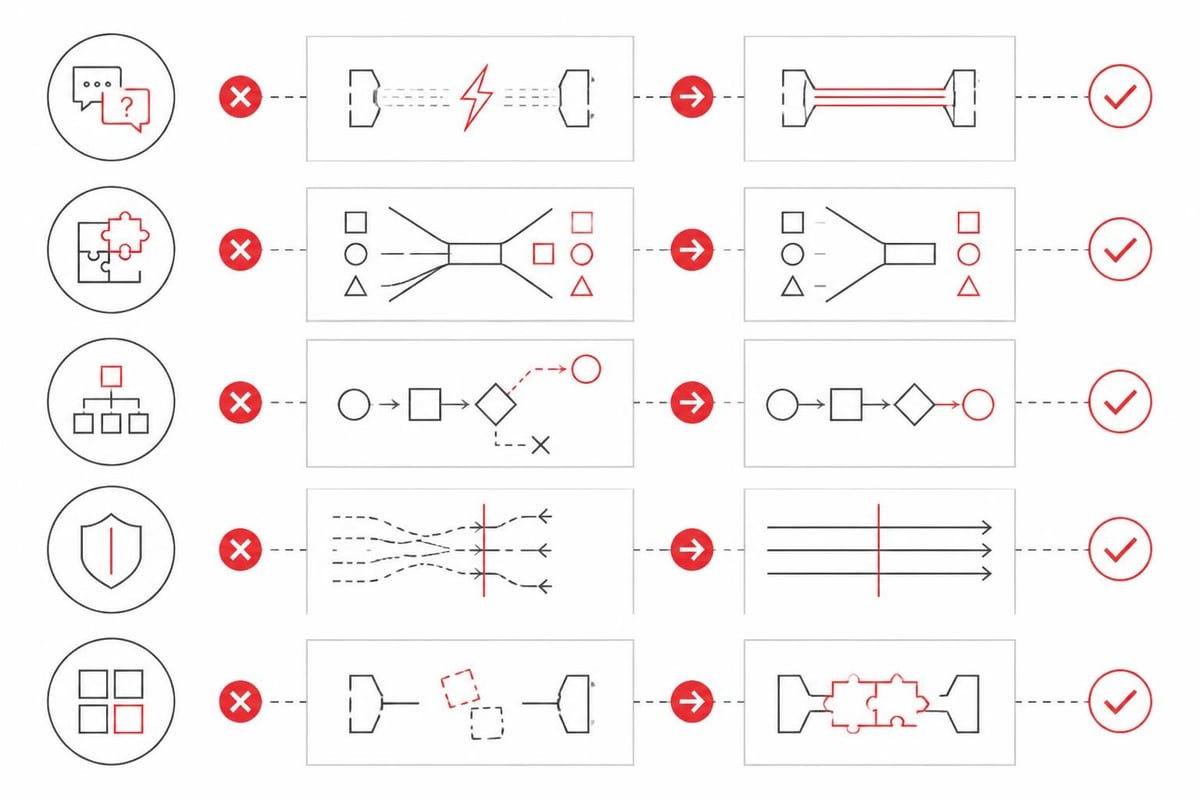
Integration failures derail otherwise solid programs. The provider books meetings in their calendar system, but your CRM doesn't update. Sales gets no pre-call briefing. Prospects receive confirmation emails from an unfamiliar domain. These friction points reduce show rates and damage brand perception.
Invest in proper integration from day one. Calendar systems should sync with your CRM. Pre-call briefs should populate automatically. Confirmation and reminder emails should come from your domain in your brand voice. The prospect's experience should feel seamless, not like they're being handed off between disconnected systems.
How do you transition from considering outsourced lead generation to actually launching?
Implementation follows a structured path whether you're replacing an underperforming internal team or building pipeline capacity from scratch.
Step one: Audit your current state. Document your monthly pipeline requirements, current cost per opportunity, average deal size, close rate, and sales cycle length. Calculate how many qualified meetings you need monthly to hit revenue targets based on historical conversion rates. This becomes your provider brief and success criteria.
Step two: Define your ideal customer profile and qualification criteria with specificity that eliminates interpretation. Weak ICP definition sounds like "B2B SaaS companies with 50-500 employees." Strong definition specifies "B2B SaaS companies with 100-500 employees, $10M-$100M revenue, selling to enterprise accounts, currently using Salesforce, with a dedicated sales team of 5+ reps, experiencing challenges with pipeline consistency or cost per acquisition."
Step three: Shortlist 4-6 providers based on client references, case studies in your market, technology ownership, and performance guarantees. Request proposals with specific meeting volume commitments, cost per meeting, show rate guarantees, and contractual protections. Eliminate any vendor who won't guarantee outcomes or lacks relevant case studies.
Step four: Run pilot programs with your top two choices if budget permits. A 90-day pilot with each provider costs more upfront but eliminates the risk of binding a 12-month contract with the wrong partner. Structure pilots with clear success metrics and decision criteria. Which provider hits target meeting volume first? Which delivers higher meeting quality as measured by opportunity conversion? Which communicates more effectively and responds faster to feedback?
The first 90 days determine long-term success
Launch week should include kickoff meetings where your sales team meets the provider's account team, reviews ICPs and qualification criteria together, and establishes communication protocols. Weekly performance reviews for the first month keep both teams aligned as the provider learns your market and refines their approach.
Expect to iterate messaging, targeting, and qualification criteria heavily in weeks 2-6. Your initial assumptions about what resonates with buyers will be partially wrong. The provider's initial understanding of your value proposition will be incomplete. Rapid feedback loops during this period separate successful partnerships from failing ones. Companies that go silent for three weeks then complain about results waste everyone's time.
By day 60, you should see clear performance trends and trajectory. Are meeting volumes increasing? Is show rate improving? Are sales reps converting meetings to opportunities at acceptable rates? If the answer to all three is yes, you're on track. If two of three are trending negative, course correction is needed immediately.
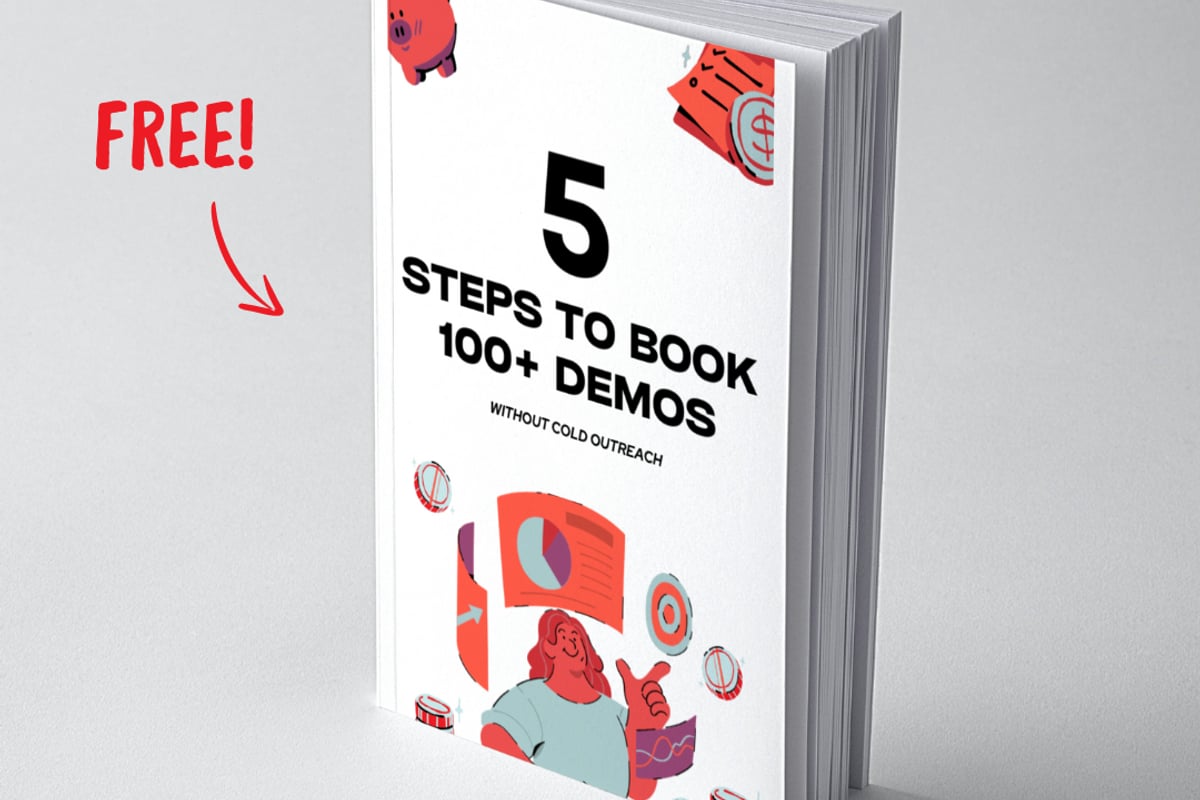
Many B2B companies need to see the complete picture before committing to outsourced lead generation. Understanding exactly how modern systems book qualified sales calls using paid acquisition and AI automation removes much of the uncertainty around vendor selection and performance expectations.
Frequently Asked Questions
How long does it take to see results from outsourced lead generation?
Most programs deliver first qualified meetings within 3-4 weeks of launch, but steady-state performance typically requires 90 days. Month one focuses on audience research and campaign setup, month two tests messaging and targeting variations, and month three optimizes based on sales feedback. Companies should budget for a 90-day ramp period before expecting consistent meeting volumes at target cost per meeting.
Can outsourced lead generation work for complex B2B sales?
Yes, but the approach differs significantly from transactional sales. Complex B2B deals requiring multiple stakeholders and 6-12 month sales cycles need account-based programs with personalized outreach, executive-level targeting, and extended nurture sequences. Performance-based pricing works poorly for complex sales because attribution becomes difficult. Dedicated SDR models with deep product training deliver better results for technical or enterprise selling.
What's the difference between lead generation and appointment setting services?
Lead generation encompasses the full process of identifying prospects, building awareness, nurturing interest, and delivering qualified opportunities to sales. Appointment setting focuses narrowly on scheduling meetings, typically from provided lists or warm leads. Modern outsourced lead generation includes acquisition, qualification, nurturing, and booking as an integrated system rather than just the final scheduling step.
How do you ensure lead quality from an outsourced provider?
Quality control starts with precise ICP definition and qualification criteria documented before launch. Effective providers implement multi-layer verification: automated data validation checks firmographic fit, conversational AI or human screeners assess need and timing, and sales team feedback triggers immediate disqualification of sources or segments delivering poor matches. Tie provider compensation to meetings that show and convert to opportunities, not just booked appointments.
Should we outsource lead generation if we already have a marketing team?
Marketing teams and outsourced lead generation serve different functions. Marketing builds brand awareness, creates content, and generates inbound interest over time. Outsourced lead generation delivers predictable meeting flow within 30-60 days through paid acquisition and proactive outreach. Most successful companies run both: marketing feeds long-term pipeline while outsourced programs fill near-term gaps and scale quickly when growth accelerates. They complement rather than replace each other.
Outsourced lead generation works when you match your business model, deal size, and sales capacity to the right provider model and set realistic expectations for ramp time and ongoing optimization. The companies winning with this approach in 2026 treat providers as partners, invest in proper integration, and hold both the vendor and their own sales team accountable for results.
If you're evaluating whether outsourced lead generation fits your business, start by understanding exactly how modern systems work. Aletto has documented the complete methodology we use to book qualified sales calls through integrated paid acquisition, AI follow-up, and automated scheduling. Our free report shows the specific system that generated 1,122 qualified calls in 11 months for B2B clients without cold outreach, giving you a clear benchmark for what's possible and what to expect from competent providers.