Quick answer: when should you hire a demand generation agency? Hire one when your team has maxed out one or two channels and now needs paid media, ABM or marketing automation without hiring three specialists. Before you sign, ask how the agency ties spend to pipeline and booked calls, and expect it to start with research, not ads.
You are ready for an agency when:
- Sales says lead quality is poor or pipeline is thin
- You spend on ads but can’t connect that spend to revenue
- You have content, but it doesn’t turn into conversations
- You need to scale fast for a funding round or a growth target
- Your in-house marketers are stuck on day-to-day execution
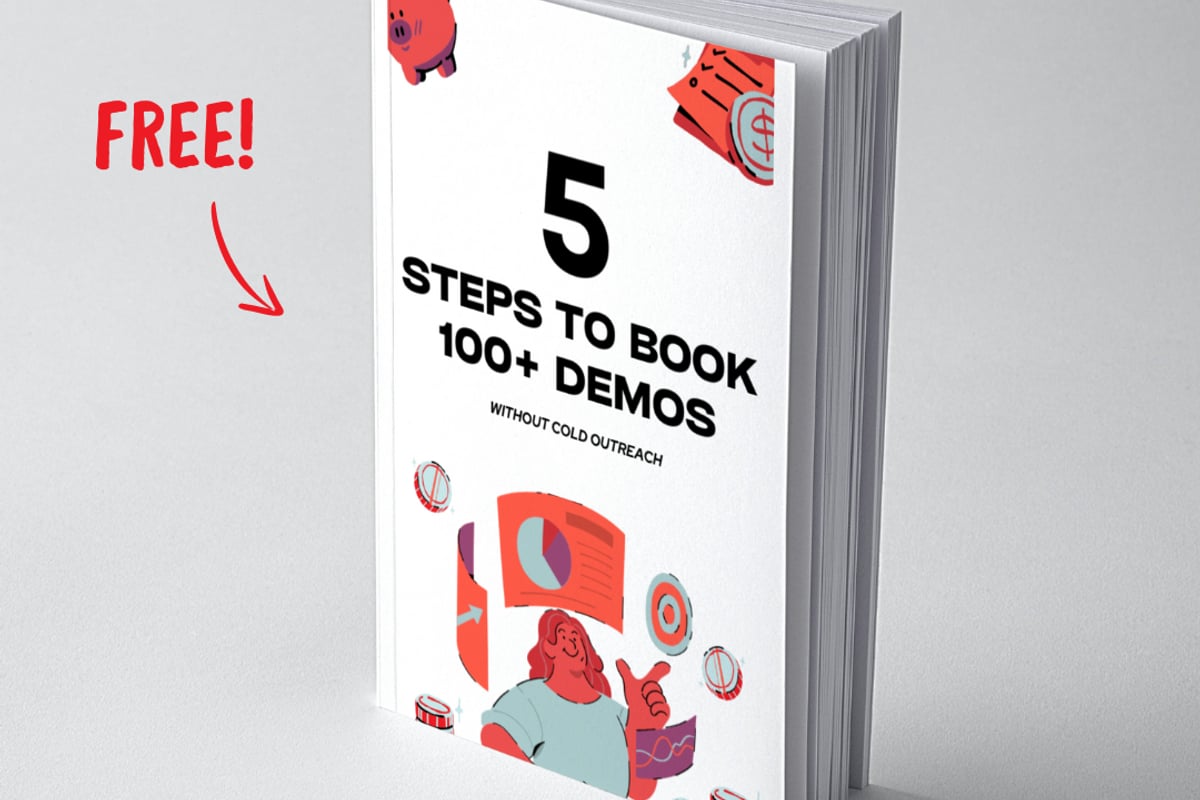
Comparing agencies? See what to expect from an AI sales funnel agency, or get the free SaaS report on the 5-step AI funnel we use to book sales calls.
Demand generation agencies are specialized marketing firms that build awareness and buyer interest across your entire target market, not just individuals ready to buy today. They create systematic campaigns that educate prospects, establish your authority, and generate inbound interest that sales teams convert into revenue. Unlike traditional lead generation shops that focus on harvesting contact information, these agencies architect multi-channel programs that make your brand the obvious choice when buyers enter the market.
The distinction matters because most B2B buyers spend months researching before they talk to sales. If your marketing only targets people ready to book a call right now, you miss the 95% of your market that will buy later. Demand generation agencies solve this by building programs that stay visible throughout the entire buying journey, from initial problem awareness through vendor evaluation.
What do demand generation agencies actually do?
Demand generation agencies design and execute integrated marketing programs that create measurable pipeline growth. They start by mapping your buyer's journey, identifying the questions and concerns at each stage, then build content and campaigns that address those specific needs. The work typically includes content strategy, paid media, marketing automation, account-based marketing, and analytics.
Core services include:
- Strategic planning and buyer journey mapping
- Content creation (whitepapers, case studies, webinars, videos)
- Paid acquisition across search, social, and display channels
- Marketing automation setup and campaign execution
- Account-based marketing programs for target accounts
- Lead scoring and qualification frameworks
- Performance analytics and attribution modeling
The output is not just traffic or downloads. A competent agency delivers qualified opportunities that match your ideal customer profile, tracking how many convert to meetings, pipeline, and revenue. According to HubSpot’s demand generation guide, effective programs increase qualified pipeline by 20-40% within six months by aligning marketing activities directly to sales outcomes.
How demand generation differs from lead generation
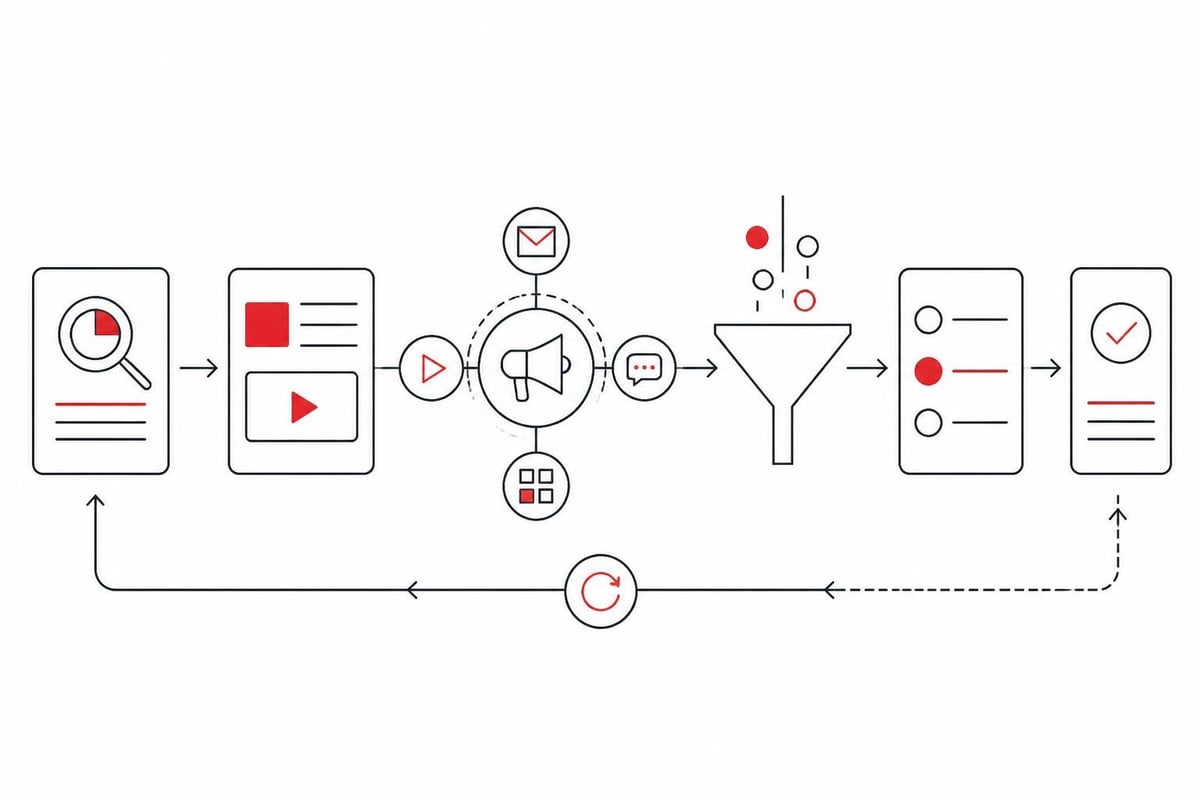
Lead generation focuses on capturing contact information from people showing immediate buying signals. You run ads to a landing page, offer a demo or consultation, and hand names to sales. It works for bottom-of-funnel activity but ignores everyone else.
Demand generation builds the conditions that make lead generation work. It creates awareness in people who don't know they have a problem, educates them on solutions, and positions your company as the authority. When these prospects eventually enter buying mode, they already trust you and actively seek you out.
| Approach | Goal | Timeframe | Metrics |
|---|---|---|---|
| Lead Generation | Capture contact info | Immediate | Form fills, MQLs, cost per lead |
| Demand Generation | Build market awareness | 3-12 months | Pipeline influence, deal velocity, revenue |
| Lead Gen + Demand Gen | Fill pipeline sustainably | Ongoing | Both short and long-term pipeline |
Most B2B companies need both. Lead generation fills immediate pipeline gaps. Demand generation ensures you have a constant flow of educated, interested buyers entering your funnel. Demand generation agencies typically run both, but they organize everything around creating sustained buyer interest, not just harvesting contacts.
When should you hire a demand generation agency?
Hire a demand generation agency when your internal team lacks the expertise, capacity, or cross-channel capabilities to build integrated programs that drive pipeline. The typical trigger is when you've maxed out one or two channels (maybe content and organic search) but need to expand into paid media, ABM, or marketing automation without hiring three specialists.
You're ready for an agency when:
- Your sales team complains about lead quality or insufficient pipeline
- You're spending on ads but can't connect spend to revenue
- Content exists but doesn't drive meaningful engagement or conversions
- You need to scale quickly for a funding round or growth target
- Internal marketing is stretched thin managing day-to-day execution
Early-stage companies (pre-Series A) often cannot afford agencies charging $10,000-$50,000 monthly retainers. You're better off hiring one strong generalist who can execute across channels. Companies in the $5M-$50M revenue range get the most value because they have product-market fit, reference customers, and budget to invest in multi-channel programs that compound over time.
What to expect in the first 90 days
Good demand generation agencies spend the first month on research, not execution. They interview customers, analyze your data, audit existing campaigns, and map your buyer journey. Expect workshops, stakeholder interviews, and detailed documentation before any campaigns launch.
Months two and three focus on foundation building. The agency sets up tracking, builds initial content assets, configures marketing automation, and launches pilot campaigns. You won't see massive pipeline impact yet because demand generation is a compounding system that takes 4-6 months to mature.
A realistic 90-day plan includes:
- Weeks 1-4: Discovery, strategy development, tech stack audit
- Weeks 5-8: Content creation, campaign setup, automation configuration
- Weeks 9-12: Campaign launch, initial optimization, reporting framework
Any agency promising instant results is running lead generation tactics, not true demand generation. According to the Content Marketing Institute’s B2B research, 64% of the most successful B2B marketers say their demand programs take 6+ months to show meaningful ROI.
How much do demand generation agencies cost?
Monthly retainers for demand generation agencies range from $8,000 to $50,000 depending on scope, seniority of team, and channel mix. Project-based engagements for specific campaigns run $15,000-$75,000. Agencies typically require 6-12 month commitments because demand programs need time to prove performance.
Typical pricing models:
- Retainer: $10,000-$30,000/month for ongoing program management
- Project: $20,000-$60,000 for campaign buildout or strategic planning
- Performance-based: Base retainer plus bonuses tied to pipeline or revenue
- Hybrid: Lower retainer ($5,000-$10,000) plus media spend management fee
Media spend sits on top of agency fees. If you're running paid campaigns, expect to invest $20,000-$100,000+ monthly in ad spend across LinkedIn, Google, display, and other channels. The agency manages this budget but it flows directly to platforms.
Cheaper options exist but deliver less. Freelancer networks charge $3,000-$8,000 monthly but lack integrated capabilities. You get content or ads, not a system. Offshore agencies price at $2,000-$5,000 monthly but struggle with B2B nuance and U.S. market understanding.
Evaluating ROI and payback period
Demand generation ROI is measured in pipeline and revenue, not clicks or leads. A strong agency engagement should generate 3-5x ROI within 12 months, meaning every dollar spent on retainer and media returns three to five dollars in closed revenue.
Calculate payback by tracking influenced pipeline. If your average deal size is $50,000 and close rate is 25%, you need four opportunities to close one deal worth $50,000. At a $15,000 monthly retainer plus $25,000 media ($40,000 total monthly spend), the agency needs to generate 3.2 qualified opportunities per month to break even, or roughly 10-12 opportunities for healthy ROI.
Most companies see the payback curve improve over time. Months 1-3 often run negative as you invest in setup. Months 4-8 approach breakeven as campaigns mature. Months 9-12+ deliver positive ROI as content compounds, automation optimizes, and brand awareness builds.
Aletto has tested this extensively with B2B SaaS teams. In one analysis spanning 11 months, a properly configured paid acquisition system integrated with AI follow-up and automated booking generated 1,122 qualified sales calls without relying on cold emails or events. That level of performance requires both the right system architecture and enough time for campaigns to optimize and compound.
What makes a demand generation agency effective?
Effective demand generation agencies demonstrate three capabilities: strategic thinking that connects marketing activities to revenue outcomes, technical execution across multiple channels, and transparent reporting that shows pipeline influence. The best agencies act as an extension of your team, not a vendor you manage at arm's length.
Look for agencies that lead with questions, not solutions. They should ask about your sales process, average deal size, sales cycle length, and customer acquisition cost before proposing tactics. If an agency pitches a standard package without understanding your business model, they're selling services, not solving problems.
Green flags when evaluating agencies:
- Case studies showing pipeline and revenue impact, not just traffic or leads
- Team members with hands-on experience in your industry or ICPs
- Transparent reporting with full access to campaign data and analytics
- Clear handoff process between marketing and sales with defined SLAs
- Willingness to tie compensation to pipeline or revenue outcomes
Red flags include agencies that cannot explain their attribution model, promise specific lead volumes without knowing your conversion rates, or focus exclusively on top-of-funnel metrics like impressions and clicks. Harvard Business Review research on B2B relationships emphasizes that successful partnerships require aligned incentives and shared accountability for outcomes, not just activity.
The importance of sales and marketing alignment
Demand generation only works when marketing and sales operate as a unified revenue team. The agency needs regular access to sales leadership to understand what's converting, what messaging resonates in discovery calls, and which lead sources produce the best customers.
Set up weekly or biweekly sync meetings where sales shares feedback on lead quality, deal progression, and common objections. Marketing uses this intel to refine targeting, adjust messaging, and optimize lead scoring. Without this loop, marketing generates leads that sales ignores and everyone blames each other for poor results.
Define clear handoff criteria before campaigns launch. What makes a lead qualified? What information does sales need before accepting a handoff? Who follows up within what timeframe? Aligning on these details prevents the common scenario where marketing hits lead targets but sales complains about quality.
Common mistakes when working with demand generation agencies
The biggest mistake is treating the agency like an order-taker instead of a strategic partner. Companies hand over campaign execution but withhold access to sales data, customer insights, and leadership strategy. The agency optimizes in a vacuum and delivers mediocre results.
Frequent failure modes:
- No clear pipeline or revenue targets, just vague "generate leads"
- Siloed communication where the agency only talks to one marketing coordinator
- Unrealistic timeframe expectations (wanting pipeline impact in 30 days)
- Withholding budget for media spend, expecting organic tactics to scale
- Failing to implement agency recommendations due to internal politics
Another common issue is hiring an agency to fix a broken product-market fit. If your close rate is 2% and sales cycle is 18 months, the problem is not marketing. Demand generation agencies amplify what works; they cannot manufacture demand for products nobody wants. Fix product-market fit first, then scale with agency support.
Over-reliance on a single channel
Many companies hire agencies then constrain them to one channel because it's what leadership understands. "Just do LinkedIn ads" or "we only want SEO" limits effectiveness because modern buyers engage across multiple touchpoints before converting.
Multi-channel integration delivers better results than single-channel optimization. A prospect might see your LinkedIn ad, visit your website, consume a blog post, attend a webinar, and receive three nurture emails before booking a call. Forcing everything through one channel inflates cost and reduces conversion.
Budget for at least 2-3 integrated channels: paid social, paid search, and email nurturing at minimum. High-performing programs add content syndication, webinars, account-based advertising, and retargeting. The channels should reinforce each other, creating multiple exposures that build familiarity and trust.
Building vs buying demand generation capabilities
Some companies question whether hiring an agency makes sense versus building an internal team. The decision depends on timeline, budget, and strategic importance of marketing to your business model.
| Factor | Build Internal Team | Hire Agency |
|---|---|---|
| Time to productivity | 6-12 months | 1-3 months |
| Upfront cost | $200K-$400K annual salaries + tools | $100K-$350K annual retainer |
| Flexibility | Lower, committed to headcount | Higher, can scale up/down |
| Depth | Specialized knowledge of your business | Breadth across industries and tactics |
| Control | Complete | Collaborative |
Building an internal team makes sense when demand generation is a core competency for your business (marketing agencies, high-volume SaaS) or when you have complex products requiring deep domain knowledge that takes months to develop. You'll pay more upfront but own the capabilities long-term.
Hiring an agency is faster and often cheaper for companies where marketing is important but not the core product. You get experienced practitioners immediately, avoid hiring mistakes, and maintain flexibility to change direction without layoffs.
Many companies run a hybrid model: internal strategist plus agency execution. The in-house person owns the relationship with sales, sets strategy, and manages the agency. The agency provides specialized capabilities across content, paid media, and automation. This combines institutional knowledge with specialized execution.
Frequently Asked Questions
How long does it take to see results from a demand generation agency?
Expect initial signals in 60-90 days (engagement metrics, early pipeline) but meaningful revenue impact takes 6-12 months. Demand generation builds compounding awareness and trust across your market, which requires multiple touchpoints over time. Agencies that promise immediate results are typically running direct lead generation tactics, not true demand programs.
What's the difference between a demand generation agency and a growth marketing agency?
Demand generation agencies focus on building market awareness and qualified pipeline through integrated marketing programs. Growth marketing agencies typically emphasize rapid experimentation across acquisition channels with stronger focus on product-led growth and activation. Demand gen suits enterprise B2B with long sales cycles; growth marketing fits PLG companies with self-serve models.
Should we hire a specialized demand generation agency or a full-service marketing agency?
Hire specialized demand generation agencies when pipeline growth is your primary need and you have other marketing functions covered. Full-service agencies make sense if you need brand, website, PR, and demand gen under one roof. Specialists typically deliver better performance in their domain but require more coordination if you need multiple capabilities.
How do we measure demand generation agency performance?
Track pipeline generated, opportunity-to-close rate, influenced revenue, and cost per qualified opportunity. Avoid measuring agencies purely on MQLs or form fills because those metrics don't reflect sales outcomes. The best agencies provide full-funnel reporting from first touch through closed revenue, showing exactly which campaigns and channels drive actual business results.
Can small B2B companies afford demand generation agencies?
Companies under $3M revenue typically cannot justify $10,000+ monthly agency retainers because the pipeline required to achieve ROI exceeds their total revenue targets. Focus on hiring one strong marketing generalist and using point solutions. Once you hit $5M-$10M revenue with proven product-market fit, agencies become cost-effective because you can scale what works rather than figuring out what works.
Demand generation agencies fill a critical gap for B2B companies that need sophisticated, multi-channel marketing programs but lack the internal expertise or bandwidth to execute them. The right agency becomes a strategic partner that drives measurable pipeline and revenue growth, not just marketing activity. For teams tired of inconsistent pipeline from outdated tactics like cold outreach and events, a modern approach that integrates paid acquisition with intelligent follow-up systems delivers the predictable results sales teams need. Aletto specializes in filling B2B sales calendars through exactly this type of integrated system, helping SaaS and service companies hit their targets without relying on channels that no longer work.