A lead generation appointment setter is the person, team or system that turns raw leads into booked sales meetings with qualified prospects, so closers spend their time selling instead of chasing. For B2B SaaS and service teams, the role can be filled by a hired employee, an outsourced team or an automated system, and the right choice depends on lead volume, cost and how much calendar quality you need.
This guide covers what the role involves, what it really costs, how it compares to an SDR, and where automation changes the math. It takes a clear position: hiring a person to cold call your way to a full calendar is the slowest and most expensive option available in 2026.
What Is an Appointment Setter?
An appointment setter is a sales-support professional whose single job is to get a qualified prospect onto a rep's calendar. They do not run demos, negotiate or close. They respond to inbound leads, follow up on stalled ones, confirm interest and budget fit, and schedule the meeting.
In practice, the daily work looks like this:
- Contacting new leads within minutes of a form fill or ad click
- Following up by phone, email, SMS and chat until the lead replies or is disqualified
- Asking two to four qualifying questions about role, need, timeline and budget
- Booking the meeting and sending reminders to reduce no-shows
- Logging every touch and outcome in the CRM
Hypothetical example: a B2B SaaS company running paid ads gets 200 demo requests a month. Half of those leads never answer the first email. A setter's job is to reach the silent half quickly, confirm who is serious, and fill the reps' calendars with people who are ready to talk.
What Is B2B Lead Generation, and Where Does the Setter Fit?
B2B lead generation is the process of attracting and capturing business prospects who show interest in a product or service, then moving them toward a sales conversation. The appointment setter sits at the last step of that chain, converting captured interest into a scheduled meeting.
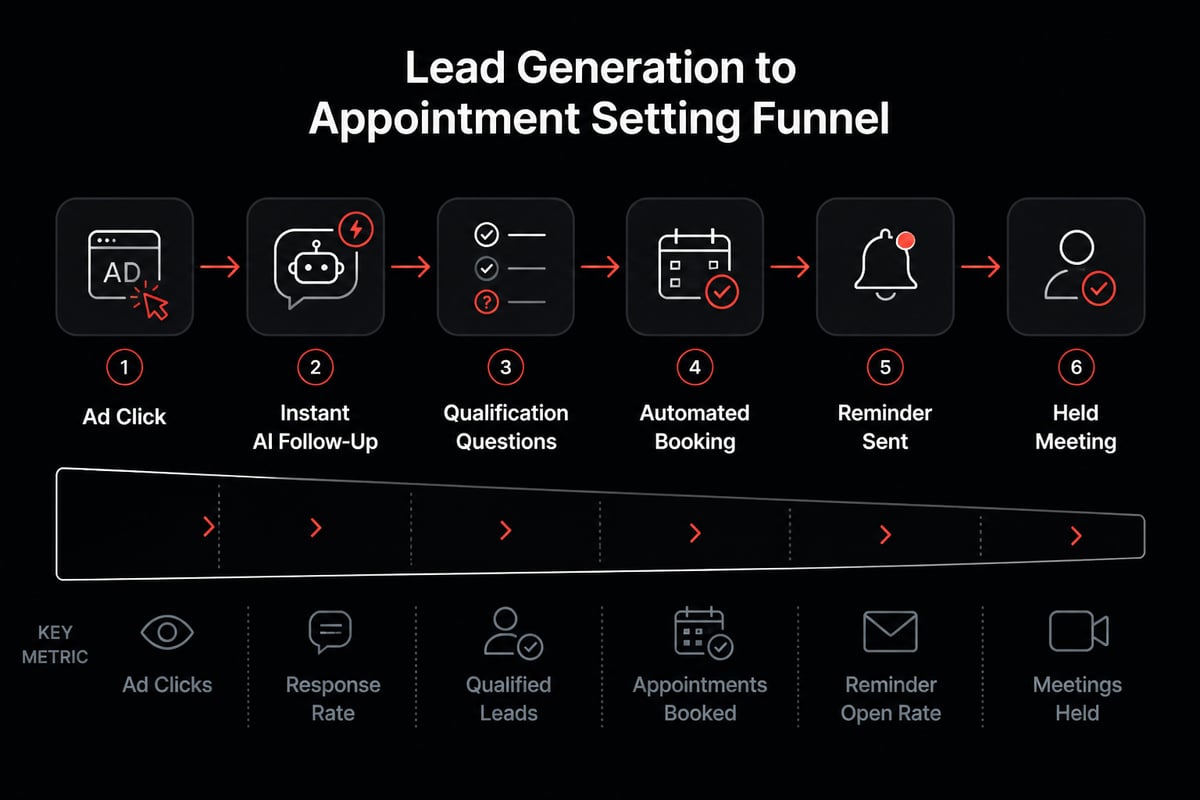
The funnel has four stages: acquisition (ads, content, referrals), capture (forms, landing pages), qualification (checking fit and intent) and booking. Most teams invest heavily in the first two and underfund the last two. That gap is where leads go cold.
Speed matters here. LinkedIn's research on top performers found that top-performing sales professionals are twice as likely to hit quota than their peers, and many of them researched prospects before outreach. Preparation and prompt follow-up separate teams that hit targets from teams that miss them.
For a deeper look at how the upstream stages connect, see this breakdown of B2B SaaS lead generation.
Appointment Setter vs. SDR vs. BDR: What Is the Difference?
An appointment setter books meetings, an SDR (sales development representative) qualifies inbound and outbound leads, and a BDR (business development representative) generates new pipeline, usually through outbound prospecting. The titles overlap, and many companies use them loosely.
| Role | Primary job | Lead source | Typical scope |
|---|---|---|---|
| Appointment setter | Book qualified meetings | Mostly inbound or supplied leads | Narrow: contact, qualify, schedule |
| SDR | Qualify and hand off leads | Inbound and some outbound | Broader: research, sequences, qualification |
| BDR | Open new accounts | Outbound, partnerships | Widest: prospecting and account targeting |
The distinction matters for hiring. If your pipeline already produces leads through paid acquisition, you need setter-level work: speed, persistence and clean booking. If you have no pipeline, adding a setter fixes nothing, because there is nothing to set.
What Does a Lead Generation Appointment Setter Cost?
A fully loaded in-house setter costs far more than the base salary, because recruiting, benefits, software, management time and ramp-up all land on the same budget line. The hourly wage is the least useful number in the calculation.
Consider the real cost drivers:
- Compensation and benefits. Base pay plus commission, payroll taxes and benefits.
- Tools. A dialer, CRM seat, email and SMS software, and data subscriptions.
- Management. Someone has to coach, listen to calls and review pipeline weekly.
- Ramp and turnover. Setting is a high-churn role, and each replacement restarts the learning curve.
- Idle time. Lead flow is uneven, so a paid setter sits underused in slow weeks and overwhelmed in spikes.
That last point is the one that breaks the budget. A person is paid for hours, but you only need the work when leads arrive. A system that responds to every lead instantly, at any hour, scales with volume instead of headcount.
In-House, Freelance or Outsourced: Which Model Fits?
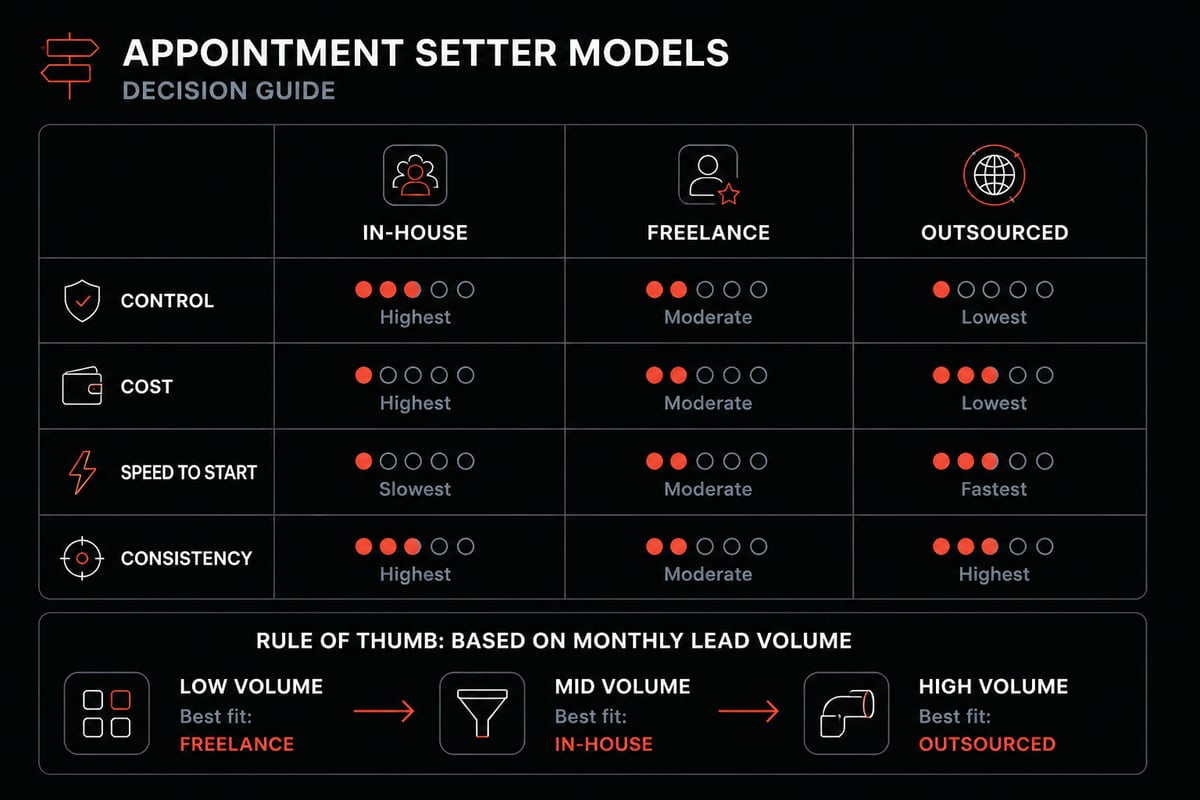
Pick in-house when your lead volume is steady and your offer is complex, freelance when you are testing, and outsourced when you need volume fast without building a team. Each model trades control against cost and consistency.
In-house gives you the tightest control over scripts and brand voice. It also carries the full cost and management load described above.
Freelance lowers fixed cost and works for pilots. The weakness is reliability: availability, tool access and quality vary, and few freelancers share your CRM discipline.
Outsourced teams deliver volume quickly. The risk is quality drift, because a third party reading scripts rarely knows your product as well as your own reps.
A simple rule: if fewer than roughly 100 leads arrive per month, a part-time or freelance setter is usually enough. Above that, the follow-up workload starts to exceed what one person can handle at speed, and a system or team becomes the better answer. This threshold is a working guideline, not a published benchmark, so adjust it to your sales cycle.
How Do You Become a Better Appointment Setter?
You become a better appointment setter by shortening your response time, preparing before every contact, asking fewer but sharper qualifying questions, and reviewing your own call recordings weekly. Skill here is mostly discipline, not charisma.
Five habits separate strong setters from average ones:
- Respond in minutes. A lead who just filled a form is warmest in the first hour.
- Research for 60 seconds. Check the prospect's role, company size and recent activity before dialing or writing.
- Qualify with intent, not interrogation. Two or three questions that reveal need and timeline beat a ten-question script.
- Offer two specific time slots. "Tuesday at 10 or Wednesday at 2?" books more meetings than "when works for you?"
- Confirm and remind. Send a calendar invite with context and a reminder the day before to protect show rates.
If you manage setters, measure them on qualified meetings held, not meetings booked. A setter who books unqualified calls inflates the dashboard and wastes rep time.
What Does the Setter's Work Look Like When It Is Automated?
Automated appointment setting uses software to contact leads instantly, follow up across channels, qualify intent and book meetings directly into a rep's calendar, with humans stepping in only for qualified conversations. It removes the gap between interest and booking.
A 2025 buyer behavior report analyzed more than 6 million B2B buyer interactions with interactive demos, tours and simulations. It reports that buyers who viewed a demo nine or more times had 8 to 10 times higher close rates. That is an association, not proof of cause, but it points to something useful: engaged buyers behave differently, and a system can detect that engagement and route those leads to booking first.
Aletto runs this as one connected machine: paid acquisition, AI follow-up and automated booking. Only qualified prospects reach a rep's calendar, so the team walks into each call ready to close. Across clients, Aletto reports over 1,500 calendars packed in 100+ countries, over $50M in ad spend managed and over 100,000 leads generated, with attribution verified by Hyros.
Two operating details matter for anyone evaluating this approach. First, ad accounts run on kill-switch discipline: underperforming creative is cut, not monitored for weeks. Second, creative is written from buyers' actual language and tested weekly, so the leads entering the system match the people reps want to meet. Aletto also reports that a majority of client campaigns reach a home-run rate of 10x ROI or more, and that average customer acquisition cost fell materially.
For appointment-based businesses outside SaaS, the logic is identical: the booking step is where leads are won or lost. This overview of the lead generation process for services shows how the pieces connect.
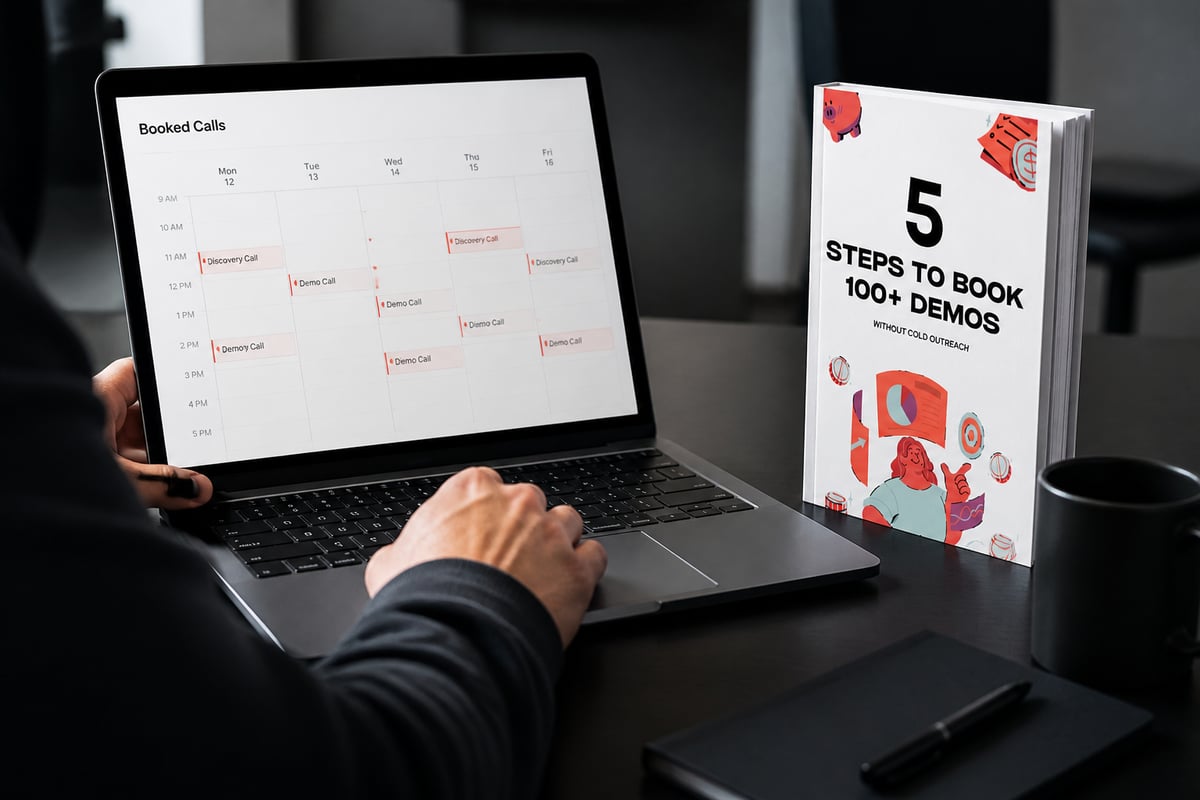
If you want to see the numbers behind this model before committing to anything, the Free AI Call Booking Report shows how 1,122 qualified sales calls were booked in 11 months without cold emails, cold calls, LinkedIn outreach, events or referral requests.
What Does Not Work for Appointment Setting?
Cold calling lists, buying contact databases and stacking more outreach volume are the approaches most likely to waste a setter's time in 2026. They produce activity, not meetings.
A 2025 Sopro and Sapio Research study surveyed senior B2B decision-makers and analyzed millions of emails and multichannel touchpoints, reflecting how saturated buyer inboxes have become. When every competitor sends the same sequence, a human setter reading a script to a stranger gets the lowest-quality conversations at the highest cost.
Three mistakes show up repeatedly:
- Hiring before you have lead flow. A setter with no inbound leads becomes a cold caller by default.
- Scripts that sound like scripts. Prospects hang up on anything that reads as read aloud.
- Optimizing for booked, not held. A calendar full of no-shows is not a full calendar.
Warm, intent-based leads from paid acquisition, followed up in minutes, consistently outperform cold lists. Buyers also research independently before they ever speak to sales; Buyers research independently before they ever speak to sales, so much of the decision is formed before a rep gets involved. By the time a prospect books, they have already formed a view, so qualification should confirm fit, not try to persuade.
For a candid look at which tactics still produce pipeline, read what actually works in B2B lead generation campaigns.
Which Metrics Show a Setter Is Working?
The metrics that matter are speed to lead, contact rate, qualified-meeting rate, show rate and cost per held meeting. Booked meetings alone are a vanity number.
| Metric | What it tells you | Warning sign |
|---|---|---|
| Speed to lead | Time from lead capture to first contact | Hours instead of minutes |
| Contact rate | Share of leads actually reached | Large share never answers |
| Qualified-meeting rate | Booked meetings that fit your ICP | Reps reject many bookings |
| Show rate | Meetings that actually happen | Frequent no-shows |
| Cost per held meeting | Total cost divided by held, qualified meetings | Rising while volume is flat |
Track these by lead source as well. If one ad campaign produces leads that book but never show, the problem sits in the creative or the offer, not in the setter. Clean attribution makes that diagnosis possible, which is why SaaS lead generation tracking deserves attention before you scale spend.
How Should You Choose Between a Person and a System?
Choose a person when your sales process needs nuanced human judgment before the first meeting, and choose a system when speed, volume and cost control matter most. Most B2B SaaS and service teams with steady paid lead flow land on the system.
Ask four questions before deciding:
- How many leads arrive each month, and how uneven is the flow?
- How fast do you respond today, honestly measured?
- What is your current cost per held meeting?
- Can you see every dollar of ad spend and trace it to a booked call?
If the answers reveal slow response, patchy follow-up and unclear attribution, adding headcount treats a symptom. A managed system that handles acquisition, follow-up and booking together addresses the cause. Teams comparing providers can review how B2B lead generation companies differ in model and accountability.

Frequently Asked Questions
What is an appointment setter?
An appointment setter is a sales-support role focused on contacting leads, confirming they fit your ideal customer profile, and scheduling meetings with a closer. They do not demo or close deals. Their output is qualified meetings on a rep's calendar.
Which lead generation companies should I consider?
No single list fits every business. Judge any provider on transparent ad spend reporting, verified attribution, qualification standards and cost per held meeting, and compare several options against those criteria.
What is the difference between lead generation and appointment setting?
Lead generation creates and captures interest from potential buyers, while appointment setting converts that interest into scheduled sales meetings. Lead generation fills the top of the funnel, and appointment setting fills the calendar. Both must work together, or leads go cold before anyone speaks to them.
How fast should a lead be contacted?
Within minutes of the inquiry. Interest peaks right after a form fill or ad click, and it fades quickly. Automated follow-up by email, SMS and chat reaches leads at any hour, which a single human setter cannot match.
Start by pulling your last 90 days of inbound leads and measuring how long each waited for a first response and how many ever reached a booked, held meeting. That gap is your real appointment setting problem, and it is usually larger than teams expect. If you want to see how a connected system closes it, review the Free AI Call Booking Report, then Start free training with Aletto to learn how paid acquisition, AI follow-up and automated booking can keep your reps' calendars full of qualified prospects.