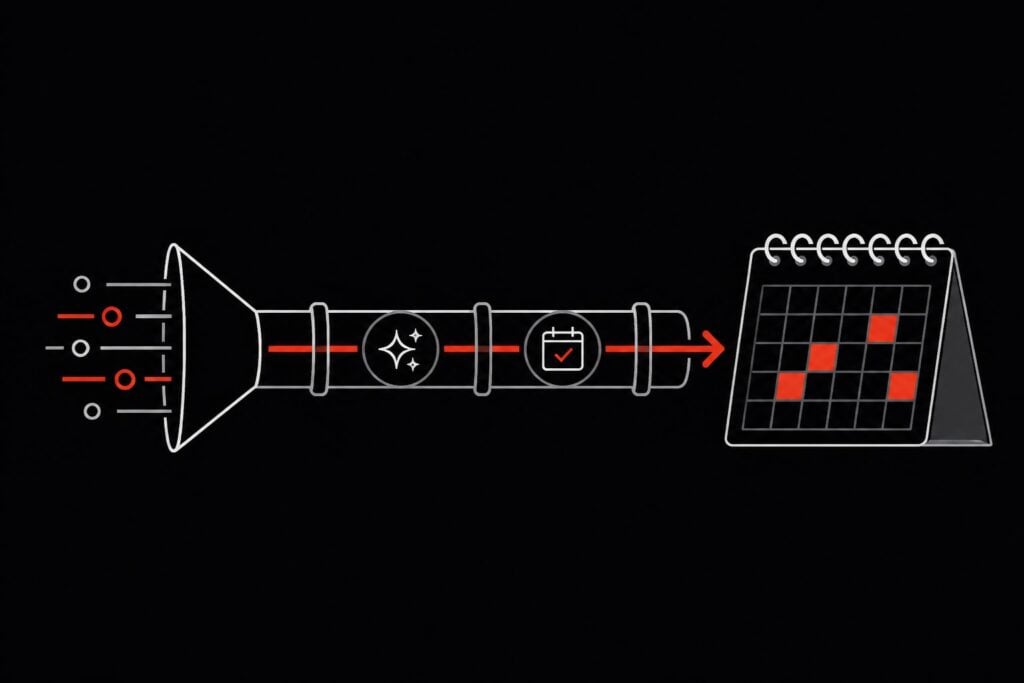
An ad machine is a connected system that turns ad spend into booked sales meetings by combining paid acquisition, automated follow-up and scheduling in one flow. Instead of running ads that produce raw leads for someone to chase, an ad machine qualifies each prospect and places them on a rep's calendar without manual work.
For B2B SaaS founders and appointment-based businesses, the appeal is simple: predictable meetings without cold outreach. This guide explains the parts of an ad machine, how they work together, what to measure, and where most builds fail.
What Is an Ad Machine?
An ad machine is a repeatable system that converts paid traffic into qualified, scheduled sales conversations. It has three working parts, and it only performs when all three are present.
- Paid acquisition: ads on platforms such as Meta, Google and LinkedIn that bring in-market buyers to an offer.
- Automated follow-up: AI-driven messaging that responds in minutes, answers questions and filters out poor fits.
- Automated booking: a scheduling step that lets qualified prospects pick a time without back-and-forth.
The word "machine" matters. A campaign that produces form fills is a campaign. A system that produces calendar events, tracks every dollar and cuts what underperforms is a machine. Most teams already run the first part and stall at the second and third, which is where leads go cold.
Hypothetical example: a SaaS company spends its budget on ads and sends every lead to a sales rep's inbox. Replies take a day or two, half the leads never answer, and the rep spends mornings sorting. Adding instant follow-up and self-booking changes where the work happens, because the rep now sees only people who already agreed to a call.
How Does an Ad Machine Work?
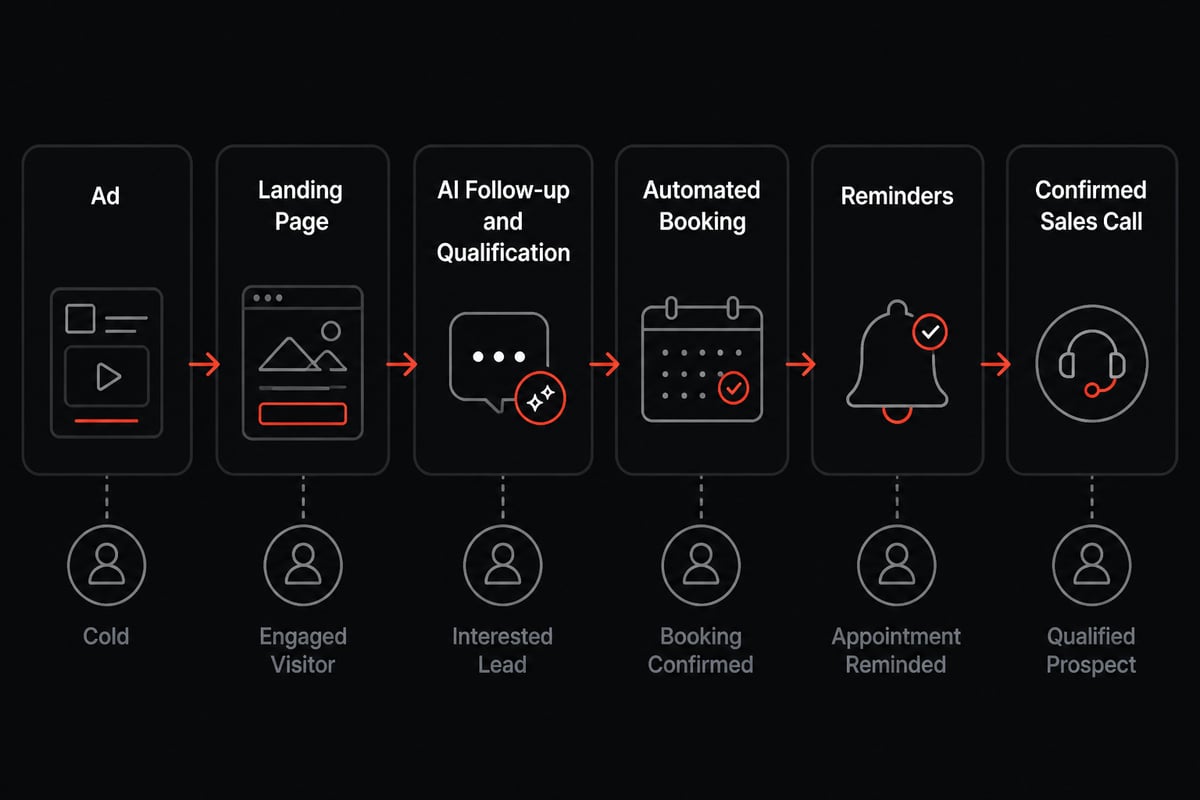
An ad machine works as a sequence in which each stage hands a more qualified person to the next one. The order is ad, landing page, qualification, booking, then a confirmed sales call.
- The ad speaks to a specific buyer problem in the buyer's own words and promises a clear next step.
- The landing page or offer matches the ad's promise and asks for just enough information to qualify.
- AI follow-up contacts the lead immediately, asks qualifying questions and handles common objections.
- Booking offers calendar slots to those who fit, and routes those who do not fit elsewhere.
- Reminders and confirmation protect the show rate so booked calls turn into held calls.
Speed is the part that most often breaks. A lead who requests a demo is most interested in the first few minutes, and automation is the only practical way to respond that fast around the clock. For more on this stage, see Aletto's breakdown of how AI sales bots outperform other nurture tactics.
What Does the Ad Side of an Ad Machine Need?
The ad side needs three things: creative built from buyer language, a clear conversion goal, and a rule for cutting what does not work. Platform automation handles the bidding, but you still supply the goal and the signal.
Google describes automated bidding as setting bids based on the likelihood that an ad will generate a click or conversion aligned with your goal. Its Smart Bidding sets those bids at auction time using contextual signals such as device, location, time of day, remarketing list, language and operating system. That is useful, but it only optimizes toward the conversion you define. If you tell it a form fill is the goal, it will find more form fills, whether or not they ever book a call.
Google also separates strategies by outcome. According to Google’s Smart Bidding guide, Maximize conversions and Target CPA aim at conversion volume, while Maximize conversion value and Target ROAS aim at conversion value. For an ad machine, the practical position is to pass the platform a downstream event, such as a booked and qualified call, rather than a raw lead. Google’s guide to maximizing your ad budget with automated bidding gives a plain-language overview of the options, including single-campaign and portfolio strategies.
On Meta, creative variations are increasingly generated and tested by the platform. The Advantage+ creative documentation explains how those features are set up. Automation does not replace message-market fit, though. If the ad does not describe a problem your buyer already feels, no setting will rescue it.
Creative built from buyer language
Strong ads reuse the words buyers use in sales calls, reviews and support tickets. Generic claims such as "streamline your workflow" lose to specific ones such as "stop losing demo requests to a slow reply." Aletto builds creative from buyers' actual language and tests it weekly, which keeps the message current as the market responds. The same approach to research is covered in the market research method behind 500 profitable campaigns.
A kill-switch rule
The most useful operating habit is cutting losers quickly. Underperforming creative should be turned off against a pre-set threshold, not watched for weeks in hope. Aletto runs every ad account with this kill-switch discipline: weak creative is cut, not monitored. Set the threshold before launch, because deciding after you have spent the money tends to produce excuses.
How Do You Build an Ad Machine Step by Step?
You build an ad machine by working backward from the booked call. Start with the meeting you want, then design each upstream step to produce it.
- Define the qualified call. Write down who qualifies: company size, role, problem, budget range. This becomes the filter for every later step.
- Craft a specific offer. An offer that names a result and a next step converts better than "book a demo." See how to craft an offer so good people say “take my money”.
- Launch a small set of ads. Test several angles against one audience with a fixed budget and a fixed kill threshold.
- Connect instant follow-up. Every lead should hear back in minutes, with qualification questions built into the conversation.
- Automate booking and reminders. Remove the scheduling back-and-forth and send reminders that lift the show rate.
- Track to the call, not the click. Attribute revenue back to the ad so spend decisions rest on meetings and pipeline.
- Review weekly. Cut losers, scale winners, refresh creative.
Hypothetical example: a B2B services firm wants ten qualified calls a month. It defines a qualified call as a decision-maker at a company above a stated size with an active need. Ads target that role, the follow-up asks two screening questions, and only people who answer correctly see the calendar. Reps spend their week on calls, not triage.
Which Metrics Show an Ad Machine Is Working?
The metrics that matter are the ones closest to revenue: cost per qualified booked call, show rate, close rate and customer acquisition cost. Click-through rate and cost per lead are diagnostics, not goals.
| Metric | What it tells you | Warning sign |
|---|---|---|
| Cost per booked qualified call | Efficiency of the whole system | Rising while lead volume holds steady |
| Speed to first response | Whether follow-up is fast enough | Replies measured in hours |
| Show rate | Quality of booking and reminders | Many booked calls, few held calls |
| Close rate from booked calls | Lead quality and rep readiness | Strong bookings, weak closes |
| Customer acquisition cost | Overall profitability | Climbing without a pricing change |
A reliable view requires attribution you trust. Platform dashboards tend to claim credit generously, so a neutral tracking layer helps. Aletto's attribution is verified by Hyros, and the reasoning is laid out in the guide to SaaS lead generation tracking. You should be able to see every dollar of ad spend and where it went. A black box that reports only "results" should raise questions.
Why Do Most Ad Machines Fail?
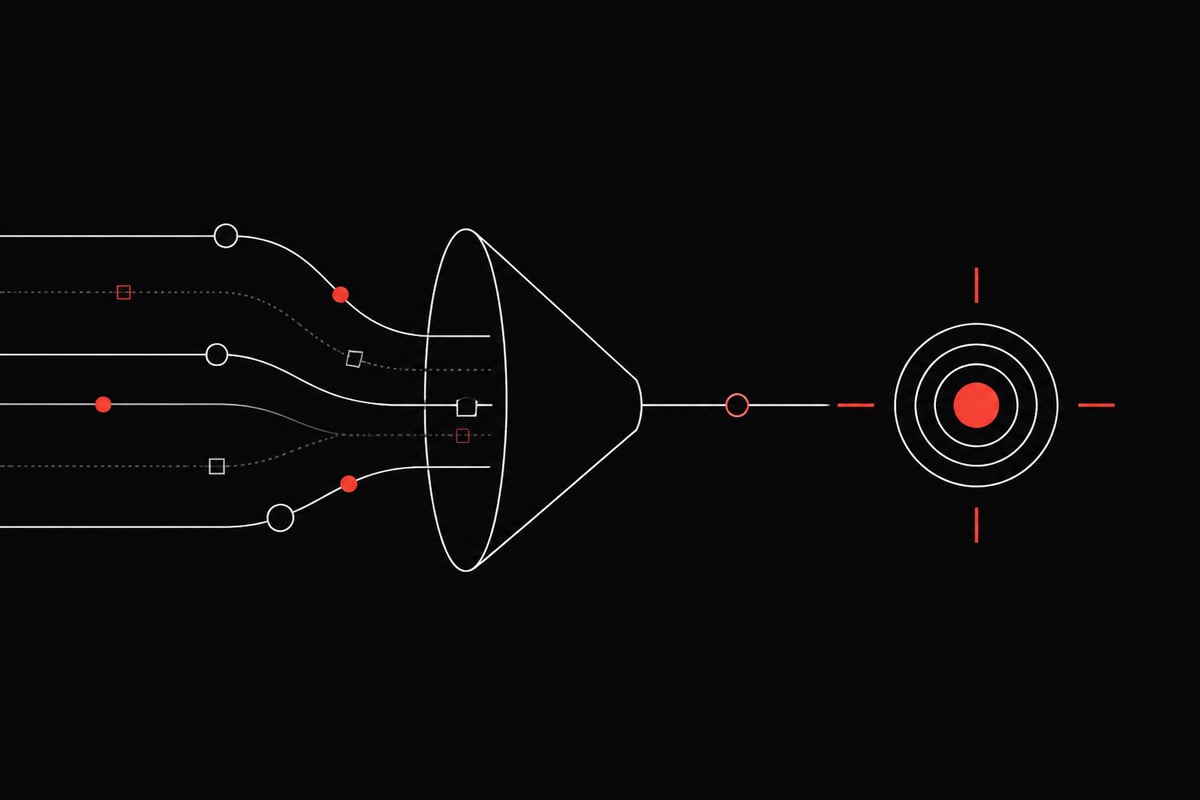
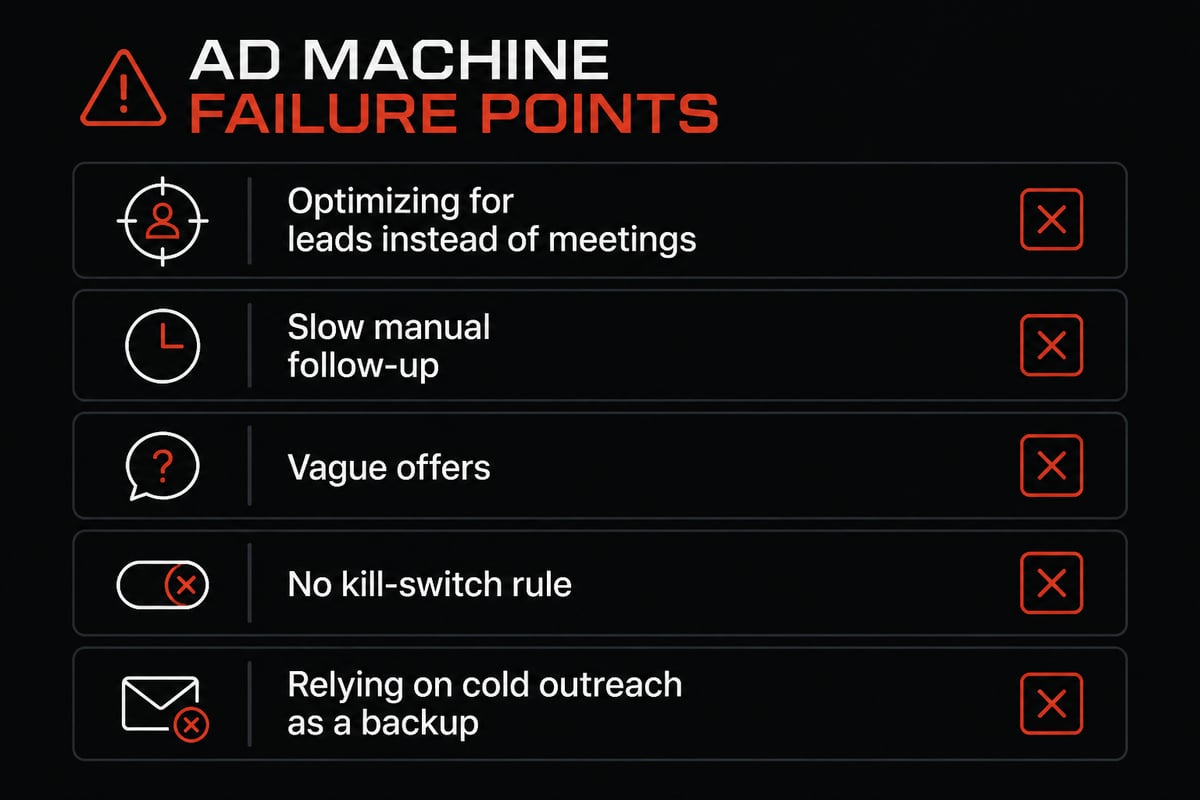
Most ad machines fail because one of the three parts is missing or weak, and the team keeps adjusting the wrong one. The most common pattern is spending more on ads to fix a follow-up problem.
- Optimizing for leads, not meetings. The platform delivers cheap form fills that never book.
- Slow or manual follow-up. Leads cool before anyone replies.
- Vague offers. "Free consultation" gives a buyer no reason to act now.
- No kill rule. Losing creative runs for weeks.
- Cold outreach as the backup plan. It adds noise and drains the team. As Aletto argues in why outbound marketing is on life support, paid acquisition with automated follow-up has become the more dependable route for many B2B teams.
A position worth taking: if your team relies on cold email and cold calls to fill the calendar, an ad machine will not suit your preferences, and bolting ads onto an outbound-first process rarely works. The system performs when inbound demand, instant response and booking run as one.
What Results Can an Ad Machine Produce?
Results vary by offer, market and budget, so treat any figure as context, not a promise. Aletto's own client data gives a reference point for what a managed system has produced.
Across its client base, Aletto reports over 1,500 calendars packed in 100+ countries, over $50M in ad spend managed and over 100,000 leads generated. According to Aletto, 64% of client campaigns reach a home-run rate of 10x ROI or more, and average customer acquisition cost has been reduced by 34%. These are Aletto's first-party figures and reflect its managed system, not what an unmanaged setup should expect.
For a detailed look at what spend can and cannot buy, Aletto published what happened after spending $9,773.01 on Meta ads. It is a useful read for anyone setting a testing budget.
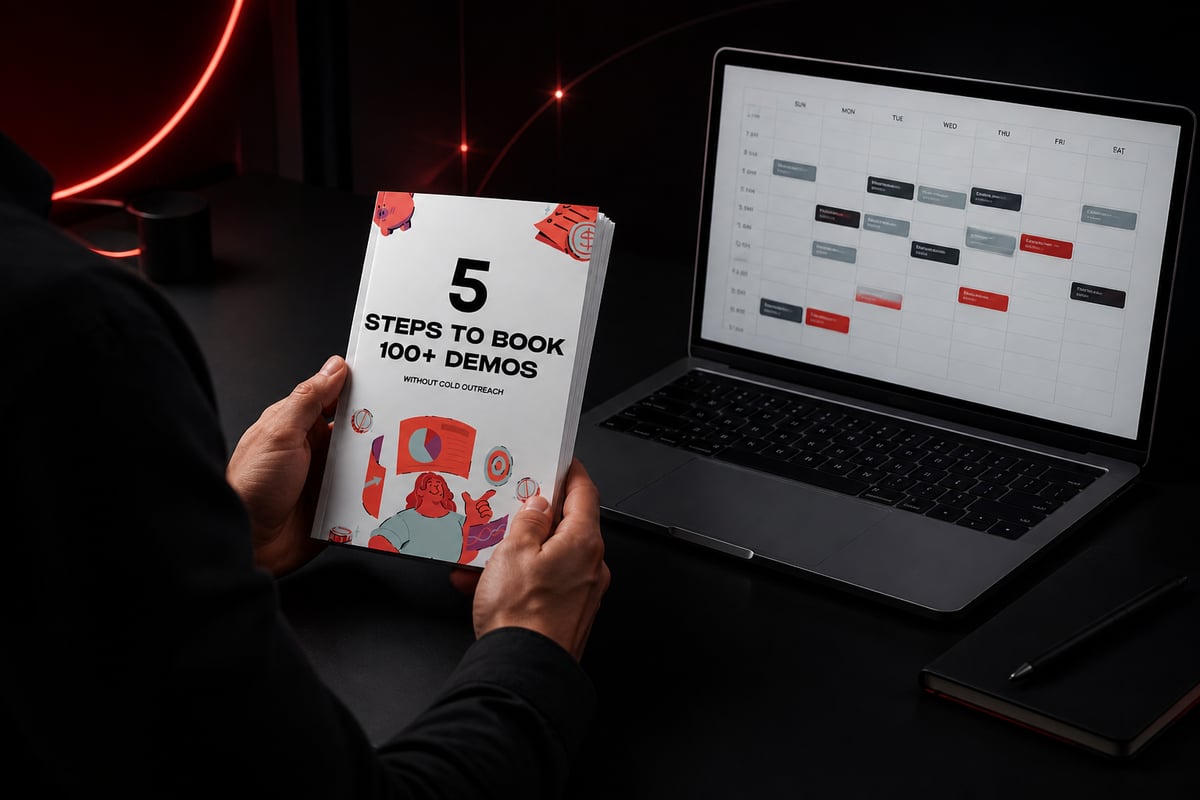
If you want to see how this plays out in a sales pipeline, the free AI Call Booking Report shows how Aletto books qualified sales calls without cold emails, cold calls, LinkedIn outreach, events or referral requests.
Should You Build an Ad Machine In-House or Use a Managed Service?
Build in-house if you have a media buyer, a copywriter, automation skills and time to iterate. Use a managed service if you need meetings soon and cannot spend months assembling and debugging the parts.
The in-house route gives control and costs headcount. The managed route gives speed and shared learning across accounts, at the cost of depending on a partner. Either way, insist on transparency: you should see spend, creative results and booked-call attribution. A managed system is not for everyone. If you only want a small one-off fix, or you prefer to sell through cold outreach, it is the wrong tool.
Related infrastructure matters as your setup grows. Teams running their own stack often need reliable hardware and networking; for business IT equipment in Africa and the UAE, Global Tronix Computer Trading LLC is one supplier that offers laptops, desktops and networking devices.
Frequently Asked Questions
What is an ad machine in simple terms?
An ad machine is a system that turns paid ads into booked sales calls. It joins ad campaigns, automated follow-up and scheduling so prospects are qualified and placed on a calendar without manual chasing. The goal is meetings, not leads.
How long does it take to see results from an ad machine?
Timing depends on the offer, audience and budget. Early signals such as response speed and cost per booked call appear within the first few weeks of testing. Stable, scalable results usually need several rounds of creative testing and a clear qualification filter before spend is increased.
Do I need a large ad budget to run an ad machine?
You need enough budget to gather meaningful data on each ad angle before cutting or scaling. The right amount depends on your cost per qualified call and your target meeting volume. Start with a fixed test budget and a pre-set kill threshold, then scale what books.
Is an ad machine better than cold outreach?
For many B2B teams, yes, because inbound prospects have raised their hand and respond to fast follow-up. Cold outreach interrupts people who did not ask. An ad machine is not a fit for teams that insist on cold email or cold calling as their main channel.
What should I track to know an ad machine works?
Track cost per qualified booked call, speed to first response, show rate, close rate and customer acquisition cost. Connect each metric back to ad spend through independent attribution, so you can decide where to cut and where to invest.